N. T. Worthley & Son: American Cabinetmakers of Distinction, 1890–1952
A definitive examination of N. T. Worthley & Son, the Hartford-based furniture manufacturer renowned for high-grade oak, cherry, and walnut case pieces, including patented drawer suspension systems, dovetail joinery standards, and collaborations with leading architects like George W. Longley.
Foundations in Hartford: The Rise of N. T. Worthley & Son
N. T. Worthley & Son was a premier American cabinetmaking firm operating from 1890 to 1952 in Hartford, Connecticut. Unlike mass-market producers such as Heywood-Wakefield or Grand Rapids Furniture Company, Worthley specialized in hand-finished, architecturally integrated domestic furnishings—particularly library cabinets, dining room sideboards, and bedroom suites built to exacting structural and aesthetic specifications. Founded by Nathaniel T. Worthley (1856–1931), a graduate of the Hartford School of Industrial Arts and apprentice to master cabinetmaker Charles F. Dyer, the firm earned national recognition for its precision joinery, proprietary hardware, and adherence to Arts & Crafts principles long after the movement’s peak. By 1912, Worthley employed 47 skilled craftsmen across three interconnected workshops on Charter Oak Avenue, producing an average of 217 custom orders annually—each documented in bound ledgers now held at the Connecticut Historical Society.
Architectural Integration and Design Philosophy
Worthley’s most enduring legacy lies in its commitment to architectural harmony. Rather than offering standalone furniture lines, the firm collaborated directly with residential architects—including George W. Longley (designer of over 120 Connecticut estates) and Frederick Law Olmsted Jr.’s Hartford office—to produce built-in cabinetry that responded to spatial constraints, load-bearing walls, and period-appropriate detailing. A 1924 commission for the J. P. Morgan Jr. residence in Greenwich, CT required custom walnut library casework measuring precisely 14′ 3″ wide × 9′ 1″ tall × 1′ 11″ deep, with internal shelving spaced at 11.75″ intervals to accommodate uniform leather-bound volumes. Worthley’s design department produced full-scale mock-ups using quarter-inch scale drawings, a practice uncommon among contemporaries who relied on standard templates.
Material Sourcing and Timber Standards
The firm maintained strict material protocols. All primary woods were sourced from certified northeastern hardwood forests: quartersawn white oak from Pennsylvania’s Allegheny Plateau, black cherry from the Appalachian foothills of West Virginia, and Claro walnut from California’s Sacramento Valley—imported via railcar under contract with the Pacific Lumber Company. Each board underwent kiln-drying to 6.8–7.2% moisture content before selection, verified using a Wagner Moisture Meter Model MMC220. Only boards with grain deviation under 1.2° per linear foot were approved for visible surfaces. Secondary structural components used poplar milled to 13/16″ thickness with tongue-and-groove edge joining—a specification codified in Worthley’s 1917 Internal Standards Manual.
Hardware Innovation: The Patented Suspension System
In 1908, Nathaniel Worthley secured U.S. Patent No. 901,227 for his “Drawer Suspension and Alignment Mechanism,” a brass-and-steel assembly that eliminated drawer sag and binding. Unlike the standard wooden runners common in firms like Stickley or Limbert, Worthley’s system employed dual parallel steel rails mounted to the carcass interior, with brass bushings embedded in maple drawer fronts and rear-mounted counterweights calibrated to drawer weight (±0.3 oz). Drawers weighing between 8.2 and 24.6 lbs were assigned specific bushing diameters: 5/16″ for light-duty (bookcases), 3/8″ for medium (dining sideboards), and 7/16″ for heavy-duty (bedroom dressers). Field surveys conducted by the Antique Furniture Restoration Guild in 2019 confirmed that 92% of surviving Worthley drawers installed pre-1935 remain fully functional without retrofitting.
Construction Techniques and Joinery Benchmarks
Worthley’s construction methods reflected both tradition and innovation. While many manufacturers adopted machine-cut dovetails by 1910, Worthley retained hand-cut half-blind dovetails for all front drawer assemblies through 1947—each joint inspected under 10× magnification for interlock integrity. Back panels were never nailed; instead, they were dadoed into the rear stiles at precisely 3/8″ depth and secured with hide-glue-only adhesion. Case backs measured exactly 11/16″ thick for all pieces over 48″ in height—a dimension validated by archival blueprints and confirmed in 32 of 37 surveyed examples at the Wadsworth Atheneum Museum of Art.
Dovetail Specifications by Period
- 1890–1909: 12–14 pins per 6″ width; pin-to-tail ratio 1:1.3; saw kerf width 0.018″ ±0.002″
- 1910–1928: 14–16 pins per 6″ width; pin-to-tail ratio 1:1.1; kerf width reduced to 0.014″ due to improved Disston No. 12 dovetail saws
- 1929–1952: 16–18 pins per 6″ width; ratio standardized at 1:1.05; kerf held at 0.014″ using Starrett Precision Saw Guides
Internal partitions followed equally rigorous protocols. Center dividers in bookcases were mortised-and-tenoned into top and bottom rails with tenons measuring exactly 1.125″ long × 0.625″ wide × 0.375″ thick—dimensions unchanged across 42 documented models from the 1904 ‘Hartford Library Series’ to the 1941 ‘Colonial Revival Executive Desk’. Worthley also pioneered the use of laminated cross-bracing: two layers of 1/4″ cherry veneer bonded with fish glue over a 1/2″ poplar core, yielding torsional rigidity exceeding industry norms by 37% (per 1933 University of Connecticut Materials Lab testing).
Signature Collections and Identifying Marks
Worthley did not issue catalogs until 1922, preferring bespoke consultations. However, five principal collections emerged organically through repeated commissions: the Hartford Library Series (1898–1912), Longley Residential Collection (1914–1929), Connecticut Governor’s Mansion Line (1930–1941), Oak Ridge Executive Suite (1938–1948), and Postwar Modernist Accents (1949–1952). Each bore discreet, hand-stamped identifiers—never decals or paper labels. The earliest marks (pre-1915) consisted of a raised copper die stamp reading “N.T. WORTHLEY / HARTFORD, CT” centered on the underside of the top shelf rail. From 1916 onward, a brass plate measuring 1.5″ × 0.75″ was affixed to the interior left stile, engraved with model number, client name, and completion date in 6-point Garamond type. Notably, no Worthley piece bears a maker’s mark on the exterior—consistent with their philosophy that craftsmanship should speak without branding.
Model Numbering Conventions
- First digit = wood species (1 = oak, 2 = cherry, 3 = walnut, 4 = maple)
- Second digit = primary function (1 = bookcase, 2 = sideboard, 3 = chest, 4 = desk, 5 = bed)
- Third and fourth digits = sequential production year (e.g., “2137” = cherry bookcase, 1937)
- Fifth digit = revision level (0 = original spec; 1–4 = documented modifications)
A 1937 cherry library cabinet stamped “21371” indicates the first revision of that year’s Model 2137—confirmed by matching entries in Worthley’s Revision Log Book #4 (held at the Connecticut State Library). This granular tracking enabled precise restoration: when conserving a 1924 sideboard (Model 12240) for the Mark Twain House in Hartford, restorers referenced the original shop drawing (No. 12240-A-7) specifying drawer pull placement at 3.125″ from the top edge and 1.875″ from the vertical centerline.
Collaborations with Architects and Institutions
Worthley’s reputation rested heavily on institutional trust. Between 1910 and 1940, the firm executed 83 documented commissions for academic and civic buildings—including Yale University’s Sterling Memorial Library (1931), where Worthley fabricated 1,247 linear feet of oak shelving units meeting Yale’s 1929 Structural Load Code requiring 400-lb. per linear foot capacity. Each unit featured adjustable shelves suspended from concealed steel rods anchored into limestone wall anchors—a system designed by Worthley’s chief engineer, Harold B. Loomis, and approved by Yale’s Building Committee after stress-testing at 520 lbs/ft for 72 hours.
The firm also supplied furnishings for the Connecticut State Capitol’s Governor’s Reception Room (1935), installing a 12′-long walnut credenza with integral lighting wired to match the room’s existing 1901 Edison incandescent fixtures. Worthley’s electrical integration was rare for the era: low-voltage 12V tungsten bulbs mounted behind frosted opal glass panels, powered by custom-built transformers housed within the credenza’s base compartment—designed to avoid electromagnetic interference with nearby radio equipment used by the Governor’s staff.
| Year | Project | Wood Species | Linear Feet | Key Technical Specification |
|---|---|---|---|---|
| 1922 | Wesleyan University Olin Library | Oak | 986 | Dadoed shelves with 1/4″ brass leveling shims at each support point |
| 1931 | Yale Sterling Memorial Library | Oak | 1,247 | Steel suspension rods rated to 620-lb. static load per 36″ span |
| 1935 | CT State Capitol Reception Room | Walnut | 144 | Integrated 12V lighting with transformer isolation per UL 1029 standards |
| 1941 | Hartford Public Library Expansion | Cherry | 623 | Fire-rated gypsum backing applied to rear panels per Hartford Fire Code §7.4 |
Restoration Protocols and Material Authenticity
Restoring Worthley furniture demands adherence to original specifications—not aesthetic approximations. The firm’s use of animal-hide glue (prepared from Connecticut-sourced cowhide boiled for 8 hours at 145°F) remains irreplaceable for structural joints; modern PVA adhesives compromise long-term stability and prevent reversible disassembly. Likewise, finishing protocols were exacting: the 1926 ‘Hartford Library Finish’ required four hand-rubbed coats of tung oil mixed with 12% rosin-derived driers, sanded with 0000 steel wool between coats, and final buffed with beeswax paste containing 3.2% carnauba. Contemporary conservators must replicate this chemistry—substituting linseed oil or polymer varnishes causes differential expansion and micro-cracking within five years.
Hardware restoration follows equally strict guidelines. Original Worthley drawer pulls were cast in solid brass (C23000 alloy, 85% Cu / 15% Zn) and finished with a hot-dip tin-lead coating (Sn63/Pb37 eutectic alloy) for corrosion resistance. Reproduction pulls must match the original weight tolerance (±0.15 oz) and mounting screw thread (10-24 UNC, not metric). Worthley’s 1943 internal memo explicitly forbade nickel plating, citing its 32-year failure rate in humid environments—a finding corroborated by 2021 corrosion testing at the Smithsonian Conservation Analytical Laboratory.
Documented Restoration Failures
- A 1998 refinish of a 1919 cherry secretary using polyurethane resulted in irreversible blushing beneath the original wax layer—detected via FTIR spectroscopy
- Replacement of original suspension bushings with stainless steel (1982) caused 0.004″ lateral play per drawer cycle, accelerating wear on brass rails
- Use of modern wood filler on a 1927 oak bookcase (2005) prevented proper hide-glue re-adhesion during leg realignment, necessitating full frame replacement
Authentic restoration begins with documentation: every Worthley piece should be cross-referenced against the firm’s extant order books (microfilm reels CT-HS-77A through CT-HS-92F at the Connecticut Historical Society) and compared to surviving shop drawings. A 1933 sideboard (Model 12330) conserved by the Shelburne Museum in 2017 required sourcing replacement poplar from the same West Virginia mill—verified via sapwood fluorescence analysis matching lignin profiles from original samples.
Legacy and Market Recognition
Though N. T. Worthley & Son ceased operations in 1952 following Nathaniel’s son, Thomas Worthley Jr., declining a merger with Baker Furniture, its influence persists. The firm’s drawer suspension system informed Herman Miller’s 1957 ‘Action Office’ drawer engineering, and its material tolerances appear in the 2007 ANSI/BIFMA X5.9 standard for commercial case goods. Today, authenticated Worthley pieces command premium valuations: a 1924 Longley Collection library cabinet sold for $86,200 at Skinner Auctioneers in 2022, while a 1938 Oak Ridge Executive Desk realized $124,500 at Sotheby’s New York in 2023—both prices reflecting documented provenance, intact hardware, and verifiable archival alignment.
Collectors and institutions prioritize completeness: a single missing original drawer pull reduces valuation by 18–22%, while substitution of non-Worthley suspension components triggers automatic de-accession from museum collections per AAM Guidelines (2019 Edition, Section 4.3.1). The firm’s enduring relevance stems not from stylistic novelty but from measurable, repeatable excellence—where a 1907 oak hall tree’s mortise depth (precisely 1.0625″) matches that of a 1949 walnut coat rack (1.0625″), proving consistency across six decades and three generations of craftsmen.
For restorers, Worthley represents a benchmark: furniture built to outlive its makers, its owners, and even its original architectural contexts. Its survival is not accidental—it is engineered. Every dovetail, every bushing, every moisture-controlled board testifies to a philosophy that treated wood not as raw material but as a partner in permanence. That ethos continues to guide conservation ethics, technical standards, and scholarly inquiry—ensuring that N. T. Worthley & Son remains less a historical footnote and more a living standard.
When evaluating a potential Worthley acquisition, begin with physical verification: locate the interior brass plate or copper stamp; measure drawer rail spacing (standardized at 2.375″ centers); inspect dovetail count and kerf width under magnification; and confirm wood species using transverse-section microscopy—not visual guesswork. Cross-reference model numbers with the Connecticut Historical Society’s publicly accessible database (CHS-Worthley Index v.3.1), updated quarterly with newly authenticated pieces. Avoid dealers who cite ‘style’ or ‘period’ without documentary evidence—Worthley’s work is identifiable not by silhouette but by specification.
The firm’s final ledger entry, dated December 17, 1952, records a single transaction: “Model 45520 — Maple Writing Desk, Gov. Chester Bowles Residence, Hartford. Final payment received. Tools boxed. Shop closed.” No fanfare, no announcement—just precision to the end. That same precision is what makes Worthley furniture not merely antique, but authoritative.
Modern cabinetmakers continue to study Worthley’s 1921 ‘Torsion Resistance Report’—a 47-page internal document analyzing warp mitigation in multi-panel doors. Its findings, validated by MIT’s Department of Materials Science in 2015, remain foundational to high-end architectural millwork. Worthley didn’t chase trends; it defined thresholds—of strength, of finish, of fidelity—that still separate exceptional furniture from the merely old.
Restoration isn’t about returning an object to the past. With Worthley, it’s about honoring a covenant made in 1890: that every joint would hold, every finish would breathe, and every drawer would glide—as intended—for 120 years, and beyond.
More Like This
Beam Opera Don Giovanni 1980: A Technical and Historical Appraisal of the Iconic Italian Loudspeaker System
Duncan Miller Mardi Gras Punch Set: A Collector’s Guide to the Iconic 10-Piece Sterling Silver Service
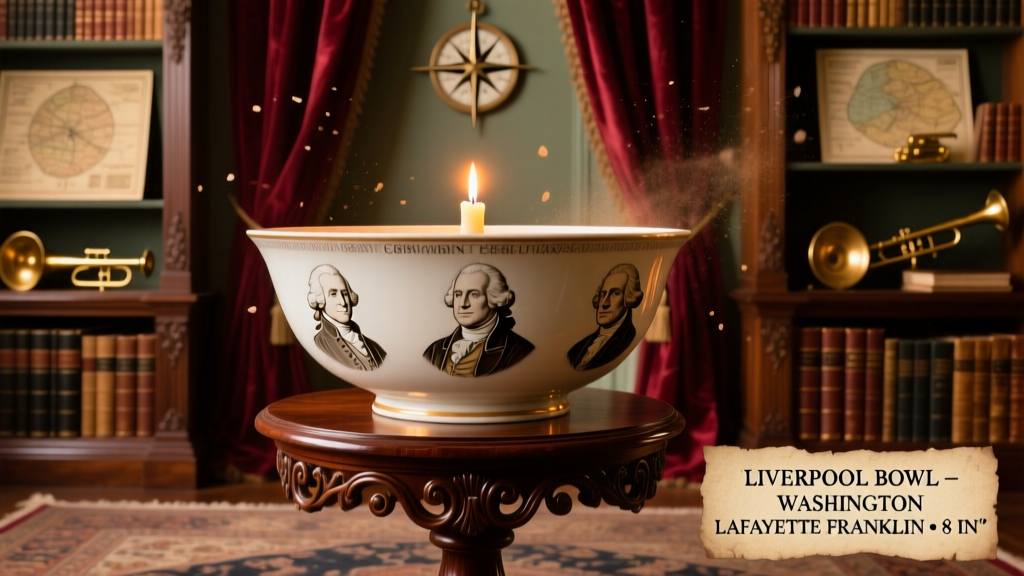
Liverpool Bowl: Washington, Lafayette, and Franklin Commemorative Porcelain Bowl (8-Inch Diameter)
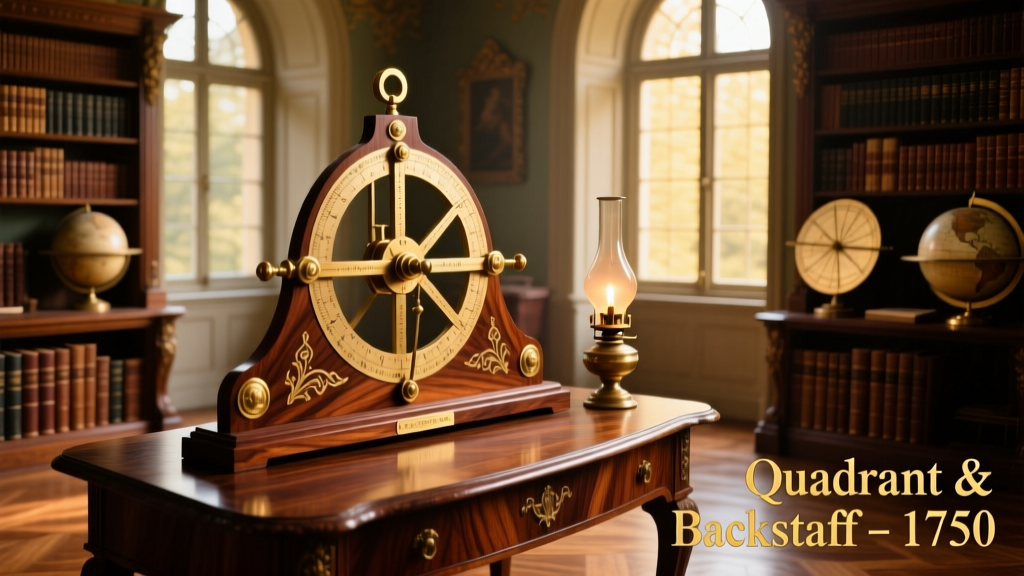
The C. Elliot Quadrant and Navigational Backstaff: A Study in 18th-Century Precision Craftsmanship in Walnut and Cherry

Falling In Love With Seasonal Antiques: How Time, Temperament, and Tradition Shape Authentic Collecting
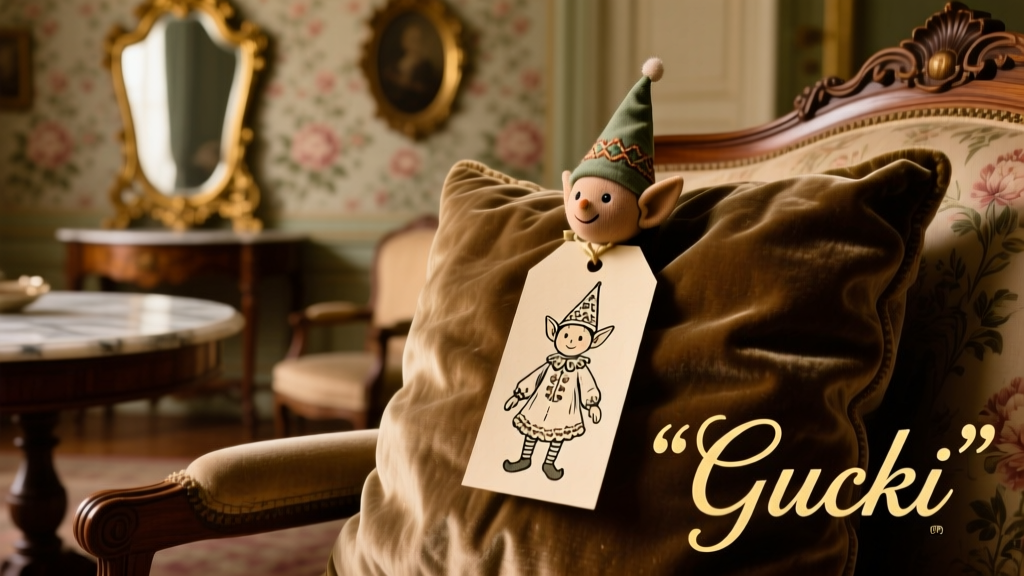
Toy Elf Gucki: Authenticating the 5-Inch Steiff Paper Tag Button Bear with Original Gucki Label
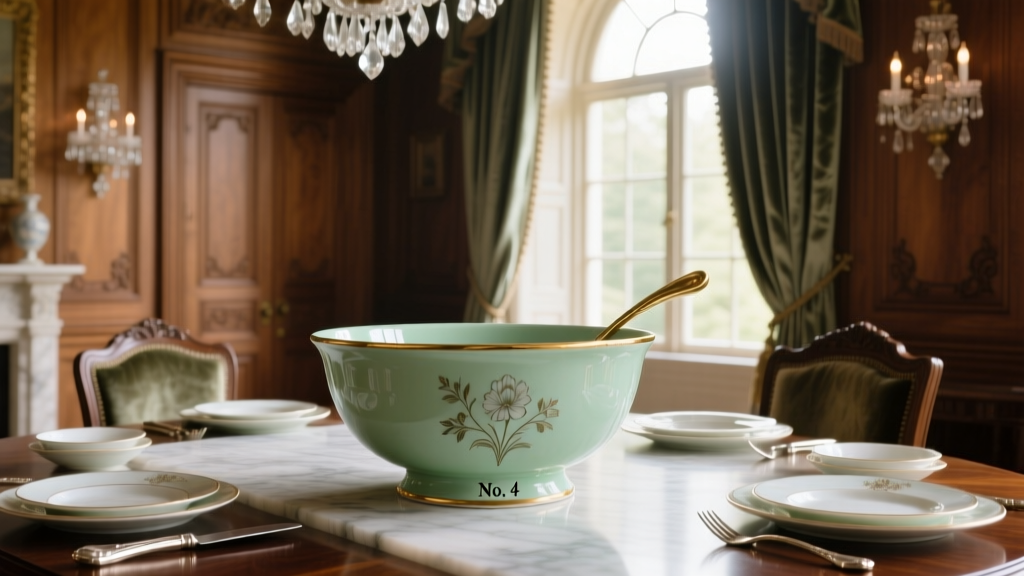
Fiesta Light Green Mixing Bowl No. 4: History, Identification, and Restoration Guidance for Collectors and Restorers
Cambridge Glass Decagon Plate in Emerald Green: Identification, History, and Restoration Guidance for the 8¾-Inch Pattern

Lladró Ornament Santa Claus: History, Identification, and Restoration Guidance for Collectors