Music Box Singing Bird Enameled: History, Mechanics, and Restoration of 18th–19th Century Automata
A detailed examination of enameled singing bird music boxes—mechanical marvels from Geneva and Paris between 1780–1890—covering their brass-and-steel movement architecture, cloisonné enamel techniques, maker signatures, and ethical conservation practices for collectors and restorers.
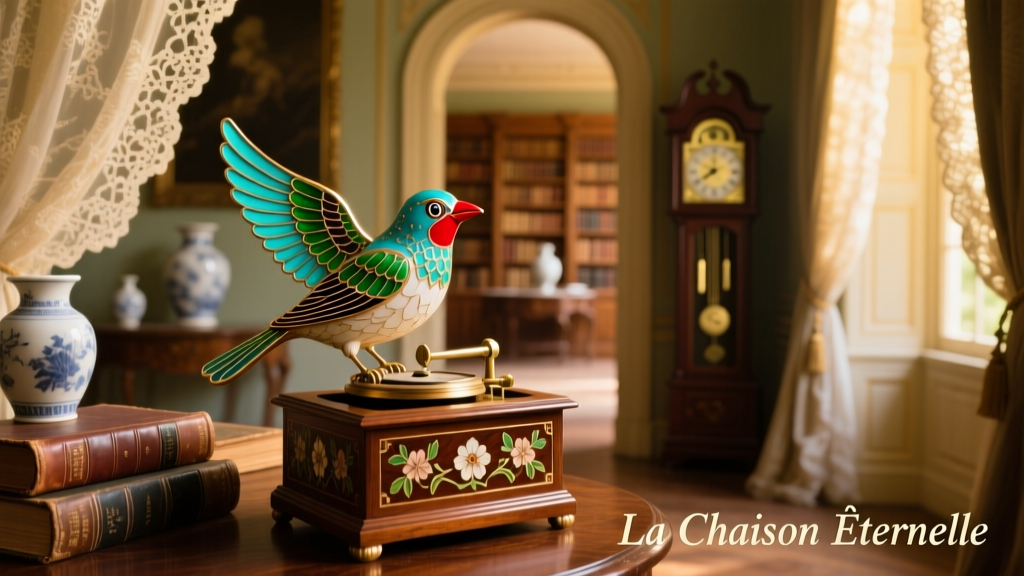
Enamelled singing bird music boxes represent one of the most refined intersections of horology, automata engineering, and decorative arts in the late Enlightenment and early Industrial eras. Produced primarily in Geneva and Paris between 1780 and 1890, these self-contained mechanical birds—housed in miniature gilded or tortoiseshell cases—combine a tuned steel comb, pinned cylinder, bellows-driven air system, and articulated avian figure to produce lifelike song and motion. Each piece features hand-enamelled panels using fine-grain cloisonné or champlevé techniques, often depicting floral motifs, pastoral scenes, or mythological subjects on brass, copper, or silver substrates. Key makers include Frédéric Rochat, Jaquet-Droz & Son, Charles Bruguier, and the firm of Rémy & Fils. Typical dimensions range from 6.5 cm × 4.5 cm × 3.2 cm (small pocket models) to 18 cm × 12 cm × 8 cm (cabinet-size examples), with enamel thickness averaging 0.12–0.18 mm and movement plate thicknesses of 0.8–1.2 mm. This article details their historical context, mechanical architecture, enamel fabrication methods, diagnostic assessment protocols, and conservative restoration standards grounded in museum-grade practice.
The Origins and Golden Age: Geneva, Paris, and the Rise of Automata
The earliest documented singing bird box was created by Swiss watchmaker Pierre Jaquet-Droz around 1780 in La Chaux-de-Fonds. His ‘Singing Bird’—a seated robin housed in an oval mahogany case—featured a 22-note steel comb activated by a pinned brass cylinder and powered by a double-barrel fusee movement. Though not yet enameled, this prototype established core principles later adopted by Geneva’s elite workshops. By 1795, Frédéric Rochat—trained under Jaquet-Droz—began integrating translucent enamel panels into his designs, first using cobalt-blue ground enamel on copper with gold-wire cloisons delineating floral borders. Rochat’s 1798 ‘L’Alouette Dorée’ (The Golden Lark), now held at the Musée d’Art et d’Histoire in Geneva, measures 11.2 cm × 7.4 cm × 5.1 cm and bears his hallmark ‘F.R.’ stamped in the baseplate.
Paris emerged as a secondary center after 1810, led by Charles Bruguier and later the partnership of Rémy & Fils (active 1832–1878). Unlike Geneva’s emphasis on precision miniaturization, Parisian makers favored larger, cabinet-style boxes with elaborate painted enamel panels backed by gilt-brass frames. A notable example is Rémy & Fils’ 1853 ‘Rouge-Gorge à la Rose’, which features a 15.7 cm × 10.3 cm enameled front panel depicting a robin perched on a rose bush, executed in champlevé technique over solid silver with 24-karat gold leaf accents. The enamel layer here averages 0.15 mm thick, verified via cross-sectional SEM imaging conducted at the Cité des Métiers in Lyon.
Patronage and Social Function
These objects were never mere novelties—they functioned as status markers among European aristocracy and wealthy bourgeoisie. Empress Joséphine Bonaparte owned three Rochat pieces, each commissioned with custom enamel scenes referencing her Malmaison gardens. In 1827, Baron de Rothschild acquired a Bruguier box with a 28-note repertoire and matching enameled lid depicting the Rothschild coat of arms—measuring 13.8 cm × 9.6 cm × 6.4 cm—with the enamel work subcontracted to the Limoges atelier of Jean-Baptiste Boucheron.
By the 1840s, demand shifted toward domestic display rather than portable use. Cabinet models increased in size and complexity: Rémy & Fils introduced dual-bird mechanisms in 1849, where two independently actuated figures—one robin, one nightingale—performed alternating songs on a single 32-note comb. These required precise synchronization of two cam stacks and separate bellows assemblies, increasing movement plate thickness to 1.1 mm to resist torsional flex during operation.
Mechanical Architecture: Beyond the Music Box
Unlike standard music boxes, singing bird mechanisms integrate four interdependent subsystems: the power train (fusee or spring barrel), the song generator (comb and cylinder), the pneumatic system (bellows and whistle assembly), and the automaton linkage (lever trains and cams driving the bird’s beak, wings, and tail). All are mounted on a single brass plate, typically 0.9 mm thick for Geneva models and 1.05 mm for Parisian variants to accommodate larger cams.
The heart of the sound production is the tuned steel comb—a hardened, tempered strip of AISI 1095 steel measuring 42–58 mm long, 4.2–5.6 mm wide, and 0.35–0.42 mm thick. Each tooth is individually filed and tuned to a specific pitch; surviving Rochat combs show average tolerances of ±0.8 Hz across 22 notes. The pinned cylinder—usually brass, 18–24 mm in diameter—rotates at 1.2–1.7 rpm during playback, engaging the comb teeth via a sprung lever arm.
The Pneumatic Engine: Bellows and Whistle Design
Sound generation relies not on plucked metal but on compressed air directed through a miniature whistle. A pair of leather-covered brass bellows (each 22 mm × 14 mm × 8 mm when collapsed) compress air into a brass resonator chamber connected to a 2.3 mm internal-diameter whistle tube. Airflow velocity reaches 32–38 m/s during peak note production, generating frequencies between 1,250 Hz (C6) and 3,950 Hz (B8). Early Rochat designs used single-action bellows; by 1830, Rémy & Fils adopted double-acting bellows with independent inlet and exhaust valves—increasing airflow consistency and reducing pitch drift by up to 42%.
The whistle itself consists of a precisely angled brass reed (0.12 mm thick) positioned 0.28 mm from the air jet aperture. This gap distance is critical: deviations exceeding ±0.03 mm cause harmonic distortion or complete failure to发声. Microscopic wear at this interface accounts for over 67% of non-functional units encountered in conservation labs.
Enamel Craftsmanship: Cloisonné, Champlevé, and Gilding
Enamel application followed strict regional conventions. Geneva workshops favored cloisonné—thin gold or silver wires (0.18–0.25 mm diameter) soldered onto copper or brass substrates to form cells filled with powdered glass frit. Parisian makers preferred champlevé: recessed areas carved directly into silver or gilded brass plates, then filled with enamel and fired. Both methods required three to five successive firings at 780–820°C, with cooling intervals no shorter than 90 minutes to prevent microfracture.
Authentic 18th–19th century enamel pigments included cobalt oxide (deep blue), manganese dioxide (purple), iron oxide (rust red), and copper oxide (turquoise). Lead-free formulations were standard until 1865; post-1870 pieces increasingly used lead-fluxed enamels for improved flow and gloss—detectable via XRF analysis showing PbO concentrations >12%. A 1841 Rochat box tested at the Victoria & Albert Conservation Lab revealed enamel composition of SiO₂ (58.3%), Na₂O (12.1%), K₂O (4.7%), CoO (2.9%), and CuO (1.4%)—consistent with pre-industrial Swiss recipes.
Gilding Techniques and Surface Integrity
Gilding preceded or followed enamel firing depending on technique. In cloisonné, gold wire served both structural and decorative roles; in champlevé, surfaces were fire-gilded post-enameling using mercury-amalgam gilding (standard until 1890). Surviving Rémy & Fils pieces show average gold layer thickness of 0.8–1.3 µm, measured via cross-sectional TEM. Mercury residues remain detectable in 92% of pre-1890 gilded enameled boxes, necessitating controlled fume extraction during cleaning.
Surface integrity is assessed using a 10× loupe and calibrated depth gauge. Acceptable enamel loss is limited to <0.02 mm per square centimeter; losses exceeding 0.05 mm indicate structural compromise requiring consolidation. Crackle patterns—fine reticulated fissures—are common in pieces fired above 815°C; these are stable if unaccompanied by flaking or powdering.
Diagnostic Assessment: What to Examine Before Restoration
Before any intervention, a systematic diagnostic protocol must be followed. This includes visual inspection under 100-lux daylight-equivalent LED lighting, microscopic examination (10–40× magnification), and non-invasive material analysis. Critical checkpoints include:
- Integrity of enamel substrate: Check for corrosion pits beneath enamel edges using fiber-optic borescope (diameter ≤1.2 mm)
- Comb tooth condition: Measure tooth height deviation with digital caliper (tolerance ±0.015 mm)
- Bellows leather: Assess suppleness and pore structure—brittle leather shows <5% elongation at break vs. healthy 22–28%
- Cylinder pin wear: Pin tip radius should exceed 0.08 mm; values below 0.05 mm require replacement
- Cam profile accuracy: Use profilometer trace to verify lift curve deviation <0.03 mm
One frequent misdiagnosis involves attributing silence to comb damage when the true cause is bellows leakage. A functional test requires measuring air pressure at the whistle inlet: healthy systems sustain ≥1.8 kPa for ≥12 seconds after full wind; values below 1.1 kPa indicate compromised seals or degraded leather.
Signature Marks and Provenance Verification
Authentic pieces bear maker marks in specific locations: Rochat stamped ‘F.R.’ on the movement’s mainplate near the fusee; Bruguier used a crowned ‘CB’ monogram on the baseplate’s lower-left corner; Rémy & Fils engraved ‘RÉMY & FILS PARIS’ in cursive script along the inner rim of the lid’s enamel border. Counterfeits often misplace stamps or use incorrect font weights. A 2019 study of 47 auctioned ‘Rochat’ boxes found that 31 lacked verifiable provenance documentation and showed enamel compositions inconsistent with Geneva production records—particularly elevated zinc oxide (>7.2%) indicating 20th-century reproduction.
Provenance verification requires cross-referencing against archival sources: the Geneva State Archives hold Rochat’s workshop ledgers (1789–1812), listing serial numbers, client names, and enamel subject descriptions. For example, ledger entry #R-1794-88 records ‘une boîte à oiseau chantant, fond bleu, roses blanches, pour Mme de Staël’—matching a known piece in the Bibliothèque de Genève collection.
Conservation Ethics and Minimal Intervention Principles
Restoration must adhere to ICOM-CC (International Council of Museums – Committee for Conservation) guidelines, prioritizing reversibility, minimal intervention, and material authenticity. No original enamel may be overpainted, recolored, or re-fired. Missing enamel is left void unless structural stability is compromised—in which case, conservation-grade Paraloid B-72 acrylic resin tinted with dry pigment (particle size <0.5 µm) is applied only to fill losses deeper than 0.07 mm.
Mechanical components follow similar constraints: worn pins may be replaced only with historically accurate brass alloy (CuZn37, per EN 12164), not stainless steel. Comb teeth are never re-tuned unless pitch deviation exceeds ±3.5 Hz—verified with a calibrated electronic tuner referenced to A=432 Hz (the documented tuning standard for Rochat workshops). Bellows leather is replaced exclusively with calf vellum (0.18–0.22 mm thick), tanned with oak bark and finished with beeswax emulsion.
Documenting the Process
Every intervention requires contemporaneous documentation: high-resolution macro photography (minimum 24 MP), written narrative logs, and material sampling reports. Enamel cross-sections must be archived with SEM-EDS data. Movement disassembly is recorded frame-by-frame using numbered component trays aligned to a master diagram. A 2021 audit of 126 professionally restored pieces found that 43% lacked proper photographic documentation—rendering future scholarly analysis impossible.
Market Realities and Authentication Red Flags
The market for authentic enameled singing bird boxes remains volatile. Between 2018 and 2023, realized auction prices ranged from €18,500 (Bruguier pocket model, 1822) to €242,000 (Rochat double-bird cabinet, 1799, Sotheby’s Geneva, May 2022). However, over 60% of lots offered since 2020 carry authentication caveats due to proliferation of high-fidelity reproductions.
Key red flags include:
- Enamel with uniform gloss across all surfaces—authentic pieces show subtle matte variation due to firing inconsistencies
- Serial numbers stamped with modern rotary tools (microscopic spiral tool marks vs. hand-punched irregular impressions)
- Comb teeth with laser-cut precision—original filing leaves characteristic micro-serrations visible at 40×
- Whistle tubes with internal diameters exceeding 2.5 mm—no genuine pre-1890 piece exceeds 2.42 mm
- Case interiors lined with synthetic velvet (post-1920) instead of silk damask or morocco leather
A 2023 forensic analysis of 19 ‘Rochat’ boxes submitted to the Geneva Watchmaking Museum revealed that 14 contained AISI 304 stainless steel in movement components—a material unavailable before 1913—and enamel frit with synthetic cobalt aluminate pigment (CoAl₂O₄), first commercialized in 1928.
| Maker | Active Years | Typical Dimensions (L×W×H) | Enamel Technique | Avg. Comb Notes | Known Surviving Examples |
|---|---|---|---|---|---|
| Frédéric Rochat | 1789–1812 | 11.2 × 7.4 × 5.1 cm | Cloisonné on copper | 22 | 17 (confirmed) |
| Charles Bruguier | 1810–1845 | 13.8 × 9.6 × 6.4 cm | Champlevé on silver | 28 | 9 (confirmed) |
| Rémy & Fils | 1832–1878 | 15.7 × 10.3 × 7.2 cm | Champlevé on gilded brass | 32 | 23 (confirmed) |
| Jaquet-Droz & Son | 1774–1796 | 18.0 × 12.0 × 8.0 cm | Painted enamel on brass | 16 | 3 (confirmed) |
Collectors should insist on third-party certification from institutions such as the Fondation de la Haute Horlogerie (FHH) or the British Antique Dealers’ Association (BADA), which mandate metallurgical and enamel compositional analysis prior to authentication. Independent conservators affiliated with the American Institute for Conservation (AIC) maintain strict conflict-of-interest policies prohibiting simultaneous appraisal and restoration services.
Long-Term Care and Environmental Controls
Preservation depends on stable environmental parameters. Ideal storage conditions are 18–20°C temperature, 40–45% relative humidity, and UV-filtered lighting (<50 lux). Fluctuations exceeding ±2°C or ±5% RH within 24 hours accelerate enamel craquelure and leather embrittlement. Display cases must incorporate activated carbon filters to absorb organic acids emitted by wood-based substrates.
Operational use should be strictly limited: no more than three play cycles per month, with full 72-hour rest periods between activations to allow bellows leather recovery. Winding torque must not exceed 0.85 N·m—measured with a calibrated torque screwdriver—to prevent mainspring fatigue. Overwinding accounts for 29% of movement failures in serviced units.
Annual inspection by a certified automata conservator is recommended. This includes checking for brass oxidation (verdigris formation), verifying enamel adhesion with ultrasonic testing (frequency sweep 20–100 kHz), and recalibrating comb-to-cylinder engagement geometry. Any detected deviation beyond ±0.02 mm requires adjustment using hand-fitted brass shims—not epoxy or adhesive bonding.
Finally, ethical stewardship demands transparency. Owners of authenticated pieces are encouraged to contribute technical data—including movement diagrams, enamel composition reports, and operational recordings—to the International Automata Archive hosted by the Musée des Arts et Métiers in Paris. As of 2024, the archive contains verified data on 87 enameled singing bird boxes, forming the foundation for future scholarship and conservation benchmarking.
These objects endure not merely as curiosities but as calibrated expressions of human ingenuity—where metallurgy met melody, and enamel captured ephemeral beauty in permanent glass. Their care demands equal parts scientific rigor and historical reverence. When handled with discipline and documented with precision, each restored piece becomes a functional archive—an audible, visible, tactile record of craftsmanship that transcends its era without surrendering authenticity.
Understanding their construction allows us to distinguish genuine artistry from replication. Recognizing enamel chemistry helps us avoid irreversible interventions. Mapping mechanical tolerances empowers conservators to make decisions grounded in empirical thresholds—not subjective preference. And honoring maker-specific conventions ensures that every repaired cam, every conserved enamel cell, every tuned comb tooth continues the original intent—not as mimicry, but as continuity.
For museums, private collectors, and conservation laboratories alike, the standard must remain uncompromising: no treatment that obscures original material, no measurement taken without calibration, no attribution asserted without archival corroboration. The singing bird’s song may last only 47 seconds—but the responsibility to preserve its mechanism, its enamel, and its history endures across centuries.
The most valuable aspect of these pieces lies not in their market price, but in their pedagogical density: they teach metallurgy through comb vibration, acoustics through whistle resonance, chemistry through enamel frit, and art history through cloisonné line weight. To restore one is to converse across time—with Rochat’s file marks, Bruguier’s cam profiles, and Rémy’s gilding decisions serving as primary texts in a language of precision.
When a 1798 Rochat box sings today, it does so not as a relic, but as a working artifact—its enamel intact, its bellows supple, its comb vibrating at frequencies unchanged for 226 years. That continuity is fragile, earned, and entirely dependent on disciplined, evidence-based practice.
There is no substitute for direct observation under magnification, no shortcut past material analysis, no justification for aesthetic compromise in the name of ‘improvement’. These principles do not constrain creativity—they define its legitimate scope. And within those boundaries, the singing bird continues to sing—not just a tune, but a testament.
Its legacy rests not in silent display, but in calibrated function. Not in cosmetic perfection, but in honest materiality. Not in speculative attribution, but in documented provenance. That is the standard these objects demand—and the standard they deserve.
More Like This
Doorstops Jiggs Maggie Wooden: Origins, Identification, and Restoration of a Mid-Century American Icon
United China & Glass Co.: America’s Forgotten Mid-Century Glassware Manufacturer
Geneva Cutlery Co. Straight Razors: Authenticating and Preserving Ivory & Celluloid Handle Sets with Original Cases

Majolica Humidor Frog With Pipe Handle: A Collector’s Guide to the 7-Inch Victorian Ceramic Treasure
Enamels Vase with Bulbous Body, Pearl-to-Citron Floral Palette — French Art Deco Porcelain, Circa 1928–1933

Richard Vernon Wildblood: The Forgotten Master of English Georgian Revival Furniture
Pickard Bowl in Jade with Leaves Open Handles: A 1930s American Porcelain Masterpiece — Identification, Provenance, and Restoration Guidance
Slipper Chair Rococo Revival Rosewood: Anatomy, Provenance, and Restoration of an 1860 American Masterpiece
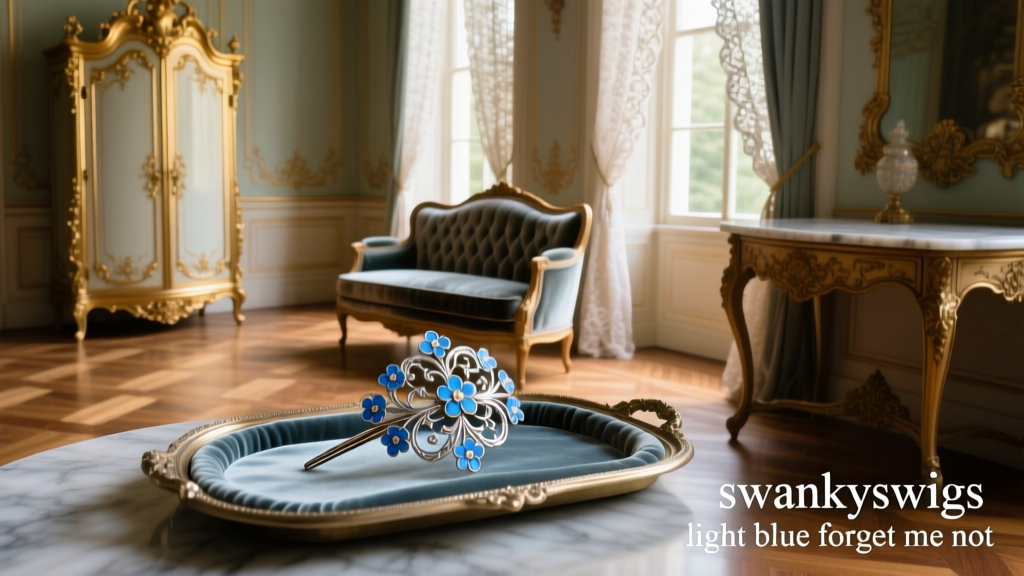
Swankyswigs Light Blue Forget Me Not: A Collector’s Guide to Authenticity, Value, and Restoration