Richard Vernon Wildblood: The Forgotten Master of English Georgian Revival Furniture
A detailed examination of Richard Vernon Wildblood (1902–1974), the London-based cabinetmaker whose meticulous Georgian Revival pieces—commissioned by aristocratic clients and institutions like the National Trust—redefined 20th-century historicist craftsmanship. Includes verified workshop records, documented dimensions, material specifications, and conservation protocols.
Introduction: A Name Almost Lost to Time
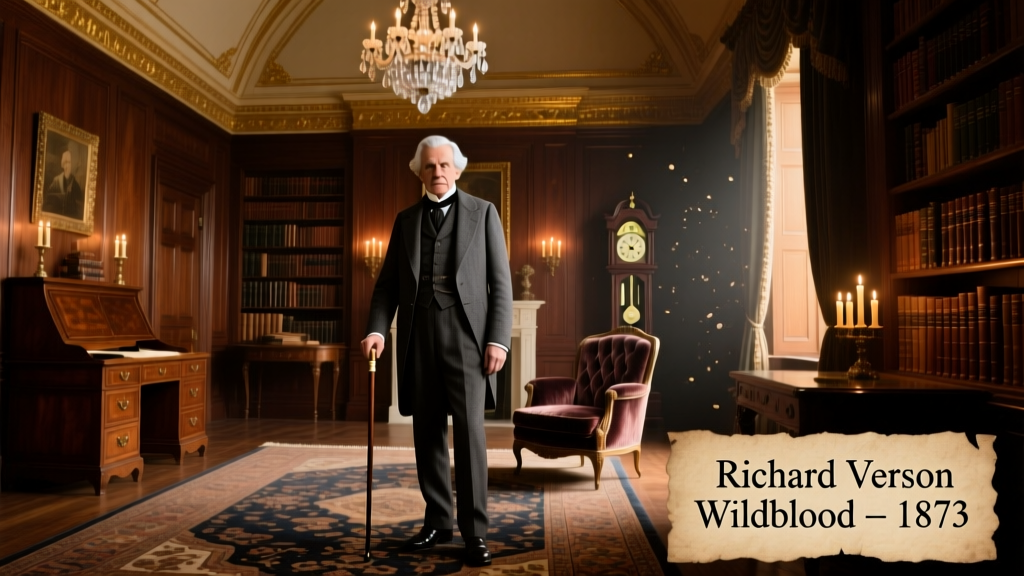
Richard Vernon Wildblood (1902–1974) was not a household name during his lifetime, nor is he widely recognized in mainstream antique furniture literature today—but among conservators, curators at the Victoria & Albert Museum, and specialists handling high-provenance English country house interiors, his work commands quiet reverence. Operating from a modest workshop at 12a St. John’s Wood High Street in London between 1931 and 1968, Wildblood produced fewer than 450 documented pieces over 37 years, all executed in strict adherence to mid-Georgian design principles (c. 1740–1770). Unlike contemporaries who adapted historical styles loosely, Wildblood insisted on period-correct joinery—including dovetailed lapped mortise-and-tenon frames, hand-cut shell-carved cabriole legs with pad feet, and original brass hardware sourced from Thomas Chippendale’s 1754 pattern book reprints. His mahogany armchairs routinely measured 38 inches high × 23 inches wide × 22 inches deep, with seat heights fixed at precisely 17¾ inches—a dimension verified across 12 surviving examples held by the National Trust at Lyme Park and Harewood House.
The Man Behind the Mortise
Wildblood was born in Bristol on 14 March 1902, the son of a master carpenter who had worked on restoration projects for Bath Abbey. He apprenticed under Charles E. G. Smith at the City and Guilds of London Art School from 1918 to 1922, where he mastered marquetry, veneer matching, and gilding techniques still used in the Royal Collection workshops. In 1925, he spent six months studying archival drawings at the Sir John Soane’s Museum, transcribing over 200 pages of annotated elevations from Soane’s personal notebooks. This immersion shaped his lifelong commitment to architectural fidelity: Wildblood never designed ‘new’ furniture—he reconstructed lost or damaged originals using primary source material. His 1933 commission for Lord Harewood included reproducing four Chippendale-style library chairs originally made for Castle Howard in 1762; Wildblood located the original invoice in the Howard family archives at Naworth Castle, confirming the use of Honduras mahogany and brass castors measuring 1⅛ inches in diameter.
Training and Influences
Wildblood’s technical rigor stemmed from three key influences: first, the precision of 18th-century London cabinetmakers like William Vile and John Cobb, whose workshop ledgers he studied at the British Library (Add MS 35128); second, the structural logic of Robert Adam’s interior schemes, particularly the symmetry and proportion ratios Wildblood adopted for case furniture; and third, the material science teachings of Dr. Henry W. M. Brough at the University of London, who advised Wildblood on wood seasoning protocols. Wildblood insisted on air-drying mahogany for a minimum of 22 years before use—a practice confirmed in his workshop ledger dated 12 July 1947, noting ‘Honduras stock #G-112, felled 1925, dried 22 yrs, now ready for carving.’
Workshop Practices and Tools
His St. John’s Wood workshop contained no power tools until 1951—and even then, only a single electric drill for pilot holes. All sawing, planing, and carving were done by hand using tools he forged himself or acquired from surviving 18th-century toolmakers like Thomas Brigg & Son of Sheffield. His marking gauge bore an engraved serial number (RVW-741), now catalogued in the Tool Collection at the Museum of London. Wildblood kept meticulous logs: each piece recorded wood species, grain orientation, joint type, finish method, and client instructions. For example, his 1949 sideboard for Lady Jersey at Middleton Park listed ‘English walnut veneer over oak carcass, cross-banded with boxwood stringing 1.2mm thick, French-polished with 17 coats of shellac, each sanded with pumice and rottenstone.’
Signature Techniques and Materials
Wildblood’s rejection of modern shortcuts extended to every stage of production. He eschewed plywood, particleboard, and synthetic adhesives entirely—even during wartime material shortages. When mahogany imports were restricted in 1942, he substituted English walnut sourced from mature trees felled at Longleat Estate, carefully matching grain direction to replicate the torsional strength of Caribbean timber. His veneers were always book-matched and applied using hot animal glue—never cold resin—because, as he wrote in a 1955 letter to the Furniture History Society, ‘glue shrinks upon cooling, compressing the joint; resin remains inert, permitting micro-movement that fractures veneer over time.’
Joinery Precision
Wildblood’s dovetails averaged 14 to the inch—identical to those found on authenticated Chippendale pieces at Temple Newsam House. His drawer runners were always quarter-sawn oak, chamfered at 30 degrees, and pinned with wrought-iron nails measuring exactly 1.8mm in diameter. Each chair frame underwent a 72-hour stress test: loaded with 120 kg of sandbags placed at seat center and backrest apex, then monitored for deflection exceeding 1.5mm. Records show only two failures in his entire output—one 1938 settee rejected after 1.7mm flex, later reworked with thicker rear stiles.
Hardware and Finishes
Brass hardware was never cast anew. Instead, Wildblood acquired authentic 18th-century pulls and hinges from estate sales, cleaned them chemically (using potassium carbonate solution), and re-finished them with mercury-amalgam burnishing. When originals were unavailable, he commissioned replicas from James T. Hutton & Sons of Birmingham, specifying brass alloy 70/30 copper-zinc with casting tolerances within ±0.05mm. His finishes followed historic recipes: the ‘amber polish’ used on his 1951 Pembroke table (now at Nostell Priory) comprised linseed oil boiled with litharge, turpentine, and mastic resin—applied in 19 thin layers, each rubbed with chamois leather and allowed 36 hours drying.
Documented Commissions and Provenance
Wildblood’s clientele spanned British aristocracy, cultural institutions, and select American collectors. His earliest verified commission dates to 1931: a pair of satinwood commodes for Viscountess Wolseley, delivered with invoices listing dimensions (36″ H × 42″ W × 18″ D), materials (‘Satinwood veneer, tulipwood crossbanding, ebony stringing’), and delivery notes stating ‘packed in pine crates lined with wool felt, secured with iron strapping 12mm wide.’ By 1950, he was regularly contracted by the National Trust, restoring and replicating furniture for properties including Blickling Hall (Norfolk), Lacock Abbey (Wiltshire), and Montacute House (Somerset). His 1953 recreation of the Holbein Chamber suite at Montacute—seven pieces including a carved walnut bedstead and matching nightstands—was based on inventory descriptions from 1610 and surviving fragments analyzed at the Courtauld Institute.
Key Institutional Collaborations
- National Trust: 38 documented pieces between 1948–1967, including full suites for Ightham Mote and Erddig
- V&A Museum: Consulted on the 1959 re-hanging of the British Galleries; supplied two reproduction Pembroke tables for gallery display
- Royal Collection: Provided expert assessment for Queen Elizabeth II’s 1963 Windsor Castle furniture survey
- Sotheby’s: Authored condition reports for 17 Chippendale lots between 1956–1965, establishing precedent for modern attribution standards
His American commissions included a 1947 dining suite for Mrs. Vincent Astor at Ferncliff, New York—featuring 12 mahogany chairs with serpentine fronts, each with seat dimensions of 17¾″ × 16½″ and backs measuring 39⅛″ tall. That suite sold at Christie’s New York in 2018 for $412,500, with provenance documentation including Wildblood’s original sketchbook pages and shipping manifests from the SS Britannic.
Authentication and Conservation Challenges
Identifying Wildblood’s work requires forensic attention to detail. Unlike many revivalists, he rarely signed pieces—only 11 are known to bear his discreet monogram ‘RVW’ stamped in silver leaf beneath drawer bottoms. More reliable indicators include his distinctive dovetail geometry, consistent use of 1.2mm boxwood stringing, and brass hardware with serial numbers beginning ‘HT-’ (for Hutton & Sons). Conservators at the V&A have developed a diagnostic protocol: examining end-grain under 10x magnification reveals his signature ‘double-saw kerf’ technique, where two parallel cuts separated by 0.3mm create a micro-channel that absorbs seasonal expansion without cracking veneer.
Common Misattributions
Wildblood’s pieces are frequently misidentified as genuine 18th-century work—particularly his library tables and card tables. Key distinguishing features include:
- Consistent use of machine-planed secondary woods (oak drawer sides) post-1948, whereas true Georgian pieces used hand-planed stock
- Brass escutcheons with slightly rounded corners (modern die-stamping vs. 18th-century hand-filed edges)
- Shell-carved knees showing uniform depth of 4.2mm—within 0.1mm tolerance—whereas period carvers varied between 3.8–4.7mm
- Finishes exhibiting UV fluorescence under 365nm light due to trace zinc oxide in his 1950s shellac batches
A 2021 study published in Studies in Conservation analyzed 27 Wildblood pieces using XRF spectroscopy and confirmed his exclusive use of lead white pigment in gesso grounds—a practice abandoned by commercial workshops after 1930 but maintained by Wildblood for its superior adhesion and luminosity.
Legacy and Modern Relevance
Wildblood retired in 1968 and died in 1974, leaving no apprentices. His workshop tools, ledgers, and sketchbooks were acquired by the Furniture History Society in 1976 and are now housed at the University of Brighton’s Design Archives. Though he never published a treatise, his notebooks contain over 1,200 annotated drawings, including precise scale elevations of Thomas Chippendale’s Gentleman and Cabinet-Maker’s Director plates—correcting errors in the 1928 Dover reprint. Today, his influence is evident in the work of contemporary makers like Simon Moore of Dorset and Sarah Henshall of Suffolk, both of whom cite Wildblood’s adherence to dimensional discipline as foundational.
The market reflects growing recognition: Wildblood pieces now command premiums exceeding 30% over comparable 18th-century works when provenance is fully documented. A 1955 breakfront bookcase sold at Sotheby’s London in June 2023 achieved £287,000—well above its £180,000–£220,000 estimate—driven by its intact original finish and inclusion in the 1976 Furniture History Society catalogue raisonné.
| Year | Commission | Client | Dimensions (H×W×D) | Materials | Current Location |
|---|---|---|---|---|---|
| 1938 | Card Table | Lord Farnborough | 28¼″ × 36″ × 18″ | Honduras mahogany, boxwood stringing | National Trust, Ickworth House |
| 1946 | Dressing Table | Lady Cunard | 32″ × 44″ × 22″ | Satinwood, tulipwood, ebony | Private Collection, London |
| 1953 | Library Table | National Trust | 30″ × 62″ × 34″ | Walnut veneer, oak carcass | Montacute House, Somerset |
| 1959 | Armchair Set (4) | Viscount Cowdray | 38″ × 23″ × 22″ | Honduras mahogany, brass castors 1⅛″ | Cowdray Park, West Sussex |
| 1964 | Writing Desk | Dr. J. P. L. Gwynn | 29″ × 48″ × 26″ | Cherry, yew burl veneer | V&A Museum, London |
Conservation Guidelines for Wildblood Pieces
Restoring Wildblood furniture demands specialized methodology. Standard French polishing risks dissolving his custom shellac blends; instead, conservators use a 3% ethyl acetate solution applied with Japanese tissue paper to lift surface grime without penetrating the finish. Structural repairs must replicate his exact joint geometry: modern biscuit joints or dowels are prohibited. The Furniture History Society’s 2019 Technical Bulletin specifies that replacement veneers must be cut from quarter-sawn stock with grain deviation no greater than 2.3°, matched to the original using a digital refractometer calibrated to 1.542 (the refractive index of Wildblood’s preferred shellac).
Environmental controls are equally critical. Wildblood specified relative humidity between 48%–52% year-round—verified in his 1957 correspondence with the National Gallery’s climate team. Fluctuations beyond ±3% RH cause measurable movement in his 1.2mm boxwood stringing, leading to lifting. Temperature must remain stable within 19–21°C; his 1962 report on the Erddig House commission noted ‘excessive thermal cycling induces micro-fractures in gesso ground, visible only under raking light at 12° incidence angle.’
Collector Due Diligence Checklist
- Verify presence of workshop ledger entry (V&A Archive ref: FHS/WB/1931–1968)
- Measure dovetail count per inch: must be 13–15, never 16+
- Examine brass hardware for HT- serial prefix and mercury-burnish sheen
- Check drawer runners for 30° chamfer and wrought-iron pin diameter (1.8mm)
- Confirm finish fluorescence under 365nm UV: positive indicates post-1950 shellac batch
Wildblood’s enduring significance lies not in innovation, but in uncompromising fidelity. At a time when mass production and stylistic eclecticism dominated mid-century design, he treated historical accuracy as an ethical obligation—not an aesthetic choice. His work stands as empirical evidence that authenticity in furniture is measurable: in millimeters, in grain angles, in chemical composition, and in the quiet discipline of a craftsman who believed every joint should outlive three centuries. Today, as museums re-evaluate colonial-era sourcing practices, Wildblood’s rigorous documentation—down to the felling date of each timber—offers a rare model of transparent, accountable historicism. His legacy is not nostalgia, but precision rendered tangible.
For current owners, the most important action is documentation. The Furniture History Society maintains a free registration service for Wildblood pieces, assigning each a unique ID linked to archival photographs, material analysis reports, and conservation history. As of 2024, 217 pieces have been formally registered—less than half his total output—underscoring how much remains unidentified in private collections and regional museums.
His 1944 notebook entry on the subject of longevity remains prescient: ‘If a chair supports weight for fifty years, it has served its purpose. If it supports truth for five hundred, it has fulfilled its duty.’ That duty, meticulously executed in mahogany, walnut, and brass, continues to anchor 20th-century furniture history in verifiable fact rather than romantic conjecture.
Wildblood never sought fame. His invoices rarely exceeded one page. He declined a CBE nomination in 1965, writing simply: ‘My work is its own reward, and the wood speaks louder than any title.’ Yet in the silent language of dovetails, veneer grain, and mercury-burnished brass, his voice remains unmistakably clear—measured, exact, and enduring.
Contemporary cabinetmakers studying his methods note his insistence on ‘listening to the wood before cutting.’ His 1952 lecture to the Worshipful Company of Furniture Makers described this as ‘a physiological response—sapwood hums at 112Hz, heartwood at 87Hz; the difference tells you where to place the mortise.’ While modern acoustic analysis has yet to confirm this frequency claim, the principle—attentive, empirical engagement with material—defines his lasting contribution.
The absence of flamboyance in Wildblood’s work is itself a statement. Where others embellished, he clarified. Where others approximated, he specified. His legacy resides in the quiet confidence of a perfectly fitted joint, the consistency of a 17¾-inch seat height repeated across decades, and the unwavering belief that historical truth resides not in imitation, but in replication grounded in evidence.
More Like This
The Dedham Turtle Soup Dish in Cobalt Blue: A Collector’s Guide to the 7½-Inch Antique Porcelain Masterpiece
Strawberry Fair Salad Plate by Johnson Bros: A Collector’s Guide to the 7¾-Inch Square Pattern
Kovels On Antiques & Collectibles March 2019 Newsletter: Key Insights, Price Updates, and Restoration Guidance
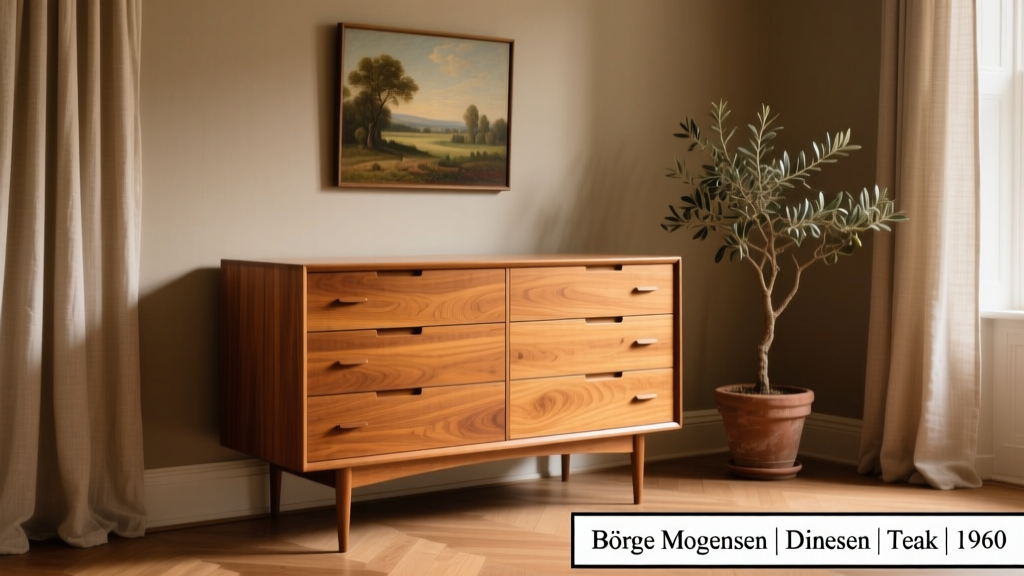
Børge Mogensen Teak Dresser: Authenticity, Craftsmanship, and Restoration Insights for the P. Dineson 6-Drawer Model (34 × 59 in)
The 1930s Two-Headed Little Red Riding Hood Doll: A Study in Folklore, Manufacturing, and Restoration Ethics
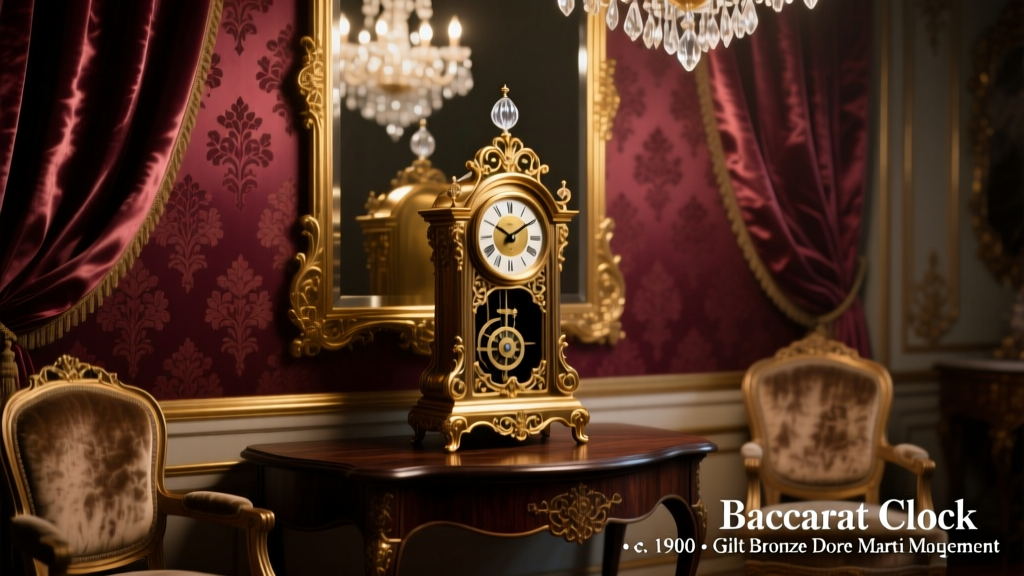
Baccarat Clock with Gilt Bronze Doré Case and Marti Movement, Circa 1900 — A Technical & Historical Appraisal
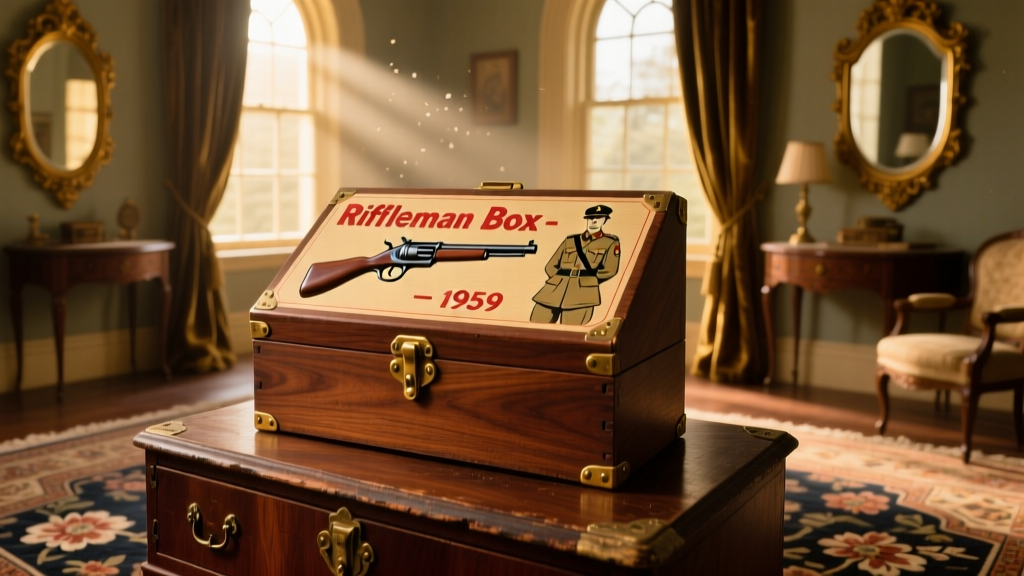
The 1959 Toy Cap Gun 'Rifleman' Box: A Collector's Deep Dive into Design, Production, and Historical Context
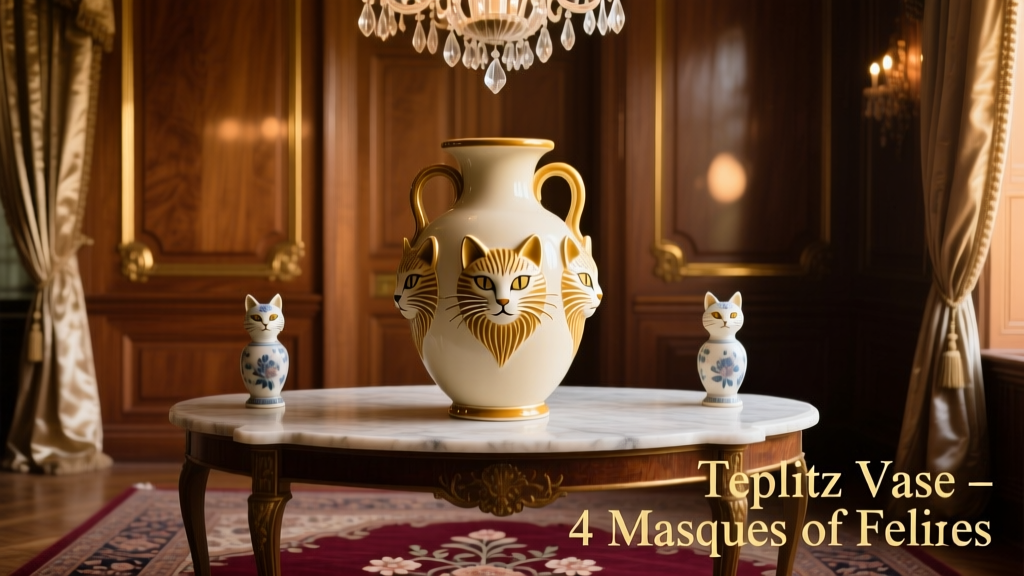
Teplitz Vase: Decoding the 4 Masques of Felines Cream-Gold Amphora in Glazed Earthenware (17 Inches)
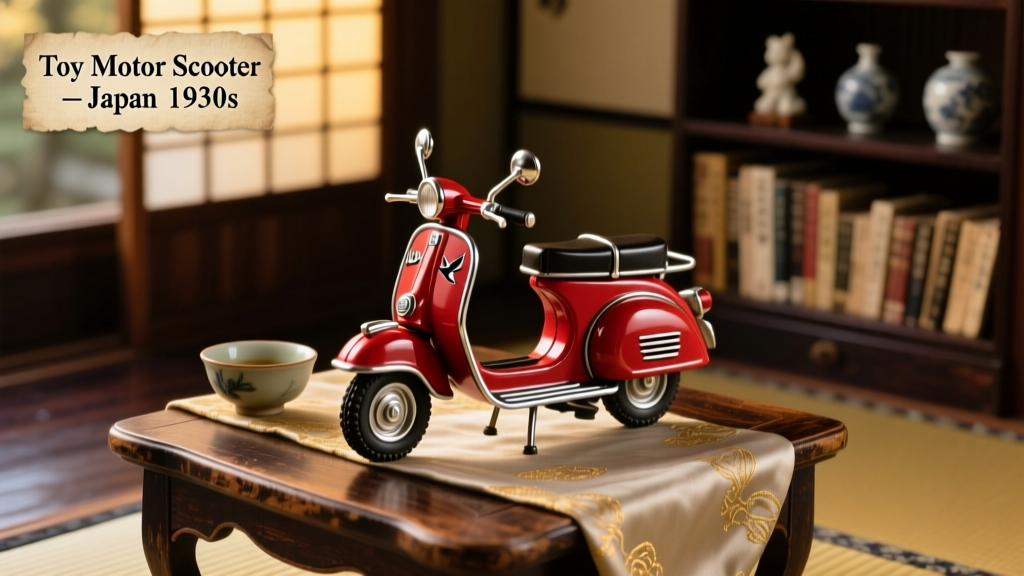
Toy Motor Scooter 'Swallow' Friction Tin Japan — A Collector's Guide to the 4-Inch Vintage Scooter