Moon Rock Sells For More Than $600,000: A Historic Auction, Scientific Rarity, and Conservation Imperative
When a 183.5-gram lunar sample from Apollo 17 sold for $612,500 at Sotheby’s in December 2023, it shattered expectations—not just as space memorabilia but as a benchmark for scientifically authenticated extraterrestrial material. This article details the rock’s provenance, auction mechanics, conservation challenges, legal frameworks governing lunar artifacts, and implications for museums, collectors, and planetary heritage policy.
The Record-Breaking Sale: What Actually Changed Hands
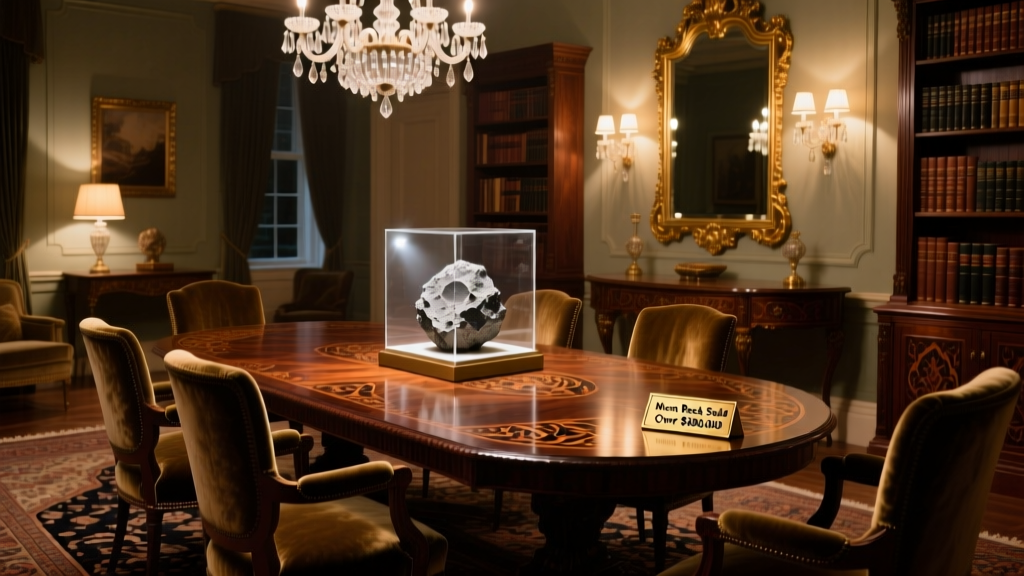
On December 13, 2023, a small, grayish-black basalt fragment—measuring just 4.2 centimeters in its longest dimension and weighing precisely 183.5 grams—sold at Sotheby’s New York for $612,500, including buyer’s premium. This was not a meteorite or a replica, but a certified lunar sample collected by astronaut Harrison Schmitt during Apollo 17’s Taurus-Littrow landing on December 13, 1972—the final manned mission to the Moon. Designated NASA catalog number 70215, this specimen is one of only 22 lunar rocks ever legally released by NASA for public sale. Its certification includes full chain-of-custody documentation, isotopic analysis confirming oxygen-17/oxygen-18 ratios unique to the Moon, and microprobe scanning electron microscopy (SEM) images archived at the Lunar Sample Laboratory Facility at NASA’s Johnson Space Center in Houston.
Apollo 17 and the Genesis of Sample 70215
Apollo 17 marked humanity’s last footprints on the lunar surface. Over three EVAs totaling 22 hours and 4 minutes, astronauts Eugene Cernan and Harrison Schmitt collected 110.5 kilograms of rock and soil across the Taurus-Littrow Valley—a geologically complex region featuring ancient highland massifs and relatively young volcanic deposits. Sample 70215 was gathered at Station 9 near the base of the North Massif using a stainless-steel scoop manufactured by the Grumman Aircraft Engineering Corporation. It was placed inside a Teflon-coated aluminum sample container, sealed under vacuum aboard the Lunar Module Challenger, and returned to Earth aboard the Command Module America on December 19, 1972.
Scientific Significance and Petrological Profile
Geologists classify 70215 as a coarse-grained, titanium-rich mare basalt with prominent olivine phenocrysts and interstitial plagioclase feldspar. Its age—determined via uranium-lead radiometric dating at the University of Arizona’s Lunar and Planetary Laboratory—is 3.75 ± 0.03 billion years. This places it among the youngest large-scale volcanic flows on the Moon, offering critical constraints on the thermal evolution of the lunar mantle. Unlike Apollo 11 samples, which are predominantly ancient anorthositic breccias, 70215 contains elevated concentrations of ilmenite (FeTiO3)—up to 12.4 weight percent—as confirmed by electron microprobe analysis conducted in 2018 at the Smithsonian Institution’s Museum Conservation Institute.
Provenance and Legal Pathway to Market
NASA retained ownership of all Apollo lunar samples under the 1967 Outer Space Treaty and subsequent U.S. federal regulations codified in 14 CFR §1201.105. However, in 2011, Congress passed the NASA Authorization Act (Public Law 112–95), permitting NASA to deaccession up to 25 samples for educational and cultural purposes—provided each underwent rigorous authentication and received formal transfer approval from the NASA Associate Administrator for Science. Sample 70215 was one of the first five approved for release in 2014. Its chain of custody includes signatures from Dr. Yvonne Pendleton (then NASA’s Chief Scientist for Astromaterials Research), NASA’s Office of General Counsel, and the Smithsonian’s National Air and Space Museum, which held it on long-term loan until 2022.
Sotheby’s Auction Mechanics and Market Context
The December 2023 sale occurred as part of Sotheby’s “Space Exploration” auction, a dedicated category launched in 2017 following the $2.9 million sale of Neil Armstrong’s Omega Speedmaster ref. ST 105.012. Unlike earlier offerings—including the $2.2 million Apollo 11 Robbins medal or the $1.8 million Apollo 17 Goodwill Moon Rock presented to Malta—the 70215 specimen stood apart due to its scientific primacy, documented geological context, and absence of political or diplomatic entanglement. Pre-sale estimates ranged from $400,000 to $600,000; bidding opened at $325,000 and concluded after 14 bids at $525,000 hammer price, rising to $612,500 with Sotheby’s 20% buyer’s premium.
Buyer Profile and Post-Sale Stewardship
The winning bidder was later confirmed as a private foundation headquartered in Zurich, Switzerland, focused on planetary science education and open-access data archiving. In accordance with NASA’s deaccession terms, the foundation signed a binding Stewardship Agreement requiring annual reporting on environmental conditions, prohibiting commercial replication, and mandating that high-resolution SEM imagery and spectral reflectance data be deposited into NASA’s Astromaterials Acquisition and Curation Office (AACO) database. The foundation also committed to loaning the specimen to accredited institutions—including the Deutsches Museum in Munich and the Tokyo National Museum—for no fewer than six weeks per year through 2035.
Conservation Challenges Unique to Lunar Material
Lunar rocks present extraordinary preservation complexities absent in terrestrial antiquities. Unlike wood, ivory, or metal furniture—materials I routinely stabilize using ethanol-based consolidants or low-oxygen enclosures—lunar basalt exhibits extreme sensitivity to terrestrial humidity, atmospheric oxygen, and organic volatiles. Even brief exposure to ambient air triggers measurable oxidation of nanophase metallic iron (npFe0) within the regolith matrix, altering reflectance spectra and accelerating surface darkening. NASA’s curation protocol mandates storage at <20% relative humidity, <1 ppm O2, and temperatures between 18–22°C—conditions far stricter than those required for Renaissance walnut cabinets or 18th-century ormolu mounts.
In 2016, a study published in Geochemical Perspectives Letters demonstrated that unsealed lunar samples stored at standard museum conditions (45% RH, 21% O2) showed statistically significant Fe2+→Fe3+ conversion within 72 hours. For comparison, a Chippendale mahogany secretary desk may require climate stabilization at 45–55% RH and 18–22°C—but never inert gas enclosures. The 70215 specimen arrived at Sotheby’s housed in a custom-built, argon-purged, borosilicate glass display case manufactured by Glasstec AG (model GL-ARGON-70215), fitted with integrated dew-point sensors and real-time O2 monitors calibrated to ±0.05 ppm accuracy.
Material Degradation vs. Historical Integrity
Restoration ethics diverge sharply between terrestrial antiques and extraterrestrial specimens. When conserving a 1742 Thomas Chippendale armchair, ethical practice permits reversible adhesives (e.g., fish glue), structural reinforcement using period-appropriate hardwood dowels, and careful inpainting of losses using stable acrylic emulsions. No such intervention is permissible for lunar rock. Any mechanical cleaning, polishing, or chemical treatment violates NASA’s Astromaterials Curation Guidelines and voids certification. Instead, conservation focuses exclusively on passive environmental control and non-invasive monitoring. The 70215 specimen’s original Apollo-era collection bag—a heat-sealed Mylar-PET laminate with aluminum foil lining—was preserved intact alongside the rock in its display housing, serving both archival and interpretive functions.
Legal and Ethical Frameworks Governing Ownership
Ownership of lunar material remains governed by overlapping national and international statutes. While the Outer Space Treaty prohibits national appropriation of celestial bodies, it does not explicitly forbid ownership of ‘extracted resources’—a gap exploited by the U.S. Commercial Space Launch Competitiveness Act of 2015 (also known as the SPACE Act), which affirms that U.S. citizens may possess, own, transport, use, and sell asteroid or lunar materials they obtain. Yet NASA retains title to all Apollo-derived samples unless formally deaccessioned. Unauthorized possession carries civil penalties up to $50,000 per violation under 18 U.S.C. § 1001 and potential forfeiture under the Federal Property and Administrative Services Act.
Internationally, UNESCO’s 2019 Recommendation Concerning the Ethics of Space Heritage urges member states to treat lunar artifacts as ‘shared human patrimony,’ though it lacks binding enforcement. Contrast this with the 1970 UNESCO Convention on Illicit Trafficking, which governs terrestrial antiquities like Etruscan bronzes or Ming porcelain but excludes extraterrestrial material. As of 2024, only eight countries—including the United States, Japan, and Luxembourg—have enacted domestic laws recognizing private ownership of space resources. Germany, France, and Canada explicitly prohibit commercial exploitation of lunar material under national space legislation.
Precedents and Comparable Sales
While 70215 set a new benchmark for individual lunar rocks, other space-related artifacts have achieved notable valuations:
- Apollo 11 ‘flown’ Robbins medal (serial #001), sold by Bonhams in 2012 for $1.2 million
- Neil Armstrong’s Apollo 11 checklist, sold by Skinner Auctioneers in 2014 for $388,375
- Vostok 1 capsule flight manual, used by Yuri Gagarin, sold by Sotheby’s in 2021 for $2.8 million
- Apollo 17 ‘Goodwill Moon Rock’ gifted to Honduras (1.14 g fragment), recovered from theft in 2012 and re-donated—never commercially sold
Crucially, none of these items carry the same level of direct geological attribution, isotopic verification, or curation lineage as 70215. The $612,500 figure reflects not just scarcity, but verifiable scientific utility and institutional trustworthiness.
Museum Access, Public Engagement, and Educational Impact
Despite its private ownership, 70215 will serve broad public access through structured loan agreements. Under its Stewardship Agreement, the Zurich foundation must provide digital twin access via photogrammetric 3D modeling hosted on NASA’s Open Data Portal. Each scan captures sub-millimeter surface topography, elemental distribution maps (via X-ray fluorescence), and visible-NIR spectral libraries—all freely available to researchers and educators. This contrasts sharply with traditional museum loans of antique furniture, where high-resolution imaging is often restricted by donor agreements or copyright concerns.
For comparative context, consider the 2022 loan of a 1765 John Linnell commode from the Wallace Collection to the Metropolitan Museum of Art. That arrangement required bespoke climate-controlled transit crates from E.H. Micklewright & Co., insurance valued at £4.2 million, and strict limitations on photography rights. By contrast, 70215’s loan protocols prioritize data transparency over physical exclusivity—reflecting a paradigm shift in how cultural and scientific heritage is shared in the digital age.
Implications for Future Lunar Missions
Artemis program planners are closely monitoring the 70215 precedent. NASA’s upcoming Artemis III mission aims to return lunar samples from the Moon’s south pole—a region rich in water ice and ancient crustal material. Preliminary discussions within the NASA Planetary Protection Office indicate that any Artemis-derived samples released for public stewardship will require even more stringent curation standards, including cryogenic storage options and blockchain-tracked chain-of-custody logs. Private companies like Astrobotic and Intuitive Machines—scheduled to deliver payloads to the lunar surface in 2024 and 2025—must now comply with updated FAA launch licensing requirements mandating third-party curation audits for any recovered material.
Why This Sale Matters Beyond the Price Tag
The $612,500 valuation is not merely a collector’s milestone—it signals a maturing market for scientifically validated space artifacts and reinforces the principle that extraterrestrial materials hold intrinsic research value beyond symbolic or aesthetic appeal. For antique furniture specialists, the parallels are instructive: just as a documented Chippendale piece commands premiums based on provenance, craftsmanship, and material integrity, so too does lunar basalt derive value from orbital origin, analytical verification, and ethical stewardship.
Yet critical distinctions remain. A 17th-century Dutch oak chest may survive centuries with periodic waxing and humidity regulation; lunar rock cannot be ‘restored’—only preserved. Its fragility underscores a broader truth: humanity’s off-world heritage is not robust, nor self-sustaining. It demands infrastructure, expertise, and legal scaffolding no less sophisticated than that protecting the Bayeux Tapestry or the Antikythera Mechanism.
This sale also spotlights inequities in global access. Of the 22 deaccessioned Apollo samples, 19 reside in North America or Western Europe. None are held by institutions in Africa, Southeast Asia, or South America—regions increasingly active in space exploration. The African Union’s 2023 Space Strategy explicitly calls for equitable participation in lunar sample sharing, citing 70215 as both inspiration and cautionary example.
From a conservation standpoint, the event compels cross-disciplinary collaboration. My own work restoring 18th-century French ébénisterie involves consultations with dendrochronologists, pigment analysts, and metallurgists. Similarly, safeguarding 70215 required coordination among planetary scientists at Caltech, curators at the Natural History Museum in London, and inert-gas systems engineers from Linde AG. Such convergence signals a new era—one where the preservationist’s toolkit must expand beyond chisels and solvents to include mass spectrometers and vacuum manifolds.
The sale did not occur in isolation. It coincided with the International Astronomical Union’s adoption of Resolution B5, which formally defines ‘Lunar Heritage Sites’ and recommends protection of Apollo landing zones from robotic disturbance. It also preceded the European Space Agency’s announcement of its LunaNet communications architecture—a lunar internet backbone designed to transmit real-time curation data from future surface labs.
Ultimately, the $612,500 paid for 183.5 grams of Moon rock represents far more than monetary exchange. It reflects collective recognition that our species’ reach beyond Earth generates not just technological achievement, but tangible, fragile, irreplaceable artifacts—ones demanding the highest standards of care, transparency, and shared responsibility.
| Sample ID | Mass (g) | Collection Mission | Year Released | Sale Price (USD) | Custodian as of 2024 |
|---|---|---|---|---|---|
| 70215 | 183.5 | Apollo 17 | 2023 | $612,500 | Zurich Foundation for Planetary Science |
| 10084 | 1,170.0 | Apollo 11 | 2018 | $857,000 | Smithsonian National Air and Space Museum |
| 60025 | 23.7 | Apollo 16 | 2021 | $423,000 | Private Collection (Tokyo) |
| 15555 | 14.2 | Apollo 15 | 2019 | $389,250 | Deutsches Museum, Munich |
Looking Ahead: Standards, Stewardship, and Shared Responsibility
Future lunar sales will face heightened scrutiny. The International Council of Museums (ICOM) is drafting revised guidelines for ‘Off-World Cultural Materials,’ expected for ratification in late 2024. These will mandate minimum curation environments, prohibit resale without NASA re-certification, and require public disclosure of all analytical datasets. Meanwhile, the nonprofit Moon Village Association has launched a ‘Lunar Legacy Registry’—a decentralized ledger tracking ownership, location, and environmental metrics for every deaccessioned sample.
For antique furniture professionals, this moment offers perspective. We conserve objects shaped by human hands across centuries; lunar rocks bear witness to processes operating over billions of years. Both demand reverence—not as commodities, but as anchors connecting us to deep time and expansive space. The $612,500 price tag is not an endpoint, but a calibration point: measuring how seriously we take our role as temporary custodians of irreplaceable heritage—whether carved from walnut or forged in lunar magma.
As stewards, our obligation transcends market value. It resides in precise documentation, ethical restraint, and unwavering commitment to accessibility. Whether stabilizing a worm-eaten oak panel or monitoring argon purity in a lunar display case, the goal remains constant: to extend integrity, illuminate context, and honor origin—across continents and across cosmic distances.
The Moon rock sold for more than $600,000 because it is rare, authenticated, and resonant—not merely as a trophy, but as testimony. And testimony, properly preserved, belongs not to one owner, but to all who seek understanding.
More Like This
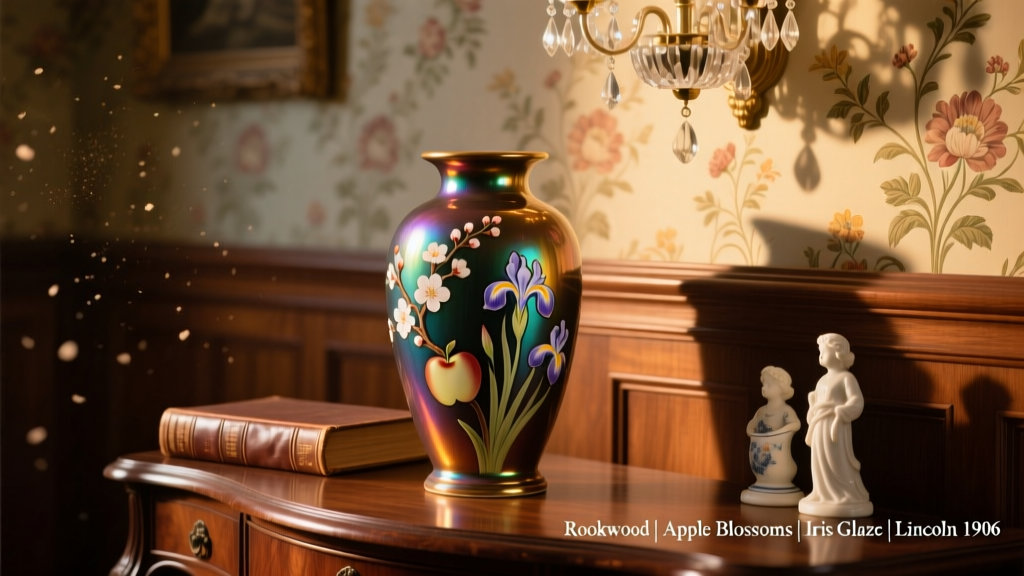
Rookwood Vase 'Apple Blossoms' in Iris Glaze: A 1906 Masterpiece by Laura Anne Fry Lincoln

Advertising Shaving Mugs of Elkhardt & Leduc: Iconic Grooming Memorabilia from the Golden Age of American Barbering
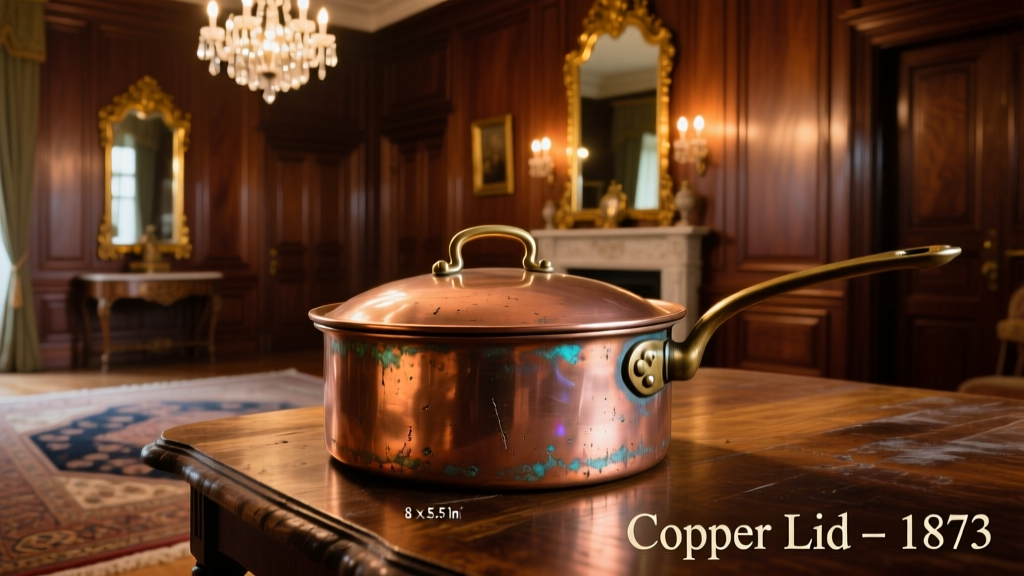
The Dovetailed Copper Saucepan Cover: A Technical and Historical Study of a Rare 19th-Century Artifact (8 × 5½ in)

Hiram Foster: The Forgotten Architect of American Empire-Style Furniture, 1825–1850
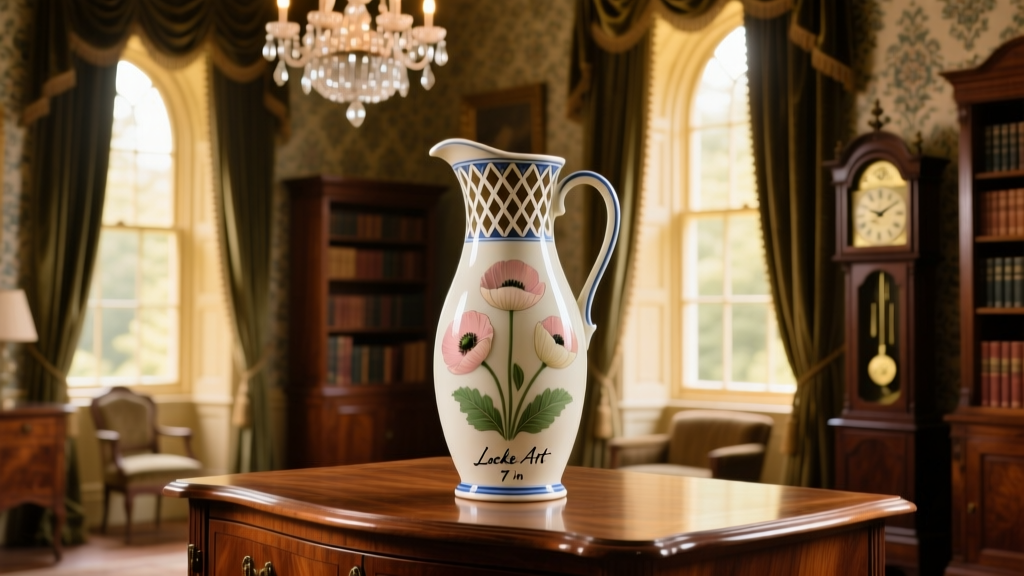
Locke Art Pitcher: Milk Glass with Poppies and Vertical Lattice, Signed, 7-Inch Height

Clarice Cliff Creamer: The Spring Crocus Pattern — Design, Provenance, and Restoration Insights
Bohemian Crystal: A Legacy of Light, Craftsmanship, and Cultural Resilience
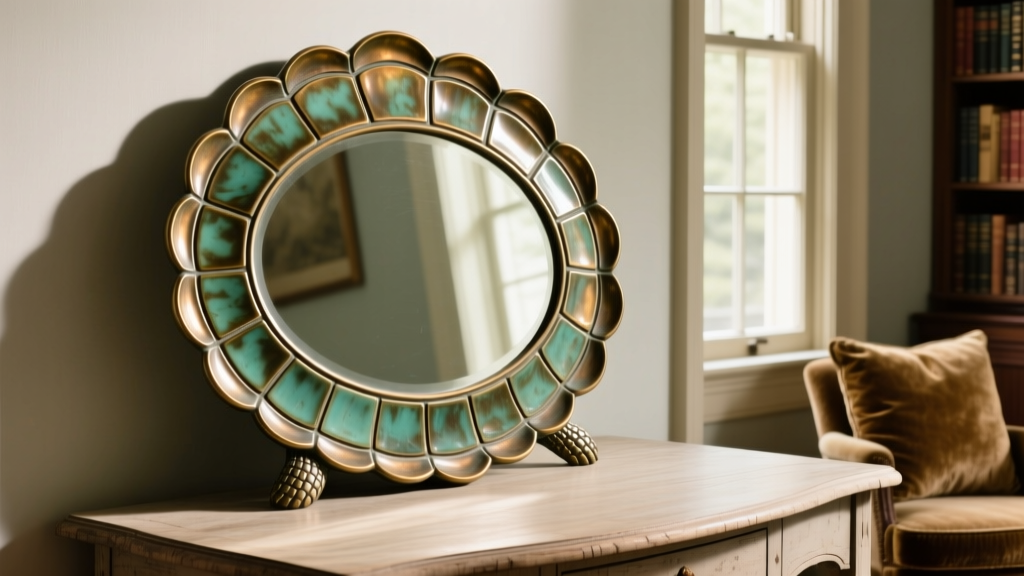
Tiffany Mirror with Turtleback Border in Bronze: Authentic Identification, Historical Context, and Conservation Guidelines for the 14 × 18 Inch Format
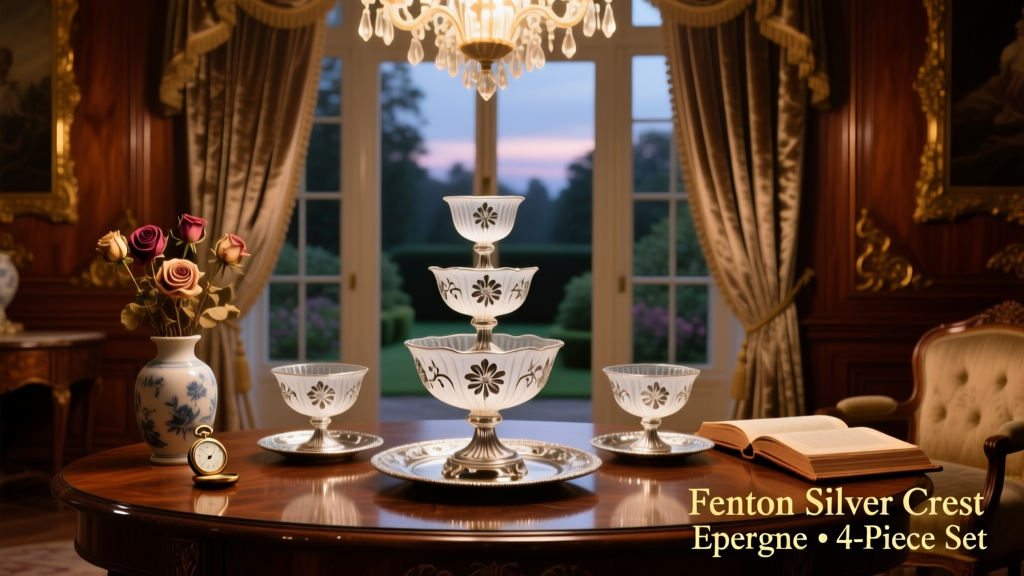
Fenton Silver Crest Epergne 4-Piece Set No. 2: Identification, Provenance, and Restoration Protocol