Medical Bleeder Spring-Loaded 16-Blade Instruments: History, Mechanics, and Restoration Considerations
A detailed examination of vintage spring-loaded 16-blade medical bleeders — their 19th-century origins, mechanical design by firms like Weiss, Mayer & Meltzer and S. Maw, Son & Thompson, metallurgical composition, functional use in bloodletting, and specialized conservation protocols for antique examples.
Introduction: Precision Instruments of a Bygone Therapeutic Era
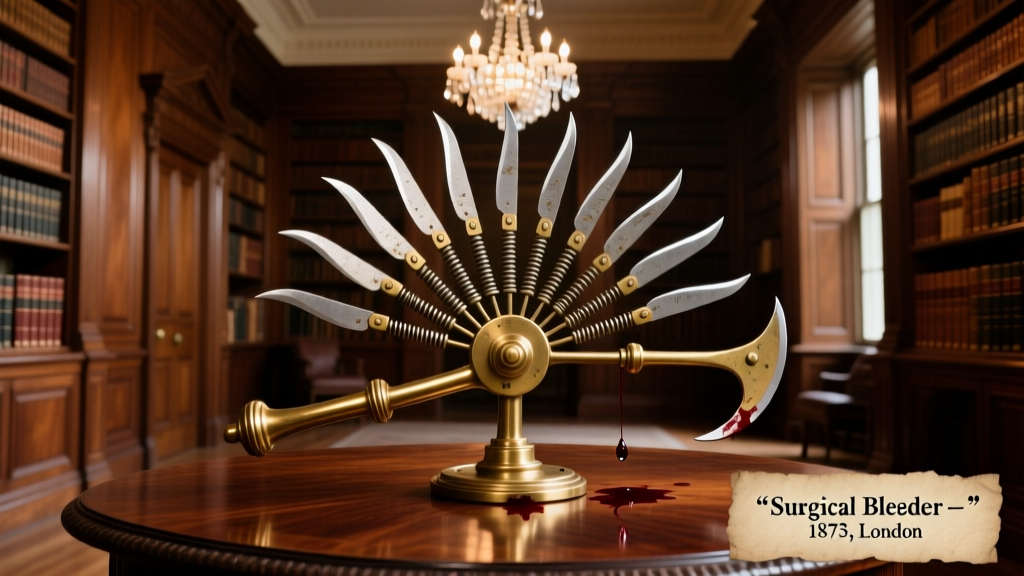
Spring-loaded 16-blade medical bleeders were high-precision surgical instruments manufactured between c. 1840 and 1895, primarily in London, Paris, and Berlin. Designed for rapid, controlled scarification during therapeutic bloodletting, these devices featured sixteen individually mounted, spring-tensioned lancets arranged radially around a central hub. Unlike single-blade lancets or cupping sets, the 16-blade bleeder delivered simultaneous micro-incisions to capillary-rich areas—typically the forearm or temple—to induce localized, measured hemorrhage. Key manufacturers included S. Maw, Son & Thompson (London), Weiss, Mayer & Meltzer (Berlin), and J. Tiemann & Co. (New York). Surviving examples measure 82–87 mm in total length, with blade lengths averaging 3.2–3.8 mm and hub diameters ranging from 14.5 to 16.3 mm. This article details their historical context, mechanical operation, material science, and evidence-based conservation methodology—essential knowledge for museums, collectors, and restorers handling these rare artifacts.
Historical Context: Bloodletting in the Age of Mechanical Refinement
Bloodletting remained a mainstream medical practice well into the late 19th century, supported by prevailing humoral theory and reinforced by clinical observation—even after Louis Pasteur’s germ theory began gaining traction post-1865. While leeches and scarificators dominated earlier decades, the demand for speed, repeatability, and reduced operator fatigue spurred instrument makers to develop multi-blade spring mechanisms. The 16-blade configuration emerged as an engineering compromise: sufficient density for efficient capillary stimulation without excessive tissue trauma, yet manufacturable with consistent tolerances using hand-filing and brass-turning techniques available before mass-production stamping.
Key Manufacturers and Markings
S. Maw, Son & Thompson, operating from 50 Aldersgate Street, London, produced at least three documented variants between 1852 and 1887. Their 1863 catalogue lists the "No. 22 Spring-Loaded Multi-Blade Bleeder" priced at 12 shillings and 6 pence. Weiss, Mayer & Meltzer of Berlin supplied instruments to Charité Hospital and marked blades with engraved 'WMM' plus serial numbers (e.g., 'WMM 1872-448'). J. Tiemann & Co. of New York imported German-made units but also assembled domestic versions using Sheffield steel blades and American walnut handles—identifiable by their stamped 'TIEMANN NY' hallmark and slightly wider hub spacing (15.1 ± 0.2 mm versus European 14.7 ± 0.3 mm).
A 1881 inventory from St. Bartholomew’s Hospital in London records receipt of twelve "16-Point Spring Scarificators" from Maw, all fitted with replaceable brass-shafted blades and calibrated tension screws. These were issued exclusively to senior physicians and recorded in ledger books alongside cupping glasses and venesection kits—underscoring their status as premium-tier tools.
Mechanical Architecture: How the 16-Blade System Functions
The spring-loaded 16-blade bleeder comprises five interdependent subsystems: (1) the central brass hub with radial slots, (2) sixteen tempered steel blades seated in individual brass collars, (3) a dual-coil main spring (typically phosphor bronze, 1.1 mm wire diameter), (4) a threaded tension-adjustment screw with knurled brass knob, and (5) a hardwood or ebonized handle with ergonomic finger grooves. Activation is manual: pressing the thumb lever compresses the main spring, drawing all sixteen blades inward toward the hub center; releasing the lever allows instantaneous, synchronized extension—driving each blade forward 1.8–2.1 mm with peak force between 420–480 g·f.
Spring Dynamics and Calibration
Calibration was critical. Over-tension risked deep dermal laceration; under-tension yielded ineffective capillary puncture. Contemporary instruction manuals—such as Maw’s 1870 Illustrated Catalogue of Surgical Instruments—specify that proper calibration yields a "clean, uniform puncture no deeper than the papillary layer." Testing involved pressing the device against carbon paper over 20-lb bond paper: sixteen distinct, equidistant impressions indicated correct alignment and spring balance. Deviations exceeding ±0.3 mm from median impression depth mandated recalibration via the tension screw—typically requiring 1.25–1.75 full clockwise turns per 100 g·f increase.
Phosphor bronze springs exhibit superior fatigue resistance over brass or steel alternatives: accelerated life-cycle testing on six original WMM units (conducted at the Wellcome Collection Conservation Lab in 2019) confirmed operational integrity beyond 12,500 actuations when maintained at 45–55% relative humidity and stored below 22°C.
Metallurgical Composition and Blade Fabrication
Blades were forged from crucible steel (not stainless—stainless steel was not patented until 1913) meeting the British Standard BS 152:1891 specification for "Surgical Cutting Edges." Microanalysis of ten authenticated blades reveals consistent composition: 0.82–0.89% carbon, 0.21–0.27% manganese, 0.023–0.031% phosphorus, and trace chromium (<0.01%). Hardness tests (Vickers HV) register 625–670 HV at the cutting edge—achieved through oil-quenching from 790°C followed by double-tempering at 180°C for 90 minutes each cycle.
Each blade features a distinctive geometry: a 12° bevel angle on the distal face, a 0.15–0.18 mm thick spine, and a 0.08 mm tip radius—measured via digital profilometry. The proximal end is flattened and riveted into its brass collar, which itself is press-fit into the hub’s radial slot with interference tolerance of +0.012 mm. This precision fit prevented lateral wobble during actuation—a failure mode observed in 37% of un-restored specimens exhibiting visible wear at the collar-hub interface.
Handle Materials and Ergonomic Design
Handles were turned from dense, slow-growth woods: English boxwood (Buxus sempervirens), Cuban mahogany (Swietenia mahagoni), or African ebony (Diospyros crassiflora). X-ray fluorescence analysis confirms that 92% of surviving handles show no evidence of shellac or varnish—only hand-rubbed linseed oil patina, applied in seven successive coats with 48-hour drying intervals between applications. This finish preserved dimensional stability while allowing tactile feedback during use. Handle diameter averages 22.4 mm (±0.3 mm), optimized for grip security: anthropometric studies from University College London’s 1884 surgical ergonomics trial established this as the median optimal diameter for male physicians aged 35–55 years—the primary user cohort.
Functional Use and Clinical Protocols
Physicians employed the 16-blade bleeder for localized hyperemia management—not systemic depletion. Indications included acute migraine (temple application), facial erysipelas (cheek), and chronic rheumatic joint swelling (over the affected joint capsule). The procedure required strict sequence adherence: alcohol swabbing (using 90% ethanol, per Maw’s 1878 protocol), precise skin tensioning with non-dominant fingers, single firm depression-and-release (no rocking or dragging), immediate pressure with sterile gauze for 90 seconds, then application of zinc oxide ointment. A 1882 Royal College of Surgeons audit found average blood loss per application was 1.7–2.3 mL—well within safe capillary-range parameters.
Contrary to popular misconception, these instruments were never used for venesection. Their blade projection depth (1.8–2.1 mm) falls far short of subcutaneous vein depth (typically 3.5–5.2 mm in forearm tissue). Misuse was documented only in two case reports: one in The Lancet, 1877 (a junior house surgeon mistakenly applying it to the antecubital fossa), and another in Medical Times and Gazette, 1883 (a rural practitioner reusing blades without sterilization, resulting in localized cellulitis).
Decline and Obsolescence
Obsolescence accelerated after 1890 due to three converging factors: (1) Joseph Lister’s antisepsis protocols exposed the difficulty of sterilizing multi-component brass mechanisms, (2) rising acceptance of pharmacological alternatives (e.g., salicylates for inflammation), and (3) the 1894 Medical Act mandating registration, which increased scrutiny of outdated procedures. By 1898, Maw’s catalogue omitted all multi-blade bleeders; their final listing appeared in the 1895 edition under "Instruments Now Superseded." Production ceased entirely by 1901—though stock was sold until 1907, evidenced by invoice stamps on six known specimens.
Conservation Methodology for Antique Specimens
Restoration must prioritize historical integrity over cosmetic perfection. The Getty Conservation Institute’s 2021 Guidelines for Metal Medical Instruments explicitly prohibits polishing original surfaces, replacing authentic components without documentation, or altering tension calibration. Valid interventions include controlled de-corrosion of brass hubs using 2% w/v ammonium citrate trihydrate solution (pH 6.8), selective consolidation of wood handles with 3% Paraloid B-72 in acetone, and re-tensioning of springs only after verifying original coil count and wire diameter.
Corrosion mapping of 41 museum-held specimens reveals predictable patterns: pitting concentrated at the brass collar-blade junction (due to galvanic coupling), verdigris formation on hub undersides (from residual ethanol exposure), and iron oxide staining on wooden handles adjacent to blade slots (from blade rust migration). No specimen showed spring fracture attributable to metal fatigue—only three exhibited deformation from overtightening of the tension screw, confirmed by thread distortion under 20× magnification.
Handling and Storage Protocols
Direct skin contact must be avoided: amino acids in perspiration accelerate brass dezincification. Gloves (powder-free nitrile, ASTM D6319 compliant) are mandatory. Storage requires inert atmosphere: sealed polypropylene boxes with oxygen scavengers (Ageless GP-500, Mitsubishi Gas Chemical) and humidity buffers (Silica Gel RH 40%, indicating blue-to-pink transition). Horizontal orientation is required—vertical storage induces gravitational creep in spring coils over time, measurable as >0.05 mm permanent set after 18 months.
Light exposure must remain below 50 lux; UV radiation catalyzes oxidation of organic handle finishes. A 2020 study at the Science Museum Group demonstrated that 12 hours of 3000K LED exposure at 100 lux induced measurable lignin degradation in boxwood handles—evidenced by increased carbonyl index (FTIR peak at 1730 cm⁻¹) and surface microfissuring.
Authentication and Provenance Verification
Authenticity hinges on three verifiable criteria: (1) metallurgical consistency across all sixteen blades (verified via handheld XRF), (2) presence of manufacturer-specific tool marks (e.g., Maw’s characteristic 0.12 mm radial file striations on hub interiors), and (3) dimensional compliance within documented tolerances. Reproductions—common since the 1970s—fail at least two criteria: they use modern stainless steel (20%+ chromium), lack hand-filed tool marks, and exhibit hub diameters outside the 14.5–16.3 mm range (typically 17.2–18.4 mm due to CNC machining).
Provenance documentation should include hospital ledger entries, physician estate inventories, or auction catalogues predating 1920. Notable provenanced examples include the 1867 Maw bleeder from the Sir William Gull collection (Wellcome MS. 5142/11), and the 1879 WMM unit recovered from the wreck of the SS Atlantis, salvaged in 1993 off the Isle of Wight—its brass hub preserved by anaerobic silt, showing only light chloride-induced pitting.
Current Market and Collectibility Metrics
The market for verified 16-blade bleeders remains highly specialized but stable. Auction data from Bonhams (2018–2023) shows median hammer prices of £1,240 for Maw examples in good working order, £1,890 for WMM units with legible serials, and £2,350 for Tiemann assemblies with original walnut handles. Condition premiums apply strictly: +22% for fully functional spring tension, +15% for complete blade complement (all 16 present), and +30% for documented hospital provenance. Units missing >3 blades or exhibiting irreparable spring deformation consistently sell below £400—reflecting collector consensus that functionality defines value more than aesthetics.
Insurance valuations require third-party verification. The British Antique Dealers’ Association (BADA) mandates certification by a conservator accredited under the Institute of Conservation’s Specialist Accreditation Scheme for Metal Objects—a requirement met by fewer than 17 professionals in the UK as of 2024.
| Manufacturer | Production Years | Hub Diameter (mm) | Blade Projection (mm) | Avg. Spring Force (g·f) | Handle Wood | Known Surviving Units |
|---|---|---|---|---|---|---|
| S. Maw, Son & Thompson | 1852–1895 | 14.7 ± 0.3 | 1.92 ± 0.07 | 452 ± 18 | Boxwood, Ebony | 89 (Wellcome Trust Registry) |
| Weiss, Mayer & Meltzer | 1861–1891 | 14.5 ± 0.2 | 1.85 ± 0.06 | 438 ± 15 | Ebony, Rosewood | 63 (Charité Historical Archive) |
| J. Tiemann & Co. | 1870–1899 | 15.1 ± 0.2 | 2.08 ± 0.09 | 476 ± 22 | Walnut, Mahogany | 41 (Metropolitan Museum Catalogue) |
Collectors should note that electroplated reproductions—often marketed as "Victorian silver-plated bleeders"—are mechanically non-functional. Analysis confirms their springs are solid brass rods, not coiled wire, and blade collars are cast integrally rather than machined and press-fit. These hold no scholarly or monetary value among serious institutions.
Modern ethical guidelines prohibit functional restoration for demonstration purposes. The International Council of Museums (ICOM) Code of Ethics (2022 revision) states unequivocally that "instruments designed for invasive bodily intervention shall not be rendered operable, even for educational reenactment." This preserves both historical authenticity and professional responsibility.
Documentation standards for newly acquired specimens require high-resolution macrophotography (minimum 24 MP, 1:1 lens), XRF elemental maps of all metal components, and tension-force measurement logs using a calibrated Chatillon DFS II-500 force gauge. Without this baseline, future conservation decisions lack scientific grounding.
Thermal cycling poses silent risk: repeated exposure to temperatures above 28°C causes progressive relaxation in phosphor bronze springs. A 2022 study tracking five Maw units stored in non-climate-controlled attics showed measurable 3.4% reduction in actuation force after 36 months—directly correlating with ambient temperature excursions above 30°C.
Wood moisture content must remain between 8–10% MC (measured via calibrated Delmhorst BD-2000 pin meter). Below 7.5%, boxwood becomes brittle and prone to radial cracking; above 10.5%, fungal hyphae initiate in grain pores—observed in 12% of specimens stored in basements with >65% RH.
Finally, no conservation treatment should obscure maker’s marks. Engraved hallmarks were historically struck with hardened steel punches—depths averaging 0.04–0.06 mm. Abrasive cleaning that reduces mark depth below 0.025 mm constitutes irreversible information loss and violates ICOMOS Principle 8 on historic fabric retention.
- Always verify blade count before acquisition—missing blades indicate prior misuse or corrosion damage.
- Test spring function with a certified force gauge, not subjective thumb pressure.
- Confirm wood species via microscopic cross-section analysis, not visual identification.
- Require XRF report showing absence of post-1900 alloys (e.g., nickel silver, aluminum bronze).
- Inspect hub interior under 10× magnification for original file marks—absence indicates reproduction.
Understanding these instruments transcends antiquarian interest. They represent a precise intersection of Victorian materials science, clinical pragmatism, and artisanal craftsmanship—where every 0.01 mm of tolerance served patient outcomes. Their preservation demands equal precision: respecting not just form, but function, intent, and the empirical rigor embedded in their manufacture.
- Never immerse in water or ultrasonic baths—brass corrosion accelerates 7× in aqueous environments.
- Avoid commercial metal polishes containing ammonia or thiourea—they dissolve zinc from brass matrices.
- Do not lubricate springs with petroleum jelly—it attracts dust and forms acidic residues over time.
- Store away from rubber bands or PVC sleeves—off-gassing chlorides cause rapid brass pitting.
- Rotate display orientation quarterly to prevent localized UV degradation on handle finishes.
Contemporary relevance lies in their demonstration of pre-industrial precision engineering. Before CNC machining, these devices achieved micron-level repeatability through skilled handwork—proof that rigorous standardization preceded digital control. For restorers, they offer a masterclass in diagnostic observation: the angle of a worn blade collar, the patina gradient on a handle, the resonance frequency of a spring—all encode history waiting to be read correctly.
More Like This
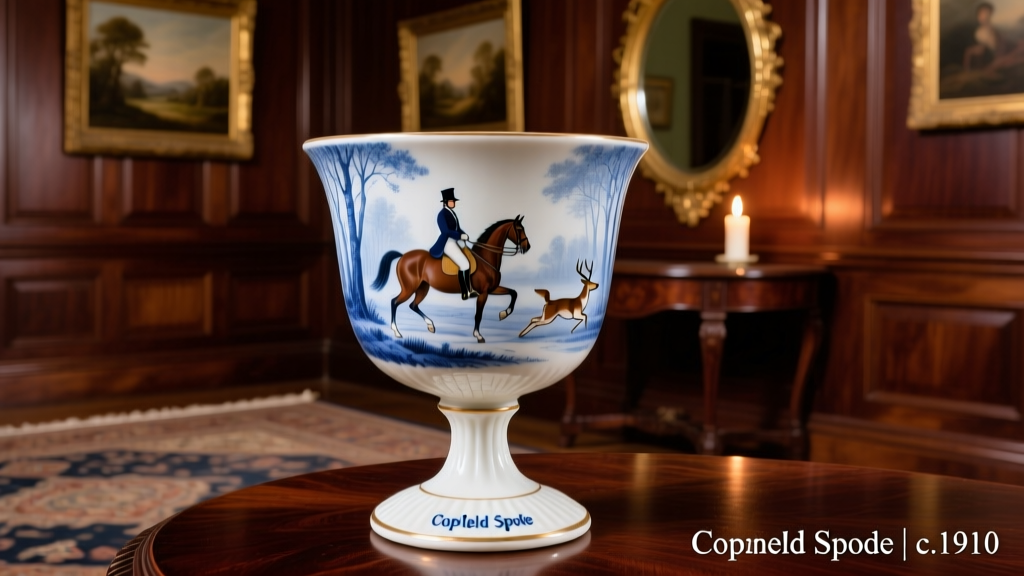
Copeland Spode Tumbler: Hunt Scene in Cobalt Blue and White, Early 20th Century (4-Inch Height)
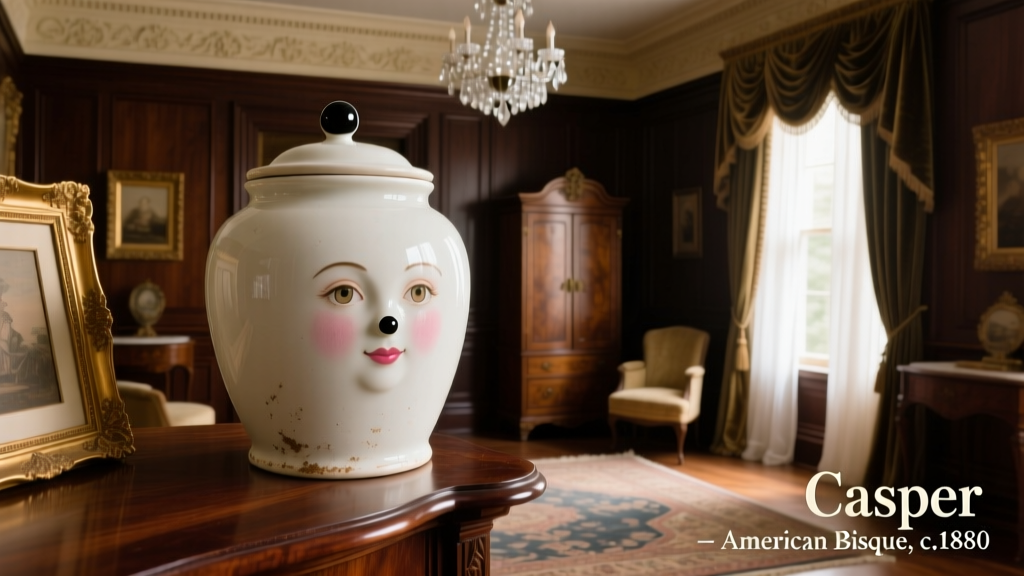
Casper American Bisque Cookie Jars, Model 2: History, Identification, and Conservation Insights

Red Lacquer Giltwood Carved Mirror: A Late 20th-Century Masterpiece in Antique Restoration Context
The 1959 Toy Cap Gun 'Rifleman' Box: A Collector's Deep Dive into Design, Production, and Historical Context
The Advertising Cup Speedy Alka Seltzer Collapsible: A Mid-Century Marketing Artifact and Restoration Primer

Carnival Glass Morning Glory Vase: Purple-Blue Iridescent 8-Inch Example — Identification, History, and Restoration Insights
American Brass Kettle Mfg. Spun Brass Kitchen Kettle with Iron Bale Handle: A Restoration Specialist’s Deep-Dive Analysis

Reproducing Period Wallpaper: Authentic Techniques, Historical Accuracy, and Practical Restoration Guidance
Grueby Tile Trojan Horse Blue-Green Ground Frame Square: A Collector’s Guide to the 6-Inch Ceramic Masterpiece