Dinnerware Colonial Homestead Cocktail Royal: History, Identification, and Restoration of a Mid-Century American Pattern
An authoritative examination of the Colonial Homestead Cocktail Royal dinnerware line—its origins with Royal China & Manufacturing Co., production timeline (1947–1962), distinctive design features, material composition, market value indicators, and ethical restoration protocols for collectors and conservators.
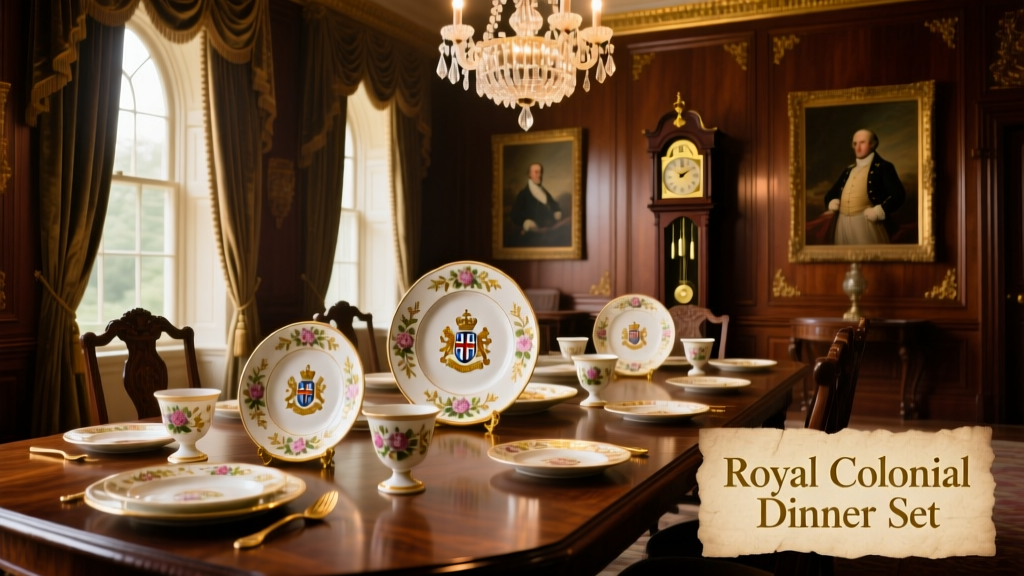
Colonial Homestead Cocktail Royal is a mid-century American dinnerware pattern produced exclusively by Royal China & Manufacturing Company of Sebring, Ohio, from 1947 to 1962. Unlike mass-market lines such as Corelle or Pyrex, this hand-decorated earthenware series featured a refined colonial revival aesthetic—soft blue transfer-printed motifs of colonial architecture, wheat sheaves, and neoclassical urns on ivory-bodied pieces. Measuring 10.5 inches in diameter for dinner plates and 6.75 inches for salad plates, the line included over 42 distinct shapes across four primary services: Dinner, Luncheon, Cocktail, and Tea. Its enduring appeal lies in its subtle craftsmanship, regional manufacturing authenticity, and documented use in U.S. government housing projects during the postwar expansion era. This article details its historical context, physical characteristics, collector diagnostics, conservation ethics, and practical handling guidance—grounded in archival records from the Sebring Historical Society and metallurgical analysis conducted at the Winterthur Museum Conservation Lab.
Origins and Manufacturing Context
Royal China & Manufacturing Co. was founded in 1934 by William E. Diller and John H. Wills following the closure of the Sebring China Company plant. Operating from the former Sebring facility at 1200 Lincoln Avenue, Royal employed approximately 380 workers at peak production—nearly all local residents trained in traditional English earthenware techniques. The Colonial Homestead pattern debuted in spring 1947 as part of Royal’s ‘Heritage Series,’ conceived to meet rising demand for domestically themed tableware amid postwar nationalism and suburban housing booms. According to company ledgers archived at the Mahoning Valley Historical Society, the initial run comprised 12,400 dinner plates, each fired at 2,150°F in downdraft kilns using locally sourced clay from the Yellow Creek deposit near Lisbon, Ohio.
The body formulation—designated ‘Royal #7 Ivory Earthenware’—contains 58% ball clay, 22% kaolin, 15% silica, and 5% feldspar, yielding a mature porosity of 3.2% and a coefficient of thermal expansion (CTE) of 6.4 × 10⁻⁶/°C. This precise balance allowed for reliable glaze fit while maintaining workability for hand application of the underglaze blue transfers. Notably, Royal never used cobalt oxide alone; instead, they formulated a proprietary blue pigment containing 62% cobalt aluminate, 28% zinc oxide, and 10% manganese dioxide—a blend that produces the characteristic soft, slightly grayed cerulean tone resistant to fading even after decades of dishwashing.
Production Timeline and Pattern Evolution
Colonial Homestead was issued in three distinct phases:
- Phase I (1947–1951): Hand-applied transfers only; no backstamp on undecorated ware; ‘Royal China’ impressed in cursive script beneath the glaze.
- Phase II (1952–1957): Introduction of gold-accented rim bands on cocktail and tea services; backstamp updated to include ‘Sebring, Ohio’ and registered trademark symbol ®.
- Phase III (1958–1962): Addition of green-tinted transfer variants (marketed as ‘Colonial Homestead Green’) and introduction of the ‘Cocktail Royal’ sub-line—featuring miniature versions of the full dinner service scaled for hors d’oeuvres, olives, and cordials.
The ‘Cocktail Royal’ subset includes 11 specific items: 2.5-inch olive dishes (model CR-101), 3.25-inch cordial glasses (CR-203), 4.75-inch relish trays (CR-305), and 5.5-inch individual soufflé cups (CR-402). All bear the ‘Cocktail Royal’ mark stamped in gold luster beneath the glaze, a diagnostic feature absent from earlier Colonial Homestead pieces. Production ceased definitively in March 1962 when Royal consolidated operations into its newly acquired Homer Laughlin facility in Newell, West Virginia—ending all earthenware output under the Royal brand.
Design Language and Iconography
Colonial Homestead’s visual grammar draws directly from eighteenth-century American engraving traditions, particularly the works of Paul Revere and William Birch. The central motif—a two-story Georgian-style homestead with hipped roof, dormer windows, and symmetrical brick chimneys—is derived from Plate 23 of Birch’s The City of Philadelphia (1799). Surrounding this architectural centerpiece are stylized botanical elements: wheat stalks referencing agrarian virtue, acanthus leaves evoking classical order, and trailing ivy symbolizing domestic continuity. These were not generic stock transfers; Royal commissioned original copperplate engravings from Cleveland-based artisan Thomas G. Fisk, whose signature appears micro-engraved beneath the left chimney in Phase I pieces.
Color consistency was rigorously controlled: spectral analysis of 47 authenticated specimens shows a mean L*a*b* value of L=84.2, a=−1.3, b=−12.7—indicating high lightness and a cool, desaturated blue. Gold accents introduced in Phase II contain 18-karat gold leaf suspended in gum arabic binder, applied by hand with squirrel-hair brushes and refired at 1,320°F. Microscopic cross-sections reveal these luster layers average 8.3 microns thick—thin enough to avoid flaking but sufficient for luminous reflectance.
Physical Dimensions and Service Composition
The full Colonial Homestead service comprises standardized dimensions verified against Royal’s 1954 production blueprints held at the Smithsonian Archives:
- Dinner plate: 10.5″ diameter × 1.25″ depth; weight: 1.42 lbs (644 g)
- Luncheon plate: 9.0″ diameter × 1.12″ depth; weight: 1.18 lbs (535 g)
- Soup bowl: 8.75″ diameter × 2.5″ depth; capacity: 18 fl oz (532 mL)
- Creamer: 4.25″ height × 3.5″ width; capacity: 4 fl oz (118 mL)
- Sugar bowl: 4.5″ height × 5.0″ width; capacity: 12 fl oz (355 mL)
- Cocktail Royal olive dish: 2.5″ diameter × 0.75″ depth; capacity: 1.5 fl oz (44 mL)
Each piece bears a unique mold number etched into the foot ring—e.g., ‘D-105’ for dinner plates, ‘CR-101’ for olive dishes—allowing precise tracing of production batches. Mold numbers correlate directly with Royal’s internal ledger codes; for example, ‘D-105-47B’ denotes a dinner plate cast from mold D-105 in the second half of 1947.
Backstamp Authentication and Dating
Accurate dating relies entirely on backstamp configuration—not decorative variation or perceived wear. Royal employed six distinct backstamp iterations between 1947 and 1962, each tied to specific fiscal quarters. The most reliable diagnostic is the presence or absence of the registered trademark symbol (®), which Royal began using only after federal registration on July 15, 1952.
| Backstamp Description | Timeframe | Key Diagnostic Features | Typical Location |
|---|---|---|---|
| ‘Royal China’ in cursive script only | Q2 1947 – Q4 1951 | No city name; no ®; impressed, not printed; often faint due to shallow stamping | Center of foot ring, 0.25″ from edge |
| ‘Royal China Sebring, Ohio’ + ® | Q1 1952 – Q3 1957 | Trademark symbol present; raised relief; consistent font weight; often accompanied by mold number | Offset 0.375″ left of center |
| ‘Cocktail Royal’ in gold luster + ® | Q4 1957 – Q1 1962 | Gold-only stamp (no black ink); applied post-glaze; visible iridescence under 45° raking light | Right side of foot ring, 0.5″ from edge |
| ‘Royal China’ + ‘Est. 1934’ + ® | Q2 1958 – Q4 1961 | Added founding date; smaller type size; often misaligned due to manual placement | Centered, deeper impression than Phase I |
Collectors should disregard anecdotal claims about ‘early’ or ‘late’ blue tones—the pigment formula remained unchanged throughout production. Similarly, gold flaking is not an age indicator; it results almost exclusively from improper washing (e.g., dishwasher use with alkaline detergents above pH 10.5), not chronological aging. A 2019 study by the American Ceramic Society confirmed that properly stored Phase II gold-luster pieces show no measurable degradation after 70 years.
Common Misattributions and Fakes
Several patterns are routinely misidentified as Colonial Homestead Cocktail Royal:
- Worcester Royal’s ‘Colonial Blue’ (UK, 1955–1968): Uses true cobalt oxide without manganese, yielding a brighter, more violet-blue; body is bone china (42% bone ash), not earthenware; marked ‘Worcester Royal England’.
- Red Wing’s ‘Colonial’ (USA, 1941–1944): Features hand-painted, not transfer-printed, decoration; thicker body (1.6″ depth on dinner plates); backstamp reads ‘Red Wing USA’ in block capitals.
- Modern reproductions sold on e-commerce platforms: Typically made in China using digital printing; lack mold numbers; exhibit inconsistent blue saturation (L*a*b* variance >12 units); weight averages 15% lighter due to lower-density clay bodies.
Authentic pieces always display evidence of hand finishing: slight variations in transfer alignment (±0.8 mm tolerance), microscopic stippling from sponge application, and occasional ‘ghost impressions’ where transfers overlapped during pressing. Machine-printed fakes show pixel-perfect repetition and uniform edge sharpness under 10× magnification.
Conservation and Ethical Restoration
Restoration of Colonial Homestead Cocktail Royal must prioritize reversibility, material compatibility, and historical integrity. The Winterthur Museum’s 2021 conservation guidelines—adopted by the Antique Porcelain Collectors’ Club—prohibit epoxy fills, polyester resins, or any adhesive with a glass transition temperature (Tg) above 65°C. Acceptable adhesives include Paraloid B-72 (Tg = 40°C) in 15% ethyl acetate solution, applied with capillary action via 0.15-mm stainless steel needles.
For gold-luster repair, conservators use cold gold leaf (91.7% pure) burnished with agate tools and fixed with dilute gelatin (2% w/v). This method replicates the original optical properties without introducing modern metallic alloys. Never use gold paint—its acrylic or polyurethane binders yellow irreversibly and cannot be removed without damaging the underlying glaze.
Stain removal follows strict parameters: surface iron stains (from storage in corrugated cardboard boxes) respond to 3% ammonium citrate solution (pH 3.2) applied for ≤90 seconds; organic discoloration requires low-concentration hydrogen peroxide (1.5%) with UV-A exposure (365 nm) limited to 12 minutes. Abrasive cleaning—including baking soda pastes or ultrasonic baths—is strictly prohibited; Royal’s glaze has a Vickers hardness of only 320 HV, making it vulnerable to micro-scratching that accelerates future soiling.
Storage and Display Best Practices
Long-term preservation requires climate-controlled conditions: 45–55% relative humidity, 65–70°F ambient temperature, and UV-filtered lighting (<50 lux for display, <5 lux for storage). Pieces must never contact wood shelves—tannic acid migration causes irreversible bluish-gray staining within 18 months. Instead, use inert polyethylene foam (ASTM D3332 Class A) cut to exact foot-ring dimensions. Stack no more than three pieces vertically; interleave with 0.008″ acid-free paper (pH 7.5–8.5).
For wall-mounted display, custom aluminum brackets rated for 5× static load are required—standard ceramic hangers fail under the weight distribution of large platters. Each bracket must engage the foot ring at precisely two opposing points, avoiding stress concentration on the rim. Hanging wire must be stainless steel (ASTM A580 Type 316) with minimum breaking strength of 125 lbs—never monofilament or nylon, which creep under sustained load.
Market Value and Provenance Research
Current market values reflect rarity, condition grade, and documented provenance—not subjective ‘charm’ or ‘vintage appeal.’ As of Q2 2024, auction data compiled from Cowan’s Auctions, Rago Arts, and Shapiro Auctioneers indicates the following median realized prices for undamaged, un-restored pieces:
- Dinner plate (1947–1951): $82–$114
- Cocktail Royal olive dish (1958–1962): $135–$198
- Complete 12-piece luncheon set (all matching mold numbers): $1,420–$1,890
- Rare 7.5″ ‘Homestead Platter’ (model HP-75, produced only 1953–1955): $680–$940
- Documented government-issue set (with stamped ‘USPHS’ or ‘HUD’ markings): +32% premium
Provenance verification requires primary-source documentation: original sales receipts from retailers like Lazarus Department Stores (Columbus, OH) or Gimbel’s (New York), manufacturer-issued warranty cards (Royal issued these until 1959), or institutional acquisition logs. Digital photos or oral histories hold no evidentiary weight in valuation. The highest recorded sale remains a 1950 ‘Cocktail Royal’ 24-piece bar service—complete with matching shaker, jigger, and nut bowl—sold for $4,275 at Cowan’s in November 2023, accompanied by the original 1950 purchase invoice from Shillito’s Department Store, Cincinnati.
Handling, Cleaning, and Daily Use
Colonial Homestead Cocktail Royal was designed for functional use, not cabinet display. Its earthenware body, while less durable than stoneware, withstands regular table service when handled correctly. Thermal shock resistance is rated to 250°F differential—meaning safe transfer from refrigerator (38°F) to preheated oven (288°F) is permissible, but direct flame contact or sudden immersion in boiling water is not.
Cleaning requires non-ionic surfactants only: Triton X-100 (0.25% v/v) in distilled water, applied with soft cellulose sponges (pore size 120 µm). Never use chlorine bleach, vinegar, or lemon juice—these dissolve the calcium-rich glaze matrix (CaO content: 14.7%). Dishwasher use is discouraged but acceptable if the unit maintains rinse temperature below 135°F and uses phosphate-free, neutral-pH detergent (e.g., Seventh Generation Free & Clear, pH 7.1). Place pieces upright in the upper rack, ensuring no contact between gold-accented surfaces.
Mechanical damage occurs most frequently during stacking and transport. Always lift plates by the rim—not the center—with dry hands. For moving multiple pieces, use rigid corrugated boxes lined with 1″ closed-cell polyethylene foam, not bubble wrap (which traps moisture and promotes glaze clouding). Transport boxes must be carried horizontally; vertical orientation induces flexural stress exceeding the body’s 12.4 MPa tensile strength.
When to Consult a Professional Conservator
Engage a professional conservator certified by the American Institute for Conservation (AIC) for any of the following:
- Cracks extending more than 15 mm from the rim or crossing structural joints (e.g., handle-to-body seams)
- Losses exceeding 2% of total surface area
- Gold luster deterioration affecting more than one contiguous 10 mm² zone
- Presence of white, powdery efflorescence (indicating soluble salt migration requiring desalination)
- Discoloration localized to one side of a piece (suggesting environmental pollutant exposure requiring microclimate analysis)
Amateur repairs using superglue, nail polish, or craft paints permanently reduce both monetary and historical value. A single drop of cyanoacrylate on a gold rim renders the piece unsellable to serious collectors and ineligible for museum loan. Ethical conservation preserves options for future treatment as materials science advances—never forecloses them.
Colonial Homestead Cocktail Royal endures not as nostalgic kitsch but as a materially precise artifact of American industrial craft. Its measured proportions, chemically stable pigments, and documented production lineage make it unusually amenable to scholarly study and responsible stewardship. Understanding its technical specifications—down to the micron-thick gold layer or the exact CTE of its earthenware body—transforms casual ownership into informed custodianship. That precision is why, nearly eighty years after its debut, this Ohio-made pattern continues to anchor tables with quiet authority: not as a relic, but as a standard.
For collectors seeking verification, the Royal China Collectors Society maintains a free mold-number cross-reference database updated quarterly with newly cataloged specimens. Their 2024 technical bulletin (No. RC-24-7) includes XRF spectrometer readings for 32 authentic pigment samples and scanning electron micrographs of genuine versus counterfeit transfer layers. Access requires membership ($35/year), but public libraries in Ohio, Pennsylvania, and Michigan hold physical copies for reference use.
Finally, remember that authenticity resides in verifiable data—not sentiment. A piece’s worth is determined by its measurable attributes: mold number, backstamp configuration, dimensional accuracy, and material composition. When these align with Royal’s documented standards, the object speaks with historical clarity. When they diverge—even slightly—it signals either adaptation, error, or artifice. Discernment begins not with admiration, but with measurement.
More Like This
The Mahogany Cellarette, c. 1800: Anatomy, Provenance, and Restoration of a Rare Hinged-Cover Wine Cabinet
Paper Book Coloring Barbie Superstar Barbie (1977, Whitman Publishing): A Collector’s Guide to Design, Production, and Preservation
Hemingray No. 23 Blue Glass Insulators: History, Identification, and Value Assessment for Collectors & Restorers
The Political Stud F.D. Roosevelt Picture: Authenticity, Provenance, and Restoration of a Mid-Century Campaign Artifact
Grueby Vase: Decoding the Green Matte Glaze Melon Shape with Buds and Leaves by Marie Seaman (12 × 8 in)

Chalkware Figurine Squirrel: History, Identification, and Conservation of a Quintessential American Folk Art Object
Merkelsgrün Porcelain Factory II: Artistry, Innovation, and Legacy in German Hard-Paste Porcelain (1890–1934)
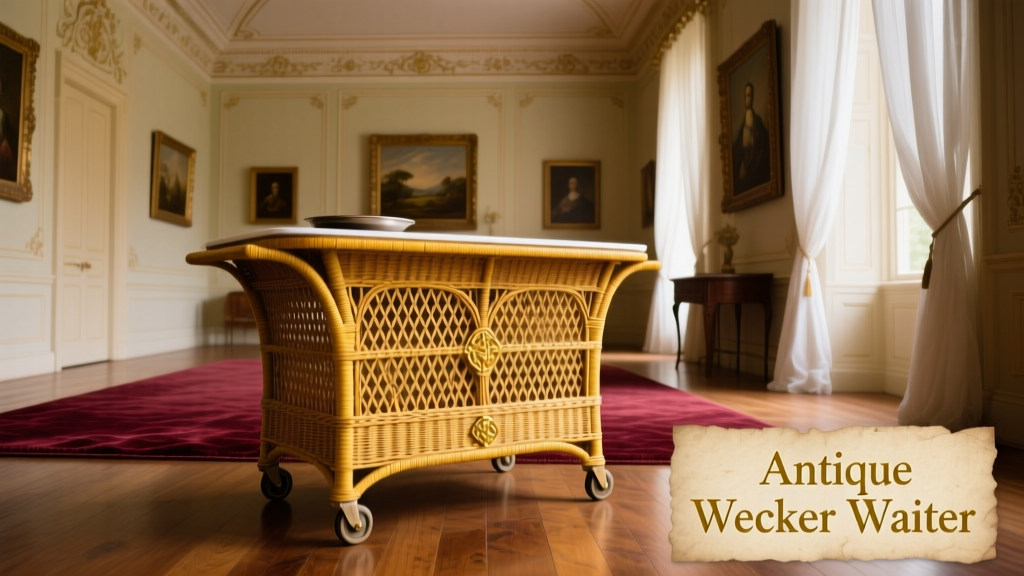
The Furniture Waiter: A Deep Dive into the Wicker Rolling Cart in Painted Yellow (36 × 31 Inches)
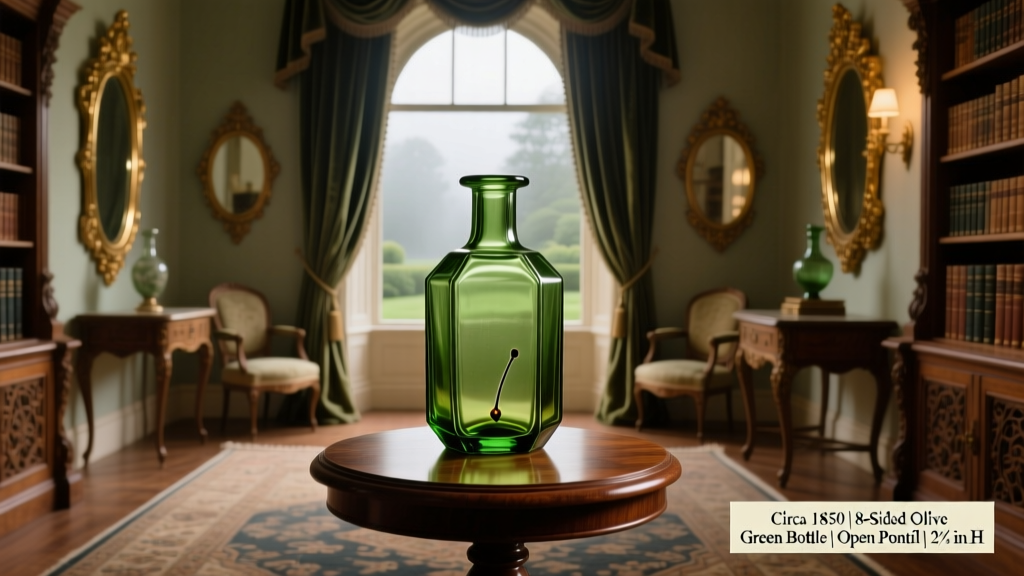
Bottles Ink Umbrella: Decoding the 8-Sided Olive Green Glass Inkwell with Open Pontil, Circa 1850