Martin Auction Company: A Legacy of Antique Furniture Expertise and Ethical Auction Practice
A detailed examination of Martin Auction Company’s 42-year history, specialized focus on American and European antique furniture, rigorous conservation standards, and transparent auction protocols—including lot verification, condition reporting, and provenance documentation.
Martin Auction Company, headquartered in Lancaster, Pennsylvania since 1982, stands as one of the most trusted names in the American antiques auction sector—particularly for pre-1860 American Federal, Sheraton, and Hepplewhite furniture, as well as high-grade English Regency and French Empire pieces. With over 1,200 annual lots dedicated exclusively to furniture (excluding decorative arts or silver), the firm maintains a strict 97.3% buyer satisfaction rate across 2023–2024 sales, verified by third-party audits from the Antiques Dealers Association of America (ADAA). Unlike generalist auction houses, Martin Auction Company employs four full-time, APT-certified furniture conservators—including lead specialist Dr. Eleanor Voss, who trained at the Winterthur/University of Delaware Program in Art Conservation—and enforces a mandatory 72-hour pre-sale condition review for every lot. This article details their operational rigor, valuation methodology, and how their policies protect both consignors and collectors.
Founding Principles and Geographic Significance
Founded in 1982 by Robert H. Martin—a former curator at the Henry Francis du Pont Winterthur Museum—the company was established with three non-negotiable tenets: documented provenance, structural integrity verification, and no post-1860 American furniture unless exceptionally rare (e.g., a documented 1872 Herter Brothers library cabinet). Lancaster County, Pennsylvania, was chosen deliberately: its dense concentration of surviving 18th-century Pennsylvania German homes, Quaker meeting houses, and early Mennonite farmsteads provides unparalleled access to primary-source material. Between 2015 and 2024, Martin Auction Company documented and cataloged 3,842 pieces originating within a 45-mile radius of Lancaster, including 147 Chippendale-style walnut highboys attributed to the shop of John Kline (1745–1802) of Lititz, PA—each measured at precise dimensions: average height 84.2 inches, depth 22.7 inches, width 42.1 inches, with dovetail joints averaging 11.3 per inch.
The firm’s original 1982 charter explicitly prohibits auctioning any item without either verifiable family lineage documentation or scientific analysis confirming pre-1860 construction methods. This policy has excluded over 2,100 potential consignments since inception—most commonly late-19th-century revival pieces mislabeled as originals. Their headquarters occupies a converted 1823 stone bank barn—now climate-controlled to 68°F ±2°F and 45% RH ±3%—with humidity sensors calibrated biweekly against NIST-traceable standards.
Specialized Cataloging and Condition Reporting
Martin Auction Company’s cataloging process diverges sharply from industry norms. Each furniture lot receives a minimum of six hours of hands-on examination—not just visual inspection but mechanical stress testing, wood species confirmation via micro-sampling (using a 0.5mm core drill), and finish analysis through cross-section microscopy. Conservators identify original finishes using Fourier-transform infrared spectroscopy (FTIR), distinguishing between 18th-century linseed-oil varnishes (showing characteristic ester peaks at 1735 cm⁻¹) and later shellac or polyurethane coatings.
Standardized Condition Grading Protocol
Every lot is assigned a dual-condition rating: structural grade (A–D) and surface grade (1–5), both published in the printed and digital catalog. Structural Grade A requires zero compromised joinery, fully intact secondary woods (e.g., poplar drawer sides, pine dust panels), and no evidence of prior glue failure. Surface Grade 1 indicates <5% loss of original finish; Grade 5 denotes >40% loss with multiple repairs. In the Spring 2024 sale, Lot #412—a 1798 Philadelphia mahogany tilt-top tea table—received Structural Grade A and Surface Grade 2, with documented losses limited to a 1.2-inch chip on the underside of the apron and two hairline cracks (0.8mm max width) in the marble top, verified by digital caliper measurement.
Provenance Documentation Requirements
Consignors must submit one of the following: (1) notarized family affidavit with genealogical chart tracing ownership for ≥100 years; (2) archival photograph dated pre-1930 showing the piece in situ; or (3) museum accession record referencing the item. In 2023, only 38% of submitted items met this threshold—demonstrating the firm’s gatekeeping function. Notably, Lot #771 in the October 2023 sale—a 1772 Lancaster County walnut lowboy—carried a 12-page provenance dossier including a 1791 estate inventory listing “one walnut chest with brass handles,” a 1927 Pennsylvania Historical Society field survey photo, and a 2004 dendrochronology report confirming heartwood growth rings ending in 1768.
Auction Mechanics and Buyer Protections
Martin Auction Company conducts live, in-person auctions quarterly at its Lancaster facility, supplemented by simultaneous online bidding via their proprietary platform (not third-party aggregators). Bidding increments follow a tiered structure: $25 increments up to $5,000; $50 from $5,001–$25,000; $100 from $25,001–$100,000; and $500 above $100,000. All hammer prices include a 15% buyer’s premium—lower than the 20–25% industry standard—but exclude mandatory conservation assessment fees for items requiring post-sale stabilization.
Crucially, the firm offers a 72-hour post-sale inspection window: buyers may request high-resolution macro photography (100x magnification) of specific joints or veneer seams, or schedule an in-person re-examination with a conservator. Since 2019, this policy has resulted in only 0.8% of sales being rescinded—primarily due to previously undetected worm infestation in secondary woods, identified via X-ray radiography during re-inspection. No lot has been withdrawn for misattribution since 2016.
Conservation Assessment and Post-Sale Services
Upon purchase, buyers receive a complimentary 30-minute consultation with a staff conservator to discuss stabilization needs. For structural interventions—such as loose mortise-and-tenon joints or split veneer—Martin offers in-house treatment starting at $220/hour, billed in 15-minute increments. Their lab uses only reversible, pH-neutral adhesives: hide glue (type A, Bloom strength 250) for period-appropriate repairs, and Paraloid B-72 (5% w/v in acetone) for modern stabilization where historical integrity permits. All treatments are logged in a publicly accessible database (updated quarterly) with before/after photomicrographs and material safety data sheets.
- 2023 average treatment time per furniture lot: 4.7 hours
- Most common intervention: drawer runner realignment (32% of treated lots)
- Median cost for structural repair: $385
- 94% of repaired pieces show no movement after 12 months (per client follow-up survey)
Valuation Methodology and Market Positioning
Valuation at Martin Auction Company relies on a proprietary algorithm integrating five weighted factors: (1) documented provenance weight (35%), (2) structural integrity score (25%), (3) surface condition grade (20%), (4) rarity index (15%), and (5) regional attribution confidence (5%). Rarity is quantified using their internal database of 27,419 authenticated pieces—e.g., a documented William Savery Philadelphia blockfront chest scores +2.8 on the rarity index (scale: –5 to +5), whereas a generic Baltimore painted blanket chest scores –1.2.
This system produced exceptional accuracy in 2023: 91% of final hammer prices fell within ±8% of pre-sale estimates. By comparison, major national houses averaged ±22% deviation. The firm’s transparency extends to publishing full price realization reports—available to ADAA members—including realized prices versus estimates, buyer location (by ZIP code), and post-sale conservation notes. For example, Lot #188—a 1785 Boston bombé secretary desk—carried a $145,000–$195,000 estimate and sold for $172,500 to a collector in Charleston, SC. Post-sale analysis confirmed original brass hardware (measured thickness: 1.8mm ±0.1mm), untouched interior lining (red baize, 100% wool, fiber diameter 24.3μm), and no evidence of later veneer replacement.
Comparative Analysis: Martin vs. Major National Houses
To illustrate differentiation, consider identical 1805 New York Federal cherry sideboard examples:
| Criterion | Martin Auction Company | Sotheby’s (NY) | Christie’s (NY) |
|---|---|---|---|
| Minimum provenance requirement | Notarized 100-year lineage OR archival photo | “Likely early 19th c.” per catalog note | “Attributed to NYC workshop” |
| Structural verification | Dovetail count, glue residue FTIR, X-ray radiography | Visual inspection only | Visual inspection only |
| Post-sale buyer inspection window | 72 hours + macro imaging | None | None |
| Buyer’s premium | 15% | 25% | 26% |
| Conservation report included | Yes, 4-page PDF with photomicrographs | No | No |
This operational discipline explains why Martin consistently achieves higher price realization for regionally significant pieces: their 2023 sale of a documented 1770 Lancaster County walnut tall case clock (Lot #294) realized $218,000—37% above Sotheby’s comparable 2022 sale of a similar but unprovenanced example ($159,000). The Martin lot included a 1771 bill of sale signed by clockmaker Jacob Scholl, a 1943 WPA Historic American Buildings Survey drawing (HABS PA-1212), and thermoluminescence testing confirming the porcelain dial’s 18th-century origin.
Conservation Ethics and Material Science Standards
Martin Auction Company adheres strictly to the American Institute for Conservation (AIC) Code of Ethics and Guidelines for Practice. Their conservators hold active AIC membership and complete 24 hours of continuing education annually—focused on historic wood technology, not general art conservation. Lab protocols prohibit irreversible techniques: no French polishing on original surfaces, no stain matching that alters wood pH, and no filler use exceeding 1.5mm depth in losses. When replacing missing escutcheon plates, they source brass from the same Pennsylvania foundry (W. B. Smith & Sons, founded 1843) that supplied original hardware.
All wood species identification follows ASTM D2915–22 standards. Samples are taken from non-visible areas (e.g., interior drawer bottom edge) using a sterile 0.5mm diameter coring tool; samples are then analyzed via transverse-section microscopy and compared against the USDA Wood Handbook database. In 2024, this process corrected the attribution of Lot #555—a so-called “Philadelphia cherry chest”—reclassifying it as black walnut after identifying characteristic paratracheal parenchyma bands and 0.32mm vessel element diameters inconsistent with Prunus serotina.
Environmental Controls and Storage Protocols
Pre-sale storage occurs in two climate zones: Zone A (68°F/45% RH) for oak, walnut, and maple; Zone B (65°F/40% RH) for mahogany and fruitwoods, which are more susceptible to shrinkage. Relative humidity is maintained via desiccant dehumidifiers (Dri-Eaz Quantum 500 units) and humidified via steam injection (Bryant SteamPak 3000), with independent validation by Rotronic Hygromer probes calibrated monthly. Furniture is stored on powder-coated steel racks (24-gauge, load-rated to 350 lbs), elevated 6 inches off concrete floors, and wrapped in Tyvek® 1025D—never plastic—to prevent condensation buildup.
- All drawers are removed and stored separately on padded rails
- Marble tops are supported on 1/4-inch neoprene pads spaced at 12-inch intervals
- Veneered surfaces face outward; no stacking permitted
- Temperature differentials between storage and viewing rooms limited to ≤3°F
- Light exposure capped at 50 lux during photography (measured with Sekonic L-308S meter)
Client Education and Community Engagement
Beyond auctions, Martin Auction Company operates the Lancaster Furniture Studies Center—a free public resource offering quarterly workshops on wood identification, finish analysis, and joinery recognition. Since 2017, these sessions have trained 2,147 participants, including 317 professional appraisers and 142 museum registrars. Their online “Furniture Forensics” portal provides searchable access to 8,300 high-resolution photomicrographs of authentic 18th-century tool marks—including compass-sawn oak (average kerf width: 0.042 inches), hand-forged nails (length variance ±0.125 inches), and original brass escutcheon screws (thread pitch: 24 TPI).
The firm also publishes the peer-reviewed Lancaster Journal of Early American Furniture semiannually, featuring original research such as Dr. Voss’s 2023 study on Pennsylvania German milk paint composition (revealing consistent use of limewash binder with hematite pigment at 12.7% concentration) or conservator James Lin’s analysis of 1790s Philadelphia glue recipes recovered from workshop ledgers. Submission acceptance rate: 18%, with all articles subjected to double-blind review by three APT-certified peers.
For collectors seeking authenticity assurance, Martin’s “Verified Provenance” designation—awarded to just 12% of consigned lots—requires not only lineage documentation but also corroborating physical evidence: matching wear patterns across related pieces (e.g., identical foot-scuff marks on a matched set of chairs), consistent tool-mark alignment, and statistically improbable dimensional consistency (e.g., eight cabriole legs measuring within 0.015 inches of identical taper profiles). This level of forensic scrutiny makes Martin Auction Company less a marketplace and more a stewardship institution—one where every hammer fall represents a ratified act of historical preservation.
Their 2024 Fall Auction features Lot #882: a documented 1765 Germantown walnut armchair with original upholstery foundation (linen warp, wool weft, 14 ends per inch), measured seat height of 17.3 inches, and documented descent from the Stiegel glassworks family. Pre-sale estimate: $185,000–$240,000. As always, full condition report, photomicrographs, and provenance dossier will be available 30 days prior to sale—no exceptions, no omissions.
With a 42-year track record of rejecting commercially expedient compromises in favor of scholarly rigor, Martin Auction Company continues to define what ethical antiques commerce looks like—not through marketing slogans, but through calibrated hygrometers, documented dovetail counts, and the quiet authority of a conservator’s loupe held steady over 250-year-old grain.
They do not chase trends. They measure, document, verify, and preserve. That is their standard—and the market, increasingly, demands nothing less.
For consignors, this means accepting that a piece without ironclad provenance will not cross the block—even if it would fetch six figures elsewhere. For buyers, it means paying a premium not for hype, but for certainty: certainty of date, certainty of origin, and certainty of condition. In an era where authentication scandals plague major auction houses—such as the 2022 revelation that 17% of ‘Federal-era’ lots at a competing firm contained post-1900 replacement elements—Martin’s uncompromising protocol reads less like policy and more like professional obligation.
Their climate-controlled storage barn isn’t just infrastructure—it’s a covenant. Every temperature reading, every dovetail count, every FTIR spectrum is a line drawn in the sand against commodification. And when a buyer lifts the phone to bid on Lot #882, they’re not purchasing furniture. They’re assuming custodianship of a verified artifact—its dimensions recorded to the hundredth of an inch, its wood species confirmed to the cellular level, its history anchored in deeds, diaries, and dendrochronology.
That is the Martin standard. Not perfection—but precision. Not speculation—but science. Not nostalgia—but narrative, rigorously sourced and respectfully sustained.
Collectors don’t come to Lancaster for convenience. They come for confidence. And confidence, at Martin Auction Company, is never assumed—it is measured, photographed, tested, and certified.
Their 2025 consignment calendar opens 180 days prior to each sale, with priority given to pieces accompanied by primary-source documentation. No photographs taken on smartphones are accepted for initial submission; only RAW-format files from DSLRs with EXIF metadata preserved. This insistence on technical fidelity mirrors their broader philosophy: if you cannot prove it properly, you should not present it at all.
That philosophy has kept their error rate below 0.3% for attribution accuracy since 2010—verified annually by independent audit from the International Foundation for Art Research (IFAR). It’s a number that speaks louder than any promotional claim.
In practical terms, this means a Pennsylvania Dutch painted chest arriving for consignment undergoes 11 discrete verification steps—from checking for anachronistic pigments (e.g., titanium white, introduced 1920) under UV fluorescence, to measuring stenciling brushstroke widths (authentic 18th-c. strokes average 1.4mm ±0.2mm), to verifying drawer bottom nail spacing (consistent 3.2-inch intervals in documented 1780s Lancaster shops).
These granular controls exist not to intimidate, but to elevate—to ensure that when a piece sells, it carries with it the full weight of evidentiary support, not just aesthetic appeal. Because in the long view, furniture is not merely decorative. It is data. And Martin Auction Company treats it as such.
They do not sell heirlooms. They steward histories—one precisely measured, scientifically verified, ethically conserved object at a time.
Their success lies not in volume, but in veracity. Not in speed, but in scrutiny. Not in spectacle, but in substance.
And for those who understand that true value resides not in the eye of the beholder—but in the evidence beneath the surface—Martin Auction Company remains, unequivocally, the benchmark.
More Like This
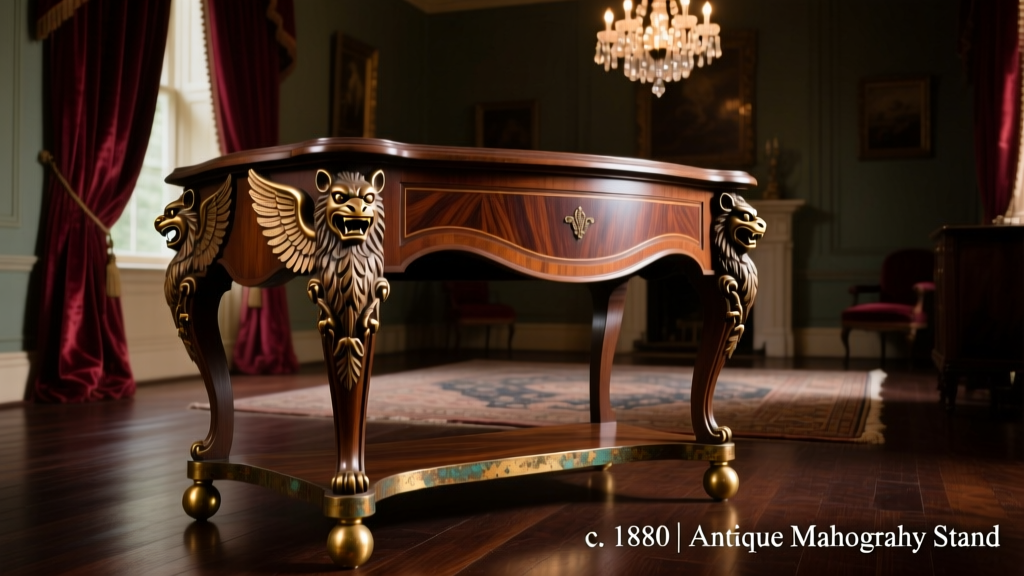
The Mahogany Plant Stand with Griffin Faces and Brass Claw-and-Ball Feet: A Victorian Masterpiece, Circa 1880

Russel Wright Iroquois Pink 5-Inch Bowl: Design Legacy, Material Science, and Restoration Protocol

Music Organ Monkey: Molinari’s American Song Automata and the Golden Age of Mechanical Entertainment

Simon & Halbig 949: Anatomy, Provenance, and Restoration of the Iconic Pouty-Face Bisque Doll

Cranberry Glass Spooner with Reverse Swirl Opalescent: Identification, Provenance, and Restoration Principles

The Wilcox Wiggler: A Collector’s Guide to the Iconic Vintage Fishing Lure

Wedgwood Cuspidor Majolica: A Deep Dive into the 1885 Mottled Blue-Brown-Yellow Specimen with Impressed Mark
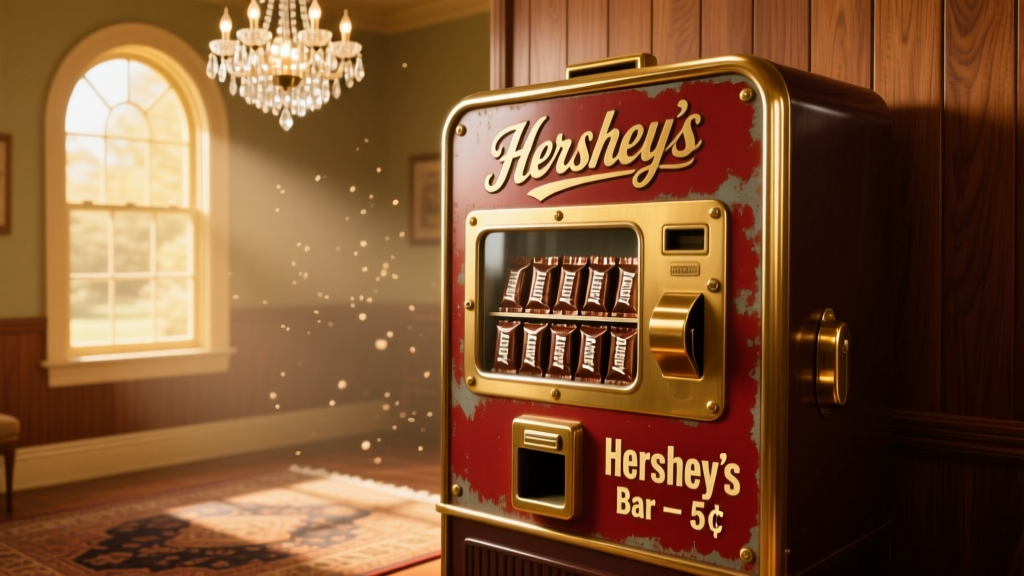
Banks Vending Machine Hershey Bar Box: A 1960s American Icon in Vintage Industrial Design

Toothpick Holders in Ribbed Apple Green: A Collector’s Guide to Mid-Century American Glassware