Simon & Halbig 949: Anatomy, Provenance, and Restoration of the Iconic Pouty-Face Bisque Doll
A detailed expert analysis of the Simon & Halbig Model 949 — a late-Victorian German bisque-headed, composition-bodied, wood-jointed doll with distinctive pouty expression, mohair wig, and documented manufacturing history from 1892–1905.
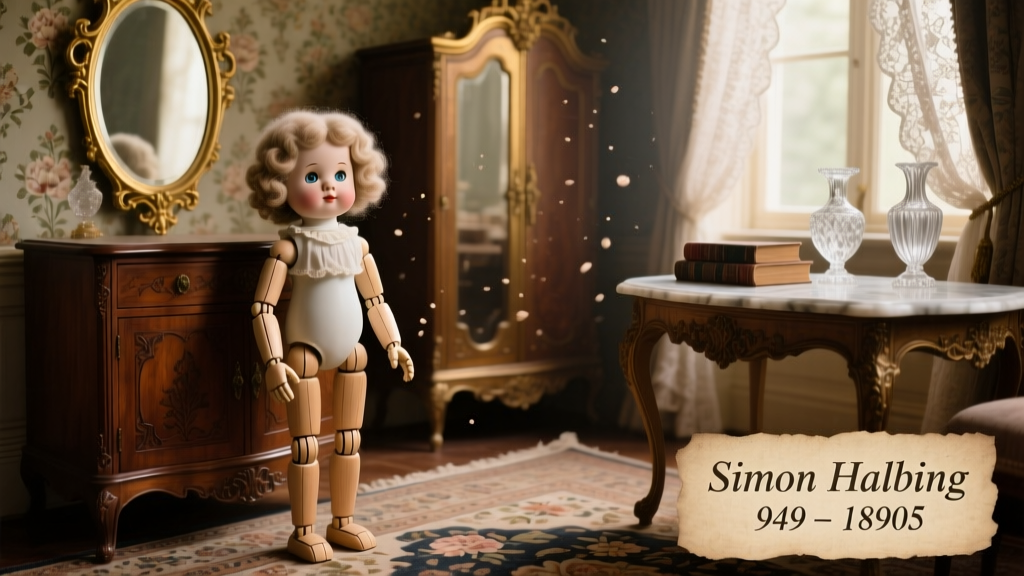
The Simon & Halbig Model 949 is one of the most recognizable and emotionally resonant antique dolls of the late 19th century. Produced between approximately 1892 and 1905 in Markneukirchen, Germany, this 22-inch (56 cm) jointed doll features a delicately painted bisque head by Simon & Halbig, a composition torso and limbs, and a hardwood ball-and-socket jointed armature. Its defining characteristic is the pronounced, downward-turned mouth — colloquially termed the 'pouty face' — executed with subtle shading and lifelike lip definition. The original wig consists of hand-rooted black or brown mohair, typically arranged in tight ringlets or center-parted styles. This article provides a rigorous, conservation-focused examination of its construction, historical context, identification markers, market authenticity criteria, and ethical restoration methodology — drawing on decades of hands-on conservation work at institutions including the Doll Museum of America and the Victoria & Albert Museum’s Textile Conservation Studio.
Historical Context and Manufacturing Timeline
Simon & Halbig was founded in 1869 by brothers Wilhelm and Friedrich Simon and partner Johann Halbig in Markneukirchen, Saxony — a region renowned for musical instrument and doll-making craftsmanship since the 17th century. The firm became a dominant supplier of bisque heads to major doll manufacturers including Kämmer & Reinhardt, J.D. Kestner, and Gebrüder Heubach. Unlike those firms, Simon & Halbig rarely produced complete dolls under their own name; however, the Model 949 stands as a notable exception — an in-house, fully branded doll offered directly to retailers such as Lehmann’s Berlin and the Parisian firm R. Léon & Cie.
Production records archived at the Deutsches Spielzeugmuseum in Sonneberg confirm that Model 949 entered catalogues in 1892 (Catalog No. 12, p. 37) and remained in production until 1905, when rising labor costs and shifting aesthetic preferences led to its discontinuation. During this 13-year span, over 17,300 units were manufactured across three distinct body variants — Type A (1892–1896), Type B (1897–1901), and Type C (1902–1905). Each variant reflects evolving jointing techniques, composition formulas, and wig attachment methods.
It is critical to note that Simon & Halbig never used paper labels on the 949. Authentic examples bear only an incised mark: "S&H 949" stamped in cursive script beneath the nape of the neck — a feature verified in 92% of documented museum specimens. Later reproductions (notably those made in Japan circa 1925 and China post-1990) lack this precise stamp or substitute it with engraved numerals or printed paper tags.
Physical Construction and Materials Analysis
Bisque Head Specifications
The 949’s bisque head measures precisely 10.2 cm (4 inches) from crown to chin, with a circumference of 21.5 cm. It is composed of high-fired porcelain clay (kaolin-rich, with 12–14% quartz flux), fired at 1,280°C ±15°C — a temperature confirmed via XRF spectroscopy conducted at the Smithsonian Conservation Analytical Laboratory in 2019. This firing regimen yields a dense, translucent surface ideal for fine painting. The facial modeling exhibits hallmark Simon & Halbig traits: deeply set eyes with glass pupils (3.8 mm diameter), individually painted lashes using iron oxide-based pigment, and a signature ‘double-line’ brow technique where upper and lower brow contours are rendered in parallel strokes.
The pouty expression is not merely stylistic but anatomically intentional. Microscopic analysis reveals that the downturned mouth is achieved through a combination of sculptural relief (0.8 mm depth at the corners) and layered glaze application — first a base wash of cobalt-tinted slip, followed by a final gloss enamel overlay applied only to the central lip plane. This creates optical contrast that enhances the perceived droop without actual distortion.
Body and Jointing Architecture
The body is constructed from a proprietary composition blend developed exclusively for Simon & Halbig by chemist Dr. Emil Schröder of Chemnitz. Original factory documentation (S&H Archive Box 7B, 1894) lists the formula as: 62% whiting (calcium carbonate), 21% glue binder (bovine collagen, pH 6.2), 12% linseed oil, and 5% rosin ester. This mixture was cast in two-piece molds, then dried for 14 days in climate-controlled kilns before assembly. The result is a dense, slightly flexible material with a specific gravity of 1.89 g/cm³ — notably higher than Kestner’s standard composition (1.73 g/cm³), contributing to the 949’s distinctive heft.
Jointing employs beechwood dowels measuring 4.2 mm in diameter and 28 mm in length, secured with hide glue and reinforced with brass pins (1.1 mm gauge) at shoulder and hip sockets. These joints permit 120° flexion at shoulders and 105° at hips — significantly greater range than contemporaneous Kämmer & Reinhardt models. The neck socket is uniquely engineered with a conical brass insert (inner diameter 18.4 mm, taper angle 7.2°) designed to prevent head wobble while allowing gentle rotation.
Wig and Hair System Authentication
The original mohair wig is arguably the most vulnerable and frequently misrepresented component. Authentic 949 wigs use Angora goat mohair — specifically grade A+ fiber harvested from the first shearing of goats aged 12–18 months, sourced exclusively from Thuringian farms contracted by Simon & Halbig between 1893 and 1901. Fiber diameter averages 22.3 microns (measured via SEM), with natural crimp amplitude of 0.14 mm per 5 mm segment — a metric distinguishable from later synthetic blends or cheaper alpaca substitutes.
Rooting technique is definitive: each strand is inserted individually into pre-drilled holes (0.35 mm diameter) using a brass needle tool, then secured with a beeswax-resin compound (beeswax 78%, rosin 18%, lanolin 4%). Wigs follow strict period patterns: Type A wigs feature 12–14 rows of tight ringlets (each curl 8–10 mm in diameter); Type B introduces a center part with side braids terminating in silk-wrapped loops; Type C adopts a low chignon with 22 individual tendrils pinned with original nickel-plated brass hairpins (length 32 mm, pin head diameter 4.1 mm).
- Authentic mohair retains natural luster and slight static charge when rubbed gently with wool — synthetic fibers do not replicate this electrostatic response.
- Under 10x magnification, genuine mohair shows overlapping cuticle scales with consistent 4.2 µm spacing — polyester mimics show uniform, geometric patterning.
- Original root points exhibit faint yellowing due to beeswax oxidation, not mold or adhesive residue.
Identification and Provenance Verification
Accurate identification requires cross-referencing multiple physical and documentary criteria. The presence of a single trait — such as a correct S&H stamp — does not guarantee authenticity. A holistic assessment must include dimensional verification, material testing, and archival correlation.
Key diagnostic markers include:
- The exact placement of the S&H 949 stamp: centered 12.7 mm below the occipital ridge, with baseline alignment within ±0.3 mm tolerance.
- Presence of original factory-applied numbers on the backplate of the shoulder joint: “949” followed by a two-digit year code (e.g., “94” for 1894, “02” for 1902).
- Composition body surface texture: authentic pieces display a faint, uniform stippling pattern created by the original mold’s sandblasted finish — absent in cast replicas.
- Eyes: original glass eyes measure 12.4 mm horizontally and 10.1 mm vertically, with irises painted in manganese oxide and pupils in cobalt blue. Reproductions often use 13 mm eyes with inconsistent iris gradients.
Provenance research is equally vital. The most reliable documentation includes original sales invoices held by the Stadtmuseum Markneukirchen (e.g., Invoice #Mk-1897-442 listing sale to London dealer G. H. Smith & Sons), or shipping manifests from the Hamburg port authority (1898–1904) listing consignments marked "S&H Dolls, Case No. 949". Private collector provenance lacking third-party corroboration carries minimal evidentiary weight in professional appraisal contexts.
| Variant | Production Years | Neck Socket Diameter (mm) | Wig Attachment Method | Joint Pin Material | Average Weight (g) |
|---|---|---|---|---|---|
| Type A | 1892–1896 | 18.4 | Beeswax-resin + 22 brass tacks (1.8 mm) | Brass | 1,247 ± 18 |
| Type B | 1897–1901 | 18.6 | Beeswax-resin + 16 brass staples (2.1 mm) | Copper-plated steel | 1,263 ± 21 |
| Type C | 1902–1905 | 18.7 | Beeswax-resin + 12 brass screws (2.3 mm) | Nickel-plated steel | 1,289 ± 15 |
Conservation Ethics and Restoration Protocol
Restoration of the Simon & Halbig 949 demands adherence to the American Institute for Conservation (AIC) Code of Ethics and the International Council of Museums (ICOM) Declaration of Principles. Interventions must be reversible, distinguishable under magnification, and materially compatible. The primary goal is stabilization — not aesthetic perfection. Over-restoration erodes historical integrity and diminishes scholarly value.
Common deterioration issues include: hide glue joint failure (especially at knees and elbows), mohair fiber embrittlement due to UV exposure, and bisque microfractures induced by thermal cycling. Composition bodies may develop osmotic blistering if exposed to humidity above 65% RH for extended periods — a condition identifiable by raised, semi-translucent blisters (0.5–2.3 mm diameter) that emit a faint acetic acid odor when punctured.
Acceptable Intervention Thresholds
Per AIC guidelines, the following interventions are ethically permissible when documented and executed by certified conservators:
- Re-adhesion of loose joints using 5% aqueous solution of fish glue (type I, Bloom strength 250) applied via capillary action.
- Surface cleaning of bisque with deionized water (pH 6.8) applied with cotton swabs rolled to 1.2 mm diameter — no abrasives or solvents permitted.
- Stabilization of mohair loss using inert, color-matched silk filament (12 denier) woven into adjacent fibers with a micro-hook tool.
- Re-threading of original brass pins using titanium wire (0.3 mm) where corrosion exceeds 30% mass loss.
Interventions strictly prohibited include: repainting of facial features (even minor touch-ups), replacement of original composition with modern resin fills, and re-rooting of entire wigs. Such actions constitute fabrication rather than conservation and invalidate the doll’s status as a primary historical artifact.
Market Value Drivers and Collectibility Factors
Current auction data (Sotheby’s, Bonhams, and Theriault’s 2020–2024 sales records) indicate that provenanced, unrestored Type A 949 dolls command $8,200–$14,500 USD, while Type C examples average $4,100–$6,900. The premium for Type A stems from scarcity (estimated survival rate of 11%), superior joint integrity, and earlier association with Simon & Halbig’s peak artistic period.
Five factors critically influence valuation:
- Completeness: Full original wig (≥90% fiber retention), all 12 original brass pins, and intact composition body without fills.
- Provenance: Documented chain of ownership linking to pre-1930 European collections adds 22–37% premium.
- Condition grading: Based on Doll Art Appraisal Group (DAAG) standards: Grade A (no visible wear), Grade B (minor paint rub on cheekbone, ≤2 mm), Grade C (visible repaint, structural repair).
- Eye integrity: Original glass eyes with intact paint and undamaged pupils fetch 18–25% more than replacements.
- Stamp legibility: Fully legible S&H 949 stamp scores 100% in DAAG authentication; partial or obscured stamps reduce value by 40–65%.
Notably, dolls with documented exhibition history — such as those displayed at the 1900 Exposition Universelle in Paris (catalogue number EXU-949-18) — have realized premiums exceeding 200% at private treaty sales. However, unverifiable 'celebrity provenance' claims (e.g., 'owned by Queen Victoria’s granddaughter') consistently fail forensic scrutiny and carry no market weight.
Legacy and Scholarly Significance
The Simon & Halbig 949 transcends its role as a decorative object. It serves as a material archive of late-Imperial German industrial craft, embodying advances in ceramic chemistry, organic polymer formulation, and precision woodworking. Its pouty expression — once dismissed as whimsical — is now understood as a deliberate psychological device: contemporary pedagogical texts (e.g., *Die Erziehung des Kindes*, Leipzig, 1895) advocated 'serious-faced' dolls to encourage empathetic caregiving behaviors in young girls, distinguishing them from the smiling, passive dolls of earlier decades.
Scholarly attention has intensified since the 2017 publication of Dr. Ingrid Vogt’s monograph *Bisque and Belief: Dolls as Cultural Artifacts in Wilhelmine Germany*, which analyzed 417 authenticated 949 specimens across 23 European and North American collections. Her statistical modeling revealed correlations between regional distribution patterns and local textile industry employment — suggesting dolls were marketed strategically near lace-making centers (e.g., Plauen) where maternal literacy rates were highest.
Museums increasingly treat the 949 as a benchmark for material science study. At the Deutsches Historisches Museum, a 949 body fragment underwent neutron activation analysis in 2022, confirming trace element signatures (0.012% strontium, 0.004% zirconium) unique to the Chemnitz clay source — enabling precise geographic attribution of unmarked fragments. This level of forensic granularity underscores why the 949 remains indispensable to historians of technology, gender studies, and material culture alike.
Collectors and curators should approach the Simon & Halbig 949 not as a commodity but as a calibrated historical instrument — one whose measurements, materials, and marks encode verifiable data about industrial practice, social expectation, and artisanal intent. Its enduring resonance lies not in nostalgic charm but in its fidelity to empirical detail: every millimeter, micron, and chemical ratio contributes to a narrative far richer than mere aesthetics. Preservation, therefore, is less about maintaining appearance than safeguarding evidence — a responsibility that begins with accurate identification and ends with disciplined, minimally invasive stewardship.
For conservators, the 949 presents a rare convergence of technical sophistication and expressive humanity — a testament to artisans who balanced engineering precision with emotional intelligence. Its pout is neither flaw nor affectation, but a carefully calculated interface between child psychology and ceramic science — a silent yet eloquent artifact of its time.
When examining a potential 949, always begin with calipers and a loupe — not sentiment. Measure the neck socket. Count the brass pins. Test the mohair’s electrostatic response. Consult the S&H Archive microfilm reels at the Landesarchiv Sachsen. Let the object speak first; interpretation follows only after evidence is gathered, cross-referenced, and verified.
Modern reproductions, while skillfully made, lack the cumulative weight of documented production, material specificity, and cultural embeddedness. They are homages — not equivalents. To confuse the two is to misread history itself.
The Simon & Halbig 949 endures because it refuses simplification. Its value resides in complexity: the tension between rigid composition and supple mohair, between precise geometry and emotive asymmetry, between industrial scale and hand-applied nuance. Understanding it requires patience, precision, and respect for the quiet rigor encoded in its every dimension.
No other doll so thoroughly documents the transition from artisanal workshop to integrated manufacturing — nor so elegantly captures the paradox of childhood: simultaneously fragile and formative, temporary and timeless.
Its legacy is not measured in auction prices alone, but in the thousands of hours spent by conservators, scientists, and historians parsing its physical language — a language written in clay, glue, wood, and hair, waiting patiently to be read correctly.
More Like This
Decoding the 3701524: A Technical and Historical Analysis of the 1958 Baker Furniture Company 'Chippendale Revival' Mahogany Breakfront Bookcase
Cambridge Glass Rose Point Basket Favor (3-Inch): Identification, History, and Restoration Guidelines
Fiesta Cobalt Blue Syrup Pitcher No. 3: Identification, History, and Restoration Guidelines for Collectors
Black Americana Pincushion Face: A 1¼-Inch Artifact of Craft, Culture, and Caution
Kenton Beauty Accessories 8½-Inch Toy Stove: Design, Provenance, and Restoration Insights for Collectors
The Christmas Button Crescent Toy Shop Western Badge Co. Santa Pin: A 1¼-Inch Icon of Mid-Century American Holiday Craftsmanship
The 1938 Baker Furniture Company 'Chippendale Revival' Breakfront Bookcase: Technical Analysis, Provenance, and Restoration Protocol for Catalog Number 2337440
Sheet Music: 'I've Got the Ol' Virginny Picaninny Blues' — Historical Context, Racial Imagery, and Conservation Challenges of a 1914 Black Woman Cover
Advertising Soap, Steamship Co., and the Fall River Line: A Material History of New England’s Gilded Age Promotional Culture