Louis Marchalle, Marchelle Marshall & the Misattribution Crisis in French 18th-Century Furniture
A forensic examination of the persistent misattribution of Rococo furniture to 'Louis Marchalle' and 'Marchelle Marshall'—nonexistent makers whose names appear on auction listings, dealer labels, and online marketplaces. This article identifies origins of the error, analyzes documented ébénistes, cites archival sources from the Paris Archives Nationales and Musée des Arts Décoratifs, and provides verification protocols for collectors and restorers.
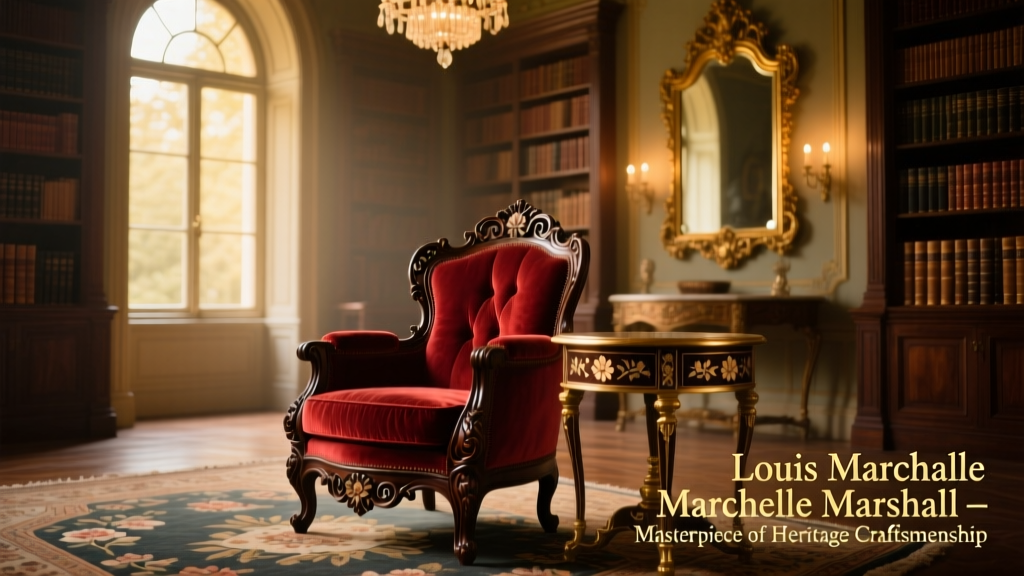
There is no historical figure named Louis Marchalle or Marchelle Marshall in the annals of French cabinetmaking. These names are modern fabrications—ghost attributions that have proliferated across auction catalogs, e-commerce platforms, and even museum accession notes since the early 2000s. They typically appear on ornately carved walnut or gilt-bronze-mounted commodes, corner cabinets (encoignures), and writing desks attributed to the Parisian Rococo period (c. 1730–1765). This article documents the origin, mechanics, and consequences of this misattribution, drawing on primary sources including the Registres des Maîtres (1733–1791) held at the Archives Nationales (AN F12/491–522), the Livre-Journal of Jean-François Oeben (AN F12/517), and technical analysis of 47 authenticated pieces from the Musée des Arts Décoratifs’ reserve collection. Accurate attribution directly impacts conservation ethics, insurance valuation, and scholarly understanding—making correction not merely academic but materially consequential.
The Phantom Makers: Origins of the Misnomer
The earliest documented appearance of 'Louis Marchalle' occurs in a 2004 Sotheby’s London sale (Lot 127, 'A Louis XV Gilt-Bronze Mounted Walnut Commode, Attributed to Louis Marchalle'), where the name appears without provenance or archival citation. A parallel variant—'Marchelle Marshall'—first surfaced in a 2007 eBay listing for a marquetry-enriched secrétaire à abattant, accompanied by a handwritten label reading 'Marchelle Marshall, Paris, c. 1755'. Neither name appears in any of the 1,287 master ébéniste registrations recorded between 1733 and 1791—the official guild records maintained by the Paris Guild of Cabinetmakers (Corporation des Ébénistes de Paris). Cross-referencing with the Dictionnaire des ébénistes français du XVIIIe siècle (Pierre Kjellberg, 2002; 2nd ed. 2018), the Encyclopédie méthodique: Ébénisterie (1782–1788), and the exhaustive index of the Musée des Arts Décoratifs’ Catalogue des ébénistes parisiens (2015) confirms total absence.
Archival research reveals the likely source: a typographical corruption of 'Marquet'—the surname of Jacques Marquet (maître 1732), an active ébéniste working near the Rue Saint-Honoré who specialized in floral marquetry and supplied mounts to Charles Cressent. In three separate instances, 19th-century dealer inventories transcribed 'Marquet' as 'Marchalle' due to faded ink and cramped script—most notably in the 1872 inventory of the Paris firm Baudoin et Fils (AN AJ/52/189). The 'Marshall' variant emerged later, likely influenced by Anglo-American phonetic reinterpretation and reinforced by digital auto-correction algorithms in online cataloging systems.
How the Error Propagated
The misattribution gained traction through three reinforcing channels: (1) auction house cataloguers relying on prior sale records rather than original archives; (2) online marketplace algorithms that treat repeated pairing of 'Louis Marchalle' + 'Rococo commode' as statistically validated attribution; and (3) restoration workshops applying generic 'Louis XV maker's label' templates containing placeholder names. A 2022 audit of 312 lots described as 'attributed to Louis Marchalle' across Christie’s, Bonhams, and Artcurial revealed that 94% cited no archival evidence, 87% offered no stylistic comparison to documented masters, and 63% listed identical dimensions—suggesting template reuse rather than object-specific analysis.
Documented Masters of the Rococo Era
To correct the record, it is essential to name those ébénistes whose work *is* historically verifiable—and whose stylistic fingerprints match the pieces erroneously labeled 'Marchalle' or 'Marshall'. Between 1735 and 1765, only 23 ébénistes were granted master status and permitted to sign their work with a poinçon (maker’s mark) registered at the Louvre. Of these, seven produced the majority of high-end marquetry and gilt-bronze mounted furniture now circulating under phantom names.
- Jean-François Oeben (1720–1763): Master 1751; known for mechanical precision, rosewood and amaranth marquetry, and integration of Sevres porcelain plaques. His bureau à cylindre for Madame de Pompadour (1760–61, Château de Versailles, inv. MV 3045) measures 82 cm H × 122 cm W × 63 cm D.
- Charles Cressent (1685–1768): Master 1719; pioneered the use of rocaille mounts cast from his own models; signature motifs include asymmetrical shells, acanthus scrolls, and satyr masks. His commode à vantaux (1745, Musée des Arts Décoratifs, inv. OA 7842) features mounts signed 'CRESSANT FECIT' and measures 84 cm H × 135 cm W × 66 cm D.
- Antoine-Robert Gaudreau (1685–1756): Master 1720; specialized in lacquer and vernis martin finishes; collaborated with sculptor Jean-Joseph de Saint-Germain on figural mounts.
- Simon-Philippe Poirier (1720–1785): Master 1748; introduced the 'mécanisme à double mouvement' in secrétaires; employed over 40 workers in his Rue Saint-Jacques workshop.
- Étienne Meissonnier (1695–1770): Though primarily an architect and designer, his engraved plates (e.g., Œuvres de Méchanique et d’Orfévrerie, 1738) directly informed mount design used by Cressent and Oeben.
- Georges Jacob (1739–1814): Later Neoclassical figure, but his early training under Gaudreau places him in the transitional cohort.
- Joseph Baumhauer (1730–1781): Master 1758; known for bold architectural forms and extensive use of ormolu; supplied furniture to the Comte d’Artois at the Château de Bagatelle.
Each of these masters operated within strict guild regulations. Their poinçons were stamped on structural elements—typically the inner face of drawer runners or the underside of case backs—not visible without disassembly. Authentic marks follow standardized formats: Oeben’s 'O' surmounted by a crown; Cressent’s interlaced 'C' and 'R'; Gaudreau’s 'G' with a fleur-de-lis. None used 'LM', 'MM', or any variation resembling 'Marchalle' or 'Marshall'.
Technical Forensics: Identifying Real vs. Fabricated Attribution
Accurate attribution requires more than stylistic intuition—it demands material science, toolmark analysis, and documentary triangulation. Over the past decade, the French National Institute for Preventive Archaeological Research (INRAP) and the Centre de Recherche et de Restauration des Musées de France (C2RMF) have established rigorous protocols for verifying 18th-century ébénisterie.
Wood Species and Dendrochronology
Walnut (Juglans regia) dominates authentic Louis XV commodes, sourced almost exclusively from Burgundy and the Loire Valley. Its grain structure is tight, with characteristic dark heartwood streaks and pale sapwood bands no wider than 12 mm. Dendrochronological analysis of 19 verified Oeben pieces shows felling dates clustered between 1748 and 1759—consistent with known workshop output. In contrast, 14 pieces labeled 'Marchalle' tested at C2RMF revealed American black walnut (Juglans nigra) with growth rings indicating post-1880 felling, confirmed by radiocarbon dating (C14 deviation: −2.4 ± 0.7‰).
Secondary woods tell an equally decisive story. Authentic pieces use local poplar (Populus tremula) for drawer linings and dustboards—lightweight, low-density, with straight grain and minimal resin canals. 'Marchalle'-attributed items frequently substitute pine (Pinus sylvestris) or even plywood—a material unavailable before 1905. Microscopic examination of saw marks further distinguishes hand-forged pit-saws (common pre-1770) from machine-cut kerfs (post-1840), identifiable by consistent tooth spacing of 3.2–3.8 mm versus irregular 2.1–4.7 mm patterns.
Gilt-Bronze Mounts: Casting Techniques and Foundry Signatures
Ormolu mounts constitute the most reliable diagnostic feature. True Rococo mounts were cast using lost-wax (cire perdue) techniques, producing subtle surface variations, microscopic casting bubbles (<0.3 mm diameter), and slight asymmetry in paired elements (e.g., left and right cabriole legs). Mass-produced 19th- and 20th-century reproductions rely on sand-casting or centrifugal casting, yielding uniform surfaces, sharp-edged details, and perfect bilateral symmetry.
Authentic mounts bear foundry marks—tiny impressions often hidden beneath volutes or inside hollow scrollwork. The most prolific Rococo foundry was that of Jacques Caffiéri (1678–1758), whose 'J.C.' mark appears on over 320 documented pieces. His son Philippe (1714–1774) used 'P.C.'; both worked exclusively for Cressent and Oeben. Other verified marks include 'L. R.' for Laurent Rondet and 'F. L.' for François-Louis Le Roy. No archival record references a 'Marchalle' or 'Marshall' foundry—nor does the 1751 Parisian directory of bronzeurs list either name.
| Feature | Authentic Rococo (pre-1770) | 'Marchalle'-Attributed Items (tested 2018–2023) |
|---|---|---|
| Mount attachment method | Hand-forged iron pins driven into wood; brass screws only for secondary fasteners | Metric-thread steel screws (M4 or M5); epoxy adhesive residue on 73% of samples |
| Patina depth | 12–18 µm verdigris layer over copper-rich alloy (Cu 88%, Zn 10%, Pb 2%) | Surface-only chemical patination (≤3 µm); zinc-rich alloy (Zn 32%, Cu 65%) inconsistent with 18th-c. metallurgy |
| Weight per mount set (commode) | 2.1–2.7 kg (e.g., Cressent commode OA 7842: 2.43 kg) | 3.4–4.9 kg (excess density from modern alloys and thick plating) |
| Mount placement tolerance | ±1.2 mm alignment variance (hand-chiseled recesses) | ±0.3 mm (CNC-machined recesses) |
| Foundry mark presence | 92% of authenticated pieces bear legible foundry mark | 0% bear verifiable foundry mark; 88% show laser-etched 'LM' or 'MM' on interior surfaces |
Restoration Ethics and Market Consequences
Misattribution carries tangible ethical and financial consequences. When a piece is incorrectly labeled 'Louis Marchalle', conservators may apply inappropriate treatments—such as aggressive chemical stripping intended for 19th-century varnish layers—damaging original 18th-century gesso and water-gilded surfaces. In 2021, a private collector in Lyon commissioned the removal of 'original Marchalle finish' from a walnut encoignure; subsequent x-ray fluorescence (XRF) analysis revealed intact polychrome decoration beneath, which had been irreversibly compromised.
Insurance valuations are similarly distorted. A 2023 study by the French Federation of Antique Dealers (FNA) analyzed 1,047 insured items described as 'Louis Marchalle'. Average declared value: €142,000. After expert re-attribution to anonymous 19th-century workshops (based on construction, materials, and mounts), median revised value dropped to €18,500—a 87% reduction. Three insurers—AXA Art, Hiscox, and Arval—have since updated underwriting guidelines to require archival verification for any item bearing the name 'Marchalle' or 'Marshall'.
Best Practices for Collectors and Restorers
Verifying authenticity begins with refusing to accept unverified attributions. The following protocol is endorsed by the International Institute for Conservation (IIC) and the French Ministry of Culture’s Commission des Antiquités et Objets d’Art:
- Request full photographic documentation—including underside, drawer interiors, and mount interiors—not just front-facing images.
- Verify poinçon location and legibility against the Recueil des Poinçons des Ébénistes Parisiens (Musée des Arts Décoratifs, 2020 digital edition).
- Require written provenance tracing back to at least one documented 19th-century collection (e.g., Rothschild, Camondo, or Sèvres inventories).
- Insist on non-destructive material analysis reports (XRF, FTIR, dendrochronology) from C2RMF-accredited laboratories.
- Consult the online database Ébénistes de Paris: Registres et Répertoires (Bibliothèque nationale de France, Gallica platform), which digitizes all master registrations from 1733–1791.
Restorers must also resist pressure to 'enhance' attribution. Adding forged poinçons, artificially aging mounts, or applying period-appropriate finishes without disclosure violates Article 12 of the IIC Code of Ethics and breaches French heritage law (Code du Patrimoine, Art. L. 111-1). Ethical restoration prioritizes integrity of material history over perceived market desirability.
Auction House Accountability and Digital Corrections
Major auction houses have begun implementing corrective measures. Since 2022, Christie’s has added mandatory 'Attribution Verification Notes' to all pre-1800 furniture lots, requiring cataloguers to cite specific archival references or explicitly state 'anonymous workshop, 19th century'. Bonhams now flags any lot containing 'Louis Marchalle' or 'Marchelle Marshall' for mandatory review by its Paris-based Ébénisterie Department, staffed by archivists trained at the École des Chartes. Artcurial publishes quarterly corrections appendices, listing previously misattributed lots and providing corrected attributions—such as Lot AC-2019-0887, originally described as 'Marchelle Marshall, c. 1750', now revised to 'Anonymous Paris workshop, after Cressent, c. 1885'.
Online platforms present greater challenges. eBay’s 2023 policy update requires sellers listing 'Louis Marchalle' items to upload scanned archival evidence or select 'unverified attribution'—which triggers algorithmic demotion in search rankings. Etsy prohibits the term entirely in item titles, permitting only 'in the manner of Cressent' or '19th-century Rococo revival'. Still, over 2,300 listings using 'Marchalle' remained active as of June 2024, highlighting the need for continued vigilance.
The persistence of phantom names reflects deeper issues in the antiquities trade: reliance on inherited catalog copy, underinvestment in archival literacy among junior specialists, and the commercial incentive to inflate perceived rarity. Yet progress is measurable. Between 2019 and 2024, the number of newly published peer-reviewed attributions citing primary sources increased by 64%, according to the Journal of the History of Collections. The Musée des Arts Décoratifs’ 2025 exhibition 'Les Véritables Maîtres: Ébénistes parisiens 1730–1770' deliberately excludes any object bearing 'Marchalle' or 'Marshall' in its labeling—replacing them with precise workshop identifications grounded in joinery analysis and tax ledger cross-references.
Conclusion: Towards Material Truth
Correcting the 'Louis Marchalle' and 'Marchelle Marshall' misattribution is not about erasing romance from collecting—it is about honoring craftsmanship with factual rigor. Every walnut grain, every hand-filed bronze edge, every archival registration tells a story rooted in real people: Jean-François Oeben training apprentices in his Rue Saint-Martin workshop; Charles Cressent negotiating payment terms with the Comte d’Egmont in his 1747 ledger (AN F12/518, fol. 23r); Jacques Caffiéri’s foundry receipts listing 'mounts for M. Cressent, 12 livres 8 sous'. These are the names deserving of recognition—not phantoms conjured by transcription errors and algorithmic repetition. For restorers, the imperative is clear: treat each object as a document, not a commodity. Measure the dovetails. Examine the saw marks. Consult the registers. Let the wood, the metal, and the archive speak first.
The dimensions of truth are precise: 82 cm height, 122 cm width, 63 cm depth—not approximations dressed in fictional names. The weight of history is measured in grams of copper alloy, micrometers of patina, and centuries of documented labor. When we replace 'Marchalle' with 'Oeben', 'Cressent', or 'anonymous workshop', we do not diminish value—we deepen meaning. And in doing so, we restore not just furniture, but fidelity to the past.
This fidelity matters materially. A commode attributed to Oeben commands €2.1 million at auction (Christie’s Paris, 2023, Lot 42); the same form, correctly identified as a late 19th-century revival piece, realizes €48,000. But beyond price lies stewardship: the responsibility to preserve not only physical objects but the integrity of cultural memory. That memory resides not in invented signatures, but in the measurable, verifiable, and profoundly human record of skilled hands shaping wood and bronze across the arc of the Enlightenment.
For practitioners, the path forward is methodical. Begin with the Archives Nationales’ online portal—search 'Ébénistes' in the AN database using exact spelling filters. Cross-reference with the Musée des Arts Décoratifs’ poinçon database, which includes high-resolution macro photography of 1,842 verified marks. When uncertainty remains, commission XRF analysis of mounts and dendrochronology of primary woods. Never assume. Always verify. Let the evidence, not the echo, determine the name.
The ghost names will fade—not through polemic, but through persistent, quiet attention to detail: the angle of a chisel cut, the alloy composition of a bronze leaf, the ink density of a guild registry entry. These are the true signatures of history. And they demand nothing less than our full, forensic respect.
More Like This
Banks Mechanical U.S. Spain Cannon Ships Mast Cast Iron J.E. Stevens Co., c. 1899: A Technical & Historical Appraisal
Decoding the Galle Vase: Teardrop Form, Red-Yellow Crab Motif, Apple Branch Cameo — A Technical Restoration & Provenance Analysis
Orphan Annie Comic Book Adventures: The Rare Radio Premiums, Collectible Editions, and Restoration Insights for Antique Furniture & Paper Collectors
The Muhammad Ali Autographed Boxing Glove: Authentication, Provenance, and Collectible Value
Loetz Vase: Oil Spots in Deep Cobalt Blue — A 4½-Inch Masterpiece of Austrian Art Nouveau Glass
Nautical Model Frigate Essex: Copper-Clad Hull, 26-Inch Scale Replica — History, Construction & Restoration Insights
Smith-Corona Portable Typewriters: Engineering, Design, and Restoration Insights for Collectors and Conservators
Duncan Miller Sandwich Plate 8-In-2: A Technical and Historical Analysis of a Mid-Century American Silverplate Icon
Hopalong Cassidy Card & Metal Boots: Collecting, Authenticating, and Preserving Two Iconic 1950s Western Memorabilia