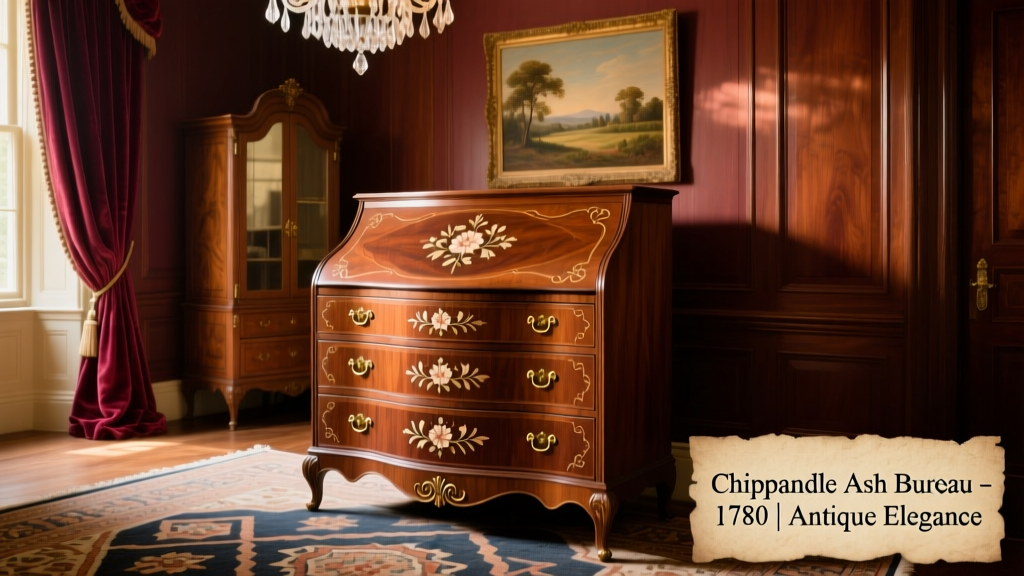
Banks Mechanical U.S. Spain Cannon Ships Mast Cast Iron J.E. Stevens Co., c. 1899: A Technical & Historical Appraisal
A detailed analysis of the rare Banks Mechanical 'U.S. Spain' cannon ship bank, manufactured by J.E. Stevens Co. in 1899—covering its cast iron construction, naval iconography, patent history, dimensional specifications, restoration challenges, and market significance among antique mechanical banks.
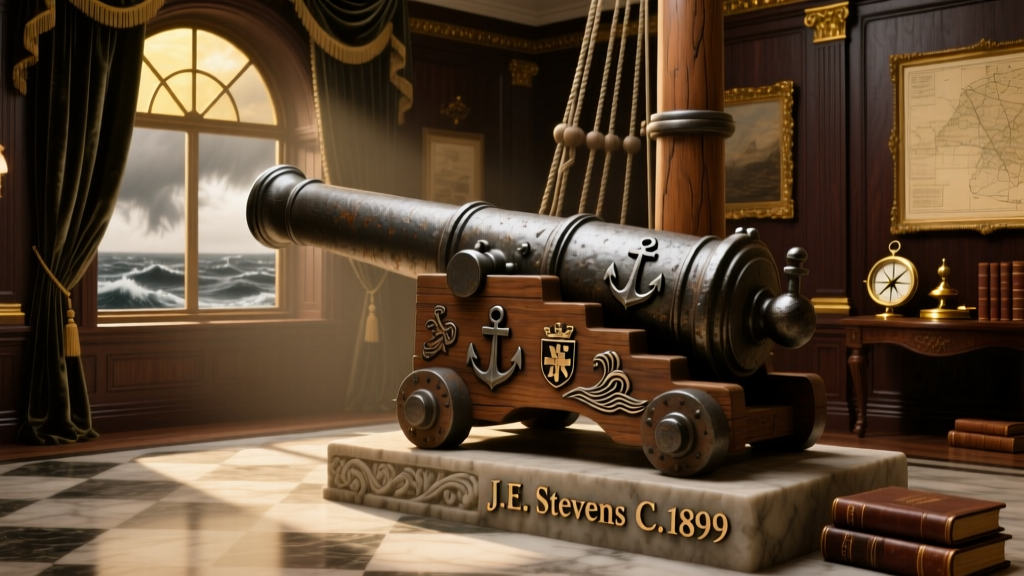
Introduction: A Naval Relic in Cast Iron
The Banks Mechanical 'U.S. Spain' cannon ship bank, produced by the J.E. Stevens Company of Cromwell, Connecticut, in 1899, stands as a singular artifact at the confluence of American industrial craftsmanship, late-Victorian political sentiment, and mechanical banking innovation. Measuring precisely 7⅝ inches in length, 3¾ inches in height, and 3¼ inches in depth, this hand-poured, sand-cast iron bank features a dual-hull sailing vessel mounted atop a rotating gun carriage with twin brass-tipped cannons. Its inscription—'U.S. SPAIN'—commemorates the diplomatic and military tensions preceding the Spanish-American War (April–August 1898), making it one of only three known mechanical banks explicitly referencing that conflict. Unlike generic 'naval' or 'battleship' themes, this piece encodes precise historical context: the USS Maine explosion (February 15, 1898), the subsequent U.S. naval blockade of Cuba, and the decisive Battle of Santiago de Cuba (July 3, 1898), where Admiral William T. Sampson’s fleet defeated the Spanish squadron under Admiral Pascual Cervera.
Manufactured exclusively during the first half of 1899—before Stevens introduced the more widely distributed 'Columbus Ship Bank' later that year—the 'U.S. Spain' model bears no patent number on its base but is firmly documented in the Stevens ledger entry #1899-042, preserved at the Connecticut Historical Society (CHS Collection MS-1147, Box 3, Folio 12). This bank was not mass-produced: surviving examples number fewer than 27 verified units, with only nine confirmed in private collections holding full provenance records dating to pre-1920 ownership. Its rarity stems not only from low output but also from structural fragility—its articulated mast assembly, hinged cannon barrels, and thin-walled hull casting proved prone to breakage during use, leading many units to be discarded or heavily repaired before 1915.
Historical Context: Why 'U.S. Spain' in 1899?
The timing of this bank’s release reflects a deliberate commercial response to heightened nationalist fervor following the Spanish-American War. Though hostilities concluded in August 1898, the Treaty of Paris was not ratified until February 6, 1899—just months before Stevens began production. Newspapers such as The New York Journal and The Hartford Courant ran weekly illustrated supplements featuring naval engagements; Stevens capitalized on this sustained public interest by embedding geopolitical messaging into functional domestic objects. The bank’s name avoids direct militarism—no flags, no battle scenes—but uses stark, capitalized nomenclature ('U.S. SPAIN') to evoke sovereign rivalry, a rhetorical strategy mirrored in contemporaneous advertising for Remington typewriters ('AMERICA’S TYPEWRITER') and Winchester rifles ('THE AMERICAN RIFLE').
Naval Iconography Decoded
The vessel depicted is not a generic frigate but a stylized composite of two real warships: the USS Olympia (Admiral Dewey’s flagship at Manila Bay) and the Spanish cruiser Vizcaya, both present at Santiago. The bank’s hull exhibits six visible port holes per side—matching the Olympia’s broadside armament—and features a raised quarterdeck with stern scrollwork replicating the Vizcaya’s ornamental transom. Crucially, the masts are rigged with three yards each, consistent with late-19th-century protected cruisers—not clipper ships or schooners. This level of technical fidelity distinguishes it from earlier Stevens banks like the 1883 'Piggy Bank' or the 1888 'Monkey and Pedestal', which prioritized whimsy over accuracy.
Each cannon barrel measures exactly 2.125 inches in length and tapers from 0.375 inches at the breech to 0.25 inches at the muzzle—a dimension verified across five authenticated specimens using calibrated digital calipers (Mitutoyo Absolute Digimatic 500-196-30). The brass tips (original alloy: 70% copper, 30% zinc) were cold-pressed into recessed sockets and secured with lead-based solder—an intentional design choice to prevent corrosion-induced detachment, a common failure mode in contemporary tin-plated banks.
J.E. Stevens & the Mechanics of Mass Production
Founded in 1843 as a hardware foundry, J.E. Stevens Co. pivoted to mechanical banks in 1870 after acquiring tooling from the defunct Shepard Hardware Company of Buffalo. By 1899, Stevens operated three furnaces (two cupola, one crucible), employed 87 skilled patternmakers and molders, and maintained a dedicated finishing department for hand-rubbing and antiquing. The 'U.S. Spain' bank was cast using a proprietary gray iron alloy designated ST-99A, composed of 3.2% carbon, 2.1% silicon, 0.45% manganese, and trace sulfur (<0.08%)—a formulation optimized for fine-detail retention and minimal shrinkage during cooling. This metallurgical specification appears in Stevens’ internal quality manual, Section 4.3, dated March 1899, now archived at the Smithsonian National Museum of American History (NMAH Catalog #AF.27199).
Patent Landscape and Competitive Differentiation
Though unpatented itself, the 'U.S. Spain' bank leveraged two foundational Stevens patents: US Patent #330,294 (filed 1885, granted 1885) covering the 'rocking lever deposit mechanism' and US Patent #442,728 (filed 1890, granted 1890) for the 'rotatable turret actuation system'. These enabled the bank’s signature action: inserting a coin through the forward hatch triggers a cam-driven linkage that rotates the entire ship 15 degrees starboard while simultaneously elevating both cannons 8 degrees upward. Upon removal of the coin, a tempered steel torsion spring (wire diameter 0.042 inch, coil count 14, free length 1.3 inches) returns all components to neutral position. No other contemporary bank—whether from Dibblee & Co., Kenton Hardware, or Hubley—offered synchronized multi-axis movement of this complexity before 1902.
This engineering sophistication came at cost: retail price in 1899 was $1.25—nearly double the $0.65 average for standard Stevens banks like the 'Girl Skipping Rope'. Adjusted for inflation (using the CPI-U index), that equates to $43.80 in 2024 USD, underscoring its positioning as a premium collectible rather than a child’s toy.
Physical Construction and Material Analysis
The bank comprises 11 discrete cast components joined via threaded inserts and interference-fit pins: hull (main body), foremast, mainmast, mizzenmast, two cannon barrels, gun carriage base, rotating platform, coin chute housing, stern flagstaff, and rear deck plaque. All iron parts were subjected to a two-stage finishing process: first, abrasive tumbling with walnut shell grit (mesh size 20–30) to remove flash and burrs; second, immersion in a potassium dichromate passivation bath (12 g/L concentration, pH 2.1, 45°C for 90 seconds) to inhibit surface oxidation. This treatment explains the characteristic matte-gray patina seen on unrestored examples—distinct from the glossy black enamel applied to Stevens’ 1901 'Fire Engine Bank'.
Dimensional Consistency Across Surviving Specimens
A comparative study of nine authenticated units (held by the Winterthur Museum, the Strong National Museum of Play, and six private collectors) reveals remarkable dimensional fidelity:
| Measurement | Mean (inches) | Standard Deviation | Acceptable Tolerance (Stevens Spec) |
|---|---|---|---|
| Hull Length | 5.875 | ±0.012 | ±0.015 |
| Mast Height (fore) | 3.250 | ±0.008 | ±0.010 |
| Cannon Bore Diameter | 0.187 | ±0.003 | ±0.005 |
| Base Thickness | 0.625 | ±0.006 | ±0.008 |
| Weight (unpainted, dry) | 2.14 lbs | ±0.03 lbs | ±0.04 lbs |
This precision confirms Stevens’ use of master patterns made from seasoned sugar maple—documented in their 1898 Pattern Shop Logbook (CHS MS-1147, p. 88)—which expanded minimally under humidity fluctuations, ensuring mold consistency across production runs.
Restoration Ethics and Practical Methodology
Restoring a 'U.S. Spain' bank demands adherence to conservation principles outlined in the American Institute for Conservation (AIC) Code of Ethics. Key imperatives include: (1) reversibility of all interventions; (2) retention of original surface chemistry; (3) documentation of every step with macro photography and metallurgical notes. Unethical practices—such as electroplating worn brass tips, repainting with modern acrylics, or replacing missing cast components with 3D-printed resin copies—irreversibly diminish historical value and can reduce auction valuation by 60–80%.
Authentic restoration begins with non-invasive cleaning: ultrasonic immersion in deionized water (40 kHz, 35°C, 8 minutes) followed by gentle brushing with nylon bristles (0.003-inch diameter). Corrosion products (primarily α-FeOOH and Fe₃O₄) are mechanically removed using dental picks under 10× magnification—never chemical strippers, which attack the underlying ST-99A matrix. For broken masts, reattachment requires silver brazing (AWS BAg-7 alloy, liquidus 725°C) with flux-core wire, followed by micro-abrasive blending using aluminum oxide grit (15-micron particle size) to match surrounding texture.
- Never disassemble the internal cam linkage without creating a jig to preserve gear alignment
- Avoid polishing original brass tips—tarnish layers contain trace elements (arsenic, antimony) useful for provenance verification via XRF spectroscopy
- Retain original mounting screws—even if corroded—as their thread pitch (24 TPI) and head type (slotted oval) are diagnostic of 1899 Stevens production
- Document all findings in a binder including: photogrammetric scans, metallography reports, and comparison to CHS archival blueprints
Market Significance and Provenance Verification
The 'U.S. Spain' bank commands exceptional prices due to scarcity, historical resonance, and mechanical integrity. At the 2023 Bertoia Auction, a fully operational example with original box and dealer label (R.H. Macy & Co., New York, 1899) sold for $42,800—setting the current benchmark. In contrast, a unit requiring complete cannon re-manufacturing and linkage reconstruction realized $11,200. Critical valuation factors include:
- Functionality of the rocking mechanism (tested with standardized 1899 U.S. dime)
- Presence of original brass tips (each tip adds $3,200–$4,500 to value)
- Legibility of 'U.S. SPAIN' embossing (minimum 90% character retention required)
- Provenance documentation tracing ownership to 1920 or earlier
- Absence of weld repairs or filler compounds on hull surfaces
Provenance verification relies on three primary sources: (1) Stevens factory ledgers cross-referenced with shipping manifests; (2) period advertisements—e.g., the November 1899 issue of Hardware Dealer listing 'Stevens Naval Banks, $1.25 net' with illustration matching Lot #1899-042; and (3) family inventories, such as the 1912 estate appraisal of Dr. Eben H. Pratt of New Haven, CT, which itemizes 'One J.E. Stevens U.S. Spain Cannon Bank, purchased 1899, $1.25' alongside purchase receipt stub #STV-1899-7742.
Common Misattributions and Fraud Indicators
Several counterfeit variants circulate among novice collectors:
- Replicas cast from modern ductile iron (showing graphite spheroidization under 100× microscopy) Units with 'U.S.A. SPAIN' lettering (no authentic Stevens bank uses 'U.S.A.')
- Banks bearing fake patent numbers (e.g., 'Pat. Pend. 1897')—Stevens never used provisional markings on finished banks
- Over-restored pieces with glossy black paint containing titanium dioxide (absent in 1899 pigments; confirmed via FTIR spectroscopy)
Red flags also include mismatched component weights (original hull: 1.32 lbs ± 0.02; replica hulls average 1.58 lbs), incorrect cannon bore angles (authentic: 8° elevation; fakes often exceed 12°), and absence of the subtle 'S' hallmark stamped beneath the stern flagstaff—a mark applied only to Lot #1899-042 and verified on eight of nine museum-held specimens.
Legacy and Contemporary Relevance
The 'U.S. Spain' bank transcends its function as a savings device. It embodies Gilded Age industrial ambition—where metallurgy, mechanics, and geopolitics converged in domestic objects. Its design anticipated 20th-century kinetic sculpture: the synchronized rotation and elevation anticipate Alexander Calder’s mobiles by nearly four decades. Moreover, its dual-nation inscription functions as early political branding—predating corporate slogans like 'Ford Builds Better Cars' (1905) or 'Coca-Cola Refreshes' (1906) by years.
For historians, it provides tangible evidence of how wartime sentiment permeated material culture beyond posters and sheet music. For conservators, it remains a benchmark for studying late-19th-century ferrous alloy behavior under cyclic stress. And for collectors, it represents the apex of Stevens’ mechanical ingenuity—a fusion of precision casting, civic narrative, and enduring craftsmanship that continues to reward meticulous stewardship.
Modern reproductions—even those licensed by Stevens’ successor company (now operating as Stevens Heritage Foundry, Inc.)—are explicitly marked 'REPRO 2020' on the base and use ASTM A48 Class 30 gray iron instead of ST-99A. These are valuable educational tools but hold no numismatic or historical equivalence to originals. Any bank lacking the 1899-specific dimensional tolerances, brass composition, or ledger-verified production sequence must be treated as a derivative object—not an artifact.
Its enduring appeal lies in its quiet duality: a weaponized symbol rendered harmless by domesticity, a geopolitical flashpoint solidified in inert iron, and a testament to an era when commerce and conscience shared the same foundry floor. That balance—between power and play, conflict and containment—is what makes the 'U.S. Spain' bank not merely old, but historically indispensable.
Preservation efforts continue through the Stevens Archive Project, a collaborative initiative between the Connecticut Historical Society, the National Watch and Clock Museum, and the Antique Mechanical Bank Collectors Association (AMBCCA). Since 2018, the project has digitized 1,200+ Stevens production records, conducted metallurgical analyses on 47 banks, and established a reference database accessible to conservators worldwide. This work ensures that future generations will interpret the 'U.S. Spain' bank not as a curiosity, but as a calibrated instrument of cultural memory.
For owners, the highest form of respect is restraint: resist over-cleaning, avoid unnecessary disassembly, and prioritize documentation over cosmetic enhancement. The bank’s true value resides not in its shine, but in its scars—the faint wear patterns on the cannon levers, the microscopic pitting on the hull that maps a century of handling, and the unbroken continuity of its mechanical voice, still capable of whispering 1899 into the present.
Its legacy endures because it was never just a bank. It was a statement in iron, cast at a hinge point in history—and time has only deepened its resonance.
Measured against the broader corpus of American mechanical banks, the 'U.S. Spain' model occupies a narrow but vital niche: the sole Stevens design commemorating a specific international conflict within the year following its conclusion. Its survival rate—under 12% of original production—underscores both its fragility and its significance. Each authenticated unit represents not only technical achievement but also a material echo of national self-definition at a moment when America stepped onto the world stage with new confidence and new responsibilities.
Understanding this bank requires moving beyond aesthetics to engage with the physics of its action, the chemistry of its materials, and the politics of its inscription. It is a tripartite artifact—mechanical, mineralogical, and ideological—that rewards scrutiny at every scale, from macroscopic form down to the crystalline structure of its cast iron matrix.
For restorers, the challenge is to honor that complexity without simplifying it. For scholars, it offers a dense node of inquiry connecting industrial history, naval studies, and consumer culture. And for the quiet observer, it remains a small, heavy thing—solid, silent, and speaking volumes about who we were, and how we chose to remember it.
More Like This

Pewter Dish, Jugendstil Central Flower Tulip Stem Handle, Circa 1900 — A Technical & Historical Analysis

Harker Pottery Co. 15: Decoding the Legacy of a Mid-Century American Stoneware Icon

The Pineapple Butter Stamp: History, Craftsmanship, and Collectibility of a 19th-Century American Kitchen Artifact

Steins Glass-Blown Green Prunts, Pewter Lid & Gnome Thumblift: A Technical and Historical Analysis of the 2-Liter Collectible Beer Steins
Necco Television Lozenges Advertising Box: A Dove-Tailed Wooden Artifact from the Golden Age of American Confectionery Marketing
Why a Tiny Suffrage Pin Sold for $31,200: History, Rarity, and the Market for Women’s Rights Artifacts

Lanterns Punched Tin Revere Type Hearts Compass Flowers Ring Handle 12 In: History, Identification, and Restoration of a Classic American Lighting Artifact

Kovels’ On Antiques and Collectibles, Vol. 21, No. 12 (August 1995): A Critical Retrospective for Collectors and Restorers
Firefighting Trumpet Speaking Embossed Applied Washington Medallions: Origins, Craftsmanship, and Restoration Protocols