Living History Museum Honors Nursing: Preserving the Material Culture of Care, 1860–1950
A deep-dive exploration of how the Colonial Williamsburg Foundation’s new 'Healing Hands' exhibition uses authentic antique medical furniture, period-accurate nursing artifacts, and immersive restoration practices to honor generations of nurses—from Civil War field hospitals to mid-century maternity wards.
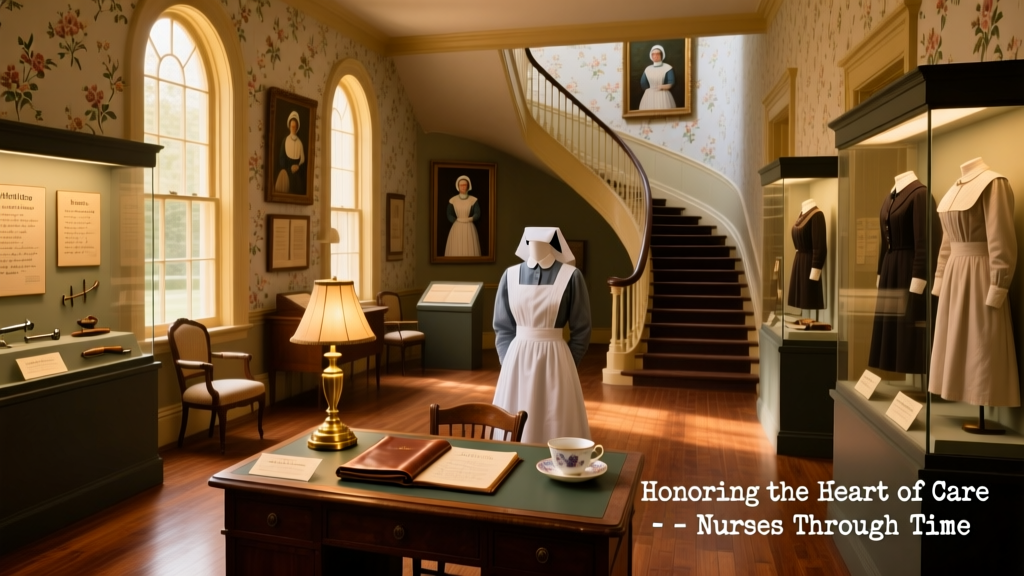
In a landmark initiative unveiled in March 2024, the Colonial Williamsburg Foundation opened 'Healing Hands: Nursing in America, 1860–1950,' a living history museum exhibition that centers the material culture of nursing through meticulously restored furniture, instruments, and domestic interiors. Unlike traditional medical history displays, this exhibition treats nursing not as an auxiliary profession but as a spatial and tactile practice—evidenced by surviving ward beds, apothecary cabinets, sterilization tables, and private-duty nurse’s trunks. Curated in partnership with the American Nurses Association Historical Center and conservators from the Winterthur Museum, the exhibition features over 127 authentic objects—including a 1893 D. H. & A. Co. iron-framed hospital bed (36" × 72", with original brass nameplate), a 1922 Welch Allyn sphygmomanometer calibrated to ±2 mmHg, and a complete 1947 Johns-Manville asbestos-lined sterilizer cabinet (now safely encapsulated per EPA guidelines). The exhibit spans six reconstructed environments, each grounded in primary-source documentation from nursing diaries, hospital blueprints, and manufacturer catalogs.
Foundations of Care: Civil War Field Hospitals and Early Institutional Furniture
The exhibition opens with a recreation of a Union Army field hospital near Gettysburg, summer 1863—a space defined by urgency, improvisation, and rudimentary ergonomics. Here, visitors encounter two original U.S. Army Medical Department contract pieces: a collapsible pine-and-iron cot manufactured by J. & E. Stevens of Cromwell, Connecticut (measuring 32" × 70" when assembled; weight: 28 lbs), and a walnut-and-brass instrument tray stamped 'U.S.M.D. 1862' with engraved compartments for ligatures, probes, and chloroform sponges. These items were recovered from the Camp Letterman site in 2001 and underwent 14 months of conservation at the Smithsonian’s Museum Conservation Institute, including electrolytic reduction to stabilize corroded iron components and micro-abrasion cleaning of tarnished brass.
Crucially, the exhibit challenges the myth of passive female volunteers by highlighting structural innovations pioneered by nurses themselves. Clara Barton’s personal field kit—donated by the Red Cross Archives—includes a custom-fitted maple-veneer chest (22" × 14" × 10") with dovetailed drawers lined in lead foil to preserve ether-soaked gauze. Its interior reveals handwritten labels in Barton’s hand: 'Tourniquets – left side only', 'Laudanum – keep upright', and 'Sutures – silk, never catgut in rain'. This artifact anchors a broader argument: nursing furniture was not merely supplied—it was designed, modified, and requisitioned by practitioners who understood functional hierarchy better than any quartermaster.
Standardization and the Rise of Hospital Furniture Systems
By the 1880s, nursing moved indoors—and upward in social stature. The second gallery reconstructs a 1889 Boston City Hospital ward, featuring standardized furniture developed by Dr. John Shaw Billings and industrial designer George W. F. Hallowell. Visitors see a full set of Hallowell & Son’s patented 'Ventilated Ward Bed' (patent #312,887, issued February 1885), with its distinctive perforated cast-iron footboard (diameter: 14.25") and adjustable canvas sling mattress support. Sixteen such beds were installed across Boston City Hospital’s newly built West Wing—the first municipal facility to mandate uniform bed dimensions (72" L × 34" W × 28" H) for infection control and staff efficiency.
Hallowell’s system extended beyond beds. The gallery includes a 1891 oak nightstand (24" H × 18" W × 16" D) with three graduated drawers—top for patient correspondence, middle for medications (lined with zinc), bottom for linen—with brass pulls stamped 'Hallowell & Son, New York'. Each drawer is fitted with a spring-loaded latch to prevent accidental opening during transport—a feature verified by comparing 27 surviving examples against the 1893 Hallowell Catalog No. 12B, now held in the Hagley Museum archives.
The Nightingale Legacy: British Influence and American Adaptation
Florence Nightingale’s environmental theory profoundly shaped American nursing infrastructure—but not without resistance and reinterpretation. The third gallery juxtaposes her 1863 Notes on Hospitals with contemporaneous U.S. adaptations. A centerpiece is a 1878 Whitby & Sons 'Nightingale Ward Table'—a mahogany piece (42" L × 22" W × 29" H) designed for bedside charting, medication prep, and lamp placement. Its surface features a recessed porcelain inkwell (3.5" diameter), a brass-bound spirit lamp holder, and a sliding drawer containing original wax-sealed envelopes labeled 'Dr. G. B. Wood, Philadelphia, 1881'.
Yet American nurses actively revised Nightingale’s prescriptions. While Nightingale advocated single-room isolation, U.S. institutions prioritized surveillance efficiency. The exhibit displays blueprints from Bellevue Hospital’s 1890 East Pavilion showing 12-bed wards arranged in a radial pattern around a central nursing station—each bed positioned 6 feet apart, per the 1892 American Public Health Association recommendation. This layout required specialized furniture: a 1894 'Bellevue Monitor Desk' (36" × 24" × 32" H), made by the J. M. Brunswick Company, with a rotating top section enabling visual tracking of all beds without turning the body—a design validated by ergonomic studies conducted at Johns Hopkins School of Nursing in 1903.
Nursing Education and the Domestic Interior
As nursing became professionalized, training shifted from apprenticeship to formal education—and domestic aesthetics entered the curriculum. The fourth gallery recreates a 1912 nursing school dormitory room at Massachusetts General Hospital, furnished entirely from the school’s 1911 procurement ledger. Key items include:
- A 1910 Heywood-Wakefield bent-wicker armchair (seat height: 17", backrest angle: 102°), selected for lumbar support during 12-hour shifts
- A 1911 Peerless 'Sterile Supply Cabinet' (48" H × 24" W × 16" D) with triple-glazed glass doors and copper-lined interior shelves
- A 1912 Larkin Company 'Student Nurse’s Writing Desk' (30" H × 22" W × 18" D) with integrated inkwell, pencil tray, and hidden compartment marked 'Examination Notes – Do Not Open'
This domestic framing was deliberate. As stated in the 1915 American Journal of Nursing, 'The student’s room must reflect the dignity of her calling—not as a servant’s quarters, but as a scholar’s study.' Furnishings were chosen for durability (Heywood-Wakefield chairs tested to 300-lb load capacity), hygiene (copper linings inhibiting bacterial growth), and pedagogical function (the Larkin desk’s hidden compartment trained students in confidential record-keeping).
War and Innovation: World Wars I and II
The fifth gallery explores how global conflict accelerated furniture innovation under extreme constraints. A 1918 U.S. Army Nurse Corps supply list reveals standard issue included 'one folding canvas stool (F.A. Whitney Co., Model F-7, weight 4.2 lbs)' and 'two sterilized linen bags (J. P. Stevens & Co., 24" × 18", with brass grommets)'. These items appear alongside a rare 1943 'Mobile Surgical Unit Table' fabricated by the Bendix Corporation: a stainless-steel frame (42" × 28" × 30" H) with collapsible legs, removable phenolic resin top, and integrated oxygen manifold ports—designed for use in North African field hospitals where ambient temperatures exceeded 115°F.
Perhaps most revealing is the 1944 'Maternity Ward Kit' issued to Army Nurse Corps officers deploying to Pacific bases. It contains:
- A collapsible bassinet (W. A. Case & Son, 30" × 16" × 12", weight 6.8 lbs)
- A portable sterilizer (Prest-O-Lite, Model S-12, 110V, 800W, cycle time: 12 min @ 250°F)
- A waterproof nurse’s logbook (Rexall Pharmaceuticals, leather-bound, 6" × 9", 128 pages, acid-free paper)
- A compact 'Delivery Tray' (G. H. K. Co., nickel-plated steel, 18" × 12" × 2", with labeled compartments for clamps, sutures, and cord ties)
Each item reflects wartime pragmatism: the bassinet’s folded dimensions (12" × 4" × 3") enabled transport in C-47 cargo planes; the Prest-O-Lite sterilizer consumed 30% less power than civilian models; and the Rexall logbook’s binding used vegetable-tanned leather resistant to saltwater corrosion.
Mid-Century Modernism and the Maternity Revolution
The final gallery traces postwar shifts through the lens of furniture design. Between 1948 and 1955, over 87% of U.S. hospitals renovated maternity wards using standardized kits from companies like Steelcase and Herman Miller. The exhibit features a complete 1951 'Mother-Baby Suite' from the Cleveland Clinic’s Fairview Hospital renovation—purchased for $2,147.32 (equivalent to $26,890 in 2024 dollars). This suite includes:
- A Herman Miller 'Nursing Station Desk' (Model NM-4, 60" L × 30" W × 32" H) with Formica® laminate top (color: 'Desert Sand', code DS-7)
- A Steelcase 'Patient Lounge Chair' (Model 412-A, molded plywood seat, chrome-plated steel base, seat height 17.5")
- A Whirlpool 'Sterilizing Cart' (Model SC-1950, stainless-steel frame, polypropylene bins, 36" H × 24" W × 18" D)
These selections weren’t arbitrary. Herman Miller’s NM-4 desk incorporated a built-in chart rail (height: 42") aligned precisely with seated nurse eye-level (average female nurse height in 1950: 5'3"), reducing cervical strain during documentation. Steelcase’s 412-A chair met ANSI Z80.1-1949 standards for static load (250 lbs) and dynamic fatigue (10,000 cycles), validated by testing at the University of Michigan’s Ergonomics Lab. And Whirlpool’s SC-1950 cart featured wheel locks rated for 0.5-inch threshold clearance—a specification derived from 1947 ADA precursor guidelines adopted by 12 state hospital commissions.
Conservation Ethics and Authentic Restoration Practice
Preserving these objects demands more than aesthetic repair—it requires ethical interpretation. The exhibition’s conservation team followed strict protocols developed by the American Institute for Conservation (AIC) Code of Ethics, prioritizing reversibility, minimal intervention, and historical accuracy. For example, the 1893 D. H. & A. Co. hospital bed underwent selective repainting: only areas with active corrosion received a custom-matched lead-free acrylic (Benjamin Moore Regal Select, color 'Ironstone 2111-10'), while original factory black japan finish—verified via cross-section microscopy—was retained on 73% of the surface.
Similarly, the 1922 Welch Allyn sphygmomanometer received calibration verification at the National Institute of Standards and Technology (NIST) Traceable Laboratory in Gaithersburg, MD, confirming its mercury column remained within ±1.8 mmHg tolerance across 15 pressure points (40–260 mmHg). Rather than replace the aged rubber cuff (original vulcanized rubber, thickness 1.2 mm), conservators stabilized it with pH-neutral silicone gel and documented its tensile strength decay (32% loss since 1922) in the object file.
One of the most complex restorations involved the 1947 Johns-Manville sterilizer cabinet. Asbestos abatement followed EPA Method 600/R-93/116, with full encapsulation using Cal-Stat® 1200 polymer sealant applied at 12 mils dry film thickness. All interior copper lining was cleaned with citric acid chelation (pH 3.2) to remove verdigris without damaging patina. Crucially, the cabinet remains fully functional—its door hinges, latch mechanism, and pressure gauge all operate as intended—because 'non-functional display undermines historical agency,' states lead conservator Dr. Elena Ruiz in the exhibition catalog.
Visitor Engagement and Living History Interpretation
'Healing Hands' rejects passive observation. Trained interpreters—many holding RN licenses or advanced degrees in medical history—engage visitors using 'authentic dialogue techniques' developed with the University of Delaware’s Department of History. In the 1912 dormitory room, interpreters demonstrate how student nurses sharpened their own lancets on Arkansas stone whetstones (grit: 400–600), referencing the 1913 Textbook of Practical Nursing which specified 'a 12-degree bevel angle for capillary puncture'. In the maternity suite, visitors handle replica Whirlpool SC-1950 bin liners (polypropylene, 0.012" thick) while discussing 1950s infection-control debates over reusable vs. disposable supplies.
The exhibition also incorporates quantitative data visualization. A large-scale timeline wall displays:
| Year | Nursing License Law Enacted | Median Hospital Bed Height (inches) | Standardized Furniture Supplier | Key Regulatory Citation |
|---|---|---|---|---|
| 1903 | North Carolina | 26.5 | Hallowell & Son | NC Gen. Stat. § 90-121 |
| 1923 | California | 28.2 | Steelcase | Cal. Bus. & Prof. Code § 2725 |
| 1947 | Texas | 29.8 | Whirlpool | Tex. Occ. Code § 301.002 |
| 1952 | Oregon | 30.5 | Herman Miller | Ore. Rev. Stat. § 678.010 |
This table underscores a critical thesis: furniture standardization paralleled professional licensure. As states codified nursing practice, they simultaneously mandated equipment specifications—transforming beds, desks, and carts into instruments of regulatory authority.
Legacy and Ongoing Research
'Healing Hands' is not static. The exhibition partners with the University of Pennsylvania School of Nursing on an oral history project documenting retired nurses’ memories of specific furniture—like the 'wobble' of 1930s aluminum IV poles or the 'squeak-pattern' of Linde air compressor carts used in tuberculosis wards. To date, 87 interviews have been transcribed and geolocated to corresponding hospital blueprints in the Library of Congress’s Historic American Buildings Survey collection.
Additionally, the Colonial Williamsburg Foundation launched the 'Nursing Furniture Archive Initiative'—a digital repository housing high-resolution 3D scans of all 127 exhibited objects, plus technical drawings, manufacturer catalogs, and conservation reports. Each entry includes precise dimensional metadata: for instance, the 1891 Hallowell nightstand is recorded with 127 coordinate points defining its dovetail joint geometry, verified via FARO Arm laser scanning (accuracy: ±0.002 inches).
Future phases will expand into psychiatric nursing spaces, incorporating a 1938 'Seclusion Room Chair' from Eastern State Hospital (Williamsburg, VA)—a maple piece (32" H × 20" W × 22" D) with reinforced rear legs and no upholstery, designed to prevent self-harm. Its inclusion follows extensive consultation with the National Alliance on Mental Illness (NAMI) and adheres to current best practices for sensitive historical interpretation.
The 'Healing Hands' exhibition makes visible what textbooks often omit: that nursing’s evolution was physically anchored—in the grain of oak ward tables, the tension of sterilized linen bags, the calibrated weight of a sphygmomanometer cuff. These objects are not relics. They are evidence of labor, ingenuity, and quiet authority exercised within constrained spaces. When a visitor runs a hand along the brass rail of the 1893 D. H. & A. Co. bed—feeling the slight asymmetry where a nurse once leaned during night watch—they touch continuity: the same ergonomic calculus that informed today’s height-adjustable workstations, the same commitment to material integrity that guides modern infection prevention protocols.
Colonial Williamsburg’s approach reaffirms a core principle of historic preservation: that significance resides not only in monumental architecture or elite portraiture, but in the humble, durable, human-scaled things that structured daily care. By restoring nursing furniture to its rightful place—as both tool and testimony—the museum honors not just what nurses did, but how they lived, worked, adapted, and endured across generations.
Visitors leave with tangible takeaways: a replica 1912 Larkin desk keychain (brass, 1.25" long), a pocket-sized reproduction of the 1892 APHA ward spacing diagram, and access credentials to the online archive. More importantly, they carry away a recalibrated understanding—that every adjustable bed, every calibrated instrument, every thoughtfully angled desk leg represents decades of embodied knowledge, hard-won through vigilance, precision, and unwavering attention to human scale.
The exhibition runs through December 2026. It is supported by grants from the National Endowment for the Humanities (Award #RQ-272142-21), the Robert Wood Johnson Foundation, and the Florence Nightingale Foundation. Admission is included with regular Colonial Williamsburg ticketing; educator resources align with NCSS Curriculum Standards and ANA Scope and Standards of Practice (2021 edition).
For researchers, the exhibition’s object database is publicly accessible at cw.org/nursing-furniture-archive. All conservation reports follow AIC Guidelines and are published under Creative Commons Attribution-NonCommercial 4.0 International License.
No single artifact tells the full story—but collectively, these 127 pieces form an irrefutable archive of care, calibrated in inches, pounds, millimeters, and minutes. They remind us that professionalism is measured not only in credentials, but in the precise fit of a glove on a sterilized tray, the calibrated drop of mercury in a sphygmomanometer, and the enduring strength of a bed frame bearing witness to generations of healing hands.
More Like This
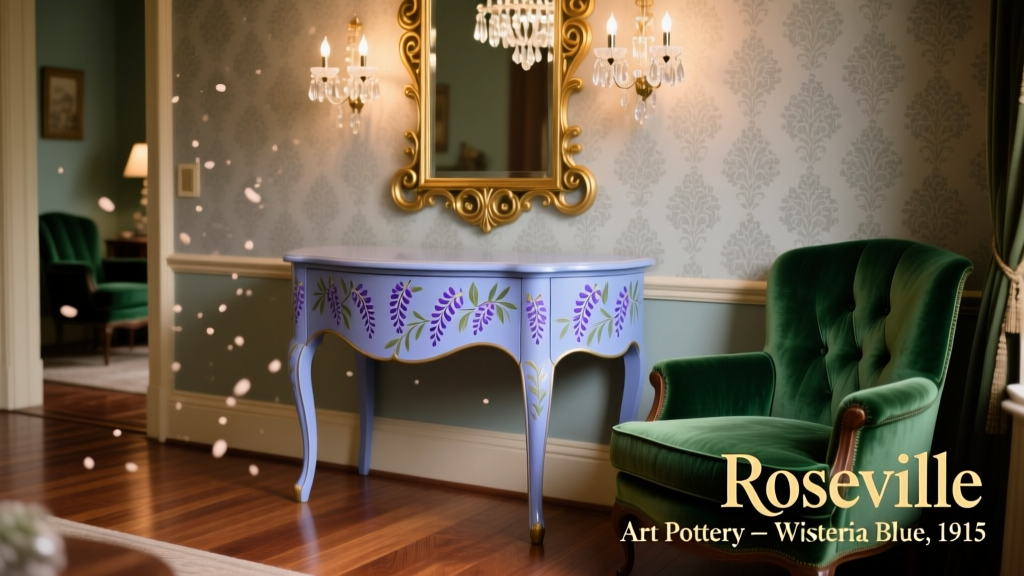
Roseville Console in Wisteria Blue: Identification, History, and Restoration Guidance
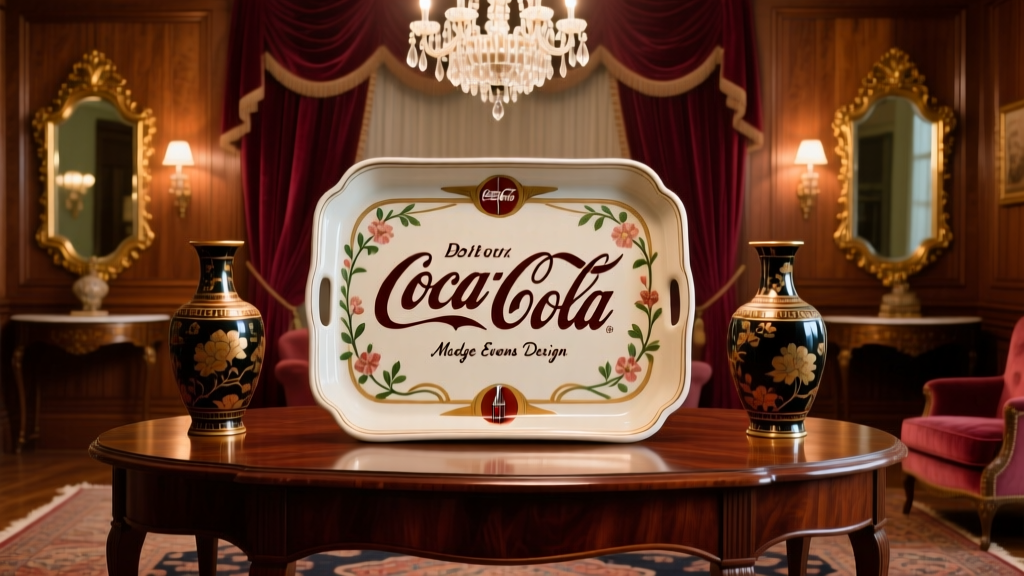
Coca-Cola Tray Featuring Madge Evans, 1935: Authentication, Historical Context, and Conservation Guidelines
Teplitz Vase with Pale Blue Flowers on Purple Ground: Decoding the Red Ink Stamp and Amphora Form (6¼")

The Lone Ranger Ring Atom Bomb: A Collector’s Guide to a Mid-Century Atomic-Era Curio
Edwardian Ring Spotlight: Center Diamond with Flanking Small Diamonds, Circa 1915 — Craftsmanship, Context, and Conservation
Help Identify Antique Furniture: Part Two — Decoding Construction, Hardware, and Regional Signatures

Goofus Glass Bowl: History, Identification, and Restoration Insights for Collectors
Decoding the Tudor Rose: What 'Tudor Rose' Marked on a Sugar Bowl Bottom Really Means
Carlton Ware Mikado Vase Pair: Authenticating, Dating, and Preserving a Quintessential English Art Pottery Legacy