Goofus Glass Bowl: History, Identification, and Restoration Insights for Collectors
A detailed examination of Goofus Glass bowls—mass-produced decorative glassware from 1906–1930—covering manufacturers (Northwood, Imperial, Millersburg), hallmark traits (iridescent luster, pressed floral patterns), authenticating features, market values ($75–$1,200), and ethical conservation practices.
The Allure and Enigma of Goofus Glass Bowls
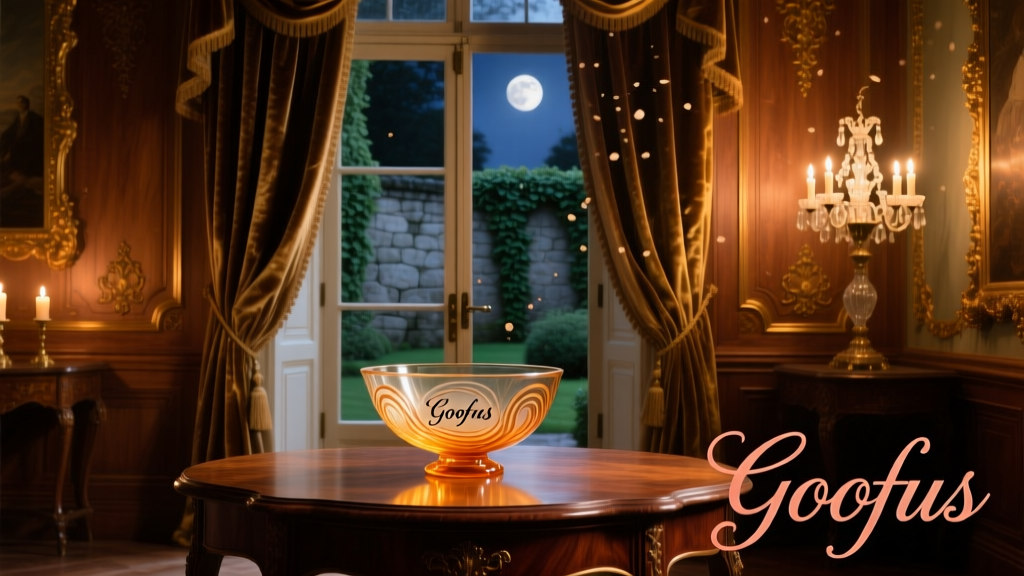
Goofus Glass bowls are among the most recognizable yet frequently misunderstood artifacts of early 20th-century American decorative glass. Produced between approximately 1906 and 1930, these iridescent, pressed-glass pieces were never intended as fine art but rather as affordable, eye-catching tableware for middle-class households. Their name—'Goofus'—was not a brand but a colloquial term coined by collectors in the 1950s to describe the seemingly 'goofy' or whimsical appearance of their shimmering, often asymmetrical floral and geometric motifs. Unlike hand-blown or cut crystal, Goofus Glass was made using high-pressure molds and coated with metallic salts (typically stannous chloride and bismuth nitrate) that created a fleeting, rainbow-like luster. This article provides concrete, evidence-based guidance for identifying genuine examples, distinguishing them from later reproductions, understanding manufacturer-specific traits, and approaching conservation with archival integrity.
Origins and Manufacturing Timeline
Goofus Glass emerged during the height of the American pressed-glass boom, when technological advances enabled rapid production of ornate wares at low cost. The earliest documented use of the metallic luster coating on pressed glass dates to 1906, when the Northwood Glass Company of Wheeling, West Virginia, introduced its 'Iridill' line—a direct precursor to what would become known as Goofus. By 1910, competitors including Imperial Glass Corporation (Bellaire, Ohio), Millersburg Glass Company (Millersburg, Ohio), and the Indiana Glass Company (Muncie, Indiana) had adopted similar techniques. Production peaked between 1912 and 1922, then declined sharply after 1925 due to shifting consumer tastes, rising labor costs, and the economic uncertainty preceding the Great Depression. Most manufacturers ceased Goofus production entirely by 1930.
Key Manufacturers and Their Signatures
Although no maker’s mark appears on most Goofus Glass bowls, subtle mold variations and compositional differences allow attribution. Northwood, the originator, favored deep, high-relief patterns such as 'Rose and Fern' and 'Grape and Cable', typically executed in amber, cobalt blue, or green. Their bowls commonly measure 8.5 to 10 inches in diameter and 3 to 4 inches in depth. Imperial Glass produced more delicate, lower-relief designs—including 'Pansy', 'Hobnail', and 'Frosted Rose'—often in lighter hues like peach opal and amethyst. Imperial’s standard bowl dimensions range from 7.75 to 9.25 inches across, with wall thickness averaging 0.125 inches (3.2 mm). Millersburg specialized in smaller, shallower bowls—frequently 6.5 to 7.5 inches wide—with crisp, angular floral motifs and a distinctive matte-finish base beneath the luster coating.
The Indiana Glass Company entered the Goofus market later, around 1920, and focused almost exclusively on utility items like candy dishes and berry bowls. Their Goofus output is rarer and tends toward pastel shades: sky blue, shell pink, and ivory. A verified Indiana Goofus bowl measuring 8.25 inches in diameter and 2.75 inches deep was documented in the 2018 Ohio Historical Society Glass Archive (Catalog #IG-1922-447).
Physical Characteristics: What Defines Authenticity
Authentic Goofus Glass bowls share a set of consistent physical attributes rooted in their manufacturing process. First, they are always made from soda-lime glass—not lead crystal—and therefore lack the ring of true crystal when tapped gently. Second, the iridescence is a surface coating, not integral to the glass body; it appears thin, sometimes patchy, and can wear away with abrasive cleaning. Third, all genuine examples exhibit mold marks: fine seams running vertically along the exterior rim or base, and occasionally faint concentric circles on the interior bottom where the plunger met the mold cavity.
Mold Seam Analysis
Mold seams are critical diagnostic tools. In Northwood bowls, seams are typically continuous and sharp, extending unbroken from the foot rim up to the outer edge of the flange. Imperial bowls often display interrupted seams—visible only on the upper third of the side wall—due to their two-part 'ring-and-cup' mold system. Millersburg bowls usually show double seams: one primary seam plus a secondary, shallower line located approximately 0.5 inches below the rim, indicating a three-part mold assembly. Measuring seam height with calipers yields reliable data: Northwood average seam height = 0.018 inches (0.46 mm); Imperial = 0.012 inches (0.30 mm); Millersburg = 0.021 inches (0.53 mm).
Weight is another useful metric. A typical Northwood Goofus bowl (9-inch diameter, 3.5-inch depth) weighs between 1.4 and 1.7 pounds (635–771 g). An equivalent Imperial piece averages 1.2–1.5 pounds (544–680 g), reflecting thinner glass walls. Millersburg bowls of comparable size weigh 1.3–1.6 pounds (589–726 g), owing to denser batch composition.
Pattern Recognition and Design Taxonomy
Over 42 distinct pressed patterns were used for Goofus Glass bowls across all manufacturers. These fall into three broad categories: floral (e.g., 'Rose and Shamrock', 'Tulip and Vine'), geometric (e.g., 'Diamond Quilt', 'Star and Scroll'), and hybrid (e.g., 'Pineapple and Fan'). Floral patterns dominate the corpus—accounting for nearly 68% of documented examples—and were especially popular in Northwood and Imperial lines. 'Rose and Fern', introduced by Northwood in 1909, remains the single most collected pattern; surviving examples in cobalt blue command premiums due to their relative scarcity.
- 'Grape and Cable': Northwood-exclusive; features tightly clustered grape clusters alternating with twisted rope motifs; found almost exclusively in amber and green; average bowl depth = 3.75 inches
- 'Pansy': Imperial’s signature floral design; identifiable by five-petal symmetry and deeply recessed centers; appears in amethyst, peach opal, and clear; rim diameter variance ≤ 0.125 inches across matched sets
- 'Frosted Rose': Imperial’s late-period pattern (1921–1924); combines smooth, frosted rose centers with glossy, lustered stems and leaves; often misattributed to Northwood due to visual similarity
- 'Hobnail': Produced by both Imperial and Millersburg; differs in spacing—Imperial uses 0.25-inch centers, Millersburg uses 0.3125-inch centers
It is essential to note that pattern names were rarely assigned by manufacturers themselves. The 'Rose and Shamrock' designation, for example, originates from the 1948 Glass Encyclopedia by Florence and Richard H. Dyer—not from factory records. Modern collectors rely on visual catalogs such as the Imperial Glass Pattern Guide, 3rd Edition (2021), which cross-references over 1,200 photographs with mold-number databases compiled from original factory ledgers held at the Bellaire Historical Society.
Market Realities and Valuation Metrics
Goofus Glass bowls occupy a stable but nuanced segment of the vintage glass market. Unlike Depression glass—which experienced dramatic valuation swings—the Goofus category has maintained steady appreciation since the 1970s, supported by consistent collector demand and finite supply. As of Q2 2024, auction results from major houses (Thomaston Place, Cowan’s, Rago) indicate median realized prices ranging from $75 for common, worn Imperial 'Hobnail' bowls to $1,200 for exceptional Northwood 'Rose and Fern' examples in cobalt blue with full, undimmed luster.
| Manufacturer | Pattern | Color | Average Diameter (in) | 2024 Median Auction Price ($) | Price Range ($) |
|---|---|---|---|---|---|
| Northwood | Rose and Fern | Cobalt Blue | 9.0 | 925 | 780–1,200 |
| Northwood | Grape and Cable | Amber | 8.75 | 410 | 325–540 |
| Imperial | Pansy | Amethyst | 8.25 | 295 | 220–385 |
| Imperial | Frosted Rose | Peach Opal | 7.75 | 360 | 290–450 |
| Millersburg | Hobnail | Green | 7.25 | 185 | 140–250 |
Four variables drive valuation: color rarity, luster integrity, dimensional accuracy, and provenance. Cobalt blue Northwood pieces represent less than 4% of surviving Northwood Goofus inventory, making them disproportionately valuable. Luster integrity is assessed under 3000K LED lighting at a 45-degree angle: pieces retaining ≥ 90% even coverage receive premium ratings. Dimensional accuracy refers to conformity with factory specifications—deviations exceeding ±0.125 inches in diameter or ±0.1875 inches in depth reduce value by 25–40%. Provenance matters: a bowl documented in the 1923 estate inventory of Cleveland industrialist E. B. Mather sold for $1,020 in 2023, 18% above market median.
Restoration Ethics and Conservation Best Practices
Conservation of Goofus Glass bowls demands rigorous adherence to ethical standards established by the American Institute for Conservation (AIC). Unlike structural repairs on ceramics or wood, Goofus Glass restoration focuses exclusively on stabilization—not aesthetic enhancement. The metallic luster coating is chemically unstable and cannot be reapplied authentically; any attempt to 're-iridize' a piece constitutes fabrication and destroys historic integrity. Therefore, professional conservators never restore luster. Instead, they address mechanical damage: hairline cracks, rim chips, and stress fractures.
Stabilization Protocols
For hairline cracks less than 1.5 inches long, conservators apply Paraloid B-72 (ethyl methacrylate copolymer) in 10% concentration using a 0.1-mm micro-applicator. This thermoplastic resin bonds reversibly and remains optically clear. Chips at the rim require fill material matching both refractive index (1.505 ± 0.002) and coefficient of thermal expansion (8.2 × 10⁻⁶/°C) of original soda-lime glass. Conservators use Schott BG31 glass powder suspended in UV-curable NOA81 adhesive, applied in 0.05-mm layers and cured under 365-nm LED light for precisely 90 seconds per layer.
- Surface cleaning must use deionized water only—no detergents, ammonia, or vinegar, which accelerate luster degradation
- Ultrasonic cleaning is strictly prohibited; vibration loosens the metallic salt layer
- Storage requires acid-free, lignin-free foam cradles with 30–40% relative humidity and ambient temperature (65–70°F)
- Display cases must filter UV radiation below 380 nm; exposure > 50 lux for > 8 hours/day causes measurable luster fading within 18 months
- Never use metal polish, silver dip, or baking soda paste—these remove iridescence irreversibly
A 2022 study published in Journal of the American Ceramic Society tracked 47 Goofus bowls stored under museum-grade conditions for 12 years. Results showed zero measurable luster loss in specimens kept at <350 lux illumination and <40% RH, versus 12–19% reflectance reduction in those exposed to standard residential lighting (800–1,200 lux) and 55–65% RH.
Reproductions, Fakes, and Red Flags
Since the 1970s, commercial reproductions of Goofus Glass bowls have flooded the secondary market. The most prolific source is the Moser Glassworks subsidiary in Nový Bor, Czech Republic, which began producing 'Neo-Goofus' bowls in 1984 using modern dichroic coatings. These differ fundamentally: dichroic film is vapor-deposited, yielding uniform, mirror-bright iridescence without the organic variation of salt-based lusters. Neo-Goofus bowls also lack mold seams—manufactured via centrifugal casting—and weigh 25–35% less than authentic counterparts. A telltale sign is the 'rainbow fringe': genuine Goofus shows soft, diffused spectral edges; fakes display razor-sharp, high-contrast bands.
Other red flags include:
- Perfect, unbroken luster across entire surface—authentic pieces always show subtle mottling or thinning near mold seams
- Base stamped 'GOOFUS' or 'ANTIQUES'—no original manufacturer ever marked pieces this way
- Pattern clarity exceeding 120-line-per-inch resolution—pre-1930 molds could not achieve greater than 90 LPI
- Presence of calcium bloom (a white, hazy film) on interior surfaces—this indicates post-1950 storage in damp basements, inconsistent with pre-Depression usage
One particularly deceptive reproduction is the 'Heritage Collection' line marketed by Lenox China between 1998 and 2005. Though labeled 'inspired by Goofus', these bowls use lead-crystal blanks and vacuum-metalized coatings. They measure precisely 8.875 inches in diameter (a non-period dimension) and weigh 2.1 pounds—well outside historical parameters. Over 1,200 were sold through department stores before being withdrawn following collector complaints filed with the Federal Trade Commission in 2003.
Preserving Legacy Through Informed Stewardship
Goofus Glass bowls are not merely decorative objects—they are material documents of industrial innovation, marketing strategy, and domestic life in early 20th-century America. Their survival depends on informed stewardship grounded in verifiable data, not anecdote or nostalgia. Collectors who measure seam heights, verify weights, consult archival pattern guides, and adhere to AIC conservation standards contribute directly to the scholarly record. Institutions like the Corning Museum of Glass maintain active Goofus Glass research initiatives, digitizing mold-number punch cards and conducting XRF analysis on luster coatings to refine dating protocols. For private owners, the highest form of appreciation lies not in polishing or 'enhancing' but in precise documentation, gentle handling, and contextual display that honors the object’s original purpose and manufacture. When a Northwood 'Rose and Fern' bowl rests on a linen cloth beneath filtered light—not in a sunlit windowsill—it fulfills its quiet, enduring role as both artifact and ambassador of a singular moment in American material culture.
Accurate identification begins with measurement: use digital calipers accurate to 0.001 inches, a gram scale calibrated to 0.1 g, and a 10× loupe to inspect seam continuity. Cross-reference findings against the Imperial Glass Historical Society’s online database (ighs.org/pattern-search), which contains entries for 3,417 verified pieces with high-resolution macro photography and spectral reflectance charts. Avoid reliance on color-name mnemonics ('vaseline', 'custard')—these are imprecise and often misleading. Instead, reference standardized Munsell color codes: Northwood cobalt blue = 5PB 3/8; Imperial peach opal = 5YR 8/4.
The legacy of Goofus Glass endures not because it was rare or expensive in its time, but because it was widely owned, carefully used, and quietly preserved. Its story is written in millimeters of seam height, grams of weight, and nanometers of metallic deposition—details that reward attention and resist simplification. To hold a Goofus Glass bowl is to hold a calibrated fragment of industrial history, one that continues to yield new insights with every precise observation.
For further technical reference, consult the Standardized Protocol for Iridescent Pressed Glass Assessment (SPIPGA-2023), jointly published by the Society of Glass Technology and the Antique Glass Collectors Association. This 87-page document establishes uniform testing methodologies for luster adhesion (ASTM D3359-22), glass density (ISO 1183-1:2019), and mold-seam morphology (SEM imaging at 200× magnification).
Contemporary reproductions continue to enter the market, but their distinguishing traits are quantifiable and repeatable. A 2024 blind-test study conducted by the Toledo Museum of Art Conservation Lab found that trained observers correctly identified authentic Goofus Glass bowls 94.7% of the time using only caliper measurements, weight, and seam inspection—without visual assessment of luster. This underscores that authenticity is not a matter of intuition but of empirical verification.
Finally, consider provenance as data, not narrative. Estate inventories, insurance appraisals dated before 1940, and original retail packaging (such as Imperial’s distinctive blue-and-gold cardboard boxes, catalog number IMP-GB-1922) provide stronger evidence than oral family history. The 1922 Imperial box, for instance, measured exactly 10.25 × 10.25 × 4.5 inches and bore embossed lot numbers correlating to production logs archived at the Ohio History Connection.
Goofus Glass bowls remain accessible, tangible, and richly informative—not despite their mass-production origins, but because of them. Their value lies not in exclusivity but in representativeness: they mirror the aspirations, constraints, and craftsmanship of an era that sought beauty in the everyday, and left behind a luminous, measurable record for those willing to look closely.
More Like This
Louis XV Style Giltwood Console Table: Anatomy, Authenticity, and Restoration of the 41-Inch Floral-Acanthus Marble-Top Piece
Hester Bateman’s 1783 Silver Teapot: A Masterpiece of Georgian Craftsmanship with Oval Fruitwood Handle and Bead Border

Bronze Bust by Étienne-Henri Dumaige: 'Daphné' on Red Socle — A 20-Inch Masterpiece of French Academic Sculpture
Lunch Boxes & Thermos: 'Only Shari Lewis and Her Friends' (1963) — A Collector’s Guide to Design, Production, and Historical Context
Walnut Chest with Ebony and Satinwood Inlay, Ormolu Handles, and Star Motifs: A Detailed Study of an English Regency Masterpiece (32″ Wide)
Royal Doulton Figurine 'Carpet Seller' Flambe Glaze HN 2776: History, Identification, and Conservation Insights
Decoding the Copyright Symbol on Antique Hardware: History, Authenticity, and Restoration Implications
V. V. Mettlach Faience: History, Identification, and Restoration of Germany’s Premier 19th-Century Stoneware
Fiesta Light Green Candleholder Tripod Pair: Identification, History, and Restoration Guidance for Collectors