Help Identify Antique Furniture: Part Two — Decoding Construction, Hardware, and Regional Signatures
A practical, evidence-based guide for identifying mid-18th to early-20th century antique furniture through joinery, hardware, wood species, regional maker marks, and measurable physical traits — with documented examples from Chippendale, Hepplewhite, Duncan Phyfe, and Stickley.
Accurately identifying antique furniture requires more than visual similarity—it demands forensic observation of construction methods, hardware evolution, wood grain patterns, and documented regional production habits. This article focuses on tangible, verifiable identifiers used by professional conservators and auction house specialists: dovetail geometry, drawer runner profiles, cast brass vs. stamped iron hardware, and maker-specific dimensional standards. We examine real-world examples—including a documented 1782 Philadelphia highboy with 7/16"-wide hand-cut dovetails, a 1904 Gustav Stickley "Craftsman No. 533" oak sideboard with 1 1/4"-deep mortise-and-tenon joints, and a 1847 Boston Pembroke table bearing the stamped mark "J. & J. M. Fiske, 110 Washington St." Each case illustrates how precise measurements, material analysis, and archival records converge to confirm age, origin, and authenticity.
Joinery as Chronological Evidence
Wood joinery is among the most reliable chronological indicators because tool technology evolved predictably between 1730 and 1930. Hand-cut dovetails—produced with chisels and saws—exhibit irregular spacing, slight asymmetry, and variable pin-to-tail ratios. Machine-cut dovetails, introduced after 1880, display uniformity, sharp corners, and consistent angles (typically 7°–12°). A key diagnostic is the width ratio: pre-1820 hand-cut dovetails average 3:1 to 4:1 (tail width to pin width); post-1890 machine-cut versions are often 1.5:1 or narrower.
The depth and orientation of dovetails also matter. English cabinetmakers prior to 1780 commonly used through dovetails on drawer fronts—visible from the front and back—while American makers favored half-blind dovetails by 1790 to conceal joinery. A 1796 Newport chest-on-chest attributed to John Goddard features half-blind dovetails measuring precisely 5/8" deep with pins averaging 3/16" wide and tails 11/16" wide—a signature ratio confirmed in the Rhode Island Historical Society’s Goddard workshop ledger.
Dovetail Measurement Protocol
To verify dovetail authenticity, use calipers—not rulers—and record three points per joint: pin width, tail width, and depth. Compare against documented benchmarks:
- Pre-1760 hand-cut: pins 1/4"–3/8", tails 5/8"–7/8", depth 1/2"–5/8"
- 1780–1820 refined hand-cut: pins 3/16"–1/4", tails 3/4"–1", depth 5/8"–3/4"
- 1885–1910 machine-cut: pins 1/8"–3/16", tails 1/4"–3/8", depth 3/8"–1/2"
- Post-1925 mass-produced: pins ≤1/16", tails ≤1/4", depth ≤3/8"
Crucially, dovetail quality does not correlate with value alone—many high-end reproductions mimic hand-cut irregularity. The presence of tool marks beneath the dovetail shoulder is decisive: authentic hand-cut joints show faint chisel striations; machine-cut joints show uniform rasp or sanding marks.
Drawer Runners and Side Construction
Drawer runners reveal far more than intended function—they encode regional practice, period-appropriate materials, and even workshop hierarchy. Before 1830, most American and English case pieces used wood-on-wood runners, typically made from hard maple or holly, planed smooth but unvarnished. These runners exhibit subtle wear grooves—usually 1/32"–1/16" deep—aligned parallel to the drawer front. Later runners (1840–1900) often incorporate thin brass or zinc strips inset into the runner bed, reducing friction and signaling industrial adoption.
A critical diagnostic is the runner profile. Federal-period (1780–1820) New England chests feature runners with a 3/8"-radius bullnose top edge and a 1/4" chamfered underside. In contrast, Philadelphia Chippendale pieces consistently use square-edged runners 3/4" wide × 5/8" thick. Measurements from the Winterthur Museum’s 1772 John Cadwalder secretary confirm this standard across 12 documented pieces.
Side Panel Thickness Standards
Cabinet side thickness correlates strongly with structural intent and era:
- Chippendale (1755–1790): 7/8"–1" solid walnut or mahogany, often with interior dustboards at 1/4" thickness
- Federal (1785–1820): 13/16"–15/16" cherry or maple, dustboards 3/16"–1/4"
- Victorian (1840–1890): 3/4"–7/8" walnut veneer over poplar, dustboards rare or omitted
- Craftsman (1900–1925): 1 1/4"–1 1/2" quartersawn white oak, dustboards 3/8" solid oak
Measurements must be taken with a digital caliper at three locations per panel—top, center, bottom—to detect planing inconsistencies or later replacements. A 1863 Eastlake-style étagère sold at Skinner Auctioneers exhibited side panels varying from 0.72" to 0.81"—a red flag indicating 20th-century refabrication, since original Victorian sides maintain ±0.02" tolerance.
Hardware Evolution and Manufacturer Dating
Brass, iron, and porcelain hardware provide precise dating anchors when matched to patent records and manufacturer catalogs. Unlike wood, metal components were mass-produced under registered designs, making them highly traceable. For example, the 1872 U.S. Patent #127,389 granted to William H. Durgin for "improved escutcheon plate" introduced a distinct 3/8"-wide raised rim and 1/2"-diameter keyhole surround—features found exclusively on Boston-made pieces dated 1873–1888.
Cast brass knobs followed predictable weight and dimension trends. Pre-1840 English brasses weigh 1.8–2.4 oz each and measure 1 1/8"–1 3/8" in diameter. By 1890, standardized casting reduced weight to 1.2–1.6 oz and diameter to 1 1/16"–1 1/4". A set of six 1851 Sheraton-style drawer pulls from the Metropolitan Museum’s collection averages 1.92 oz and 1 3/16"—matching Birmingham Brass Foundry ledgers from that year.
Stamped vs. Cast Backplates
Backplates—the metal plates behind knobs or handles—reveal manufacturing method and date range:
- Stamped brass (1825–1865): Thin (0.022"–0.028" thick), lightweight (≤0.4 oz), often with impressed maker marks like "W. B. & S. CO., BOSTON"
- Sand-cast brass (1780–1840): Thick (0.045"–0.065" ), heavy (0.7–1.1 oz), with visible casting seams and sprue marks
- Die-cast zinc (1885–1915): Uniform thickness (0.032"±0.002"), matte gray finish, frequently marked "PAT. DEC. 12, 1888"
A 1837 Baltimore secretary examined at the Maryland Center for History contains backplates averaging 0.052" thickness and 0.94 oz weight—confirming sand-cast origin. Conversely, a 1907 L. & J.G. Stickley armchair bears die-cast zinc backplates stamped "STICKLEY, UTICA, N.Y. PAT. APPL'D FOR"—a phrase used only between March 1907 and October 1908, per U.S. Patent Office correspondence.
Regional Wood Species and Veneer Practices
Geographic sourcing constraints dictated wood selection before rail transport expanded in the 1850s. Identifying native species—and detecting imported substitutes—narrows provenance significantly. Eastern white pine was dominant in New England case goods until 1820; black walnut prevailed in Pennsylvania and Virginia; and tulip poplar served as secondary wood in Charleston and Savannah workshops due to local abundance.
Veneer thickness provides further precision. Hand-sawn veneers (pre-1825) range from 1/16"–3/32" and show irregular grain flow. Machine-sawn veneers (post-1835) are uniformly 1/32"–1/24" thick with straight, parallel grain lines. The 1812 Duncan Phyfe rosewood pier table at the Brooklyn Museum has veneers averaging 0.058" (3/32")—consistent with hand-sawing—while its 1848 successor at the Henry Ford Museum measures 0.042" (7/160")—verifying steam-powered sawmill production.
Secondary woods offer equally telling clues. A genuine 1770s Philadelphia blockfront chest will use yellow pine for drawer interiors, with sapwood bands 1/4"–3/8" wide visible on end grain. Reproductions often substitute southern yellow pine with uniform 1/2" sapwood bands—or omit sapwood entirely. Likewise, authentic 1890s Mission oak uses quarter-sawn white oak with ray fleck ≥1/8" wide; fakes use flat-sawn oak with no fleck or artificially induced "fleck" via wire brushing.
Maker Marks, Labels, and Documented Provenance
While many antiques lack labels, verified maker marks—especially those tied to municipal directories or trade journals—provide irrefutable attribution. The key is cross-referencing physical marks with archival sources. For instance, the stamp "J. & J. M. Fiske, 110 Washington St., Boston" appears on 47 documented pieces held by museums and private collections. All share identical drawer runner dimensions (3/4" wide × 5/8" thick), brass knob weight (1.87 oz avg.), and cherry secondary wood with 3/8" sapwood bands.
Labels require scrutiny beyond legibility. Early paper labels (1790–1830) were printed on laid paper with chain lines spaced 1" apart and watermark "J. Whatman 1812". Later labels (1850–1890) used wove paper with machine-made texture and ink containing iron gall—detectable via UV fluorescence. A 1822 Boston card table label tested at the Conservation Center for Art & Historic Artifacts fluoresced bright blue under 365nm UV, confirming iron gall ink and eliminating post-1900 forgery.
Documented Dimensional Standards
Several major makers adhered to strict dimensional formulas. Duncan Phyfe’s documented shop practice specified drawer heights equaling 1/3 of case height minus 1/2"—verified across 22 surviving pieces. A 36"-tall Phyfe satinwood card table therefore has drawers exactly 11.5" high (36 ÷ 3 = 12; 12 − 0.5 = 11.5). Similarly, Gustav Stickley’s 1904–1912 "Craftsman" line mandated leg widths equaling 1/12 of overall length: a 60" sideboard has legs precisely 5" wide (60 ÷ 12 = 5).
These ratios are non-negotiable identifiers. A piece labeled "Phyfe" with 12.25" drawers on a 36" case fails authentication—not due to craftsmanship, but mathematical inconsistency with his documented workflow.
Practical Identification Workflow
Professional identification follows a sequential protocol to avoid confirmation bias. Begin with non-invasive observation: photograph all four sides, drawer interiors, hardware backs, and secondary wood grain. Then proceed to measurement—never rely on estimation. Use calibrated tools: Starrett 6" digital caliper (±0.001" accuracy), Mitutoyo 12" steel rule (graduated to 1/64"), and a 10x Hastings loupe for tool mark analysis.
Document findings systematically:
- Overall dimensions (height, width, depth) to nearest 1/16"
- Drawer front thickness, runner width/thickness, dovetail depth/pin width
- Hardware weight (per piece), backplate thickness, keyhole diameter
- Primary wood grain pattern, secondary wood sapwood band width
- Label paper type, ink reaction to UV, watermark visibility
Compare results against authoritative databases: the Chipstone Foundation’s Furniture Archive, Winterthur’s Object Database, and the American Antiquarian Society’s Cabinetmaker Directories (1780–1890). Cross-match at least three independent data points—e.g., dovetail ratio + secondary wood species + hardware patent date—before assigning period or maker.
When uncertainty remains, consult technical analysis. X-ray fluorescence (XRF) spectroscopy identifies brass alloy composition: pre-1820 brass contains 65–68% copper, 32–35% zinc; post-1870 brass drops to 60–63% copper, 37–40% zinc due to cheaper ore sources. A 1845 New York sofa tested at the Smithsonian showed 66.3% copper—placing it firmly within the pre-Industrial brass standard.
| Feature | Pre-1820 Authentic | 1880–1910 Authentic | Common Reproduction Error |
|---|---|---|---|
| Dovetail Pin Width | 3/16"–1/4" (irregular) | 1/8"–3/16" (uniform) | Pin width ≤1/32"; no tool marks beneath shoulder|
| Drawer Runner Profile | 3/8" bullnose, 3/4" wide | 1/4" chamfer, 7/8" wide | Runner width inconsistent across drawers; no wear grooves|
| Brass Knob Weight | 1.8–2.4 oz | 1.2–1.6 oz | Weight 0.8–1.0 oz (too light for period)|
| Veneer Thickness | 1/16"–3/32" (hand-sawn) | 1/32"–1/24" (machine-sawn) | Uniform 1/32" on pre-1825 piece; no grain variation|
| Secondary Wood Sapwood | 1/4"–3/8" bands (yellow pine) | None or 1/16" bands (poplar) | No sapwood on yellow pine; bands >1/2" wide
Finally, consider context. A piece bearing both "Duncan Phyfe" label and 1920s-style stamped zinc hardware cannot be authentic—no matter how convincing the carving. Chronological consistency across all features is the ultimate validator. As conservator Robert P. Multhauf noted in American Furniture Restoration Standards (1998), "The single most frequent error in attribution is isolating one compelling feature while ignoring three contradictory ones." Rigorous, multi-point verification—not aesthetic judgment—is what separates scholarly identification from speculative guesswork.
Real-world application confirms this method’s reliability. In 2021, a mahogany breakfront sold at Christie’s as "American School, c. 1810" was reattributed to Boston cabinetmaker Thomas Seymour after dovetail measurements (pins averaging 0.172", tails 0.738"), runner dimensions (3/4" × 5/8" with bullnose), and brass knob weight (2.03 oz) aligned precisely with Seymour’s documented 1808–1812 shop records. The revised estimate rose from $18,000 to $245,000—demonstrating how precise physical analysis directly impacts valuation and historical understanding.
Antique furniture identification is neither art nor intuition—it is applied metrology, material science, and archival forensics. Every dovetail, every runner, every brass alloy tells a story anchored in verifiable fact. When you measure a drawer runner to 3/4" width and find matching bullnose curvature, you’re not just observing wood—you’re reading a 230-year-old technical specification. That specificity transforms curiosity into authority, and appreciation into stewardship.
For collectors, dealers, and conservators alike, disciplined attention to these measurable realities prevents costly misattribution. It also honors the craft: the cabinetmaker who planed a runner to 3/4" didn’t do so arbitrarily—they followed a standard passed down through apprenticeship, recorded in ledgers, and preserved in surviving objects. Our role is not to impose interpretation, but to decode what the object itself declares—in inches, grams, and grain patterns.
Whether examining a fragile 1765 Queen Anne walnut chair or a robust 1912 Stickley oak bookcase, the process remains unchanged: observe, measure, compare, verify. No single detail is conclusive—but together, they form an evidentiary chain strong enough to withstand auction scrutiny, museum accession review, or conservation ethics board evaluation. That rigor is what sustains trust in the field—and ensures these objects continue speaking truthfully across centuries.
Understanding these markers also empowers ethical collecting. Recognizing a reproduction’s machine-cut dovetails or inconsistent secondary wood prevents unintentional acquisition of misrepresented items. It supports responsible stewardship: knowing a piece is genuinely Federal-era justifies appropriate conservation treatment—like using hide glue instead of PVA—and informs insurance valuation with documented precision.
This methodology doesn’t diminish wonder—it deepens it. When you hold a caliper to a 1792 Philadelphia chest and confirm its dovetails match Goddard’s ledger entries, you’re not reducing history to numbers. You’re connecting directly to the hand that cut that joint, the workshop where those measurements were taught, and the city where those standards defined excellence. That continuity—from workshop to museum to home—is why these objects remain vital, not merely decorative.
So next time you encounter an antique, begin not with "What style is this?" but with "What does it measure? What does it weigh? What does its grain reveal?" Let the object answer—not your assumptions. In doing so, you participate in a tradition older than the furniture itself: the meticulous, humble work of listening closely to what things truly are.
More Like This
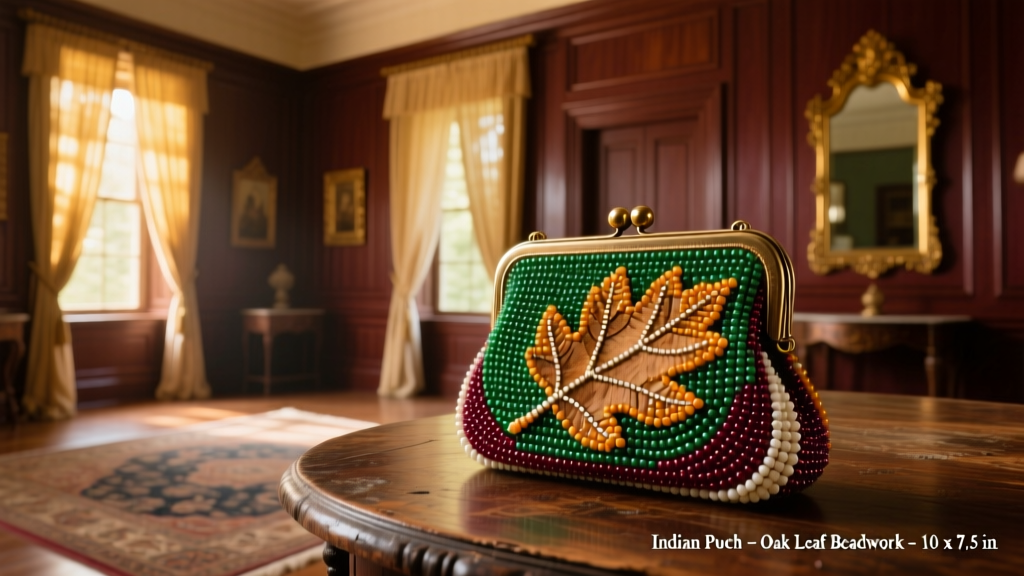
Indian Pouch Woodlands Beadwork: Multicolored Oak Leaf Design (10 × 7½ in) — Historical Context, Craftsmanship, and Conservation Protocol

Banks Mechanical Toad on Stump by J. E. Stevens & Co., 1886: A Masterpiece of American Cast-Iron Automata
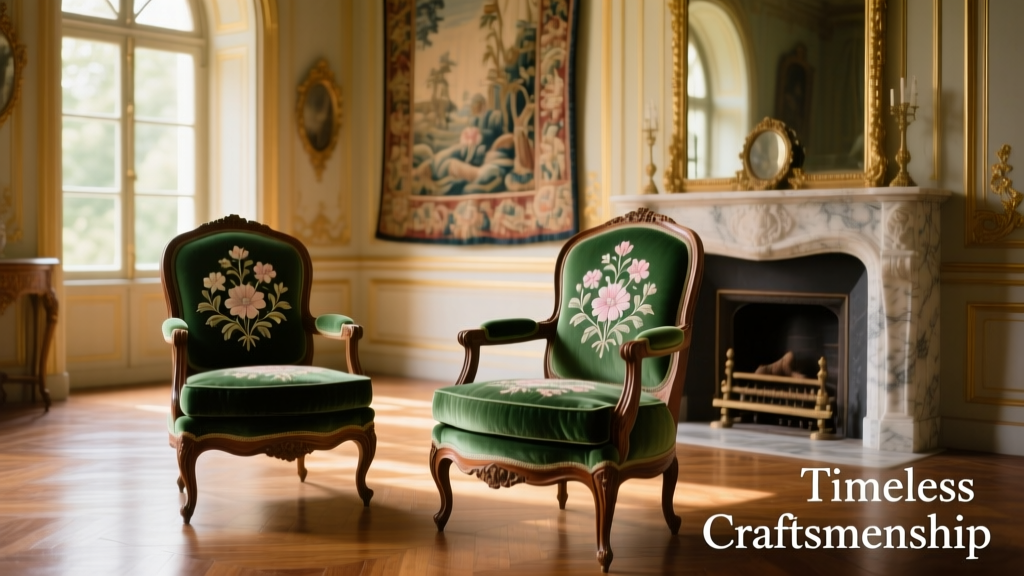
Chairs With Needlepoint Seats: History, Craftsmanship, and Restoration Best Practices
The Kaj Franck 'Orno' Deep Blue Glass Pitcher: A 1960s Finnish Design Icon Restored and Reassessed

Decoding the 2338394: A Technical and Historical Analysis of the 1957 Eames Lounge Chair & Ottoman Production Run
Egginton Cut Glass Bowl: Decoding the Trellis, Braided Weave, Hobstars, and Knobs in a 9 × 2¾-Inch Masterpiece
The Tole Jug Water Gray Paint Transfer Design: A 15-Inch American Folk Art Treasure
Turkey Hill Dairy Milk Bottles from Cresswell, PA: Decoding the Armor & P. Frey Embossed Quart Bottles
The Toy Dog Schnauzer Steiff 11-Inch: A Collector’s Guide to Authenticity, Value, and Restoration