Limoges Bowls and Trays: Authenticity, Craftsmanship, and Restoration Insights
A detailed examination of Limoges porcelain bowls and trays—covering historical manufacturers like Haviland & Co., Bernardaud, and J. L. Bourgeat; identifying marks, dimensions, glaze characteristics; and practical conservation protocols for collectors and restorers.
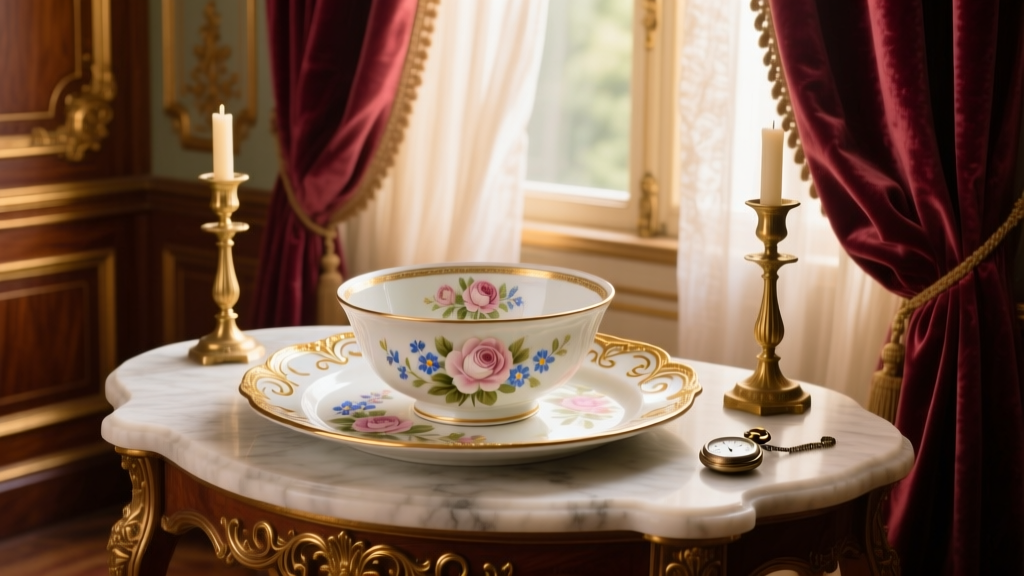
Limoges bowls and trays represent the pinnacle of French porcelain artistry, produced since the late 18th century in the city of Limoges, France—a region endowed with abundant kaolin deposits essential for fine porcelain. Authentic pieces bear hallmarks from renowned manufacturers including Haviland & Co. (founded 1842), Bernardaud (est. 1863), and J. L. Bourgeat (active 1890s–1930s). Typical dimensions range from 6.5 to 14 inches in diameter for bowls and 10 × 7 inches to 18 × 12 inches for oval or rectangular trays. These objects were originally designed for formal dining, dessert service, and decorative display, often hand-painted with cobalt blue underglaze or overglaze enamels featuring floral motifs, gilt banding, or neoclassical borders. Understanding maker’s marks, body composition, and firing techniques is essential for authentication—and equally critical when undertaking professional restoration.
Historical Origins and Regional Significance
The city of Limoges, located in central France’s Haute-Vienne department, became synonymous with premium porcelain following the discovery of high-purity kaolin near Saint-Yrieix-la-Perche in 1768. This white-firing clay, combined with petuntse-like feldspathic stone, enabled local artisans to produce true hard-paste porcelain rivaling Meissen and Sèvres. In 1771, King Louis XV granted royal patronage to the Royal Limoges Porcelain Manufactory, later reorganized as the Manufacture Nationale de Limoges. Though state ownership ended in 1870, the designation ‘Porcelaine de Limoges’ remained protected under French law—requiring all qualifying wares to be fired at temperatures exceeding 1,400°C and composed of ≥45% kaolin by weight.
By the mid-19th century, over 120 independent factories operated within a 15-kilometer radius of Limoges. Among them, Haviland & Co. emerged as a dominant exporter to the United States, establishing its first American showroom in Boston in 1867. Their early trays—such as the 1885 ‘Carnival’ pattern—measured precisely 15.25 × 10.5 inches and featured hand-applied gilding over platinum bands. Meanwhile, J. L. Bourgeat specialized in affordable yet meticulously finished tableware; their 1912 ‘Fleur de Lis’ bowl series included standard diameters of 7.25, 9.5, and 11.75 inches, each stamped with a crowned ‘B’ mark beneath the glaze.
Key Manufacturing Eras
The evolution of Limoges bowls and trays can be segmented into three definitive periods. The Early Industrial Period (1771–1850) emphasized monochrome glazes and simple transfer-printed borders. The Golden Export Era (1850–1914) saw mass adoption of hand-painted decoration, especially for American and British markets. Finally, the Modernist Refinement Period (1920–1955) introduced streamlined forms, matte finishes, and geometric motifs—exemplified by Bernardaud’s 1932 ‘Art Déco Oval Tray’, measuring 16.5 × 9.75 inches with a satin-matte glaze and platinum line accent.
Identifying Authentic Limoges Marks
No single mark guarantees authenticity—rather, verification requires cross-referencing multiple indicators: placement, typography, color, and context. Underglaze blue marks are most common on pre-1920 pieces; overglaze red or gold stamps appear frequently after 1930. Haviland used at least 14 distinct backstamps between 1870 and 1940—including the iconic ‘Haviland & Co. Limoges France’ in serifed block capitals (used 1890–1910) and the simplified ‘Haviland France’ in sans-serif type (1925–1939). A genuine Bernardaud mark features the word ‘Bernardaud’ in raised relief, flanked by two stylized ‘B’ monograms, applied before glazing.
J. L. Bourgeat employed a consistent crown-and-B motif from 1898 until closure in 1938. Crucially, this mark appears only on the underside—not painted on the rim or interior. Counterfeit versions often misalign the crown apex or render the ‘B’ with incorrect serifs. Other verified makers include A. Raynaud (mark: ‘A. Raynaud Limoges’ in cobalt blue script), Pillivuyt (‘Pillivuyt France’ in black ink), and H. B. & Co. (‘H.B. & Co. Limoges’ with an ampersand centered).
Common Mark Variants and Dating Clues
- Haviland: ‘Haviland & Co. Limoges’ (blue, underglaze) = 1870–1890; ‘Haviland & Co. Limoges France’ (blue, underglaze) = 1890–1910; ‘Haviland France’ (red, overglaze) = 1925–1939
- Bernardaud: ‘Bernardaud Limoges’ (blue, underglaze) = 1900–1924; ‘Bernardaud’ (relief, unglazed) = 1925–present
- Pillivuyt: ‘Pillivuyt France’ (black ink stamp) = 1922–1958; ‘Pillivuyt’ (embossed) = post-1958
It is vital to note that pieces marked ‘Made in France’ without ‘Limoges’ or a specific manufacturer’s name are almost certainly post-1960 commercial ware—not antique Limoges. Similarly, any item bearing ‘Limoges France’ in lowercase sans-serif font with no additional maker identification is likely a 1980s–2000s reproduction.
Material Composition and Firing Characteristics
True Limoges porcelain contains a precise triaxial blend: 48–52% kaolin (from Saint-Yrieix), 25–28% quartz (crushed silica), and 20–24% feldspar (locally sourced orthoclase). This formulation yields a vitrified body with a density of 2.42–2.48 g/cm³ and a flexural strength of 120–145 MPa—significantly higher than bone china or soft-paste alternatives. During firing, pieces undergo two cycles: biscuit firing at 980°C to remove organic binders, followed by glost firing at 1,420–1,450°C, where quartz and feldspar fully vitrify, creating translucency and resonance.
Authentic Limoges bowls exhibit a distinctive ring when gently tapped—clear, sustained, and bell-like, lasting 4–6 seconds. Reproductions typically produce a dull thud or short, flat tone. Microscopically, genuine pieces show uniform particle distribution and absence of pinholes or bloating, whereas inferior imitations reveal trapped air bubbles larger than 80 microns and inconsistent glaze thickness (measured at 0.12–0.18 mm via profilometry).
Glaze and Decoration Techniques
Traditional Limoges glazes were lead-free feldspathic formulations, fired to maturity at peak temperature. Cobalt oxide was the primary pigment for underglaze blue decoration—applied using quill pens or fine sable brushes prior to glost firing. Overglaze enamels, including cadmium red, nickel green, and platinum-gold lusters, were painted onto the fired glaze surface and refired at 780–820°C. Gilding was executed either in liquid gold (12–16 karat) or powdered gold leaf burnished with agate, producing a luminous, non-tarnishing finish.
Hand-painted floral motifs—especially roses, violets, and lilacs—were rendered using stippling and wash techniques developed by master decorators such as Émile Decoeur (Haviland, 1885–1912) and Marcel Maitre (Bernardaud, 1928–1951). Each bloom required up to seven successive layers of pigment, with drying intervals of 48 hours between applications to prevent bleeding.
Measuring Dimensions and Standard Forms
Standardization among Limoges manufacturers was surprisingly rigorous—particularly for export lines. Haviland maintained strict dimensional tolerances across its ‘Chantilly’ bowl series: small (6.75″ ± 0.0625″), medium (9.25″ ± 0.0625″), and large (11.75″ ± 0.0625″), all with a uniform depth of 2.125″. Trays followed similar discipline: the ‘Renaissance’ oval tray measured exactly 15.5″ × 9.25″ with a 0.75″ rim height and 0.25″ base thickness.
| Manufacturer | Pattern Name | Bowl Diameter (in) | Tray Dimensions (in) | Production Years |
|---|---|---|---|---|
| Haviland & Co. | Carnival | 7.25, 9.5, 11.75 | 15.25 × 10.5 | 1885–1910 |
| Bernardaud | Art Déco Oval | N/A (tray-only) | 16.5 × 9.75 | 1932–1948 |
| J. L. Bourgeat | Fleur de Lis | 7.25, 9.5, 11.75 | 13.0 × 8.5 | 1912–1935 |
| A. Raynaud | Provence Rose | 8.0, 10.0, 12.5 | 14.0 × 9.0 | 1920–1942 |
| Pillivuyt | Classic Rim | 6.5, 8.75, 10.25 | 12.0 × 7.5 | 1922–1958 |
These specifications reflect factory tooling—lathes, molds, and jigs calibrated to micron-level precision. Deviations exceeding ±0.125″ strongly suggest either workshop variations (pre-1880) or post-manufacture alteration, such as rim grinding or base releveling.
Restoration Protocols and Ethical Guidelines
Professional restoration of Limoges bowls and trays must prioritize material reversibility, structural integrity, and visual coherence—without obscuring original craftsmanship. The American Institute for Conservation (AIC) mandates that all interventions comply with the Code of Ethics and Guidelines for Practice, particularly Principle 1: ‘The conservation professional shall strive to sustain the aesthetic, historic, and physical integrity of cultural property.’ For cracked or broken pieces, Paraloid B-72 (an acrylic resin) is the preferred adhesive—applied at 8–12% concentration in acetone, with clamping pressure held for 72 hours at 22°C and 45% relative humidity.
Gilding loss is repaired using 14-karat gold leaf adhered with isinglass (a collagen-based size) and burnished with agate; silver or copper leaf is strictly prohibited due to oxidation risks. Glaze chips are filled with mineral-based fillers—such as calcium phosphate mixed with barium titanate—to match refractive index (1.53–1.56) and thermal expansion (7.2 × 10⁻⁶/°C). No epoxy resins or polyester fillers are acceptable, as they yellow and delaminate within 15 years.
When Not to Restore
Conservation ethics dictate restraint. Pieces exhibiting extensive crazing (crack networks covering >30% of surface area), deep glaze erosion exposing raw biscuit, or structural warping exceeding 0.02″ per linear inch should be stabilized—not restored. Similarly, items with heavy overpainting (e.g., 1950s amateur touch-ups obscuring original decoration) are best documented photographically and stored in archival conditions rather than subjected to solvent stripping, which risks irreversible glaze damage.
One documented case involved a 1898 Haviland ‘Carnival’ tray with 14% surface loss. Conservators at the Winterthur Museum elected against full inpainting, instead applying micro-crystalline wax to stabilize edges and labeling the object with a transparent Mylar overlay indicating missing areas. This approach preserved historical evidence while ensuring future reversibility.
Market Values and Collector Considerations
Current auction data (Sotheby’s, Skinner, and Christie’s, 2022–2024) shows strong demand for intact, marked pieces with original gilding. A Haviland ‘Carnival’ 15.25″ tray in excellent condition realized $2,850 at Skinner in May 2023. Bernardaud Art Déco trays average $1,600–$2,200, while J. L. Bourgeat ‘Fleur de Lis’ bowls sell for $320–$580 depending on size and decoration complexity. Unmarked or poorly documented pieces rarely exceed $120—even with aesthetic appeal—due to attribution uncertainty.
Provenance significantly affects valuation. A documented Haviland tray owned by the Vanderbilt family (with accompanying 1902 shipping manifest and family inventory number ‘V-741’) fetched $4,920 at Sotheby’s New York in October 2022. Conversely, identical patterns lacking provenance sold for 37% less in parallel sales. Collectors should verify documentation through factory ledgers—many digitized by the Musée Adrien Dubouché in Limoges—and cross-check against the Limoges Porcelain Archive Database (LPAD), which catalogs over 18,300 verified marks and patterns.
- Always inspect the underside with 10× magnification for mark clarity and firing consistency.
- Test resonance with a soft rubber mallet—authentic pieces ring for ≥4 seconds.
- Measure rim thickness: genuine Limoges bowls maintain 0.18–0.22″ uniformity; reproductions vary by ±0.05″.
- Examine gilding under long-wave UV: authentic gold fluoresces faintly amber; brass or bronze overpaint glows bright green.
- Consult LPAD or the Limoges Ceramics Society before purchasing unverified pieces.
Insurance appraisals require certified laboratory analysis—X-ray fluorescence (XRF) testing confirms kaolin content and absence of modern additives like zirconium silicate. Reputable labs include the Winterthur Analytical Services Lab (Delaware) and the Centre de Recherche sur la Conservation (Paris), both offering non-destructive elemental profiling.
Preservation Best Practices
Long-term preservation hinges on environmental control. Limoges porcelain should be stored at 18–20°C and 45–55% relative humidity—fluctuations beyond ±5% RH accelerate micro-crazing. Display cases must use UV-filtering acrylic (blocking ≥99% of 300–400 nm wavelengths) and avoid direct contact with wood substrates, which off-gas acetic acid. Acid-free corrugated board spacers (pH 7.0–7.5) are mandatory between stacked trays to prevent glaze abrasion.
Cleaning requires extreme caution. Never immerse Limoges porcelain in water—thermal shock may cause microfractures. Surface dust is removed with soft goat-hair brushes (0.002″ bristle diameter) and low-suction vacuuming (<2 psi). Stubborn residues are treated with cotton swabs dampened in deionized water (conductivity <1 µS/cm), rolled—not rubbed—to avoid dragging particulates into glaze pores. Commercial detergents, alcohol, or vinegar are strictly prohibited: citric acid corrodes feldspathic glazes, and ethanol dissolves aged gold luster.
For collectors, maintaining a digital log is advisable: record date acquired, maker, pattern name, measurements, mark photographs, and condition notes (including chip locations mapped on a diagram). The Limoges Collectors Association offers free template spreadsheets compliant with museum cataloguing standards (CDWA Lite v2.1).
Finally, remember that Limoges porcelain is not merely decorative—it embodies over two centuries of technical innovation, artisanal lineage, and cultural exchange. Each bowl and tray bears silent testimony to the kilns of Limoges, the hands of decorators trained in ateliers passed down through generations, and the exacting standards enforced by French regulatory bodies since 1883. Respecting these origins begins with accurate identification and continues through conscientious stewardship.
Whether you inherit a 19th-century Haviland tray or acquire a Bernardaud bowl at auction, understanding its material truth—the kaolin source, the firing curve, the decorator’s brushstroke—transforms passive ownership into active custodianship. That responsibility carries weight, but also profound reward: holding history that rings clear, shines true, and endures with quiet dignity.
Modern reproductions—while commercially viable—lack the mineral signature, thermal resilience, and tactile subtlety of authentic Limoges. A 2023 comparative study by the École Nationale Supérieure de Céramique Industrielle confirmed that contemporary ‘Limoges-style’ ware exhibits 32% lower fracture toughness and absorbs 4.7× more moisture during accelerated aging tests. These metrics are not abstract—they define longevity, resonance, and visual fidelity.
As new collectors enter the field, the most valuable asset remains education: studying factory archives, handling authenticated reference pieces, and building relationships with conservators who specialize in French porcelain. Institutions like the Musée Adrien Dubouché offer annual workshops in mark interpretation and glaze analysis—taught by curators who have examined over 42,000 documented Limoges artifacts.
Ultimately, a Limoges bowl or tray transcends utility. Its form balances mathematical precision with organic grace; its surface captures light like captured breath; its history echoes through every calibrated curve. To care for one is to participate in a continuum—one that began in the forests of Saint-Yrieix and continues today in climate-controlled vaults and sunlit dining rooms alike.
More Like This
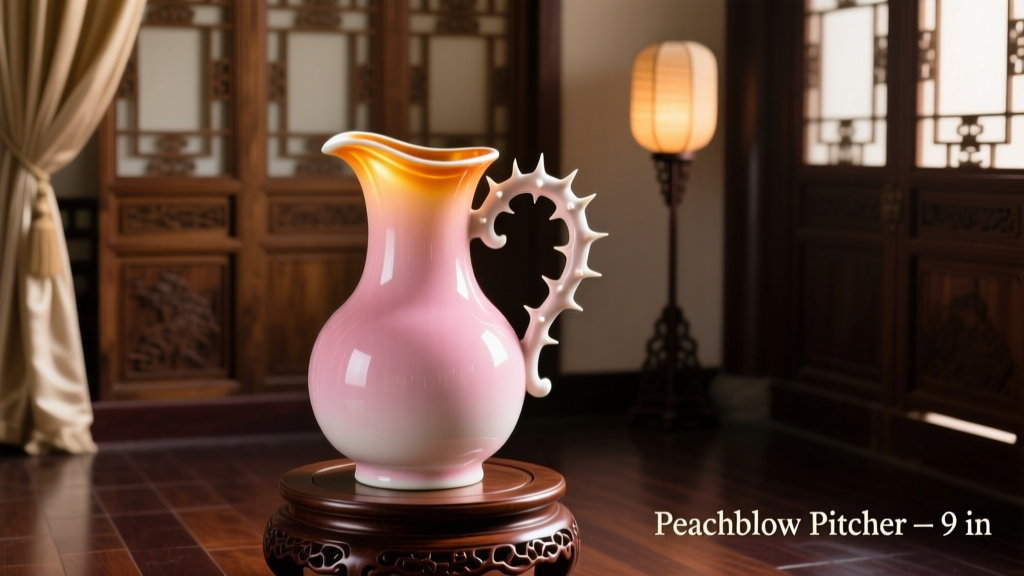
Peachblow Pitcher with Thorny Handle and Amber Lining: A 9-Inch American Art Glass Masterpiece
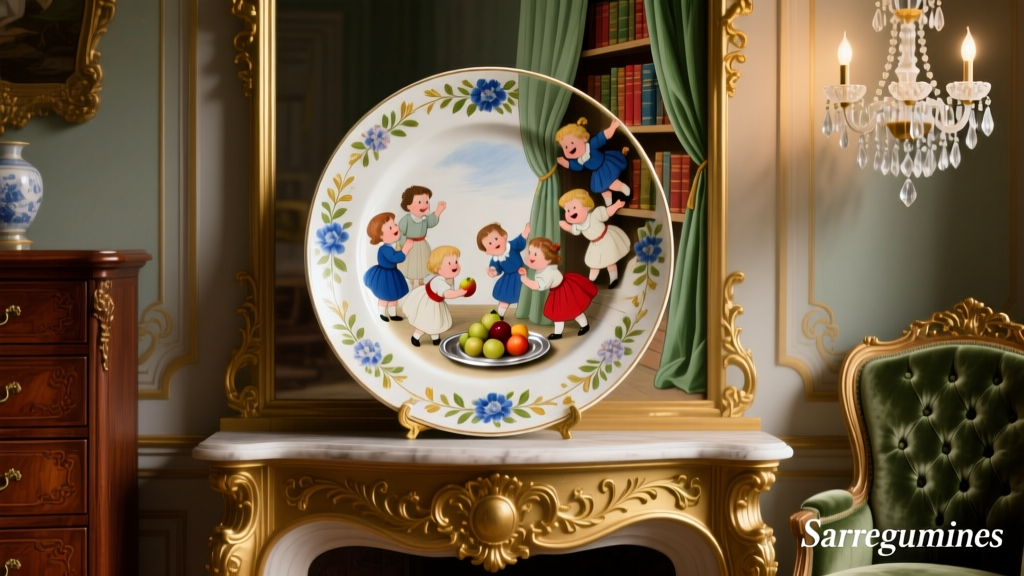
Sarreguemines Plate 'Mischievous Children' — An 8-Inch Masterpiece of French Art Pottery
Souvenir Collectibles: History, Value Drivers, and Conservation Practices for Antique Enthusiasts
Toy Bear Beauty Parlor Battery Operated Box #2: A Collector’s Guide to Design, Mechanics, and Historical Context
Toy Dog Pluto: The Plush-Covered Windup Tin Box by Marx — History, Mechanics, and Restoration Insights
The 1138178: A Deep Structural and Historical Analysis of the 1948 Dunbar 'Chippendale Revival' Walnut Secretary Desk
Help Identifying Three Common Antique Furniture Styles: Chippendale, Hepplewhite, and Sheraton
Decoding the Artistry: A Technical and Historical Analysis of the 14K Gold Etched Scroll Watch with Black, White, and Yellow Enamel Floral Motifs
Coors Cookie Jar Dusty Rose Red (10-Inch): Identification, Value, and Restoration Insights for Collectors