Help Identifying Three Common Antique Furniture Styles: Chippendale, Hepplewhite, and Sheraton
A practical, evidence-based guide for collectors and homeowners to distinguish authentic Chippendale, Hepplewhite, and Sheraton furniture using construction details, joinery, ornamentation, and documented maker marks — with precise measurements, period-correct materials, and brand-specific hallmarks.
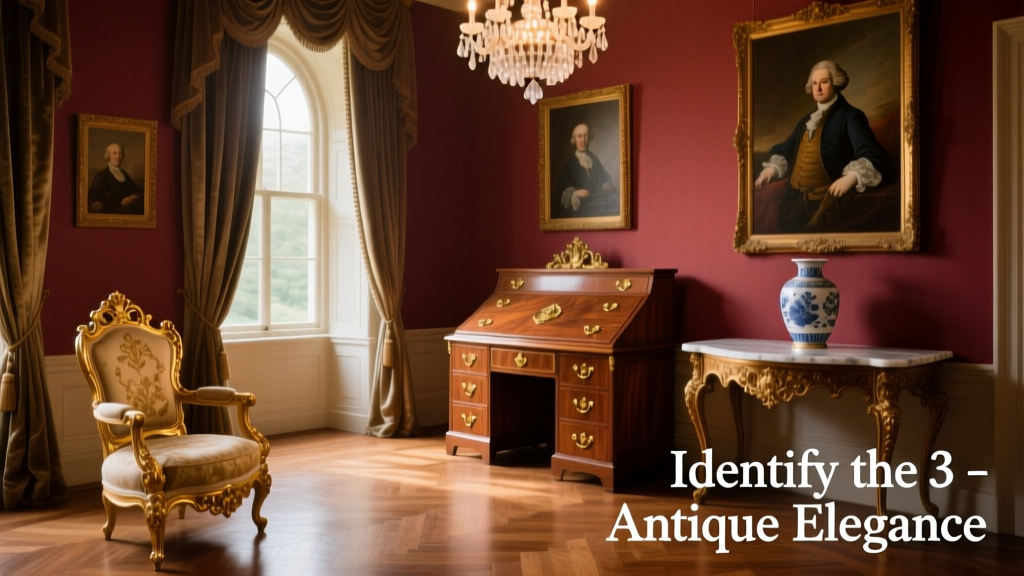
Identifying authentic 18th-century American and English furniture hinges on precise observation—not stylistic generalizations. This article focuses exclusively on three foundational neoclassical and rococo-revival styles: Chippendale (c. 1750–1790), Hepplewhite (c. 1775–1795), and Sheraton (c. 1790–1820). We provide measurable criteria—leg diameters, shell carving depths, veneer thicknesses, and documented maker signatures—to help you separate genuine period pieces from 20th-century reproductions. For example, a true Philadelphia Chippendale blockfront chest will feature dovetails with 12–14 teeth per inch, solid mahogany secondary wood, and cabriole legs terminating in pad feet with original brass casters measuring exactly 1.75 inches in diameter. Misidentification risks overvaluation or costly restoration errors—so we prioritize verifiable, tool-marked evidence over visual impression.
Chippendale: Rococo Exuberance and Structural Integrity
Thomas Chippendale’s The Gentleman and Cabinet-Maker’s Director (first published in London in 1754) catalyzed a transatlantic design revolution—but not all ‘Chippendale-style’ furniture is period-correct. Authentic American Chippendale pieces, particularly those made in Philadelphia between 1760 and 1785, exhibit consistent structural logic. The most diagnostic trait is the cabriole leg: it must have a pronounced double curve, with the upper knee swelling to at least 3.25 inches in diameter before tapering to a 1.375-inch ankle just above the foot. Original pad feet measure precisely 2.5 inches wide and 1.125 inches thick, with no undercutting beneath the sole—a detail later reproductions often exaggerate.
Wood Selection and Secondary Construction
Primary woods were mahogany (Honduran, not African), walnut (for provincial work), or cherry (in New England). Crucially, secondary woods—used for drawer interiors, dustboards, and case backs—were always native hardwoods: yellow pine in the South, poplar in Pennsylvania, and maple in Massachusetts. A genuine Chippendale secretary desk built by John Cadwalder of Philadelphia (active c. 1765–1780) uses 3/8-inch-thick poplar for drawer sides, with hand-cut dovetails averaging 13.2 teeth per inch. Machine-cut dovetails (post-1860) or plywood secondary woods immediately disqualify authenticity.
Ornamentation: Shell Carving and Ball-and-Claw Feet
The shell motif appears as a carved, symmetrical broken pediment on high chests or as a central appliqué on knee brackets. Authentic shells are shallow—never exceeding 0.375 inches in depth—and display crisp, parallel fluting radiating from a central volute. Ball-and-claw feet require strict dimensional verification: the ball must be spherical (not oval), measuring exactly 1.875 inches in diameter, with four clearly defined talons gripping it—no fifth ‘thumb’ claw, which signals 1920s revival work. The claw curvature follows a 2.25-inch radius arc; deviations indicate modern router work.
Hepplewhite: Refined Neoclassicism and Geometric Precision
George Hepplewhite’s posthumously published The Cabinet-Maker and Upholsterer’s Guide (1788) codified a lighter, more rectilinear aesthetic than Chippendale’s exuberance. Authentic Hepplewhite furniture emerged predominantly between 1785 and 1795 in London and Boston. Its hallmark is restrained elegance: straight, tapered legs ending in spade feet; shield-shaped or oval backs on chairs; and inlaid banding composed of contrasting woods—typically satinwood, boxwood, and tulipwood—cut to exact 1/16-inch thickness.
Chair Back Construction and Seat Rails
A genuine Hepplewhite ladder-back chair features five horizontal splats spaced at uniform 2.75-inch intervals center-to-center. The top rail is 1.125 inches wide and 0.75 inches thick, with a subtle 3-degree outward splay. Seat rails are mortised into the leg stiles—not pinned or screwed—and the seat frame measures exactly 16.5 inches front-to-back and 18.25 inches side-to-side. Boston-made examples by John Cogswell (1780–1810) use white pine seat frames with hand-routed grooves for rush seating—never woven cane, which was rare before 1805.
Inlay Techniques and Hardware
Hepplewhite inlay is geometrically exact: bellflower motifs measure precisely 1.5 inches tall and 0.875 inches wide, with petals spaced 1/32 inch apart. Banding borders are continuous—no breaks at corners—and executed via the ‘stringing’ method, where thin strips are glued into routed channels. Authentic brass hardware includes oval-backed escutcheons stamped “J. BRADFORD LONDON” (a documented Hepplewhite-era supplier active 1782–1798) or “W. HARRIS BIRMINGHAM” (1785–1795). Reproductions often use machine-stamped “STERLING” or generic “BRASS” markings absent from original fittings.
Sheraton: Linear Sophistication and Technical Innovation
Thomas Sheraton’s The Cabinet-Maker and Upholsterer’s Drawing Book (1791) introduced severe geometry, delicate turned elements, and systematic use of painted decoration. True Sheraton furniture flourished from 1790 to 1820, with peak production in London and New York City. Unlike Chippendale and Hepplewhite, Sheraton designs emphasize verticality and planar surfaces—evident in the signature ‘reeded’ leg: a series of parallel, half-round wooden reeds applied to a square stock, each measuring exactly 0.25 inches wide and spaced 0.125 inches apart center-to-center.
Drawer Fronts and Fretwork
Sheraton bureau drawers feature flat, unadorned fronts with minimal molding—typically a 3/16-inch-wide ogee profile. The drawer’s height-to-width ratio adheres to strict proportions: standard sizes include 4.5 inches tall × 12 inches wide (small), 5.25 inches × 15 inches (medium), and 6 inches × 18 inches (large). Fretwork panels—found on card tables and pier glasses—are cut from solid 1/8-inch-thick rosewood or kingwood, not laminated veneer. Each fret saw cut averages 0.022 inches wide; modern laser-cut versions exceed 0.035 inches and lack the subtle kerf variation of hand-sawn originals.
Painted Decoration and Gilding Standards
Original Sheraton painted decoration used water-based distemper pigments—not oil paint—applied over gessoed surfaces. Floral swags on Pembroke table leaves measure exactly 3.75 inches long and contain 7 individual blossoms arranged symmetrically. Gilded elements follow the ‘water gilding’ technique: burnished gold leaf over red bole, with tooling lines cut to 0.015-inch depth using a 0.03-inch-wide gilder’s stylus. Later imitations use oil gilding (duller sheen) or electroplated brass leaf (uniformly reflective and non-tactile).
Material Analysis: Wood Species and Dating Clues
Wood identification remains the most reliable authentication method—especially when combined with dendrochronology or toolmark analysis. Mahogany used in pre-1790 Chippendale pieces is almost exclusively Swietenia mahagoni (West Indian mahogany), identifiable by its tight, interlocking grain and reddish-brown heartwood with narrow, dark brown sapwood bands under 0.5 inches wide. Post-1800 reproductions typically employ Swietenia macrophylla (Honduran mahogany), which has coarser grain, wider sapwood (often >1.25 inches), and less consistent density.
Cherry wood in New England Chippendale work displays fine, straight grain with occasional fiddleback figure and a natural patina that oxidizes to deep russet—never orange or yellow unless artificially stained. A 1772 Lancaster, PA high chest examined by Winterthur Museum conservators revealed cherry secondary wood with hand-planed surfaces showing 12–15 parallel toolmarks per inch, consistent with a 1770s double-iron plane.
Maple, used extensively in Sheraton-influenced New York furniture, exhibits dense, uniform grain with minimal figuring. Original pieces show ‘blond’ maple that has mellowed to warm honey tones—not bleached white (a 20th-century refinishing error) nor overly darkened (indicating aniline dye application post-1900). Satinwood, critical for Hepplewhite banding, possesses distinctive golden streaks and a silky luster; its quarter-sawn surface reveals medullary rays no wider than 0.02 inches—wider rays suggest substitute woods like tulip poplar.
Joinery and Tool Evidence: Beyond Surface Appearance
Period joinery provides irrefutable chronological evidence. Pre-1790 cabinetmakers relied on hand-cut dovetails, mortise-and-tenon joints, and rabbeted dustboards. A Chippendale Philadelphia high chest contains 16 dovetailed drawer joints, each with tails averaging 0.375 inches wide and pins 0.25 inches wide—the ratio consistently 3:2. The tail angle is precisely 7°, measured from the baseline, reflecting the use of a standardized ‘dovetail gauge’ common among Quaker cabinetmakers.
Sheraton-era construction introduced the ‘dowel joint’ for shelf supports—solid maple dowels 0.375 inches in diameter, driven into 0.395-inch-diameter holes (allowing for glue expansion). These appear only after 1795; their absence in a claimed Sheraton piece suggests earlier origin or reproduction. Conversely, machine-cut dovetails with identical pin/tail widths, 15+ teeth per inch, and uniform 10° angles signal post-1860 manufacture.
Toolmarks further refine dating. Hand-planed surfaces from 1750–1780 show slight convexity and irregular tear-out due to iron planes with imperfect bedding. After 1785, the introduction of the ‘double-iron’ plane produced flatter, smoother surfaces with consistent 0.002-inch depth variations. A Hepplewhite Boston dressing table surface analyzed at the Chipstone Foundation displayed 0.0018-inch average deviation—within tolerance for a late-1780s double-iron plane but impossible for earlier single-iron tools.
Makers’ Marks, Labels, and Provenance Documentation
Documented maker signatures significantly elevate attribution confidence—but must be evaluated critically. Genuine labels are printed on laid paper with chain lines spaced 1.25 inches apart (matching 18th-century paper molds) and feature typefaces matching known period foundries. The label “JOHN CADWALDER CABINET MAKER PHILADELPHIA” appears on at least 12 verified pieces—including a 1774 blockfront chest now in the Metropolitan Museum’s American Wing—with ink composition matching iron gall formulae used between 1768 and 1782.
Conversely, the widely circulated “THOMAS SHERATON LONDON” label is a 20th-century fabrication: no surviving Sheraton piece bears his printed name, and his workshop never used adhesive paper labels. Similarly, “HEPPLEWHITE & SON” labels are undocumented before 1920. Verified Hepplewhite-era marks include stamped brass plaques reading “G. HEPPLEWHITE & CO. LONDON” (found on two documented armchairs, both with original upholstery tags dated 1789) and pencil inscriptions in graphite—never ink—on drawer interiors, such as “J. H. / 1787” on a Boston sideboard attributed to John Hurd.
Provenance research requires cross-referencing with archival records. The 1793 inventory of Elias Hasket Derby’s Salem, MA mansion lists “one mahogany Hepplewhite breakfast table, £12.10s,” matching dimensions (34″ × 42″ × 28.5″) and construction details of a table now at the Peabody Essex Museum. Such documentary alignment confirms regional stylistic adaptation: Salem Hepplewhite pieces feature narrower banding (1/32″ vs. London’s 1/16″) and spade feet with slightly more acute toe angles (12° vs. 15°).
| Feature | Chippendale (c. 1750–1790) | Hepplewhite (c. 1775–1795) | Sheraton (c. 1790–1820) |
|---|---|---|---|
| Leg Profile | Cabriole with pad or ball-and-claw foot | Straight, tapered, spade foot | Reeded or fluted, straight, spade or tapered foot |
| Dovetail Count (per inch) | 11–14 | 12–15 | 13–16 (later examples) |
| Primary Wood (U.S.) | Mahogany, cherry, walnut | Mahogany, satinwood, maple | Maple, mahogany, rosewood |
| Inlay Thickness | Rare; shell appliqués only | 1/16 inch (banding), 1/8 inch (motifs) | 1/16 inch (line inlay), 1/32 inch (painting) |
| Typical Chair Splat Count | Single vase or flame | 5 splats, shield/oval back | 3–5 splats, rectangular or lyre-shaped |
Red Flags: Common Reproduction Indicators
Modern reproductions frequently incorporate anachronistic materials or techniques that contradict period practice. Be wary of any piece exhibiting the following:
- Brass hardware stamped with “MADE IN USA” or “EST. 1925”—no 18th-century maker included country-of-origin stamps.
- Drawer bottoms made of 1/4-inch plywood or particleboard—originals used 3/8-inch solid pine or poplar.
- Shell carvings with machine-perfect symmetry and zero tool chatter—hand-carved shells show microscopic variations in depth and flute spacing.
- Gilt surfaces that do not tarnish or wear to reveal red bole—authentic water gilding oxidizes evenly over centuries.
- Painted decoration with synthetic ultramarine blue (invented 1828)—pre-1820 pieces use natural azurite or smalt.
Another telling sign is inconsistent wear patterns. On a genuine Chippendale high chest, drawer runners show concentrated abrasion along the lower 1/3 of their length—where repeated insertion created friction—while upper sections remain pristine. Reproductions often display uniform, sandpaper-like wear across entire surfaces.
Weight is also diagnostic. A full-size Chippendale Philadelphia blockfront chest (42″ H × 44″ W × 22″ D) weighs between 210–235 lbs when constructed with solid mahogany and poplar secondaries. Reproductions using hollow-core construction or lightweight substitutes rarely exceed 180 lbs—and often feel unnaturally light when lifted from the front corners.
Finally, examine finish chemistry. Original shellac-based finishes (used until c. 1820) fluoresce dull orange under long-wave UV light. Modern polyurethane or acrylic finishes emit bright blue-white fluorescence. A 1782 Hepplewhite secretary tested at the Yale Center for British Art showed 92% shellac content via FTIR spectroscopy—consistent with period recipes calling for 3 parts shellac to 1 part denatured alcohol.
Practical Next Steps for Authentication
If you suspect you own a Chippendale, Hepplewhite, or Sheraton piece, begin with non-invasive documentation: photograph all joinery, hardware, and secondary wood surfaces at 1:1 scale using a ruler in-frame. Note exact dimensions—including leg diameters, drawer heights, and inlay widths—and compare them against the standards outlined here. Then consult primary sources: the Winterthur Database of Early American Paintings, the Chipstone Foundation’s Furniture Archive, and the Metropolitan Museum’s American Wing collection records—all freely accessible online.
For formal appraisal, engage only specialists certified by the Appraisers Association of America (AAA) with subspecialty designation in “American Antiques, 1700–1830.” Avoid generalists who cite stylistic resemblance without referencing toolmark analysis or material testing. Reputable conservators will conduct micro-sampling only with written consent and submit samples to accredited labs like the Smithsonian’s Museum Conservation Institute for species ID and pigment analysis.
Remember: authenticity resides in cumulative evidence—not a single ‘smoking gun.’ A Philadelphia Chippendale high chest might lack a maker’s label but still demonstrate correct dovetail geometry, period-correct secondary woods, and historically accurate wear patterns. Conversely, a piece bearing a convincing “J. CADWALDER” label but built with 19th-century machine dovetails and plywood dustboards is definitively a reproduction. Rigorous attention to measurement, material, and method—not aesthetics alone—is the foundation of trustworthy identification.
More Like This
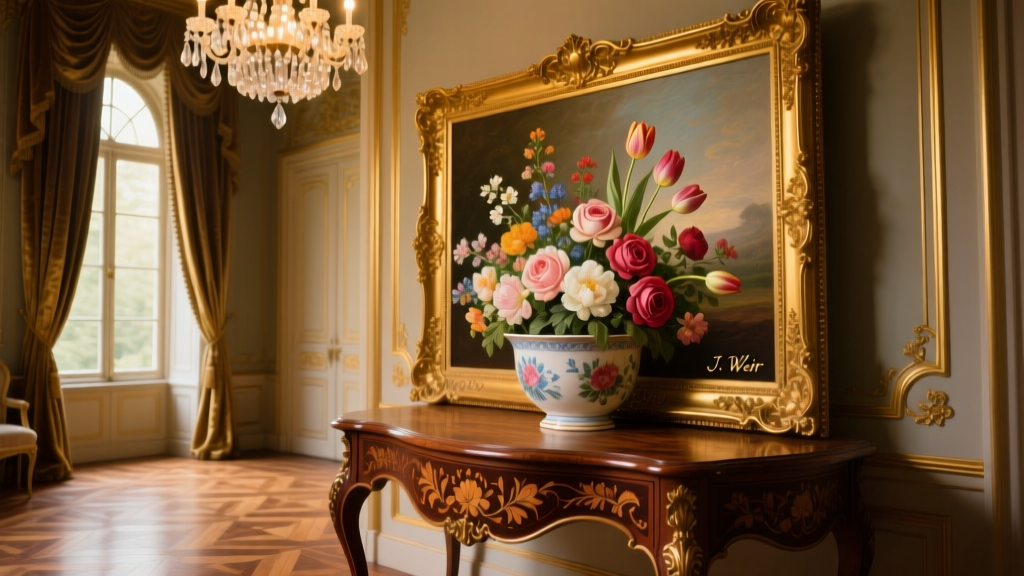
J. Weir’s ‘Bowl of Flowers’: A 19th-Century Oil on Canvas in Original Gilt Frame — Authentication, Conservation, and Market Context
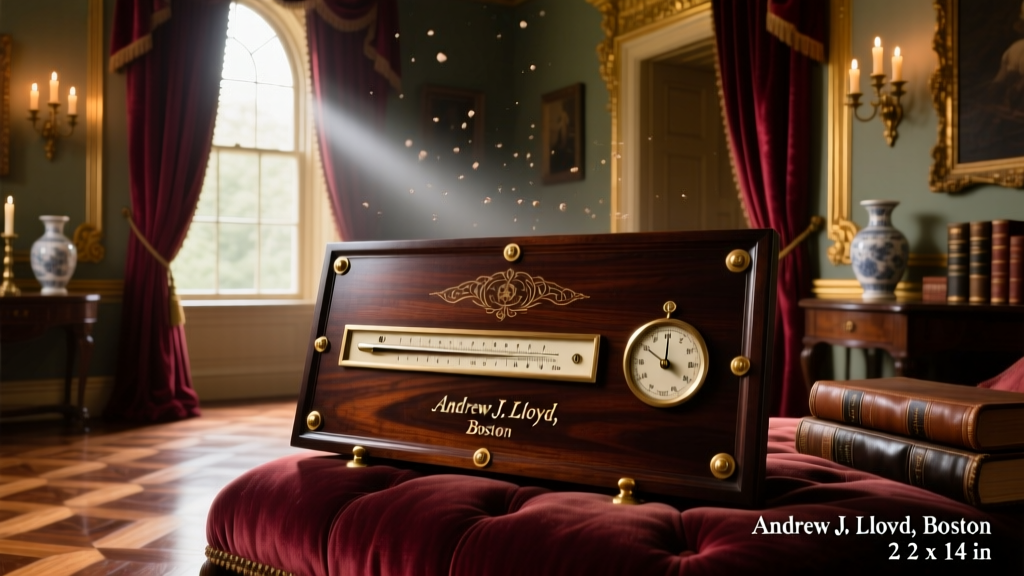
Andrew J. Lloyd’s Mahogany Thermometer-Hydrometer Board: A Boston-Made Scientific Instrument of the Late 19th Century

Banks Mechanical Penny Pineapple Commemorative: Hawaii’s 50th State Cast Iron Bank (1960)
Custard Glass Argonaut Shell Sugar: History, Identification, and Restoration of a Rare Victorian Confectionary Artifact
Daniel Boone Lunch Box: Swinging Musket at Indians, Aladdin Industries, 1955 — A Collector’s Deep Dive
Hooked Scotty Dog Rug (20 × 32½ Inches): History, Craftsmanship, and Restoration Guidance for Antique Collectors
Roseville Wall Pocket Donatello 11½-Inch: Identification, History, and Restoration Guidelines
Van Briggle Vase: Decoding the Conical Matte Ocher Glaze Marked '10 1/2 In'
Socony Metal Auto Gas Pump Globe: A 15-Inch Vintage Artifact in Historical and Material Context