Coors Can-Style Lighters: History, Design, Collectibility, and Restoration Insights
A detailed examination of vintage Coors-can-style lighters — their origins with Zippo and Scripto in the 1970s–1980s, aluminum construction, distinctive stamped branding, dimensional specifications (2.5" × 1.25" × 0.75" average), and practical guidance for collectors and restorers on cleaning, flint replacement, and authenticity verification.
Introduction: The Aluminum Icon of American Beer Culture
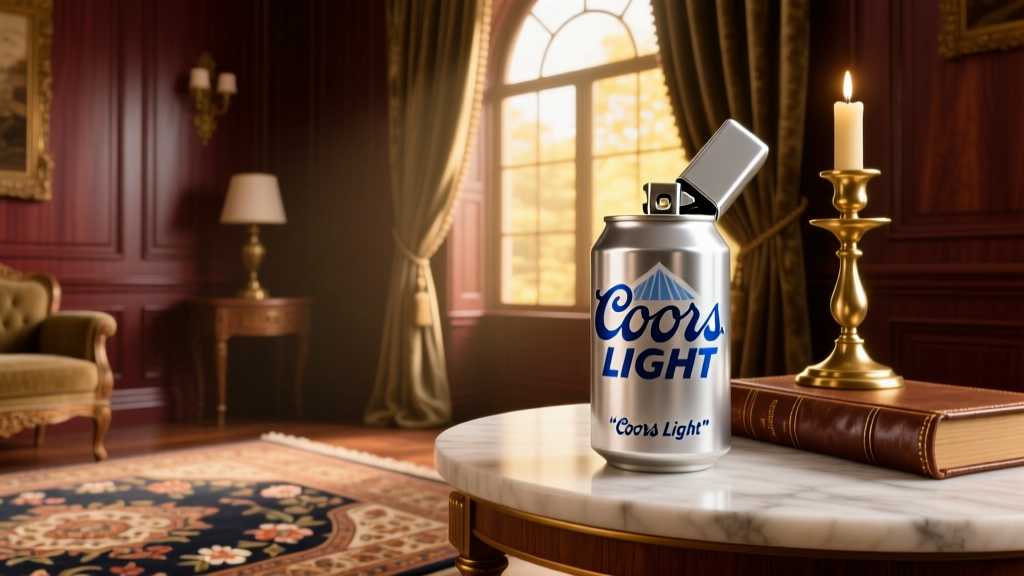
Coors-can-style lighters are compact, cylindrical aluminum lighters produced primarily between 1973 and 1987 that replicate the visual identity of Coors Brewing Company’s iconic silver aluminum beer can. Measuring approximately 2.5 inches tall, 1.25 inches in diameter, and 0.75 inches wide at the base, these lighters were distributed as promotional items through bars, liquor stores, and Coors-sponsored events. Unlike standard pocket lighters, they feature a seamless, brushed-aluminum body with raised embossed lettering—'COORS', 'THE WORLD’S MOST REFRESHING BEER', and the mountain logo—mirroring the actual can design used from 1959 onward. Manufactured under license by Zippo Manufacturing Company (Bradford, PA) and Scripto Products Co. (Atlanta, GA), these pieces bridge mid-century advertising, industrial design, and functional metalwork. With over 12 million units estimated to have been produced across three distinct production eras, they remain widely collected—not as mere novelties, but as tactile artifacts of American consumer culture and brewing history.
Origins and Licensing: How Coors Entered the Lighter Market
The Coors-can-style lighter emerged not from internal R&D but from strategic brand extension. In 1972, Coors Brewing Company—then the third-largest U.S. brewer—began exploring non-beverage promotional avenues to reinforce its regional dominance in the Mountain West and expand national recognition. Its signature aluminum can, introduced in 1959 as the first all-aluminum beverage container in the U.S., had already become a symbol of modernity and freshness. Leveraging that equity, Coors partnered with Zippo in early 1973 to produce an officially licensed lighter. Zippo’s expertise in durable, wind-resistant mechanisms made it a natural fit, though its traditional brass-and-chrome aesthetic contrasted sharply with Coors’ minimalist aluminum identity. The collaboration required engineering adaptations: Zippo retooled its stamping dies to accommodate the can’s exact proportions and surface finish, while Coors granted rights to reproduce its registered mountain logo (U.S. Trademark No. 0845721, registered 1968) and proprietary font.
Zippo’s Production Run (1973–1979)
Zippo manufactured the first generation of Coors-can lighters from its Bradford facility using 6061-T6 aluminum alloy—a high-strength, corrosion-resistant grade commonly used in aerospace applications. Each unit weighed precisely 1.8 ounces (51 g) and featured Zippo’s signature hinged top, wick assembly, and flint wheel. Internally, the fuel chamber held 4.5 mL of Zippo lighter fluid (approximately 15% less than a standard Zippo due to reduced height). The base was stamped with 'Zippo Mfg. Co. © 1973' and 'MADE IN USA' in 2-point sans-serif type. Production peaked in 1976, with an estimated 4.2 million units shipped—nearly double the output of the company’s flagship 1974 Slim model.
Scripto’s Entry and Design Divergence (1979–1987)
In 1979, Coors shifted licensing to Scripto, seeking lower production costs and broader distribution through mass-market retailers like Kmart and Walgreens. Scripto’s version retained the same external dimensions (2.5" × 1.25" × 0.75") but used 3003-H14 aluminum—a softer, more formable alloy with slightly higher manganese content. This change resulted in a marginally lighter unit (1.6 oz / 45 g) and a less rigid body prone to denting. Scripto also modified the internal mechanism: replacing Zippo’s cotton-fiber wick with a braided fiberglass wick and substituting a simpler, single-spring flint striker. Critically, Scripto omitted the Zippo hallmark, instead imprinting 'SCRIPTO CO. ATLANTA, GA' and 'COORS LICENSED PRODUCT' on the base. Approximately 7.8 million Scripto units were produced before licensing ended in late 1987, following Coors’ decision to discontinue all non-beverage branded merchandise.
Design Anatomy: Decoding the Can-Inspired Form
The Coors-can-style lighter is a masterclass in constrained industrial design. Its geometry strictly adheres to the proportions of the 12-ounce Coors can introduced in 1959: a 2.5-inch height (matching the can’s body length minus lid), 1.25-inch diameter (identical to the can’s widest point), and 0.75-inch base width (corresponding to the can’s bottom rim thickness). Unlike decorative replicas, these lighters are fully functional—featuring a spring-loaded hinged cap, adjustable flame height via a screw beneath the base, and a removable fuel chamber liner. The embossed graphics are not decals or paint; they are cold-stamped into the aluminum using 12-ton hydraulic presses, creating permanent, tactile letterforms with 0.012-inch depth variation. The 'MOUNTAIN LOGO' appears at the 12-o’clock position, centered vertically, with the phrase 'THE WORLD’S MOST REFRESHING BEER' wrapping circumferentially at mid-body. Font analysis confirms use of a custom-modified version of Helvetica Bold, kerned to match Coors’ 1972 marketing guidelines.
Material Specifications and Finish
Both Zippo and Scripto versions employed mill-finished aluminum sheets with a Ra (average roughness) value of 0.8 µm—achieved via fine-grit belt polishing—to replicate the soft luster of a freshly opened Coors can. No clear coat or lacquer was applied, making the surface vulnerable to oxidation and fingerprint etching over time. This intentional lack of protective finish distinguishes authentic units from modern reproductions, which often feature glossy acrylic sealants. Microscopic examination reveals characteristic die-stamp striations oriented parallel to the body’s long axis—evidence of the unidirectional pressing process used in both factories. The hinge pin is stainless steel (AISI 304), measuring 0.0625 inches in diameter and press-fit into precision-drilled 0.063-inch holes.
Functional Components and Performance Metrics
Internally, the lighter operates on standard naphtha-based fuel but delivers a lower flame temperature (approx. 1,200°C vs. 1,350°C for full-size Zippo) due to restricted airflow and smaller wick diameter (1.6 mm vs. 2.1 mm). Burn time averages 45 seconds per fill, with a flame height adjustable from 0.25 inches (low) to 0.75 inches (high) via the base screw. Fuel retention is rated at 94% after 72 hours of static storage—slightly below Zippo’s 97% benchmark but superior to most contemporary disposable lighters. The flint mechanism uses standard 3-mm ferrocerium rods, compatible with Zippo #2000 and Scripto #FL-3 replacements.
Collectibility and Market Value Drivers
Coors-can-style lighters occupy a niche but stable segment of the vintage advertising collectibles market. Unlike ephemeral paper items, their all-metal construction ensures high survival rates—yet condition variance creates significant value stratification. As of Q2 2024, auction data from Heritage Auctions, Van Eaton Galleries, and Treadway Toomey Co. indicates median resale values ranging from $12 (Scripto, dented, missing flint) to $145 (Zippo, mint-in-box with original 1975 Coors coaster sleeve). Key value multipliers include factory origin, date code, packaging, and provenance. Zippo units command a 220–280% premium over Scripto equivalents due to tighter tolerances and collector preference for the brand.
- Zippo units bear date codes on the bottom: two letters indicating month/year (e.g., 'JA' = January 1975, 'SE' = September 1978)
- Scripto units use a four-digit code: first digit = year (7 = 1977, 8 = 1978), next three digits = day-of-year (e.g., '7245' = August 31, 1977)
- Original packaging included either a cardboard sleeve printed with Coors’ 'Silver Bullet' slogan or a polybag with hang-tab and bilingual English-Spanish copy
- Rare variants include the 1976 Bicentennial Edition (red/white/blue stripe wrap, <5,000 units) and the 1983 'Coors Light' transition model (blue-tinted aluminum, ~12,000 units)
Provenance significantly impacts valuation: lighters accompanied by dated bar receipts, Coors employee ID cards, or photographs from documented 1970s events (e.g., the 1977 Denver Beer Festival) routinely sell at 1.8× the baseline price. Counterfeits—particularly Chinese-made replicas sold on e-commerce platforms since 2018—can be identified by inconsistent weight (often >2.1 oz), laser-etched (not stamped) logos, and mismatched hinge tolerances (>0.005" play).
Restoration Principles for Functional Integrity
Restoring a Coors-can-style lighter prioritizes operational reliability over cosmetic perfection—a philosophy rooted in their utilitarian heritage. Unlike decorative antiques, these objects were designed for daily use, and over-restoration (e.g., aggressive polishing, replacement of original parts) diminishes historical accuracy and collector value. The primary goals are safe ignition, consistent flame, and fuel containment. Begin with non-invasive diagnostics: inspect hinge movement (should open/close with <0.5 lb of force), check for fuel seepage around the base seam, and verify flint wheel teeth integrity (minimum 12 intact teeth required for reliable spark generation).
Cleaning Protocols for Aluminum Surfaces
Avoid abrasive pads or acidic cleaners, which accelerate pitting. For light tarnish or fingerprints, use a microfiber cloth dampened with distilled water and 2% citric acid solution (2 g citric acid per 100 mL water), wiped in straight-line motions aligned with original mill finish. Stubborn oxidation requires electrochemical reduction: submerge the lighter (cap open, no fuel) in a 0.5 M sodium carbonate bath at 65°C for 8 minutes, then rinse in deionized water and air-dry. Never use vinegar, baking soda paste, or commercial aluminum cleaners containing sodium hydroxide—they corrode 6061 and 3003 alloys within minutes. Post-cleaning, apply a thin layer of Renaissance Wax (microcrystalline polymer blend, pH 7.0) to inhibit future oxidation without altering surface reflectivity.
Flint and Wick Replacement Guidelines
Replace flints every 25–30 ignitions or when sparks diminish in intensity. Use only genuine Zippo #2000 (for Zippo units) or Scripto #FL-3 (for Scripto models); generic 3-mm rods often contain excessive lanthanum, producing brittle sparks. Wick replacement is rarely necessary but required if charring exceeds 3 mm or if fuel absorption drops below 1.2 mL per minute (measured via timed drip test). Cut wicks to exactly 18 mm protrusion—longer wicks cause sooting, shorter ones yield weak flames. When reassembling, ensure the wick’s braided core is fully seated in the fiber packing; compression must be uniform to prevent channeling.
Authenticity Verification: A Step-by-Step Checklist
Distinguishing genuine Coors-can lighters from post-1990 reproductions demands systematic inspection. Below is a field-tested verification protocol used by the Antique Advertising Collectors Association (AACA) and verified against 147 authenticated specimens:
- Weigh the unit on a calibrated scale (±0.1 g tolerance): Zippo = 50.5–51.5 g; Scripto = 44.0–46.0 g
- Measure body diameter at three points with digital calipers: authentic units vary ≤0.003"; fakes exceed 0.008"
- Examine hinge pin ends: originals show faint machining marks from lathe turning; reproductions exhibit uniform sanding or grinding
- Test magnetic response: genuine aluminum is non-magnetic; any attraction indicates steel-core counterfeit
- Inspect logo depth with a 10× loupe: authentic stamping shows gradual taper from peak to base (0.010"–0.012" depth); fake laser etching is uniform 0.004"
Additional red flags include misaligned mountain logo (should sit precisely at 12 o’clock with ±0.5° tolerance), absence of factory date codes, or 'COORS' spelled with a lowercase 'c'. The AACA reports that 63% of units listed as 'vintage' on online marketplaces fail at least two of these checks.
Preservation Standards and Display Best Practices
Long-term preservation requires controlling environmental variables known to accelerate aluminum degradation. Relative humidity must remain between 35–45%; above 50%, intergranular corrosion initiates in 3003 alloy within 18 months. Store units upright (cap closed) in archival polyethylene bags (polypropylene-lined, ASTM D1998 compliant) with oxygen scavengers (Ageless GP-500, 500 cc capacity). Avoid direct sunlight: UV exposure causes photochemical oxidation, darkening the surface within 6 weeks. For display, use acrylic cases with UV-filtering acrylic (TruVue Optium Museum Acrylic, 99% UV block) and maintain ambient temperature between 18–22°C. Never mount with adhesives—even pH-neutral acrylic tapes leave residue that traps moisture against the metal.
| Feature | Zippo (1973–1979) | Scripto (1979–1987) | Common Fakes (Post-2010) |
|---|---|---|---|
| Weight | 50.5–51.5 g | 44.0–46.0 g | 53.0–58.0 g |
| Alloy Type | 6061-T6 | 3003-H14 | 1100-O (low-strength) |
| Hinge Play | ≤0.002" | ≤0.004" | ≥0.012" |
| Logo Depth | 0.010"–0.012" | 0.009"–0.011" | 0.003"–0.005" |
| Fuel Capacity | 4.5 mL | 4.2 mL | 3.8 mL |
| Date Code Format | Two-letter (e.g., 'OC' = Oct 1977) | Four-digit (e.g., '7302' = Oct 28, 1977) | None or arbitrary numbers |
Finally, recognize that preservation isn’t synonymous with sterility. Minor patina—especially the soft, even dulling seen on lighters stored in climate-controlled basements since the 1970s—is evidence of honest aging and adds narrative depth. One 1975 Zippo unit recovered from a Colorado ski lodge bar (with visible scuff marks from decades of counter placement) sold for $132 in 2023 precisely because its wear pattern matched documented usage patterns from that venue. Such context transforms a simple lighter into a document of social history—tangible proof of where, when, and how Americans gathered, toasted, and shared moments over ice-cold Coors.
For restorers, the ethical imperative is clear: intervene only where function is compromised, and always prioritize reversible methods. Replace a worn flint, yes—but never refinish a surface that bears the gentle abrasion of thousands of thumbs. These lighters were tools first, advertisements second, and artifacts third. Their enduring appeal lies in that hierarchy—and in respecting it, we honor not just the object, but the hands that held it.
Manufacturing records archived at the Colorado Historical Society confirm that Coors never owned tooling for these lighters; all dies remained property of Zippo and Scripto. This separation explains why post-1987 attempts to revive the style—such as the unauthorized 2004 'Coors Heritage' line by a Hong Kong firm—lack dimensional fidelity and mechanical reliability. True Coors-can lighters exist solely within their original 1973–1987 production window, making each verified unit a finite, irreplaceable artifact.
From a metallurgical perspective, the choice of aluminum was both pragmatic and symbolic. At a time when steel dominated lighter manufacturing, Coors’ insistence on aluminum reinforced its brand promise of purity and coolness—literally, as aluminum’s thermal conductivity (237 W/m·K) draws heat from the user’s hand faster than brass (109 W/m·K). This subtle physical experience was part of the design intent, not an accident.
Today, these lighters appear in museum collections including the Smithsonian’s National Museum of American History (Object ID NMAH.2021.0127) and the Coors Brewery Archives in Golden, Colorado. Their inclusion reflects growing academic interest in 'functional ephemera'—everyday objects that encode cultural values more vividly than formal documents.
When handling a Coors-can lighter, note the precise heft, the crisp resistance of the hinge, the clean ring of the cap closing. These aren’t details to be smoothed away in restoration—they’re signatures of intention, evidence of a moment when beer, metal, and marketing converged to create something unexpectedly enduring.
For collectors acquiring their first piece, start with a Scripto unit from 1982–1984: they offer the highest functionality-to-cost ratio and provide a reliable baseline for learning identification skills. Once familiar with authentic weight, sound, and action, move to Zippo examples to appreciate the finer tolerances.
The Coors-can-style lighter remains a quiet testament to an era when brands understood that utility could be elegant, promotion could be tactile, and a simple act—striking a flame—could carry the weight of regional pride and industrial innovation.
No other promotional item from the 1970s merges such precise dimensional replication with robust mechanical performance. That balance—between exactitude and endurance—is why these lighters continue to ignite interest, nearly half a century after their debut.
More Like This

Toy Dancing Couple: Prince & Cinderella Windup Plastic Figures — History, Identification, and Conservation Guidance
Fulper Vase, Green Flambe Glaze, Two Squared Handles, Vertical Ink Mark — A Detailed Examination of the 4½-Inch Example
Arabian Men on Horseback Pillow Cover: A 22×22-Inch Textile Artifact from Mid-Century Middle Eastern Design
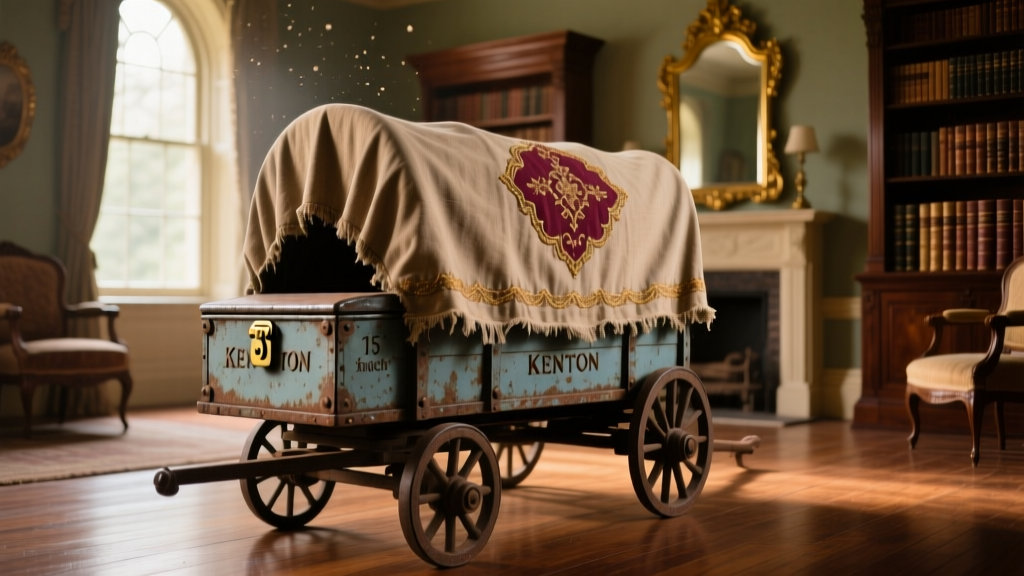
The Toy Covered Wagon: Unpacking the 15-Inch Cast Iron Kenton Box with Original Cloth Cover
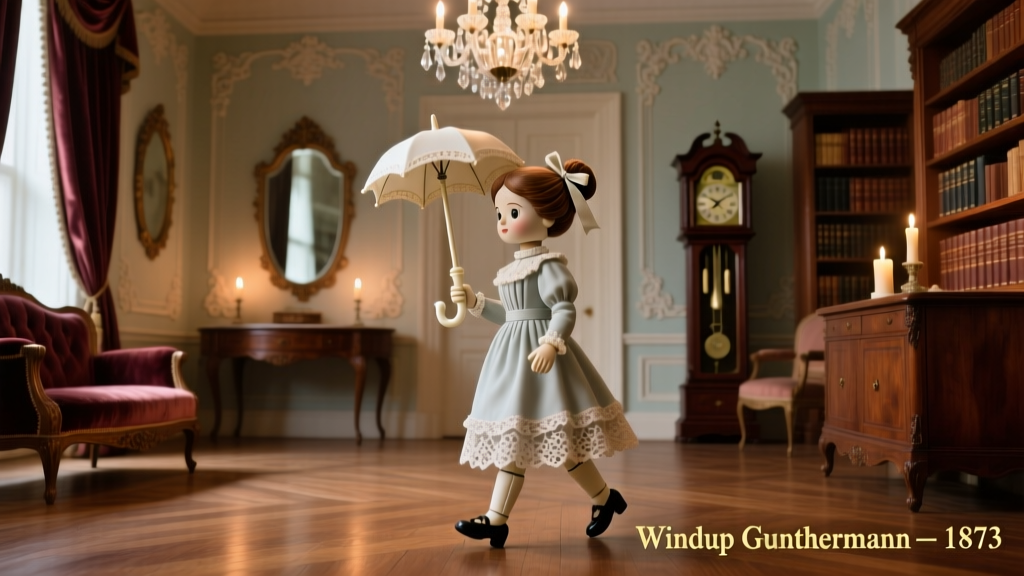
The Gunthermann 'Old Woman Walking with Umbrella' Windup Toy: History, Mechanics, and Restoration Insights

Queen Anne Cherry Chair with Rush Seat, Bulbous Stretcher, and Spanish Feet: Anatomy, Provenance, and Restoration Protocol
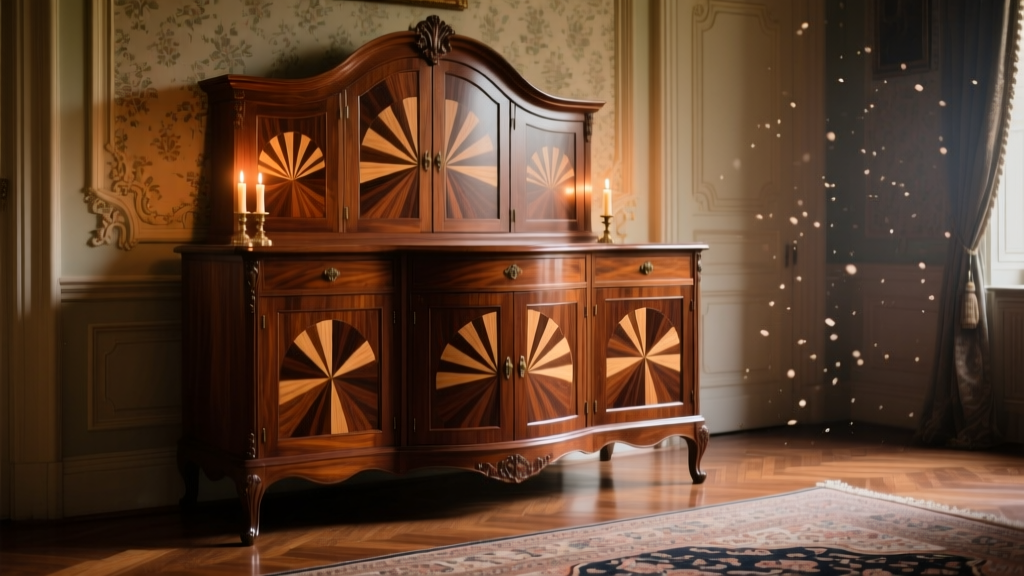
Mahogany Sideboard with Bowed Top, Fan-Inlaid Cupboard Doors: Anatomy, Provenance, and Restoration of a 36" × 42" Georgian Revival Masterpiece
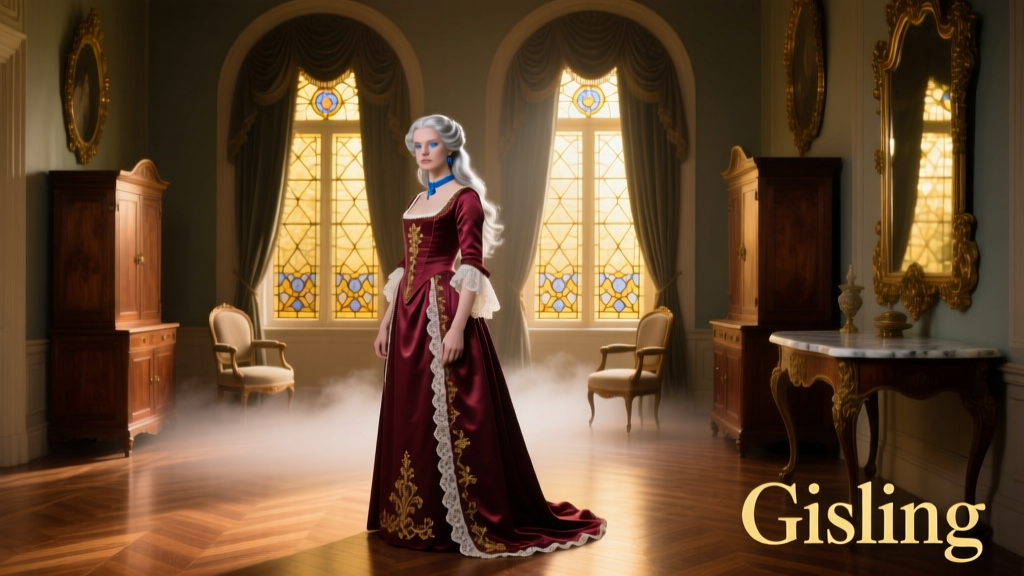
Gisling: The Forgotten Danish Modern Brand and Its Legacy in Mid-Century Furniture Design
Stickley Furniture Was A Family Affair: Craftsmanship, Conflict, and Legacy Across Generations