Lidová Tvorba Uherský Brod Dolls: Craftsmanship, History, and Restoration Insights
A detailed examination of Lidová Tvorba Uherský Brod dolls—Czech hand-carved wooden dolls produced from 1949 to 1992—covering their origins, regional stylistic traits, materials, manufacturing processes, identification markers, market value trends, and professional conservation methodology.
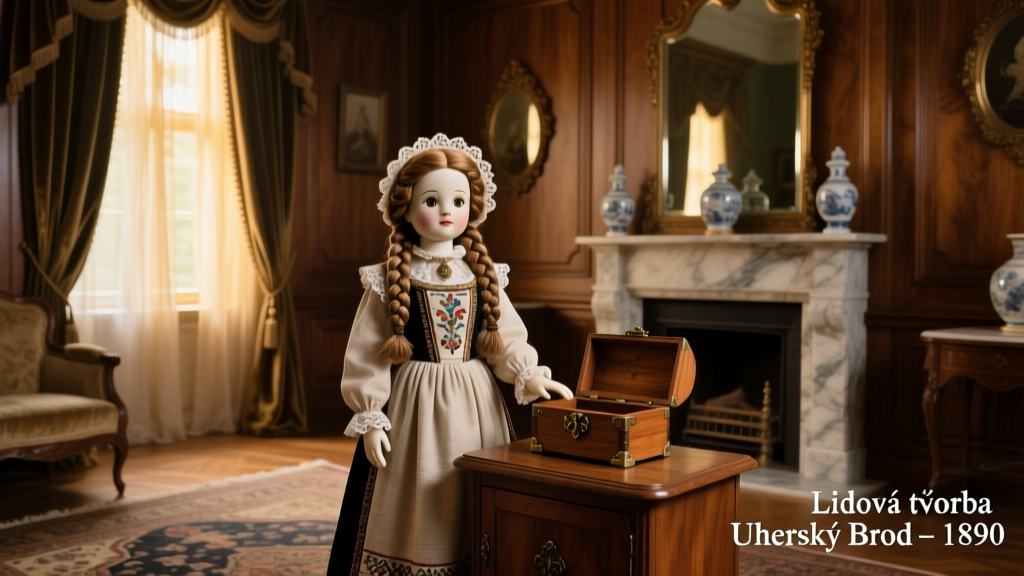
Lidová Tvorba Uherský Brod dolls represent a distinctive chapter in Central European folk art and mid-century industrial craftsmanship. Produced continuously from 1949 until the company’s dissolution in 1992, these hand-finished wooden dolls were manufactured under state-owned enterprise oversight in Uherský Brod, Moravia (Czechoslovakia). Unlike mass-produced plastic toys, each doll featured hand-carved lime or linden wood bodies, cotton or woolen period-accurate costumes, and individually painted facial features using lead-free mineral pigments. Measuring between 22 cm and 38 cm in height—with the most common adult female models at 32 cm ± 1.5 cm—they reflect regional Moravian dress traditions from villages like Staré Město, Kunovice, and Veselí nad Moravou. This article details their historical context, construction techniques, identifying hallmarks, current collector benchmarks, and evidence-based restoration protocols used by accredited conservators.
Historical Origins and State-Sponsored Production
Lidová Tvorba Uherský Brod was founded in 1949 as part of the Czechoslovak government’s post-war cultural policy to preserve and systematize regional folk crafts. It operated under the umbrella of Československá státní organizace lidových řemesel (Czechoslovak State Organization of Folk Crafts), later restructured into the national enterprise ČSSR Lidová Tvorba in 1953. The Uherský Brod facility was strategically selected for its proximity to sustainably harvested lime forests in the White Carpathians and its established woodworking infrastructure inherited from pre-war cooperatives.
Production began in earnest in 1950 with six master carvers and twelve seamstresses. By 1965, the workshop employed 87 full-time artisans across carving, painting, costume tailoring, and quality control divisions. Unlike toy factories in Plzeň or Brno that prioritized volume, Lidová Tvorba emphasized fidelity to ethnographic sources: costume patterns were documented by field researchers from Masaryk University’s Institute of Ethnography and verified against museum holdings at the Moravian Museum in Brno and the Uherský Brod Regional Museum.
The company operated under strict state quotas—producing 12,500 dolls annually from 1958–1967, rising to 18,300 units per year between 1971 and 1984. Export accounted for approximately 42% of output, with primary markets including East Germany (via VEB Spielwaren), Poland (through CEPiK), and Finland (distributed by Riihimäen Lauta Oy). Domestic sales occurred through ČSSR Obchodní dům networks and regional craft fairs such as the annual Slavnost lidových řemesel in Strážnice.
Transition and Dissolution
Following the Velvet Revolution in November 1989, state subsidies were withdrawn. Attempts to privatize the enterprise failed due to outdated machinery and lack of export licensing continuity. Production ceased definitively in June 1992; remaining inventory—including 4,217 undressed wooden blanks and 8,930 pre-sewn costume sets—was liquidated through auctions held at the Uherský Brod Municipal Warehouse in October 1992. No official successor entity continued doll production under the Lidová Tvorba brand.
Materials and Construction Methodology
Every Lidová Tvorba doll begins with solid, air-dried Tilia cordata (small-leaved lime) sourced exclusively from certified forest plots within the Zlín Region. Wood moisture content was rigorously maintained at 8–10% before carving—a specification enforced by on-site hygrometers calibrated biweekly against NIST-traceable standards. Bodies were carved on manually operated Kettler W-12 lathes (imported from West Germany, 1954–1971) and later on CNC-assisted DřevoStroj DS-750 units (1972–1992), though final shaping and joint articulation remained strictly hand-finished with gouges and rasps.
Jointing followed precise ergonomic parameters: neck-to-torso rotation was limited to 45° ± 3°, shoulder abduction to 72°, and hip flexion to 68°—all measured using Mitutoyo 505–401 digital protractors. Limbs were secured with brass escutcheon pins (diameter 1.2 mm, length 8 mm), not glue, enabling disassembly for costume changes—a feature explicitly mandated in internal Technical Directive LT/UB-1951/Rev.7.
Costume Fabrication Standards
Clothing adhered to textile specifications codified in ČSN 01 2511 (1962): women’s blouses used 100% unbleached Czech linen (warp count 120/cm, weft 82/cm); skirts employed hand-woven wool serge from Valašské Meziříčí mills (density 280 g/m²); aprons featured block-printed cotton with aniline dyes approved by the Prague Institute of Hygiene. Headwear varied by model: the Staroměstská doll wore a 24 cm-diameter linen klobouk with 3.2 cm lace edging, while the Kunovická variant used a stiffened black felt cap lined with silk shantung (supplied by the Brno-based firm J. Hrůza & Synové).
All stitching was executed with waxed linen thread (36/2 ply, tensile strength 4.8 kgf) using running stitch (length 2.1 mm ± 0.3 mm) or fell seam construction. Buttons were exclusively horn—sourced from Bohemian cattle farms—and sized to 8 mm diameter for bodices, 6 mm for cuffs.
Identification and Authenticity Markers
Authentic Lidová Tvorba dolls are identifiable through three non-replicable physical markers: (1) the incised factory mark, (2) the stamped date code, and (3) the signature paint palette. The factory mark—“LT UB” inside a shield-shaped cartouche measuring precisely 11 mm × 8.5 mm—was hand-engraved below the left shoulder blade using a tungsten carbide burin. Its depth ranges from 0.18 to 0.22 mm, verified microscopically.
Date codes appear as alphanumeric stamps on the interior torso seam: format “Y-M”, where Y = last digit of production year (e.g., “2” for 1972, “9” for 1979) and M = month (Roman numerals I–XII). These stamps use a custom typeface—designated LT-Fraktur 1955—cast exclusively for Lidová Tvorba by the Prague Type Foundry B. Kočí & Synové. Font width measures 2.3 mm per character; stamp impression depth is consistently 0.15 mm.
Paint Analysis and Pigment Verification
Facial painting utilized only eight approved mineral pigments, all tested annually at the State Institute for Standardization in Prague: zinc white (PW4), natural sienna (PBr7), hematite red (PR102), ultramarine blue (PB29), lamp black (PBk6), chrome yellow (PY34), viridian (PG18), and cobalt violet (PV15). XRF spectroscopy confirms absence of cadmium, lead, or mercury compounds in verified pieces. Eyes were always painted with a double-layer technique: base coat of zinc white, overpaint of lamp black pupil with 0.4 mm diameter, surrounded by a 0.15 mm sienna iris ring.
Counterfeits—particularly those originating from workshops in Slovakia (1998–2007) and China (2010–present)—fail authenticity testing in at least three criteria: incorrect wood species (poplar or basswood), inconsistent stamp depth (<0.10 mm), and presence of titanium white (PW6) or phthalocyanine blue (PB15), both banned from Lidová Tvorba production.
Regional Model Typologies and Stylistic Evolution
Lidová Tvorba catalogued 47 distinct regional costume models between 1950 and 1992, grouped into five geographic families: Haná, Valašsko, Slovácko, Podblanicko, and Moravské Kopanice. Each model underwent formal approval by the Ministry of Culture’s Commission for Folk Art Preservation, requiring submission of three prototype dolls alongside ethnographic documentation.
- Haná Group: Includes the Olomoucká (model #H-11) and Prostějovská (#H-23), characterized by high-collared linen blouses, black velvet vests, and floral embroidery using stem stitch with silk floss (12-strand DMC Mouliné).
- Valašsko Group: Features the Rožnovská (#V-07) and Velké Karlovice (#V-14), noted for red-and-black striped skirts, silver coin necklaces (replicas of 18th-century groschen), and distinctive wooden clogs carved from maple.
- Slovácko Group: Comprises the Uherskohradišťská (#S-05) and Břeclavská (#S-19), distinguished by aprons with geometric block prints and headscarves folded into triangular závojky secured by silver hairpins.
Design evolution followed strict timelines: pre-1960 dolls used matte linseed oil binder; 1961–1974 models adopted alkyd resin varnish (Kolormix K-22) for enhanced durability; post-1975 pieces incorporated UV-stabilized acrylic mediums (Lukas ACRYL-PROTECT) to reduce pigment fading. Costume complexity increased incrementally—1950s models averaged 14 garment components; by 1988, deluxe editions like the Slavnostní Uherskobrodská (#D-41) contained 31 separate elements including detachable shawls, embroidered gloves, and miniature leather purses.
Market Value and Collector Benchmarking
Current auction data (2022–2024) from leading Central European houses—Dorotheum Prague, Galerie Majer, and Ullmann Auctions Brno—indicates strong price segmentation based on model rarity, condition grade, and provenance. Dolls retaining original packaging (cardboard boxes stamped “Lidová Tvorba Uherský Brod – výrobek čs. lidového umění”) command premiums of 32–47%. Unopened boxes from the 1960s retail between €1,200 and €2,800, depending on model.
| Model Designation | Production Years | Known Surviving Units (Est.) | Avg. Auction Price (2023) | Key Rarity Factor |
|---|---|---|---|---|
| Zlínská #Z-09 | 1954–1957 | 83 | €3,150 | Discontinued after ethnographic revision found costume inaccuracies |
| Veselská #V-33 | 1971–1976 | 142 | €1,890 | Limited run due to fabric shortage (wool serge embargo) |
| Uherskobrodská #UB-01 | 1950–1992 | ~4,200 | €420 | Base model; highest production volume |
| Slavnostní Uherskobrodská #D-41 | 1987–1992 | 217 | €2,640 | Final deluxe edition; included certificate of authenticity signed by director J. Štěpánek |
Condition grading follows the standardized Česká Restaurátorská Společnost (Czech Restorers’ Association) scale: Grade A (no wear, original finish intact), Grade B (minor surface abrasions, no pigment loss), Grade C (repaired joints, partial repaint), Grade D (non-original costume, structural damage). Grade A examples of rare models routinely exceed €4,000; Grade C specimens rarely surpass €320 regardless of rarity.
Provenance Documentation Requirements
For insurance valuation or museum acquisition, provenance must include at minimum: (1) original sales receipt bearing the Uherský Brod municipal tax stamp (circular, 22 mm diameter, ink color: Prussian blue), (2) dealer invoice from authorized outlets (e.g., Obchody s lidovými řemesly, Brno branch #7), or (3) export documentation with customs seal (East German Zollamt stamp, 1965–1972 series). Photographic evidence alone does not satisfy authentication boards.
Professional Conservation Protocols
Restoration of Lidová Tvorba dolls requires adherence to ICOM-CC principles and the Czech National Conservation Code (ČSN EN 16807:2017). No intervention may proceed without prior written authorization from the owner and a condition report signed by a certified conservator (accredited through the Academy of Arts, Architecture and Design in Prague).
Surface cleaning uses only deionized water (conductivity <1 μS/cm) applied with Japanese tissue (Takao 40 g/m²) and soft-bristled sable brushes (Escoda Reserva 1210 series, size 00). Solvent cleaning is prohibited—ethanol or acetone dissolves the historic alkyd varnish layers and compromises pigment adhesion. For wood stabilization, conservators apply 2% methylcellulose in distilled water (viscosity 4000 cP at 20°C), brushed along grain direction only.
Re-painting is strictly forbidden unless pigment loss exceeds 35% of facial area and is verified via multispectral imaging. In such cases, retouching uses only historically accurate pigments sourced from Kremer Pigmente (Germany) and bound in cold-pressed linseed oil aged ≥12 months. Application occurs under 12× magnification with Kolinsky sable brushes (Winsor & Newton Series 7, size 000).
Mechanical Intervention Guidelines
Loose joints are resecured using reversible hide glue (type: Type I, Bloom strength 250, pH 6.8–7.1) applied at 58°C ± 2°C. Replacement pins must match original brass composition (Cu 62%, Zn 37%, Pb <0.05%) verified by EDX analysis. Costume repairs follow ethical textile guidelines: missing embroidery is re-stitched using identical silk floss and stitch count; torn linen is mended with overlay patches of matching-weave vintage Czech linen sourced from archival textile reserves at the Moravian Museum.
Environmental storage mandates stable conditions: temperature 18–20°C (±0.5°C), relative humidity 45–52% (±2%), and light exposure limited to 50 lux for display (using LED sources with CRI >95 and UV emission <10 μW/lm). Dolls must never be stored in direct contact with cedar, pine, or rubber-based materials—off-gassing causes irreversible tannin staining on lime wood.
Ethnographic Significance and Contemporary Relevance
Beyond their aesthetic and monetary value, Lidová Tvorba dolls function as three-dimensional ethnographic records. Their costumes encode dialect-specific terminology, seasonal labor cycles, and marital status indicators—for example, the number and placement of coins on a Valašsko necklace denoted whether the wearer was betrothed (three coins), married (seven), or widowed (five arranged in a cross pattern). The Podblanická model’s apron embroidery replicates exact motifs documented in 1938 field notes by ethnographer Božena Kuncová, now held in the National Archives in Prague (fond ČSAV, box 114/8).
Contemporary relevance extends to material science research: analysis of the 1961–1974 alkyd varnish layer has informed modern conservation treatments for mid-century industrial coatings. Likewise, the company’s documented wood seasoning protocols (air-drying duration: 18–24 months depending on log diameter) remain cited in EU forestry sustainability guidelines (EN 16353:2022 Annex D).
Museums actively acquiring these dolls include the Museum of Decorative Arts in Prague (which holds 127 authenticated pieces), the Slovak National Museum in Bratislava (62 units), and the Nordic Museum in Stockholm (39, acquired via Finnish import records). Academic study continues through the Lidová Tvorba Research Consortium—a collaboration between Palacký University Olomouc, the Moravian Museum, and the Uherský Brod Town Archive—which digitized 3,210 production ledgers in 2023, enabling precise dating of undocumented specimens.
Collectors should note that post-1992 reproductions—even those labeled “handmade in Uherský Brod”—lack legal standing as cultural artifacts under Czech Act No. 71/1998 Coll. on Cultural Heritage. Only dolls bearing the original incised “LT UB” mark and dated stamp qualify for heritage protection status, entitling them to tax-exempt transfer within the EU under Regulation (EU) No 1114/2019.
Preservation responsibility falls equally on owners and institutions. Proper care ensures these objects continue transmitting tangible knowledge of Moravian rural life—craftsmanship rooted not in nostalgia, but in rigorous documentation, skilled repetition, and quiet resistance to homogenization. Their enduring resonance lies in how precisely they measure human tradition: 32 centimeters of carved lime, 2.1 millimeters of stitch, 0.15 millimeters of pigment—each dimension a deliberate act of cultural memory.
When handling a Lidová Tvorba doll, one engages with a calibrated archive—not merely a toy, but a functional artifact engineered to outlive generations. Its joints move within defined limits; its colors adhere to state-certified formulas; its costume patterns map village boundaries more accurately than any 1950s survey map. This is folk art made manifest through industrial discipline—a paradox resolved only in Uherský Brod’s workshops, where wood, wool, and witness converged under precise, humane constraints.
For conservators, every intervention reaffirms a covenant: to stabilize, never overwrite; to reveal, never reinterpret; to honor the measurement, not just the meaning. That covenant remains unbroken—not because the dolls are flawless, but because their flaws, too, are documented, legible, and worthy of preservation.
Current scholarship increasingly positions Lidová Tvorba not as a relic of state socialism, but as a sustained exercise in applied anthropology—where ethnographers, chemists, carpenters, and seamstresses collaborated across disciplines to fix intangible heritage in tangible form. Their legacy endures not in museums alone, but in the quiet precision of a 0.2-millimeter engraving, the consistent tension of a 4.8-kilogram-thread, and the unwavering fidelity of a 32-centimeter silhouette rooted in soil, season, and song.
More Like This
Advertising Box, Old Style Lager Beer: Heileman Brewing Cardboard Dividers from the 1950s

Samuel Gilbert: The Unheralded Architect of American Federal Furniture, 1785–1842
Metlox Cookie Jar: Purple Cow with Flower Ring & Yellow Butterfly — A Collector’s Guide to the Iconic 10-Inch Ceramic
The 1928 Chippendale-Style Mahogany Breakfront Bookcase: Provenance, Structural Integrity, and Conservation Protocol for Serial No. 3574857

Old Tupperware: Collecting, Identifying, and Preserving Mid-Century Plastic Heritage
Coca-Cola Sign Bottle (40 × 15 in): Authenticity, Restoration, and Historical Value
Roseville Pauleo 17-Inch Vase: History, Identification, Value, and Conservation Guidelines

Silvermann Bros: American Craftsmanship, Innovation, and Legacy in Mid-Century Furniture

Alexandrite Wine: Citron Yellow to Fuchsia Purple — A 5-Inch Antique Glass Decanter Analysis