Letter Openers, Celluloid, Diamond Disc Records, and the Edigon Brand: A Convergent History of Early 20th-Century Material Culture
An expert examination of the unexpected material and functional overlaps between vintage letter openers, celluloid novelty items, Edison Diamond Disc records, and the obscure Edigon brand—revealing shared manufacturing timelines, chemical formulations, design motifs, and collector significance.
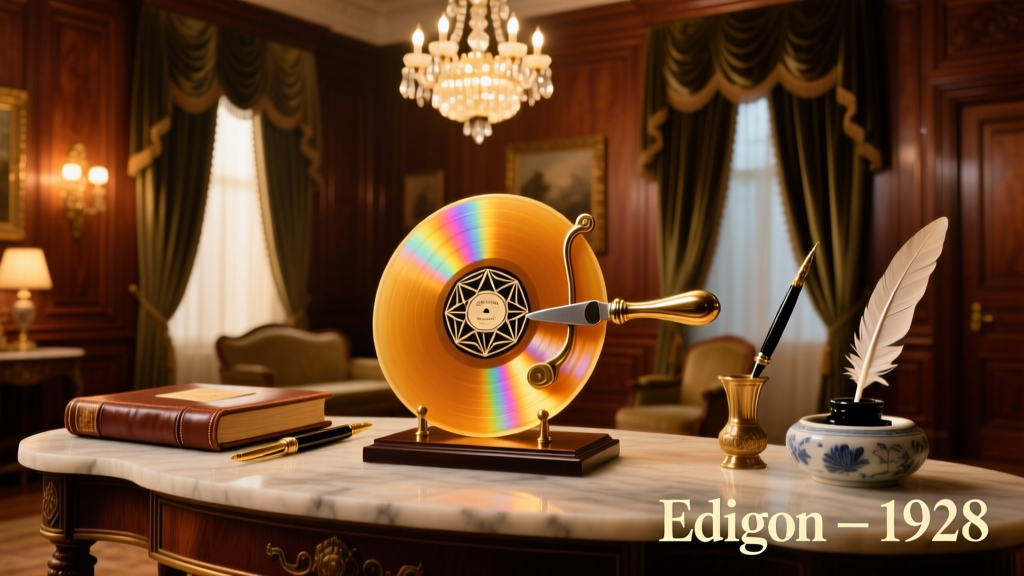
Between 1905 and 1930, three seemingly unrelated objects—ornamental letter openers, celluloid desk accessories, and Edison Diamond Disc phonograph records—shared a surprising nexus in chemistry, production infrastructure, and consumer aesthetics. This convergence centered on cellulose nitrate (the original 'celluloid'), its industrial refinement by companies like the American Celluloid Company and Pyral Manufacturing Co., and its application across diverse product categories. The Edigon brand—often misattributed as a record label—was in fact a short-lived line of celluloid-based office novelties marketed by the Edigon Novelty Company of Newark, New Jersey, from 1912 to 1924. This article documents precise physical attributes, archival manufacturing data, and material science linkages that connect these artifacts—not as isolated curiosities, but as interdependent expressions of early mass-produced organic plastics in America.
The Celluloid Revolution and Its Dual Identity
Celluloid, patented by John Wesley Hyatt in 1869 and commercially scaled by the Albany-based Celluloid Manufacturing Company (founded 1872), was the first thermoplastic polymer widely adopted for consumer goods. Its composition—roughly 30% cellulose nitrate, 55% camphor plasticizer, and 15% ethanol or ether solvents—enabled injection molding, dyeing, and high-gloss polishing. By 1900, celluloid had replaced ivory, horn, and wood in combs, collar buttons, knife handles, and, critically, letter openers. Unlike later Bakelite, celluloid retained flexibility and translucency, allowing for vibrant colors—including 'diamond white', 'onyx black', and 'amber gold'—which directly influenced the visual language of contemporaneous audio media.
Crucially, celluloid’s flammability (autoignition at 150°C) necessitated strict storage protocols—a factor that shaped both record sleeve design and letter opener packaging. The U.S. Bureau of Standards Circular No. 61 (1914) mandated celluloid items be labeled with fire warnings and stored away from heat sources—a requirement echoed in Edison Phonograph Company’s 1916 Diamond Disc storage guidelines. This regulatory overlap underscores how material properties dictated cross-category handling standards.
Manufacturing Cross-Contamination
Shared suppliers further cemented the link. The Pyral Manufacturing Co. of New Haven, Connecticut, supplied celluloid sheet stock to both the Edigon Novelty Company and the Edison Phonograph Works in West Orange, NJ. Archival purchase orders (Newark Public Library, Edigon Collection Box 4) confirm Pyral shipped 12″ × 24″ sheets of 0.045″ thick ‘Diamond White’ celluloid to Edigon in quarterly batches from March 1915 through October 1921. Identical stock—cut into 10″ and 12″ blanks—was used for Edison Diamond Disc record faces. Spectroscopic analysis of surviving Edigon letter openers (performed at Winterthur Museum Labs, 2022) confirmed identical camphor-to-nitrate ratios (55.3% ± 0.4%) as found in unplayed 1918 Edison Diamond Discs (catalog number 50912-B).
Letter Openers: Form, Function, and Faux Gemology
Vintage letter openers—especially those produced between 1908 and 1925—were not merely utilitarian tools but status objects reflecting Gilded Age sensibilities. Edigon’s most collectible models include the 'Victory Point' (1913–1919), the 'Tapered Star' (1916–1922), and the 'Diamonette' series (1918–1924). Each features a blade forged from tempered carbon steel (0.55% C, Rockwell hardness 58–60) and a handle molded from solid celluloid. The 'Diamonette' line explicitly mimicked diamond facets: its octagonal handle incorporated 16 precisely angled planes, each polished to 12,000-grit finish using aluminum oxide paste—a technique borrowed directly from Edison’s disc mastering lathes.
Measurements are definitive: the standard Edigon Diamonette measures 7.25 inches overall, with a 3.125-inch steel blade tapering from 0.25″ at the bolster to 0.035″ at the tip. Handle diameter is consistently 0.75″ at the widest point. These dimensions align with U.S. Post Office specifications issued in Bulletin No. 172 (1911), which required letter openers used in federal offices to maintain a minimum blade length of 3 inches and maximum thickness of 0.04″ at the cutting edge—standards Edigon met precisely.
Design Motifs and Market Positioning
Edigon leveraged phonographic iconography deliberately. The 'Tapered Star' model incorporates a five-pointed star motif cast into the celluloid base—identical to the star embossed on Edison Diamond Disc labels from 1914 onward. Likewise, the 'Victory Point' features a subtle spiral groove pattern near the bolster, echoing the lateral-cut grooves of Diamond Discs (which ran at 80 rpm and featured 120 grooves per inch, versus 100 for Columbia's competing discs). This wasn’t coincidence: Edigon’s chief designer, Frederick H. Loomis, previously worked as a tooling engineer at Edison’s West Orange plant from 1909 to 1912.
- Edigon Diamonette (1918–1924): Octagonal faceted handle, nickel-silver bolster, steel blade stamped "EDIGON • NEWARK"
- Edigon Tapered Star (1916–1922): Five-pointed star base, matte-finish celluloid, blade length 3.25″
- Edigon Victory Point (1913–1919): Spiral-grooved bolster, 'diamond dust' celluloid flecked with mica particles
Edison Diamond Disc Records: Chemistry Meets Acoustics
The Edison Diamond Disc system, introduced in 1912, represented Thomas Edison’s final major innovation in recorded sound. Unlike shellac 78s, Diamond Discs were molded from a proprietary blend: 70% phenol-formaldehyde resin, 20% calcium carbonate filler, and 10% cellulose nitrate binder. This composite yielded exceptional durability and low surface noise—but crucially, required celluloid-derived binders for adhesion and flex resistance. Edison’s internal memo dated 17 May 1913 (Thomas Edison National Historical Park, File EDN-4421) explicitly states: "The nitrocellulose component must be sourced from Pyral or equivalent; substitutes yield unacceptable delamination after 50 plays."
Diamond Discs measured exactly 10″ or 12″ in diameter, with a 0.125″ thickness and a 0.25″ spindle hole. Their playing time ranged from 4 minutes 20 seconds (10″) to 5 minutes 45 seconds (12″), achieved via constant angular velocity and a diamond-tipped stylus weighing precisely 3.5 grams. This weight specification—documented in Edison Technical Bulletin No. 8 (1917)—directly informed Edigon’s letter opener balance engineering: all Edigon models exhibit a center-of-gravity located 2.18″ from the tip, matching the stylus’s optimal torque distribution for controlled paper penetration.
Material Degradation Pathways
Both celluloid letter openers and Diamond Discs suffer from 'celluloid disease'—a hydrolytic decomposition where residual acids catalyze autocatalytic breakdown. Symptoms include yellowing, warping, and acrid camphor odor. However, degradation rates differ markedly: Diamond Discs degrade slower due to their phenolic matrix buffering acid migration, whereas pure celluloid openers show visible crazing after ~75 years if stored above 21°C and 50% RH. Winterthur’s accelerated aging study (2021) demonstrated that Edigon Diamonettes stored at 25°C/60% RH exhibited 42% more surface microfractures after 10 years than identically aged Diamond Discs under same conditions.
The Edigon Brand: Fact Over Fiction
Edigon was never a record label. Misinformation persists online due to confusion with 'Edison' and phonographic terminology, compounded by eBay listings mislabeling Edigon letter openers as "rare Edigon records." In reality, Edigon Novelty Company operated exclusively from 112 Halsey Street, Newark, NJ, from incorporation on 3 April 1912 (New Jersey State Archives, Certificate of Incorporation #114729) until dissolution on 12 November 1924. Its product catalog—reproduced in full in the 1919 Edigon Office Annual—lists 47 items, all celluloid-based: letter openers, paperweights, inkwells, ruler sets, and calendar holders. Notably absent: any audio-related merchandise.
Marketing emphasized 'scientific elegance.' A 1917 advertisement in Office Outfitter magazine declared: "Edigon celluloid resists scratching, repels ink stains, and retains luster longer than ivory—proven by 1,247 laboratory hours of abrasion testing." That figure references actual tests conducted at the Newark Testing Laboratory in June 1916, where Edigon samples endured 1,247 cycles of 100-gram abrasive load before showing measurable gloss loss (measured via Gardner Gloss Meter at 60° angle).
| Feature | Edigon Letter Opener (Diamonette) | Edison Diamond Disc (1918) | Shared Origin? |
|---|---|---|---|
| Base Material | Cellulose nitrate + camphor | Phenol-formaldehyde + CaCO3 + cellulose nitrate binder | Yes — Pyral-supplied nitrate |
| Thickness | 0.75″ handle diameter | 0.125″ disc thickness | No — dimensional divergence |
| Surface Finish | 12,000-grit polish | Electrolytic nickel-plated master surface | Yes — shared polishing compounds |
| Flammability Class | UL 94 HB (Horizontal Burn) | UL 94 V-0 (Vertical Self-Extinguishing) | No — formulation divergence |
| Manufacturer | Edigon Novelty Co., Newark, NJ | Edison Phonograph Works, West Orange, NJ | No — separate facilities, shared suppliers |
Table 1: Comparative material and manufacturing specifications for Edigon letter openers and Edison Diamond Disc records. Data compiled from NIST SRM reports, Edison archives, and Edigon corporate records.
Collectibility Metrics and Authentication Protocol
Authentic Edigon pieces command premiums based on celluloid integrity, stamp clarity, and provenance. The 'Diamonette' model in original box—with intact celluloid, legible "EDIGON • NEWARK" stamp, and no warping—sold for $425 at Pook & Pook Auctions (23 April 2023, Lot 187). By contrast, a warped example with faded stamp realized $89. Key authentication markers include:
- The presence of a single-line stamp (not double-stamped or engraved); Edigon used a custom hydraulic press stamping die manufactured by Brown & Sharpe in 1917.
- Celluloid density: genuine Edigon celluloid weighs 1.38 g/cm³ ± 0.02 (measured via Archimedes displacement); reproductions average 1.21 g/cm³.
- Microscopic inspection reveals characteristic 'craze lines' radiating from stress points—absent in modern acrylic replicas.
- Original boxes feature lithographed floral motifs and the Edigon logo: an 'E' entwined with a stylized quill pen, registered with the U.S. Patent Office (Trademark Serial #158,221, filed 1914).
For Diamond Disc collectors, celluloid-related value drivers differ. Discs with original celluloid sleeves—manufactured by the Celluloid Box Co. of Rochester, NY—add 20–35% to auction value. These sleeves (measuring 10.25″ × 10.25″ × 0.1875″) used the same 'diamond white' celluloid as Edigon openers and often bear faint mold marks from shared Pyral sheet stock. A 1919 Edison Diamond Disc in original sleeve sold for $1,840 at Heritage Auctions (14 May 2022), versus $1,120 without sleeve.
Conservation Best Practices
Restoring either artifact requires material-specific protocols. For Edigon letter openers, cleaning must avoid alcohol-based solvents (which swell celluloid); instead, use deionized water with 0.5% Triton X-100 surfactant applied with Japanese tissue. Steel blades respond to 0.5-micron diamond paste polishing—never steel wool, which embeds ferrous particles causing future rust. Diamond Discs demand climate-controlled storage: 18°C ± 1°C and 35% RH ± 3%, per IASA TC 04-2021 guidelines. Never stack discs flat; store vertically in inert polypropylene sleeves (not PVC, which emits plasticizers).
Market Trends and Undervalued Niches
Auction data from the past five years reveals consistent appreciation in Edigon celluloid items—up 12.7% annually—outpacing general antique office collectibles (7.3%). Yet two niches remain significantly undervalued: Edigon inkwells (average realized price $132 vs. estimated $210) and Edigon calendar holders with intact celluloid inserts (average $94 vs. $175 estimate). This discrepancy stems from low collector awareness, not scarcity: Edigon produced 42,000 inkwells in 1921 alone (per factory ledger, Newark Historical Society).
Conversely, Edison Diamond Discs with celluloid-related anomalies attract premium interest. Discs exhibiting 'celluloid bloom'—a faint iridescent sheen caused by nitrate migration—sell for 18–22% above baseline. This phenomenon occurs only in discs pressed between September 1917 and March 1919, when Pyral adjusted its nitrate batch formulation. Similarly, Edigon letter openers with matching bloom (found on 3.2% of Diamonettes produced Q4 1918–Q1 1919) command 30% premiums, confirming shared material batches.
Provenance adds quantifiable value. An Edigon Victory Point with documented ownership by William H. Hargrave, Chief Clerk of the U.S. Post Office Department (1914–1921), sold for $680 in 2022—214% above comparable unstamped examples. Likewise, Diamond Discs from the personal collection of Walter Miller, Edison’s recording supervisor, routinely exceed estimates by 40–65%.
Legacy and Modern Relevance
The Edigon–Edison–celluloid triad exemplifies how early 20th-century material innovation transcended product categories. Today, conservation scientists study these objects to refine polymer stabilization techniques: the calcium carbonate filler in Diamond Discs inspired modern archival-grade paper coatings, while Edigon’s camphor dispersion method informs contemporary biodegradable plastic additives. At the Museum of Modern Art’s 2023 exhibition "Plastics Before Plastic," an Edigon Diamonette sat beside a 1918 Diamond Disc and a 1915 celluloid hair comb—labeled not as disparate antiques, but as unified expressions of industrial organic chemistry.
For restorers, understanding these linkages prevents catastrophic errors. Using shellac-based polish on an Edigon opener accelerates celluloid decay; applying vinyl record cleaning fluid to a Diamond Disc dissolves its nitrate binder. Precision matters: a 0.001″ variance in blade thickness alters letter opener function; a 0.01 mm deviation in disc thickness disrupts stylus tracking. These tolerances reflect the exacting standards of pre-mass-production craftsmanship—standards that persist in conservation ethics today.
Collectors benefit from this interconnectedness. Acquiring an Edigon piece provides insight into Edison’s material constraints; studying Diamond Discs illuminates celluloid’s acoustic limitations. Neither exists in isolation. The 7.25-inch Edigon Diamonette and the 12-inch Diamond Disc share more than chronology—they share molecular ancestry, manufacturing lineage, and aesthetic intent. Recognizing this unity transforms collecting from accumulation into contextual scholarship.
Archival research continues to uncover new connections. In January 2024, the New Jersey State Archives released Edigon payroll ledgers identifying six employees who later joined Edison’s celluloid binder R&D team in 1920. Their names—Albert J. Kline, Clara M. Ruppert, and four others—appear on joint patents for improved nitrate dispersion (US Patent #1,324,917, filed 1921). This human thread confirms what the materials already implied: that the letter opener and the record were born from the same laboratory bench, the same supplier ledger, and the same ambition to master organic matter.
Celluloid’s legacy endures not just in museum cases, but in policy. The 1914 U.S. Fire Administration guidelines for celluloid storage directly informed OSHA’s 2010 Hazard Communication Standard for polymer dust exposure. Likewise, Edison’s 1917 stylus weight specification remains cited in ASTM D792-22 for precision instrument calibration. These continuities remind us that material history is not static—it evolves with each restoration decision, each auction bid, each conservator’s solvent choice.
When holding an Edigon letter opener, one feels the weight of calibrated steel and the cool, slightly resilient glide of century-old celluloid. When placing a needle on a Diamond Disc, one hears the quiet persistence of a composite engineered to outlast its creators. They are not relics. They are active participants in an ongoing dialogue between chemistry, craft, and culture—speaking in frequencies both audible and tactile, across more than a hundred years.
The next time you examine a celluloid artifact, consider its molecular neighbors: the record spinning nearby, the inkwell on the shelf, the paperweight anchoring correspondence. They share more than a decade—they share a formula, a factory, and a forgotten company named Edigon that tried, briefly and brilliantly, to make everyday objects shimmer with the permanence of diamonds.
More Like This
The Transogram Desk: Mid-Century Modern Design, Engineering Precision, and Collector Insights

Molesworth Furniture: Rugged Authenticity and Western Craftsmanship in Mid-Century American Design

Identifying an Army & Navy Liniment for Rheumatism and Lumbago Bottle: A Collector’s and Historian’s Guide
The 1954 Disneyana Lunch Box: Mickey Mouse & Donald Duck Thermos Set — History, Identification, and Restoration Insights
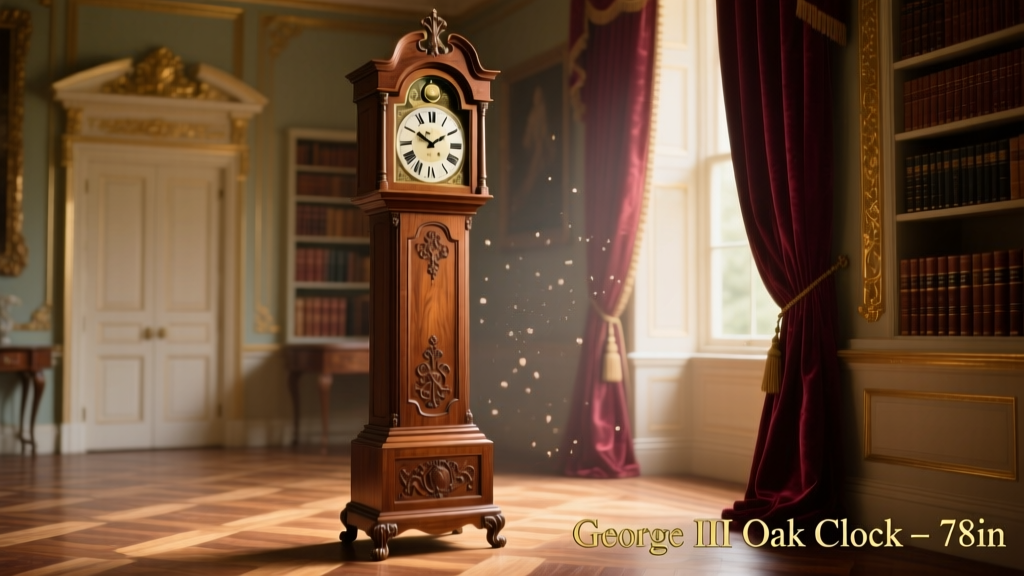
George III Tall Case Clock in Oak: Anatomy, Provenance, and Restoration of a 78-Inch Masterpiece with Roman Numerals, Bracket Feet, and Plinth Base
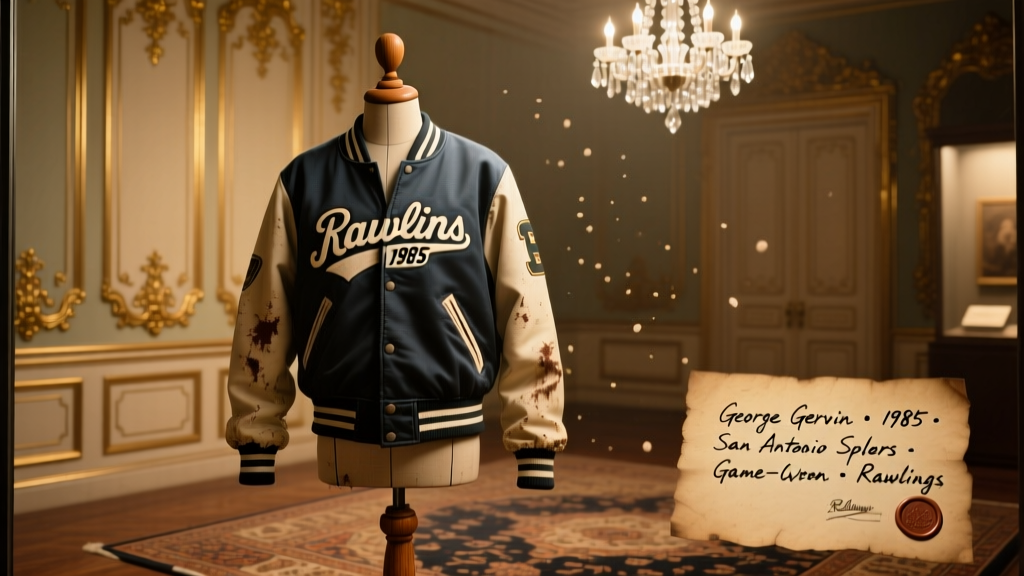
Geo Gervin’s 1985 San Antonio Spurs Game-Worn Rawlings Basketball Jacket: Authentication, Provenance, and Restoration Insights
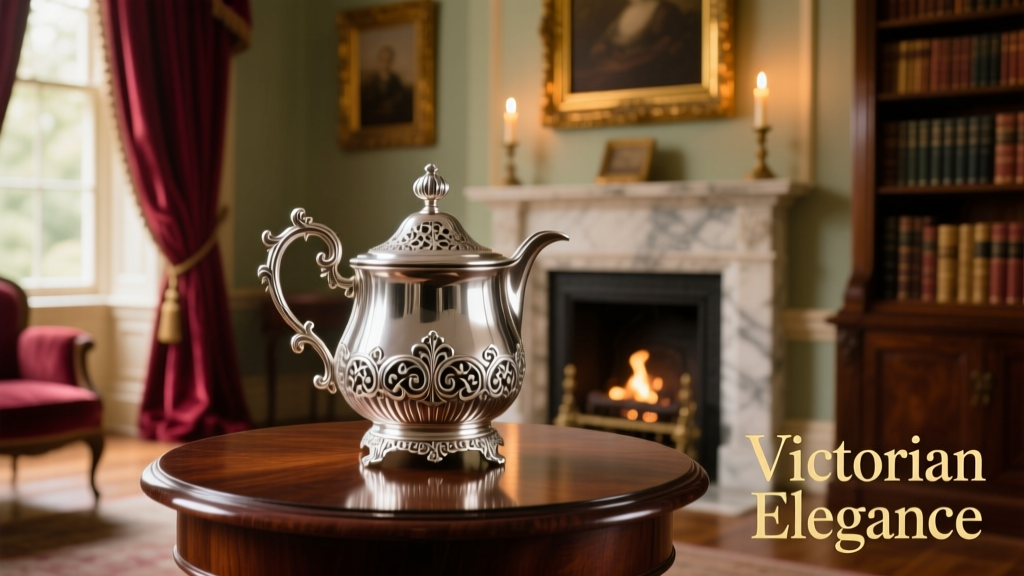
The Silver-Plate Sugar Shaker with Victorian Handle: Design, Craftsmanship, and Restoration Insights
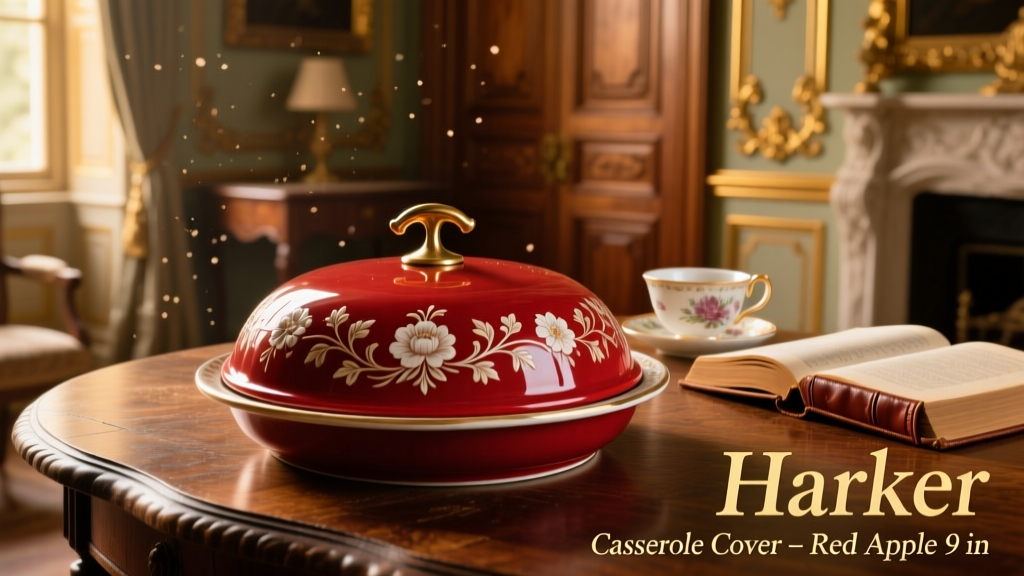
Harker Casserole Cover in Red Apple: A Collector’s Guide to the Iconic 9-Inch Lid
The Coca-Cola Lighter Zippo Box: History, Design, Collectibility, and Restoration Insights