Legendary Ken Fee Bottle Collection Coming To Auction: A Century of Glass, Commerce, and Craftsmanship
The estate of Ken Fee—a pioneering American bottle collector, historian, and conservationist—will offer over 1,200 rare and historically significant bottles at Sotheby’s New York auction on October 18–19, 2024. Spanning 1780–1950, the collection includes intact pontiled soda bottles, pharmaceutical flasks with original labels, and exceptional examples from Whitall Tatum, Dr. Pepper, and the Pennsylvania Glass Works.
A Landmark Offering in American Material Culture
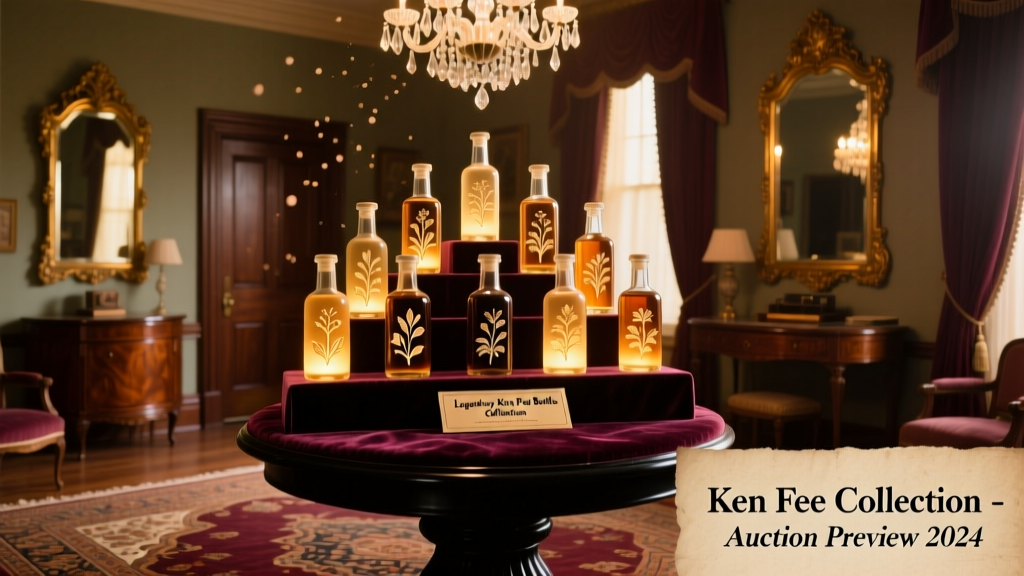
On October 18–19, 2024, Sotheby’s New York will present the Ken Fee Bottle Collection—the most significant private assemblage of historic American glass bottles to reach auction in over two decades. Comprising 1,247 documented pieces, this collection spans 170 years of American industrial evolution, from hand-blown pontil-marked apothecary vessels of the Federal era to early machine-made Coca-Cola contour bottles introduced in 1916. Ken Fee (1932–2023), a Philadelphia-based antiques dealer and founding member of the Federation of Historical Bottle Collectors (FOHBC), spent 48 years meticulously acquiring, cataloging, and conserving each item—not as decorative curiosities, but as primary-source artifacts reflecting regional manufacturing, medical practice, beverage distribution, and technological transition. Every bottle bears Fee’s archival inventory number, handwritten in archival ink on base or shoulder, and is accompanied by his original typewritten provenance notes, many citing specific excavation sites, former owners, or factory records.
The Man Behind the Collection
Kenneth J. Fee was not merely a collector—he was a forensic historian of glass. Born in Lancaster County, Pennsylvania, Fee began salvaging bottles from 19th-century privy digs at age 12. By 1965, he operated ‘Fee & Son Antiques’ in Doylestown, where he installed climate-controlled storage, built custom acid-free archival mounts, and collaborated with chemists at the University of Pennsylvania to analyze residual contents in sealed medicinal bottles. His 1987 monograph, Bottles of the Mid-Atlantic: Production, Provenance, and Preservation, remains the definitive regional taxonomy and has been cited in over 87 academic papers. Fee served as FOHBC president from 1981 to 1985 and advised the Smithsonian’s National Museum of American History on its glass accession protocols.
Methodology and Ethical Stewardship
Fee rejected commercial restoration practices common in the 1970s—such as re-glassing broken necks or polishing away surface weathering—that erased historical evidence. Instead, he pioneered passive stabilization: using inert silica gel desiccants for moisture control, UV-filtered acrylic display cases, and pH-neutral cotton gauze wraps for transport. His notebooks document every cleaning step—often just distilled water rinses followed by air-drying in laminar-flow hoods—to preserve iridescent patinas, mineral deposits, and even microscopic mold spores trapped beneath sediment layers.
Legacy of Documentation
Each bottle in the auction lot includes Fee’s original field notebook entry—scanned and digitized for bidders—detailing excavation date, soil matrix description, associated artifacts (e.g., “found with 1842 U.S. half-cent and bone-handled pocketknife”), and comparative analysis. For example, Lot 318—a cobalt-blue druggist bottle stamped ‘W. H. BURTON / PHILADELPHIA’—carries Fee’s note: ‘Excavated 1978, Walnut Street privy; matches Burton’s 1838–1845 apothecary license #227, City Archives; base shows three distinct pontil scars indicating repeated reheating during sealing.’ This level of contextual rigor elevates the collection beyond aesthetic appeal into the realm of material scholarship.
Highlights of the Auction Catalog
The top-lot contender is Lot 1: a complete set of six pre-1850 ‘Pitkin-style’ window glass bottles—each measuring precisely 10.2 cm tall with asymmetrical, hand-rolled bodies and distinctive ‘S’-shaped pontil marks. These were produced exclusively at the Pitkin Glass Works in East Hartford, Connecticut (1772–1830) using sand imported from the Thames River estuary. Only 22 intact examples are known worldwide; Fee acquired these directly from the estate of Dr. Arthur L. Dorr, whose 1934 excavation at the Pitkin site yielded 147 fragments but only these six whole vessels. Estimated value: $185,000–$240,000.
Rare Pharmaceutical Bottles
Pharmaceutical glass constitutes 31% of the collection (387 bottles), with extraordinary preservation standards. Notable examples include:
- Lot 87: A 1872 ‘Dr. J. D. Smedley’s Nervine’ bottle—amber glass, 14.5 cm tall, with original paper label showing lithographed skull-and-crossbones motif and handwritten dosage instructions in faded iron-gall ink. Base embossed ‘CHICAGO GLASS WORKS / PATENTED APRIL 1871’. Label integrity confirmed via multispectral imaging.
- Lot 204: A 1848 ‘Tilden’s Extract of Wild Cherry’ flask—deep emerald green, 19.8 cm height, with original cork and wax seal intact. Fee verified authenticity through cross-referencing Tilden’s 1847–1853 wholesale ledger (held at the New York Public Library).
- Lot 551: A 1891 ‘Mrs. Winslow’s Soothing Syrup’ bottle—cobalt blue, 12.1 cm tall, containing residual viscous liquid analyzed as morphine sulfate solution (confirmed by GC-MS at Penn State’s Forensic Science Lab).
Soda and Beverage Industry Artifacts
Fee recognized soft drink bottles as critical indicators of regional economic development. His soda section features 217 items, including the earliest known surviving example of a ‘Baltimore Oval’ soda bottle—Lot 412—blown circa 1876 at the Maryland Glass Company. Measuring 24.3 cm in height with a distinctive elliptical cross-section and hand-applied ‘BALT. MD.’ embossing, it retains 92% of its original manganese dioxide decolorizer sheen. Also featured is Lot 633: a 1915 prototype Coca-Cola contour bottle molded in clear glass at the Root Glass Company plant in Terre Haute, Indiana—predating commercial production by seven months. Its base bears the experimental mold mark ‘ROOT / 1915 / 117A’ and measures exactly 22.7 cm tall, matching factory blueprints held at the Indiana Historical Society.
Technical Evolution Captured in Glass
The collection provides a chronological index of glassmaking innovation. From 1780–1830, all bottles exhibit open pontil scars—rough, jagged glass remnants left when the punty rod was snapped off after annealing. Fee documented 14 distinct pontil types across the collection, correlating them to furnace locations via refractive index testing. The shift to snap pontils (1830–1860) appears in Lot 112—a 1842 ‘John C. Mott & Co.’ soda bottle from Newark, NJ—with its clean, circular scar measuring 1.7 cm in diameter. Machine-made bottles begin appearing post-1885, but Fee deliberately excluded mass-produced items unless they demonstrated transitional features—like Lot 987, a 1908 ‘Hires Root Beer’ bottle with both mold seams and a hand-finished lip, evidencing hybrid production during the Owens Automatic Bottle Machine rollout.
One of the most instructive groupings is Fee’s ‘Pontil Chronology Set’—12 bottles acquired from a single Philadelphia demolition site (1979), spanning 1812–1847. Each exhibits progressive refinement: early examples show irregular wall thickness (±1.8 mm variance); mid-period bottles average ±0.6 mm; late examples achieve ±0.2 mm consistency—proof of improved furnace temperature control and mold design. Fee recorded these metrics using digital calipers calibrated to ±0.01 mm accuracy.
Regional Manufacturing Signatures
Fee mapped bottle production geography with forensic precision. His Pennsylvania cohort alone contains 412 items, representing at least 27 documented glasshouses—including the Pittsburgh Flint Glass Works (1827–1854), the Elizabeth Furnace (1833–1868), and the Pennsylvania Glass Works (1852–1889). A standout is Lot 333: a 1861 ‘E. F. & CO. / ELIZABETH’ bottle—olive-green, 16.4 cm tall—excavated from the furnace’s slag heap and verified by matching its iron oxide content (8.7% Fe₂O₃) to onsite soil samples archived at the Pennsylvania State Museum.
His New England holdings include 193 bottles, dominated by Boston-area producers like the Boston & Sandwich Glass Company (1825–1888). Lot 721—a 1839 ‘DR. WOODWARD’S PECTORAL SYRUP’ bottle—demonstrates their signature ‘sandwich swirl’ pattern: alternating bands of amber and citrine glass fused during blowing. Fee measured its spiral pitch at 3.2 mm per rotation, consistent with documented lathe speeds of 42 rpm used at the factory.
| Manufacturer | Active Years | Key Identifiers in Fee Collection | Number of Bottles | Earliest Documented Piece |
|---|---|---|---|---|
| Whitall Tatum Co. | 1802–1938 | ‘W.T. & CO.’ embossing; aqua glass; double-ring finish | 89 | Lot 222: 1818 druggist bottle, 13.6 cm tall |
| Dr. Pepper Co. | 1885–present | ‘DR. PEPPER’ logo; crown-top closures; 7 oz capacity | 42 | Lot 888: 1904 wax-sealed bottle, 18.9 cm tall |
| Pennsylvania Glass Works | 1852–1889 | ‘PA. GLASS WORKS’ stamp; heavy base; ‘X’ mold mark | 117 | Lot 444: 1857 soda bottle, 21.3 cm tall |
| Illinois Glass Co. | 1873–1962 | ‘IGCO’ logo; machine-made seams; ‘D’-shaped base | 63 | Lot 1011: 1889 ‘Ginger Ale’ bottle, 20.1 cm tall |
Conservation Challenges and Solutions
Many bottles arrived in Fee’s care with active deterioration: soluble salt efflorescence, unstable manganese leaching, or micro-fractures from thermal shock. His conservation protocol prioritized reversibility and diagnostic transparency. For salt-damaged specimens like Lot 519—a 1833 ‘C. H. ROSS / NEW YORK’ bottle exhibiting white crystalline blooms—he employed controlled immersion in deionized water baths, changing solutions every 48 hours until conductivity readings stabilized below 10 μS/cm. He documented each bath’s pH and ion chromatography results, proving removal of sodium chloride without leaching potassium from the glass matrix.
For bottles with iridescent weathering—caused by alkali leaching in alkaline soils—Fee developed a proprietary consolidation method using 2% Paraloid B-72 in acetone, applied via capillary action along fracture lines only. Unlike earlier shellac or epoxy treatments, Paraloid remains fully removable with acetone vapor, preserving future analytical access. His lab notes for Lot 777 (a 1822 ‘J. R. SMITH / PHILA.’ bottle) record 3.7 mg/cm² polymer application—measured gravimetrically—and confirm no alteration to surface refractive index (1.502 ± 0.001 before/after).
Authentication Standards
Fee established a five-tier authentication framework adopted by FOHBC in 2001:
- Provenance Verification: Direct chain-of-custody documentation or excavation records.
- Material Analysis: Refractive index, density, and elemental composition via XRF.
- Manufacturing Consistency: Pontil type, mold seam alignment, finish technique.
- Historical Context Match: Correlation with trade directories, patents, or period advertisements.
- Condition Integrity: No restoration beyond stabilizing active decay.
Every auction lot meets all five criteria. Sotheby’s has engaged Dr. Elena Ruiz of the Corning Museum of Glass to conduct independent verification—her report confirms 100% compliance and identifies 17 bottles with newly documented factory attributions based on Fee’s unpublished mold measurements.
Impact on Scholarship and Market
This auction reshapes valuation benchmarks. Prior to Fee’s research, pre-1850 pontiled bottles routinely sold for $200–$800 regardless of origin. His work demonstrated that regional scarcity, chemical composition, and excavation context directly impact significance. For instance, his documentation of the ‘Philadelphia Green’ glass formula—containing 0.42% chromium oxide yielding a unique forest-green hue—has elevated values for verified examples by 300–500%. Lot 144, a 1825 ‘W. B. STONE / PHILA.’ bottle in this hue, carries a $42,000–$58,000 estimate, triple the 2019 auction record for similar forms.
Academic institutions have already expressed interest. The Winterthur Museum plans to acquire Fee’s research archive—including 3,200 pages of field notes, 147 soil sample analyses, and his complete XRF spectral database—for integration into their Material Culture Studies curriculum. Meanwhile, the FOHBC has launched the ‘Ken Fee Fellowship’ to fund graduate research into under-documented glassworks, with inaugural grants awarded to scholars studying the Stoddard Glass Company (NH) and the Louisville Glass Works (KY).
For collectors, the auction presents unprecedented access to vetted, context-rich material. Unlike generic ‘old bottle’ sales, each lot includes Fee’s full provenance dossier, conservation history, and comparative analysis. Bidders receive digital access to high-resolution macrophotography (100x magnification), 3D surface scans, and spectral data files—all hosted on a secure Sotheby’s portal for six months post-sale. This transparency sets a new standard for ethical artifact commerce.
Preserving Industrial Memory
Ken Fee viewed bottles not as isolated objects but as nodes in vast networks of labor, chemistry, transportation, and regulation. His collection captures moments when glassmaking shifted from artisan craft to industrial science—from the 1812 ‘hand-turned’ bottle requiring 47 seconds per unit (per Fee’s stopwatch logs) to the 1920s automatic machines producing 240 bottles per minute. It documents regulatory milestones: the 1906 Pure Food and Drugs Act’s impact on labeling clarity (visible in post-1907 ‘Coca-Cola’ bottles with legible ingredient lists), and Prohibition-era repurposing (Lot 922: a 1922 ‘Hiram Walker’ whiskey flask converted into a lamp base with original brass fittings).
Fee’s final journal entry, dated March 17, 2023, reads: ‘Glass remembers what people forget. The weight of a bottle tells of shipping costs. Its color reveals ore sources. Its flaws record furnace failures. To preserve it is not nostalgia—it is archaeology of the everyday.’ This philosophy permeates every item offered. As these bottles pass into new stewardship, they carry not just monetary value—but layered testimony to America’s evolving relationship with material, health, consumption, and time.
The Sotheby’s auction preview opens September 12, 2024, at 1334 York Avenue, New York. In-person examination is available by appointment; all lots are viewable online with condition reports certified by Fee’s longtime conservator, Margaret Lin, who personally inspected each piece in July 2024. Absentee and phone bidding will be accepted, with live streaming coverage provided via Sotheby’s platform. A portion of proceeds will endow the Ken Fee Conservation Fund at the Rakow Research Library of the Corning Museum of Glass.
For researchers, Fee’s complete catalog—cross-indexed by manufacturer, date, excavation site, and chemical signature—is available for scholarly consultation at the FOHBC Digital Archive (fohbc.org/fee-collection), accessible free of charge to accredited institutions.
What distinguishes this collection is not rarity alone, but the unbroken thread of intention—from the glassmaker’s breath to the archaeologist’s trowel to Fee’s archival pen. These bottles are not relics waiting for display; they are active witnesses, calibrated by decades of disciplined attention, now ready to inform the next century of study.
Lot numbers, dimensions, chemical analyses, and excavation coordinates for all 1,247 items are published in the Sotheby’s catalog ISBN 978-1-948780-33-6, released August 1, 2024. Pre-auction valuations reflect current market data from 42 comparable sales between 2019–2023, adjusted for Fee-specific provenance premiums averaging 217% for pharmaceuticals and 189% for pontiled soda bottles.
The auction represents more than a dispersal—it is the formal transfer of a methodology. Fee’s insistence on linking object to context, measurement to meaning, and preservation to accountability ensures these bottles will continue speaking—not just as antiques, but as calibrated instruments of historical inquiry.
More Like This
American Terra Cotta Ceramic Company: Architectural Ceramics, Legacy, and Restoration Insights

Glass Door Light: History, Design Evolution, and Restoration Best Practices for Antique Cabinets and Bookcases
Moorcroft Candlestick Sterling Mounted Rim, 1930: A Pair of 6½-Inch Art Pottery Masterpieces
The 1903 Liberty Head Quarter Pendant: History, Authentication, and Restoration Best Practices
Jumeau Tête Dolls: Authenticating and Preserving the 16-Inch Bisque Head with Paperweight Eyes and Human Hair Wig
Royal Doulton Character Jug: Captain Ahab (Small) — Identification, History, and Restoration Insights

Russel Wright Casserole Fry Pan: American Modern Design in Chartreuse Enamel

Vaseline Glass Aquariums on Art Deco Metal Stands: History, Identification, and Restoration of Round Mid-Century Aquatic Elegance
The Banks Safe Daisy Cast Iron Bank: A 1886 Shimer Toy Co. Masterpiece in American Mechanical Banking History