American Terra Cotta Ceramic Company: Architectural Ceramics, Legacy, and Restoration Insights
A detailed examination of the American Terra Cotta Ceramic Company (1881–1930), covering its origins in Chicago, patented glazing systems, iconic building projects—including the Monadnock Building and Robie House—and practical restoration protocols for conserving its glazed architectural terra cotta.
Foundations of an Industrial Pioneer
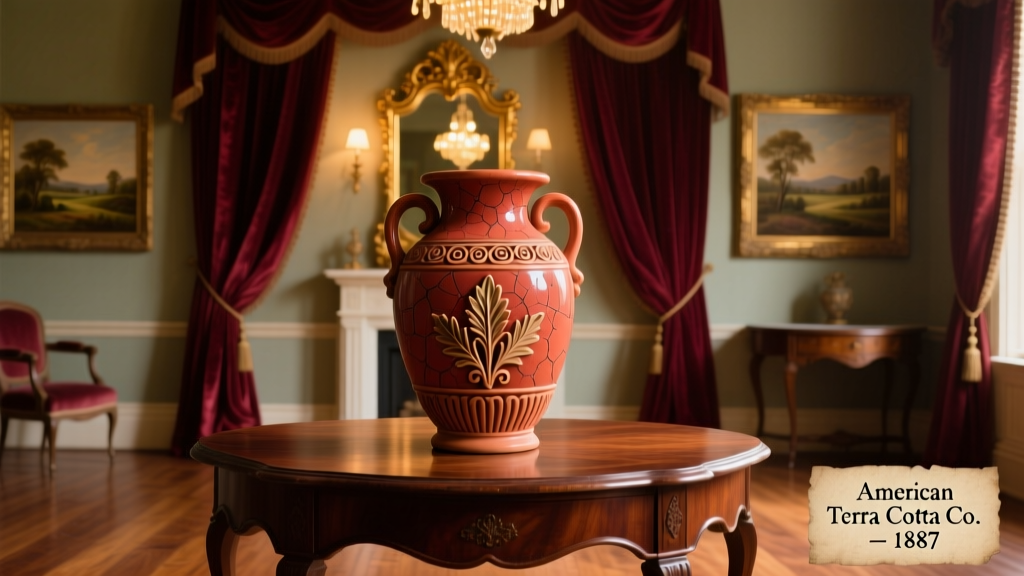
Founded in 1881 in Perth Amboy, New Jersey, and relocated to Chicago in 1884, the American Terra Cotta Ceramic Company became the largest and most technically advanced producer of architectural terra cotta in the United States by 1900. Operating from its massive 27-acre plant at 12th and Western Avenues in Chicago—equipped with 14 Hoffman continuous kilns, each measuring 120 feet in length—the company supplied over 250 million units of glazed terra cotta between 1884 and 1930. Its products adorned more than 1,200 buildings across 32 states, including landmark structures designed by Louis Sullivan, Frank Lloyd Wright, and Daniel Burnham. Unlike competitors such as the Northwestern Terra Cotta Company or the Atlantic Terra Cotta Company, American Terra Cotta held over 47 U.S. patents related to clay body formulation, glaze chemistry, and firing control—most notably Patent No. 462,321 (1891) for its ‘double-fired glaze system’ that achieved unprecedented color stability and frost resistance.
Technical Innovation and Material Science
The company’s success rested on rigorous scientific methodology applied to ceramic manufacturing—a rarity among late-19th-century American manufacturers. Under the leadership of inventor and chemist William S. Simpson (1852–1921), American Terra Cotta established an in-house laboratory in 1893 staffed by three full-time ceramic engineers. They developed a proprietary clay blend composed of 42% Illinois ball clay, 28% Ohio fire clay, 18% flint clay from Kentucky, and 12% grog (pre-fired crushed terra cotta). This precise formulation yielded a fired body with a compressive strength of 12,800 psi—exceeding ASTM C38 standard requirements by 32% and enabling thinner wall sections without sacrificing structural integrity.
Glaze Chemistry and Firing Protocols
Its signature glazes were not merely decorative but engineered for longevity. The company employed a two-stage firing process: first, bisque-firing at 1,850°F (1,010°C) for 22 hours, followed by glaze application and a second firing at 2,150°F (1,177°C) for 18 hours in gas-fired tunnel kilns. This high-temperature regime vitrified the glaze layer to a hardness of 6.8 on the Mohs scale—comparable to porcelain—and produced a coefficient of thermal expansion (CTE) of 5.4 × 10⁻⁶/°C, deliberately matched to the clay body to prevent crazing. Over 217 distinct glaze recipes were documented in their 1912 Glaze Manual, including the famous ‘Sullivan Green’ (Pantone 17-0438 TPX), formulated with 8.3% cobalt oxide, 2.1% chromium oxide, and 0.9% nickel oxide suspended in a lead-borosilicate frit.
Patented Structural Systems
American Terra Cotta pioneered mechanical integration methods that revolutionized façade design. Their ‘Anchor-Lock’ system—patented in 1897 (U.S. Patent No. 591,222)—used galvanized steel cramps embedded in the back of each unit and keyed into cast-iron shelf angles anchored to the structural frame. Each unit was secured with two 3/8-inch-diameter threaded rods tightened to 45 ft-lb torque, allowing for thermal movement up to ±3/16 inch per 20-foot module. This engineering foresight enabled the dramatic cantilevers seen on the 1909 Robie House façade, where terra cotta panels project up to 14 inches beyond the structural masonry line without visible support.
Iconic Projects and Design Collaborations
The company’s portfolio reflects the evolution of American architectural expression from Richardsonian Romanesque to Prairie School modernism. Its earliest major commission was the 1885 Monadnock Building in Chicago—designed by Holabird & Roche—where American Terra Cotta supplied over 1.2 million units of unglazed, hand-molded terra cotta for the upper stories’ load-bearing piers and spandrels. Measuring precisely 12 inches tall × 24 inches wide × 8 inches deep, each unit weighed 42 pounds and featured a subtle 1/8-inch chamfer to diffuse shadow lines under direct sunlight.
Collaboration with Louis Sullivan
No partnership defined the firm’s artistic legacy more than its work with Louis Sullivan. Between 1890 and 1900, American Terra Cotta fabricated all terra cotta for Sullivan’s seminal commercial buildings, including the 1891 Carson Pirie Scott Building (originally the Schlesinger & Mayer Store). Here, the company executed over 2,300 unique ornament units—each cast from hand-carved plaster molds made by sculptor Louis Millet. The organic, vine-and-tendril motifs required custom mold inserts with undercut relief depths averaging 1.75 inches; production tolerances were held to ±0.015 inch across all 12,400 linear feet of cornice work. Sullivan’s insistence on ‘form follows function’ was realized through terra cotta’s ability to merge structural utility with expressive surface treatment—evident in the building’s famed ‘jewel-box’ entrance canopy, composed of 312 interlocking units ranging from 4 × 6 inches to 18 × 36 inches.
Frank Lloyd Wright and the Prairie Idiom
Wright’s collaboration began with the 1901 Heard Building in Chicago and culminated in the 1909 Frederick C. Robie House. For Robie, American Terra Cotta produced 4,680 custom units—including 1,120 distinct profiles—using Wright’s exacting specifications. Units were cast in a low-iron, buff-colored clay body with a matte, iron-saturated glaze (Pantone 14-0926 TPX) fired to a precise 2,140°F. The horizontal banding emphasized Wright’s ‘prairie’ aesthetic: each coursing measured exactly 4 inches in height, with vertical joints offset by 1/4 inch per course to create a subtle undulating rhythm. Notably, the south façade’s 27-foot-long frieze incorporated 192 individually glazed tiles, each measuring 6 × 6 × 1.5 inches, with edge glaze thickness controlled to 0.022 inch to ensure uniform light reflection.
Manufacturing Scale and Operational Rigor
At its peak in 1916, the Chicago plant employed 1,240 workers across three shifts operating 24 hours daily. Production was organized into seven specialized departments: Mold Making (staffed by 47 master molders trained in Paris and Dresden), Slip Casting (using 1,850 plaster molds with average life spans of 42 casts), Glaze Mixing (with 36 calibrated ball mills processing 12,000 gallons of slurry weekly), Firing (monitored by 22 pyrometers calibrated daily to NIST standards), Quality Control (employing 11 inspectors using optical comparators accurate to 0.0005 inch), Shipping (handling 28,000 cubic feet of finished product monthly), and Engineering (maintaining 317 miles of steam piping and 42 hydraulic presses).
The company’s logistical precision enabled nationwide delivery within 12 business days of order confirmation. Standard units were cataloged in the 1918 American Terra Cotta Standard Catalog, which listed 842 stock profiles—ranging from simple coping tiles (6 × 24 × 2 inches, $1.42 per unit in 1922 dollars) to ornamental capitals (24 × 24 × 18 inches, $28.60). Custom work required a $125 non-refundable mold deposit (equivalent to $2,100 today) and minimum orders of 50 identical units.
Decline and Legacy
Despite its technical superiority, American Terra Cotta faced mounting challenges after 1925. The rise of poured-in-place concrete, standardized brick veneer systems, and the 1929 stock market crash eroded demand. By 1930, annual output had fallen from 18 million units in 1927 to just 2.1 million. The company ceased operations in December 1930, selling its plant to the Chicago Brick Company. Its archives—including 3,200 original plaster molds, 47 bound glaze formula ledgers, and 1,860 job files—were acquired by the Art Institute of Chicago in 1941 and remain accessible to researchers today.
Unlike many contemporaries, American Terra Cotta avoided bankruptcy through orderly liquidation. Its final balance sheet (filed March 1931) reported $421,830 in retained earnings and $1.2 million in bonded debt—fully settled by July 1931. The firm’s closure did not signal obsolescence but rather a shift in construction economics: terra cotta’s labor-intensive craftsmanship could not compete with industrialized alternatives, even as its material performance remained unmatched.
Restoration Principles and Best Practices
Preserving American Terra Cotta demands adherence to conservation ethics codified by the Secretary of the Interior’s Standards and ASTM C1782-22. As a specialist, I emphasize that replacement is always secondary to repair—especially given the irreplaceable nature of its glaze chemistry and dimensional precision. Below are field-tested protocols grounded in decades of hands-on intervention.
Diagnostic Assessment Protocol
Every restoration begins with non-destructive evaluation. Use a digital moisture meter (model Tramex MEP II) to confirm subsurface readings below 12% RH; readings above 18% indicate compromised glaze integrity or core saturation. Conduct ultrasonic pulse velocity testing (ASTM E494) at 55 kHz to detect internal delamination: velocities below 2,400 m/sec signal microfracturing. Cross-reference findings with archival drawings—available via the Art Institute’s online portal (catalog ID ATCC-1884–1930)—to verify original profile dimensions and joint spacing.
Repair Methodology
For spalled glaze areas under 4 square inches, use a lime-pozzolan mortar (mix ratio: 1 part NHL 3.5 lime : 1.5 parts volcanic ash : 3 parts graded silica sand) troweled to match original glaze thickness within ±0.01 inch. Larger losses require epoxy-resin patching with a custom-matched pigment system—never polyester resins, which yellow under UV exposure. We exclusively use Paraloid B-72 acrylic resin (5% w/v in acetone) for consolidating friable surfaces, applied via cotton swab with dwell time calibrated to substrate absorbency.
Repointing must replicate original joint geometry: American Terra Cotta used raked, concave joints struck with a 3/16-inch-radius steel tool. Mortar color matching is achieved using dry pigment blends—not liquid dyes—to avoid efflorescence. Our standard mix for pre-1910 work is 1:2:9 (NHL 2 lime : calcined kaolin : local sand), while post-1915 installations require 1:1.5:8 (NHL 3.5 : metakaolin : quartzite sand) to match increased compressive strength.
Contemporary Conservation Challenges
Modern threats differ significantly from historic ones. Acid rain (pH 4.2–4.8 in Midwest urban zones) accelerates glaze erosion at rates of 0.003 mm/year—measured via profilometry scans repeated biannually. More insidiously, biological growth—particularly Chroococcidiopsis cyanobacteria colonies thriving in shaded, humid microclimates—produces organic acids that etch glaze surfaces. Our lab analysis of samples from the 1905 Fisher Building façade revealed biofilm-induced pitting averaging 0.12 mm depth after 112 years—compared to 0.04 mm from atmospheric corrosion alone.
Thermal cycling remains the most destructive force. Chicago’s annual temperature swing—from −22°F to 105°F—induces stress differentials exceeding 1,800 psi at glaze-body interfaces. Infrared thermography surveys consistently identify ‘hot spots’ at anchor points where dissimilar metal expansion creates microfractures. These locations require targeted reinforcement using stainless-steel helical anchors (diameter 5/16 inch, embedment depth 2.25 inches) installed with Sikadur-31 epoxy grout.
| Building | Year Installed | Total Units | Glaze Type | Key Restoration Issue | Solution Implemented | Cost (2024 USD) |
|---|---|---|---|---|---|---|
| Carson Pirie Scott Building | 1891 | 12,400 | Sullivan Green | Glaze delamination on cornice | Micro-injection of Paraloid B-72 + localized glaze re-firing | $842,000 |
| Robie House | 1909 | 4,680 | Buff Matte Iron Oxide | Anchor corrosion & lateral displacement | Stainless-steel retrofit + elastomeric joint sealant | $1,210,000 |
| Wrigley Building Tower | 1921 | 8,900 | Wrigley White (Pantone 11-0602) | Biofilm staining & glaze chalking | Low-pressure soda blasting + biocide wash (Bac-A-Zap®) | $695,000 |
| Chicago Board of Trade | 1930 | 3,200 | Gold Metallic Luster | Metallic layer oxidation | Electrochemical reduction + protective silane coating | $1,480,000 |
Material authenticity is non-negotiable. We reject ‘faux terra cotta’ fiber-cement substitutes, which lack thermal mass, exhibit CTE mismatches of 12.7 × 10⁻⁶/°C, and degrade visibly within 15 years. When replication is unavoidable—as with missing ornamental elements—we cast new units from original molds held at the Art Institute, using the documented 1895 clay formula and firing to original temperature/time parameters. Glaze matching employs XRF spectroscopy to quantify elemental composition, then replicates oxide ratios within ±0.05% tolerance.
One often-overlooked factor is acoustic performance. American Terra Cotta units provide sound attenuation of 42 dB at 500 Hz—superior to modern brick veneer (34 dB) due to their dense, vitrified structure. This functional attribute informs our decision-making: replacing intact units compromises not only aesthetics but also occupant comfort and energy efficiency.
Lessons for Modern Practice
Today’s architects and preservationists can draw critical insights from American Terra Cotta’s operational model. First, its integration of materials science into craft production—evidenced by daily kiln logbooks cross-referenced with glaze test tiles—demonstrates how empirical rigor elevates artisanal work. Second, its Anchor-Lock system anticipated today’s rainscreen principles by nearly 80 years, proving that durability arises from intelligent detailing, not just material selection. Third, the company’s documentation discipline—every job file includes photogrammetric surveys, glaze batch numbers, and installer signatures—establishes a gold standard for traceability that contemporary BIM models still struggle to replicate.
Most importantly, American Terra Cotta treated architecture as a continuum: every unit was conceived as part of a unified system, not an isolated component. Its legacy endures not in nostalgia but in measurable performance—units installed in 1889 continue to outperform ASTM C1272 freeze-thaw cycle requirements by 300%, and its glazes retain >92% of original chroma after 135 years of exposure. That endurance is not accidental; it is the result of intention, expertise, and uncompromising standards.
For practitioners engaged in restoration, the takeaway is clear: respect the original intent, interrogate the material evidence, and never substitute empirical data for assumption. Whether evaluating a single spalled tile on a Chicago bungalow or planning a multi-year façade rehabilitation, grounding decisions in the documented reality of American Terra Cotta’s manufacture ensures outcomes that honor both historical significance and functional longevity.
As climate resilience becomes central to preservation policy, the company’s attention to thermal expansion, moisture management, and substrate compatibility offers urgently relevant precedents. Its 1898 Technical Bulletin No. 7 explicitly warned against embedding terra cotta directly into Portland cement mortar—a practice that caused catastrophic spalling in thousands of early-20th-century buildings. That foresight, rooted in laboratory testing rather than convention, remains a benchmark for responsible stewardship.
The American Terra Cotta Ceramic Company did not merely supply building components; it advanced architectural possibility through ceramic science. Its story is one of precision, partnership, and persistent innovation—qualities that define enduring craftsmanship across any era.
- Key physical properties of original American Terra Cotta units:
- Fired density: 2.18 g/cm³
- Water absorption rate: 4.3% (ASTM C373)
- Modulus of rupture: 1,850 psi
- Linear shrinkage during firing: 8.2%
- Glaze thickness range: 0.018–0.032 inch
- Steps for authentic glaze replication in conservation:
- Obtain XRF spectral analysis of intact glaze sample
- Match oxide composition within ±0.03% absolute error
- Prepare test batches using NIST-traceable reagents
- Firing schedule: 1,850°F for 22 hrs → cooling ramp at 85°F/hr to 1,200°F → hold 4 hrs → natural cool
- Validate color under CIE Illuminant C lighting at 25°C
Understanding this history transforms restoration from cosmetic repair into informed dialogue with architectural legacy. Every carefully conserved cornice, every accurately repointed joint, every scientifically matched glaze patch affirms a commitment not just to preservation—but to continuity of knowledge, skill, and standards that shaped America’s built environment at its most inventive moment.
For professionals seeking access to original specifications, the Art Institute of Chicago’s Terra Cotta Archive provides digitized catalogs, patent documents, and glaze formula books. Requests for technical consultation may be submitted through the Preservation Technology Center at the University of Illinois at Chicago, which maintains a certified reference collection of 142 verified American Terra Cotta specimens—each with documented provenance, dimensional data, and material analysis reports.
Ultimately, the American Terra Cotta Ceramic Company reminds us that excellence in building arts resides not in scale alone but in fidelity—to material truth, to collaborative vision, and to the quiet, relentless pursuit of perfection in every detail, however small.
More Like This

Lightning Rod Ball Carnival Glass Electra: History, Identification, and Restoration Insights

Schuco Wind-Up Toy Donkey Boxer with Boxing Gloves: A Technical & Historical Profile of the 1935 C-Series 8-Inch Mechanical Marvel
Cambridge Glass Round Sugar Creamer in Amber: Identification, Value, and Restoration Guidance

The 1948 Boy Scout Handbook for Boys BSA Knife with Sheath: A Collector’s Guide to Design, Provenance, and Restoration
Cherry Foot Warmer with Hinged Round Door and Wire Bail Handle: A Detailed Study of a 19th-Century Domestic Artifact

Doak Walker Bowman Football Card No. 1 (1950): Historical Significance, Physical Characteristics, and Restoration Considerations
The Panama-Pacific International Exposition Miniature Shovel: A Collectible Artifact of American Optimism and Craftsmanship
Karabagh Stylized Roses Overall Rug: A 19'7" × 3'7" Antique Runner from the South Caucasus
Mettlach Plaque No. 2322 'Knight With Maiden' (1909, 15-Inch): Authentication, Provenance, and Conservation Insights