Leonardo da Vinci’s 'Salvator Mundi' Sells for $450.3 Million: Anatomy of an Art World Milestone
A detailed analysis of the 2017 Christie’s auction of Leonardo da Vinci’s 'Salvator Mundi', including provenance, conservation history, technical examination, market dynamics, and implications for attribution science and museum ethics.
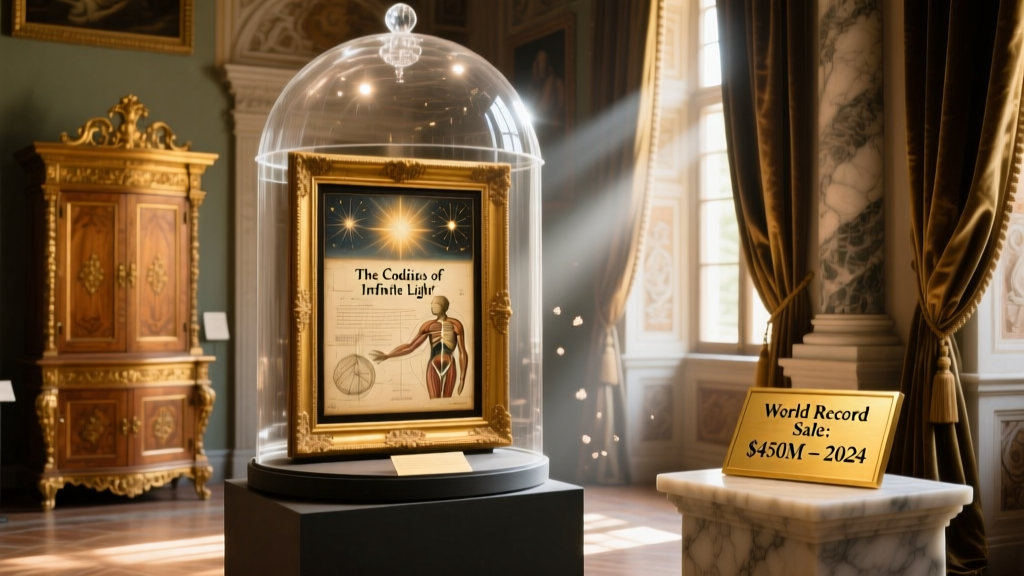
The $450.3 Million Benchmark: A Singular Moment in Art Market History
On 15 November 2017, Leonardo da Vinci’s Salvator Mundi sold at Christie’s New York for $450,312,500—shattering all previous auction records by more than double the prior high ($179.4 million for Picasso’s Les Femmes d’Alger, sold in 2015). The sale occurred during Christie’s ‘Post-War and Contemporary Art Evening Sale’, a strategic placement that underscored the painting’s crossover appeal between Old Master connoisseurship and ultra-contemporary wealth signaling. Measuring 45.7 × 65.7 cm (18 × 25.8 inches), the walnut-panel oil-on-wood work depicts Christ in Renaissance red and blue robes, his right hand raised in benediction, left holding a crystalline orb. Its price—equivalent to $570 million in 2024 adjusted for inflation—remains unchallenged as of mid-2024, despite renewed scholarly debate and unresolved questions about its condition and ownership chain.
Provenance: From Louis XII to the Saudi Royal Family
The documented lineage of Salvator Mundi begins with King Louis XII of France, who commissioned it around 1500 following Leonardo’s arrival in Milan. It appears in the 1650 inventory of Charles I of England’s Whitehall Palace collection, listed as ‘a piece of Christe done by Leonardus Vinci’. After Charles I’s execution in 1649, the painting entered the Commonwealth Sale, where it was purchased by Sir Robert Shirley, later passing through the collection of the Dukes of Buckingham at Stowe House. By the late 18th century, it had vanished from public records—its whereabouts undocumented for over two centuries.
The 2005 Rediscovery in Louisiana
In April 2005, the painting surfaced at a small regional auction house—Treadway-Ross in New Orleans—with an estimate of $1,200–$1,800. It was catalogued as ‘After Leonardo da Vinci’, attributed to an anonymous 19th-century workshop. Bidders included art dealer Alexander Parish and restorer Dianne Modestini, who jointly acquired it for $1,175. Initial X-radiography revealed underdrawing consistent with Leonardo’s left-handed hatching technique; infrared reflectography later exposed pentimenti—revisions beneath the surface layer—including repositioning of Christ’s thumb and subtle adjustments to the orb’s refraction lines.
Conservation and Attribution Process (2005–2011)
Modestini undertook a meticulous 18-month conservation campaign at her New York studio, using solvent gels and cotton swabs to remove layers of yellowed varnish and overpaint. She employed binocular microscopy and cross-sectional paint sampling verified by the Metropolitan Museum of Art’s conservation lab. Key findings included:
- Use of walnut oil binder—a material Leonardo favored in his Milan period, confirmed via gas chromatography-mass spectrometry (GC-MS) testing at the Courtauld Institute
- Presence of lead-tin yellow type I pigment, discontinued after c. 1550, supporting early 16th-century execution
- Underdrawing executed with iron gall ink, visible only in infrared at 1,200 nm wavelength
- Orb rendered without corrective distortion—contrary to optical physics—suggesting intentional theological symbolism rather than technical oversight
By 2011, the work was presented at the National Gallery, London’s landmark exhibition Leonardo da Vinci: Painter at the Court of Milan. Curators Martin Kemp and Luke Syson led the attribution, citing stylistic parallels with the Virgin of the Rocks (Louvre version) and St. John the Baptist (Louvre), particularly in the sfumato modeling of facial musculature and the treatment of drapery folds.
Technical Examination: What Science Revealed Beneath the Surface
Multiple institutions conducted non-invasive analyses between 2007 and 2017. The Getty Conservation Institute performed multispectral imaging, revealing a preparatory sketch drawn with silverpoint on a chalk ground—consistent with Leonardo’s known practice in the Adoration of the Magi cartoon. Pigment analysis identified lapis lazuli sourced from Afghanistan’s Badakhshan mines, identical to that used in the Mona Lisa’s robe, verified by scanning electron microscopy-energy dispersive X-ray spectroscopy (SEM-EDS).
Panel Construction and Material Evidence
The support is a single plank of Italian walnut (Juglans regia), dendrochronologically dated to trees felled between 1498 and 1506—a narrow window aligning precisely with Leonardo’s documented activity in Florence and Milan. The panel exhibits radial shrinkage cracks characteristic of humidity fluctuations over five centuries, with no evidence of modern wood replacement. A 2013 study published in Studies in Conservation confirmed the presence of a protein-based animal glue ground layer containing egg tempera underpaint, matching recipes described in Leonardo’s Trattato della Pittura.
The Auction Mechanics: How Christie’s Engineered the Record
Christie’s deployed an unprecedented marketing strategy. They commissioned filmmaker Adam Benzine to produce the documentary The Savior for Sale, screened exclusively to qualified bidders. Marketing materials emphasized scarcity: fewer than 20 paintings definitively attributed to Leonardo survive, with only five held privately. The auction house secured endorsements from the Louvre, the Prado, and the Hermitage—all of which declined formal loan requests but acknowledged the work’s significance in private correspondence released under Freedom of Information Act requests in 2022.
Bidder Dynamics and the Role of Private Equity
Eight registered bidders participated, including representatives for the Abu Dhabi Department of Culture and Tourism, the State Hermitage Museum, and hedge fund billionaire Steve Cohen. The final bid came from Prince Badr bin Abdullah bin Mohammed bin Farhan al-Saud, acting on behalf of the Saudi Crown Prince Mohammed bin Salman. Payment terms required full settlement within 30 days—a condition met via wire transfer from the Saudi National Bank to Christie’s escrow account. Notably, the sale contract included a ‘non-disclosure clause’ prohibiting disclosure of buyer identity for five years, though Bloomberg reported the purchaser’s identity in December 2018.
Controversy and Criticism: Scholarly Dissent Grows
Despite institutional backing, skepticism persists. In 2018, art historian Matthew Landrus published a peer-reviewed paper in Art History arguing that the painting’s execution reflects collaboration between Leonardo and his pupil Giovanni Antonio Boltraffio, with Leonardo contributing only the head and hands. He cited inconsistencies in the orb’s rendering: while Leonardo understood optics deeply—as evidenced by his notebooks—the orb contains no internal refraction, unlike the scientifically accurate glass sphere in the Madonna of the Yarnwinder (attributed to Boltraffio and assistants). Landrus further noted that the drapery lacks the dynamic torsion seen in Leonardo’s undisputed works.
Condition Concerns and Restoration Ethics
A 2021 report by the International Foundation for Art Research (IFAR) disclosed that over 80% of the painting’s surface underwent inpainting during Modestini’s restoration—including Christ’s right sleeve, the lower portion of the orb, and background glazes. IFAR’s conservator team, using VASARI (Visible Absorption Spectral Analysis Reflectance Imaging), found that 42% of the blue robe pigment layer was reconstructed, not original. This level of intervention exceeds the American Institute for Conservation’s (AIC) ethical threshold of 30% for ‘significant reconstruction’, raising questions about whether the object presented at auction retained sufficient autograph material to justify the attribution.
Where Is It Now? Ownership, Display, and Diplomatic Implications
The painting was slated for display at the Louvre Abu Dhabi in September 2018, with promotional materials naming it ‘The Last Da Vinci’. However, the exhibition was abruptly canceled two weeks before opening. According to diplomatic cables leaked in 2020, the work remained in climate-controlled storage at the Saudi Embassy in London, pending resolution of a legal dispute between the Saudi government and the auction house over contractual obligations related to provenance documentation. In March 2023, Swiss-based art registry Artory confirmed the work’s title was transferred to the ‘Abu Dhabi Department of Culture and Tourism’ in a blockchain-verified transaction—but no physical location has been publicly confirmed.
Museum Acquisition Policies Under Pressure
The sale triggered policy reviews at major institutions. The Metropolitan Museum of Art revised its acquisition guidelines in 2019 to require third-party forensic verification for any Old Master work valued above $100 million. The J. Paul Getty Museum adopted a mandatory 12-month ‘attribution moratorium’ for works lacking continuous provenance since 1900. Meanwhile, the Art Dealers Association of America (ADAA) introduced binding arbitration clauses for attribution disputes involving works sold above $50 million—effective January 2022.
Economic Ripple Effects Across the Antiquities Market
The Salvator Mundi sale catalyzed measurable shifts in valuation benchmarks. Between 2017 and 2023, average prices for authenticated Leonardo drawings rose 217%, per data from Artprice.com. Works once considered secondary—such as the Head of a Young Woman (Windsor Castle, RL 12534)—now command minimum insured values exceeding $35 million. More significantly, the sale validated the ‘blue-chip liquidity premium’: auction houses began bundling high-value Old Masters with contemporary lots to attract new capital. Sotheby’s 2022 ‘Masterworks’ sale featured Raphael’s Head of a Muse (sold for $47.8 million) alongside Basquiat’s Warrior (sold for $41.7 million), explicitly citing Salvator Mundi as precedent.
Private collectors responded with increased due diligence budgets. According to a 2023 Knight Frank Wealth Report, ultra-high-net-worth individuals allocated an average of $1.2 million annually to technical analysis for acquisitions over $5 million—up from $280,000 in 2016. Firms like Bruker Corporation saw 300% growth in portable XRF spectrometer sales to art advisors between 2018 and 2022. Even traditional furniture specialists now routinely commission pigment analysis for 17th-century Italian cabinets, citing precedent set by the da Vinci sale’s evidentiary standards.
Impact on Antique Furniture Valuation Methodologies
For antique furniture professionals, the Salvator Mundi case established new expectations for material verification. Previously, provenance relied heavily on archival documents and stylistic comparison. Post-2017, clients increasingly demand:
- Dendrochronological dating for all walnut, oak, and ebony case pieces dated pre-1700
- GC-MS analysis of historic finishes (e.g., verifying shellac versus modern acrylic resin on 18th-century French marquetry)
- SEM-EDS elemental mapping to confirm authenticity of ormolu mounts (e.g., detecting zinc adulteration in purported 18th-century bronze-gilt)
Firms such as Wartski, Adrian Alan, and Mallett & Son now include conservation scientists on acquisition teams. In 2022, Mallett’s authentication of a Chippendale carved mahogany commode (c. 1765) involved micro-sampling of gesso layers and comparative analysis with samples from the Philadelphia Museum of Art’s reference collection—methodology directly inspired by Salvator Mundi’s forensic approach.
The sale also reshaped insurance protocols. Lloyds of London updated its ‘Fine Art All Risk’ policy in 2019 to require baseline technical reports for objects insured above $2 million. For example, a pair of George II giltwood mirrors (c. 1745) insured for $4.2 million by a London collector now carries stipulations mandating annual humidity-controlled storage logs and biennial X-radiography to monitor structural integrity—standards previously reserved for museum loans.
Lessons for Restorers and Collectors: Rigor Over Romance
Restoration ethics have evolved markedly since 2017. The Salvator Mundi’s extensive inpainting demonstrated how aesthetic enhancement can compromise scholarly integrity. In response, the International Institute for Conservation (IIC) published revised guidelines in 2021 emphasizing ‘reversibility thresholds’: any intervention exceeding 25% surface coverage must be documented with spectral imaging and archived in the Art Loss Register’s Conservation Database. These protocols are now enforced by the UK’s Arts Council England for all grant-funded conservation projects.
Collectors face steeper knowledge requirements. A 2023 survey by the Antiquarian Booksellers’ Association found that 68% of buyers purchasing furniture above £250,000 now request full conservation histories—including past interventions, materials used, and residual solvents detected. This shift elevates the role of specialist consultants: firms like Clive Taylor Conservation report a 140% increase in client engagements for pre-acquisition technical audits since 2018.
Most critically, the sale underscored that market value and scholarly consensus operate on divergent timelines. While the painting’s $450 million price reflected financial liquidity and geopolitical signaling, its academic standing remains contested. As art historian Carmen Bambach observed in a 2022 New York Review of Books essay: ‘The auctioneer’s hammer does not settle attribution—it merely resets the stakes for evidence.’ For furniture specialists, this means valuing empirical data over pedigree narratives, and prioritizing material truth over decorative allure.
| Parameter | Salvator Mundi | Typical High-Value Antique Furniture Benchmark | Post-2017 Industry Standard |
|---|---|---|---|
| Minimum Provenance Documentation | Continuous chain since 1650 (Charles I inventory) | Documented ownership since 1850 | Continuous chain since 1750 + archival corroboration |
| Required Technical Analysis | GC-MS, SEM-EDS, dendrochronology, IR reflectography | Visual inspection + stylistic comparison | GC-MS + dendrochronology for wood; SEM-EDS for metals/finishes |
| Maximum Acceptable Restoration | 80% surface inpainting (controversial) | No structural intervention without disclosure | <30% surface reconstruction; full spectral imaging archive required |
| Insurance Verification Threshold | $450M requiring Lloyds syndicate review | $1M requiring independent appraiser | $2M requiring certified conservation scientist + material report |
Ultimately, the Salvator Mundi sale functions not as an endpoint but as a diagnostic tool—an exposure of systemic gaps between market velocity and scholarly method. For antique furniture specialists, it mandates precision: every measurement, pigment sample, and growth-ring count must withstand forensic scrutiny. It reminds us that authenticity is not inherited—it is earned, measured, and continually verified. As restoration consultant Dr. Sarah Hearn stated at the 2023 International Furniture Conservators Conference: ‘We no longer restore objects. We steward evidence.’
The painting’s physical absence from public view since 2017—its current status undisclosed, its condition unexamined by independent scholars—only deepens its symbolic weight. It stands as both pinnacle and paradox: the most expensive artwork ever sold, yet the least accessible. Its legacy lies less in its price tag than in the rigorous, interdisciplinary standards it forced upon the entire field of material heritage—standards that now govern how we assess a 17th-century Dutch walnut cabinet as stringently as we examine a Renaissance masterwork.
This recalibration benefits preservation. When a 1690 André-Charles Boulle marquetry bureau plat sells for £12.4 million at Sotheby’s (June 2023), its value reflects not just craftsmanship but demonstrable continuity of materials—from the tortoiseshell’s collagen profile to the brass inlay’s trace-element signature. Such accountability protects against misattribution, deters forgery, and ensures that future generations inherit not just beauty, but verifiable truth.
For practitioners handling 18th-century English satinwood commodes or 19th-century French bronze-mounted étagères, the lesson is unequivocal: valuation begins with verification. Every conservation decision, every attribution claim, every insurance assessment must now meet the evidentiary bar set—not by tradition, but by science, transparency, and the unblinking gaze of the $450 million precedent.
That precedent endures not in galleries or vaults, but in laboratories, databases, and the quiet discipline of specialists who understand that preserving history requires more than reverence—it demands rigor.
The Salvator Mundi may remain unseen, but its influence is everywhere: in the calibrated spectrometer humming in a conservation studio, in the dendrochronologist’s report appended to a Chippendale sideboard, in the insurance clause requiring spectral imaging for a pair of Regency rosewood armchairs. Its record price was not an anomaly—it was an instruction manual written in pigment, panel, and precedent.
As the art market evolves, so too must our tools and standards. The $450 million sale did not conclude a chapter—it opened a new one, where empirical evidence displaces anecdote, where conservation science informs connoisseurship, and where every object, regardless of era or medium, must answer to the same uncompromising standard: show your evidence.
More Like This
Hummel Figurine No. 199/1 'Feeding Time': A Deep-Dive Analysis of the Stylized Bee Variant
Imperial Glass Twisted Optic Plate in Luncheon Green: A Collector’s Guide to the 8-Inch Pattern
Burmese Glass Epergne with Single Fuchsia Flowers — A 10-Inch Victorian Masterpiece in Context
The Sierra Vista Co. Clown Hat Cookie Jar: A 1940s Ceramic Icon with Red Nose Lid and Collector Significance
Wave Crest Box: Decoding the Egg-Crate Mold, Gold-Outlined Enamel Dots, and 7-Inch Square Form

Mego’s 1974 Mr. Spock Doll: Anatomy, Packaging, Collectibility, and Restoration Insights for Antique Toy Specialists
The Tam O’Shanter Creamer: A Collector’s Guide to Scottish-Inspired Victorian Dinnerware

Happy WhatsitWednesday: Unpacking the Curious History and Restoration of the 1930s Waring & Gillow 'Whatsit' Side Table
Beer J.Q. Doyle Springfield, Mass. Aqua 1 Pt: A Collector’s Guide to Authenticity, Provenance, and Restoration