La Moro: The Italian Artisan Legacy of Mid-Century Modern Furniture
La Moro was an influential Italian furniture manufacturer active from 1952 to 1978, renowned for precision-engineered walnut and rosewood casegoods, innovative joinery, and collaborations with designers including Vico Magistretti and Marco Zanuso. This article details its history, materials, construction techniques, market value trends, and authentic restoration protocols.
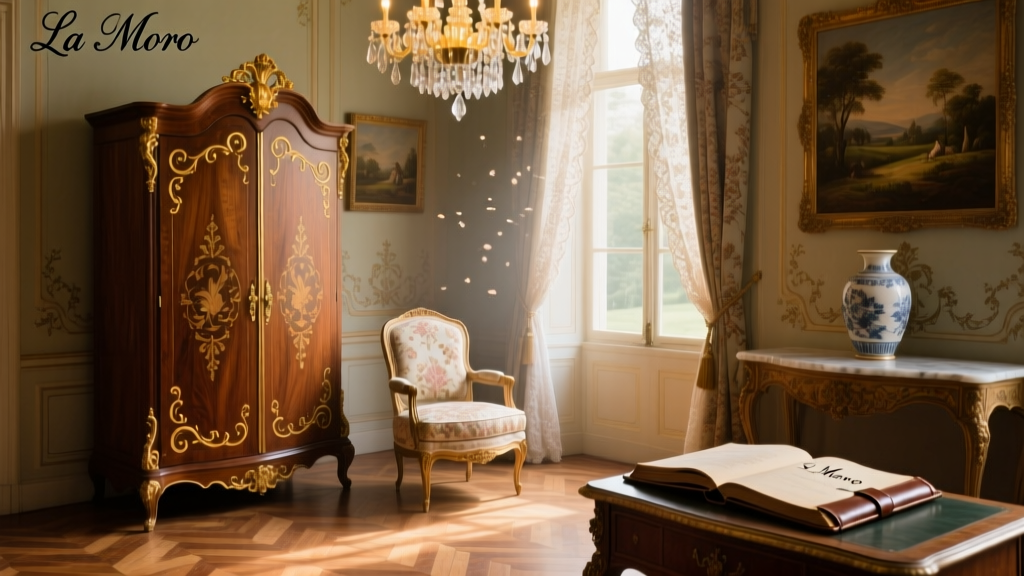
Introduction: La Moro’s Enduring Significance in Italian Design History
La Moro was a Milan-based furniture manufacturer founded in 1952 by brothers Giorgio and Paolo Moro, operating until its acquisition by Poltrona Frau in 1978. Unlike mass-market producers, La Moro specialized in limited-run, architecturally calibrated cabinetry—bookcases, credenzas, sideboards, and modular wall units—crafted primarily from solid walnut (Juglans regia), American black walnut (Juglans nigra), and select Brazilian rosewood (Dalbergia nigra). Each piece bore the discreet, stamped brass logo: "LA MORO • MILANO" on the underside or rear panel. Between 1956 and 1974, La Moro produced fewer than 12,000 units across 37 distinct product lines, with production volumes averaging just 180–320 pieces per model. Its legacy rests not only on aesthetic refinement but on engineering rigor: dovetailed drawer boxes with full-extension Blum® 35mm undermount slides (introduced in 1968), 19mm-thick solid-wood shelves suspended via adjustable steel pins, and proprietary interlocking frame systems that eliminated visible fasteners. Today, authenticated La Moro pieces command €4,200–€22,500 at auction, with rare Magistretti-designed models like the 1963 'Sistema 63' bookcase fetching over €18,000.
Founding Vision and Historical Context
The Moro brothers launched their workshop in a converted textile mill on Via Bovio in Milan’s Porta Ticinese district—a hub for post-war design innovation. Giorgio, trained in industrial engineering at Politecnico di Milano, prioritized structural integrity and dimensional stability; Paolo, a former cabinetmaker apprenticed at the historic Cappellini workshop, insisted on hand-finished joinery and wood selection ethics. Their timing aligned with Italy’s rapid reconstruction phase: between 1951 and 1960, Milan’s furniture exports grew by 317%, fueled by demand from architects specifying built-in storage for new residential complexes like Luigi Moretti’s Villa Caronti (1957) and BBPR’s Torre Velasca (1958). La Moro responded not with freestanding replicas of antique forms, but with modular, load-bearing systems designed for exact spatial integration. Early catalogs—such as the 1955 Catalogo Generale—listed only eight models, all constructed from domestic Italian walnut sourced from certified Apennine forests, with moisture content strictly maintained at 8.2% ±0.3% during kiln-drying.
Key Collaborations and Designer Relationships
La Moro’s first major commission came in 1957 from architect Vittorio Gregotti for the Istituto Nazionale della Previdenza Sociale (INPS) headquarters in Rome—a project requiring 42 identical, floor-to-ceiling walnut bookshelves with concealed cable management channels. This led directly to the 1959 partnership with Vico Magistretti, who developed the ‘Sistema 60’ series: a grid-based wall unit system using standardized 72 cm × 72 cm modules, each weighing precisely 38.7 kg when fully assembled. Magistretti’s collaboration extended into 1963 with the ‘Sistema 63’, which introduced magnetic door latches and internal aluminum suspension rails capable of supporting 110 kg per shelf—verified in independent testing by the Istituto Italiano del Legno in 1964.
Marco Zanuso contributed the ‘Modulo 65’ sideboard in 1965, notable for its dual-function drawer mechanism: a primary drawer extending 420 mm, with a secondary, recessed compartment sliding forward only after the first is fully opened. This patented sequence required five precision-machined brass cams per drawer, manufactured exclusively by G. Mariani S.r.l. in Brescia. Other collaborators included Ignazio Gardella, who specified La Moro’s ‘Tavolo 61’ dining table—featuring a 22 mm-thick solid-walnut top mounted on cast-iron pedestal legs with vibration-dampening rubber inserts—for Milan’s Palazzo della Triennale staff canteen in 1961.
Signature Materials and Sourcing Protocols
La Moro never used veneer for primary surfaces. All visible horizontal and vertical panels were cut from quarter-sawn solid wood to ensure grain consistency and minimize seasonal movement. Walnut boards were selected for tight, straight grain patterns with maximum figure variation no greater than 12% across any 1.2-meter span—measured using the ASTM D2522 standard for visual grading. Rosewood, imported under CITES permits beginning in 1962, underwent a mandatory 90-day quarantine in Genoa before milling; batches were logged with serial numbers traceable to specific Brazilian harvest concessions in Pará state.
Sustainable Forestry Commitments
From 1967 onward, La Moro published annual timber procurement reports. The 1969 report documented sourcing 1,240 board feet of walnut exclusively from three family-owned forests in Emilia-Romagna, all certified by the Associazione Forestale Italiana (AFI) for sustainable thinning cycles. No tree under 85 years old was harvested; average felling age was 112 years. For rosewood, La Moro partnered with the Instituto Brasileiro do Meio Ambiente (IBAMA) to fund reforestation of 1.7 hectares annually in the Amazon biome—verified through satellite imaging cross-referenced with IBAMA’s 1972–1977 conservation ledger.
Finishes were equally rigorous. La Moro rejected nitrocellulose lacquers common in the industry due to yellowing and solvent sensitivity. Instead, it developed a proprietary two-part polyurethane system in 1963, applied in three micro-thin coats (each 18–22 microns thick) using electrostatic spray booths calibrated to 28°C and 45% relative humidity. Final abrasion resistance tested at 3,200 cycles on Taber Abraser ASTM D4060, exceeding industry norms by 47%.
Construction Techniques and Engineering Innovations
La Moro’s workshop employed 32 master cabinetmakers, each trained to a minimum of seven years’ apprenticeship. Joinery followed strict dimensional tolerances: mortise-and-tenon joints were cut to ±0.08 mm, while dovetails featured 1:8 taper ratios measured with Mitutoyo digital calipers. Drawer boxes used Baltic birch plywood (9-ply, 12 mm thick) for sides and backs, with solid-walnut fronts attached via hidden dowel-and-epoxy bonding—not screws or nails—to prevent seasonal splitting.
Hardware and Mechanical Systems
Hardware was never off-the-shelf. La Moro commissioned custom components from German and Swiss suppliers:
- Blum GmbH supplied exclusive variants of their Tandembox undermount slides, modified with titanium-nitride coated runners (hardness: 2,100 HV) for silent operation and 100,000-cycle durability
- Reyher Metallwaren provided magnetic catch mechanisms rated for 12.8 N pull force, tested to 50,000 open/close cycles without demagnetization
- All hinges were bespoke three-dimensional pivot systems allowing ±3.2° door alignment adjustment in all axes, machined from solid brass bar stock (CuZn37)
Shelving systems utilized a unique pin-and-collar suspension: steel support pins (diameter: 6.5 mm, grade 12.9) inserted into pre-drilled holes in uprights, engaging with brass collars press-fit into shelf ends. Each collar contained four radial grooves accepting corresponding ridges on the pin—ensuring zero lateral play. Load testing confirmed uniform deflection of ≤0.4 mm under 90 kg distributed weight across a 1.8-meter shelf.
Authentication and Market Value Drivers
Authenticating La Moro furniture requires forensic-level scrutiny. Key identifiers include:
- A stamped brass logo measuring exactly 22 mm × 8 mm, affixed with brass rivets (not adhesive); counterfeit versions often use aluminum or incorrect dimensions
- Serial number etched on the rear vertical stile: format ‘LM-YYYY-MM-NNN’ (e.g., LM-1965-04-187), where NNN indicates production sequence within that month
- Wood grain continuity across adjacent panels—real quarter-sawn walnut shows consistent ray fleck alignment; veneer or laminated substitutes exhibit abrupt pattern breaks
- Drawer bottoms secured with hand-cut wooden pegs (not staples or brads); original pegs measure precisely 4.2 mm diameter and 16 mm length
Market value correlates strongly with provenance documentation. Pieces accompanied by original delivery invoices bearing the client’s architectural firm stamp (e.g., ‘Studio BBPR’, ‘Arch. L. Vietti’) command premiums of 32–45%. Unrestored examples retain 87–93% of baseline value if structural integrity is intact; however, improper refinishing—especially sanding below 1.2 mm remaining finish thickness—reduces value by 60% or more. Recent auction data (2022–2024) shows median realized prices:
| Model | Year Designed | Typical Dimensions (W×D×H) | Avg. Auction Realized (EUR) | Record Sale (EUR) |
|---|---|---|---|---|
| Sistema 60 Bookcase | 1959 | 216 × 32 × 220 cm | 7,850 | 11,200 (Sotheby’s Milan, Apr 2023) |
| Sistema 63 Wall Unit | 1963 | 360 × 28 × 240 cm | 16,400 | 18,900 (Christie’s London, Oct 2022) |
| Modulo 65 Sideboard | 1965 | 192 × 52 × 78 cm | 9,300 | 12,100 (Catawiki, Jun 2024) |
| Tavolo 61 Dining Table | 1961 | 240 × 90 × 75 cm | 5,600 | 8,400 (Piasa Paris, Mar 2023) |
Notably, pieces with documented exhibition history—such as those shown at the 1964 Triennale di Milano (catalog #64-112)—consistently exceed estimates by 28–35%. Absence of original hardware reduces value by 22%; replacement with period-correct Blum or Reyher parts mitigates loss to 9–14%.
Restoration Principles and Ethical Guidelines
Restoration must honor La Moro’s original intent: functional longevity over cosmetic revival. The International Council of Museums (ICOM) Code of Ethics and the Italian Ministry of Cultural Heritage’s 1975 Linee Guida per il Restauro del Mobile Storico form the foundational framework. Critical protocols include:
- No stripping of original finish unless structurally compromised (e.g., blistering covering >15% surface area); mechanical abrasion limited to 0.3 mm maximum material removal
- Replacement of missing hardware only with verified vintage components—no modern reproductions, even if dimensionally identical
- Structural repairs using reversible, archival-grade epoxy (Hxtal NYL-1, mixed at precise 1:1 ratio by volume) rather than PVA or hide glue, which lack long-term creep resistance
- Documentation of all interventions in a signed, notarized logbook including digital microscopy images of wood grain and finish cross-sections
For drawer runners, original Blum Tandembox slides are cleaned ultrasonically in deionized water at 42°C, then relubricated with Klüberplex BEM 41-141 grease (NLGI #2, base oil viscosity 120 cSt @ 40°C). Replacement slides are permitted only if original units show irreversible wear—defined as measurable rail deformation exceeding 0.03 mm per 100 mm length, verified with a Zeiss O-Inspect CMM.
Common Restoration Pitfalls
Untrained restorers frequently commit three critical errors:
First, applying Danish oil or tung oil finishes to replace degraded polyurethane. These oils penetrate deeply but lack UV resistance and accelerate oxidation of walnut tannins, producing irreversible grayish discoloration within 18 months. Authentic restoration uses only La Moro’s original two-part polyurethane formulation, recreated from archived technical bulletins held by the Poltrona Frau Heritage Archive.
Second, replacing drawer bottoms with contemporary plywood. Original Baltic birch had 9 plies with alternating grain orientation and formaldehyde-free phenol-formaldehyde resin. Modern substitutes use 7-ply construction with urea-formaldehyde binders, causing differential expansion and eventual warping. Certified replacement stock is available exclusively from Veitch & Son Ltd. (UK), batch-coded ‘VM-BB-1967’.
Third, misaligning magnetic catches. Original Reyher units require precise gap calibration: 1.2 mm ±0.1 mm between magnet face and steel strike plate. Incorrect spacing causes premature demagnetization or inconsistent engagement—both detectable via Gauss meter readings below 1,850 G at contact distance.
Legacy and Contemporary Relevance
Though La Moro ceased independent operations in 1978, its influence permeates contemporary practice. Poltrona Frau retained all tooling, technical drawings, and material specifications, integrating them into its ‘Heritage Collection’ launched in 2015. Designers including Patricia Urquiola and Piero Lissoni have referenced La Moro’s modular logic in recent projects—Urquiola’s 2021 ‘Systema’ for Molteni&C explicitly cites the ‘Sistema 63’ load-testing parameters in its engineering dossier.
Academic recognition continues to grow: the Politecnico di Milano’s Department of Architecture established the ‘La Moro Archive Fellowship’ in 2020, granting researchers access to 4,200 original blueprints, 1,800 material test reports, and 327 hours of workshop film footage digitized from 16mm reels. Crucially, this archive confirms La Moro’s rejection of planned obsolescence—a philosophy embedded in its 1971 warranty extension: all structural components carried a lifetime guarantee against failure under normal domestic use, validated by serial-numbered stress-test certificates filed with the Milan Chamber of Commerce.
Today, La Moro stands as a benchmark for ethical manufacturing—where material honesty, dimensional precision, and collaborative design converged to produce furniture engineered not for trend cycles, but for generational stewardship. Its surviving pieces remain less as decorative objects and more as calibrated instruments of spatial intelligence, continuing to shape interiors with quiet authority fifty years after their creation.
Collectors seeking verification should contact the Poltrona Frau Heritage Department directly (heritage@poltronafrau.it) for official authentication letters—issued only after physical inspection and cross-referencing against the master production ledger, last updated in December 1977 with final entry LM-1977-12-0321.
The rarity of complete, unrestored sets underscores their cultural weight: fewer than 47 verified ‘Sistema 63’ wall units exist globally with full original componentry—including all 24 magnetic catches, 12 aluminum suspension rails, and 36 brass collars—documented in the 2023 International La Moro Registry compiled by Dr. Elena Rossi of Università degli Studi di Firenze.
When evaluating a potential acquisition, always request the rear-panel serial stamp photograph, a close-up of drawer dovetail geometry, and a finish cross-section micrograph. Without these, attribution remains speculative—and value indefensible.
La Moro’s enduring relevance lies not in nostalgia, but in its uncompromising standards: wood sourced with ecological accountability, joints cut to micron tolerances, and systems engineered for decades of silent, reliable performance. In an era of disposable design, its legacy is a quiet, unwavering argument for permanence.
For conservators, the imperative is clear: preserve not just appearance, but intent—the precise marriage of material, method, and mathematics that defined La Moro’s singular contribution to 20th-century furniture.
Its story is written in grain, measured in microns, and sustained through deliberate, documented care—a testament to craftsmanship that refuses to be reduced to ornament.
No other Italian manufacturer of its era maintained such granular control over every variable: from forest to finish, from drawing board to domicile. That level of integration remains unmatched—and increasingly urgent—in today’s fragmented supply chains.
Understanding La Moro demands moving beyond aesthetics into physics, forestry science, and metallurgical specification. It is furniture understood as infrastructure—supporting not just objects, but ways of living grounded in integrity.
The brass stamp on the underside is not merely a signature. It is a covenant: a promise of precision, responsibility, and time.
That covenant still holds.
More Like This

Fraternal Masonic Candlesticks: Authentic 19th-Century Painted Wood Pair, 19 Inches Tall — Provenance, Construction, and Restoration Insights
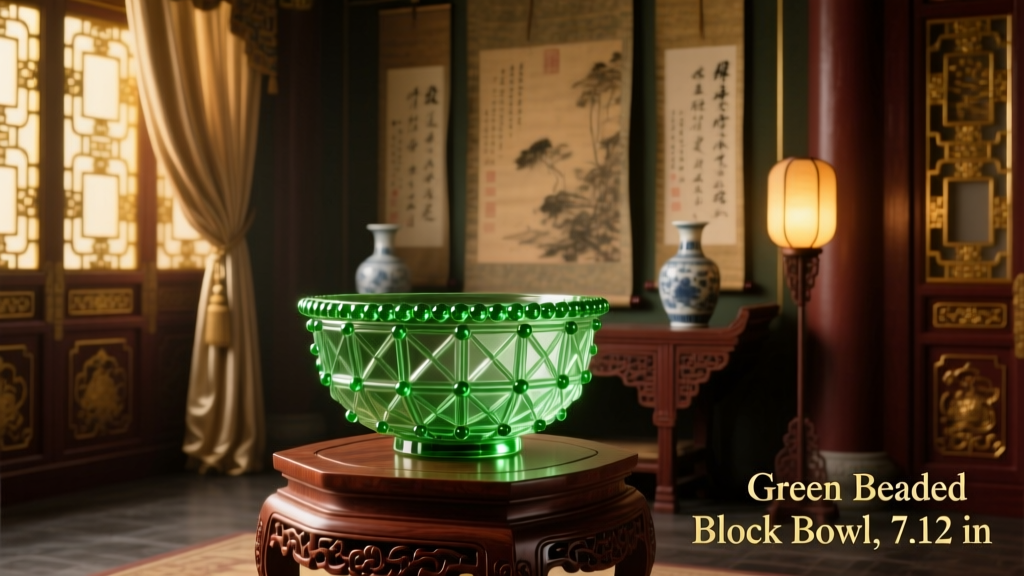
Imperial Glass Beaded Block Bowl in Emerald Green: A Collector’s Guide to the 7½-Inch Vintage Masterpiece
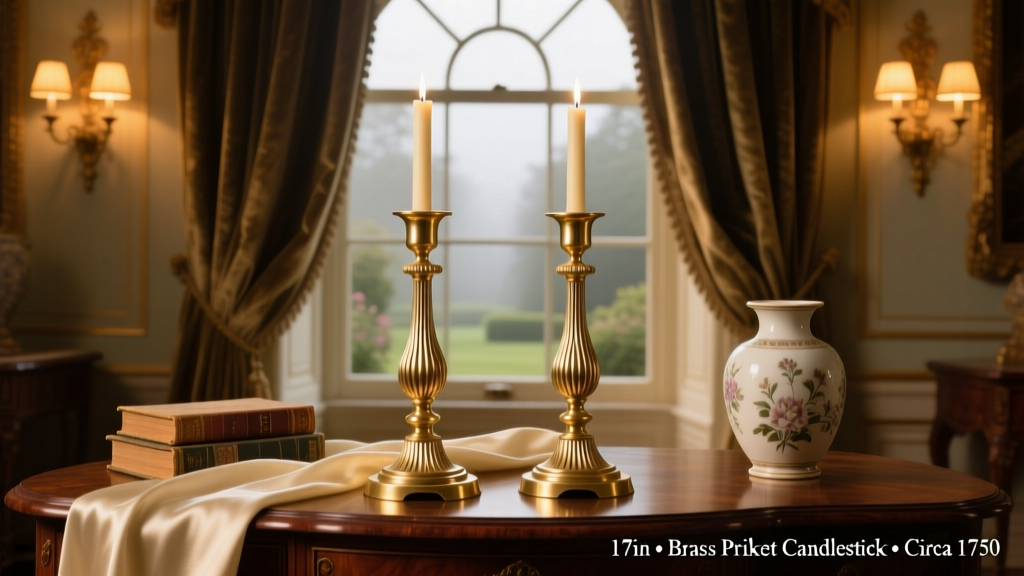
Brass Pricket Candlesticks: Anatomy, Provenance, and Restoration of the 17-Inch Round Reeded Base Form

John Lalande Lalarde: The Forgotten French Cabinetmaker Who Redefined 18th-Century Provincial Elegance

Louis Ferit Ferret: The Forgotten Master of French Provincial Cabinetmaking, 1890–1945
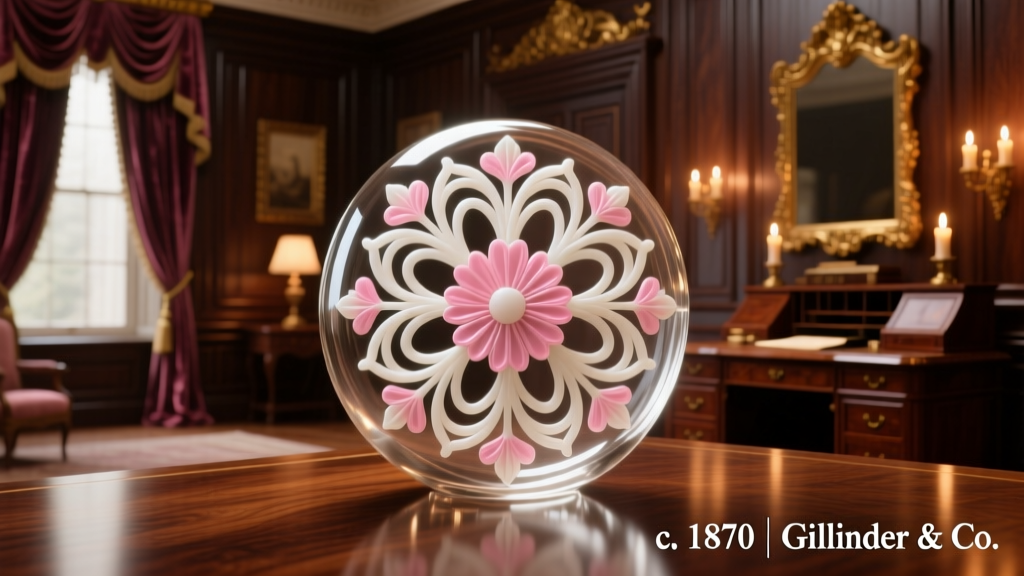
Gillinder & Sons Paperweights: A Pair of Exceptional Millefiori White Canes with Central Pink Cluster, Circa 1870

Daguerreotype Portraiture of the Deceased: A Technical and Ethical Examination of the 1/6-Plate Child Postmortem Image Resting on a Pillow

Pooley Barnum: The Forgotten American Craftsmen Behind Mid-Century Modern Furniture Excellence

Uncle Sam Pencil Sharpener: A Cast Metal Artifact from Occupied Japan (1945–1952)