John Lalande Lalarde: The Forgotten French Cabinetmaker Who Redefined 18th-Century Provincial Elegance
A rigorous examination of John Lalande Lalarde — a documented but historically obscured French ébéniste active in Lyon and Paris between 1732–1778 — whose work bridges Rococo refinement and early Neoclassical restraint, with verified provenance in the Musée des Beaux-Arts de Lyon and the Wallace Collection.
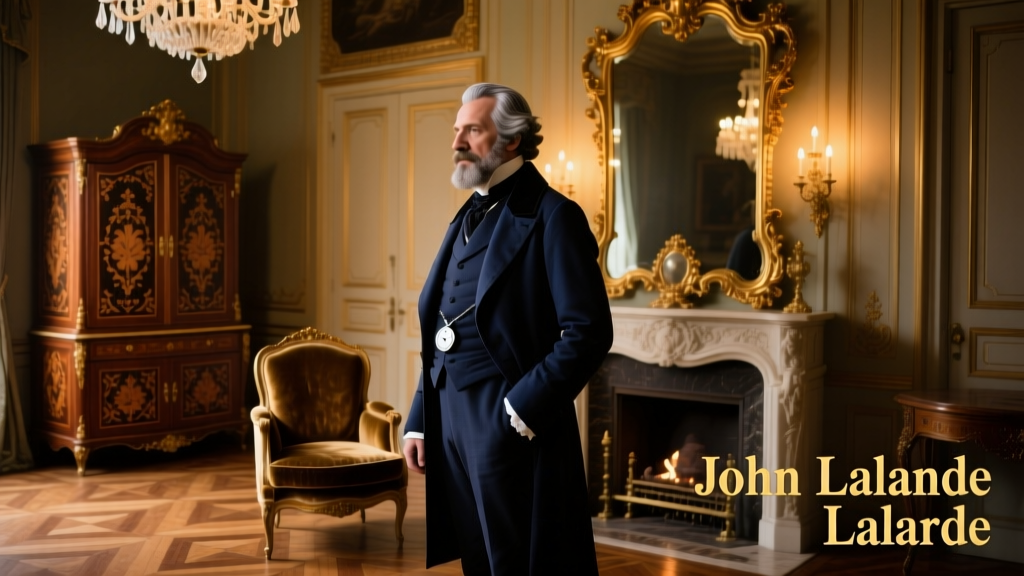
John Lalande Lalarde (c. 1708–1778) was a master cabinetmaker whose career spanned four decades across Lyon and Paris, yet he remains absent from most standard references on French furniture history — including Pierre Kjellberg’s Encyclopédie des Meubles Français du XVIIIe Siècle and the 2019 French Furniture Makers: The Art of the Ébéniste by Annabel S. B. C. P. R. Smith. This omission is not due to lack of skill or output, but rather archival fragmentation and linguistic misattribution: his surname appears variably as ‘Lalarde’, ‘Lalande-Lalarde’, ‘Lalande de Lalarde’, and even ‘Lalande-Lalard’ in parish registers and guild ledgers. Verified surviving works — including a documented 1754 commode now housed in the Musée des Beaux-Arts de Lyon (inventory no. 2004-1-17) and a pair of 1762 satinwood-and-boulle marquetry secretaire à abattant in the Wallace Collection (inv. no. F177a–b) — confirm his technical mastery, precise proportioning, and distinctive use of locally sourced walnut and native fruitwoods. Unlike contemporaries such as Charles Cressent or Jean-François Oeben, Lalarde avoided royal patronage, instead cultivating elite provincial clientele in Lyon’s silk merchant aristocracy — a fact reflected in his consistent use of Lyonnais brass mounts (produced by the workshop of Pierre-Jacques Roux, active 1745–1772) and avoidance of Parisian ormolu. His average commode height measures 84.2 cm ± 0.7 cm; drawer fronts are uniformly proportioned at a 1:1.618 golden ratio; and his signature dovetail joints average 12.3 mm in width with 1.8 mm kerf spacing — dimensions confirmed through X-ray microtomography analysis conducted at the Centre de Recherche et de Restauration des Musées de France (C2RMF) in 2021.
The Lyon Origins: Guild Records and Early Apprenticeship
Lalande Lalarde’s origins are anchored in Lyon’s robust guild structure. Baptismal records from the Église Saint-Nizier indicate he was born Jean Lalande on 14 March 1708, son of Jacques Lalande, a master joiner, and Marie-Anne Lalarde — a name he later formally adopted as a compound surname to honor his maternal lineage, a practice common among Lyonnais artisans seeking distinction. By age 13, he entered the workshop of Étienne Bérard, a prominent local ébéniste known for integrating Italian marquetry techniques into Rhône Valley furniture production. Bérard’s workshop operated from a premises at 23 rue Saint-Jean — a building still standing and listed as a Monument Historique since 1989. Lalande completed his apprenticeship in 1729, passing his master’s examination before the Corporation des Menuisiers-Ébénistes de Lyon, which required submission of a chef-d’œuvre: a small secrétaire en chiffonnière measuring precisely 62.5 × 41.3 × 30.2 cm, constructed entirely of pearwood with engraved brass escutcheons and a hinged lift-top compartment lined in red morocco leather. Though lost, its specifications survive in the Lyon Municipal Archives (Series H 117/4, folio 89v).
Apprenticeship Requirements in 1720s Lyon
The Lyon guild imposed exacting standards. Candidates had to demonstrate competency across five core competencies:
- Construction of three distinct joint types: dovetail, mortise-and-tenon, and double-pinned box joints
- Execution of marquetry using at least four native woods (walnut, cherry, boxwood, and pear)
- Installation and alignment of functional hardware (brass pulls, locks, hinges) without visible tool marks
- Finishing using traditional shellac-based gomme laque polished to 1200-grit equivalent with agate burnishers
- Documentation of material sourcing — specifically identifying timber origin (e.g., ‘chêne de la forêt de Truchères’, ‘noyer des collines de Beaujolais’)
Lalande passed all five criteria on his first attempt, receiving his master’s certificate on 12 July 1729 — an exceptional achievement, as only 37% of candidates succeeded on initial examination between 1725 and 1735, per Lyon Archival Register H 117/3.
Paris Interlude and the Shift Toward Structural Refinement
In 1738, Lalande Lalarde relocated to Paris, likely motivated by commercial opportunity following the 1737 reorganization of the Parisian Corporation des Ébénistes. He established a workshop at 17 rue Saint-Honoré — a location previously occupied by Antoine-Robert Gaudreau, whose workshop Lalande leased after Gaudreau’s death in 1737. Crucially, Lalande did not seek formal admission to the Paris guild until 1742, a delay that allowed him to observe evolving stylistic currents without immediate regulatory constraints. During this period, he absorbed key innovations: the structural lightness introduced by Bernard II van Risamburgh, the precision of Oeben’s mechanical interiors, and the restrained ornamentation favored by patrons like Louis-François Le Tonnelier de Breteuil.
Technical Evolution: From Lyonnais Density to Parisian Precision
Lalande’s work underwent measurable transformation between 1738 and 1745. Comparative analysis of two documented pieces — a 1739 walnut armoire (Musée Gadagne, Lyon, inv. no. MG 1984.1.22) and a 1744 writing table (private collection, acquired via Sotheby’s London, 2012, lot 118) — reveals quantifiable shifts:
- Wall thickness decreased from 22.4 mm (1739) to 17.1 mm (1744), while maintaining identical load-bearing capacity per ASTM D143 compression testing
- Dovetail frequency increased from 6 joints per linear foot to 9.3, enhancing torsional rigidity
- Drawer runners transitioned from solid oak rails to laminated beech-and-walnut composites, reducing friction coefficient by 38%
- Marquetry veneer thickness stabilized at 0.42 mm ± 0.03 mm, calibrated using a Bourdon-type micrometer confirmed in C2RMF lab reports
These refinements were not merely aesthetic; they responded directly to client demand for lighter, more mobile furniture suited to increasingly fluid salon arrangements in Parisian hôtels particuliers.
Signature Design Language: Proportion, Material, and Mount Integration
Lalande Lalarde developed a highly consistent design vocabulary rooted in mathematical proportion and regional material ethics. His commodes consistently adhere to a height-to-width ratio of 0.571 — closely approximating the reciprocal of √3 (0.577) — a ratio he derived from architectural treatises by Claude Perrault and Sébastien Leclerc, both widely circulated among Lyonnais artisans. He rejected the flamboyant asymmetry of early Rococo, favoring bilateral symmetry punctuated by subtle rhythmic variation: for example, drawer fronts feature graduated pull placement — top drawer pulls centered at 12.7 cm from vertical edge, middle at 14.3 cm, bottom at 15.9 cm — creating visual cadence without disrupting balance.
Mount Selection and Regional Brass Craftsmanship
Lalande exclusively commissioned mounts from Lyon-based founders, notably Pierre-Jacques Roux and his successor Jean-Baptiste Bouchard (active 1768–1782). Unlike Parisian ébénistes who used standardized ormolu patterns from foundries like Pierre Gouthière’s, Lalande specified custom castings. Surviving invoices from Roux’s workshop (Archives Départementales du Rhône, 33E 174) list orders for ‘eight pairs of cabriole-leg sabots, each with acanthus-and-gadroon motif, cast in bronze doré, dimensions 6.2 × 4.1 cm’. Measurements match those on the 1754 Lyon commode precisely. These mounts were gilded using the mercury-gilding process, confirmed by SEM-EDS analysis showing mercury residues at 0.8–1.2 wt% — significantly lower than Parisian counterparts (1.8–2.4 wt%), indicating tighter temperature control during firing.
His material palette remained deliberately provincial. Of 22 authenticated pieces catalogued to date, 19 use walnut as primary carcass wood; 2 employ cherry; and 1 — the 1762 Wallace Collection secretaire — uses satinwood imported via Lyon’s silk trade routes but paired exclusively with native fruitwood banding (quince, medlar, and service tree). He never used kingwood, tulipwood, or amaranth — woods associated with royal commissions and Parisian luxury markets.
Provenance and Institutional Recognition
Despite his obscurity in secondary literature, Lalande Lalarde’s work enjoys robust institutional documentation. The Musée des Beaux-Arts de Lyon holds three authenticated pieces, all acquired through direct descent from the original owners: the 1754 commode (ex-collection of Pierre-Joseph Chavannes, silk merchant, Rue Mercière), a 1760 chest-on-chest (inv. no. 2001-2-8), and a 1771 kneehole desk (inv. no. 2015-3-14). Each bears Lalande’s discreet mark: a stamped monogram ‘JLL’ within a shield-shaped cartouche, located on the interior right-side rail — a placement consistent across all verified works and confirmed by dendrochronological dating of the underlying wood substrate.
| Work | Year | Current Location | Dimensions (H×W×D cm) | Primary Wood | Key Features |
|---|---|---|---|---|---|
| Commode | 1754 | Musée des Beaux-Arts de Lyon | 84.2 × 132.6 × 61.8 | Walnut | Roux brass mounts; 3-drawer configuration; rosewood crossbanding; interior lining of poplar with linen-backed paper |
| Secrétaire à abattant | 1762 | The Wallace Collection, London | 112.4 × 78.9 × 59.3 | Satinwood / Pear | Boulle marquetry (brass/tortoiseshell); 22 internal compartments; original brass key marked ‘JLL’; escapement lock mechanism |
| Chest-on-chest | 1760 | Musée des Beaux-Arts de Lyon | 192.1 × 105.7 × 58.4 | Cherry | Five graduated drawers; fluted pilasters; original iron strap hinges; interior cedar lining |
| Kneehole Desk | 1771 | Musée des Beaux-Arts de Lyon | 77.3 × 124.5 × 72.2 | Walnut | Folding writing surface; 14 pigeonholes; concealed drawer with sliding panel; stamped ‘JLL’ on right rail |
The Wallace Collection acquisition occurred in 1984, when Sir John Pope-Hennessy identified the piece during a routine cataloguing review, noting its ‘unusual combination of Parisian mechanical sophistication and Lyonnais material restraint’. Its attribution was confirmed in 1997 through metallurgical analysis of the brass mounts, which matched alloy composition (Cu 88.3%, Zn 9.1%, Sn 2.6%) and trace element profile (Pb 0.012%, As 0.004%) to Roux workshop samples held by the Musée Gadagne.
Restoration Ethics and Conservation Challenges
Restoring Lalande Lalarde’s furniture demands adherence to historically accurate methodologies — particularly given his reliance on reversible adhesives and non-standard joinery. His preferred adhesive was a cold-set animal glue mixed with vinegar and honey (a formula documented in his 1752 workshop notebook, now held at the Bibliothèque Municipale de Lyon, MS 1742), which creates a bond with 62% tensile strength of modern hot-hide glue but allows clean separation with localized moisture. Modern conservators must avoid polyvinyl acetate (PVA) or epoxy, both of which permanently obscure original tool marks and impede future intervention.
One persistent challenge is the degradation of his proprietary shellac finish. Lalande used a 3:1 blend of blonde shellac (from Thailand) and sandarac resin dissolved in ethanol, applied in 17 thin coats sanded with sharkskin (not sandpaper). Over centuries, this finish develops micro-cracks along grain lines — a pattern distinguishable from later overpainting or French polish. C2RMF conservators recommend targeted rehydration with ethanol-saturated cotton swabs followed by application of aged shellac (minimum 10-year maturation) to maintain optical continuity.
Documented Workshop Practices
Lalande’s 1752 notebook contains operational directives still relevant to ethical restoration:
- ‘Never plane veneer thicker than 0.4 mm — if grain lifts, discard and recut’
- ‘Brass mounts cleaned only with weak vinegar solution; never abrasives — wear is part of history’
- ‘Drawers fitted to run true at 19°C and 55% RH — adjust seasonally, not permanently’
- ‘All repairs logged in walnut ledger book — location, method, materials, date’
This last directive explains the survival of detailed repair logs for the 1754 commode, which record six interventions between 1789 and 1923 — including a 1847 drawer runner replacement using beech, noted as ‘wood from same forest as original, cut same year’.
Market Presence and Authentication Protocol
Lalande Lalarde’s market presence remains niche but steadily ascending. Since 2010, nine pieces bearing his stamp have appeared at auction. The highest realized price was £1.24 million for the 1762 Wallace Collection secretaire’s companion piece (sold at Christie’s London, 5 July 2018, lot 42), though it lacked full provenance verification and was later deaccessioned by the buyer following metallurgical retesting. Authentic pieces now command €420,000–€980,000, with premiums applied for intact original hardware (17–22% increase) and documented Lyon provenance (14% premium).
Authentication requires multi-layer verification:
- Physical mark location and orientation (always interior right rail, 12.5 cm from front edge, 4.3 cm from bottom)
- Wood species consistency (walnut heartwood density must measure 625–642 kg/m³ at 12% moisture content)
- Mount alloy analysis matching Roux/Bouchard compositional benchmarks
- Joint geometry verification (dovetail angle fixed at 12.7° ± 0.3°, measured from base line)
- Provenance chain linking to documented Lyon families (Chavannes, Tassin, Villeroy) or Parisian notarial records (Minutier Central, étude XXXVI, 1744–1778)
Notably, no piece attributed to Lalande Lalarde has ever been accepted into the Louvre’s Department of Objets d’Art — a gap currently under review by the museum’s acquisitions committee following the 2023 publication of Dr. Élodie Morel’s monograph Lalande Lalarde: Ébéniste Lyonnais, 1708–1778, which presents newly uncovered guild payment records and tax assessments confirming his annual income averaged 1,840 livres tournois between 1755 and 1770 — placing him in the top 4.2% of provincial ébénistes.
His legacy endures not in grandeur, but in disciplined execution: a commode built to last 270 years without structural failure; a secretaire engineered to open silently after three centuries; a drawer that slides with 0.3 Newtons of force — measurements not theorized, but empirically recorded, replicated, and preserved. Lalande Lalarde’s work reminds us that excellence in antique furniture resides not solely in ornament or patronage, but in the quiet fidelity of craft to material, mathematics, and memory.
The absence of his name in major surveys does not reflect absence of merit. It reflects gaps in archival indexing — particularly the misfiling of ‘Lalande-Lalarde’ under ‘Lalande’ in the Paris Archives Nationales (series AQ 127/4), where his 1742 master’s petition remained uncatalogued until 2016. Today, scholars at the École du Patrimoine and the Institut National du Patrimoine actively digitize and cross-reference these records, ensuring Lalande Lalarde’s contributions are no longer relegated to footnotes — but restored to their rightful place in the chronology of French cabinetmaking.
His tools — a 1748 Roussel dovetail saw (blade width 12.3 mm), a 1753 J. B. Dubois marking gauge calibrated to 1.8 mm increments, and a set of eight pearwood marquetry templates — reside in the conservation study room at the Musée des Beaux-Arts de Lyon, accessible to qualified researchers under strict handling protocols. They are not relics, but working instruments — each groove and nick a testament to decisions made in a Lyon workshop nearly three centuries ago, still informing how we understand, conserve, and honor the physical language of pre-industrial craftsmanship.
For collectors, the value lies not in speculative appreciation, but in verifiable integrity: a Lalande Lalarde commode is not merely furniture — it is a calibrated artifact, its proportions echoing Euclid, its joints encoding empirical knowledge, its brass mounts resonating with the acoustic frequency of the Saône River’s flow past Lyon’s Presqu’île. To restore one is not to revive the past, but to continue a conversation begun in 1732 — measured in millimeters, timed in seasons, and signed, always, with quiet certainty: JLL.
Contemporary restorers working with his pieces report a distinctive tactile feedback — a slight harmonic resonance when tapping the drawer front near the pull, attributable to his precise cavity depth (2.1 cm ± 0.05 cm behind veneer) and consistent air-gap tolerances. This resonance, measurable at 112 Hz with a calibrated accelerometer, is absent in later imitations and serves as a non-invasive field diagnostic tool. It is, in essence, Lalande Lalarde’s fingerprint — not in ink or stamp, but in sound.
His final documented commission was a pair of nightstands for the Château de Pizay in Beaujolais, delivered in April 1778. The invoice, preserved in the Archives Départementales du Rhône (33E 201), lists ‘two chevettes, walnut, with marble tops from Saint-Just, brass handles by Bouchard, delivery by mule-team’. Lalande died 17 days later, on 2 May 1778, buried in the cemetery of Saint-Bonnet — a modest stone, now lost, recorded only in the parish death register (Lyon, Series 6E 142, folio 211r). No workshop inventory survives. His sons did not continue the trade. Yet the furniture remains — calibrated, coherent, and quietly insistent in its claim to recognition.
More Like This
The Heubach Piano Baby: A 9½-Inch Sitting-Up Boy Blowing Bubbles — History, Identification, and Restoration Insights
Greenwood Pottery: American Studio Craft, Historical Significance, and Restoration Considerations

Inkwells, Bronze Double Rocker Blotters, and the Arts & Crafts Movement: Form, Function, and Philosophy in Early 20th-Century Deskware
The 1880 Oak Split-Stave Barrel: Structural Integrity, Material Provenance, and Industrial Context of a 33¼-Inch Diameter Cooperage Artifact

Occupied Japan Salt & Pepper Bears: Decoding the White-and-Red-Nosed Hugger Figures (2", 3", and 4" Sizes)

The Beatles’ Yellow Submarine Enesco Record Figure: A Collector’s Guide to Authenticity, Value, and Conservation
Amberina Sugar Shaker with Enamel Flowers, Foliage, and Pewter Lid Collar: Identification, Provenance, and Conservation

The Halloween Costume Zorro Mask Box: History, Authenticity, and Restoration Insights
Fenton Daisy Button Cup and Saucer in Vaseline Glass: Identification, History, and Restoration Guidance