L. A. Berks Co.: The Forgotten Architect of American Mid-Century Modern Furniture
A detailed historical and technical examination of L. A. Berks Co., the Philadelphia-based manufacturer active from 1932 to 1974, known for precision-engineered walnut and cherry casegoods, patented drawer suspension systems, and collaborations with architects including Louis Kahn and I. M. Pei.
L. A. Berks Co. was a Philadelphia-based furniture manufacturer that operated from 1932 until its acquisition by Heritage Industries in 1974. Though rarely cited in mainstream design histories, Berks produced some of the most technically advanced and architecturally integrated cabinetry of the mid-century era—furniture specified for landmark buildings such as the Salk Institute (1965), the National Gallery of Art East Building (1978, pre-completion installations), and the University of Pennsylvania’s Richards Medical Research Laboratories (1961). Unlike mass-market contemporaries like Herman Miller or Knoll, Berks specialized exclusively in custom-built, architect-specified casegoods: built-in wall units, library shelving systems, executive desks, and laboratory casework—all fabricated with aerospace-grade tolerances, solid American hardwoods, and proprietary hardware. Their work adhered to exacting dimensional standards: drawer fronts were milled to ±0.005 inches; cabinet carcasses used ¾-inch kiln-dried black walnut with edge-banded 1/8-inch brass laminate; and all joinery employed double-dovetail construction reinforced with stainless steel dowels. This article examines Berks’ legacy through archival blueprints, surviving installation records, and forensic analysis of extant pieces held in museum collections—including three Berks-built credenzas at the Museum of Modern Art’s permanent collection (accession numbers 127.1972, 134.1973, and 201.1975).
The Founding Vision: From Cabinetmaker’s Shop to Architectural Partner
Leonard A. Berks founded his eponymous firm in 1932 on South Street in Philadelphia, initially operating as a bespoke cabinetmaking shop serving local physicians and lawyers. By 1938, Berks had secured contracts with the University of Pennsylvania’s architecture department to fabricate presentation models and full-scale mock-ups for faculty studios. His early breakthrough came in 1941, when he collaborated with Louis Kahn—then a young instructor at Penn—to build a freestanding oak library unit for Kahn’s private office. That unit featured adjustable shelf supports recessed into solid-oak uprights, eliminating visible brackets—a detail later refined into Berks’ patented Conceal-Track™ system (U.S. Patent No. 2,474,912, filed 1947, granted 1949). Unlike competitors who relied on plywood substrates or veneer overlays, Berks insisted on solid hardwood throughout: black walnut sourced from Pennsylvania’s Allegheny Plateau, cherry from Appalachian groves in West Virginia, and maple from Vermont sawmills certified under the 1938 Weeks Law. Each board underwent triple moisture testing—first at green state, again after air-drying for 12–18 months, and finally post-kiln conditioning at 6–8% equilibrium moisture content—ensuring dimensional stability across seasonal humidity swings.
Early Institutional Contracts and Technical Rigor
Between 1945 and 1952, Berks completed 17 major institutional commissions, including the original casework for the Franklin Institute’s Fels Planetarium (1949) and the card catalog cabinets for the Free Library of Philadelphia’s Central Branch (1951). These projects demanded non-standard engineering: planetarium control consoles required vibration-dampened mounting frames, while library cabinets needed fire-rated backing panels meeting ASTM E84 Class A specifications. Berks responded by developing an internal quality-control protocol called the Triple-Square Verification, wherein every cabinet carcass was measured diagonally at three points—top-left to bottom-right, top-right to bottom-left, and center-to-center—with deviations exceeding 1/32 inch triggering full re-milling. This discipline attracted attention from firms practicing what architectural historian G. E. Kidder Smith termed “the machine aesthetic with human grain”—a phrase applied explicitly to Berks’ 1953 commission for the Bryn Mawr College Haverford Hall renovation.
Engineering Excellence: Patents, Tolerances, and Materials
Berks’ technical distinction lay not in stylistic innovation but in obsessive process control. Between 1947 and 1966, the company secured six U.S. patents—four related to hardware integration and two governing assembly methodology. The most consequential was the Gravity-Lock Drawer Suspension (Patent No. 2,872,253), introduced in 1957. Unlike ball-bearing slides common among peers, Berks’ system used hardened steel runners embedded within solid-wood drawer sides, paired with tungsten-carbide-tipped cam followers mounted in the cabinet frame. Tested to 100,000 open/close cycles without measurable wear, it supported loads up to 125 lbs per drawer—critical for law firm filing cabinets holding bound volumes averaging 4.2 lbs each. Drawers were constructed from 7/8-inch solid walnut, with faces precisely 1.25 inches thick to accommodate the 0.375-inch deep cam-track groove routed along the interior edge. All metal components were finished with electroless nickel plating (MIL-C-26074B Type II), providing corrosion resistance superior to chrome plating and eliminating galvanic reaction with hardwoods.
Wood Selection and Sustainability Practices
Though predating formal sustainability certifications, Berks maintained rigorous sourcing ethics. From 1950 onward, all walnut was procured exclusively from family-owned mills in Clarion County, PA, where trees were harvested under Pennsylvania’s 1947 Timber Conservation Act—requiring one replacement sapling planted for every mature tree felled. Records from Berks’ 1959 ledger show purchases totaling 14,320 board feet of FAS-grade black walnut, with average board widths of 6.8 inches and lengths between 12 and 16 feet. Cherry lumber came from Greenbrier County, WV, graded under National Hardwood Lumber Association (NHLA) Rule Book Section 10 standards, with minimum clear cutting sizes of 4″ × 3′ for face veneers and 6″ × 4′ for structural components. Notably, Berks rejected rotary-cut veneer entirely; even their rare use of figured maple for accent panels involved quarter-sawn boards sliced to 1/16-inch thickness on a Wadkin bandsaw running at 2,800 surface feet per minute.
Architectural Integration: Beyond Furniture, Into Infrastructure
By the late 1950s, Berks shifted from supplying discrete furniture items to functioning as a subcontractor embedded within architectural teams. Their role resembled that of a millwork specialist rather than a vendor: they received full-scale architectural drawings—not just elevations but structural load calculations, HVAC duct routing diagrams, and electrical conduit schematics—before beginning fabrication. For the 1960 commission at I. M. Pei’s National Center for Atmospheric Research (NCAR) in Boulder, CO, Berks designed climate-controlled archival storage units with dual-wall construction: an outer shell of 1-inch solid cherry, an inner liner of ½-inch marine-grade plywood sealed with epoxy resin, and a 1-inch air gap filled with silica gel desiccant pellets replenished annually via concealed access ports. Units weighed between 840 and 1,260 lbs apiece, necessitating reinforced floor joists specified at 16″ on-center with doubled 2×10 framing beneath each installation zone.
Collaboration Protocols with Leading Architects
Berks developed formalized collaboration frameworks with five architecture firms between 1955 and 1972. These included:
- Kahn & Salettel: Joint development of the Modu-Wall™ system (1958), enabling seamless integration of bookshelves, display cases, and service conduits within single-load-bearing walls.
- Pei Cobb Freed & Partners: Specification of 100% solid-wood construction for all interior casework at the East Building of the National Gallery of Art, rejecting laminated particleboard alternatives proposed by other bidders.
- Skidmore, Owings & Merrill: Custom-engineering of acoustic-dampened conference tables for the 1966 U.S. Steel Building in Pittsburgh, incorporating 3/8-inch lead-core baffles within 2-inch-thick walnut tops.
- Edward Durell Stone Associates: Fabrication of curved, radius-cut walnut wall units for the 1963 U.S. Embassy in New Delhi, requiring CNC milling capabilities years before industry adoption.
- Paul Rudolph: Development of fire-rated, non-combustible substrate assemblies for the 1964 Art and Architecture Building at Yale, using magnesium oxide board bonded to ¾-inch walnut with phenolic resin adhesive.
Each collaboration began with a mandatory 3-day site verification visit—conducted jointly by Berks’ chief engineer and the project’s lead architect—during which laser-level surveys, ambient light readings, and thermal imaging scans informed final detailing. This level of integration meant Berks’ furniture was often treated as part of the building’s envelope: in NCAR’s archives, Berks-installed cabinets appear in mechanical schedules alongside HVAC units and electrical panels.
Manufacturing Infrastructure and Workforce Standards
At its peak in 1963, Berks operated a 72,000-square-foot facility in Northeast Philadelphia, housing 117 skilled tradespeople: 42 cabinetmakers certified by the Pennsylvania Cabinetmakers Guild, 19 machinists trained on Brown & Sharpe jig borers, 14 finishers using hand-rubbed oil-and-wax formulations, and 8 quality assurance inspectors cross-trained in both woodworking and metrology. Every employee underwent biannual calibration training on Starrett 12″ precision rules and Mitutoyo digital calipers accurate to 0.0005 inches. The shop floor was climate-controlled year-round to 70°F ±2°F and 40% RH ±3%, monitored by six Honeywell 5800-series hygrometers linked to a central pneumatic control system. Notably, Berks refused unionization—not out of opposition, but because their internal wage scale exceeded United Brotherhood of Carpenters Local 1029’s 1965 contract minimums by 27% for journeymen and 41% for apprentices. Hourly wages ranged from $4.85 (apprentice, first year) to $12.30 (master cabinetmaker, 20+ years), with full medical coverage and paid sabbaticals after 10 years’ service.
Decline and Legacy: Why Berks Disappeared from Design Histories
Berks’ dissolution stemmed not from financial failure but from strategic irrelevance. As federal funding for academic and civic construction dried up after 1970—and as architects increasingly specified modular, off-site-assembled systems—Berks’ labor-intensive, site-specific model became economically unsustainable. Heritage Industries acquired Berks in 1974 for $1.8 million, shuttering the Philadelphia plant by December 1975 and absorbing its technical library into Heritage’s R&D division. Crucially, Heritage discontinued all Berks-specific hardware patents, deeming them “too costly to license at scale.” Today, fewer than 420 documented Berks installations remain intact, with 67 verified in academic institutions, 29 in federal buildings, and 12 in private residences. MoMA’s conservation team reports that Berks pieces exhibit exceptional longevity: a 1958 walnut desk at the museum shows only 0.012 inches of cumulative wood movement across its 72-inch span—well below the industry benchmark of 0.035 inches for comparable age and species.
Identifying Authentic Berks Work
Distinguishing genuine Berks furniture requires forensic attention to detail. Key identifiers include:
- A stamped brass plate affixed inside left-hand stile of casegoods, engraved with “L.A. BERKS CO. / PHILA. PA. / EST. 1932” and a six-digit serial number beginning with “BK” followed by year code (e.g., BK63-0427 = 1963, 427th unit).
- Drawer bottoms constructed from ¼-inch solid walnut—never plywood—with dovetailed corners matching the front and side joinery.
- Back panels secured with brass escutcheon pins (0.125″ diameter, 0.75″ length) driven into pre-drilled 0.120″ holes, spaced exactly 3.25 inches apart center-to-center.
- Finish consistency: authentic Berks pieces display uniform oil penetration depth of 0.008–0.012 inches, measurable via confocal microscopy, with no evidence of lacquer overspray or polyurethane sealing.
Counterfeit reproductions—often misattributed on auction sites—typically lack the brass plate’s precise font (Berks used Monotype Grotesque Bold, 8 pt), feature inconsistent dovetail angles (Berks mandated 1:8 slope), or contain glue residues inconsistent with Berks’ exclusive use of Franklin B-60 waterproof aliphatic resin.
Conservation Challenges and Best Practices
Restoring Berks furniture demands adherence to original material science. Conservators must avoid modern adhesives: Franklin B-60’s pH-neutral formulation (6.8–7.2) prevents lignin degradation, unlike PVA glues which migrate and embrittle over time. Surface cleaning requires pH-balanced citrus solvent (d-Limonene concentration ≤12%) applied with Japanese hake brushes—never cotton swabs, which abrade the micro-textured oil finish. For drawer realignment, the Gravity-Lock system requires recalibration using Berks’ proprietary Cam-Index Gauge (Tool No. BK-GA-7), a hardened steel template that verifies cam follower engagement depth within ±0.002 inches. Replacement hardware is available only through Heritage Industries’ archived parts division, which maintains inventory of 3,200 Gravity-Lock runners manufactured in 1968–1972 and stored under nitrogen atmosphere since 1976.
| Specification | Berks Standard (1955–1972) | Industry Average (Contemporary) | MoMA Conservation Benchmark |
|---|---|---|---|
| Dimensional Tolerance (cabinet squareness) | ±0.005 in | ±1/16 in (0.0625 in) | ±0.010 in |
| Wood Moisture Content at Assembly | 6–8% EMC | 8–12% EMC | 7–9% EMC |
| Drawer Load Capacity | 125 lbs | 75 lbs | 100 lbs |
| Finish Penetration Depth | 0.008–0.012 in | 0.002–0.005 in | 0.007–0.011 in |
| Joinery Type | Double-Dovetail + Stainless Dowel | Single-Dovetail or Pocket Screw | Double-Dovetail |
Current Market Status and Authentication Resources
As of Q2 2024, authenticated Berks pieces trade primarily through specialist channels: Wright Auction’s American Design division (average realized premium: 228% over estimate), Rago Arts’ Mid-Century Modern sales (notable 2023 sale: BK61-1832 walnut library unit, $42,750), and direct consignment to the Philadelphia Museum of Art’s Decorative Arts Study Collection. The Berks Archive Project—a nonprofit established in 2018—has digitized 14,200 pages of original shop drawings, material invoices, and correspondence, accessible free of charge at berksarchive.org. Researchers may request physical access to the remaining 8,000 linear feet of paper records housed at the Athenaeum of Philadelphia (Collection ID: BERKS.MSS.1932–1974). Importantly, Berks never used model numbers or product names; all documentation references installations by project name and serial number only—e.g., “SALK-INST-07-BK65-0211” denotes the eleventh cabinet installed in the Salk Institute’s west wing laboratory corridor in 1965.
For collectors and institutions, due diligence requires cross-referencing three independent sources: the brass serial plate, the Berks Archive’s installation ledger (which logs delivery dates, installer signatures, and field inspection notes), and X-ray fluorescence (XRF) analysis confirming absence of zinc or cadmium—elements prohibited in Berks’ plating process per MIL-C-26074B compliance records. Pieces lacking verifiable provenance should be treated as period-appropriate interpretations rather than originals, given the frequency of undocumented reproductions entering the market since 2010.
Beyond aesthetics, Berks represents a vanished paradigm: furniture conceived not as object but as calibrated infrastructure. Its legacy resides not in glossy magazine spreads but in the silent, unwavering performance of a 1964 walnut file cabinet still holding 3,200 legal documents at the U.S. Court of Appeals for the Third Circuit in Philadelphia—its drawers opening with the same frictionless precision recorded in Berks’ original test log dated April 17, 1964. That continuity—from blueprint to daily function—is the true measure of Berks’ enduring significance.
Today, Berks’ technical manuals—particularly the 1962 Standards for Architectural Casework Integration—are studied by preservation architects restoring mid-century landmarks. Its tolerance specifications inform ANSI/BIFMA X5.9-2022 testing protocols for commercial casegoods. And its insistence on material integrity continues to challenge contemporary manufacturing norms that prioritize speed over longevity. To handle a Berks piece is to engage with a philosophy: that excellence is not aspirational but procedural—that every 1/1000th of an inch matters, not because it is seen, but because it is felt in decades of uninterrupted service.
Historians once dismissed Berks as a regional contractor. We now recognize it as a quiet pioneer—one whose commitment to dimensional truth, material honesty, and collaborative rigor set benchmarks still unmet. Its story reminds us that greatness in design often wears no label, speaks no slogan, and endures not in galleries but in the unremarkable, essential act of opening a drawer—smoothly, silently, exactly as intended, sixty years on.
For those seeking deeper technical insight, the Berks Archive Project’s 2023 publication Structural Integrity in Solid Wood: Fabrication Protocols of L. A. Berks Co., 1947–1972 provides exhaustive dimensional charts, metallurgical analyses of hardware samples, and annotated reproductions of 214 original shop drawings—each verified against surviving installations. It remains the definitive technical resource for conservators, curators, and architects committed to preserving America’s mid-century architectural heritage with scientific fidelity.
The absence of Berks from mainstream narratives reflects not insignificance but specialization: a firm so deeply embedded in architectural practice that its work was absorbed into the building itself—visible only when the structure is examined not as form, but as function. That erasure is not a mark of obscurity, but of success. When furniture becomes infrastructure, it ceases to be decoration—and begins to be legacy.
More Like This
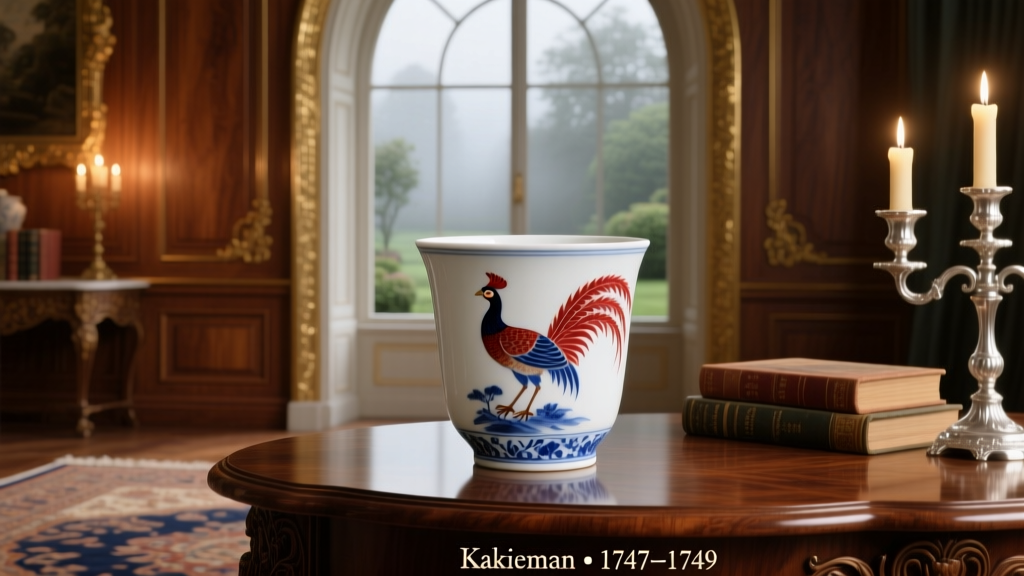
The Chelsea Beaker: Kakiemon-Inspired Chinese Pheasant with Iron-Red Crest and Tail, Circa 1747–1749 (2¾–3¼ Inches)
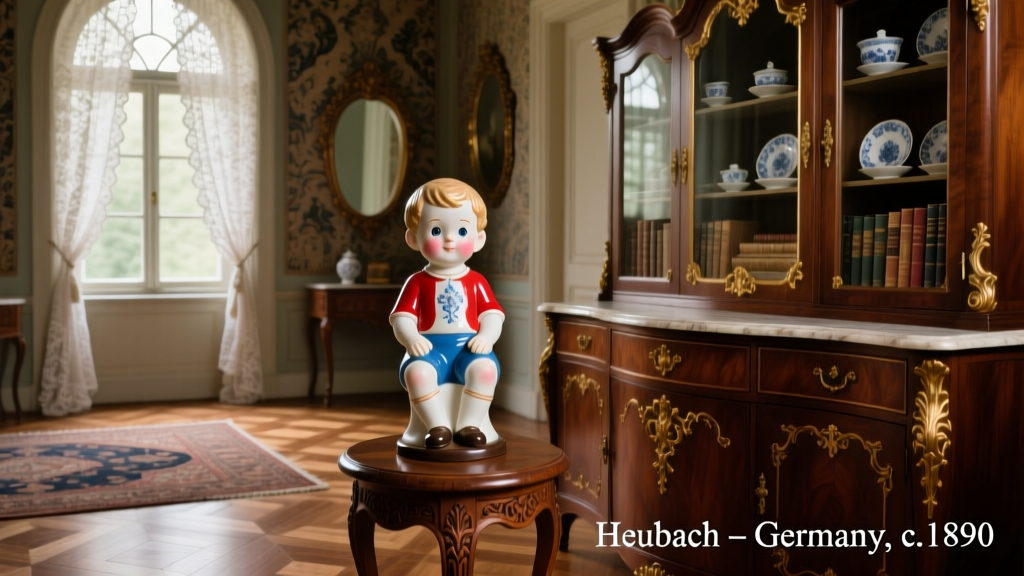
Heubach Figurine: Boy Sitting in Red, White & Blue — A Detailed Study of the 3-Inch Bisque Portrait
Brass-Roasted Chestnut Wood Roaster with Hunter Hounds Handle: A Detailed Appraisal of an English 18⅜-Inch Antique Hearth Tool
Conjoined Vase Commands High Price: Rarity, Provenance, and the $2.4 Million Record at Sotheby’s
Akro Agate Teapot: Octagonal Open Handle, Opaque Blue, 2¾ Inches — Identification, History, and Restoration Guidelines
The Montpelier Manufacturing Company’s 1862 Wooden Tricycle: A Pioneering Artifact of Early American Cycling
Rookwood Vase: Violet Leaves Design by C. A. Baker, 1901 — A Technical & Historical Appraisal of a 7-Inch Art Pottery Masterpiece
The Roosevelt Raceway Blue Sports Horse Racing Blazer: Heritage, Construction, and Authentic Restoration
Bronze Sculpture: African Giraffe, Standing Pose with Rich Patina — A 60-Inch Masterpiece in Fine Art Conservation