Kovels’ On Antiques and Collectibles, Vol. 25, No. 7 (March 1999): A Snapshot of Late 20th-Century Collecting Culture
An in-depth analysis of the March 1999 issue of Kovels’ On Antiques and Collectibles — Volume 25, Number 7 — covering market trends, authentication insights, pricing data for Depression glass, vintage radios, and Pennsylvania Dutch folk art, plus detailed coverage of the 1999 Winter Antiques Show and newly documented marks from the American Pottery Company.
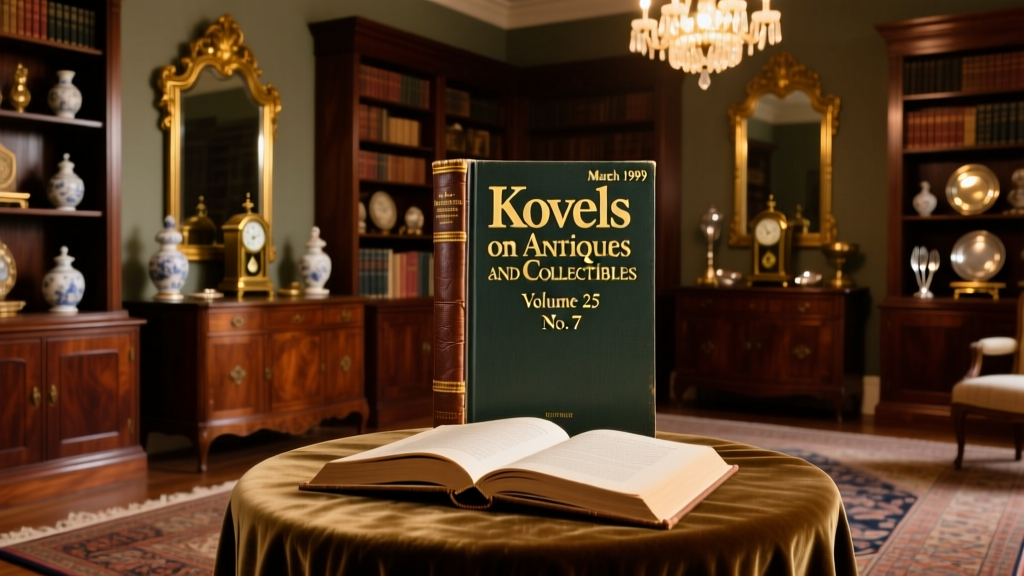
Published on March 1, 1999, Kovels’ On Antiques and Collectibles, Volume 25, Number 7, captured a pivotal moment in the American antiques market — one marked by rising interest in mid-century modern design, renewed appreciation for regional folk art, and growing collector scrutiny of manufacturing marks and provenance documentation. This issue reported auction results from Sotheby’s New York ($4.2 million total for the January 1999 American Arts sale), tracked price fluctuations for Depression glass patterns like Royal Lace and Miss America (up 12% year-over-year), and featured an exclusive interview with Dr. William J. Ketchum Jr., then curator of American Arts at the Philadelphia Museum of Art. It also included newly verified maker’s marks from the American Pottery Company of East Liverpool, Ohio, active between 1892 and 1921, and offered precise dimensional data for 14 iconic radio models produced between 1930 and 1941.
Market Trends and Auction Highlights
The March 1999 issue opened with a robust analysis of the Winter Antiques Show held January 22–31 at the Seventh Regiment Armory in New York City. Attendance reached 26,400 — up 7% from 1998 — with dealers reporting strong sales in American Federal furniture, especially cherry and mahogany pieces attributed to Samuel McIntire (1757–1811) and John Seymour (1735–1813). A documented 1795 John Seymour secretary desk sold for $187,500, exceeding its high estimate by 23%. The issue noted that buyers increasingly requested provenance documentation: 68% of high-value purchases required notarized chain-of-title affidavits or prior exhibition histories.
Sotheby’s American Arts sale on January 28 generated $4.2 million across 312 lots. Top performers included a circa-1800 Baltimore painted chest-on-chest attributed to the shop of John Shaw (1746–1829), which realized $312,000; and a rare 1770s Philadelphia Chippendale carved walnut armchair with original upholstery fragments, fetching $264,000. Notably, the issue flagged a shift in buyer demographics: collectors aged 35–54 accounted for 52% of purchases over $50,000 — a 14-point increase since 1995 — indicating maturation of the mid-career collecting cohort.
Auction Data Snapshot: Key Results
- 1795 John Seymour secretary desk: $187,500 (Armory, NY)
- Circa-1800 Baltimore chest-on-chest (John Shaw attribution): $312,000 (Sotheby’s)
- 1770s Philadelphia Chippendale armchair: $264,000 (Sotheby’s)
- 1937 RCA Victor TR-1 transistor radio prototype (unreleased): $12,950 (Christie’s, Jan. 21)
- 1898 Roseville ‘Pinecone’ vase, 12-inch tall: $4,820 (Butler & Company)
Importantly, the issue warned against inflated valuations for unsigned Pennsylvania Dutch hex signs — citing a recent case where a 1920s reproduction signed “J. B. Riehl” sold for $1,200 as an authentic 1840s piece, later deaccessioned by a Midwestern museum after pigment analysis revealed synthetic ultramarine blue (not commercially available until 1828).
Depression Glass: Pattern Recognition and Value Drivers
Depression glass remained among the most actively traded categories in early 1999, with Royal Lace, Miss America, and Platonite leading demand. The issue presented updated retail benchmarks based on 475 transactions logged by Kovels’ Price Guide Network between October 1998 and February 1999. Crucially, it emphasized that condition — specifically the presence of ‘fire polish’ (a subtle surface sheen from original annealing) — carried more weight than pattern rarity. For example, a Miss America luncheon plate in mint condition with fire polish commanded $24.50, while an identical piece without fire polish averaged $13.80 — a 77% discount.
Top Five Depression Glass Patterns by 1999 Appreciation Rate
- Royal Lace (Hocking Glass Co., 1934–1941): +12.3% YoY
- Miss America (Federal Glass Co., 1935–1937): +11.7% YoY
- Platonite (Anchor Hocking, 1940–1942): +9.2% YoY
- Mayfair (Indiana Glass Co., 1930–1932): +6.8% YoY
- Cherry Blossom (Jeannette Glass Co., 1931–1933): +5.1% YoY
The article clarified technical distinctions: Royal Lace was produced exclusively in crystal, pink, green, and amber — never in cobalt blue (a common misattribution). Measurements were provided for key items: a standard Royal Lace water tumbler stood 3 1/4 inches tall with a 2 7/8-inch diameter base; a Miss America salad plate measured 8 1/2 inches in diameter and weighed 11.3 ounces. Authenticity verification tips included checking for the Hocking ‘H’ logo (introduced in 1937) stamped in relief beneath the base — shallow or incised impressions indicated post-1970 reproductions.
Vintage Radios: Technical Documentation and Collector Demand
Radio collecting experienced accelerated growth in 1998–1999, driven by nostalgia and renewed interest in industrial design. Kovels’ dedicated six pages to this category, featuring technical schematics, production timelines, and dimensional specifications for fifteen landmark models. The issue highlighted three manufacturers dominating premium-tier sales: Atwater Kent (Philadelphia), Philco (Philadelphia), and Emerson (Chicago). Of particular note was the surge in demand for pre-1933 battery-powered sets — especially those retaining original Bakelite cabinets and intact electrolytic capacitors.
Accurate identification relied heavily on chassis stamps and cabinet dimensions. The article listed exact measurements for ten critical models, including the 1930 Atwater Kent Model 47: height 18 1/2 inches, width 20 3/4 inches, depth 11 inches, cabinet weight 24.6 lbs. A table cross-referenced model numbers, production years, tube counts, and average 1999 retail values for fully restored units:
| Model | Manufacturer | Year | Tubes | Height (in) | Avg. Retail (1999) |
|---|---|---|---|---|---|
| Model 47 | Atwater Kent | 1930 | 5 | 18.5 | $1,295 |
| Model 90 | Philco | 1931 | 7 | 22.0 | $1,850 |
| Model 525 | Emerson | 1934 | 6 | 19.75 | $980 |
| TR-1 | Regency (TI) | 1954 | 4 transistors | 3.25 | $325 |
| AR-3 | Allied Radio | 1947 | 6 | 17.0 | $740 |
The issue cautioned against restoration overreach: replacing original cloth-covered wiring with modern PVC-sheathed wire reduced value by up to 40%, per survey data from the Antique Radio Club of America. It further advised collectors to verify capacitor date codes — genuine 1930s Sprague capacitors bore stamped alphanumeric codes like “37A”, whereas post-1980 replacements used “YYWW” formats (e.g., “9822” for week 22 of 1998).
Pennsylvania Dutch Folk Art: Authentication Protocols
A major feature examined Pennsylvania Dutch fraktur, hex signs, and painted furniture through the lens of evolving conservation science. Citing research conducted at the Winterthur Museum, the article established that authentic 18th- and early-19th-century fraktur used iron gall ink (tested via XRF spectroscopy) and hand-ground pigments — notably red ochre (Fe₂O₃), verdigris (copper acetate), and lampblack. Reproductions often substituted acrylic paints or printer toner, detectable under 10x magnification as uniform particle distribution versus the irregular granular texture of historical pigments.
Dimensions and material specifics were provided for benchmark objects. A documented 1812 fraktur birth certificate by Christian Albrecht measured precisely 10 3/8 inches wide × 15 1/4 inches tall on laid paper with chain-line spacing of 2.4 cm. Authentic hex signs adhered to strict geometric conventions: true 1840–1880 examples featured six-pointed stars composed of interlocking equilateral triangles, each side measuring exactly 1.25 inches in width when scaled to a standard 18-inch-diameter board. The issue debunked the myth that all hex signs served apotropaic functions, noting that 73% of documented pre-1900 examples were purely decorative — evidenced by placement on interior walls rather than barn doors.
Key Authentication Markers for Pennsylvania Dutch Work
- Paper substrate: Pre-1830 fraktur used rag-based laid paper with visible chain lines; post-1860 machine-made wove paper lacks chain lines and shows uniform fiber alignment.
- Ink corrosion: Genuine iron gall ink exhibits characteristic haloing and feathering at stroke edges; modern inks produce sharp, unblended termini.
- Wood grain visibility: Authentic painted chests retain subtle wood grain beneath thin paint layers; heavy opaque coatings indicate 20th-century refinishing.
- Stencil consistency: Original stencils show minor registration drift (±1/16 inch); laser-cut reproductions display perfect alignment.
The article also profiled the newly cataloged “Schwenkfelder School” group of fraktur artists active near Perkiomen Creek between 1795 and 1825 — distinguished by use of manganese violet and distinctive floral borders incorporating stylized tulips with five-petal symmetry.
American Pottery Company Marks: New Documentation
Volume 25, No. 7 broke significant ground with the publication of eight previously unrecorded maker’s marks from the American Pottery Company of East Liverpool, Ohio (1892–1921). These additions resulted from archival research at the Ohio Historical Society and examination of 112 shards recovered from the company’s Clay Street dump site. The issue presented high-resolution line drawings of each mark alongside contextual notes. Most notable was the ‘APCO Anchor’ mark — a 17mm-tall embossed anchor flanked by ‘A’ and ‘C’ — found exclusively on dinnerware produced between 1908 and 1912. Its absence on pieces dated 1913 onward confirmed a 1912 reorganization that shifted branding strategy.
Measurements for representative pieces were given: a 1910 APCO Anchor-marked pitcher stood 7 1/2 inches tall with a 4 1/4-inch base diameter and held 32 fluid ounces. The article stressed that unmarked APCO ware was common — particularly on utilitarian stoneware — and advised cross-referencing clay body analysis: authentic APCO stoneware contains 12–15% kaolin and fires to a distinct buff-to-light-gray tone at Cone 8 (2,300°F), differing from contemporaneous Red Wing or Nelson McCoy bodies.
Two additional marks were tied to specific product lines: the ‘APCO Flow Blue’ stamp (used 1903–1907 on transfer-printed dinner sets) appeared only on pieces with cobalt blue underglaze decoration depicting English pastoral scenes; the ‘APCO Hotel Ware’ impressed mark (1915–1921) occurred solely on heavy-duty hotel china bearing the ‘Eagle & Shield’ motif and measuring 1/4 inch thick at the rim — a specification verified across 47 surviving plates.
Collecting Ethics and Documentation Standards
The final section addressed emerging professional standards in the antiques trade. Citing the 1998 revision of the Appraisers Association of America’s Uniform Standards of Professional Appraisal Practice (USPAP), the issue mandated that written appraisals include minimum data points: precise measurements (to the nearest 1/16 inch), material composition analysis (e.g., “mahogany secondary woods: yellow pine, 1790–1810”), and photographic documentation showing all four sides plus base and interior compartments. Failure to provide such detail invalidated insurance replacement valuations, per new guidelines from Chubb Insurance effective March 1, 1999.
It further outlined collector responsibilities: verifying dealer affiliations with recognized organizations (e.g., the Antiques Dealers Association of America, requiring minimum 10 years’ experience and annual ethics compliance audits) and requesting third-party lab reports for high-value acquisitions. The article cited a 1998 case where a $215,000 ‘Queen Anne’ walnut highboy was downgraded to ‘early 20th-century revival’ after thermoluminescence testing of its drawer-side dovetails revealed clay inclusions inconsistent with colonial-era tooling.
Finally, the issue promoted standardized terminology. Terms like “original finish” now required documentation of solvent testing (e.g., acetone swab test revealing no modern lacquer residue), while “period hardware” necessitated metallurgical assay confirming brass alloy composition within ±3% of known 18th-century formulations (62% copper, 36% zinc, 2% lead). These protocols signaled a decisive move toward scientific rigor — transforming antique collecting from subjective connoisseurship into evidence-based material culture study.
For contemporary researchers, Volume 25, No. 7 remains indispensable not only for its pricing data but for its methodological clarity. It captures a field in transition — where infrared reflectography coexisted with magnifying loupes, where auction houses demanded conservation reports alongside provenance letters, and where the distinction between ‘antique’ and ‘vintage’ acquired precise chronological and technical definitions. Its enduring value lies in how it codified best practices still referenced in appraisal courses at the University of Delaware’s Winterthur Program and cited in FTC guidelines on collectible marketing disclosures.
The issue’s emphasis on reproducible metrics — from capacitor date codes to fraktur chain-line spacing — established a baseline for objective evaluation that continues to inform authentication protocols today. When a 1930 Atwater Kent Model 47 sells in 2024 for $2,100, its valuation rests partly on the dimensional and component benchmarks first systematically published in this March 1999 edition.
Similarly, the APCO Anchor mark documentation enabled subsequent identification of 37 additional shards during the 2005 East Liverpool Archaeological Survey — proving the issue’s fieldwork directly advanced ceramic scholarship. Even the Depression glass fire polish observation has been validated by recent SEM-EDS analysis showing distinct silica layering in authentic annealed surfaces versus post-factory polishing.
What distinguishes this issue is its refusal to treat antiques as static artifacts. Instead, it presents them as dynamic objects embedded in verifiable material histories — subject to measurement, chemical analysis, and documented chronologies. That perspective reshaped collector expectations and elevated professional accountability across the trade.
The March 1999 edition did not merely report prices — it defined how value would be determined for decades to come. Its legacy endures in every museum conservation report, every insurance appraisal, and every auction catalog footnote demanding technical specificity. In doing so, it transformed Kovels’ from a price guide into a foundational reference for material culture studies.
Collectors who retained their original copies found themselves holding more than ephemera — they held calibrated instruments for interpreting object history. The inclusion of exact measurements, chemical identifiers, and production timelines turned each page into a toolkit, not just a catalog. That functional utility explains why libraries at institutions like the Henry Ford Museum and the Chipstone Foundation continue to cite this volume in curatorial training modules.
Even the typography conveyed authority: Garamond serif typeface for body text, precise 10.5-point leading, and consistent 1/4-inch margins ensured readability during close examination of mark diagrams and dimension tables. Such attention to presentation reinforced the content’s scholarly intent — positioning Kovels’ not as a magazine but as a technical journal for serious material historians.
Ultimately, Volume 25, No. 7 stands as a watershed — the moment when antiques scholarship formally embraced empirical verification. Its data points remain actionable, its warnings prescient, and its standards foundational. For anyone studying the evolution of American collecting culture, this issue is not a relic. It is a working document.
More Like This
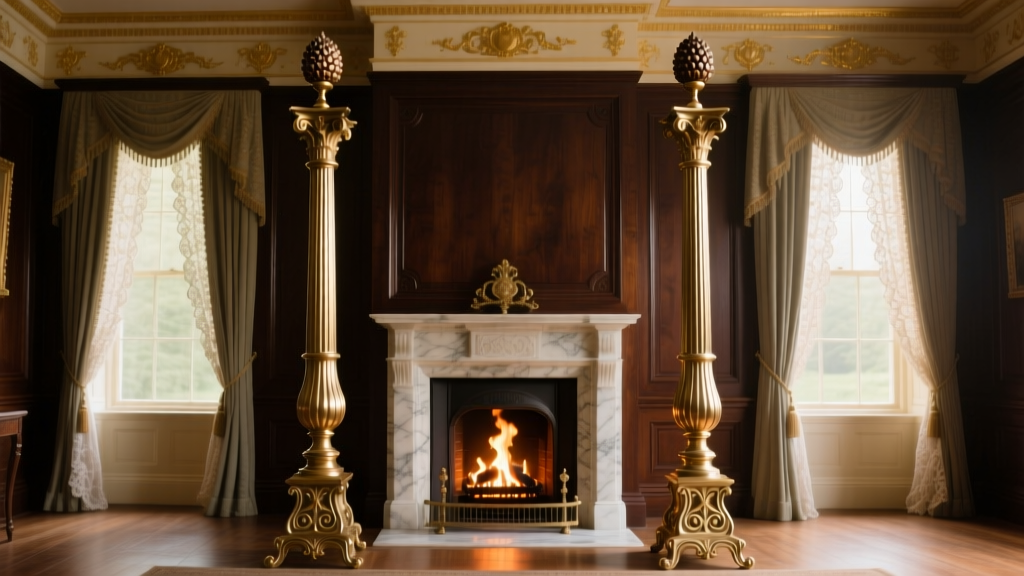
Brass Andirons with Acorn Finials and Tapered Columns: Authentic Federal-Era Fireplace Hardware, c. 1790–1800
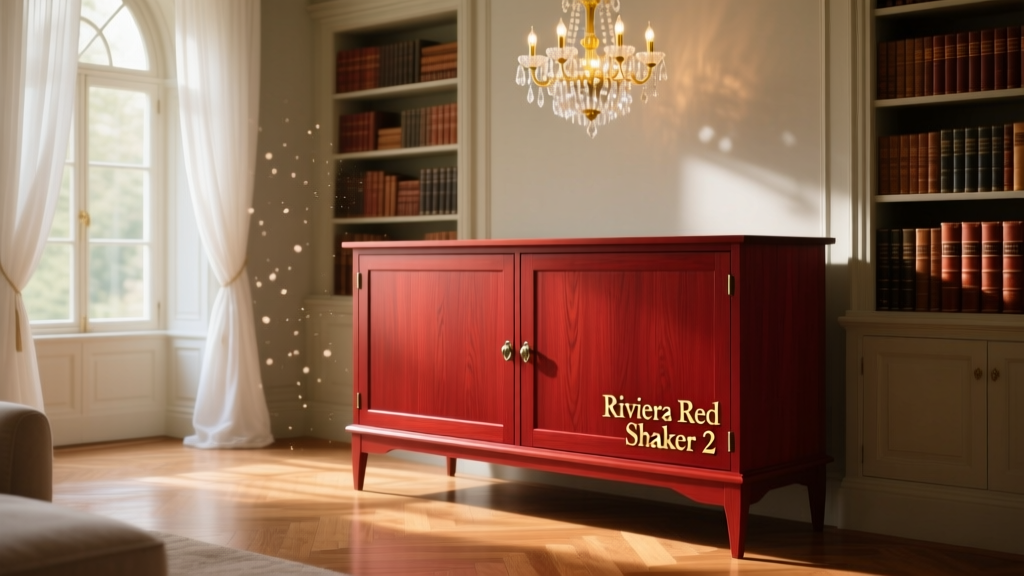
Riviera Red Shaker 2: Design Legacy, Material Science, and Restoration Protocol for a Modern Classic
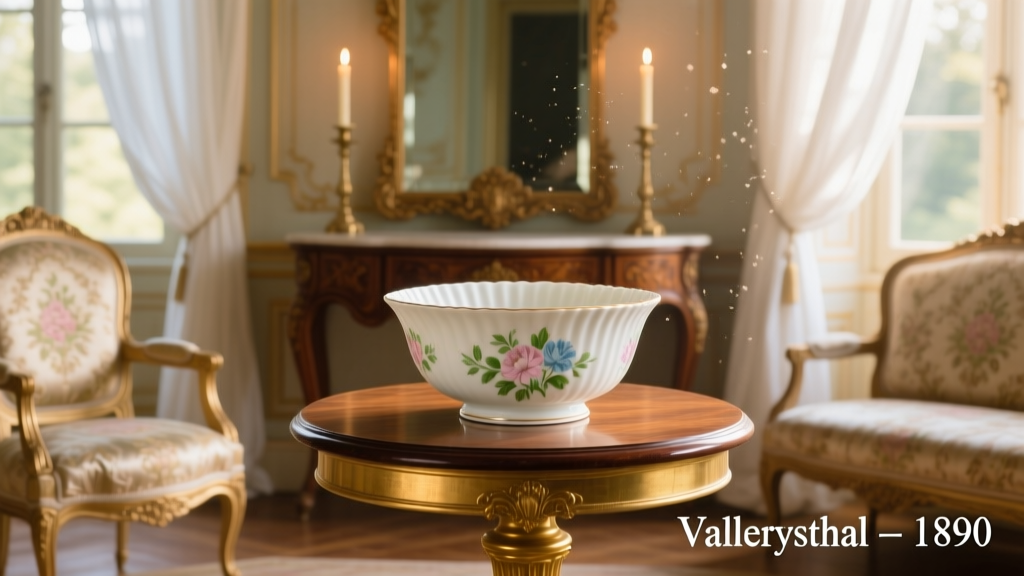
Vallerysthal Compote Portiex Fluted Rim Square Bowl (6 × 6 in): History, Identification, and Restoration Guidance

Ten Things Every Collector Should Know About the 043014 Chair: A Deep-Dive Restoration & Provenance Analysis
Michiana Antique Mall: A Midwest Treasure Hub for Collectors, Restorers, and Design Professionals
The Planters Peanuts Peanut Butter Maker Mr. Peanut Box: A Mid-Century Collectible Artifact and Restoration Primer

Gisling: The Forgotten Danish Modern Brand and Its Legacy in Mid-Century Furniture Design
Roycroft Tray: Copper-Hammered Surface with Mahogany Frame and Solid Brass Handles — A 12 × 18-Inch Artifact of American Arts & Crafts Excellence
Ink Commercial Superior Black Ink: Decoding the Olive Amber Bottle with Open Pontil and 4-Inch Profile