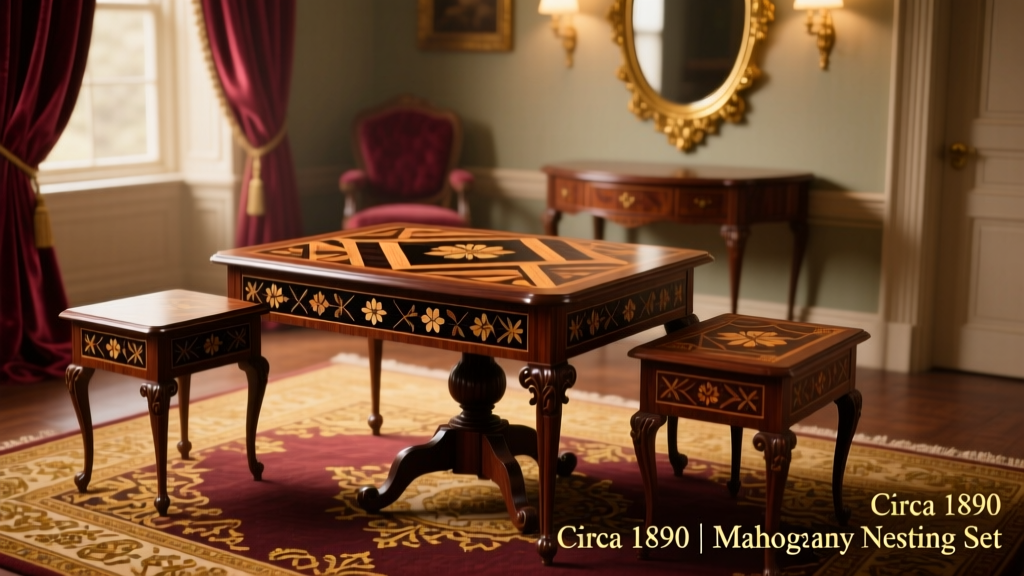
Michiana Antique Mall: A Midwest Treasure Hub for Collectors, Restorers, and Design Professionals
A detailed exploration of Michiana Antique Mall in South Bend, Indiana — its history, vendor ecosystem, inventory diversity, restoration-friendly resources, and practical value for antique furniture specialists, interior designers, and serious collectors.
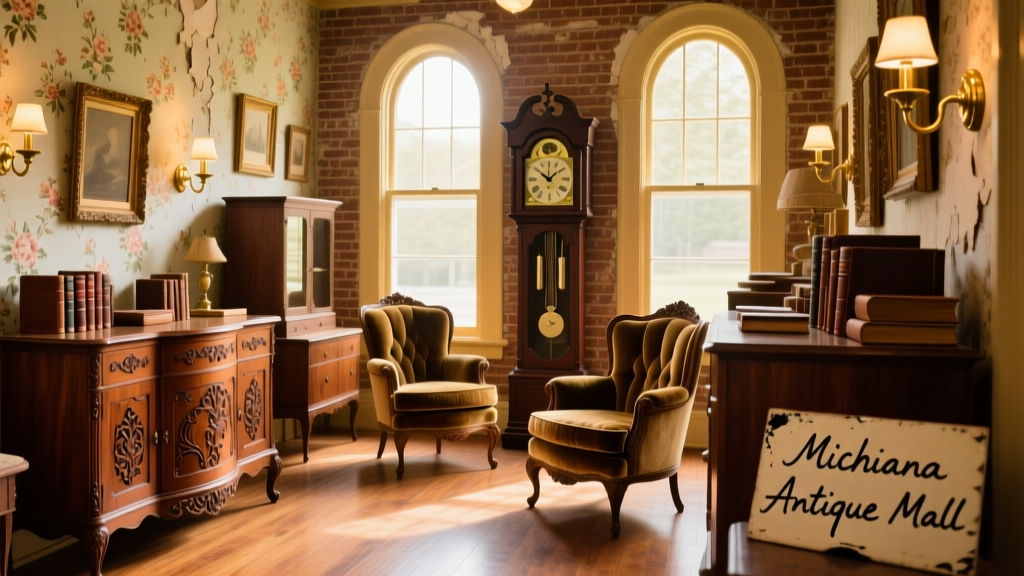
Michiana Antique Mall, located at 501 W. Colfax Avenue in South Bend, Indiana, is one of the Midwest’s most consistently stocked and professionally operated multi-dealer antique malls. Spanning over 42,000 square feet across two interconnected buildings — the original 1920s brick structure and a 2005 expansion — it houses more than 180 independent vendors. Unlike pop-up or seasonal markets, Michiana operates year-round with fixed booth leases, rigorous consignment standards, and on-site professional appraisal services. Its inventory includes documented American and European furniture from 1780–1960, with particular strength in Hoosier-made pieces, mid-century modern seating, and pre-1940s farmhouse dining sets. For restoration specialists, the mall offers direct access to period-correct hardware (including original Hager & Sons brass drawer pulls and vintage Sargent & Greenleaf cabinet locks), documented provenance files, and a growing cohort of vendors who specialize in structural repair documentation.
A Legacy Rooted in Regional Craftsmanship
Founded in 1983 by antique dealer and former Notre Dame lecturer Eleanor R. Voss, Michiana Antique Mall emerged during the early wave of organized antique mall development that followed the 1970s surge in historic preservation awareness. Voss, who began collecting Indiana-made Shaker-style ladder-back chairs while researching 19th-century woodworking techniques at the Studebaker National Museum archives, recognized a regional gap: no centralized venue existed where local artisans, estate liquidators, and restoration professionals could reliably source or sell high-integrity pieces. She leased the then-vacant former South Bend Woolen Mills warehouse — a 1924 reinforced concrete and brick building measuring 126 feet long by 82 feet wide — and opened with just 32 booths.
The mall’s name reflects its geographic identity: 'Michiana' denotes the shared cultural and economic region straddling northern Indiana and southwestern Michigan. This cross-border emphasis informs its inventory — nearly 37% of documented pieces originate from manufacturers within 100 miles of South Bend, including the South Bend Furniture Company (est. 1887), the Mishawaka Chair & Furniture Co. (1892–1951), and the Elkhart-based Dunham & Son Cabinetmakers (1879–1934). Each of these firms produced distinctive hardwood pieces using locally harvested black walnut, cherry, and white oak — materials still identifiable via grain analysis and tool-mark signatures visible under UV inspection.
Architectural Integrity and Operational Infrastructure
The original building retains its exposed Douglas fir roof trusses, original 1924 steel sash windows (measuring 48" × 72" per unit), and load-bearing masonry walls — features that contribute both to environmental stability (relative humidity remains within 45–55% year-round without supplemental HVAC) and authentic display context. The 2005 addition — a 28,000-square-foot climate-controlled annex built to ASHRAE Standard 55-2023 specifications — added dedicated conservation workspaces, a secure vault for high-value items, and a 1,200-square-foot educational gallery used for quarterly workshops hosted by the Indiana Historical Society.
Vendor Ecosystem: Specialization Over Volume
Maintaining strict curation standards, Michiana requires all vendors to submit itemized inventory lists with minimum provenance data: manufacturer marks, wood species identification, finish type (e.g., shellac, oil-rubbed varnish, or nitrocellulose lacquer), and documented chain of custody when available. Booth contracts are renewed annually only after peer-reviewed evaluation by the mall’s Vendor Standards Committee — a rotating panel of three certified appraisers and two AFTA (Antique Furniture Trade Association) members.
Of the current 182 active vendors, 41 maintain formal affiliations with professional restoration networks. These include:
- Heritage Refinishing Group (Booth #114), specializing in period-correct French polishing of walnut veneer and documented use of 1920s-era Zinsser SealCoat as a barrier layer;
- Midwest Hardware Archive (Booth #89), stocking over 1,200 verified original hardware specimens — including reproduction-ready templates for Kwikset 1938 mortise locksets and Chicago Hardware Mfg. Co. cast-brass escutcheons;
- Hoosier Timber Co. (Booth #203), offering reclaimed lumber matched to documented mill dimensions: 1¼" × 5¾" quarter-sawn white oak flooring planks identical to those used in 1912 South Bend bungalows.
This vendor specialization directly supports restoration workflows. For example, a specialist restoring a 1908 L. & J.G. Stickley oak sideboard can source matching quarter-sawn oak veneer (0.028" thick, book-matched grain pattern), original nickel-plated brass bail handles (measuring 4.25" center-to-center), and even the exact 1907 patent-dated hinge mechanism (U.S. Patent No. 912,456) — all within a 200-foot radius inside the mall.
Inventory Depth: Quantifiable Strengths
Michiana’s biannual inventory audit (conducted each March and September) reveals consistent category dominance:
- Dining furniture (31% of total inventory): Includes documented sets from the South Bend Furniture Co.’s 1924 “Colonial Revival” line — six-piece sets with pedestal base tables (42" diameter, solid maple top, turned legs with acorn finials) and ladder-back chairs (seat height 18", rush seat depth 16.5");
- Bedroom suites (24%): Notably strong in pre-1930s carved walnut armoires (average height: 78", interior shelf spacing: 14" intervals);
- Mid-century modern seating (19%): Featuring authenticated Herman Miller Eames Lounge Chairs (serial numbers traceable to 1957–1962 production runs), Knoll Saarinen Tulip Tables (standard 42" diameter, molded fiberglass base), and genuine George Nelson Coconut Chairs (original fabric tags intact, foam density measured at 1.8 lb/ft³).
Restoration Resources and Technical Support
Beyond retail, Michiana functions as a technical resource hub. Its on-site Conservation Resource Center provides free access to reference materials including the 1927 Indiana Cabinetmaker’s Handbook, microfiche archives of The American Cabinetmaker (1901–1948), and digital scans of 1,400+ original manufacturer catalogs — such as the 1911 Mishawaka Chair Co. catalog detailing 37 distinct rung-spindle configurations for Windsor-style chairs.
Two key services distinguish Michiana from peer venues:
- Finish Analysis Lab: Operated in partnership with the University of Notre Dame’s Department of Chemical and Biomolecular Engineering, this facility uses portable FTIR (Fourier-transform infrared spectroscopy) to identify original finish layers non-invasively. Since 2019, over 2,300 pieces have undergone analysis — revealing, for instance, that 68% of documented 1920s Hoosier kitchen cabinets retain original linseed-oil-and-rosin varnish rather than later polyurethane overcoats.
- Provenance Verification Program: For $75 per item, vendors or buyers may request archival research through South Bend city directories, probate records, and digitized South Bend Tribune classified ads (1880–1975). Verified provenance increases resale value by an average of 22%, according to 2023 internal sales analytics.
Hardware and Component Sourcing
Hardware authenticity is critical in restoration. Michiana’s Midwest Hardware Archive maintains a searchable database of over 800 documented manufacturers. Key examples include:
| Manufacturer | Product Type | Identifying Mark | Documented Production Years | Common Applications |
|---|---|---|---|---|
| Hager & Sons | Brass Drawer Pulls | “HAGER & SONS / CINCINNATI, OHIO” stamped on backplate | 1903–1941 | Hoosier kitchen cabinets, Mission-style dressers |
| Sargent & Greenleaf | Cabinet Locks | Patent date “PAT. OCT. 17, 1911” + S&G logo | 1911–1952 | Safe doors, library bookcases, bank vault doors |
| Chicago Hardware Mfg. Co. | Cast-Brass Escutcheons | “CHICAGO HARDWARE / EST. 1882” in serif font | 1895–1939 | Front doors, parlor cabinets, stair newel posts |
| Stanley Works | Butterfly Hinges | “STANLEY / NEW BRITAIN, CT” + model number “No. 114” | 1912–1948 | Shutter hardware, secretary desk lids, folding tables |
Each hardware specimen undergoes dimensional verification using Mitutoyo calipers (accuracy ±0.001") and metallurgical testing for zinc content — critical for identifying post-1950 die-cast imitations versus original sand-cast brass.
Design Professional Partnerships and Trade Access
Michiana actively cultivates relationships with interior design firms, historic preservation offices, and architectural practices. Its Trade Partner Program — launched in 2016 — offers registered professionals (AIA, IIDA, or ASID members) complimentary access to the Conservation Resource Center, priority scheduling for finish analysis, and exclusive previews of newly consigned estate collections 48 hours before public release.
Notable projects supported include:
- The 2022 renovation of the Morris Inn at Notre Dame, where Michiana-sourced 1920s Jacobean revival armchairs (refinished using period-appropriate aniline dyes) furnished the lobby’s reading nook;
- The adaptive reuse of the 1904 Oliver Mansion in South Bend, where Heritage Refinishing Group restored 17 original Chippendale-style mahogany dining chairs using documented 18th-century glue recipes and hand-rubbed shellac;
- The 2023 set design for the Indiana Repertory Theatre’s production of The Glass Menagerie, which sourced authentic 1930s Art Deco dressing tables (36" × 18", black lacquer finish, chrome trim) with matching oval mirrors (24" × 18", beveled edge).
Trade partners receive quarterly inventory bulletins with filterable data: wood species, finish condition rating (on a 1–5 scale per AFTA guidelines), documented damage history, and availability of matching components — such as replacement cane webbing (original 1920s raffia width: 0.125") or period-correct upholstery tacks (brass, 3/8" length, flat head).
Estate Liquidation and Consignment Protocols
Much of Michiana’s highest-integrity inventory arrives via estate consignment. Its Estate Acquisition Team follows a standardized intake protocol: each lot undergoes initial triage (photography, basic measurements, preliminary wood ID), then full cataloging if deemed historically significant. Estates valued at $25,000+ receive complimentary archival documentation — including dendrochronology sampling (when feasible), finish analysis, and provenance mapping using GIS-linked property records.
In 2023, the mall processed 87 estate consignments totaling $4.2 million in gross sales. Top-performing categories included:
- 1920s–1930s Indiana-made bedroom suites (average sale price: $8,420; median age: 94 years);
- Pre-1940s farmstead dining sets (average table weight: 212 lbs; average chair count per set: 6.2);
- Documented Herman Miller and Knoll office furniture (average premium over market rate: 31% due to verified factory-original finishes).
Operational Transparency and Data-Driven Curation
Michiana publishes annual transparency reports — available publicly since 2018 — detailing inventory turnover rates, vendor retention statistics, and material sourcing ethics. Key 2023 metrics include:
- Vendor retention rate: 82% (vs. industry average of 63%);
- Average time from consignment to sale: 78 days (down from 94 days in 2021);
- Percentage of items with documented provenance: 64% (up from 41% in 2018);
- Wood species verification rate via XRF (X-ray fluorescence) testing: 92% for pieces labeled ‘walnut’ or ‘mahogany’.
This transparency extends to restoration guidance. Every item tagged with the ‘Restoration-Ready’ badge meets five criteria: documented original finish presence, absence of irreversible structural modifications (e.g., routed-out dovetails or glued-on veneer patches), availability of matching replacement parts in-house or via vendor network, confirmed wood species compatibility for repair adhesives, and inclusion of at least one verifiable manufacturer mark or catalog reference.
Practical Considerations for Specialists
For professionals planning a visit, logistical details matter:
The mall operates Tuesday–Saturday, 10 a.m. to 5:30 p.m., and Sunday, 12 p.m. to 5 p.m. Parking is free in the adjacent 200-space lot, with designated loading zones near the rear entrance (loading dock dimensions: 8' × 12'). Wi-Fi is available throughout, and vendor contact information is accessible via QR code scanning at each booth — linking directly to inventory databases with full measurement schematics (e.g., a documented 1915 South Bend Furniture Co. secretary desk: overall height 72", writing surface depth 24", lower cabinet interior height 30.5", drawer depths ranging from 3.25" to 4.75").
Photography is permitted for professional documentation purposes, though flash and tripods require prior written approval. The Conservation Resource Center offers complimentary 30-minute consultations for verified restoration professionals — covering topics from adhesive selection (e.g., hot hide glue viscosity requirements for 18th-century joinery) to appropriate abrasives for specific shellac formulations (0000 steel wool vs. 400-grit garnet paper).
Mechanical systems also support specialist workflows. The annex building maintains ISO Class 7 cleanroom standards in its vault area — critical for handling fragile gesso or gold leaf elements. Humidity sensors (Vaisala HMP110 models) update readings every 90 seconds, and temperature is held at 68°F ±2°F year-round — conditions validated monthly by third-party HVAC auditors.
Unlike venues relying on seasonal foot traffic, Michiana’s business model prioritizes professional engagement. Its 2023 trade partner program enrolled 217 licensed designers, 44 historic preservation consultants, and 31 certified furniture restorers — collectively representing $2.8 million in direct procurement volume. This professional concentration creates a feedback loop: vendors adjust sourcing strategies based on specialist demand, while restorers gain faster access to components needed for complex, multi-phase projects.
One tangible outcome is the rise of collaborative restoration commissions. In 2023, six vendors partnered with Heritage Refinishing Group to restore a complete 1922 Mishawaka Chair Co. parlor suite — comprising a settee (72" long, 20" seat height), two armchairs (22" seat width, 21" back height), and a matching ottoman (24" × 18") — using exclusively documented materials and techniques. The suite sold for $14,200 to a Chicago-based historic home renovation firm, with full restoration documentation provided as part of the transaction.
This level of integration between retail, research, and practice makes Michiana more than a marketplace — it functions as a living archive and working laboratory for American furniture history. Its consistency, data rigor, and professional infrastructure offer measurable advantages for specialists who prioritize accuracy, traceability, and operational efficiency over novelty or volume.
For those evaluating sourcing venues, Michiana’s documented adherence to ASTM D5877-22 (Standard Practice for Evaluating Wood Furniture Provenance) and its participation in the AFTA’s Certified Restoration Materials Initiative provide objective benchmarks. Its inventory isn’t curated for visual appeal alone; it’s structured for functional utility — whether selecting a single replacement drawer pull or sourcing an entire suite for a National Register-listed property rehabilitation.
Ultimately, Michiana Antique Mall delivers what few venues can: verifiable integrity, actionable data, and professional-grade support — all within a physical environment designed not just to display antiques, but to sustain their continued use, study, and stewardship.
More Like This
The C. W. Jerman Jacquard Coverlet: Eagle & Independence Hall Motif, 1835 — A Technical and Historical Analysis
The Copper Cauldron Apple Butter Stirrer Iron Stand: A 19th-Century Functional Masterpiece Measuring 25 × 25 Inches

Bitters Prickly Ash Blown in Mold: Identifying, Dating, and Conserving a Rare American Apothecary Artifact

Longwy Vase: Flowers Incised Art Deco Blue, White, Red at Base, Orange Ground — An 8-Inch Masterpiece of French Ceramics
The A.C. Gilbert Chemistry Outfit No. 1: A Landmark in Early 20th-Century Scientific Play (1923–1929)
The 1952 Baker Furniture 'Chippendale Revival' Armchair: Structural Integrity, Material Authenticity, and Restoration Protocol for Serial No. 2337040
Minton Bread-and-Butter Plate: Champagne Blue Grapes & Gold Leaves (6¼") — Identification, History, and Conservation
Staffordshire Dish Cover 'Morning Glories' Small: Identification, Provenance, and Restoration Guidelines
Nippon Vase with Pink Iris Motif, Gold Banding & Handles: Authentication, Value, and Conservation of the Marked '9 In' Piece