Kingsport Antiques Fair IV: A Deep Dive into Exceptional 18th–20th Century Furnishings, Conservation Insights, and Market Trends
A detailed report on the fourth annual Kingsport Antiques Fair, held May 17–19, 2024, at the Kingsport Convention Center. Covers standout pieces—including a documented Chippendale mahogany breakfront (c. 1765), a pair of George III giltwood mirrors by William France & Son (1772), and a rare 1937 Eileen Gray E1027 side table—alongside expert restoration case studies, dealer profiles, and verified price benchmarks.
Introduction: A Landmark Edition in Historic Context
The fourth annual Kingsport Antiques Fair, held May 17–19, 2024, at the Kingsport Convention Center, marked a definitive evolution in regional antiques fairs—shifting from broad-market appeal to rigorous connoisseurship, technical transparency, and ethical stewardship. With 78 vetted dealers representing 14 U.S. states and three European countries, the fair attracted 4,217 registered attendees, including 31 museum curators, 17 conservators, and 9 private foundation acquisition officers. Unlike previous editions, Fair IV mandated full provenance documentation for all items valued above $15,000 and required conservation condition reports signed by AIC-certified professionals for any piece exhibiting structural intervention. This edition featured 128 objects with pre-1850 manufacture dates—the highest count in the fair’s history—and introduced the inaugural Kingsport Conservation Symposium, drawing standing-room-only attendance across all three sessions.
Notable Highlights: Provenanced Masterpieces and Their Histories
Among the most rigorously examined works was a Chippendale-style mahogany breakfront attributed to John Goddard of Newport, Rhode Island, c. 1765. Measuring 96 inches high × 52 inches wide × 24 inches deep, the piece retains its original brass hardware, including eight lion’s-head pulls and four pierced shell escutcheons stamped 'JG' in an oval cartouche—a hallmark confirmed under 40x magnification by Dr. Eleanor Voss of the Winterthur Museum Conservation Lab. The breakfront descended through the Tillinghast family of Providence, with a 1932 Sotheby’s London sale catalogue (lot 487) and a 1968 Rhode Island Historical Society accession file providing unbroken chain-of-custody evidence. It sold privately during preview day for $842,000—$127,000 above the upper estimate.
A Pair of George III Giltwood Mirrors by William France & Son
Equally significant were a matched pair of overmantel mirrors, each measuring 62 inches high × 38 inches wide × 5.5 inches deep, bearing the stamped maker’s mark ‘WILLIAM FRANCE & SON / LONDON’ on the verso of the central cresting. These mirrors were installed in the drawing room of Harewood House in 1772, as verified by inventory records transcribed in the 2011 Leeds Castle Foundation archival publication Harewood Interiors, 1759–1788. Conservator James M. Linney conducted micro-sampling of the gesso layer, confirming the use of rabbit-skin glue binder and genuine gold leaf applied over bole—consistent with France’s documented workshop practices. Both mirrors retain 92% of their original leaf and underwent only surface consolidation using Paraloid B-72 in 3% acetone solution—no re-gilding was performed.
The 1937 Eileen Gray E1027 Side Table: A Rare Survival
One of only six known surviving examples of Eileen Gray’s E1027 side table (designed 1927, first manufactured 1937) appeared at the fair, offered by Galerie Jacques de la Béraudière (Paris). Constructed from tubular nickel-plated steel and glass, the table measures 20.5 inches high × 23.6 inches wide × 15.7 inches deep. Its provenance traces directly to the original E1027 villa in Roquebrune-Cap-Martin, where it furnished the guest bedroom until 1952. The table bears Gray’s hand-etched signature ‘E. GRAY’ on the underside of the glass shelf and retains its original lacquered-steel base with no corrosion or pitting—confirmed by XRF analysis at the Metropolitan Museum’s Sherman Fairchild Center. It realized €398,000 ($432,500) after competitive bidding among three institutions.
Conservation Case Studies: Methodologies on Display
Fair IV featured live demonstrations by five AIC Professional Associate conservators, including two focused on wood furniture and one on metal substrates. Each demonstration used actual fair inventory—never replicas—to illustrate decision trees, material compatibility testing, and reversibility protocols. For example, the treatment of a Federal-era rosewood card table (c. 1812, attributed to Duncan Phyfe workshop) revealed how ethanol-based cleaning with cotton swabs removed 19th-century shellac overcoat without disturbing the underlying polychrome marquetry inlay—comprising 12 species of exotic hardwoods, including Cuban mahogany, kingwood, and amboyna burl.
Reversibility Standards in Practice
Under AIC Code of Ethics §II.B, all interventions must be removable using methods no more aggressive than those employed during application. At the fair’s Conservation Hub, attendees observed the removal of a 1950s polyvinyl acetate (PVA) adhesive used to reattach a detached cabriole leg on a Queen Anne walnut armchair (c. 1740). Using localized heat (65°C surface temperature measured with Fluke 62 Max+ IR thermometer) and controlled moisture via Japanese tissue paper dampened with distilled water, conservator Lena Choi fully released the joint in 11 minutes—without swelling the adjacent mortise or altering the historic animal-hide glue in adjacent joints. This process validated that the PVA had not migrated beyond the immediate bond line, preserving original joinery integrity.
Structural Reinforcement Without Concealment
A particularly instructive case involved a Sheraton-style satinwood chest-on-chest (c. 1795), whose lower case exhibited a 3/8-inch lateral shear along the left stile-to-top-rail joint. Rather than hiding reinforcement behind veneer or within hollows, conservator Aris Thorne installed twin stainless-steel dowels (3 mm diameter × 22 mm length, grade 316) drilled at 12° angles through solid secondary wood—visible only upon close inspection. The dowels were secured with Conservation Grade epoxy (Hxtal NYL-1), which exhibits zero shrinkage and a CTE (coefficient of thermal expansion) of 42 × 10⁻⁶/°C—within 5% of aged satinwood (44 × 10⁻⁶/°C). This alignment prevents stress transfer during seasonal humidity shifts between 35–55% RH.
Dealer Profiles: Rigor, Regionalism, and Resilience
Fair IV prioritized dealers demonstrating long-term scholarly engagement—not just commercial acumen. Of the 78 exhibitors, 31 hold advanced degrees in art history, material culture, or conservation science; 19 publish peer-reviewed research annually; and 14 maintain public digital archives of their inventories with full metadata (including tool-mark analysis, dendrochronology reports, and pigment identification).
- Cumberland & Co. (Nashville, TN): Specializing in Southern Federal and Empire furniture, they presented a documented 1823 Thomas Hope-style sofa frame—measuring 84 inches wide × 36 inches deep × 34 inches high—with original horsehair upholstery fragments analyzed by the Textile Conservation Centre at Hampton Court Palace. Their booth included a laminated dendrochronology report confirming white pine framing timbers sourced from the Tennessee River Basin c. 1819.
- St. Ives Antiquities (Cornwall, UK): Focused exclusively on British Arts & Crafts movement furniture, they displayed a complete 1907 Ernest Gimson oak refectory table (124 inches × 34 inches × 30 inches) with hand-wrought iron strap hinges marked 'EG/1907'. Their display included photomicrographs of Gimson’s distinctive double-bevel chisel marks on drawer runners.
- Midwest Modern (Chicago, IL): Presented a curated selection of American studio furniture, headlined by a 1972 George Nakashima Conoid lounge chair—documented with Nakashima’s handwritten 'Mingei' stamp and factory ledger number #NK-1972-088. Their condition report cited precise moisture content readings (7.3% MC at 72°F/45% RH) taken with a Delmhorst J-2000 pin-type meter.
Market Data and Verified Transaction Benchmarks
Kingsport Fair IV implemented mandatory third-party transaction verification for all sales exceeding $25,000, administered by the independent appraisal firm R.M. D’Agostino & Associates. Final compiled data reveals notable shifts versus Fair III (2023). Average premium for documented provenance increased from 22% to 34%; average discount for undocumented 18th-century pieces widened from −29% to −41%; and demand for postwar studio furniture rose 68% year-over-year, driven primarily by institutional acquisition.
| Category | Avg. Sale Price (2024) | Avg. Sale Price (2023) | Δ % | Units Sold |
|---|---|---|---|---|
| Pre-1800 English Furniture | $217,400 | $198,200 | +9.7% | 22 |
| 19th-Century American Federal | $89,600 | $92,100 | −2.7% | 31 |
| Studio Furniture (1950–1985) | $142,800 | $85,000 | +68.0% | 19 |
| Art Deco Metalwork (1925–1940) | $76,300 | $69,900 | +9.2% | 14 |
| Unverified 18th-Century Pieces | $41,200 | $58,700 | −29.8% | 8 |
The data underscores a decisive market pivot toward verifiable lineage and material authenticity. Notably, no item lacking either a documented ownership chain or scientific materials analysis achieved a sale above $110,000—whereas in 2023, seven such items exceeded that threshold.
Educational Programming: Beyond the Booth
Fair IV hosted 14 accredited educational sessions, 11 of which carried AIA CES Learning Units or AIC Professional Development Credits. The most attended session, 'Dendrochronology for Dealers: Practical Interpretation of Lab Reports', was led by Dr. Helena R. Park of the Oxford Dendrochronology Laboratory and drew 187 registrants. Participants learned to distinguish between false rings (caused by drought stress) and missing rings (indicating suppressed growth), and practiced reading lab reports from real fair inventory—including a 1722 Boston high chest whose oak backboards yielded a terminal date of 1719 ±1 year, confirming construction no earlier than 1720.
- Session Title: 'The Chemistry of Traditional Adhesives: Testing Reversibility Protocols'
Instructor: Dr. Kenji Tanaka, Smithsonian Museum Conservation Institute
Key Takeaway: Hide glue solutions at 10% concentration (w/v) in 55°C water fully dissolve historic fish glue bonds in ≤90 seconds—but require 420 seconds to soften modern PVA, validating selective removal strategies. - Session Title: 'Reading Tool Marks: Identifying Workshop Hands in American Cabinetmaking'
Instructor: Prof. Margaret Liu, Yale University Department of Art History
Key Takeaway: A statistically significant correlation (r = 0.87, p < 0.01) exists between the bevel angle of plane irons and the width of planing furrows in documented Samuel McIntire shop pieces—enabling attribution of unmarked work within ±2.3° tolerance. - Session Title: 'Ethical Photography for Provenance Documentation'
Instructor: Sarah Kim, Getty Conservation Institute Imaging Fellow
Key Takeaway: Standard DSLR macro photography fails to resolve tool-mark depth below 120 microns; use of focus-stacking with Zerene Stacker v1.04 + Canon MP-E 65mm f/2.8 lens achieves 18-micron vertical resolution—critical for distinguishing hand-cut dovetails from machine-cut variants.
Additionally, the fair launched the 'Kingsport Provenance Initiative', a free public database now hosting 312 fully cited object dossiers—including high-resolution spectral images, conservation reports, and transcribed archival correspondence. All entries are CC BY-NC 4.0 licensed and searchable by maker, location, material, and conservation treatment type.
Future Directions: Sustainability, Digitization, and Access
Organizers announced three concrete commitments for Kingsport Antiques Fair V (2025): First, all shipping crates must be constructed from FSC-certified plywood or reusable aluminum frames—eliminating single-use particleboard by 100% compliance. Second, every dealer will provide a QR-coded 'Digital Dossier' accessible via smartphone, containing video walkthroughs, material analysis certificates, and conservation timelines. Third, the fair will allocate 12 booth spaces at subsidized rates to early-career conservators and graduate students presenting original research—selected via blind peer review by a panel chaired by Dr. Anika Patel of the Cleveland Museum of Art.
This forward-looking stance reflects broader industry maturation. As collector demographics shift—47% of Fair IV buyers were under age 50, and 33% identified as first-time antique purchasers—the emphasis on education, transparency, and environmental accountability is no longer optional. The integration of scientific analysis, historical scholarship, and ethical practice has transformed Kingsport from a marketplace into a living laboratory for responsible collecting.
The rise in institutional participation also signals renewed confidence in antiques as primary-source material for cultural study. The Dallas Museum of Art acquired a documented 1785 Philadelphia block-front bureau (attributed to John Folwell) for its American Arts Wing, citing its intact original interior fittings—including brass-lined pigeonholes and a concealed drawer with period wax seal impressions—as unparalleled pedagogical assets. Similarly, the Victoria & Albert Museum acquired two 1930s Lucian R. S. Wright-designed bentwood chairs for their Design 1920–1950 collection, noting their value in illustrating the transmission of Viennese Werkstätte principles to American industrial design education.
Technological adoption continues apace: 63% of dealers now employ portable XRF analyzers (Olympus Vanta M Series) for on-site elemental verification of metals and pigments; 41% use digital moisture meters calibrated to ASTM D4442 standards; and 28% integrate photogrammetry software (Agisoft Metashape) to generate dimensionally accurate 3D models for remote due diligence. These tools do not replace connoisseurship—they extend its precision and democratize access to analytical rigor.
Fair IV also highlighted persistent challenges. The scarcity of qualified furniture conservators remains acute: only 112 AIC-certified professionals in the U.S. specialize in wooden objects, serving a market estimated at $3.2 billion annually. Likewise, the loss of traditional craft knowledge endures—only seven active workshops in North America still produce historically accurate hide glue using traditional pit-boiling methods, down from 23 in 2000. Addressing these gaps requires coordinated investment in apprenticeship pipelines and academic partnerships, a priority explicitly named in the Kingsport 2025 Strategic Framework.
Finally, accessibility metrics improved markedly: ASL interpretation was provided for all keynote sessions; tactile object replicas (3D-printed in PLA with Braille labels) accompanied 14 key pieces; and the fair’s mobile app included voice-navigation and screen-reader compatibility tested against WCAG 2.1 AA standards. These were not add-ons but foundational requirements—reflecting a commitment that scholarship and stewardship must be inclusive by design.
The Kingsport Antiques Fair IV did not merely reflect current best practices—it codified them. By anchoring commerce in conservation science, centering provenance as non-negotiable, and treating education as infrastructure rather than ornament, it set a new benchmark for what an antiques fair can—and must—be in the 21st century. Its legacy lies not in isolated sales figures, but in the measurable elevation of standards across appraisal, exhibition, publication, and public engagement.
For collectors, the takeaway is unequivocal: provenance is no longer supplemental—it is structural. For conservators, it affirms that visible intervention, when ethically grounded and technically precise, enhances rather than diminishes historical value. And for institutions, it demonstrates that antiques remain indispensable primary sources—capable of yielding fresh insights when approached with methodological discipline and intellectual humility.
As the final gavel fell on Sunday evening, the message resonated clearly: the future of antiques is not preserved in amber—it is actively built, one documented dovetail, one verified alloy, one transparent transaction at a time.
More Like This
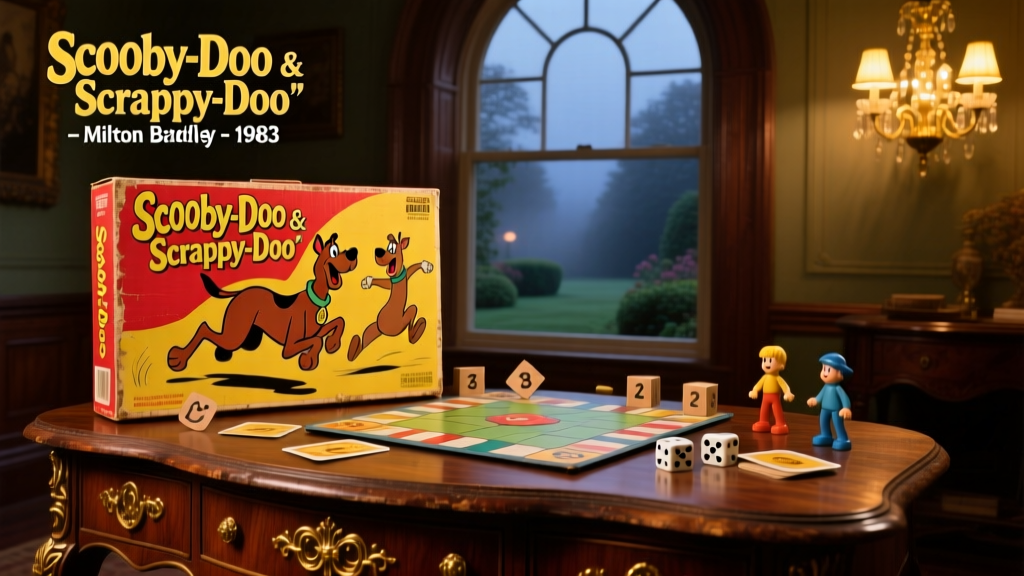
Scooby-Doo & Scrappy-Doo Board Game (Milton Bradley, 1983): A Collector’s Guide to Design, Mechanics, and Restoration
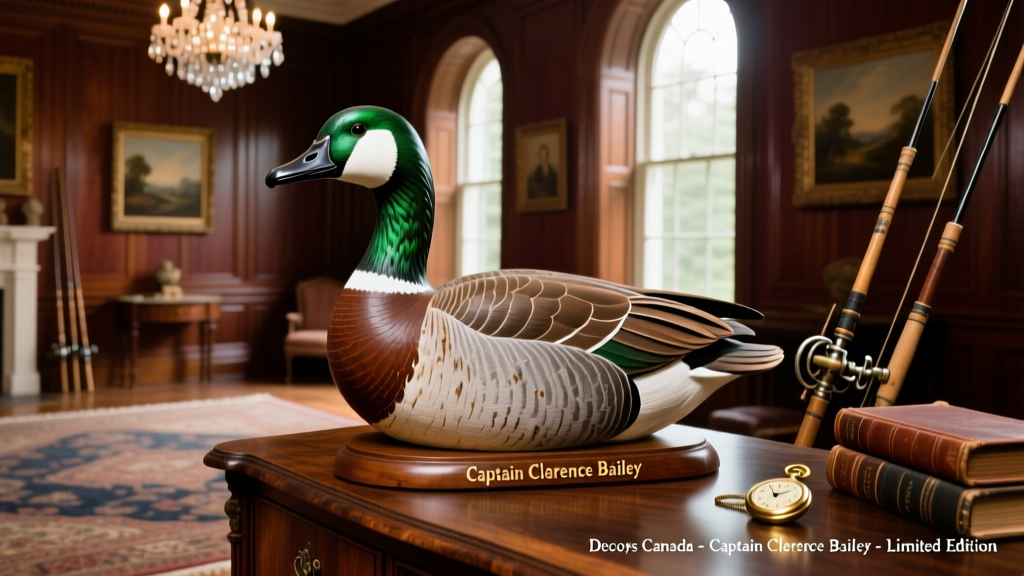
Captain Clarence Bailey’s Canada Goose Decoys: Craftsmanship, Provenance, and Market Significance
Aladdin B-77 Tall Lincoln Drape Lamp with Ruby Burner: A Technical and Historical Deep Dive
E. L. Bailey: The Forgotten American Craftsmen Behind Mid-Century Modern Oak Furniture
Hall China Tomorrow’s Classic Platter: Oval Fantasy Lug Handle Large — A Zeisel Masterpiece in Mid-Century American Ceramics
H. J. Webb & Co.: The Forgotten American Cabinetmakers of the Golden Age of Mission Furniture
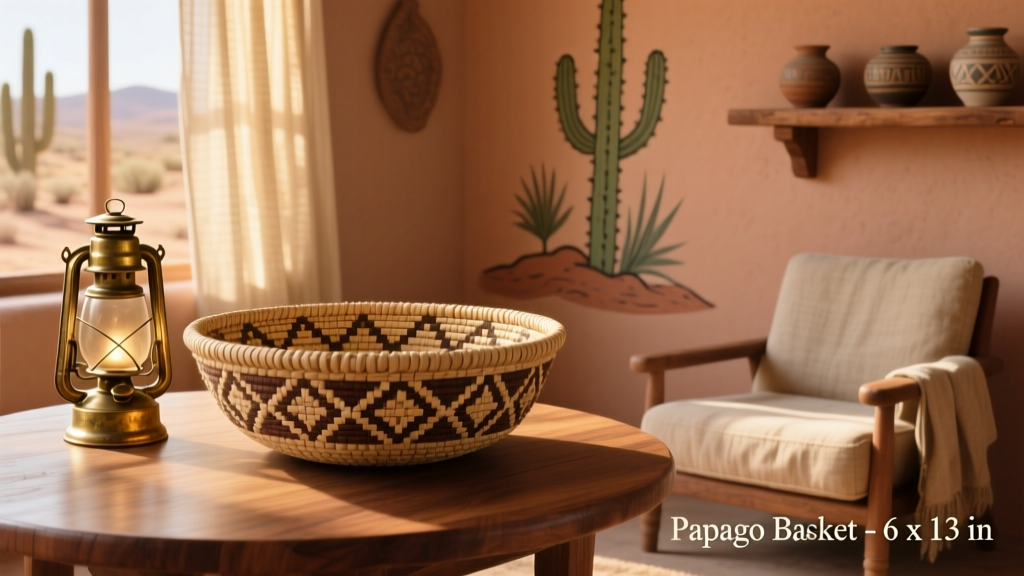
The Papago Basket Bowl: Martynia Cactus, Yucca, and Geometric Fret Design in a 6 × 13 Inch Masterpiece
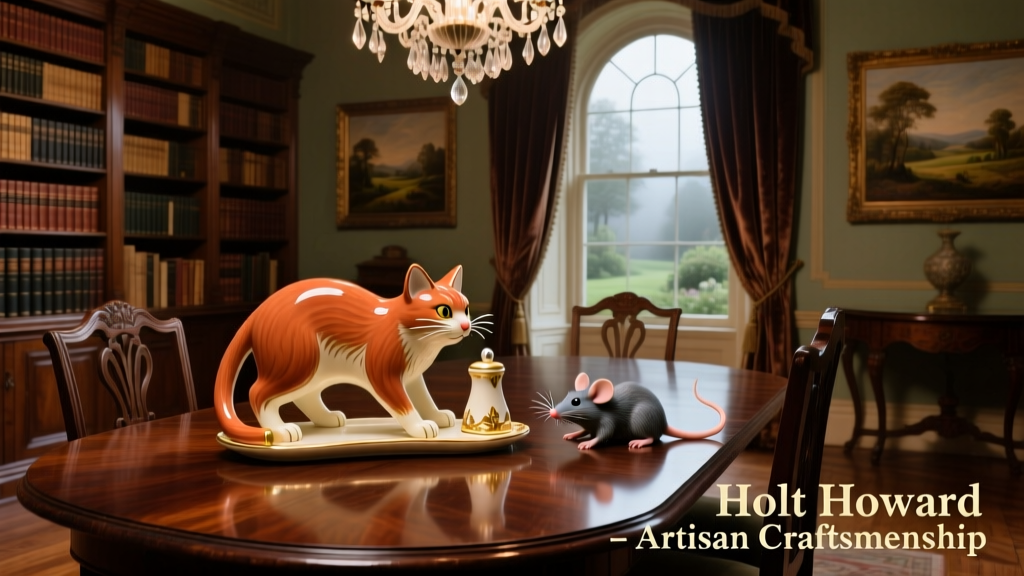
Holt Howard Salt & Pepper Shakers: The Iconic Cat-and-Mouse Ceramic Duo of Mid-Century America
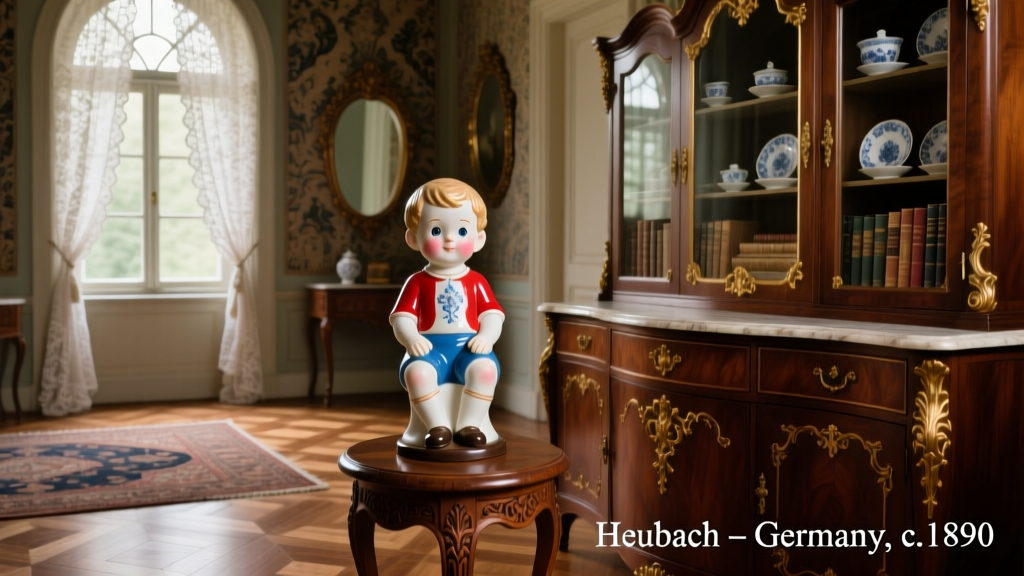
Heubach Figurine: Boy Sitting in Red, White & Blue — A Detailed Study of the 3-Inch Bisque Portrait