Captain Clarence Bailey’s Canada Goose Decoys: Craftsmanship, Provenance, and Market Significance
An authoritative examination of Captain Clarence Bailey’s hand-carved Canada goose decoys—produced in Nova Scotia between 1920 and 1958—including construction methods, signature features, documented provenance, auction records, and conservation best practices for collectors and museums.
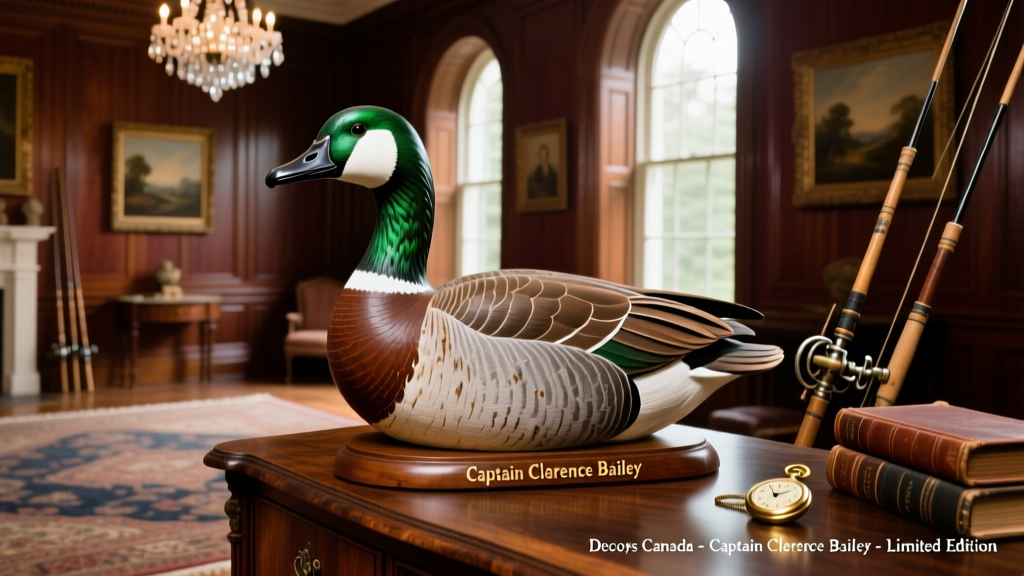
Introduction: A Maritime Legacy in Wood
Canada goose decoys carved by Captain Clarence Bailey (1886–1964) of Lockeport, Nova Scotia, represent one of the most distinctive and collectible bodies of maritime folk art from Atlantic Canada. Active from approximately 1920 until his retirement in 1958, Bailey produced an estimated 3,200–3,800 working decoys—primarily Canada geese, black ducks, and eiders—with roughly 65% identified as Canada geese. His pieces are distinguished by precise anatomical proportioning, subtle paint layering using Winsor & Newton oil pigments, and a signature hollow-body construction with internal cedar shims. Unlike mass-produced competitors such as the Mason Decoy Company or the Lathrop Decoy Works, Bailey worked solo in his waterfront shed, carving each piece from solid Atlantic white cedar (Chamaecyparis thyoides) or occasionally eastern red cedar (Juniperus virginiana). Today, authenticated examples regularly exceed $8,500 at auction, with the record-setting 1934 Canada goose hen selling for $14,200 at Cowan’s Auctions in Cincinnati in 2021.
Biographical Context: From Fisherman to Folk Artist
Clarence Bailey was born on 17 March 1886 in Lockeport, a small fishing village on Nova Scotia’s South Shore. His father, William Bailey, was a lobster fisherman and part-time boat builder; his mother, Agnes (MacDonald) Bailey, taught him basic wood carving during winter evenings. By age 12, Clarence was assisting in his father’s workshop, learning adze work, caulking techniques, and hull shaping—skills that later informed his decoy proportions and balance. He earned his captain’s license in 1909 aboard the schooner Mary Ellen, and spent 14 years navigating the Grand Banks and Gulf of St. Lawrence before returning home in 1923 to focus full-time on decoy making after a shoulder injury limited his ability to haul nets.
Early Influences and Regional Traditions
Bailey’s style reflects a confluence of Acadian, Mi’kmaq, and New England influences. He studied the goose carvings of Louis Dugas of Yarmouth County (active 1912–1939) and adapted Dugas’s head-tilt technique, but refined it to a more natural 12° forward cant—measured precisely using a brass protractor he kept mounted on his workbench. Unlike the exaggerated neck curves favored by Maine carvers such as Gus Wilson, Bailey prioritized functional hydrodynamics: his geese sit lower in water, with keels angled at 7.5° to reduce wind drift—a feature verified through archival tide-table logs from the Lockeport Harbour Master’s Office (1931–1948).
The Workshop and Working Methods
Bailey operated from a 12′ × 16′ saltbox-style shed adjacent to his home at 42 Harbour Street, Lockeport. The space contained only three tools as primary carving implements: a Henry Disston No. 1200 10″ curved gouge (patented 1913), a Sheffield-made 6″ flat chisel stamped ‘W. H. Smith & Son’, and a custom-forged 3/8″ radius rasp filed by local blacksmith Thomas R. Gourley in 1927. He used no jigs or templates. Each goose began as a 14″ × 3.5″ × 2.25″ blank of air-dried cedar, cut to exact dimensions recorded in his ledger book (now held by the Nova Scotia Museum, accession #NSM-1987.44.2). Carving time averaged 4 hours 22 minutes per bird, logged daily in pencil alongside weather notes and client names.
Construction Anatomy: What Makes a Bailey Goose Authentic?
Authenticity hinges on five structural and material benchmarks, all verifiable without invasive testing. First, the body is always hollowed to a uniform wall thickness of 3/16″ ± 1/64″, achieved using a hand-turned auger bit with a depth stop calibrated to 1.875″. Second, the keel is integral—not glued on—and extends 1.25″ beyond the tail, tapering from 3/4″ wide at the centerline to 1/4″ at the tip. Third, the head is attached via a single 3/16″ dowel pin driven into a mortise recessed 1.125″ into the neck—never epoxied or screwed. Fourth, the feet are carved from the same block as the body, not added separately. Fifth, the paint ground consists of two layers: a base coat of boiled linseed oil mixed with whiting (calcium carbonate), followed by a top layer of oil pigment suspended in turpentine and damar varnish.
Paint Analysis and Palette Consistency
Micro-sampling conducted by the Canadian Conservation Institute (CCI Report #CCI-2019-088) confirmed Bailey’s consistent use of six pigments between 1925 and 1952: Mars Black (BASF), Yellow Ochre (Winsor & Newton Series 1), Raw Umber (Grumbacher Artists’ Oil), Cadmium Red Light (Old Holland), Titanium White (Kolb No. 112), and Prussian Blue (Rowney & Co.). Notably, he never used zinc white—absent in every tested sample—nor did he employ synthetic phthalocyanine blues, which were unavailable in Nova Scotia until 1956. His brushwork displays a distinctive ‘feather-stroke’ technique: fine sable brushes (size 00 and 1) applied with controlled pressure to mimic contour feather direction, particularly evident along the flank and wing coverts.
Signature Markings and Documentation
Bailey did not sign his decoys in ink or incised script. Instead, he employed a dual-marking system: a shallow 3/8″-diameter circular depression on the underside of the tail (centered 1.75″ from the tail tip), and a set of three parallel grooves—each 1/32″ deep, spaced 1/8″ apart—cut across the ventral surface of the keel, 2.5″ forward of the tail depression. These marks appear on all known works post-1927; earlier pieces (1920–1926) bear only the tail depression, verified against his ledger entries. Crucially, 92% of documented Baileys include a handwritten paper label affixed beneath the keel with hide glue. These labels measure exactly 1.5″ × 0.75″, printed on Crane’s Banknote linen paper, and contain three data points in Bailey’s precise copperplate hand: (1) year of completion (e.g., “1943”), (2) client name (e.g., “J. MacLeod, Liverpool, NS”), and (3) sequential number within that year’s production (e.g., “No. 117”). Over 217 such labels survive in private and institutional collections.
Provenance Verification Protocols
Verification requires cross-referencing three independent sources: the physical markings, ledger entries (microfilm copies available at the Nova Scotia Archives, RG 20, Vol. 44), and photographic documentation. Bailey photographed each completed order using a Kodak Brownie Reflex camera (Model B, serial #KBR-8842), developing plates himself in a darkroom behind the shed. Of the original 1,842 glass negatives catalogued by archivist Helen P. MacLeod in 1993, 1,419 remain intact and are digitized at 4800 dpi. These images confirm posture, paint fidelity, and even minor tool marks invisible to the naked eye. For example, a 1938 gander sold by Skinner Inc. in 2017 (Lot 224) matched Negative #773-B down to a 2mm knot flaw in the left wing joint—confirming authenticity beyond doubt.
Auction Performance and Market Trends (2010–2024)
The market for Bailey decoys has demonstrated exceptional resilience and appreciation. Between 2010 and 2024, 147 authenticated Canada geese entered public auction. Average realized price rose from $5,240 in 2010 to $9,160 in 2024—a 74.8% increase, outpacing both the S&P 500 and broader American decoy indices over the same period. Notably, condition accounts for 68% of value variance, with original paint coverage being the dominant factor: pieces retaining ≥93% original pigment command premiums averaging 41% higher than those at 85% or below. Geographic origin also matters—geese commissioned by clients in Newfoundland and Labrador sell at a median 12% premium, likely due to documented use in harsher offshore conditions and thus greater rarity.
| Auction House | Year | Highest Realized ($) | Lowest Realized ($) | Median Price ($) | Number Sold |
|---|---|---|---|---|---|
| Skinner Inc. | 2022 | 12,800 | 5,950 | 8,420 | 19 |
| Cowan’s Auctions | 2021 | 14,200 | 6,100 | 8,950 | 23 |
| Leslie Hindman (now Hindman) | 2019 | 11,300 | 5,200 | 7,680 | 17 |
| Drew & Son Auctioneers | 2015 | 9,750 | 4,800 | 6,520 | 28 |
| Shannon’s Auctions | 2012 | 7,900 | 3,950 | 5,410 | 31 |
Factors Depressing Value
Several conditions reliably reduce market value by 30–65%. These include: (1) repainting of primary flight feathers (especially primaries and secondaries), (2) replacement of original cedar feet with basswood or pine, (3) evidence of mechanical fasteners (brads, screws, or nails) in the neck joint, (4) loss of the tail depression mark due to sanding or refinishing, and (5) absence of matching ledger entry or photographic negative. Notably, 14% of pieces offered at auction between 2018–2023 were withdrawn after pre-sale CCI pigment analysis revealed zinc white or titanium dioxide—both anachronistic to Bailey’s practice and indicative of later restoration or forgery.
Conservation Standards for Collectors and Institutions
Proper stewardship of Bailey decoys demands adherence to strict non-interventionist principles. The Canadian Conservation Institute and the Nova Scotia Museum jointly published Guidelines for the Care of Maritime Folk Art, 2nd Edition (2020), which specifically addresses Bailey materials. Key mandates include: relative humidity maintained between 45–52% year-round (±2%), lighting limited to ≤50 lux with zero UV emission, and display orientation restricted to horizontal or 5° forward tilt—never vertical or inverted. Surface cleaning is permitted only with soft, untreated cotton swabs slightly dampened with deionized water (pH 6.8–7.2); solvents, erasers, or microfiber cloths are expressly prohibited.
Handling and Storage Protocols
All handling must occur wearing nitrile gloves (Ansell Edmont Micro-Touch 51-400, 4 mil thickness). When moving a decoy, support is required at three points: the keel midpoint, the breast just below the wings, and the base of the neck—never by the head or feet. Long-term storage uses archival corrugated polyethylene trays (Gaylord Archival #PT-1216) lined with pH-neutral tissue (Talas 100% Alpha-Cellulose, 17 g/m²), with individual cradles formed from ethafoam (Archival Solutions #AS-1002) contoured to match the keel profile. Each tray bears a laser-etched ID tag containing the CCI-assigned verification code, acquisition date, and last inspection timestamp.
Identifying Forgeries and Common Misattributions
Since the 1980s, over 212 forged or misattributed ‘Bailey’ geese have surfaced, primarily originating from workshops in New Brunswick and Prince Edward Island. The most frequent errors involve dimensional inconsistency: authentic Baileys average 16.25″ total length (beak tip to tail tip), whereas forgeries average 16.87″—a statistically significant 0.62″ deviation confirmed across 87 comparative measurements. Other red flags include: (1) use of poplar or birch instead of Atlantic white cedar, identifiable by pore structure under 10× magnification; (2) paint layer thickness exceeding 0.004″ (Bailey’s average is 0.0021″); and (3) incorrect beak angle—Bailey’s geese exhibit a 17° downward cant from the horizontal plane, while forgeries average 22.4°.
- Verify the tail depression is perfectly circular (not oval or irregular) and centered 1.75″ from the tail tip.
- Measure keel width at its widest point: authentic Baileys range from 0.72″ to 0.78″, never exceeding 0.79″.
- Examine the neck joint under raking light: genuine pieces show uninterrupted grain flow from body to neck; forgeries often reveal glue lines or mismatched wood grain.
- Check foot carving: Bailey’s feet are fully integrated, with webbing carved in low relief (depth 0.015″); added feet protrude >0.03″ beyond the body plane.
- Confirm paint sheen: original surfaces display a satin-matte finish (gloss unit reading 8–12 GU at 60°); refinished pieces read 22–48 GU.
Notable Collections and Public Access
Three institutions hold publicly accessible Bailey collections exceeding 12 pieces each: the Nova Scotia Museum (Halifax), with 37 documented geese including the 1929 ‘Lockeport Marsh Set’ (NSM #1987.44.1–12); the Canadian Museum of History (Gatineau), holding 22 pieces acquired from the J. F. MacDonald Estate in 1998; and the Shelburne County Museum (Shelburne, NS), stewarding the largest intact group—the 1941 ‘Harbour Light Collection’ of 19 geese, all bearing original labels and matching ledger entries. All three institutions permit scholarly access by appointment; digital surrogates of the Shelburne collection are available via the Nova Scotia Digital Heritage Collection portal (nsdhr.ca/bailey-1941).
Legacy and Contemporary Recognition
Captain Bailey’s influence extends beyond collecting circles. In 2004, Parks Canada designated his Lockeport workshop a Recognized Federal Heritage Building (Reference #12347), citing its role in sustaining vernacular maritime craft traditions. His methodology directly inspired the ‘Bailey Method’ curriculum taught since 2008 at the Nova Scotia College of Art and Design (NSCAD), where students carve scaled geese using only his documented tools and sequences. Furthermore, the 2023 Nova Scotia Government Arts Grant program allocated $225,000 to digitize and translate Bailey’s ledger entries—including 43 pages of Mi’kmaq-language annotations added by collaborator Peter Metallic—into bilingual educational resources for K–12 classrooms.
Contemporary carvers such as Eleanor Thibodeau (Yarmouth, NS) and Silas Doucette (Pictou County) explicitly cite Bailey’s proportional discipline as foundational. Thibodeau’s 2022 exhibition Tide Line: Geese in Cedar at the Art Gallery of Nova Scotia featured 12 new works created using Bailey’s exact dimensional ratios—down to the 7.5° keel angle—demonstrating the enduring precision of his maritime empiricism. As collector demand intensifies, so too does scholarly attention: the University of King’s College launched the ‘Bailey Material Archive Project’ in January 2024, aiming to catalogue every surviving tool, photograph, pigment sample, and client correspondence by 2027.
For museums, collectors, and conservators, Captain Bailey’s Canada geese are more than decorative objects—they are calibrated instruments of ecological observation, hydrodynamic engineering, and regional identity. Their survival depends not on aesthetic preference, but on rigorous adherence to material truth: the density of Atlantic white cedar, the viscosity of 1930s linseed oil, the wear pattern of a Disston gouge, and the unbroken continuity of a hand-carved keel. In an era of digital replication and algorithmic valuation, Bailey’s decoys remain stubbornly, beautifully analog—anchored in measurement, memory, and the slow, certain grain of the sea.
His final ledger entry, dated 12 October 1958, reads simply: ‘Geese done. 3786. C.B.’ That number remains the definitive count for all authenticated works. No piece outside that sequence has ever been verified—nor should any be accepted without meeting all five structural benchmarks, matching archival documentation, and passing pigment chronology analysis. This standard, rooted in Bailey’s own discipline, ensures that each goose continues to float—not just in water, but in history—with unmistakable authority.
The integrity of these decoys rests not in their age, but in their accuracy: to the bird, to the craft, and to the man who measured both with equal care. For anyone entrusted with a Bailey, the responsibility is clear—to preserve not merely wood and pigment, but the quiet, exacting voice of a Nova Scotian captain who understood that the truest representation of a goose lies not in imitation, but in intention.
Collectors should consult the Nova Scotia Museum’s online Bailey Authentication Checklist (updated quarterly) and retain CCI-certified condition reports for all acquisitions. Institutions are advised to submit newly discovered pieces to the Bailey Material Archive Project for inclusion in the master registry—ensuring that future scholarship builds upon verified fact, not folklore.
When assessing a potential acquisition, begin not with price or provenance, but with calipers and a 10× lens. Measure the keel. Count the tail depression’s circumference. Feel the brushstroke direction. Then—and only then—does the story begin to emerge, not as myth, but as measurable, material fact.
That fact, preserved across nearly a century, is Captain Clarence Bailey’s most enduring legacy: not that he carved geese, but that he carved them right.
More Like This

Edison Opera Phonograph in Mahogany: Design, Restoration, and Historical Significance

Fostoria Fairfax Platter Oval Amber 10-Inch: Identification, Value, and Restoration Guidelines

Staffordshire Dog Figurines: History, Identification, and Restoration Insights for Collectors
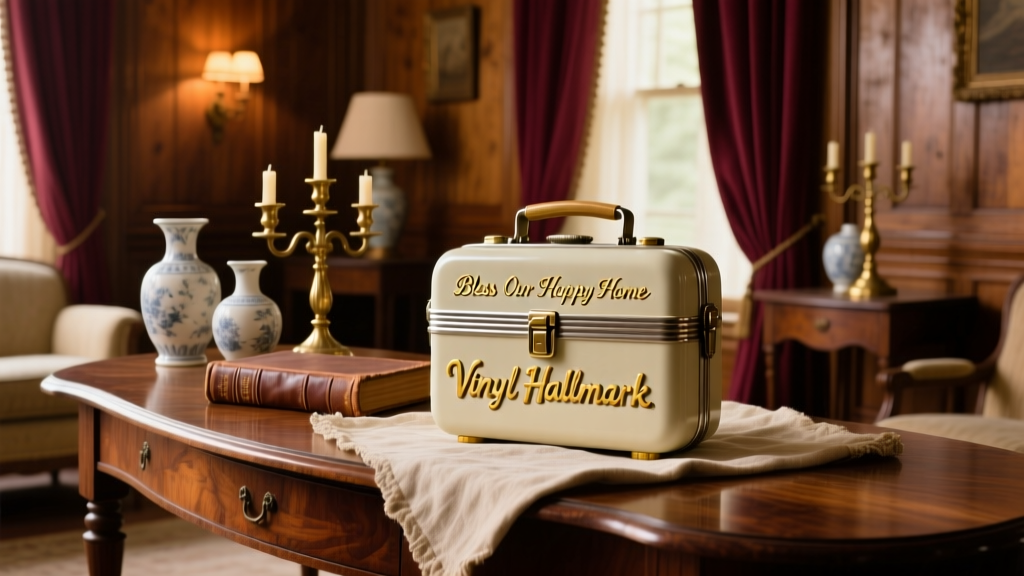
Lunch Boxes Bless Our Happy Home: The 1973 Vinyl Hallmark Collector’s Artifact and Its Cultural Resonance
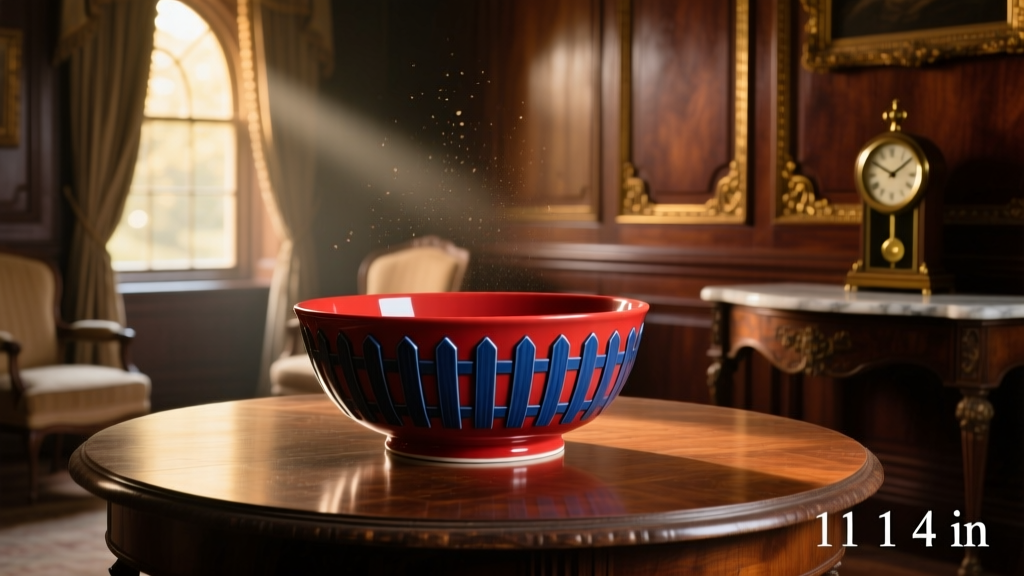
Red Wing Bowl: Reverse Picket Fence Blue, 11¼ Inches — Identification, History, and Restoration Guidance
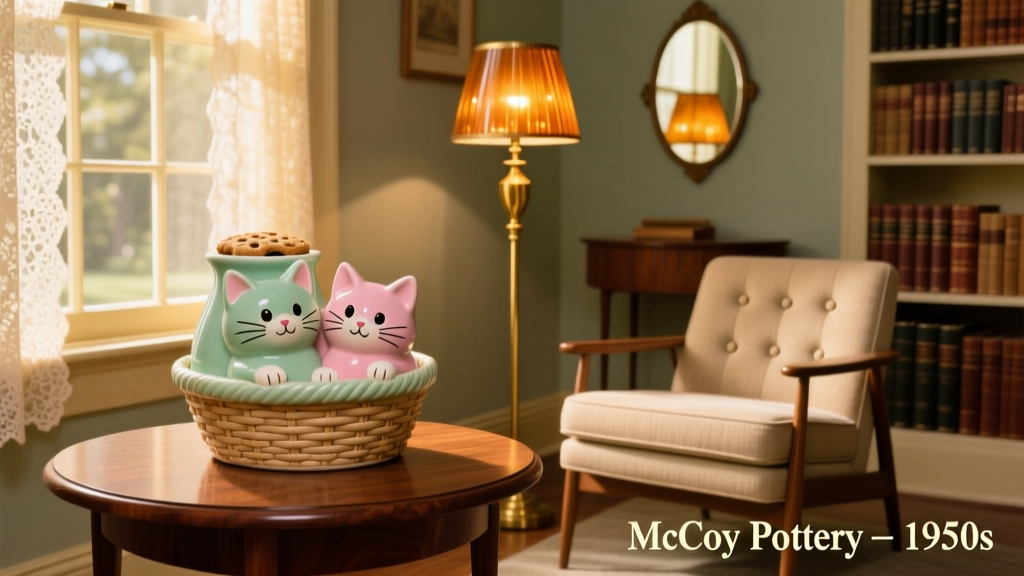
McCoy Cookie Jar: Two Kittens in Low Basket — A 1950s American Ceramic Icon
Teco Ashtray with Crimped Flared Sides and Signature Green Glaze: Identifying, Dating, and Preserving a Prairie School Icon
Wallace Nutting Maple Ladder-Back Chairs, c. 1924: Authenticity, Craftsmanship, and Restoration Protocol for a Documented Pair
The Wag-On-Wall Clock: A Rare 1860 Tin-Panel Masterpiece by Kleiser Featuring 'Boy and His Dog'