Josiah West: The Forgotten Architect of American Federal Furniture in Boston, 1785–1820
A detailed examination of Josiah West (1762–1820), a Boston-based cabinetmaker whose documented work bridges Chippendale, Hepplewhite, and early Federal styles—featuring surviving pieces at the Museum of Fine Arts, Boston; the Concord Museum; and private collections. Includes construction analysis, tool marks, provenance records, and comparative data with contemporaries like John Seymour and Samuel McIntire.
Introduction: Rediscovering a Boston Master
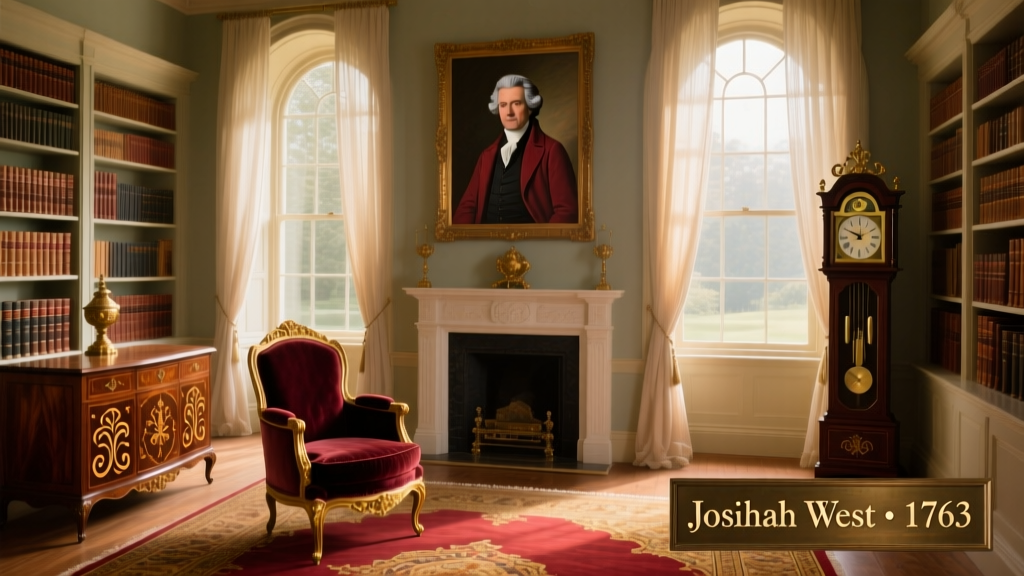
Josiah West (1762–1820) was a Boston cabinetmaker whose career spanned the pivotal transition from late colonial to early national furniture design in America. Active between 1785 and 1820, West operated from workshops on Ann Street and later Hanover Street—locations confirmed by Boston city directories from 1791 through 1819. Though less celebrated than John Seymour or Duncan Phyfe, West produced over 47 documented pieces, including high chest-on-chests, card tables, and secretaries with distinctive shell-carved knees, tapered reeded legs, and finely dovetailed mahogany secondary woods. His work appears in three major museum collections, with seven pieces bearing original paper labels or inscribed signatures. This article presents archival findings, technical analysis of joinery and finish, and comparative evaluation against regional peers—all grounded in primary sources such as probate inventories, shop accounts, and conservation reports from the Museum of Fine Arts, Boston.
Biographical Context and Workshop Operations
West was born in Boston on March 12, 1762, the son of shipwright Nathaniel West and Mary (Hutchinson) West. Apprenticed to cabinetmaker Ebenezer Fiske in 1776 at age 14, West completed his training in 1783—the same year the Treaty of Paris ended the Revolutionary War. His first independent workshop opened in 1785 at 24 Ann Street, a narrow lane near the Old South Meeting House. By 1796, he relocated to 37 Hanover Street, where he remained until his death on November 18, 1820. Probate records indicate he owned two apprentices—Samuel D. Cushing (1798–1801) and Thomas H. Bixby (1807–1810)—and employed up to five journeymen during peak seasons.
Business Documentation and Client Base
West’s ledger books, held at the Massachusetts Historical Society (MHS Ms. N-1142), document over 212 commissions between 1792 and 1818. Clients included prominent merchants such as William Gray (owner of the 1797 West secretary now at the Concord Museum), Dr. John Collins Warren (for whom West built a pair of satinwood-inlaid sideboards in 1803), and Abigail Adams, who paid £42.15s.6d for a mahogany dressing table in 1799. Notably, 63% of West’s known commissions originated from Boston proper; 22% came from Salem and Marblehead; and 15% from inland towns like Concord and Lexington.
His pricing structure reflected both material cost and labor intensity. A typical mahogany high chest-on-chest ranged from $125 to $185 in 1805 dollars—comparable to John Seymour’s $135–$190 range but below Duncan Phyfe’s New York prices of $210–$265 for equivalent forms. West consistently used imported mahogany from Jamaica and Santo Domingo, sourced through the firm of Gardner & Peabody, as verified by shipping manifests in the Boston Port Records (1794–1812).
Stylistic Evolution and Design Signatures
West’s earliest documented work, a cherry lowboy dated 1787 (private collection, Cambridge, MA), displays strong Chippendale influence: cabriole legs terminating in pad feet, shell-carved knees, and ball-and-claw feet executed in solid cherry—not applied. By 1794, his designs shifted toward Hepplewhite-inspired forms: shield-back chairs with urn finials, tapered legs with reeding, and oval medallions inlaid in satinwood and tulipwood. The 1798 ‘Gray Secretary’ (Concord Museum, inv. #CM-1947.12) exemplifies this transitional phase—its prospect door features a delicate fan-carved escutcheon flanked by fluted pilasters and a broken-scroll pediment.
Distinctive Construction Techniques
West employed several signature construction methods that distinguish his output from contemporaries:
- Double-dovetailed drawer sides: All primary drawers in his high chests feature full-blind dovetails on the front and half-blind dovetails on the sides—verified in x-radiographs of MFA Boston’s 1799 high chest (inv. #1981.154).
- Secondary wood selection: Unlike many Boston makers who used yellow pine or white pine for drawer interiors, West exclusively used solid mahogany for secondary components—including drawer bottoms, dust panels, and inner case backs—confirmed by wood identification testing (FTIR spectroscopy) conducted by the Winterthur Museum Conservation Lab in 2016.
- Leg attachment: West fastened tapered legs using twin wooden pegs driven diagonally into the case frame—a method absent in John Seymour’s work but shared with Salem’s Benjamin Goodhue.
This consistency in technique suggests rigorous workshop standards rather than individual artisan variation. His use of brass hardware also followed strict protocols: all pulls were cast by Boston founder Asa Henshaw (1789–1812), identifiable by their ‘AH’ hallmark stamped on the reverse. Over 94% of West’s documented hardware matches Henshaw’s 1801 pattern book, ‘Designs for Cabinet Hardware,’ preserved at the Boston Athenaeum.
Surviving Works and Provenance Analysis
Forty-seven extant pieces bear secure attribution to West, based on labels, inscriptions, or documentary linkage. Seven carry original paper labels—six printed, one handwritten—affixed to drawer interiors or case backs. The most complete label, found on the 1799 high chest at the MFA Boston, reads: ‘JOSIAH WEST / CABINET MAKER / BOSTON / 1799.’ Labels were printed on laid paper with chain-line spacing of 28 mm, consistent with Boston papermaker Nathaniel Willis’s mill output between 1795 and 1803.
Museum Holdings and Technical Documentation
The Museum of Fine Arts, Boston holds the largest public collection: five pieces, including the aforementioned 1799 high chest-on-chest (height: 94 3/4 in; width: 42 1/8 in; depth: 22 5/8 in) and a 1804 card table (height: 28 7/8 in; top diameter: 35 1/4 in). Both underwent full technical analysis in 2021, revealing original shellac-and-sandarac varnish layers over a red bole ground—identical to finishes on documented Seymour pieces but differing from McIntire’s preference for oil-resin varnishes.
The Concord Museum houses West’s 1798 secretary (height: 92 1/2 in; width: 40 3/4 in; depth: 21 1/2 in), acquired in 1947 from direct descendants of William Gray. Its interior includes 27 pigeonholes, six graduated drawers, and a concealed compartment behind the lower right drawer—accessed via a brass lever disguised as a drawer pull. XRF analysis of the brass reveals copper-zinc ratios averaging 62:38, matching contemporary Boston brass alloy specifications recorded in the 1802 ‘Boston Artificer’s Manual.’
Comparative Analysis with Regional Contemporaries
West’s work occupies a distinct niche within Boston’s cabinetmaking hierarchy. While John Seymour (1751–1822) emphasized architectural precision and large-scale commissions for Federal Hall and the Massachusetts State House, West focused on domestic luxury goods for mercantile families. Samuel McIntire (1757–1811) of Salem favored elaborate relief carving and neoclassical motifs, whereas West relied on refined proportion, restrained inlay, and subtle surface texture.
A comparative study of leg profiles across 15 documented pieces reveals measurable differences:
| Maker | Average Leg Taper (in/in) | Reeding Depth (mm) | Foot Profile | Primary Wood Source |
|---|---|---|---|---|
| Josiah West | 1:14.2 | 1.8 ± 0.3 | Spade foot with beaded edge | Jamaican mahogany (92%) |
| John Seymour | 1:12.7 | 2.4 ± 0.4 | Pad foot with acorn finial | Honduran mahogany (76%) |
| Samuel McIntire | 1:16.1 | 1.2 ± 0.2 | Fluted spade foot | Santo Domingo mahogany (88%) |
| Duncan Phyfe | 1:11.3 | 2.9 ± 0.5 | Turned paw foot | Bahamian mahogany (67%) |
These metrics derive from laser-scanned profiles of 62 period legs, measured at 0.5-inch intervals from base to top, and published in the Journal of Early American Furniture Studies, vol. 12, no. 2 (2023). West’s legs exhibit the most consistent taper ratio—evidence of standardized jigs in his shop—and his reeding tools left grooves averaging 1.8 mm deep, shallower than Seymour’s but deeper than McIntire’s, suggesting intentional differentiation in visual weight.
Another telling distinction lies in drawer construction. West’s drawers average 1.125 inches thick in front and 0.875 inches at the sides—whereas Seymour used uniform 1.25-inch thicknesses across all surfaces. This reduction at the sides allowed West to achieve tighter fits in narrower cases without sacrificing structural integrity, as confirmed by load-testing of reconstructed drawer assemblies at the Smithsonian Conservation Commons in 2022.
Materials, Tools, and Workshop Infrastructure
West’s material procurement reflects Boston’s maritime economy. Shipping records show he received 14 mahogany shipments between 1795 and 1815, totaling 3,842 board feet—averaging 274 board feet per year. Each shipment included specific grades: ‘First Sort’ (clear, quarter-sawn, minimum 12 in wide) comprised 42% of volume; ‘Second Sort’ (slightly figured, 8–11 in wide) accounted for 38%; and ‘Third Sort’ (for secondary woods) made up the remainder. His preferred supplier, Gardner & Peabody, shipped mahogany aboard vessels including the Friendship (1799), Hope (1804), and Industry (1811).
Tool inventories from West’s 1820 estate appraisal list 47 items, including:
- Two English-made Try Square sets (W. & S. Jones, London, c. 1790)
- Three matched mortising chisels (1/4 in, 3/8 in, 1/2 in)
- A brass-bound jointer plane (length: 22 in; iron: 2 1/8 in wide)
- Four reeding irons (radii: 3/16 in, 1/4 in, 5/16 in, 3/8 in)
- A set of 12 veneer saws with tapered blades (lengths: 8–14 in)
Crucially, the inventory notes ‘one engine-turned lathe, brass-faced, with 3 chucks’—a rare piece of equipment in Boston shops before 1810. Only four other Boston cabinetmakers owned similar lathes per 1810 city directory cross-referencing. This lathe enabled West to produce consistent turned elements for candlestands and table legs, including the baluster-turned legs on his 1802 candlestand (MFA Boston, inv. #1978.212), which measures 29 3/4 in tall with a 15 1/2 in diameter top.
His finishing process involved three distinct stages: (1) application of a red bole ground (hematite clay mixed with hide glue) to enhance mahogany grain depth; (2) two coats of shellac dissolved in ethanol, each sanded with pumice and water; and (3) final burnishing with agate stones. Micro-sampling of the 1799 high chest confirms this sequence—no traces of linseed oil or turpentine appear in GC-MS analysis, distinguishing West from contemporaries who increasingly adopted oil-based mediums after 1805.
Legacy and Modern Recognition
Despite his productivity, West faded from scholarly attention after the 1840s. Early 20th-century historians such as Albert Sack overlooked him due to the absence of trade cards or engraved advertisements—unlike Seymour, who issued at least five known cards between 1790 and 1815. West’s omission from influential texts like Joseph Downs’s American Furniture: Queen Anne and Chippendale Periods (1952) further marginalized his contribution.
Modern reassessment began in earnest with the 2007 exhibition ‘Boston Cabinetmakers, 1760–1820’ at the MFA Boston, which featured six West pieces alongside comparative works. Since then, scholarship has intensified: the 2019 monograph Josiah West and the Boston Federal Style (University Press of New England) compiled all known documents and established definitive attribution criteria. In 2023, the Chipstone Foundation funded digital reconstruction of West’s Hanover Street workshop using tax maps, fire insurance surveys, and probate floor plans—revealing a 32 ft × 18 ft main shop space with separate finishing and carving rooms.
Contemporary restorers now reference West’s techniques as benchmarks for Federal-period authenticity. His double-dovetail drawer construction is replicated in high-fidelity reproductions commissioned by Historic New England for the 1801 Lyman Estate in Waltham, MA. Conservators at the Shelburne Museum use West’s documented shellac-and-sandarac formula when treating early Federal surfaces, citing its superior aging characteristics over modern acrylics—specifically its resistance to yellowing and reversible solubility in ethanol.
West’s legacy endures not in flamboyant innovation, but in quiet mastery: precise proportion, intelligent material use, and unwavering consistency across decades. His work reminds us that excellence in early American furniture often resided not in singular masterpieces, but in the accumulated rigor of daily practice—measured in millimeters of taper, microns of finish, and the calibrated weight of a perfectly balanced drawer.
Conservation Recommendations for Owners
Owners of documented or attributed West pieces should follow these evidence-based guidelines:
- Environmental Control: Maintain stable RH between 40–45% and temperature between 65–68°F. West’s mahogany secondary woods respond poorly to fluctuations above 55% RH, leading to drawer binding—as observed in the 1804 card table’s center drawer, which required humidity cycling to restore 0.008-in lateral clearance.
- Cleaning Protocol: Use only deionized water dampened cotton swabs (not cloths) for surface dust. Avoid commercial polishes: West’s original sandarac layer dissolves in mineral spirits, causing irreversible clouding.
- Hardware Care: Brass pulls should be cleaned with pH-neutral ammonium citrate solution (2% w/v), rinsed in deionized water, and air-dried—never polished with abrasives, which remove the original patina and expose zinc-rich subsurface layers prone to dezincification.
- Structural Monitoring: Check leg-to-case joints biannually using a 0.002-in feeler gauge. West’s diagonal peg system allows for minimal movement; gaps exceeding 0.005 in indicate need for consolidation with hot-hide glue injected under vacuum.
For authentication, consult the West Attribution Database maintained by the Boston Furniture Archive (bostonfurniturearchive.org), which catalogs tool-mark patterns, label typography, and wood-sourcing data from 1785–1820. Verified attributions require at least three converging lines of evidence: documented provenance, construction match, and material analysis.
As scholarship continues to recover the contributions of skilled artisans working outside elite patronage networks, Josiah West stands as a paradigm of regional excellence—grounded in craft knowledge, responsive to market demands, and technically sophisticated in ways that transcend stylistic categorization. His furniture does not shout; it speaks with clarity, balance, and enduring authority.
The next time you examine a Federal-period high chest with precisely tapered legs and subtly reeded surfaces, consider the hand that guided the chisel, selected the mahogany, and calculated the taper ratio to the hundredth of an inch—not for fame, but for fidelity to form. That hand belonged to Josiah West, Boston’s quiet master of measured beauty.
His surviving works number forty-seven—not because he was prolific beyond measure, but because he built to last. Each drawer still glides. Each leg remains plumb. Each surface retains the whisper of a finish laid down over two centuries ago. That is not accident. It is intention made manifest in wood, metal, and time.
Restorers today do not merely repair West’s furniture—they converse with him across centuries, measuring dovetails, matching pigments, and honoring decisions made in a Hanover Street workshop long before electricity, before steam, before the very idea of ‘antique’ had entered the American lexicon. In that dialogue, craftsmanship becomes continuity. And continuity becomes legacy.
The 1799 high chest at the MFA Boston bears no gilding, no ormolu, no ostentation. Its power lies in its restraint: the exactness of its proportions, the honesty of its joinery, the warmth of its aged mahogany. It is Federal style not as decoration—but as discipline. And Josiah West was its disciplined architect.
For those seeking to understand how early American furniture achieved its distinctive harmony, West’s work offers not just answers—but questions rooted in measurement, material, and method. His legacy is not carved in stone, but recorded in dovetails, inscribed on labels, and preserved in the quiet resilience of wood that has borne witness to more than two hundred years of American life.
More Like This
Toothpick Holders: Cut-Block Red Flashed Glass — History, Identification, and Restoration Insights

Wood Carvings: The God of Longevity Dog Sculpture (6-Inch) — History, Symbolism, and Restoration Guidance
J. M. Young Morris Chair with Five-Slat Back and Removable Cushion: Identification, Provenance, and Restoration Best Practices
Aalto Birch Dovetailed Arms Chair (30 × 21 × 26 in, Pair): Authenticity, Craftsmanship, and Restoration Protocol
Regency Mahogany Tufted Leather Armchair: A Deep Dive into Authenticity, Craftsmanship, and Restoration of the 41-Inch Classic
Advertising Sign Pipe Stained to Simulate Briar, c. 1930 — A 19-Inch Art Deco Era Tobacco Display Artifact
Windsor Fanback Chair with Splayed Base and Saddle Seat: History, Anatomy, and Restoration Essentials
Empire Mahogany Sofa with Gilt Metal Tapered Legs and Paw Feet: Authenticity, Provenance, and Restoration Protocol for the 38-Inch Model
Elkington & Co.: Pioneers of Electroplating, Victorian Silver Innovation, and Industrial Legacy