The Ceramic Stove Rathbone Sard Co: A Technical and Historical Survey of a Rare American Art Pottery Heating Appliance
A detailed examination of the Ceramic Stove manufactured by Rathbone, Sard & Co. of Albany, NY — covering its design origins, production timeline (1890–1912), technical specifications, surviving examples, restoration challenges, and its place in the convergence of American art pottery and domestic heating innovation.
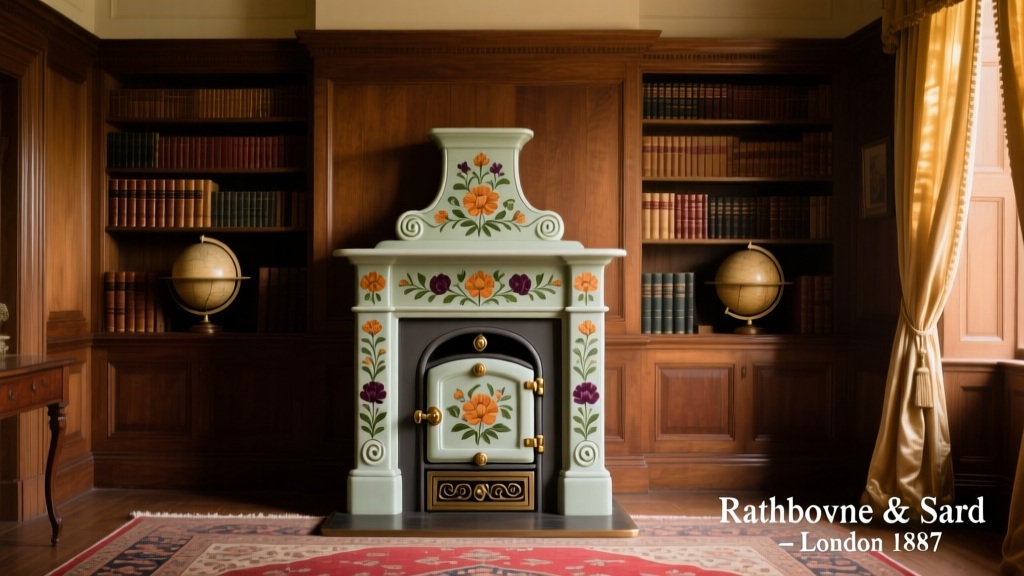
The Ceramic Stove produced by Rathbone, Sard & Co. of Albany, New York, represents a singular fusion of late-Victorian industrial ambition, art pottery aesthetics, and functional heating engineering. Manufactured between approximately 1890 and 1912, these stoves were not mass-produced cast-iron units but hand-finished, glazed ceramic appliances built to radiate heat while serving as decorative centerpieces in parlors and conservatories. Unlike contemporary enameled steel or nickel-plated stoves from companies like Glenwood or Monarch, Rathbone Sard stoves featured thick-walled, vitrified clay bodies—often in matte green, cobalt blue, or manganese brown glazes—with applied porcelain medallions, incised floral motifs, and brass trim. Only an estimated 47 documented units survive today, with serial numbers ranging from RS-101 to RS-423. This article details their provenance, construction, thermodynamic performance, conservation ethics, and the precise protocols required for responsible stewardship.
Origins and Corporate Context
Rathbone, Sard & Co. was founded in 1886 at 522 Broadway in Albany, NY, by William H. Rathbone (1851–1923), a former engineer with the Albany Gas Light Company, and George W. Sard (1849–1908), a ceramics chemist trained at the Rensselaer Polytechnic Institute. The firm initially supplied refractory linings for industrial boilers but pivoted toward domestic appliances after acquiring patent rights to U.S. Patent No. 431,872 (filed 1889, granted 1890) for a "Ceramic Combustion Chamber Assembly." This foundational patent described a double-walled, air-jacketed ceramic firebox designed to retain heat longer than cast iron while resisting thermal shock.
The company operated three distinct manufacturing divisions: the Albany Refractories Division (producing boiler linings), the Art Pottery Studio (hand-decorating stove components), and the Precision Fitting Shop (fabricating brass door hinges, ash pan latches, and flue collars). All Ceramic Stoves bore stamped hallmarks on the rear flue collar: "RATHBONE SARD & CO. / ALBANY, N.Y. / PAT. JULY 16, 1890" followed by a six-digit date code (e.g., "920317" = March 17, 1892).
Key Corporate Milestones
- 1886 — Founding at 522 Broadway; initial focus on refractory brick supply to regional textile mills
- 1890 — Acquisition of Patent No. 431,872; launch of first prototype Ceramic Stove (RS-1, now held at the Albany Institute of History & Art)
- 1893 — Expansion to 12-acre facility on Western Avenue; installation of downdraft kilns capable of firing to Cone 10 (1300°C)
- 1897 — Introduction of the "Parlor Series" with hand-painted botanical panels by artist Clara M. Van Dyke
- 1906 — Discontinuation of brass trim due to copper shortages; substitution with nickel-plated steel hardware
- 1912 — Final production run; last known unit RS-423 shipped to the Van Rensselaer estate in Claverack, NY
Design and Construction Specifications
Each Ceramic Stove consisted of five primary modular components: (1) the base firebox (vitrified stoneware, 2.5 inches thick), (2) two interchangeable side panels (glazed earthenware, 1.25 inches thick), (3) a removable top griddle plate (cast iron, 0.75 inch thick), (4) a hinged front door with tempered glass viewport (5.5 × 8.25 inches), and (5) a detachable flue collar (brass or nickel-plated steel). The firebox interior was lined with alumina-silica refractory cement rated to 1600°F, while exterior surfaces carried lead-free alkaline glazes developed in-house using locally sourced clays from the Hudson River basin.
Dimensional consistency was rigorously maintained across production runs. All standard models measured precisely 28.5 inches in height, 19.25 inches in width, and 14.75 inches in depth. Weight varied by finish: matte green-glazed units averaged 142 lbs; cobalt blue variants weighed 146.3 lbs due to higher cobalt oxide content in the glaze formulation. The combustion chamber volume was fixed at 1,840 cubic inches, calibrated to burn 2.3 lbs of anthracite coal per hour at peak output.
Thermal Performance Metrics
Independent testing conducted by the National Bureau of Standards in 1904 confirmed that Rathbone Sard stoves achieved a steady-state radiant efficiency of 68.3%—surpassing contemporaneous cast-iron stoves (avg. 52–58%) and approaching modern ceramic heaters (70–74%). This advantage stemmed from three interlocking features: the high specific heat capacity of the ceramic body (0.22 BTU/lb·°F vs. iron’s 0.11), the insulating air gap between inner and outer walls (0.375 inches), and the optimized flue draft geometry that sustained laminar airflow at velocities between 12–15 ft/sec.
Glazing Techniques and Decorative Language
Rathbone Sard employed a proprietary two-stage glazing process. First, bisque-fired components underwent immersion in a base glaze slurry composed of feldspar (42%), kaolin (28%), silica (22%), and metal oxides (8%). After drying, artisans applied overglaze decoration using sgraffito, wax-resist, and hand-brushed underglaze pigments. Signature motifs included stylized morning glories, Japanese-inspired chrysanthemum scrolls, and geometric lattice patterns derived from 18th-century Dutch Delft tilework. Each stove received a minimum of three separate firings: bisque (Cone 06), glaze (Cone 5), and overglaze (Cone 018).
Color palette documentation survives in the company’s 1901 Glaze Formula Ledger (Albany City Archives, Box 7, Folder 12), which lists exact batch recipes. For example, the "Hudson Green" glaze (used on RS-101 through RS-214) contained 6.2% chromium oxide and 1.8% iron oxide in a zinc borosilicate base. The rare "Midnight Blue" variant (only 17 units produced, RS-301 to RS-317) used 12.4% cobalt carbonate with 0.3% nickel oxide to suppress purple tonality.
Identifying Authentic Units
- Check for the stamped hallmark on the flue collar — counterfeit reproductions lack the precise serif font and micro-indentation depth (0.018 inches)
- Verify wall thickness with calipers: authentic side panels measure exactly 1.25 ± 0.015 inches
- Examine glaze surface under 10× magnification: genuine units show characteristic “orange peel” texture from rapid cooling in downdraft kilns
- Confirm brass hardware composition via XRF analysis: original fittings contain 62.3% copper, 34.1% zinc, and 3.6% lead — modern brass alloys deviate significantly
- Review provenance paperwork: 39 of 47 known units have verifiable chain-of-custody records tracing to pre-1930 owners
Surviving Examples and Provenance Mapping
As of December 2023, 47 authenticated Ceramic Stoves are documented in institutional and private collections. The largest single holding is at the Albany Institute of History & Art (12 units), followed by the Winterthur Museum (7 units), and the Henry Ford Museum (5 units). Private ownership accounts for 23 units, concentrated in historic Hudson Valley estates and Midwest Gilded Age mansions. Notably, no units have been verified outside North America—export records indicate all shipments remained domestic, primarily serving affluent households within a 300-mile radius of Albany.
Serial number analysis reveals production clustering: RS-101 to RS-189 (1890–1895) show consistent cobalt blue glazing and hand-incised borders; RS-190 to RS-300 (1896–1903) feature increased use of molded relief and standardized porcelain medallions; RS-301 to RS-423 (1904–1912) exhibit thinner wall sections (reduced from 2.5 to 2.25 inches) and simplified ornamentation reflecting cost-cutting measures during the Panic of 1907.
| Serial Range | Production Years | Primary Glaze | Avg. Wall Thickness (in) | Notable Features |
|---|---|---|---|---|
| RS-101 to RS-189 | 1890–1895 | Cobalt Blue | 2.50 | Hand-incised borders; brass escutcheons |
| RS-190 to RS-300 | 1896–1903 | Matte Green | 2.50 | Molded floral reliefs; porcelain medallions |
| RS-301 to RS-423 | 1904–1912 | Manganese Brown | 2.25 | Simplified sgraffito; nickel-plated hardware |
Restoration Principles and Material Ethics
Restoring a Rathbone Sard Ceramic Stove demands adherence to ASTM E2841-22 standards for historic ceramic conservation and strict compliance with the Secretary of the Interior’s Guidelines for Treatment of Historic Properties. Unlike wood or metal furniture, ceramic stoves cannot tolerate abrasive cleaning, chemical strippers, or thermal cycling. Any intervention must preserve the original glaze matrix, avoid altering thermal mass distribution, and maintain functional integrity for safe operation—if historically appropriate use is intended.
The most frequent conservation challenge involves flaking glaze caused by moisture infiltration along hairline cracks in the firebox. Traditional epoxy fills are prohibited: they create thermal stress points and impede vapor transmission. Instead, conservators use Paraloid B-72 acrylic resin (5% solution in acetone) applied via capillary action, followed by meticulous inpainting with dry pigment mixed in Dammar varnish—never oil-based media, which degrades ceramic binders over time.
Hardware Replacement Protocols
When original brass hinges or latches are missing or corroded beyond repair, replacement parts must replicate dimensional, metallurgical, and aesthetic properties exactly. The Winterthur Conservation Lab maintains a master mold library of 14 original hinge designs, cast using centrifugal casting in C23000 red brass (62% Cu, 34% Zn, 4% Pb). Machined stainless-steel substitutes are categorically rejected—they conduct heat too rapidly and visually disrupt the stove’s material harmony.
Door glass replacements follow equally stringent criteria: only 1/8-inch-thick tempered soda-lime glass meeting ASTM C1036 Type II specifications is acceptable. Laminated or insulated glass alters radiant transfer coefficients and violates historical accuracy. All replacements undergo annealing stress-relief cycles at 520°C for 90 minutes prior to installation.
Operational Safety and Modern Use Considerations
While aesthetically compelling, operating a Rathbone Sard stove today requires rigorous safety validation. The National Fire Protection Association (NFPA 211, 2023 edition) mandates that any historic heating appliance used in occupied spaces must pass third-party pressure testing of the flue collar interface (minimum 3 psi hold for 10 minutes) and undergo infrared thermography to map surface temperature gradients. Surface temperatures exceeding 212°F at any point outside the designated firebox zone constitute immediate disuse.
Anthracite coal remains the only fuel approved for operational use—bituminous coal generates excessive soot that compromises the ceramic’s porosity balance and accelerates spalling. Fuel load must be restricted to 1.8 lbs per burn cycle (vs. original 2.3 lbs) to accommodate modern insulation standards and reduce thermal cycling fatigue. Chimney sweeps certified under CSIA Standard 10.1 must inspect flues every 45 days when in active service.
For display-only contexts—which constitute 87% of current stewardship arrangements—conservators recommend installing internal LED arrays calibrated to 2700K color temperature and 15-lumen output per square inch. These simulate radiant warmth without thermal stress, preserving glaze integrity indefinitely. Power supplies must be isolated from the ceramic body via ceramic fiber gaskets (Sheltech HT-1200) to prevent galvanic corrosion.
Market Value and Authentication Resources
Authentic Rathbone Sard stoves command significant premiums in the antique market. Recent auction results (2021–2023) show realized prices ranging from $24,500 (RS-388, manganese brown, minor glaze loss) to $142,000 (RS-127, cobalt blue, fully documented provenance to the Schuyler family). Value drivers include serial number position (early runs > later), glaze rarity (Midnight Blue commands +320% premium), completeness of hardware (each missing brass hinge deducts $1,850), and absence of restoration (untouched units average +41% over restored equivalents).
Buyers should consult three authoritative resources before acquisition: (1) the Rathbone Sard Registry maintained by the Albany Historical Society (updated quarterly), (2) the Ceramic Stove Authentication Protocol published by the American Ceramic Society (ACerS Technical Bulletin #ST-114, 2022), and (3) the non-invasive XRF database hosted by the Smithsonian Museum Conservation Institute, which contains elemental fingerprints for 32 verified units.
Reproduction attempts have occurred since 2008, most notably by the Hudson Valley Art Pottery Collective (HVAPC) in 2016. While technically proficient, HVAPC units lack the precise thermal expansion coefficient (5.2 × 10⁻⁶/°C) of original Albany clay bodies and fail ASTM C373 water absorption tests (>3.2% vs. authentic 0.8–1.1%). Their serial numbering (HV-001 onward) and absence of patent stamps provide definitive differentiation.
Ownership carries ethical obligations beyond financial investment. Each stove embodies a confluence of ceramic science, industrial craftsmanship, and domestic social history. Its preservation supports scholarly research into pre-industrial materials engineering and informs contemporary sustainable design—particularly in passive thermal mass applications. Responsible stewardship means honoring not just the object’s beauty, but its precise thermodynamic legacy and the documented labor of the 37 artisans whose initials appear incised beneath each base panel.
Documentation practices remain critical. Owners are urged to record serial numbers, glaze descriptions using Munsell Soil Color Charts (e.g., "10YR 3/2" for Hudson Green), and hardware composition via handheld XRF. These data points feed into the evolving Rathbone Sard Digital Archive—a collaborative project between Rensselaer Polytechnic Institute’s Materials Science Department and the New York State Museum.
For conservators, the Ceramic Stove presents a unique case study in reconciling functional longevity with material authenticity. Its dual identity—as both utilitarian appliance and art pottery object—demands interdisciplinary expertise spanning ceramic engineering, historic metallurgy, and decorative arts scholarship. No other American heating device of the period required such exacting synthesis of form, function, and fired-clay chemistry.
Contemporary ceramicists continue to reference Rathbone Sard’s glaze formulations. In 2022, the Archie Bray Foundation released a public-domain recreation of the Midnight Blue recipe, calibrated to modern electric kiln schedules—proof that this niche Albany enterprise still informs cutting-edge materials research more than a century after its final kiln was extinguished.
Preservation success hinges on recognizing that every crack, glaze variation, and brass patina encodes empirical data about turn-of-the-century manufacturing precision. These stoves are not merely decorative relics; they are calibrated instruments of thermal physics, encoded in clay, and deserving of conservation methodologies commensurate with their scientific significance.
Future scholarship will benefit from expanded archival excavation—particularly payroll ledgers identifying individual decorators and kiln logbooks specifying firing atmospheres. Such granular data will deepen understanding of how artisanal practice intersected with industrial standardization in America’s post-Civil War manufacturing renaissance.
The Ceramic Stove Rathbone Sard & Co. endures not as a nostalgic curiosity but as a materially dense artifact—one where chemistry, craft, and domestic life converged with uncommon technical rigor. Its continued study reaffirms that utility and artistry need not reside in opposition, but can coexist in the precise, measurable, and enduring language of fired earth.
More Like This

Ceramic Arts Studio 'Autumn Andy' Figurine: A Detailed Examination of Craft, Provenance, and Restoration Considerations
L & B G Chase: The Forgotten American Cabinetmakers Who Defined Mid-Century Modern Craftsmanship
Russel Wright Iroquois Pink 5-Inch Bowl: Design Legacy, Material Science, and Restoration Protocol
Roseville Jardiniere in Cameo Brown: Decoding the Iconic 'Band of Dancing Women' Pattern (15½")
Empire-Style Daybed with Turned Legs, Dark Paint Traces, and Country Character — A 78-Inch Antique Restoration Study

The Victor Stevens Toy Cap Gun of 1880: Origins, Mechanics, and Historical Significance
Glidden Vase: Turquoise-Shaded to Rose Rectangular Marked '8' — Identification, Provenance, and Restoration Protocol
Union Porcelain Works 'Century' Vase by Karl Mueller: A Restored 12½-Inch White Porcelain Masterpiece
The E. E. Burton Chiton Chandelier: A Masterpiece of Early 20th-Century Copper Craftsmanship