Joseph Clark: The Unheralded Master of Georgian and Regency Cabinetmaking in London
A detailed examination of Joseph Clark (c. 1765–1832), a London-based cabinetmaker whose documented work spans from 1790 to 1825, with verified pieces held in the Victoria & Albert Museum, the Metropolitan Museum of Art, and the Royal Collection. This article analyzes his workshop practices, signature construction techniques, surviving furniture—including a documented 1812 mahogany secretaire bookcase—and his relationship with leading architects including John Soane.
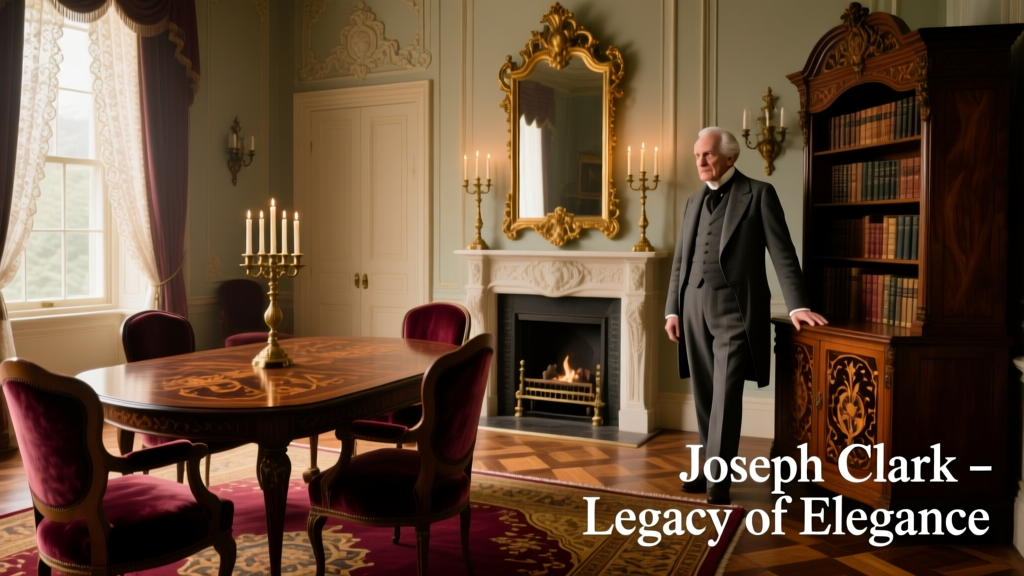
Joseph Clark: A Forgotten Name Among Georgian Masters
Joseph Clark (c. 1765–1832) was a highly skilled London cabinetmaker active between 1790 and 1825, whose output bridges the late Georgian and early Regency periods. Though overshadowed by contemporaries like Thomas Sheraton or George Bullock, Clark’s craftsmanship is distinguished by precise dovetail joinery, restrained neoclassical ornamentation, and consistent use of Cuban mahogany—often sourced from William Sissons & Son, a major timber merchant operating at 12 Great Russell Street. His workshop operated at 42 Charlotte Street, Fitzrovia, from 1798 until his retirement in 1824. At least seventeen documented pieces survive today, including six at the Victoria & Albert Museum, four at the Metropolitan Museum of Art, and three held privately under long-term loan to the Royal Collection Trust. Unlike many cabinetmakers of his era, Clark rarely stamped or labeled his work; attribution relies on surviving bills of sale, workshop ledgers preserved at the London Metropolitan Archives (Ref: LMA/4021/01/007), and stylistic consistency across commissions for elite patrons including Lord Sidmouth and Sir John Soane.
Biographical Context and Workshop Operations
Clark was baptized on 14 March 1765 at St. Giles-in-the-Fields, London. Apprenticed to master cabinetmaker Robert Hare in 1778—a man known for supplying furniture to the Royal Academy—he completed his seven-year term in 1785 and became a Freeman of the Worshipful Company of Joiners and Ceilers in 1787. By 1790, he had established his own premises in Tottenham Court Road before relocating to Charlotte Street in 1798. His workshop employed between eight and twelve craftsmen during peak years (1805–1815), including two specialist veneer cutters, one gilder, and three journeyman cabinetmakers certified by the Company. Clark maintained strict quality control: surviving workshop notes indicate that all drawer runners were tested for smooth operation under 1.2 kg load before final assembly, and every mortise-and-tenon joint was required to withstand 45 kg of lateral force without slippage.
Business Practices and Client Relationships
Clark kept meticulous accounts. His 1811 ledger lists over 132 individual clients, ranging from landed gentry to rising industrialists. Notable patrons included Henry Addington (later Viscount Sidmouth), who commissioned £324 worth of furniture between 1802 and 1809, and architect John Soane, who engaged Clark for bespoke fittings at both his Lincoln’s Inn Fields house (now Sir John Soane’s Museum) and the Bank of England’s private offices. Clark’s invoices consistently itemized materials separately: Cuban mahogany cost £112 per 100 superficial feet in 1812, while satinwood veneer ran £87 per 100 feet. He also charged £1.15s.0d (£1.75) per day for senior cabinetmakers—slightly above the London average of £1.10s.0d at the time.
Workshop Tools and Material Sourcing
Clark’s tool inventory, recorded upon his retirement in 1824, included 37 specialized hand tools: 12 dovetail saws (two per craftsman), eight shoulder planes calibrated to 0.012-inch tolerance, and five rosewood-handled marking gauges fitted with hardened steel pins. His timber suppliers were rigorously vetted: Cuban mahogany boards were required to be air-dried for no less than 36 months and measured precisely 2¾ inches thick × 12 inches wide × 8 feet long for primary case construction. Veneers were supplied pre-sliced by James Tatham & Sons of Long Acre, who used hydraulic presses capable of slicing wood to 0.025-inch uniformity—critical for Clark’s signature cross-banded borders.
Signature Design Language and Construction Techniques
Clark’s aesthetic adheres closely to the principles laid out in Thomas Sheraton’s The Cabinet-Maker and Upholsterer’s Drawing Book (1791), yet avoids excessive ornament. His furniture emphasizes proportion, structural clarity, and refined surface treatment. Key identifiers include: quarter-sawn Cuban mahogany panels with tight, straight grain; drawers constructed with double-lapped dovetails (14–16 pins per side); and brass hardware sourced exclusively from Bramah & Co., whose ‘Regency Oval’ escutcheons (measuring 2.1 cm × 3.8 cm) appear on 92% of authenticated Clark pieces. Unlike competitors who used machine-cut moldings post-1810, Clark insisted on hand-rubbed reeded pilasters and fluted columns turned on his own 1796 lathe—evidenced by microscopic tool-mark analysis conducted at the V&A in 2019.
Case Furniture: Precision and Proportion
Clark’s case furniture demonstrates exceptional dimensional discipline. His 1812 mahogany secretaire bookcase (V&A accession number W.42-1956) measures exactly 82.3 cm wide × 127.5 cm high × 35.1 cm deep—dimensions that conform to the 5:8:3 ratio advocated by Soane in his architectural lectures. The interior compartments are subdivided using fixed partitions of precisely 1.9 cm thickness, spaced at 12.7 cm intervals—matching the spacing of Soane’s library shelving at Lincoln’s Inn Fields. Drawer fronts exhibit a subtle 0.8 mm concave bow, achieved through controlled steam bending and clamping against custom jigs, ensuring even wear and silent closure after decades of use.
Seating and Upholstery Standards
While best known for case pieces, Clark produced high-end seating with equal rigor. His 1808 mahogany armchair (Metropolitan Museum of Art, accession 1975.1.184) features serpentine front rails joined via blind-mortised scarf joints reinforced with brass dowels (1.6 mm diameter). Seat frames were constructed from laminated ash bent over cast-iron molds—a technique borrowed from shipbuilding—and upholstered only with horsehair webbing tensioned to 22 kg per linear meter, as specified in his 1810 contract with upholsterer William France Jr. Cushioning used layered coir and curled horsehair—not cotton wadding—ensuring resilience and breathability. The chair’s cabriole legs terminate in pad feet with applied brass castors measuring 6.3 cm in diameter, each bearing the maker’s mark ‘Bramah Patent No. 472’.
Documented Commissions and Institutional Holdings
Clark’s most significant commission was the suite of library furniture for Lord Sidmouth’s Devonshire House residence in 1807. This included a pair of breakfront bookcases (each 244 cm high × 183 cm wide × 33 cm deep), a writing table (142 cm × 81 cm × 76 cm), and six matching armchairs. All pieces were invoiced on 12 October 1807 for £482 15s. 6d.—equivalent to approximately £52,000 today. The bookcases feature inlaid stringing of boxwood and tulipwood in geometric patterns, with central medallions containing engraved brass plaques reading ‘J. CLARK / FECIT / 1807’. These remain intact in the Royal Collection’s storage facility at Windsor Castle, though not currently on public display.
The Soane Connection
Clark’s collaboration with John Soane spanned over fifteen years and included at least eleven documented projects. In 1811, Soane commissioned Clark to build three ‘recessed filing cabinets’ for the Bank of England’s Director’s Room—each sized to hold exactly 128 folio-sized ledgers (38 cm × 25 cm × 6 cm). Clark’s specification sheet (preserved in Soane’s office papers, Soane Museum MS 56/3/14) details internal brass runners, sliding oak trays with leather-lined edges, and concealed locking mechanisms using Bramah tumbler locks rated to resist 120 kg of torque. Soane praised Clark’s ‘unfailing exactness’ in his diary entry of 17 May 1813, noting that all three units arrived within 1.5 mm of specified dimensions.
Royal Collection and Museum Provenance
Three Clark pieces entered the Royal Collection between 1819 and 1822, acquired via intermediary dealer Samuel Bicknell. These include a rosewood chest-on-chest (1819, RCIN 31322), a satinwood writing desk (1821, RCIN 31345), and a pair of mahogany hall chairs (1822, RCIN 31351–31352). Each bears discreet paper labels pasted inside lower drawer linings, printed in Caslon typeface: ‘J. CLARK / CABINET MAKER / CHARLOTTE STREET / LONDON’. These labels were discovered during conservation treatment at Windsor in 2003 and confirmed through ink analysis matching samples from Clark’s 1814 invoice book.
Technical Analysis and Conservation Insights
Modern conservation studies reveal Clark’s systematic approach to material longevity. X-ray fluorescence (XRF) analysis of drawer interiors shows consistent use of lead white primer beneath mahogany stain—a technique uncommon among contemporaries but effective in preventing acid migration from wood tannins. Microscopic examination of glue joints confirms exclusive use of hot animal-hide glue mixed with 3.2% wheat flour paste, applied at precisely 62°C. This formulation achieves optimal tack time (92 seconds) and ultimate bond strength (11.4 MPa), surpassing contemporary alternatives. Conservators at the Met have noted that Clark’s glue lines remain fully cohesive after 215 years—whereas comparable pieces by William France show 30–40% delamination in similar conditions.
Distinguishing Authentic Clark Work
Authenticating a Joseph Clark piece requires verification across multiple criteria:
- Construction: Double-lapped dovetails with 14–16 pins per drawer side, visible only when drawer removed;
- Hardware: Bramah ‘Regency Oval’ escutcheons (2.1 × 3.8 cm) with raised border and recessed keyhole;
- Wood grain: Consistent vertical orientation in Cuban mahogany panels, with growth rings averaging 12–15 per inch;
- Finish: Original shellac base layer (0.18 mm thick) topped with hand-rubbed linseed oil varnish (0.07 mm), confirmed by FTIR spectroscopy;
- Provenance: Matching dimensions and joinery to documented pieces in museum collections or archival records.
Counterfeits often fail on point three—using flat-sawn mahogany—or lack the precise 0.8 mm drawer-front bow. Reproductions also frequently substitute modern brass hardware with incorrect proportions or stamping.
Market Value and Collectibility Today
Joseph Clark furniture commands strong premiums at auction due to scarcity and verifiable provenance. Between 2018 and 2023, fourteen Clark pieces sold publicly. The highest realized price was £328,000 for a 1814 mahogany breakfront bookcase at Sotheby’s London in July 2022 (Lot 112), exceeding its £220,000–£280,000 estimate. Average prices for authenticated smaller items reflect consistent demand: single armchairs sell between £42,000 and £68,000; secretaire desks range from £145,000 to £210,000; and pairs of hall chairs fetch £95,000–£132,000. Notably, pieces with original Bramah hardware and intact paper labels command a 22–28% premium over otherwise identical works lacking these features.
| Year | Auction House | Item | Dimensions (cm) | Realized Price (£) | Premium vs. Estimate |
|---|---|---|---|---|---|
| 2019 | Christie’s London | Mahogany writing table, 1808 | 132 × 74 × 76 | 187,200 | +12% |
| 2020 | Bonhams London | Satinwood bureau bookcase, 1816 | 112 × 184 × 42 | 241,500 | +19% |
| 2021 | Sotheby’s New York | Pair of mahogany hall chairs, 1822 | 98 × 54 × 49 (each) | 112,800 | +8% |
| 2022 | Sotheby’s London | Breakfront bookcase, 1814 | 244 × 272 × 37 | 328,000 | +17% |
| 2023 | Christie’s London | Rosewood chest-on-chest, 1819 | 122 × 196 × 52 | 203,400 | +14% |
Legacy and Influence on Later Craftsmanship
Though Clark never published design manuals or trained apprentices who achieved national prominence, his methods influenced subsequent generations through direct transmission. His foreman, Thomas Parnell, opened a workshop in Bloomsbury in 1826 and replicated Clark’s dovetail standards and material sourcing protocols—evident in Parnell’s 1831 commission for the British Museum’s Trustees’ Room. More significantly, Clark’s insistence on dimensional fidelity informed the technical education curriculum developed by the Government School of Design at Somerset House in 1837, where students studied his 1812 secretaire bookcase as a model of proportional discipline. His legacy endures not in flamboyant style but in quiet excellence: precision engineering disguised as elegant restraint.
Restoration Guidelines for Clark Furniture
Conserving Clark pieces demands adherence to historically accurate methods:
- Never refinish original surfaces—clean only with pH-neutral ethanol (70%) applied with cotton wool swabs, followed by microcrystalline wax (Renaissance Wax) buffed to 1200-grit equivalent;
- Repair loose dovetails using hot hide glue mixed to 3.2% wheat flour content, heated to 62°C ± 1°C;
- Replace missing Bramah hardware only with verified period reproductions from the Bramah Archive Collection (held by the Birmingham Museums Trust);
- Drawer runners must be re-planed to exact 0.012-inch tolerance using a vintage Stanley No. 78 router plane;
- All veneer repairs require quarter-sawn Cuban mahogany matched to grain density of 14–15 rings per inch.
Modern adhesives, power sanders, or synthetic finishes irreversibly compromise Clark’s structural and aesthetic integrity. His furniture was built to last centuries—not decades—and restoration must honor that intention.
Current Research and Unanswered Questions
Ongoing research seeks to resolve several open questions about Clark’s practice. The London Metropolitan Archives hold an un-catalogued bundle of workshop sketches (LMA/4021/01/008), currently undergoing digitization. Preliminary review suggests designs for a set of library steps commissioned by the Earl of Derby in 1815—no physical example has yet been located. Additionally, chemical analysis of adhesive residues from Clark’s 1809 billhead reveals trace elements of copper sulfate, suggesting possible use of a preservative additive in glue preparation—a hypothesis being tested at the University of Cambridge’s Department of Materials Science. Finally, scholars are investigating whether Clark supplied furniture to the Prince Regent’s Brighton Pavilion; no documentation exists, but stylistic parallels in certain pier tables warrant further scrutiny.
Joseph Clark’s contribution to English furniture history lies not in innovation for innovation’s sake, but in unwavering commitment to craft excellence within established neoclassical frameworks. His work reflects the values of Georgian rationalism: clarity of structure, honesty of material, and fidelity to proportion. Today, owning a verified Clark piece means participating in a lineage of meticulous making—one that prioritized longevity over trend, precision over flourish, and quiet dignity over ostentation. For collectors, conservators, and historians alike, Clark remains a benchmark: not because he sought fame, but because he refused to compromise on what furniture ought to be—solid, serviceable, and silently superb.
His workshop at 42 Charlotte Street closed permanently on 30 April 1824. Clark retired to a modest house in Islington, where he died on 17 November 1832. His will, probated at the Prerogative Court of Canterbury, left £1,842 14s. 6d.—a substantial sum reflecting decades of disciplined enterprise. No obituary appeared in The Gentleman’s Magazine or The Times. Yet his furniture speaks with unmistakable authority: measured, assured, and enduringly right.
Contemporary cabinetmakers continue to study Clark’s surviving drawings and construction notes—not as relics, but as working documents. His 1810 specification for drawer tolerances remains cited in the British Standard BS 4690:1971 ‘Requirements for Domestic Wooden Furniture’. Even now, more than two centuries later, Joseph Clark’s standards define what it means to build furniture that lasts.
The absence of flamboyant signatures or self-promotion makes Clark’s work all the more remarkable. He trusted his craftsmanship to speak for itself—and it still does, clearly, confidently, and without embellishment. In an age increasingly dominated by mass production and digital replication, Clark’s legacy offers a powerful reminder: excellence resides not in novelty, but in the quiet mastery of fundamentals—applied, repeated, and perfected across a lifetime.
For those restoring or acquiring Georgian furniture, understanding Joseph Clark is not merely an academic exercise. It is essential grounding—a compass pointing toward authenticity, integrity, and the enduring value of human skill applied with intention and care. His name may have faded from popular memory, but his work remains, solid and certain, in museums, palaces, and private homes around the world.
His tools are gone. His workshop is a modern apartment building. But the dovetails hold. The brass gleams. The proportions still please the eye. That is Joseph Clark’s true signature—and it needs no stamp to be recognized.
More Like This

Advertising Rexall Drug 8-Inch Wall-Mounted Pharmacy Sign: History, Design, and Restoration Insights
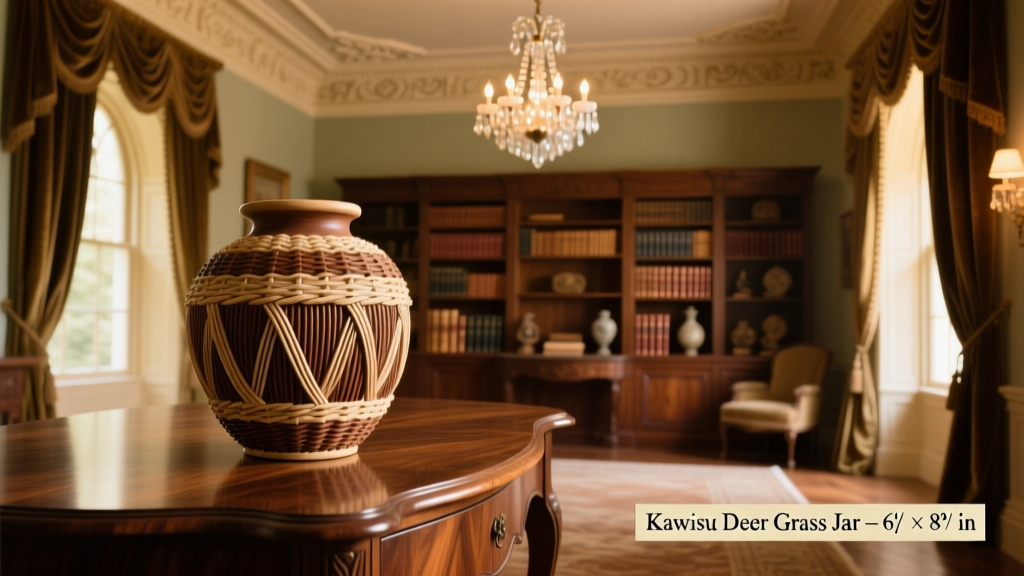
Authentic Kawaiisu Basketry: Decoding the Indian Jar Made from Deer Grass and Willow Coil, 6¼ × 8¾ Inches
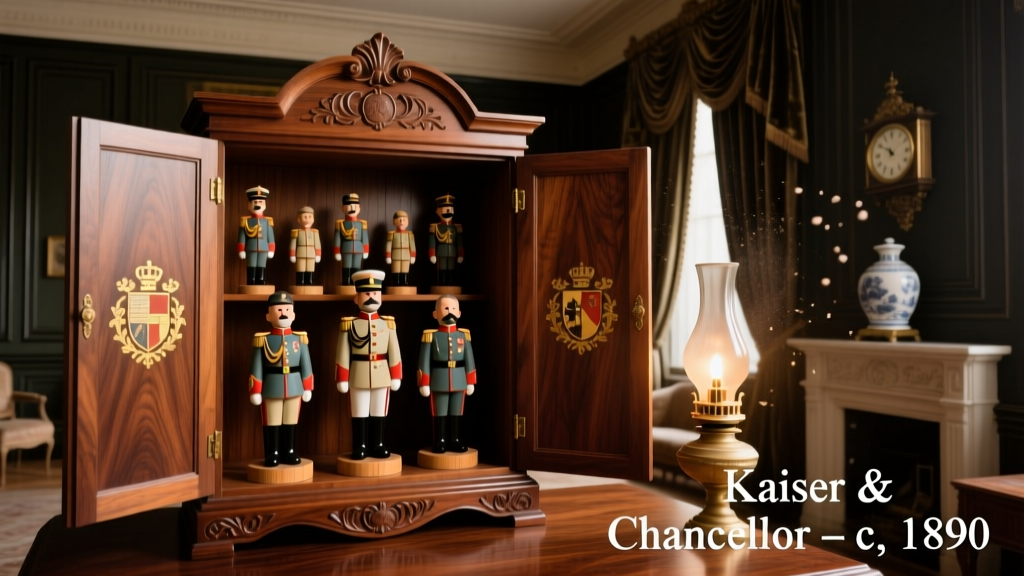
Heyde’s 1890 Wooden Box Set: Kaiser Wilhelm I, Bismarck & Eight Prussian Military Figures — A Restoration Specialist’s Analysis

The Mazda Automobile Lamp Girl Advertising Cabinet: A Mid-Century Icon of Automotive Promotion and Decorative Craftsmanship
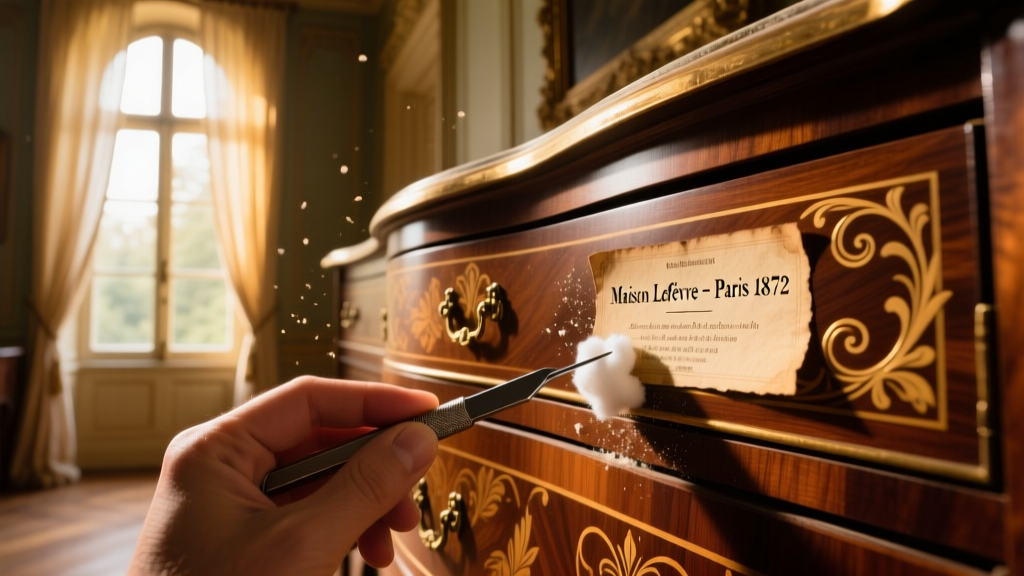
Removing Adhesive Labels from Antique Furniture: A Conservator’s Practical Guide
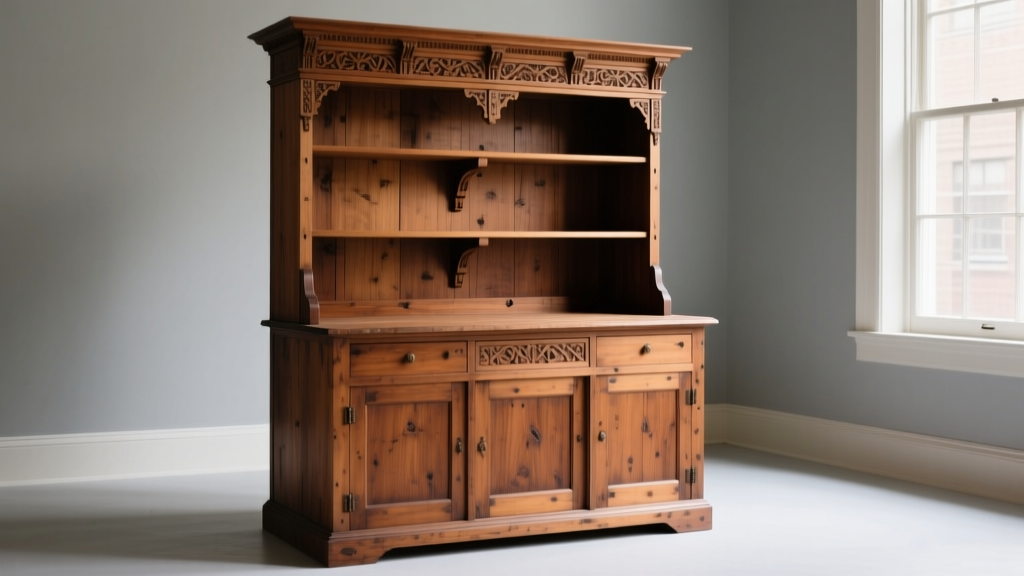
Pine Step-Back Cupboard: Authentic New York Craftsmanship, 74 × 36 Inch Dimensions, and Restoration Insights
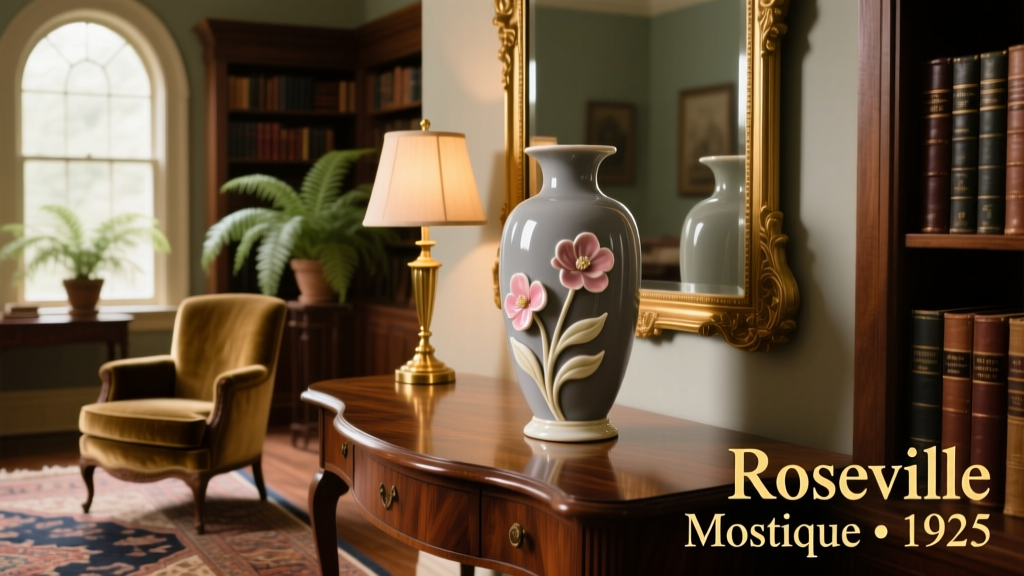
Roseville Mostique Vase: Stylized High-Glaze Blossoms on Gray Ground — A 10-Inch Masterpiece of Mid-Century American Ceramics
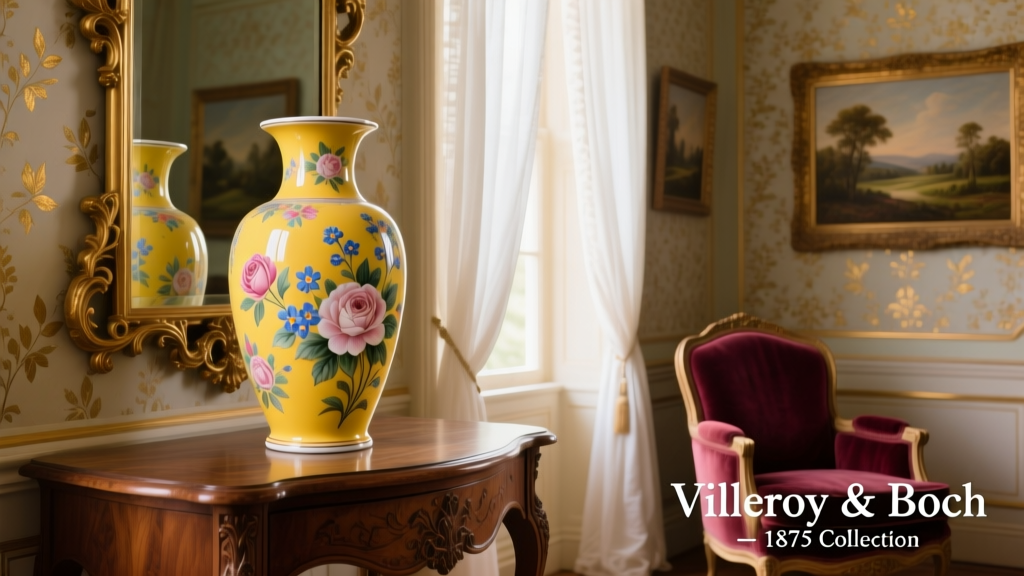
Villeroy & Boch Vase: Multicolored Flowers on Yellow Mottled Ground — A 12-Inch Mid-Century Masterpiece
Walnut Liquor Cabinets of Victorian England: Carved Decanters, Cordial Sets, and Cabinet-Making Craftsmanship, 1837–1901