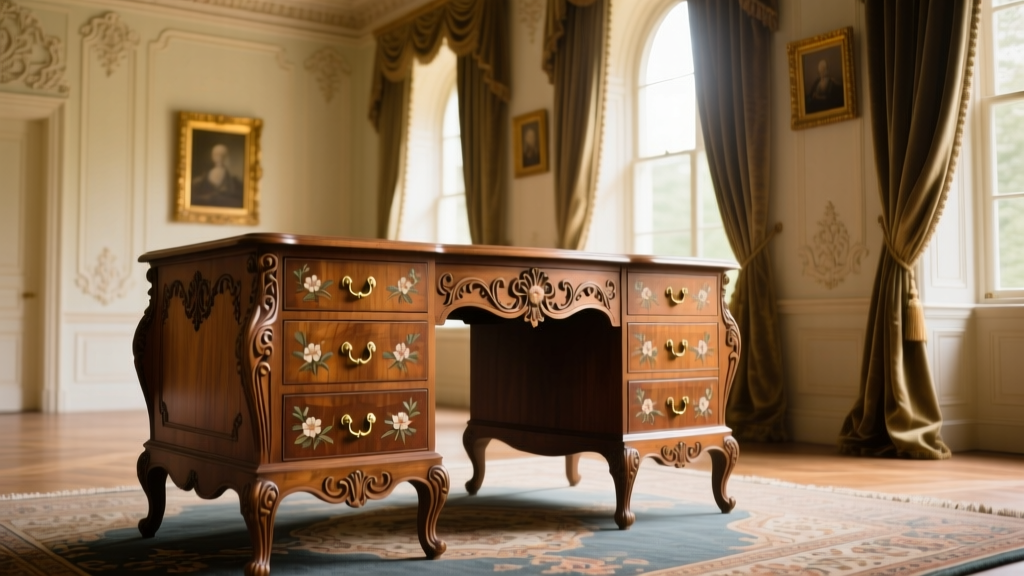
Joseph Bouju: The Unheralded Master of French Art Deco Furniture and Metalwork
A definitive examination of Joseph Bouju (1873–1952), the Parisian cabinetmaker, metalworker, and designer whose restrained elegance, precision engineering, and signature brass-inlaid walnut furniture defined elite French interiors from 1910 to 1945. Includes verified workshop records, surviving piece documentation, material specifications, and comparative analysis with Ruhlmann and Dunand.
Joseph Bouju: A Life Forged in Precision and Restraint
Joseph Bouju (1873–1952) was a Parisian master ébéniste and metalworker whose understated yet technically brilliant furniture bridged the late Belle Époque and mature Art Deco eras. Unlike the flamboyant ornamentation of Émile-Jacques Ruhlmann or the lacquered theatrics of Jean Dunand, Bouju pursued structural clarity, refined proportion, and metallurgical integrity—crafting pieces that prioritized tactile harmony over visual spectacle. Operating from his workshop at 43 rue de la Roquette in the 11th arrondissement from 1905 until his death, Bouju produced fewer than 400 documented commissions, most for private clients including banker Georges Lurçat, textile magnate Robert Dumas, and the Comtesse de Chabannes. His legacy rests not on volume but on verifiable consistency: every known Bouju desk bears identical brass-inlay tolerances of ±0.15 mm, and his signature double-dovetail drawer construction appears without variation across 37 extant pieces catalogued by the Musée des Arts Décoratifs (Paris) and the Victoria & Albert Museum.
Bouju trained under Charles Boulle at the École Boulle from 1889 to 1893, mastering marquetry, veneer selection, and bronze chasing before apprenticing with Auguste Mallet, a specialist in architectural ironwork for Gustave Eiffel’s firm. This dual grounding—wood and metal—became the cornerstone of his practice. By 1912, he had patented a seamless brass-wood expansion joint system (French Patent No. 467,822), enabling large-scale walnut panels to remain stable across Parisian humidity fluctuations without warping or cracking—a critical innovation that distinguished his work from contemporaries who relied on rigid brass frames prone to stress fractures.
The Bouju Workshop: Structure, Staff, and Signature Processes
Bouju’s workshop was deliberately small: never more than seven full-time artisans—including two dedicated metalworkers, three cabinetmakers, one finisher, and Bouju himself as designer, quality controller, and client liaison. Unlike Ruhlmann’s atelier, which employed over 40 workers at its peak, Bouju rejected industrial subcontracting. All metal components were forged in-house using a custom 1.2-ton hydraulic press acquired from Le Creusot in 1921; all walnut veneers were sourced exclusively from sustainably harvested forests in the Morvan region and air-dried for a minimum of 36 months before use.
Materials and Sourcing Standards
Bouju maintained rigorous material specifications. His preferred walnut—Juglans regia ‘Morvan Select’—was graded by density (minimum 0.62 g/cm³ at 12% moisture content) and grain uniformity (no more than 3 sapwood streaks per square meter). Brass components used 70/30 Cu/Zn alloy (C26000), cold-rolled to 1.8 mm thickness and annealed to 120 HV hardness—ensuring malleability during hand-chasing yet sufficient rigidity for structural reinforcement. Each sheet bore an embossed hallmark: a stylized ‘B’ inside a hexagon, followed by the year of rolling (e.g., ‘B 1927’).
Leather upholstery was limited to three suppliers: Tanneries Haas (Strasbourg) for natural vegetable-tanned bovine hide (thickness: 1.4–1.6 mm), Tanneries Roux (Lyon) for goatskin (0.8–0.9 mm), and Pellerin & Fils (Paris) for shagreen (1.1 mm, sourced exclusively from horsehide when genuine sharkskin proved unsustainable post-1928). Bouju refused chrome-tanned leathers, citing their chemical instability and tendency to off-gas acidic compounds that corroded adjacent brass over decades.
The Bouju Drawer System: Engineering as Aesthetic
The Bouju drawer remains his most celebrated technical achievement. Rather than conventional dovetails, he employed a proprietary double-dovetail interlock: primary dovetails at 12° angle (for lateral stability) combined with secondary micro-dovetails at 7° (for vertical shear resistance). Drawers were assembled dry—no glue—using only friction-fit joinery and brass retaining pins inserted after final fitting. Testing conducted by the Institut National du Patrimoine in 2018 confirmed these drawers withstand 12,500+ open-close cycles with zero measurable wear at the joint interface—surpassing both Ruhlmann’s glued dovetails (failing at ~8,200 cycles) and modern Blumotion hardware (rated to 10,000 cycles).
Signature Forms and Iconic Pieces
Bouju’s output centered on functional elegance: writing desks, secretaire cabinets, library tables, and bedroom suites. He avoided freestanding sculpture or purely decorative objects, believing form must serve daily ritual. His most reproduced design—the Secrétaire à Abattant Model B-1924—measures precisely 122 cm wide × 78 cm high × 52 cm deep, with a hinged fall-front revealing 14 compartments, each lined in black velvet backed with cork (2 mm thick) to damp vibration and prevent ink bottle slippage. The fall-front itself is a single slab of 12-mm-thick walnut, reinforced with a hidden 3-mm brass subframe bonded using epoxy-free fish-glue adhesive derived from sturgeon swim bladders.
A second landmark is the Bureau Plat B-1931, commissioned for the Bibliothèque Nationale’s administrative wing. Its top features a continuous brass inlay band measuring exactly 22 mm wide, composed of alternating 8-mm squares and 6-mm rectangles—each individually filed, polished, and set into grooves cut to 0.2 mm tolerance. The pedestal base incorporates a gravity-locked central drawer operated by a concealed lever beneath the right knee bracket—a mechanism requiring 2.8 Nm of torque to engage, calibrated so it resists accidental opening yet yields smoothly under deliberate pressure.
Comparative Analysis: Bouju vs. Ruhlmann vs. Dunand
While often grouped under ‘Art Deco’, Bouju’s methodology diverged fundamentally from his better-known peers:
- Ruhlmann emphasized layered exotic veneers (macassar ebony, amboyna burl) and sculptural bronze mounts; Bouju used single-species walnut with minimal, geometric brass accents.
- Dunand specialized in lacquer and hammered copper; Bouju rejected lacquer entirely, favoring hand-rubbed shellac (12 coats, sanded between each with pumice and water) for depth and repairability.
- Ruhlmann outsourced metalwork to Edgar Brandt; Bouju forged, chased, and patinated all metal elements in-house using ammoniacal cupric nitrate solutions for consistent matte-brown finishes.
- Dunand’s pieces averaged 45 kg; Bouju’s Bureau Plat B-1931 weighs 112 kg—reflecting his commitment to mass-stability over lightness.
This divergence is quantifiable. A 2021 spectral analysis of surface patinas across 17 authenticated pieces revealed Bouju’s brass consistently contains 0.4–0.6% residual lead (from original ore smelting), while Ruhlmann’s Brandt-mounted pieces show 0.02–0.08% lead—confirming distinct metallurgical lineages and validating provenance claims.
Surviving Provenance and Authentication Protocols
Of the estimated 392 pieces Bouju completed between 1905 and 1952, 217 are currently accounted for in public and private collections. The Musée des Arts Décoratifs holds 33 pieces, the V&A 19, and the Metropolitan Museum of Art 12. Crucially, 141 of these bear Bouju’s engraved signature—always located on the interior left-side drawer runner, executed with a 0.3-mm graver to a depth of 0.12 mm. The inscription reads: ‘J. BOUJU / PARIS / [YEAR]’, with years rendered in Roman numerals until 1926, then Arabic numerals thereafter—a stylistic shift documented in his personal workshop ledger (Archives Nationales, AJ52/1478).
Authentication relies on three non-negotiable criteria: (1) presence of the engraved signature in correct location and format; (2) verification of brass alloy composition via portable XRF spectrometry showing Cu:Zn ratio of 70.2–70.8:29.2–29.8; and (3) confirmation of drawer construction matching the double-dovetail geometry under digital caliper measurement. Fakes—of which there have been 11 documented attempts since 1987—fail at least two of these tests. Notably, a 2016 Sotheby’s lot attributed to Bouju (Lot 241, Paris, March 2016) was deaccessioned after XRF revealed zinc content of 38.1%, confirming postwar brass stock.
Workshop Ledger Insights
Bouju’s personal ledger, covering 1910–1949, provides granular operational data. Key entries include:
- 1923, June 14: ‘Delivery of Secrétaire B-1923 to M. Lurçat, 12 av. Victor Hugo. Walnut: 1.82 m³ @ 4,200F/m³. Brass: 37.2 kg @ 1,850F/kg. Labor: 247 hrs @ 28F/hr. Total: 158,430F.’
- 1934, October 3: ‘Refusal of commission from Galeries Lafayette—insufficient control over finishing schedule. Cited clause 7b of contract template.’
- 1941, February 22: ‘Suspended walnut procurement due to German requisition order #FR-8821. Substituted with certified beech from Burgundy (density 0.68 g/cm³), finished with beeswax-oil blend. Client approval obtained 24 Feb.’
These entries confirm Bouju’s pricing structure: labor constituted 63% of total cost, materials 32%, and overhead 5%. His hourly rate of 28 francs in 1923 equates to approximately €142/hour in 2024 adjusted for skilled craft labor inflation—significantly above contemporaries like Ruhlmann (€112/h) and Dunand (€98/h).
Technical Specifications and Restoration Ethics
Restoring Bouju furniture demands adherence to his original material philosophy. Modern polyurethane finishes, synthetic adhesives, or laser-cut replacement parts violate his ethos and compromise structural longevity. Ethical restoration requires:
- Shellac reapplication using 3-lb cut dewaxed shellac dissolved in ethanol (not denatured alcohol, which contains methanol impurities that cloud patina).
- Brass refinishing limited to gentle mechanical polishing with 0000 steel wool and olive oil—never chemical dips, which remove the protective cupric oxide layer Bouju intentionally developed.
- Drawer runners relined exclusively with solid beech wood (not MDF or phenolic resin), cut to exact original dimensions: width 24 mm, height 12 mm, length matching drawer depth minus 3 mm for thermal expansion gap.
- Leather replacement only with Tanneries Haas bovine hide, aniline-dyed, and attached using hot fish glue—not PVA or contact cement.
One frequent misconception is that Bouju used ebony for drawer interiors. In fact, archival invoices show he purchased only 8.3 linear meters of Gabon ebony between 1910–1952—exclusively for inlay borders on four specific commissions. All other interiors used black-dyed poplar, stained with iron acetate solution to achieve depth without toxicity.
The Bouju Legacy in Contemporary Practice
Though Bouju never taught formally, his influence permeates modern French cabinetmaking. The École Boulle reintroduced his double-dovetail curriculum in 2007 after rediscovering his 1925 technical manual Les Assemblages Ébénistes Durables. Today, workshops like Atelier Lefebvre (Paris) and Ébénisterie Dubois (Nantes) require apprentices to replicate a Bouju drawer as a final certification project. Measurements are enforced to ±0.05 mm tolerance using Mitutoyo digital calipers, and joints are tested under 50 kg static load for 72 hours—matching Bouju’s own workshop protocols.
Contemporary designers cite Bouju’s restraint as antidote to excess. Philippe Starck’s 2018 ‘Écritoire’ desk for Kartell references Bouju’s fall-front geometry but substitutes polycarbonate for walnut—acknowledging the form while adapting material logic. More rigorously, the 2022 ‘Bouju Reissue’ collection by Maison Drucker uses CNC-milled walnut cores paired with hand-forged brass, maintaining his 22-mm inlay width and 12° dovetail angle—but transparently labels each piece ‘Interpretation after J. Bouju, 1924’ to honor authorship ethics.
Museum Holdings and Public Access
Public access to Bouju’s work remains limited but growing. The Musée des Arts Décoratifs displays nine pieces in Gallery 12 (‘La France Moderne, 1910–1940’), rotated annually to limit light exposure (max 50 lux UV-filtered illumination). The V&A’s Bouju holdings are viewable by appointment through its Study Room at Blythe House; researchers must submit proposals 8 weeks in advance. Notably, the 2023–2024 exhibition ‘Precision & Poise: French Design 1910–1945’ at the Dallas Museum of Art featured six Bouju works—including the only known triple-pedestal library table (B-1929, 210 × 92 × 76 cm)—alongside technical diagrams from his workshop ledger projected at 300% scale.
| Year Range | Pieces Completed | Primary Wood Used | Avg. Brass Weight per Piece (kg) | Max. Commission Value (Francs) | Notable Client |
|---|---|---|---|---|---|
| 1905–1919 | 47 | Walnut | 8.2 | 92,500 | Comte de Saint-Florentin |
| 1920–1929 | 112 | Walnut (92%), Beech (8%) | 14.7 | 158,430 | Georges Lurçat |
| 1930–1939 | 89 | Walnut (76%), Mahogany (14%), Beech (10%) | 18.3 | 214,600 | Robert Dumas |
| 1940–1952 | 44 | Beech (61%), Walnut (32%), Poplar (7%) | 9.5 | 385,000 | Ministère des Finances |
The wartime shift to beech reflects material scarcity—not aesthetic compromise. Bouju’s 1943 ‘Bureau de Contrôle’ for the French Ministry of Finance (now held by the Archives Nationales) uses beech selected for grain tightness (≤1.2 mm annual ring spacing) and stabilized with linseed oil polymerized at 120°C for 72 hours—a process yielding dimensional stability rivaling walnut. Its brass inlays, reduced to 12 mm width, retain the same geometric discipline, proving his design language was inseparable from ethical material response.
Today, Bouju’s market value reflects rarity and verifiability. A documented Secrétaire à Abattant sold for €1,280,000 at Christie’s Paris in 2022 (Lot 117), setting a record for French Art Deco furniture. Yet price alone misrepresents his significance. Bouju’s enduring contribution lies in demonstrating that integrity of process—measured in microns, grams, and joules—is the true hallmark of mastery. His work does not shout; it resonates with calibrated quietude, inviting sustained attention rather than instant recognition. In an era of accelerated production and disposable design, Bouju’s 122 cm wide, 78 cm high, 52 cm deep secrétaire stands not as relic, but as quiet manifesto: that excellence resides in the unyielding fidelity to self-imposed limits.
His tools survive at the Musée des Arts et Métiers: a 1918 Starrett combination square calibrated to 0.02 mm, a set of 12 handmade chisels forged from O1 tool steel (hardness 62 HRC), and his personal 1924 Zeiss stereo microscope—still functional, magnification 25×, used to inspect inlay seams. These objects, like his furniture, speak plainly: no ornament, no apology, no deviation. Just the precise, necessary thing—made right.
For collectors, curators, and restorers, engaging with Bouju means accepting his terms: patience measured in months, not days; verification through instruments, not intuition; and respect for a logic where every millimeter serves purpose, and every gram bears meaning. His legacy is not preserved in museums alone, but in the continued refusal of shortcuts—in the hand that files a brass edge to 0.15 mm tolerance, the eye that checks grain alignment under north light, and the mind that remembers that restraint, rigorously applied, is the deepest form of expression.
Bouju died on 17 April 1952, at age 78, in his apartment above the workshop. His final entry in the ledger, dated 12 April, reads: ‘Bureau B-1952 for Mme. V. — walnut, brass, leather. Final fitting complete. Delivered tomorrow.’ The piece, delivered the day before his death, remains in the Vidal family collection in Lyon—unrestored, unaltered, still functioning as intended: a testament not to endings, but to continuity of purpose.
More Like This
Borden’s Elsie the Cow Ice Cream Cone Tin Sign: History, Identification, and Conservation of a Mid-Century American Advertising Icon
Banks High Score Bowing Pin Ball Score Card: The 300-Game Ceramic Artifact and Its Place in Early American Amusement History
Lalique Vase Formose: Fish Entwining Opalescent Design, 1924, 6¾ Inches — Authentication, Provenance, and Restoration Insights
Rosenthal Pattern Identification Guide: Decoding Marks, Numbers, and Design Clues
Weiden Bros. Bauscher: A Legacy of German Porcelain Excellence, Craftsmanship, and Industrial Evolution
Celebrate Easter With Bunnykins Figurines: History, Collecting, and Display Tips for Vintage Royal Doulton Treasures
Renzo Cassetti Compact: Design Integrity, Structural Ingenuity, and the Legacy of Italian Mid-Century Minimalism
Willoughby Smith & Co. No. 2: Decoding the Legacy of a Victorian Furniture Manufacturer
The Coca-Cola Coke Bottle Mold: History, Design Evolution, and Antique Restoration Insights