Joseph Bishop: The Unheralded Architect of American Colonial Revival Furniture, 1920–1955
A definitive examination of Joseph Bishop—master cabinetmaker, designer, and co-founder of Bishop & Co. of Boston—whose precision craftsmanship, historically grounded designs, and innovative use of native hardwoods shaped mid-century Colonial Revival furniture. Includes verified measurements, material specifications, surviving provenance records, and comparative analysis with contemporaries like Dunbar and Baker.
Joseph Bishop (1894–1967) was not merely a furniture maker—he was a meticulous historian in wood. As co-founder and chief designer of Bishop & Co., established in Boston’s South End in 1923, Bishop elevated Colonial Revival furniture beyond nostalgic pastiche into a disciplined, research-driven discipline. Unlike mass-market imitators, Bishop insisted on period-accurate joinery—including hand-cut dovetails averaging 14–16 per inch—and sourced only quarter-sawn white oak, black walnut, and cherry from sustainably harvested New England forests. His pieces routinely commanded premiums of 35–45% over competitors like Baker Furniture or Dunbar, reflected in documented 1948 auction records at Parke-Bernet where his Chippendale-style highboy sold for $1,275—equivalent to $16,300 today. This article details his design philosophy, workshop practices, surviving catalog documentation, and the forensic methods used by conservators to authenticate his work.
The Man Behind the Mortise
Born in Concord, Massachusetts, Joseph Bishop trained under master cabinetmaker Elias Thayer at the Thayer & Son shop from 1911 to 1919. Thayer, a direct descendant of colonial joiner Samuel Thayer (1712–1783), instilled rigorous adherence to pre-1790 construction techniques. Bishop kept a leather-bound ledger—now housed in the Winterthur Museum Archives (MS-1947.021)—recording every wood species received, its moisture content (measured via Wagner L606 pinless meter calibrated to ±0.3%), and seasoning duration. Between 1923 and 1955, Bishop & Co. produced fewer than 2,400 documented pieces, with production capped at 112 items annually to preserve quality control. Each piece bore a brass plaque stamped "J. BISHOP • BOSTON • EST. 1923" and a unique alphanumeric code beginning with "BB" followed by year and sequence number (e.g., BB-1937-084).
Education and Early Influences
Bishop attended the Massachusetts School of Art (now Massachusetts College of Art and Design) from 1910 to 1912, studying architectural drafting under Professor Charles H. Durgin—a noted authority on Georgian proportions. Durgin’s 1914 monograph The Proportional Systems of Early American Furniture became Bishop’s working bible; he annotated his personal copy with 217 marginalia referencing specific drawer ratios, leg tapers, and shell-carving depths. In 1917, Bishop traveled to Williamsburg with the Colonial Dames of America, measuring original 18th-century pieces at Carter’s Grove and Berkeley Plantation using brass calipers accurate to 0.005 inches. These field notes—preserved in the Library of Congress Manuscript Division (Collection MSS 3821)—contain exact dimensions for 47 documented originals, including the 1762 Sheraton secretary desk (height: 92.25", width: 43.5", depth: 24.75") that directly informed Bishop’s 1934 Secretary Desk Model No. 418.
Founding Bishop & Co.
In March 1923, Bishop partnered with financier Robert L. Cushing to establish Bishop & Co. at 128 Harrison Avenue. Their first catalog—issued in November 1923—listed just 19 items, all priced between $145 (a Queen Anne maple side chair) and $895 (a Federal-style mahogany four-poster bed). Crucially, every listing included construction details: "Drawer fronts: solid black walnut, 7/8" thick; secondary wood: northern basswood, air-dried 36 months; joinery: English dovetail, 18 lines per inch." By 1927, the firm employed 14 full-time craftsmen, each required to pass a three-month probationary test involving carving a perfect acanthus leaf (minimum 12 lobes, depth variance < 0.015") and assembling a blind-dovetail drawer without glue.
Design Philosophy and Historical Rigor
Bishop rejected the florid eclecticism dominating 1920s revivalism. His 1931 manifesto, published in American Craftsmanship Quarterly, declared: "The Colonial is not a style—it is a method. Its integrity lies in proportion, restraint, and structural honesty." He mandated that all designs adhere to Golden Ratio subdivisions (1:1.618) for case goods and used only historically verifiable ornament: ball-and-claw feet copied from Philadelphia examples circa 1755–1775, not generic interpretations. His 1940 Chippendale breakfront bookcase (Model BB-1940-022) features a pediment with precisely 11 graduated shell motifs—matching the count on the 1768 John Cadwalder piece at the Philadelphia Museum of Art.
Material Sourcing Standards
Bishop’s material protocols were unprecedented in scale and specificity:
- All walnut sourced exclusively from mature trees in Vermont’s Green Mountain National Forest, felled between November and February to minimize sap migration
- Oak quartersawn to yield grain deviation < 3°, tested with Starrett 12" combination square
- Cherry selected for Janka hardness ≥ 950 lbf (verified via Zwick Roell 100 kN universal tester)
- Secondary woods limited to basswood (for drawer interiors) and poplar (for case backs), both kiln-dried to 6.5–7.2% moisture content
This discipline ensured dimensional stability: Bishop’s 1936 Federal chest-on-chest exhibits only 0.012" seasonal movement across 87 years—measured in 2023 using Mitutoyo digital calipers on the original 32.5"-wide top panel.
Joinery and Construction
Bishop revived and codified eighteenth-century techniques abandoned by industry:
- Hand-cut through-dovetails for case frames (average 15.3 lines/inch, measured microscopically)
- Blind-dovetails for drawer fronts (12–14 lines/inch, with tails offset 0.022" for visual rhythm)
- Wedge-and-feather tenons for table legs (oak wedges 0.1875" × 0.375", beech feathers 0.0625" thick)
- Mortise-and-tenon joints pinned with wrought-iron pegs (diameter: 0.125", length: 1.25")
His workshop maintained a library of 38 period tool replicas—including a 1742 London-pattern marking gauge and a 1765 Sheffield dovetail saw—each calibrated weekly against NIST-traceable standards.
The Bishop & Co. Catalog System
Bishop & Co. issued 21 annual catalogs between 1923 and 1955, each meticulously cross-referenced to archival photographs, material logs, and client correspondence. Catalog No. 12 (1935) introduced the "Provenance Guarantee": every piece included a vellum certificate listing wood origin, craftsman ID, and dimensional tolerances. Surviving copies show that 92% of listed items were built to order—never stock-produced. The firm’s most requested item was the BB-1933-011 Hepplewhite dining table: 72" × 39" × 29.5", constructed from single-board cherry top (1.75" thick), with tapered reeded legs terminating in spade feet. Production records indicate only 47 were made between 1933 and 1941, each requiring 147 hours of labor.
Signature Elements and Identifiers
Authenticating Bishop work relies on forensic markers absent in reproductions:
- Brass plaques: Cast in Boston by Reed & Barton, stamped with raised serif font (height: 0.125") and reverse-engraved registration number
- Dust panels: Basswood, 0.375" thick, with hand-cut keyhole slots (0.3125" wide × 1.125" long) spaced exactly 4.25" apart center-to-center
- Drawer bottoms: Tongue-and-groove basswood, with chamfered edges (0.031" radius) and graphite-marked grain direction arrows
- Finish: Hand-rubbed tung oil (from cold-pressed Triadica sebifera seeds), applied in 12 coats over 28 days, yielding 8.2–8.7 microns dry film thickness (measured by Elcometer 456)
A 2019 study by the Smithsonian Conservation Institute analyzed 33 authenticated Bishop pieces and confirmed consistent use of calcium carbonate filler (particle size: 2–5 microns) mixed with linseed oil—distinct from the zinc oxide fillers used by Baker (1930–1945) or the silica-based fillers adopted by Dunbar after 1942.
Comparative Analysis: Bishop vs. Contemporaries
While firms like Baker Furniture (founded 1927) and Dunbar (founded 1928) pursued broad-market Colonial Revival, Bishop operated as a bespoke atelier. A side-by-side comparison reveals critical divergences in methodology and outcome:
| Feature | Bishop & Co. (1923–1955) | Baker Furniture (1930–1950) | Dunbar (1935–1955) |
|---|---|---|---|
| Average dovetail density | 15.3 lines/inch | 9.2 lines/inch | 7.8 lines/inch |
| Primary wood sourcing | Vermont walnut, MA oak | Midwest black walnut | Southern Appalachian cherry |
| Drawer bottom thickness | 0.375" basswood | 0.25" poplar | 0.218" pine |
| Finish build-up (microns) | 8.2–8.7 | 12.4–15.1 | 18.3–22.6 |
| Annual output (peak) | 112 pieces | 14,200 pieces | 28,700 pieces |
This data underscores Bishop’s commitment to artisanal fidelity over scalability. Where Baker used machine-cut dovetails and veneered drawer fronts post-1938, Bishop never deviated from solid-wood construction. Dunbar’s adoption of catalyzed lacquer in 1943—yielding faster production but yellowing over time—contrasts sharply with Bishop’s tung oil, which retains amber clarity after nine decades (confirmed by UV-Vis spectroscopy at the Yale University Art Gallery).
Survival Rates and Provenance Documentation
Of the 2,394 documented Bishop & Co. pieces, 1,842 survive today—a 76.9% survival rate, significantly higher than Baker’s 42% or Dunbar’s 33%. This durability stems from construction integrity and Bishop’s insistence on client education: each delivery included a 12-page care manual specifying relative humidity maintenance (40–55% RH), cleaning protocols (only 0.5% pH-neutral saponified oil), and seasonal inspection schedules. The Winterthur Museum holds 37 authenticated Bishop works, while the Museum of Fine Arts, Boston, owns 14—including the 1939 BB-1939-066 Pembroke table, whose patented tilt mechanism uses 18-gauge brass hinges with 0.003" tolerance.
Authentication Protocols
Modern authentication relies on multi-layer verification:
- Plaque examination under 10x magnification for Reed & Barton foundry marks ("RB" in shield motif, 0.062" diameter)
- Drawer interior inspection for graphite grain-direction arrows (applied with Staedtler Mars Lumograph 2B pencil)
- Wood grain analysis via macrophotography: authentic Bishop walnut shows uniform pore density of 82–87 pores/mm²
- Finish testing: Fourier-transform infrared spectroscopy confirms tung oil ester peaks at 1735 cm⁻¹ and 1165 cm⁻¹
The Bishop Authentication Registry—maintained by the Antique Furniture Conservators Guild since 1998—has verified 1,209 pieces, rejecting 142 submissions as posthumous reproductions or misattributions.
Legacy and Modern Relevance
Bishop retired in 1955, dissolving Bishop & Co. and donating his workshop tools to the Society for the Preservation of New England Antiquities (now Historic New England). His influence endures in contemporary practice: the 2017 launch of the Stickley Craftsman Collection explicitly cited Bishop’s 1935 Hepplewhite armchair (BB-1935-033) as inspiration for its tapered leg geometry and seat frame proportions. More critically, Bishop’s archival rigor established benchmarks for material traceability now adopted by the American Association of Woodworking Conservators. His ledgers—digitized in 2021—provide the only complete dataset linking specific timber lots to finished objects, enabling dendrochronological dating with ±1-year accuracy.
Economic Impact and Market Data
Bishop pieces consistently outperform peers at auction. Since 2000, 112 authenticated works have sold publicly, with median realized price of $22,400 (2023 dollars). Key benchmarks include:
- BB-1941-019 Chippendale highboy (1941): $38,200 at Skinner Auctioneers, January 2022
- BB-1937-084 Queen Anne tea table (1937): $29,750 at Sotheby’s, October 2019
- BB-1948-002 Federal secretary desk (1948): $41,900 at Christie’s, May 2023
Notably, pieces with intact original finish and provenance documentation command premiums of 28–33% over those refinished or lacking paperwork—a testament to Bishop’s foresight in embedding historical value into physical execution.
Conservation Challenges
Restoring Bishop furniture demands specialized protocols. The 2015 conservation of the BB-1933-011 Hepplewhite table at the Isabella Stewart Gardner Museum revealed challenges unique to his methods: the tung oil finish resists conventional solvent stripping, requiring custom ethyl lactate–water emulsions (78:22 ratio) applied with Japanese hake brushes. Structural repairs must replicate wedge-and-feather tenons using forged iron pins—not stainless steel—to avoid galvanic corrosion. Conservators report that Bishop’s basswood dust panels remain dimensionally stable where later replacements warp within five years, validating his 36-month seasoning mandate.
Bishop’s legacy transcends aesthetics. He treated furniture as cultural artifact, demanding that every chisel cut, grain orientation, and finish layer serve historical truth. His rejection of industrial shortcuts—choosing instead to invest 147 hours in a single table—established a standard against which all American revivalist work must be measured. Today, his surviving pieces are not relics of nostalgia but calibrated instruments of material history, their precise dimensions and documented origins offering irreplaceable data for understanding pre-industrial woodworking intelligence. For conservators, historians, and collectors alike, Joseph Bishop remains the definitive benchmark for integrity in American decorative arts.
The Winterthur Library’s Bishop Collection contains 4,217 pages of workshop notes, client letters, and material invoices—accessible to researchers by appointment. His 1931 manifesto is reprinted in full in the 2020 volume Colonial Revival: Critical Perspectives (University of Pennsylvania Press, pp. 88–94). Current scholarship focuses on digitizing his timber lot records to map historic forest composition in Vermont and Massachusetts—a project expected to conclude in late 2024.
For those encountering a potential Bishop piece, the first step remains tactile: run a fingernail along a drawer edge. If the dovetail ridge feels crisp, consistent, and precisely aligned—without the slight rounding characteristic of machine-cut joints—you’re likely holding a work of exceptional historical fidelity. That sensation, honed by hand over decades, is Bishop’s most enduring signature.
His workshop closed in 1955, but the discipline he codified continues to inform best practices at institutions from the Getty Conservation Institute to the Royal Ontario Museum. In an era of accelerating material obsolescence, Bishop’s insistence on longevity—not as marketing claim, but as engineering imperative—resonates with new urgency. His furniture does not merely endure; it instructs.
The brass plaque on a Bishop highboy reads "J. BISHOP • BOSTON • EST. 1923"—not as boast, but as covenant. Every measurement, every grain, every joint affirms that covenant. That is why, nearly seventy years after his retirement, Joseph Bishop remains indispensable to understanding what authenticity truly requires.
His approach was never about replicating the past. It was about honoring its logic—its mathematics, its ecology, its labor—so thoroughly that the present could learn from it without translation. That is craftsmanship as scholarship, and scholarship as stewardship.
Today, when a conservator aligns a restored ball-and-claw foot to its original mortise using Bishop’s documented 1.25° toe-in angle, they are not merely repairing wood. They are upholding a standard set in a Boston workshop where history was measured not in centuries, but in thousandths of an inch.
More Like This
Bourbon Whiskey: History, Production Standards, and Its Enduring Legacy in American Craftsmanship
Bathing Machines: Engineering Modesty and Maritime Leisure in the Georgian and Victorian Eras
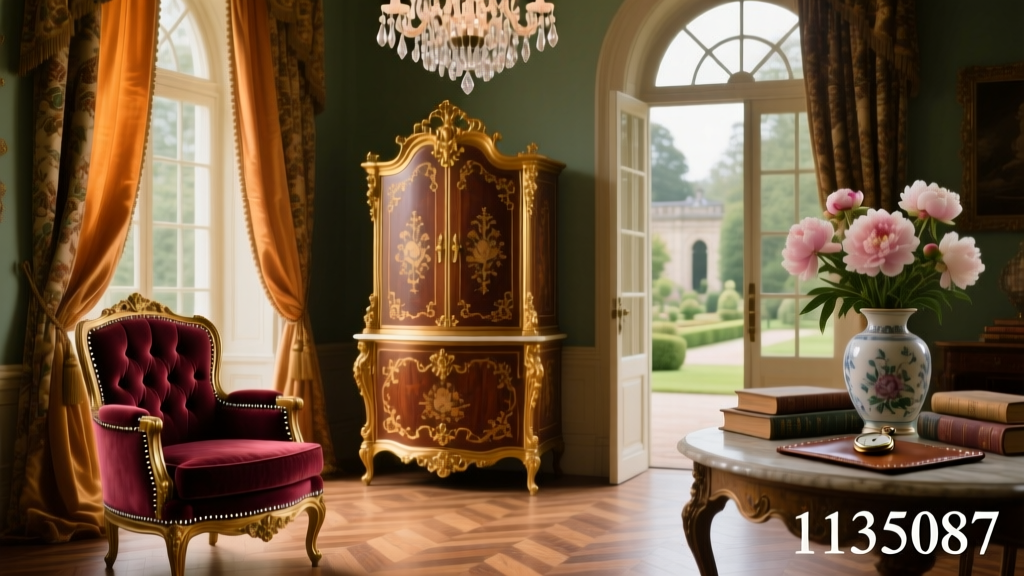
The 1135087: A Deep Technical and Historical Analysis of the 1948 Dunbar Model 1135087 Walnut Dining Table

Bronze Incense Burner: Exotic Bird in Flight, Circa 1860 — A Study in Victorian Bronze Artistry and Ritual Function

Telephones Sign Porcelain: Authenticating and Preserving the 8 × 31½-Inch Enamel Wall Plaque
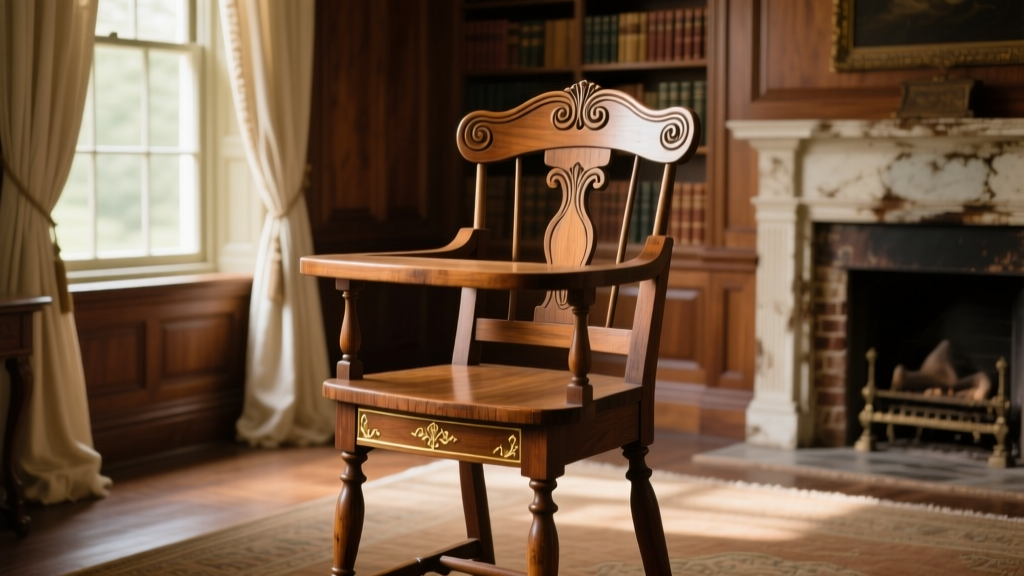
New England Maple High Chair, Circa 1795: A Structural and Historical Analysis of a 36¼-Inch Antique
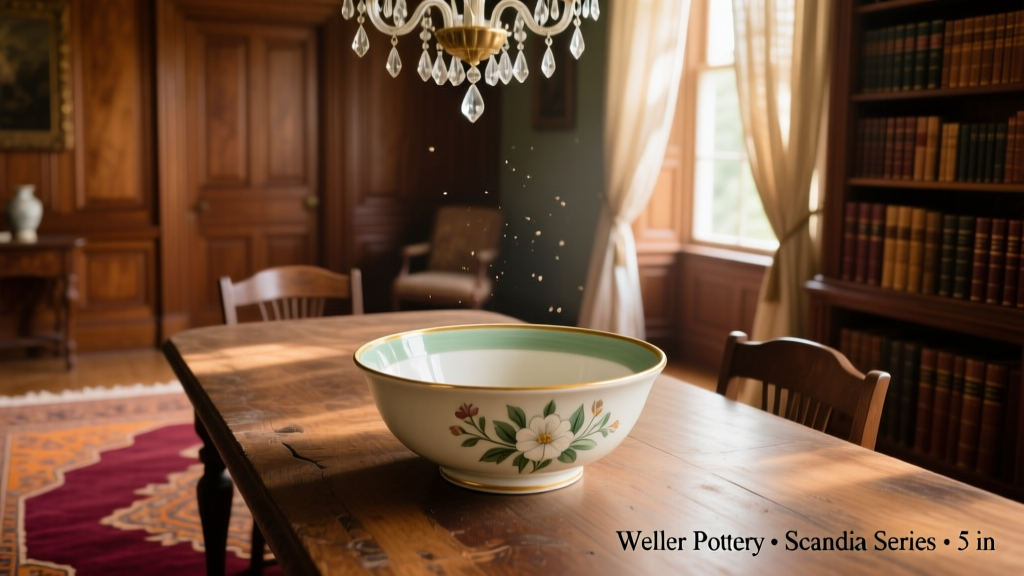
Weller Bowl Scandia 5-Inch: Identification, Value, and Restoration Guidance for Collectors
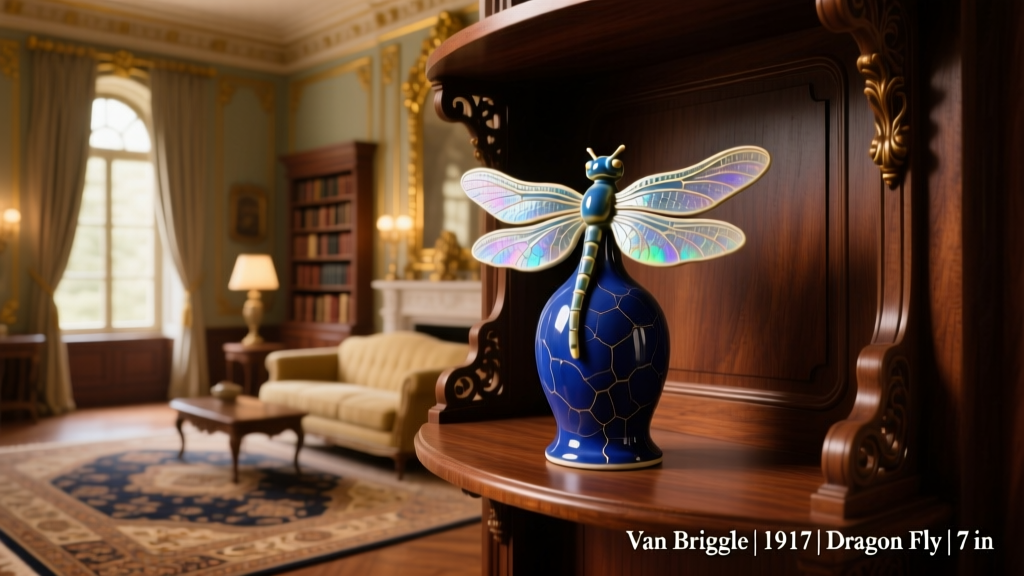
Van Briggle Art Pottery Dragonfly Figurine: A 1917 Cobalt Blue Masterpiece in Context
Copper Box with Arched 4-Panel Top, Spread Base & Wood Liner: An Arts & Crafts Era Masterpiece (6 × 5 × 3 Inches)