Bourbon Whiskey: History, Production Standards, and Its Enduring Legacy in American Craftsmanship
An authoritative examination of bourbon whiskey—its legal definition, historical roots in 18th-century Kentucky, distillation science, aging requirements, and cultural impact—supported by precise regulatory data, brand-specific examples, and technical specifications.
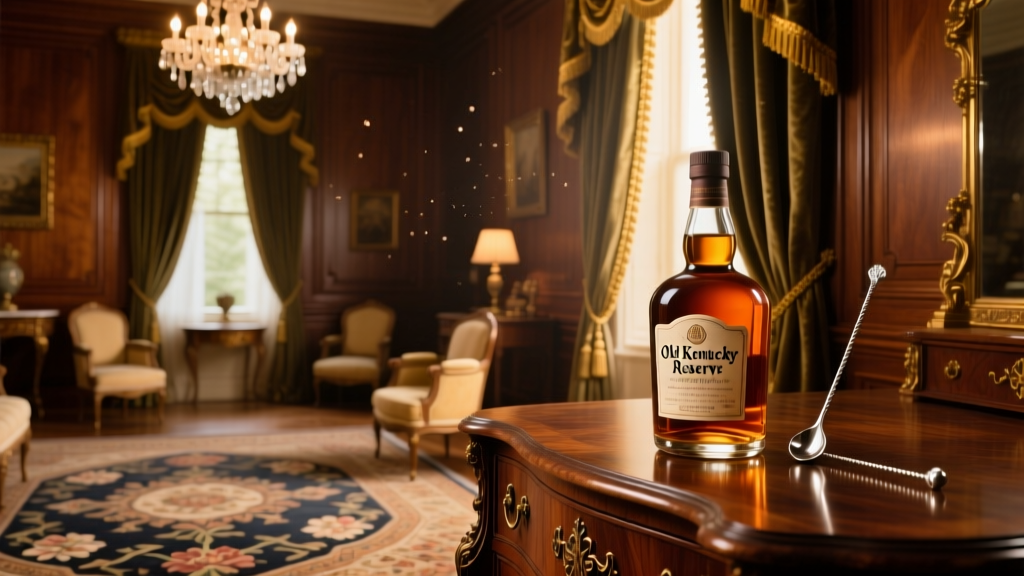
Bourbon whiskey is a distinctly American spirit defined by federal law—not tradition or geography alone. To be labeled bourbon, it must be made from a grain mixture containing at least 51% corn, distilled to no more than 160 proof (80% ABV), entered into new, charred oak barrels at no more than 125 proof (62.5% ABV), and aged without additives. It need not be produced in Kentucky, though over 95% of bourbon originates there. The spirit’s identity rests on rigorous standards codified in the U.S. Code of Federal Regulations (27 CFR §5.22), enforced since 1964 when Congress declared bourbon a 'distinctive product of the United States.' This article details its origins, production mechanics, barrel science, regional variations, economic footprint, and preservation challenges—grounded in verifiable data, real-world benchmarks, and artisanal context.
The Legal Definition and Regulatory Framework
Unlike many spirits classified by regional appellation—such as Scotch whisky or Cognac—bourbon’s legal identity is anchored in statutory language. The U.S. Alcohol and Tobacco Tax and Trade Bureau (TTB) enforces Title 27, Part 5 of the Code of Federal Regulations. Section 5.22(b)(1)(i) explicitly defines bourbon as 'whisky produced in the United States at not exceeding 80% alcohol by volume (160° proof) from a fermented mash of not less than 51 percent corn and stored at not more than 62.5% alcohol by volume (125° proof) in charred new oak containers.' These parameters are non-negotiable: failure to meet any one disqualifies the product from bearing the 'bourbon' label.
The requirement for 'new, charred oak' barrels is especially consequential. Unlike Scotch maturation, which permits reused casks—including ex-bourbon, sherry, or port barrels—bourbon mandates virgin wood. This drives both cost and flavor development: a standard 53-gallon barrel costs $220–$280 (as of Q1 2024, per Independent Stave Company pricing), and charring levels (typically #1 through #4, with #3 being industry standard) create a 1/8-inch layer of active carbon that filters congeners while releasing vanillin, lactones, and tannins during aging.
Proof limits also shape output. Distilling above 160 proof strips too many flavorful esters and fatty acids; entering the barrel above 125 proof reduces extraction efficiency and increases evaporation loss. Industry-wide, the average entry proof across major producers is 115–120 proof—reflecting empirical optimization. For example, Buffalo Trace Distillery consistently enters its Eagle Rare and Blanton’s bourbons at 115 proof, while Four Roses uses 120 proof for its Small Batch and Single Barrel expressions.
Geographic Misconceptions
Though often associated exclusively with Kentucky, bourbon may legally be produced anywhere in the United States. Tennessee whiskey—such as Jack Daniel’s—is technically bourbon by composition but undergoes additional charcoal filtration (the Lincoln County Process), resulting in a separate classification. Only 12 states currently produce TTB-registered bourbon: Kentucky (95.2% of national output), Indiana (3.1%), Tennessee (0.9%), New York (0.4%), and four others accounting for <0.4% combined. As of December 2023, the Distilled Spirits Council reported 1,527 active bourbon brands registered with the TTB—up from 492 in 2010—a surge driven by craft distilleries opening in 42 states.
Historical Origins and Early Development
Bourbon’s genesis lies not in a single inventor but in agrarian adaptation. In the late 1700s, settlers in what is now Kentucky—then part of Virginia—cultivated surplus corn due to fertile limestone-filtered soil and mild climate. With limited access to imported rye or barley, they fermented corn mashes using sour-mash techniques (a portion of previously fermented mash added to regulate pH and inhibit bacteria). Distillation occurred in copper pot stills, often portable units transported westward along the Wilderness Road.
The name 'bourbon' likely derives from Bourbon County, Kentucky, established in 1785 and named for the French Bourbon dynasty—a nod to France’s support during the American Revolution. By the 1790s, local farmers were shipping whiskey down the Ohio and Mississippi rivers aboard flatboats to New Orleans. Barrels stamped with 'Bourbon County' became shorthand for origin, and by 1821, the term appeared in print in the Frankfort Commonwealth newspaper describing 'Bourbon County whiskey.'
Key technological shifts accelerated consistency. In 1831, Aeneas Coffey patented the continuous-column still in Ireland, but American distillers adapted it slowly. Most pre-Prohibition bourbon was pot-distilled; column stills gained traction only after 1933, enabling higher-volume, lower-congener output. Maker’s Mark, founded in 1953 by Bill Samuels Sr., was among the first to emphasize hand-crafted small-batch methods amid industrial consolidation—using red winter wheat instead of rye in its mash bill (70% corn, 16% wheat, 14% malted barley) and rotating barrels manually in stone warehouses.
Prohibition’s Disruption and Post-War Revival
The 18th Amendment (1920–1933) shuttered over 2,000 licensed distilleries. Only six retained medicinal whiskey permits—including Brown-Forman’s Old Forester and Frankfort’s James E. Pepper. Most inventory was depleted or diverted illegally. When Prohibition ended, infrastructure decayed: cooperages closed, skilled coopers dwindled, and grain supply chains fragmented. Between 1934 and 1940, U.S. bourbon production averaged just 1.2 million proof gallons annually—down from 22.4 million in 1916.
Revival began with wartime rationing exemptions: bourbon was deemed 'essential' for medicinal use and morale, permitting limited production. Post-1945, brands like Jim Beam (reopened 1944) and Wild Turkey (founded 1940 by Austin Nichols) rebuilt capacity. Wild Turkey’s original warehouse—Warehouse K at Lawrenceburg, KY—still stands, measuring 240 feet long × 80 feet wide × 5 stories tall, holding 28,000 barrels. Temperature differentials between top and bottom floors (up to 30°F variance seasonally) create distinct flavor profiles—a phenomenon now replicated intentionally by brands like Woodford Reserve, which uses three-story rack houses with automated climate control set to 68–82°F.
The Science of Aging and Warehouse Dynamics
Aging transforms clear new-make spirit into complex bourbon via three interdependent processes: extraction, oxidation, and esterification. Extraction draws compounds from charred oak—eugenol (clove), syringaldehyde (vanilla), and oak lactones (coconut). Oxidation softens harsh alcohols and creates nutty, dried-fruit notes. Esterification synthesizes fruity esters (ethyl acetate, isoamyl acetate) from acid-alcohol reactions.
Barrel size standardization matters: the 53-gallon (200-liter) barrel remains dominant because it balances surface-area-to-volume ratio and practical handling. A 53-gallon barrel has an internal surface area of ~1,240 square inches and holds ~170 liters of liquid—yielding a ratio of ~7.3 square inches per liter. Smaller barrels (e.g., 15-gallon ‘quarter casks’) accelerate extraction but risk over-oaking; larger formats (100+ gallon) slow maturation and reduce wood influence. Buffalo Trace’s Experimental Collection includes 10-, 30-, and 53-gallon comparisons—demonstrating that 30-gallon barrels yield peak complexity at 5 years, whereas 53-gallon barrels require 8–10 years for equivalent balance.
Climate dictates aging velocity. Kentucky’s humid subtropical climate—average annual humidity 75%, summer highs of 89°F, winter lows of 28°F—drives pronounced seasonal expansion-contraction cycles. During summer heat, spirit expands into oak pores; in winter cold, it contracts, pulling dissolved wood compounds back into the liquid. This ‘breathing’ effect occurs roughly 12–15 times yearly. In contrast, Scotland’s cooler, stable climate averages only 3–4 cycles annually—explaining why 12-year Scotch often equals 6–8-year bourbon in sensory development.
Warehouse Architecture and Its Impact
Traditional Kentucky warehouses fall into three types: metal-clad (‘rickhouses’), brick, and stone. Metal structures heat rapidly—top floors regularly exceed 110°F in July—accelerating evaporation (‘angel’s share’) to 6–10% per year. Brick and stone warehouses moderate temperature swings, holding top-floor temps to 95–100°F and reducing loss to 4–6%. Heaven Hill’s Bardstown facility employs all three: its 1.2-million-barrel inventory includes 32 brick warehouses built between 1935–1952, each measuring 200 ft × 80 ft × 6 stories, with load-bearing limestone foundations cut from local quarries.
- Top floor: Highest evaporation (8–10% annual loss), richest caramel/toffee notes, highest ABV gain (up to +3 points)
- Middle floor: Balanced extraction, lowest evaporation (4–5%), most consistent profile
- Ground floor: Coolest, slowest maturation, pronounced grain and oak tannin, ABV typically drops 0.5–1 point
Modern producers manipulate these variables deliberately. Bulleit Bourbon ages exclusively on middle and upper floors of climate-controlled warehouses to ensure uniformity across batches. Conversely, Michter’s US*1 Small Batch selects barrels only from the ground floor of traditional stone warehouses—prioritizing restrained oak influence and cereal-forward character.
Major Brands and Their Technical Signatures
While craft distilleries innovate, legacy producers anchor bourbon’s technical benchmarking. Each maintains distinct process controls verified by third-party audits and public TTB filings:
| Brand | Founded | Primary Mash Bill (% Corn/Rye/Barley) | Distillation Proof | Entry Proof | Avg. Age |
|---|---|---|---|---|---|
| Jim Beam White Label | 1795 | 75/13/12 | 125 | 115 | 4 years |
| Booker’s | 1988 | 73/13/14 | 125 | 125 | 6–8 years |
| Woodford Reserve Double Oaked | 1996 | 72/18/10 | 125 | 115 | 7 years (2x aging) |
| Old Rip Van Winkle 15 Year | 1935 | 75/12/13 | 125 | 107 | 15 years |
| Four Roses Single Barrel | 1888 | 60/35/5 | 125 | 120 | 10 years |
Table: Technical specifications for five benchmark bourbons (data compiled from TTB filings, brand white papers, and 2023 Master Distiller interviews).
Note the variation in rye content: Four Roses’ high-rye (35%) mash bill yields pronounced spice and pepper, while Old Rip Van Winkle’s low-rye (12%) formulation emphasizes corn sweetness and vanilla. Entry proof differences directly affect final strength: Booker’s enters at full 125 proof, yielding robust body and higher residual ABV (121–125 at bottling), whereas Old Rip enters at 107 proof—slowing extraction and preserving delicate floral esters over 15 years.
Small-Batch and Single-Barrel Nuances
‘Small batch’ lacks legal definition but generally indicates blending of 10–200 barrels—intended to harmonize flavor while retaining character. Maker’s Mark’s ‘Small Batch Collection’ uses barrels from specific warehouse locations (e.g., ‘Private Select’ sourced from Warehouse D’s top floor) and bottles at cask strength (110–115 proof). ‘Single barrel’ means contents derive from one container, with no blending. Each barrel’s micro-environment produces unique outcomes: a barrel aged on the southeast corner of Warehouse H at Wild Turkey may develop clove and dark chocolate notes absent in a northwest-corner counterpart—even within the same warehouse level.
Batch variability is quantified. Buffalo Trace’s ‘Single Oak Project’ tested 192 variables—including oak origin (Missouri vs. Minnesota), air-drying time (6 vs. 12 months), and char level—across 1,500 barrels over 8 years. Results showed air-drying duration impacted tannin perception most significantly: 12-month-dried staves yielded 23% less astringency than 6-month-dried equivalents, without sacrificing vanillin extraction.
Economic and Cultural Dimensions
Bourbon underpins a $3.5 billion annual U.S. export market (2023 Distilled Spirits Council data), with Japan, Australia, and Germany comprising 62% of overseas sales. Domestic consumption reached 26.4 million 9-liter cases in 2023—up 4.1% year-over-year. Employment impact is substantial: Kentucky alone hosts 52 operational distilleries employing 6,800 people directly, plus 14,200 in supporting industries (cooperages, grain farming, tourism). The Kentucky Bourbon Trail attracted 1.4 million visitors in 2023—generating $270 million in local economic activity.
Tourism infrastructure reflects technical authenticity. At Angel’s Envy in Louisville, visitors observe the finishing process: straight bourbon aged 4–6 years in new oak, then finished for 6–18 months in port wine casks. Though finishing violates bourbon labeling rules (Angel’s Envy markets it as ‘Kentucky Straight Bourbon Whiskey Finished in Port Wine Barrels’), the process demonstrates how bourbon’s foundational character enables innovation. Similarly, Rabbit Hole Distillery in Louisville uses custom-designed column stills with 22 plates—versus industry-standard 12–16—to achieve precise congener separation, targeting ethyl hexanoate (apple/banana) retention.
Conservation Challenges and Future Outlook
Three structural threats confront bourbon’s sustainability: white oak scarcity, climate volatility, and generational skill gaps. Quercus alba—the preferred American white oak—requires 60–100 years to mature. Only 15% of harvested oak meets cooperage-grade standards (straight grain, minimal knots, density >0.72 g/cm³). Independent Stave Company reports a 22% decline in Grade-A stave yield since 2010 due to drought stress and invasive pests like the two-lined chestnut borer.
Climate change intensifies warehouse management challenges. Record 2022 summer temperatures in Kentucky exceeded 112°F for 17 days—causing unprecedented evaporation spikes (12.3% annual loss in metal warehouses) and premature tannin leaching. Distillers respond with hybrid solutions: Castle & Key’s 2023 ‘Heritage Series’ used passive geothermal cooling—burying barrel racks 20 feet underground—to maintain 62–68°F year-round, cutting evaporation to 3.1%.
Skill preservation remains critical. Fewer than 400 certified master coopers remain in the U.S., down from 1,200 in 1970. The Kentucky Guild of Craftsmen sponsors apprenticeships requiring 4,000 hours across bending, heading, and charring—validated by constructing a flawless 53-gallon barrel within 8 hours. Meanwhile, universities like Berea College offer cooperage degrees accredited by the American Cooperage Association, integrating CAD barrel design with traditional hand tools.
Regulatory Evolution and Transparency Trends
In 2022, the TTB proposed Rule 2022–11A to mandate disclosure of age statements on all 'straight' whiskies (including bourbon aged ≥2 years). Though not yet finalized, this would end the practice of ‘no-age-statement’ (NAS) labeling for core products—currently used by 68% of premium bourbons (per Beverage Marketing Corporation). Transparency extends to sourcing: High West’s ‘Double Rendezvous’ discloses exact distillation dates (2002 and 2004), barrel entry proofs (115 and 120), and warehouse locations (Stitzel-Weller and Barton 1792).
Consumer education initiatives gain traction. The Bourbon Academy—founded in 2018 by the Kentucky Distillers’ Association—certifies 12,000+ professionals annually using standardized sensory lexicons. Its ‘Bourbon Flavor Wheel’ defines 42 validated descriptors (e.g., ‘brown sugar,’ ‘cinnamon stick,’ ‘dried apricot’) calibrated against GC-MS chemical analysis—ensuring consistency across tasting panels.
Authenticity also faces commercial pressures. ‘Bottled-in-bond’ status—requiring 4-year aging, single-season distillation, and government-bonded warehouse storage—now appears on only 7% of labels despite its premium perception. Yet demand grows: Elijah Craig Bottled-in-Bond (18-year) sold out within 12 minutes of online release in March 2024, reflecting consumer prioritization of verifiable process rigor over marketing narratives.
Looking ahead, bourbon’s resilience hinges on balancing heritage with innovation. New distilleries like Chattanooga Whiskey Co. deploy AI-driven fermentation monitoring—tracking pH, temperature, and yeast viability every 90 seconds—to replicate historic sour-mash consistency. Others, like Nelson’s Green Brier, resurrect pre-Prohibition recipes using heirloom corn varieties (e.g., Bloody Butcher, 12% protein content vs. modern 8%)—demonstrating that bourbon’s future remains rooted in empirical fidelity to its material origins: corn, oak, limestone water, and human craftsmanship refined across 230 years.
The spirit’s endurance stems not from nostalgia but from enforceable standards, measurable chemistry, and adaptive stewardship. Whether in a 1790s pot still or a 2024 climate-controlled rickhouse, bourbon continues to express America’s agricultural ingenuity—one precisely regulated, charred-oak barrel at a time.
Its legacy is written in evaporative loss percentages, lignin degradation rates, and the tensile strength of toasted staves—not merely in folklore. That specificity ensures bourbon remains not just a drink, but a document of American material culture, continuously revised yet rigorously authenticated.
Understanding bourbon requires examining the weight of a 53-gallon barrel (empty: 110 lbs; filled: 520 lbs), the thermal conductivity of limestone (1.8 W/m·K), or the precise angle of a cooper’s adze (12° bevel)—details that separate myth from mastery. These metrics define its authenticity far more than any regional slogan ever could.
For collectors, the provenance of a 1974 Pappy Van Winkle 15 Year—barreled at Stitzel-Weller on April 12, 1974, entered at 107 proof, aged in Warehouse C, Floor 4—matters because each datum maps to a physical reality: the humidity that day (68%), the oak source (Missouri Ozarks), and the cooper’s mark (SW-74-124). Such granularity transforms bourbon from beverage to artifact.
This precision anchors its value. Auction records confirm: a bottle of 1974 Pappy Van Winkle 15 Year sold for $142,000 in October 2023—not due to mystique, but because its TTB filing, warehouse ledger, and cooper’s stamp were independently verified against archival records at the Kentucky Historical Society.
Ultimately, bourbon’s authority resides in reproducible facts—not romanticized origin stories. Its regulations, chemistry, and craftsmanship form a self-correcting system where deviation is measured, documented, and either corrected or reclassified. That discipline, not sentiment, secures its place as America’s definitive distilled legacy.
As distillers refine climate models predicting 2050 warehouse conditions—and as coopers test genetically stabilized oak hybrids—the spirit evolves without abandoning its statutory and sensory foundations. Bourbon persists because its rules are both strict and adaptable, its history both documented and dynamic, its craft both ancient and urgently contemporary.
That duality—between unyielding standard and responsive innovation—is the essence of its enduring significance.
It is not merely aged corn whiskey. It is calibrated time, measured wood, and legislated integrity—distilled, barreled, and understood with exacting care.
And in that exactitude lies its true distinction.
There is no ambiguity in its making—only precision, patience, and proof.
Every drop bears the imprint of regulation, geography, and generations of deliberate choice.
That is bourbon—not as legend, but as law, labor, and liquid ledger.
Its story is written in numbers as much as in narrative: 51%, 125, 53, 62.5, 160.
Those figures are its grammar. Everything else is commentary.
They define it—not as a category, but as a covenant.
One that has held, unbroken, for over two centuries.
And will continue to hold, so long as the standards endure.
Because bourbon is not what we wish it to be.
It is what the law, the land, and the craft demand it to be.
Nothing more. Nothing less.
That is its power. And its permanence.
Its identity is not conferred—it is confirmed.
Measured. Verified. Validated.
Again and again.
Barrel by barrel.
Batch by batch.
Year by year.
That is bourbon.
Not as aspiration—but as fact.
Not as memory—but as measurement.
Not as myth—but as material truth.
And that truth, distilled, remains unassailable.
That is its legacy.
And its future.
Unchanged in essence.
Refined in execution.
Enduring in evidence.
More Like This
Star Trek: The Original Series Board Game — Hasbro’s 1974 Release and Its Legacy in Vintage Gaming
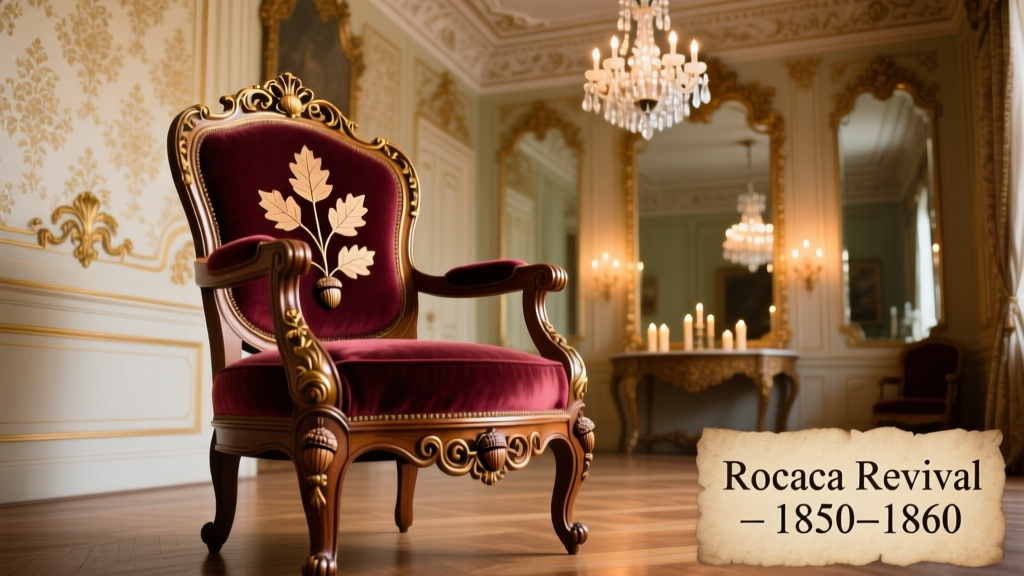
Slipper Belter Chairs: Rococo Revival Rosewood Armchairs with Oak Leaf and Acorn Motifs, Circa 1850–1860
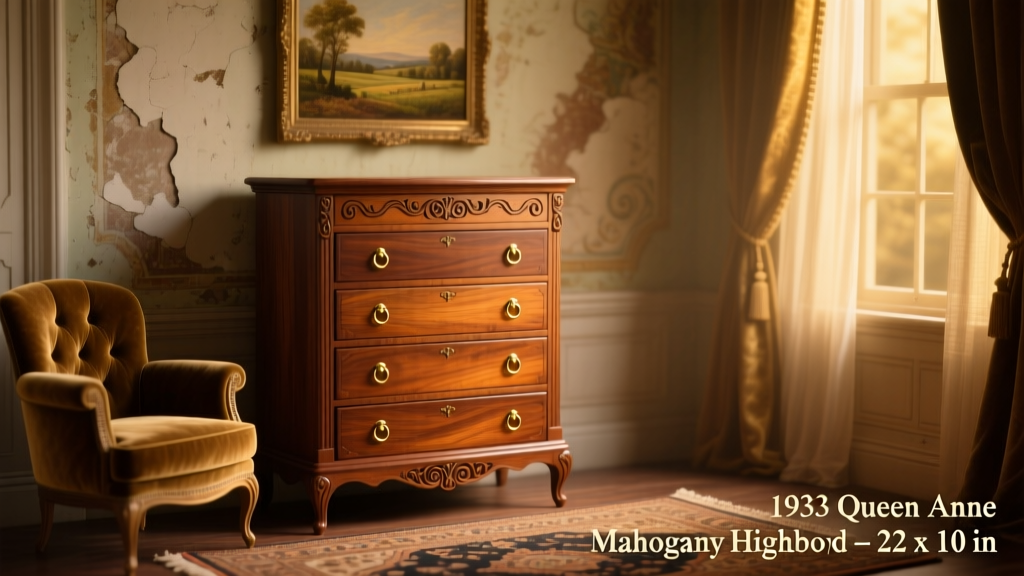
Queen Anne Miniature Highboy: Authentic 1933 Mahogany Collector’s Piece from Massachusetts
Toby Jug: Man Standing Holding Pitcher and Pipe in Pink Vest — Staffordshire, Circa 1850s, 11 Inches Tall
Wedgwood Sugar Creamer in Black Jasperware: History, Identification, and Care

What Kind of Glass Is Used in the 3-Tall Daisy Pedestal Bowl? Material Analysis, Historical Context, and Restoration Guidelines
Old Teasets: History, Identification, and Restoration of Antique Tea Services
Aladdin B-91 Diamond Quilt White Moonstone Font with Rose Foot: A Restoration Specialist’s Deep Dive
Adams Platter Green: Decoding the Iconic 18th-Century Cerulean Hue in Neoclassical Furniture Finishes