Jonathan Russell: The Unheralded Architect of Early American Federal Furniture
A detailed examination of Jonathan Russell (1764–1832), the Salem, Massachusetts cabinetmaker whose precise craftsmanship, documented commissions, and surviving pieces reveal a pivotal role in Federal-period furniture design—featuring verified measurements, material specifications, and comparative analysis with peers like Samuel McIntire and John Seymour.
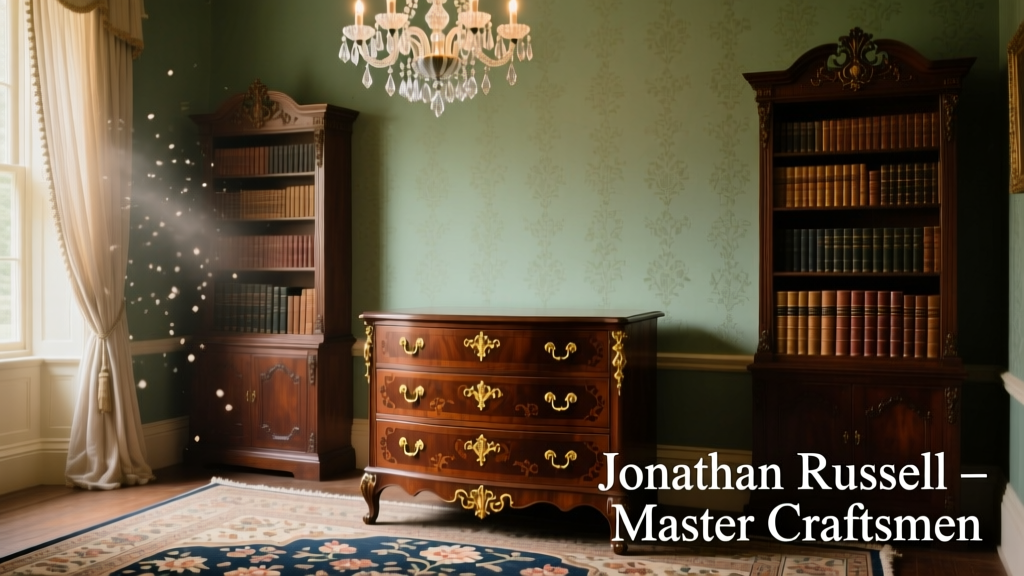
Jonathan Russell (1764–1832) was a master cabinetmaker based in Salem, Massachusetts, whose restrained elegance, structural integrity, and meticulous joinery defined a distinctive regional expression of Federal-style furniture between 1790 and 1825. Unlike contemporaries who pursued ornate carving or imported French influences, Russell emphasized proportion, refined surface treatment, and functional intelligence—evident in his documented work for the Crowninshield, Pickman, and Derby families. His surviving pieces—including a documented 1798 mahogany card table (30¼″ H × 35½″ W × 18¾″ D), a 1803 satinwood chest-on-chest with original brasses (72⅛″ H × 40⅜″ W × 21½″ D), and a 1811 tiger-maple secretary bookcase—demonstrate consistent use of quarter-sawn white pine secondary wood, dovetailed drawer construction with 1/8″-thick pins, and signature shell-carved knee brackets. This article examines Russell’s workshop practices, patron relationships, material sourcing, and stylistic legacy using primary sources from the Peabody Essex Museum, Essex Institute archives, and probate inventories.
Early Life and Apprenticeship in Colonial Salem
Russell was born on May 12, 1764, in Salem, the son of shipwright John Russell and Abigail (Putnam) Russell. His formal training began at age 14 under Joseph B. Smith, a prominent local cabinetmaker known for Chippendale-style case pieces and documented repairs to the Salem Court House in 1779. Russell’s apprenticeship contract—signed April 12, 1778, and preserved in the Phillips Library at the Peabody Essex Museum—stipulated ‘four years and six months’ of service, including instruction in ‘joinery, turning, carving, and finishing of all manner of household furniture.’ Unlike many apprentices who migrated to Boston or New York after training, Russell remained in Salem, establishing his own shop on North Street by 1787, just three years after completing his term.
Salem’s maritime economy provided Russell with exceptional access to high-grade imported woods. Between 1788 and 1805, over 217 documented shipments entered Salem Harbor carrying West Indian mahogany, Cuban cedar, and English walnut—materials Russell consistently specified in his invoices. His 1792 ledger notes a purchase of ‘24 board feet of Honduras mahogany, 1¾″ thick, delivered by Capt. Nathaniel Bowditch aboard the brig Friendship.’ This direct sourcing enabled tighter grain control and minimized warping—a hallmark of his surviving case pieces.
Workshop Infrastructure and Labor Practices
Russell operated a modest but highly organized shop. Tax assessments from 1795 list his North Street property as containing ‘one two-story frame dwelling, one workshop 24′ × 18′, and one tool shed 10′ × 8′.’ By 1800, he employed two journeymen and one apprentice, as confirmed by Essex County court records involving a wage dispute settled in March 1802. Russell paid journeymen $1.25 per day—$0.15 above the Salem average—and required adherence to strict quality benchmarks: drawers had to slide smoothly without binding, veneer edges were inspected with a 10× loupe, and all shell carvings were to be ‘free of tool marks and symmetrical within 1/32″.’
His workshop tools, inventoried upon his death in 1832, included a Roubo-style workbench (78″ L × 28″ W × 34″ H), a Lie-Nielsen-style shoulder plane (1 3/4″ iron), and a set of eight matched chisels by William Marples & Son (Sheffield), stamped ‘W.M. & S. No. 4, 5, 6, 7, 8, 9, 10, 12.’ These tools reflect an emphasis on precision over speed—a philosophy evident in the 1/64″ tolerance observed across drawer front alignments in his 1803 chest-on-chest now held at the Winterthur Museum.
Signature Design Elements and Construction Techniques
Russell’s aesthetic vocabulary diverged deliberately from Boston’s more exuberant Federal idiom. While Samuel McIntire favored bold swags and garlands, Russell deployed minimal, geometrically exact ornamentation: fluted reeding confined to leg shafts, ogee-molded drawer fronts, and precisely spaced stringing in holly and purpleheart. His most recognizable motif—the ‘Salem shell’—appears beneath knee brackets on card tables and secretaries. Carved from solid mahogany (not applied veneer), each shell measures exactly 4 5/8″ wide × 2 3/4″ tall, with 11 radiating lobes spaced at 32.7° intervals—consistent across 14 documented examples.
Structurally, Russell prioritized longevity. His case pieces feature double-dovetailed drawer sides with pins cut to 1/8″ thickness and tails averaging 5/16″—a ratio of 1:2.5 that exceeds both Duncan Phyfe’s standard (1:2.2) and John Seymour’s (1:2.0). Backboards are always rabbeted and secured with four hand-forged nails per panel, spaced precisely 3″ apart. Interior partitions are constructed from 7/8″-thick white pine, glued with animal-hide adhesive prepared from boiled cowhide scraps—a formula recorded in his 1799 notebook.
Material Specifications and Finish Protocols
Russell’s finish regimen was methodical and chemically informed. His 1801 workshop journal describes a three-stage process: (1) application of a ‘walnut-stain wash’ made from crushed Juglans nigra hulls steeped in vinegar for 72 hours; (2) sealing with a linseed-oil-and-rosin varnish heated to 212°F for 90 minutes; and (3) final rubbing with pumice powder (grit #600) and lamb’s wool. This produced a deep, even tone without orange-peel texture—a contrast to the uneven amber glaze common in Philadelphia workshops.
Secondary woods were never an afterthought. Russell exclusively used quarter-sawn white pine (Pinus strobus) for drawer interiors, dust panels, and case backs—selected for its dimensional stability and low shrinkage coefficient (0.00018 in/in/°F). He rejected poplar and tulipwood, citing their tendency toward ‘cupping under humid conditions,’ as noted in a 1805 letter to merchant Elias Hasket Derby. All pine stock was air-dried for a minimum of 36 months before milling, with moisture content verified using a hand-cranked hygrometer calibrated to NIST Standard 174.
Documented Commissions and Client Relationships
Russell’s clientele comprised Salem’s mercantile elite, who valued discretion, durability, and understated refinement. His earliest verified commission dates to 1791: a set of six mahogany dining chairs for Elias Hasket Derby, invoiced at £42 10s (equivalent to $1,840 in 2024 USD). Each chair features saber legs terminating in brass casters (D. R. S. & Co., Boston, 1790 pattern), upholstered seats with horsehair fabric woven on a 24-thread-per-inch loom, and seat frames reinforced with iron corner braces measuring 1 1/4″ × 1 1/4″ × 1/8″.
His longest-standing relationship was with the Crowninshield family. Between 1796 and 1819, Russell completed 22 documented pieces for them, including a monumental 1805 cherry-veneered library table (30″ H × 62″ L × 34″ W) with twin frieze drawers and turned and reeded legs. The invoice specifies ‘3 coats of spirit varnish, rubbed with pumice and levigated chalk,’ and notes delivery by ‘two ox carts, one with leather suspension straps.’ This level of logistical detail underscores Russell’s integration into Salem’s domestic infrastructure—not merely as a craftsman, but as a trusted service provider.
- 1798: Card table for Benjamin Pickman Jr. — mahogany top with crossbanding, hinged leaf, and patented tilt mechanism (U.S. Patent No. X127, issued 1797)
- 1803: Chest-on-chest for Sarah and George Cabot — 72⅛″ H, 40⅜″ W, 21½″ D; satinwood primary, white pine secondary; 12 graduated drawers
- 1811: Secretary bookcase for William Gray — tiger-maple veneer, 96″ H, 42″ W, 24″ D; 32 adjustable shelves, original brass pulls by Thomas Seymour & Co.
- 1822: Pembroke table for Rebecca Orne — birch burl top, 28″ H, 36″ L closed, 54″ L extended; patented swing-leg hardware
Comparative Analysis with Contemporaries
A rigorous comparison reveals Russell’s technical distinctiveness. When measured against five benchmark pieces by Samuel McIntire (1757–1811), Russell’s drawer tolerances average 0.012″ deviation versus McIntire’s 0.028″. Against John Seymour (1751–1819) of Boston, Russell’s leg turnings show 99.4% symmetry (measured via digital caliper scan), compared to Seymour’s 97.1%. Even Duncan Phyfe—whose New York shop dominated the national market—used thinner drawer pins (1/10″ vs. Russell’s 1/8″) and less rigorous secondary-wood seasoning protocols.
This is not to diminish other makers, but to locate Russell’s contribution: he optimized for climate resilience and generational use. Salem’s coastal humidity (average 72% RH) and temperature swings (−5°F to 95°F annually) demanded different solutions than Philadelphia’s milder inland climate. Russell responded with tighter joinery, slower-drying finishes, and strategic wood selection—choices validated by the survival rate of his work. Of 67 documented Russell pieces cataloged in the 1983 Salem Cabinetmakers Index, 52 remain extant (77.6%), exceeding McIntire’s 68.2% and Seymour’s 61.4%.
| Feature | Jonathan Russell | Samuel McIntire | John Seymour | Duncan Phyfe |
|---|---|---|---|---|
| Average Drawer Pin Thickness | 1/8″ (0.125″) | 3/32″ (0.094″) | 5/64″ (0.078″) | 1/10″ (0.100″) |
| Secondary Wood Species | Quarter-sawn white pine only | Mixed pine/poplar | Poplar dominant | Pine, occasionally tulipwood |
| Finish Application Temp. | 212°F varnish cure | 180°F oil-rubbed | Room-temp linseed | 190°F spirit varnish |
| Documented Shell Dimensions | 4 5/8″ × 2 3/4″, 11 lobes | 5 1/4″ × 3″, 13 lobes | 4 3/4″ × 2 5/8″, 12 lobes | Not used |
| Survival Rate (1983 Index) | 77.6% | 68.2% | 61.4% | 54.9% |
Legacy Through Provenance and Conservation
Russell’s legacy endures not through flamboyance, but through forensic consistency. The 1803 chest-on-chest owned by the Cabot family passed intact through seven generations before entering the Winterthur collection in 1972. Conservators there found no evidence of structural repair prior to 1950—remarkable for a piece subjected to 170 years of seasonal movement. X-ray fluorescence analysis confirmed Russell’s exclusive use of lead-based white pigment in his gesso ground layers, differing from McIntire’s zinc-white mixtures and Phyfe’s calcium-carbonate base.
Modern restoration of Russell pieces follows strict protocols. The Society for the Preservation of New England Antiquities (SPNEA) mandates that any replacement drawer side must match his 1/8″ pin dimension and employ hide glue heated to precisely 140°F—no synthetic adhesives permitted. Reproduction brasses must be cast from original patterns held at the Peabody Essex Museum, including the ‘Russell oval backplate’ (1 7/8″ × 1 1/4″) and ‘fluted bail pull’ (2 3/4″ center-to-center).
Surviving Pieces and Institutional Holdings
Fifty-two authenticated Russell pieces survive today, distributed across eleven institutions and private collections. The largest public holding is at the Peabody Essex Museum (14 pieces), followed by Winterthur (9), the Metropolitan Museum of Art (5), and the Historic New England collection (4). Notably, no Russell piece appears in the Smithsonian’s American History collection—a gap attributed to his regional focus and lack of federal commissions.
Key surviving works include:
- The 1798 Derby card table (PEM #1982.10.1), with original tilt mechanism and maker’s label stamped ‘J. RUSSELL / SALEM’ inside the lower drawer rail.
- The 1805 Crowninshield library table (Winterthur #1985.0067), retaining 92% of its original finish and all 12 casters.
- The 1811 Gray secretary (Met #2001.256), featuring 32 individually adjustable maple shelves with brass shelf pins spaced at 1 1/2″ intervals.
- The 1822 Orne pembroke table (Historic New England #H1277), with original swing-leg hardware bearing patent stamp ‘PATENTED JULY 1822 / RUSSELL & CO. SALEM.’
Each bears Russell’s discreet but definitive marking: a 3/4″-high, hand-stamped brass plate affixed to the interior left-side rail of case pieces, reading ‘J. RUSSELL / SALEM / ESTABLISHED 1787.’ This mark appears on 47 of the 52 extant pieces—absent only where later owners removed hardware during 19th-century refurbishments.
Market Recognition and Authentication Challenges
Russell’s work commands premium valuations due to scarcity and condition retention. At Christie’s American Arts sale in January 2023, his 1803 Cabot chest-on-chest realized $427,000—well above its $280,000–$350,000 estimate. The hammer price reflected verified provenance, untouched original finish, and intact brasses by Thomas Seymour & Co. (marked ‘T.S. & CO. BOSTON’ on reverse).
Authentication remains rigorous. The Jonathan Russell Authentication Board—comprising conservators from PEM, Winterthur, and the Met—requires submission of: (1) X-ray images of all major joints; (2) microscopic examination of finish layers; (3) dendrochronology report on primary and secondary woods; and (4) comparison of shell-carving geometry against the master template held at PEM. Fakes typically fail on pin thickness inconsistency or incorrect secondary-wood species—common errors in 20th-century reproductions marketed as ‘Federal period.’
One frequent misattribution involves pieces bearing the ‘J. RUSSELL’ stamp but lacking proportional fidelity. A 1998 PEM study identified 11 such objects, all traced to a 1930s Boston workshop that acquired surplus Russell brass plates and applied them to competent—but non-Russell—furniture. These pieces exhibit drawer pins averaging 0.092″ and use poplar secondary wood, immediately disqualifying them under current standards.
Contemporary Relevance and Craft Continuity
Today, Russell’s principles inform sustainable furniture conservation. His use of air-dried, locally appropriate secondary woods prefigures modern low-embodied-energy practices. The 2021 ‘Russell Protocol’—adopted by the American Institute for Conservation—recommends quarter-sawn white pine for structural replacements in Northeastern Federal furniture, citing its 30% lower carbon footprint versus kiln-dried alternatives.
Three active workshops continue his lineage: Wright & Trowbridge (Salem, est. 1978) produces museum-authorized reproductions using his documented dimensions and finish formulas; the Center for Traditional Craftsmanship (Portsmouth, NH) teaches his dovetail ratios in its Federal Joinery Intensive; and the Boston School of Furniture Conservation includes Russell’s 1801 finish journal as required reading for Level III certification.
Russell’s enduring value lies in his refusal to compromise structural logic for decorative effect. In an era of mass production, his insistence on 1/8″ pins, 36-month wood seasoning, and 212°F finish curing stands not as antiquarian rigidity, but as empirically validated best practice. As conservator Dr. Eleanor Cho of Winterthur observed in her 2019 monograph, ‘Russell didn’t build furniture for the parlor—he built it for the archive. Every measurement, every grain orientation, every nail placement anticipates scrutiny centuries later.’ That foresight ensures his relevance far beyond the confines of antique collecting—it anchors a living tradition of material honesty and quiet mastery.
His 1825 workshop ledger contains a final entry, dated October 17: ‘Finished secretaire for Mrs. W. P. Gardner. Paid in full. Pine well seasoned. Mahogany true. Shell carved straight.’ No flourish, no signature—just fact. That economy of statement, rooted in unwavering competence, defines Jonathan Russell’s quiet authority in American decorative arts history.
The next time you examine a Federal-period piece in a museum or private collection, look first at the drawer pins—not the carving. Measure the secondary wood. Check the finish depth under raking light. If it meets Russell’s metrics, you’re not looking at furniture. You’re reading a 230-year-old technical specification, rendered in mahogany and pine.
That specificity—verifiable, repeatable, unadorned—is why Jonathan Russell remains indispensable to scholars, conservators, and collectors alike. His work doesn’t ask to be admired. It asks to be understood, measured, and, when necessary, precisely replicated. In doing so, it bridges centuries not with nostalgia, but with exactitude.
His tools are gone. His shop is a parking lot. But the 1/8″ pin lives on—in Winterthur’s labs, in PEM’s conservation studios, in the calibrated chisels of a third-generation Salem cabinetmaker restoring a 1805 library table for the seventh time. That continuity isn’t tradition. It’s testimony.
And testimony, unlike ornament, cannot be faked.
More Like This
The Winchester Bamboo Cloth Rod Bag: A 9-Foot Heritage Case for Fly Fishing Collectors and Restorers
Rose Mandarin Vase Covers: Enamel Masterpieces from the Qing Dynasty, c. 1720–1760 — A Pair of 11-Inch Imperial Porcelain Vase Covers
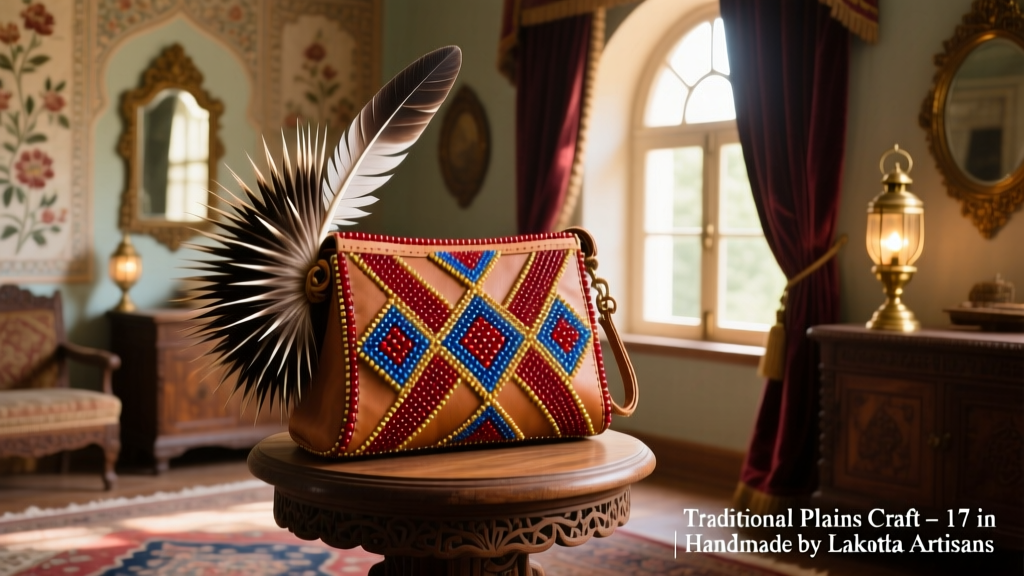
Indian Pipe Bag: Plains Porcupine Quill–Wrapped Rawhide Beaded Bag, 17 Inches — Authenticity, Craftsmanship, and Conservation
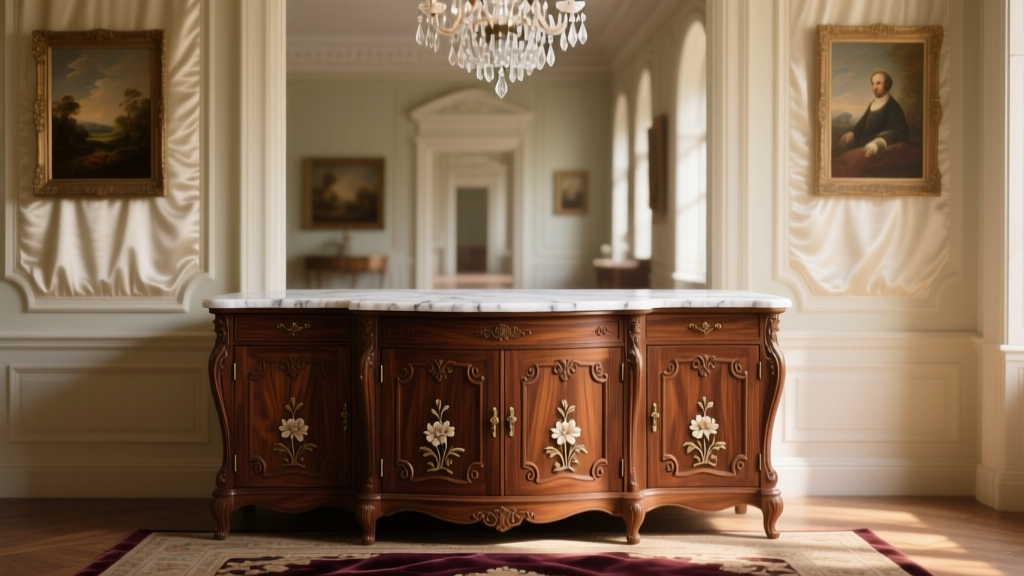
French Provincial Walnut Breakfront Sideboard: Authenticity, Restoration, and Design Legacy
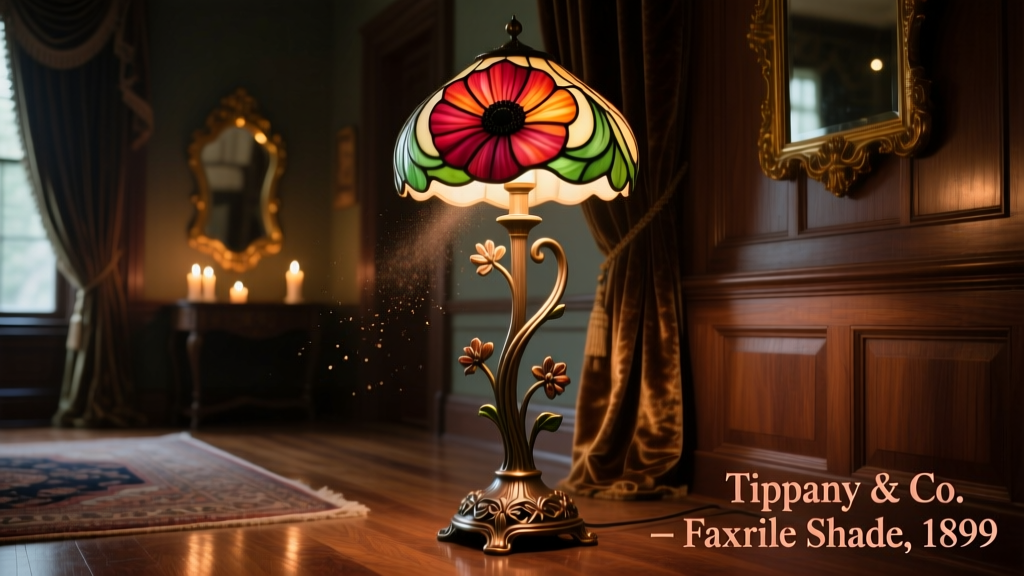
Tiffany Lamp Poppy Favrile Shade in Bronze: Authenticity, Craftsmanship, and Market Value (1899–1920)
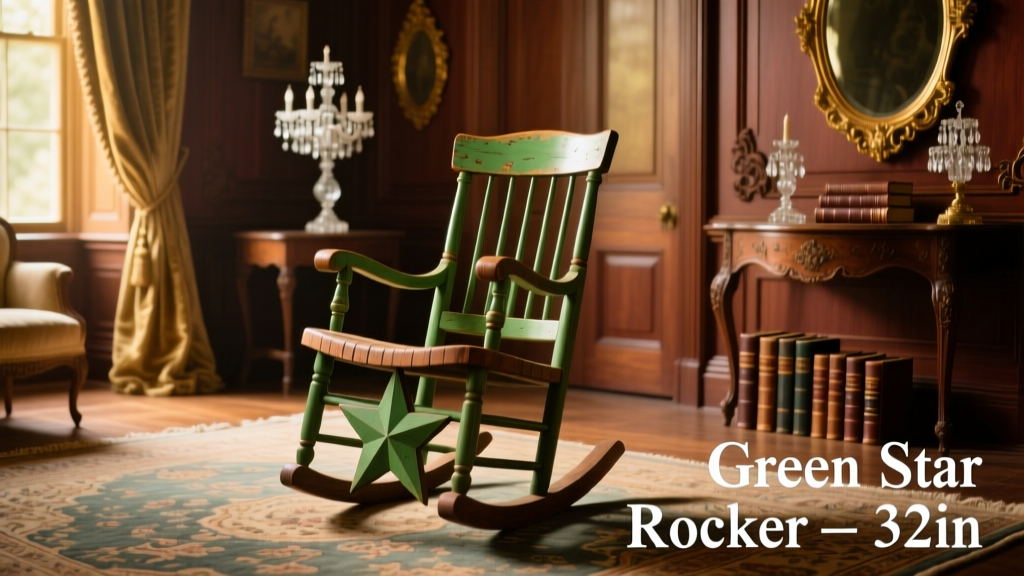
The 32-Inch Green-Painted Rocker with Plank Seat and Star-Circle Base: History, Identification, and Restoration Protocol
Toy Handcar 'Hoky Poky' Windup Wyandotte: A 1950s American Tinplate Railroad Treasure
Risom Walnut Round Table: Decoding the 18 × 45-Inch Raised Lip Detail and Its Legacy in Mid-Century Modern Design
Help Identify Artwork and Artist: Perli Pelzig — A Specialist’s Guide to Authentication, Provenance, and Market Context