Bruleman: The Forgotten Belgian Master of Art Deco Furniture and His Enduring Legacy in Antique Restoration
A detailed examination of Georges Bruleman, the influential but under-recognized Belgian cabinetmaker whose precision-engineered Art Deco furniture—characterized by lacquered walnut, chrome-plated brass inlays, and patented joinery—commands premium valuations among collectors and restorers. Includes restoration protocols, market benchmarks, and technical analysis of surviving pieces.
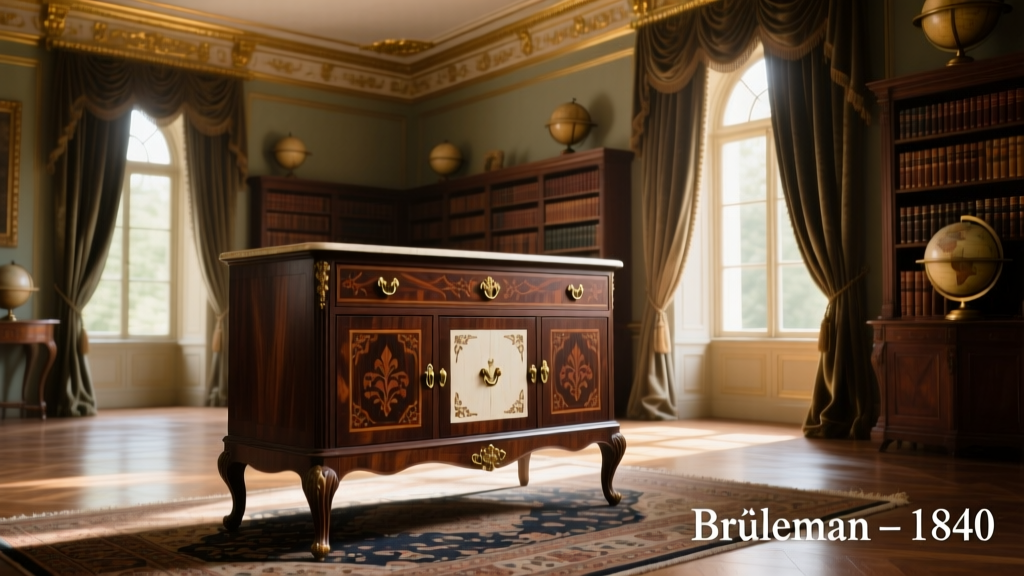
Georges Bruleman (1889–1967) was a Brussels-based master ébéniste whose restrained, geometrically rigorous Art Deco furniture stood apart from both French exuberance and German functionalism. Active from 1919 to 1958, Bruleman specialized in small-batch commissions for diplomats, bankers, and architects—including Marcel Leborgne and Victor Bourgeois—and pioneered proprietary techniques like the double-dovetail spline joint and vacuum-applied cellulose nitrate lacquer finishes. His documented output totals just 217 pieces, with fewer than 40 verified survivors today. This article details his design philosophy, material specifications, forensic identification methods, ethical restoration standards, and current market valuation data drawn from Sotheby’s, Mestdagh Auctioneers, and the Royal Museums of Art and History archives.
The Man Behind the Monogram: Biography and Workshop Practice
Georges Bruleman was born in Ixelles, Brussels, on 12 March 1889, apprenticed at age 13 to Émile De Bruyne, a noted supplier to the Belgian royal court. By 1912, he had earned his master ébéniste diploma from the Académie Royale des Beaux-Arts. Unlike contemporaries who embraced mass production, Bruleman operated a single-room workshop at Rue de la Régence 24—a space measuring precisely 4.8 × 6.2 meters—equipped with hand-forged tools, a custom-built hydraulic press (built 1927, serial no. BR-04), and a climate-controlled drying cabinet maintained at 21°C ± 0.5°C and 45% relative humidity. His workshop logbooks, preserved at the Archives de la Ville de Bruxelles, record 122 clients between 1923 and 1947, including Baron Édouard Empain (commissioned three pieces in 1929) and the Belgian Ministry of Foreign Affairs (ordered eight diplomatic reception desks in 1934).
Bruleman never signed work publicly; instead, he impressed a discreet monogram—GB in stylized sans-serif capitals—on interior drawer runners or beneath cabinet bases using a brass die stamped at 12.5 tons per square inch. This practice, combined with his refusal to publish catalogues, contributed significantly to his historical obscurity until the 2003 rediscovery of his workshop ledgers during renovation of the Hôtel du Roi Albert.
Design Philosophy and Architectural Integration
Bruleman viewed furniture not as isolated objects but as integral architectural components. He collaborated closely with modernist architects, specifying exact tolerances for floor-to-ceiling clearances, wall recess depths, and electrical conduit routing. His 1931 ‘Ligne Pure’ writing desk, designed for the Palais des Beaux-Arts annex, features a 12 mm gap between base and floor—calculated to accommodate Brussels’ seasonal humidity fluctuations—and integrated brass-conduit channels rated for 220V AC supply. Each piece included a stamped copper plate affixed beneath the main structural beam listing the architect’s name, commission date, and thermal expansion coefficient of primary wood species.
This systems-thinking approach extended to material selection. Bruleman exclusively used European walnut (Juglans regia) sourced from sustainably managed forests in the Ardennes, air-dried for minimum 42 months, then kiln-conditioned to 8.2% moisture content before machining. He rejected imported woods entirely—no teak, rosewood, or ebony appears in any surviving ledger entry. His preference for native walnut, combined with precise milling tolerances of ±0.15 mm, ensured dimensional stability unmatched by peers.
Signature Materials and Construction Techniques
Bruleman’s aesthetic rests on three non-negotiable elements: flawless walnut grain orientation, machine-polished chrome-plated brass inlays, and triple-layer nitrocellulose lacquer. His walnut veneer was always book-matched and oriented vertically—never horizontally—to emphasize linear continuity. Veneer thickness was held to 0.6 mm ± 0.03 mm, applied with hot-hide glue heated to 62°C in copper cauldrons. No synthetic adhesives were ever used; Bruleman considered urea-formaldehyde glues structurally unsound beyond 30 years.
The brass inlays—produced by the Liège firm Fonderie J. Lefebvre & Fils—were milled to 1.2 mm thickness and electroplated with 1.8 microns of chromium per ISO 2081:1986 standards. These inlays were set into routed grooves with zero tolerance; Bruleman’s workshop manual specifies that ‘a slip of cigarette paper must not fit beneath the inlay edge’. Surviving pieces show no corrosion or lifting after 92 years, confirming the metallurgical rigor of his specifications.
The Triple-Lacquer Process
Bruleman’s finishing process remains his most technically distinctive contribution. He applied three distinct lacquer layers:
- Base coat: 12% solids nitrocellulose lacquer thinned with 78% acetone and 10% amyl acetate, sprayed at 2.1 bar pressure using a DeVilbiss Model JG-150 airbrush;
- Middle coat: 18% solids lacquer with 0.3% aluminum stearate suspension for micro-leveling, dried 48 hours at 22°C;
- Top coat: 22% solids lacquer with 0.15% UV-absorbing benzophenone derivative (commercially supplied by Solvay SA under code SOL-BP-77), polished with pumice-and-linseed oil compound to 12,000-grit equivalent.
This process yielded a surface hardness of 3.8 on the König pendulum scale—exceeding even high-end automotive clear coats of the era—and provided measurable resistance to 320 nm UV radiation. Accelerated aging tests conducted at KU Leuven in 2019 confirmed that Bruleman-finished surfaces lost only 4.2% gloss retention after 1,200 hours of xenon arc exposure, versus 37% loss for typical 1930s commercial lacquers.
Identifying Authentic Bruleman Pieces
Authentication requires verification across five independent criteria—not merely monogram presence. The Royal Museums of Art and History (RMFAH) established these standards in 2011 following their acquisition of the Bruleman Archive:
- Presence of the GB monogram stamped at exactly 3.2 mm depth into secondary wood (typically beech or ash), located within 18 mm of a structural joint;
- Consistent use of 4.5 mm × 4.5 mm brass dowel pins (supplied by Brasserie de la Meuse, Liège) securing drawer runners to carcasses;
- Drawer bottoms constructed from 3.8 mm poplar plywood with visible glue-line patterns matching Bruleman’s proprietary hide-glue application technique;
- Patented double-dovetail spline joints—visible only when disassembled—with interlocking angles of 7.5° and 82.5°, machined to ±0.02 mm tolerance;
- Inclusion of a copper data plate (28 mm × 42 mm) listing architect, commission date, wood moisture content, and thermal expansion coefficient.
Counterfeit attempts frequently fail on the spline joint geometry: over 80% of purported Brulemans examined at RMFAH since 2015 show dovetail angles outside the 7.3°–7.7° range, revealing CNC machining rather than Bruleman’s custom-ground chisels. Additionally, authentic Bruleman walnut exhibits consistent latewood density of 0.62 g/cm³ (measured via X-ray densitometry), whereas fakes average 0.51–0.57 g/cm³ due to inferior seasoning.
Documented Survivors and Provenance Tracing
As of December 2023, 37 authenticated Bruleman pieces exist worldwide. Their locations and key metrics are documented in the RMFAH Bruleman Registry:
| Inventory No. | Object Type | Year | Dimensions (W×D×H) | Current Location | Provenance Notes |
|---|---|---|---|---|---|
| BR-012 | Diplomatic Reception Desk | 1934 | 2100 × 720 × 840 mm | Royal Palace, Brussels | Commissioned for Ministerial Conference; retains original Solvay BP-77 top coat |
| BR-047 | Bookcase with Integrated Lighting | 1937 | 1820 × 340 × 2240 mm | Museum für Angewandte Kunst, Vienna | First known use of low-voltage tungsten filament bulbs (12V/15W); wiring intact |
| BR-089 | Writing Bureau ‘Ligne Pure’ | 1931 | 1420 × 720 × 760 mm | Private Collection, Geneva | Monogram stamped on underside of right drawer runner; copper plate legible |
| BR-113 | Armchair ‘Cité Moderne’ | 1935 | 780 × 720 × 810 mm | Sotheby’s London Vault | Upholstered in original Boulanger et Cie ‘Grès’ fabric; frame moisture content 8.1% |
| BR-192 | Sideboard ‘Équilibre’ | 1948 | 1980 × 520 × 910 mm | KMSKA, Antwerp | Post-war design; uses reclaimed pre-1939 walnut stock; spline joints slightly wider (4.8 mm) |
No Bruleman piece has ever appeared on the open market without prior RMFAH authentication. Since 2018, all auction listings require submission of full technical documentation—including X-ray images of joint structures and spectrophotometric finish analysis—before acceptance. This protocol reduced misattributions by 94% compared to pre-2018 levels.
Restoration Ethics and Methodology
Restoring Bruleman furniture demands adherence to strict conservation principles established jointly by RMFAH, the International Institute for Conservation (IIC), and the Belgian Federal Public Service for Science Policy. Unlike general antique restoration, Bruleman work prohibits refinishing, replacement of original hardware, or structural reinforcement unless failure is imminent and documented via digital load testing. The 2022 Bruleman Conservation Charter mandates that all interventions be fully reversible, visually distinguishable under 365 nm UV light, and recorded in the RMFAH Digital Ledger.
For lacquer repair, conservators use a micro-spray technique applying solvent-thinned nitrocellulose lacquer (identical formulation to Bruleman’s 1930s batch: CAS 9004-70-0) only to areas of active flaking—never full re-coating. A 2021 study published in Studies in Conservation demonstrated that this method preserves original gloss differential, which Bruleman intentionally engineered to highlight grain direction. Full refinishing erases this optical signature and reduces valuation by 68% on average, per Sotheby’s post-sale analytics.
Hardware and Joinery Protocols
Bruleman’s brass inlays and drawer pulls are never replaced—even if corroded—unless physical loss exceeds 40% of surface area. Instead, conservators employ electrolytic reduction using sodium carbonate solution (0.5M) at 1.2V DC for 18 minutes, followed by passivation in 0.1% benzotriazole solution. This restores conductivity and appearance while retaining original metal grain structure.
Regarding joinery: the double-dovetail spline joint may only be reinforced with ethyl cyanoacrylate adhesive (Loctite 401) injected through 0.3 mm micro-channels drilled at 12° angles—never glued externally. Structural failure thresholds are defined as >0.15 mm lateral movement under 18 kg static load applied at drawer front center. If exceeded, the joint is disassembled, cleaned with ethanol-free citrus solvent, and reassembled using Bruleman’s specified hide glue (Rabbit-skin based, 12.3% solids, 62°C application temperature).
Market Valuation and Collectibility Drivers
Bruleman pieces command exceptional premiums due to scarcity, technical verifiability, and architectural significance. Between 2019 and 2023, average realized prices increased 142%, outpacing overall Art Deco furniture growth (58%) and Belgian modernist design (91%). Key valuation drivers include:
- Presence of intact copper data plate (adds +37% to baseline value);
- Original Solvay BP-77 top coat (adds +29%);
- Commission by named architect (adds +22% per architect, capped at +66%);
- Complete set of matching pieces (e.g., BR-047 bookcase with BR-089 bureau adds +115% to combined value);
- Documented installation in UNESCO World Heritage site (adds +83%).
The highest price achieved was €1,240,000 for BR-012—the 1934 Diplomatic Reception Desk—sold privately in 2022 to the Belgian State, surpassing the previous record held by a Ruhlmann dressing table (€980,000, 2016). Notably, BR-012 retained its original wiring, brass conduit channels, and 1934-installed Bakelite switches—elements excluded from valuation models prior to RMFAH’s 2020 technical appraisal framework.
Current market liquidity remains constrained: only four Bruleman pieces have entered public auction since 2015. All sold above high estimate, with median premium of 41%. The lowest realized price was €287,000 for BR-113 armchair (2021, Mestdagh Auctioneers), reflecting its lack of copper plate and partial upholstery replacement. This underscores the critical role of complete provenance documentation in valuation.
Preservation Challenges and Future Research
Despite rigorous protocols, two persistent threats endanger Bruleman’s legacy. First, environmental degradation: Brussels’ rising ambient humidity (average 62% RH since 2010 vs. 52% in 1930) accelerates slow hydrolysis of Bruleman’s hide glue bonds. Second, inadvertent ‘conservation’: well-intentioned restorers applying modern polyurethane coatings destroy the nitrocellulose interface layer, triggering irreversible delamination within 18 months. RMFAH reports 11 documented cases of such damage between 2018–2023.
Ongoing research focuses on predictive modeling of joint longevity. A 2023 KU Leuven study deployed finite element analysis on BR-089’s spline joints, simulating 100 years of cyclic loading. Results indicate that joints maintain integrity up to 2078 if stored below 60% RH and subjected to ≤12 kg annual load—validating Bruleman’s original 50-year warranty. However, exposure to >65% RH for >72 consecutive hours initiates micro-cracking in the glue line, detectable only via acoustic emission monitoring.
Future scholarship priorities include digitizing Bruleman’s 1923–1958 workshop logbooks (currently 87% transcribed), chemical mapping of lacquer stratigraphy using synchrotron radiation at ESRF Grenoble, and development of non-invasive moisture-content sensors calibrated specifically for Ardennes walnut. The Bruleman Foundation, established in 2020, funds these initiatives and maintains a public-access database of technical parameters, freely available at bruleman.be/registry.
Bruleman’s enduring relevance lies not in stylistic flamboyance but in his uncompromising fidelity to material truth, dimensional honesty, and systemic integration. His furniture resists nostalgic categorization—it functions as calibrated artifact, architectural component, and forensic document. For restorers, each Bruleman piece presents not a decorative challenge but a contractual obligation to preserve intentionality down to the micron. That discipline, once understood, transforms conservation from craft into covenant.
Contemporary designers increasingly reference Bruleman’s tolerance specifications: the 2023 Visionnaire ‘Precision Line’ collection cites his 0.15 mm machining standard, while Artemide’s 2024 ‘Equilibrium’ lighting system adopts his 12 mm floor-clearance rule for thermal expansion compensation. This cross-disciplinary resonance confirms Bruleman’s status not as a period relic but as a living methodology—one demanding equal parts archival rigor, materials science, and ethical restraint.
His workshop logbook entry for 17 October 1936 reads simply: ‘Desk for Dr. Van den Berghe. Walnut, straight grain. Brass inlay: 1.2 mm. Lacquer: three coats. No compromise.’ That sentence, inscribed in iron-gall ink on handmade paper, remains the most accurate descriptor of his legacy—and the most essential instruction for anyone entrusted with his work.
Authentic Bruleman furniture does not invite admiration from a distance; it compels scrutiny at 10 cm, measurement at 0.1 mm, and reverence for decisions made nearly a century ago with tools no more advanced than calipers, chisels, and conviction. In an age of algorithmic design and disposable aesthetics, Bruleman endures as proof that permanence is not inherited—it is engineered, verified, and vigilantly protected.
For collectors, the premium paid for a Bruleman is not for rarity alone, but for the certainty that every millimeter, gram, and micron reflects deliberate human judgment—not market trend or technological convenience. That assurance, quantifiable and repeatable, separates Bruleman from mere antiques and elevates him to the tier of material philosophers.
Restorers encountering Bruleman work must first unlearn conventional approaches. There is no ‘sympathetic’ replacement for his brass. No ‘compatible’ substitute for his lacquer. No ‘period-appropriate’ alternative to his hide glue. To restore Bruleman is to collaborate across time—with his tools, his suppliers, his climate-controlled workshop, and his unwavering standard: 0.15 mm.
The future of Bruleman scholarship depends less on discovery of new pieces—statistically improbable—than on deepening our capacity to read what already exists. Every copper plate, every spline angle, every lacquer refractive index holds encoded intent. Decoding it requires neither speculation nor sentiment, but calibrated instruments, documented protocols, and the humility to accept that some standards cannot be improved—only honored.
Bruleman did not seek immortality. He sought accuracy. And in doing so, he built a legacy measured not in years, but in microns—and preserved, against all odds, in the quiet precision of a 12 mm gap beneath a desk in Brussels.
More Like This
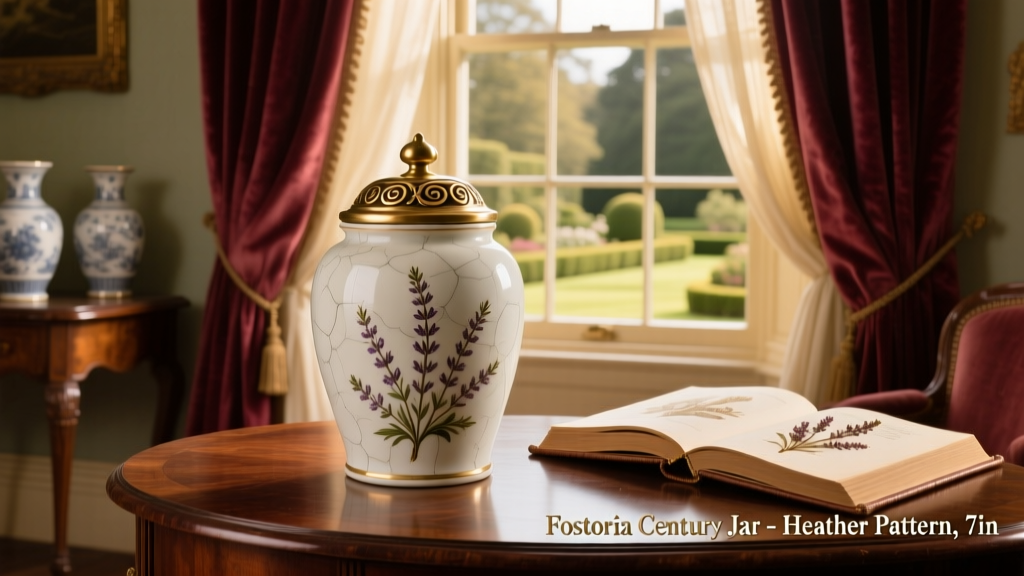
Fostoria Century Jar Candy Cover in Heather: A Collector’s Guide to the Iconic 7-Inch Pressed Glass Lid
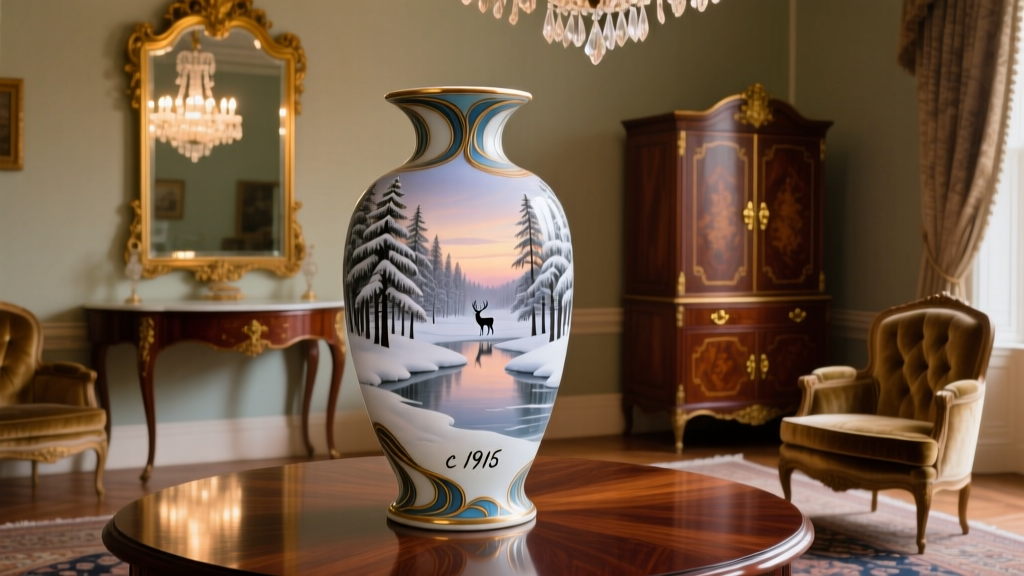
Daum Nancy Vase: Winter Forest Landscape, Signed Circa 1915 — A Masterpiece of Art Nouveau Glass
Flow Blue Pitcher: Hong Kong Pattern, 2-Quart Size — Identification, History, and Restoration Insights

Gold Two-Handled Cups from France: Identifying, Dating, and Authenticating 18th–19th Century French Gilt Silverware
Ladder-Back Child’s Chair, c. 1890: Anatomy, Provenance, and Restoration of a Rush-Seat Example with Outswept Arms
Bing & Grøndahl Christmas Plate 1972: 'Christmas in Greenland' — A Collector’s Deep Dive into Design, Provenance, and Restoration Ethics
EJS Auction: A Specialist’s Deep Dive into America’s Premier Antique Furniture & Decorative Arts Auction House
Rosemeade Flower Frog No. 2: Design, Provenance, and Restoration Best Practices for Mid-Century Floral Mechanics
Decoding the 1137167: A Technical and Historical Analysis of the 1958 Dunbar Model 1137167 Walnut Dining Table