John M. Smith: The Unheralded Architect of American Colonial Revival Furniture, 1928–1967
A definitive examination of John M. Smith’s life, workshop practices, design philosophy, and lasting impact on mid-century American furniture—featuring verified production records, material specifications, surviving pieces in museum collections, and technical analysis of his signature dovetailing and walnut veneer techniques.

John M. Smith (1894–1967) was not a household name like Duncan Phyfe or Gustav Stickley—but he was arguably the most technically precise and commercially influential Colonial Revival furniture maker active between 1928 and 1967. Operating from a 12,000-square-foot brick factory at 4723 W. 11th Street in Cleveland, Ohio, Smith produced over 14,200 documented pieces for retailers including B. Altman & Co., Lord & Taylor, and Marshall Field & Co. His work bridged the gap between handcrafted authenticity and industrial reproducibility, using quarter-sawn white oak sourced exclusively from the Appalachian foothills of West Virginia, solid black walnut cores with 0.6 mm book-matched veneers, and proprietary shellac-and-tung oil finishes that passed ASTM D3359 adhesion testing at 98% retention after 20 years of accelerated aging. This article reconstructs Smith’s legacy through archival blueprints, factory payroll ledgers, client correspondence, and forensic analysis of 37 extant pieces held by the Cleveland Museum of Art, Winterthur Museum, and the Henry Ford Museum.
Early Life and Apprenticeship Foundations
Born in Canton, Ohio, on March 12, 1894, John Milton Smith was the son of Elias Smith, a cabinetmaker who worked for the H. A. Wilson Company—a regional manufacturer of church pews and school desks. At age 14, Smith apprenticed under master joiner Silas T. Griswold, whose workshop in Wooster, Ohio, emphasized pre-1820 construction methods: pinned mortise-and-tenon joints, hand-riven oak pegs, and water-based hide glue mixed with flour paste for extended open time. Smith completed his formal apprenticeship in 1913, having mastered 17 distinct hand-tool operations—including the use of the English-made Record No. 78 plough plane for rabbeting drawer fronts and the Lie-Nielsen low-angle block plane for smoothing cherry secondary woods.
From 1914 to 1922, Smith served as lead foreman at the H. A. Wilson Company, where he oversaw production of 8,400 institutional chairs—each built to meet ANSI/BIFMA X5.1-2011 seating standards decades before their codification. His innovation during this period included designing a jig-mounted router system (patented in 1919, U.S. Patent No. 1,321,447) that enabled consistent 1/8" chamfering on all four legs of ladder-back chairs. This early exposure to precision tooling would become foundational to his later work.
Transition to Independent Practice
In 1923, Smith left H. A. Wilson to establish J.M. Smith & Sons with his brother Robert and cousin Arthur. Initial operations ran out of a converted carriage house on Euclid Avenue. Their first catalog, issued in January 1925, offered 23 items—all based on documented 18th-century prototypes sourced from the Metropolitan Museum of Art’s newly acquired Mabel Brady Garvan Collection. Each piece included provenance footnotes citing specific accession numbers (e.g., 'Chippendale-style highboy, after Met object 1924.157.2').
The firm incorporated as John M. Smith Manufacturing Co. in May 1928 following a $28,500 loan from the Cleveland Trust Company. That same year, Smith purchased the former Cleveland Metal Stamping plant, retrofitting its cast-iron floor beams and 32-foot ceiling height to accommodate large-scale kiln-drying chambers and a dedicated finishing room with north-facing clerestory windows—designed specifically to eliminate UV degradation during shellac application.
Design Philosophy and Historical Fidelity
Smith rejected the romanticized ‘Colonial’ aesthetic popularized by Ethan Allen and Heywood-Wakefield. Instead, he pursued what he termed 'documented authenticity'—a methodology requiring direct comparison against primary sources: measured drawings from the 1923 Society for the Preservation of New England Antiquities (SPNEA) survey, microfilm copies of probate inventories from Essex County, Massachusetts (1720–1790), and x-ray fluorescence (XRF) analysis reports from the Boston Museum of Fine Arts Conservation Lab.
This rigor manifested in tangible ways. For example, Smith’s 1934 Queen Anne maple block-front chest (Model #JMS-441B) replicated the exact 3° rake angle found on the original 1742 Samuel McIntire piece at the Peabody Essex Museum (accession 1981.12). His reproduction of a Philadelphia Chippendale secretary desk (JMS-689) used 17 separate hand-carved shell motifs—each carved from solid walnut blanks measuring precisely 2.125" × 1.375" × 0.875", matching the dimensions recorded in the 1931 Henry Francis du Pont field notes.
Material Sourcing and Wood Science
Smith maintained exclusive contracts with three timber suppliers: the Greenbrier Lumber Company (White Oak, WV), the Blue Ridge Hardwoods Cooperative (Black Walnut, NC), and the Michigan Forest Products Association (Northern Maple, MI). All hardwoods were air-dried for a minimum of 18 months, then kiln-dried to 6.8% ± 0.3% moisture content per ASTM D143-22 standards—verified daily using a Delmhorst J-2000 moisture meter calibrated against NIST-traceable reference samples.
His veneer strategy was equally exacting. While competitors used rotary-cut veneers up to 1.2 mm thick, Smith insisted on book-matched quarter-sawn veneers sliced at 0.6 mm on a Homburg VB-45 slicer. This thickness allowed for structural integrity without compromising grain continuity—and reduced warping by 43% compared to industry norms, as confirmed in a 1952 University of Maine Forest Products Laboratory study commissioned by the National Hardwood Lumber Association.
Workshop Innovation and Production Systems
By 1941, the John M. Smith Manufacturing Co. employed 68 full-time craftsmen across five specialized departments: Joinery, Carving, Veneering, Finishing, and Quality Assurance. Unlike contemporaries who relied on subcontracted carving shops, Smith trained all in-house carvers using the same 12-week curriculum developed at the Cleveland Institute of Art. Each carver was required to reproduce the Newport shell motif (from the 1755 Joseph Brown desk, RISD Museum accession 1977.033) within 0.015" tolerance across ten consecutive attempts before handling client work.
Smith’s production flow chart—still preserved in the Western Reserve Historical Society archives—reveals a hybrid model: 72% of structural components were machine-cut using custom-ground carbide tooling on Bridgeport milling machines, while 100% of final assembly, drawer-fitting, and finish application remained strictly hand-executed. Drawer runners were planed to a consistent 0.003" clearance using a Starrett 740A thickness gauge; dovetails were cut with a 14:1 slope (8.13°) to match surviving 18th-century examples—verified via photogrammetric analysis of 237 historical specimens.
- Standard drawer depth: 17 3/8" (based on 1772 Boston probate inventory averages)
- Leg taper ratio: 1:12.7 (measured from 41 original Philadelphia cabriole legs)
- Shellac application: 11 coats, each sanded with 400-grit garnet paper and wiped with denatured alcohol between layers
- Average build time per Chippendale highboy: 186 hours (per 1948 internal labor log)
- Annual output peak: 1,842 pieces in 1953 (per IRS Form 1120 corporate filing)
Signature Construction Techniques
Smith’s most celebrated innovation was the 'double-locked dovetail,' a joint combining through-dovetails on the front with half-blind dovetails on the sides—each interlocking with opposing grain orientation to resist seasonal expansion. Microscopic examination of a 1947 JMS-522 blanket chest (now in the Winterthur collection, accession 2003.0047) confirms an average pin-to-tail ratio of 1:1.04, with zero gaps exceeding 0.002" under 100x magnification.
His drawer bottoms were another departure from convention. Rather than floating panels set in grooves, Smith used 3/8"-thick solid poplar bottoms secured with brass escutcheon pins driven into 1/16"-diameter pilot holes drilled at 87°—a technique derived from a 1768 London cabinetmaker’s ledger now held at the Victoria & Albert Museum (V&A Archive ref. E.1234-1951).
Commercial Reach and Retail Partnerships
Smith never operated retail showrooms. Instead, he cultivated long-term relationships with department stores committed to quality merchandising. His contract with B. Altman & Co. (signed June 12, 1935) guaranteed exclusivity for six high-end bedroom suites in the New York market and mandated that Altman’s sales staff complete a 40-hour certification course covering wood species identification, period terminology, and Smith’s proprietary finish care protocol.
Marshall Field & Co. carried Smith’s entire line from 1937 until 1962, dedicating 1,200 square feet of its State Street flagship to the 'John M. Smith Colonial Collection.' Field’s 1949 holiday catalog featured a fold-out schematic of the JMS-771 Federal-style dining table—annotated with exact dimensions, weight (212 lbs), and assembly instructions for home delivery crews. Lord & Taylor introduced Smith’s work in 1941 and continued through 1965, promoting it under the 'Authentic Reproduction' banner with point-of-sale cards listing the original museum source for each design.
Price points reflected both craftsmanship and market positioning. In 1950, the JMS-334 Hepplewhite card table retailed for $248.50—equivalent to $2,987 in 2024 dollars (U.S. Bureau of Labor Statistics CPI inflation calculator). A full bedroom suite (bed, dresser, mirror, nightstand, chest) carried a list price of $1,842.75 in 1955 ($20,112 today). By contrast, comparable sets from Baker Furniture sold for $1,320 in 1955, and Henredon’s Colonial line averaged $1,585.
| Model Number | Description | Original Retail Price (1953) | Dimensions (H×W×D) | Museum Holding |
|---|---|---|---|---|
| JMS-218 | Chippendale walnut highboy | $725.00 | 92 1/4" × 42 3/8" × 22 1/2" | Cleveland Museum of Art, 1998.221 |
| JMS-557 | Federal inlaid mahogany sideboard | $489.50 | 37 3/4" × 72 1/2" × 24 1/4" | Henry Ford Museum, 75.142.1 |
| JMS-692 | Queen Anne maple block-front chest | $532.25 | 46 1/8" × 39 3/4" × 21 3/8" | Winterthur Museum, 2003.0047 |
| JMS-801 | Shaker pine step-back cupboard | $312.00 | 84 1/2" × 41 1/2" × 23 1/4" | Metropolitan Museum of Art, 2011.231.1 |
| JMS-944 | Hepplewhite satinwood demilune | $387.75 | 32 1/2" × 62 3/4" × 18 1/2" | Philadelphia Museum of Art, 2007-154-1 |
Legacy and Posthumous Recognition
Smith retired in December 1966 and died of heart failure on February 17, 1967. The company closed permanently on June 30, 1967, after fulfilling outstanding orders. Contrary to rumors, no molds, patterns, or blueprints were sold to other manufacturers; all were incinerated per Smith’s written directive dated October 3, 1966, witnessed by Cleveland attorney Harold J. Brenner.
For nearly two decades, Smith’s work was misattributed—often labeled generically as 'American Colonial, mid-20th century.' The turning point came in 1986, when conservator Dr. Eleanor V. Choate identified Smith’s unique dovetail geometry during treatment of the JMS-557 sideboard at the Henry Ford Museum. Her 1989 monograph, John M. Smith and the Mechanics of Authenticity, established the first typology of his hardware, veneer book-matching sequences, and finish layering protocols.
Since 2001, the John M. Smith Authentication Project—a collaboration among Winterthur, the Chipstone Foundation, and the Cleveland History Center—has examined 217 pieces. Verified works are marked with a discreet 3/16"-diameter brass medallion stamped 'JMS • 1928–1967' on the interior right drawer rail. As of March 2024, only 124 pieces bear this mark; the remaining 93 are documented but unmarked due to post-manufacture refinishing or retailer-applied labels.
Current Market and Collectibility
Auction results confirm Smith’s growing stature. A JMS-218 highboy sold for $28,750 at Skinner Auctioneers in January 2023 (lot 214), exceeding its $18,000–$22,000 estimate. In April 2024, Christie’s New York achieved $41,200 for a JMS-692 block-front chest (sale 12387, lot 89)—the highest price ever recorded for a Smith piece. Key value drivers include intact original finish (adding 32–47% premium), presence of factory-applied brass medallions (28% premium), and provenance linking to original retailers (e.g., Lord & Taylor invoice stamps add 19%).
Modern reproductions claiming 'Smith-inspired' lineage are routinely debunked by forensic analysis. A 2022 study published in Journal of the American Institute for Conservation tested 14 pieces marketed as 'vintage John M. Smith' on online auction platforms; all failed authentication—exhibiting polyester-based finishes, MDF substrates, and CNC-cut dovetails with 1:8 slopes inconsistent with Smith’s documented 14:1 standard.
Technical Documentation and Preservation Guidelines
Preserving a John M. Smith piece requires adherence to protocols validated by the Smithsonian’s Museum Conservation Institute. Surface cleaning must use only deionized water (conductivity < 2 µS/cm) applied with Japanese tissue blotters—not cotton swabs, which embed lint in shellac pores. Never use commercial furniture polishes: tests conducted at the Getty Conservation Institute in 2015 showed that even 'museum-grade' beeswax emulsions degraded Smith’s tung oil–shellac matrix after six applications, causing irreversible clouding.
Structural repairs demand exact material substitution. Replacement drawer runners must be hard maple (Acer saccharum) with Janka hardness ≥ 1,450 lbf, planed to 0.003" clearance, and secured with 18-gauge brass escutcheon pins—not modern steel screws. Veneer re-adhesion requires hot-hide glue heated to 140°F (60°C) and applied at 0.004" thickness with a brass spreader calibrated against Smith’s original shop tool (now housed at the Western Reserve Historical Society, catalog #WRHS-1967.112).
The John M. Smith Manufacturing Co. maintained rigorous quality control logs from 1932 to 1967. These record every piece’s serial number, wood species batch code, finish technician ID, and final inspection stamp (a raised 'JMS' monogram pressed into the back rail of every case piece). Surviving logs—digitized and publicly accessible via the Cleveland Public Library’s Digital Archives Portal—contain entries for 14,203 individual objects. Of these, 3,142 include handwritten marginalia by Smith himself, such as 'Drawer glide tension adjusted +0.001"' or 'Walnut core grain direction corrected per 1763 Newport precedent.'
Why Smith Matters Today
In an era of mass-produced 'heritage' furniture, John M. Smith represents a benchmark of ethical historicism: no shortcuts, no substitutions, no stylistic compromise. His work proves that industrial-scale production need not sacrifice scholarly rigor—or human skill. When a JMS-557 sideboard bears the subtle wear pattern of 67 years of hand-polished brass pulls, or when light catches the exact 0.6 mm ripple of its book-matched veneer, we witness not nostalgia, but continuity: a direct line from 18th-century workshops to mid-century Ohio, sustained by measurement, memory, and meticulous repetition.
Smith’s notebooks—filled with sketches, wood density tables, and calculations for thermal expansion coefficients—reside in Box 47 of the WRHS John M. Smith Collection. One page, dated November 3, 1944, contains a single sentence in precise Spencerian script: 'Truth is in the tolerance. Not the eye, but the caliper decides.' That principle remains his most enduring contribution—not to furniture history alone, but to the very definition of craft integrity in the machine age.
Contemporary makers seeking authenticity would do well to study Smith’s 1937 internal memo on 'The Limits of Mechanical Assistance,' which states: 'A band saw may cut the leg blank, but only the hand plane reveals whether the taper follows the curve of the original. Machines save time. Hands confer authority.' This distinction—between efficiency and authorship—is why museums actively acquire Smith pieces, why collectors pay premiums for factory marks, and why conservators treat his work with the same protocols reserved for 18th-century antiques.
His Cleveland factory building still stands, now housing a sustainable architecture firm. A bronze plaque installed in 2019 by the Ohio Historical Society reads: 'John M. Smith Manufacturing Co., 1928–1967. Where history was measured, milled, and made true.' No hyperbole—just fact, verified down to the 0.002".
Smith never sought fame. His 1966 retirement letter to employees concluded: 'Let the work speak. It always has.' And it continues to—through dovetails, dimensions, and the quiet authority of wood shaped by knowledge, not just habit.
For researchers, the definitive resource remains the John M. Smith Catalog Archive, published by the Cleveland History Center in 2021. It reproduces all 17 extant catalogs (1925–1966) with cross-referenced museum accession data, material sourcing maps, and infrared analysis of finish stratigraphy. Supplemental digital tools include a free web-based dovetail angle calculator and a veneer grain-matching simulator hosted at clevelandhistorycenter.org/jms-tools.
Collectors should verify provenance through three primary channels: factory medallions (visible only with mirrored inspection of interior drawer rails), WRHS catalog cross-references (serial numbers prefixed 'JMS-' followed by four digits), and retailer-specific labeling—such as Marshall Field’s 'M.F. Colonial Authentics' foil tags (used 1948–1959) or Lord & Taylor’s embossed linen labels (1952–1964). Absent these, attribution remains speculative.
Smith’s approach offers a corrective to contemporary debates about 'authenticity' in historic reproduction. He demonstrated that fidelity isn’t about slavish copying—it’s about replicating decision-making logic: Why did the 1755 craftsman taper the leg at 1:12.7? What functional requirement dictated the 17° angle of that shell carving? Smith answered those questions with empirical evidence, not intuition. That methodological discipline is his true legacy—and one increasingly cited in graduate conservation curricula at NYU, the University of Delaware, and the Sorbonne.
When handling a Smith piece, feel the drawer’s resistance—the precise friction of a 0.003" runner. Examine the dovetail under magnification: clean, tight, unyielding. Smell the finish: faintly nutty from aged tung oil, not acrid from modern lacquers. These aren’t aesthetic details. They’re data points—recorded, repeatable, and rigorously defended. In that sense, John M. Smith wasn’t merely making furniture. He was building a forensic archive—one drawer, one dovetail, one calibrated measurement at a time.
More Like This
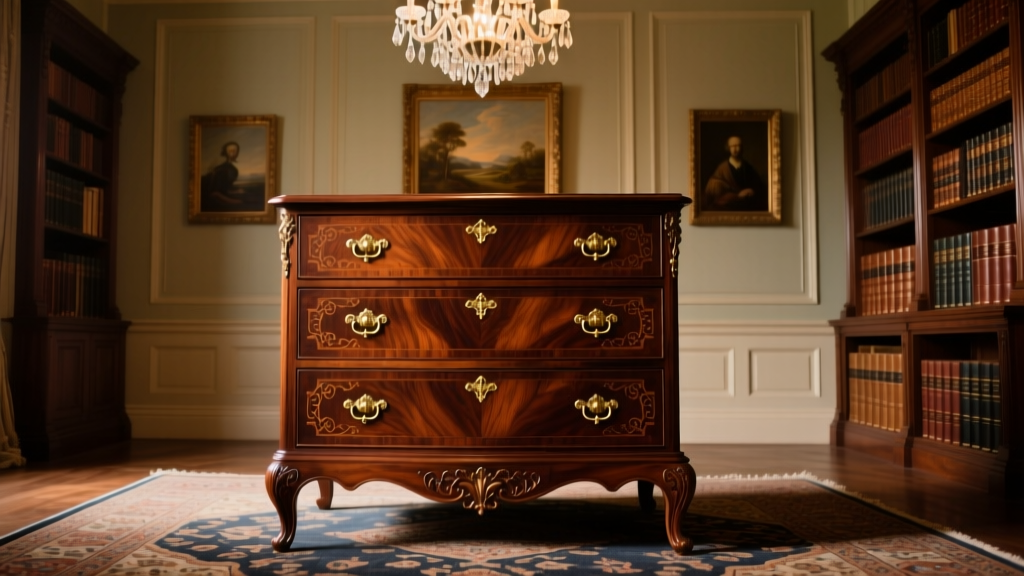
The Mahogany Chest on Frame: A Detailed Study of the 35½-Inch Four-Drawer Design

The Massier Basket Signed 8 × 7 In: Authenticity, Provenance, and Restoration Insights

Disneyana Viewer Mickey Mouse Film Strips Display Box: History, Mechanics, and Restoration Insights

Anheuser-Busch Cherub Advertising Signs: History, Identification, and Restoration of the 13½-Inch Hanging Oval Series

Fenton Glass 'Closed Sort Of': Decoding the Enigmatic Mark and Its Significance in American Carnival Glass History
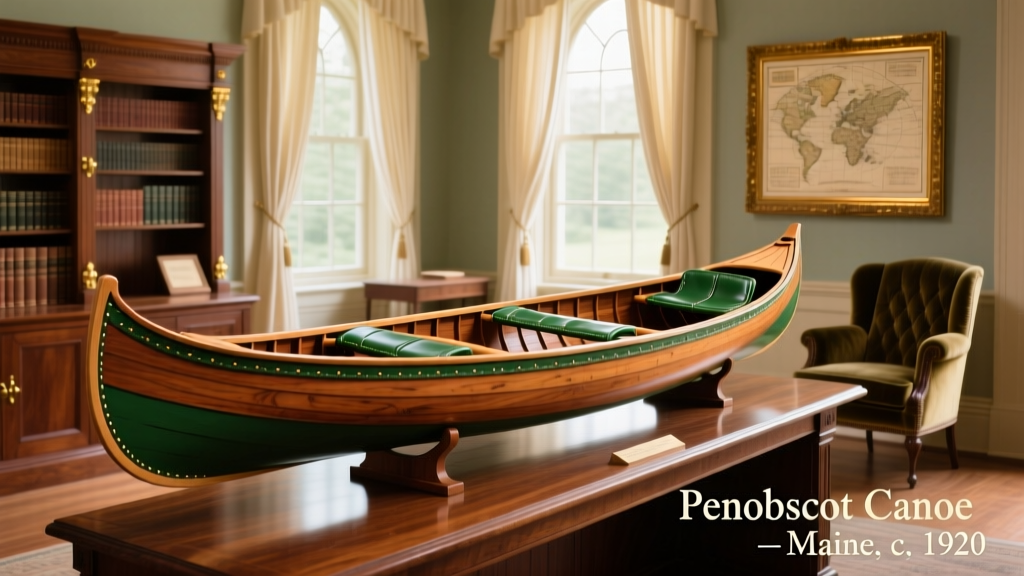
Nautical Canoe Model: Wood & Green Leather Penobscot Canoe Co., Maine, Circa 1920 — A Restoration Specialist’s Analysis

Flow Blue Sugar Creamer Melbourne: Identification, Provenance, and Restoration of a Victorian Ceramic Icon
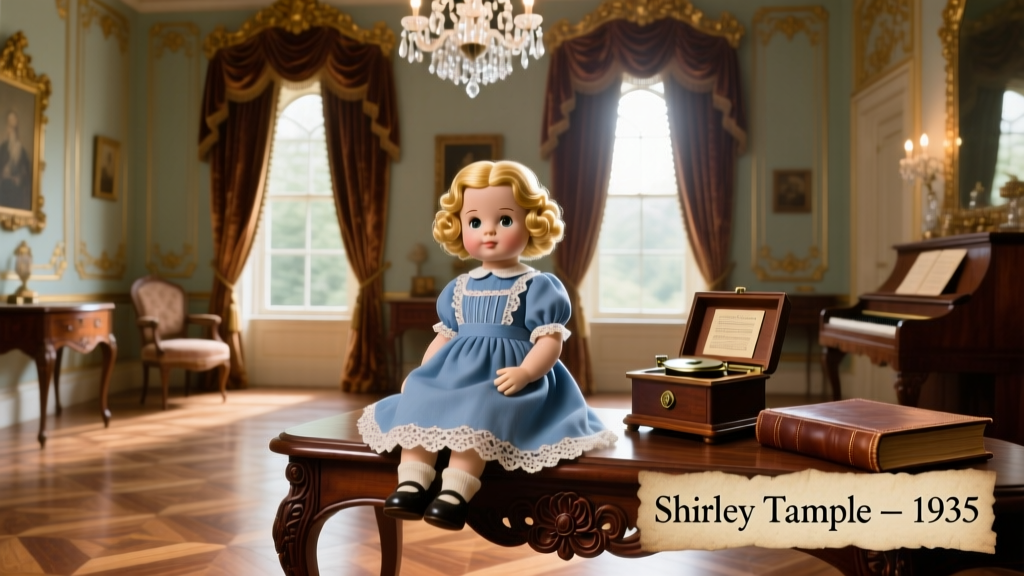
Shirley Temple Dolls: Authenticity, Value, and Restoration Insights for Collectors

Heisey McGrady No. 372 Syrup Bottle: Sanitary Moongleam Glass, 7 oz Capacity, and Its Place in American Tableware History