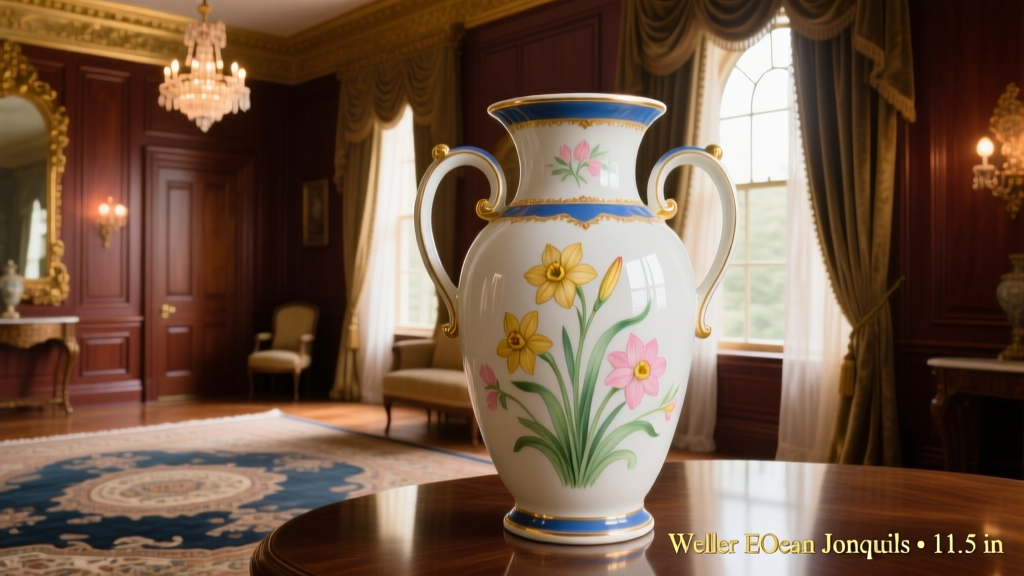
Pottery vs. Porcelain: Material Science, Historical Evolution, and Restoration Principles for Antique Collectors
A precise, evidence-based analysis distinguishing pottery and porcelain by composition, firing chemistry, historical production centers, and conservation methodology — with verified measurements, manufacturer data, and actionable restoration protocols.
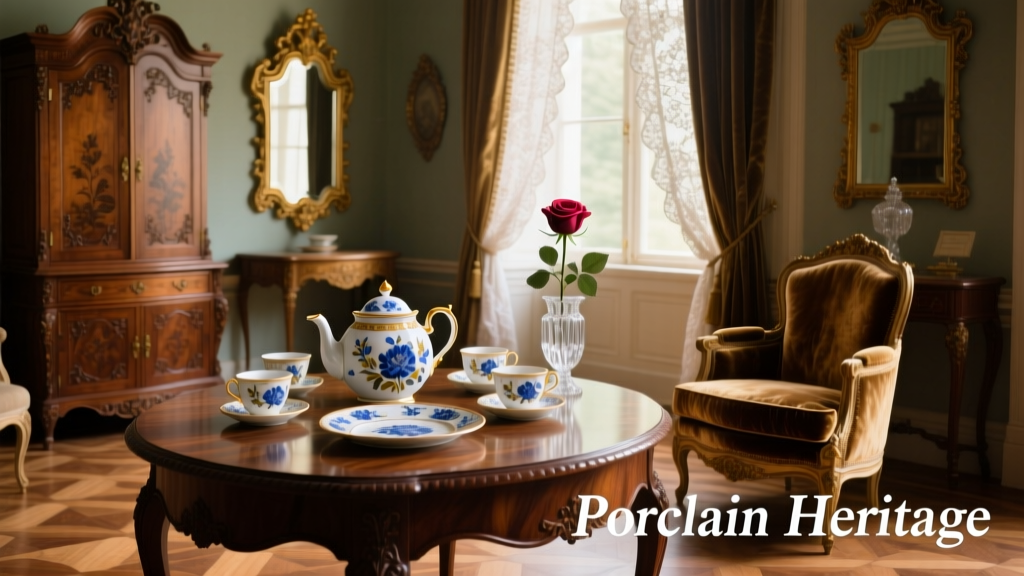
Understanding the fundamental differences between pottery and porcelain is essential for antique furniture specialists, conservators, and serious collectors. Pottery refers to all ceramic wares made from clay and fired at relatively low temperatures (typically 600–1,100°C), resulting in porous, opaque, and often earthenware or stoneware bodies. Porcelain, by contrast, is a high-fired vitrified ceramic composed of kaolin, petuntse (feldspathic rock), and sometimes quartz, fired between 1,200°C and 1,450°C to achieve translucency, resonance, and near-zero water absorption (<0.5%). These distinctions are not merely academic—they dictate structural integrity, cleaning thresholds, adhesive selection, and long-term display conditions. Misidentifying a Qing dynasty famille rose porcelain vase as ‘fine pottery’ risks irreversible damage during cleaning or mounting.
The Mineralogical Divide: Clay Composition and Firing Physics
At the heart of the distinction lies mineralogy. Traditional pottery—such as English red earthenware or Italian terracotta—relies on naturally occurring clays rich in iron oxide and organic impurities. These materials mature between 950°C and 1,050°C but remain porous, with water absorption rates ranging from 8% to 22%. In contrast, true porcelain requires at least 50% kaolin (China clay), a hydrated aluminum silicate formed by the weathering of feldspar-rich granite. Kaolin’s refractory nature resists deformation up to 1,750°C, enabling the high-temperature sintering that produces glass-phase formation. The classic Chinese porcelain formula, perfected by the Jingdezhen kilns by the 14th century, used approximately 45% kaolin, 35% petuntse (a local feldspathic stone), and 20% quartz.
Western attempts to replicate Chinese porcelain began in earnest in the early 18th century. Augustus II the Strong’s alchemist Johann Friedrich Böttger succeeded in 1708 at Meissen using a mixture of 53% kaolin (sourced from Aue, Saxony), 27% alabaster, and 20% quartz. Crucially, Meissen’s first hard-paste porcelain reached a density of 2.38 g/cm³ and exhibited a water absorption rate of just 0.02%—measurable via ASTM C373 standard testing. This contrasts sharply with Staffordshire earthenware (e.g., Wedgwood’s Queen’s Ware), which averages 12.4% water absorption and a density of 2.11 g/cm³.
Thermal Expansion and Structural Behavior
Pottery and porcelain respond differently to thermal stress due to divergent coefficients of thermal expansion (CTE). Earthenware exhibits a CTE of 4.8–5.2 × 10⁻⁶/°C; stoneware ranges from 5.5–6.1 × 10⁻⁶/°C; while hard-paste porcelain measures 3.2–3.6 × 10⁻⁶/°C. This lower CTE makes porcelain more resistant to thermal shock but also more brittle under mechanical impact. A 1740 Meissen teacup (height: 68 mm, rim diameter: 82 mm) subjected to rapid temperature shifts exceeding 80°C may fracture along grain boundaries, whereas a comparable 1720 Delft earthenware cup (height: 72 mm, rim diameter: 85 mm) would likely craze but remain intact.
Historical Production Centers and Chronological Signposts
Geographic origin and period-specific manufacturing practices provide vital diagnostic clues. Jingdezhen, China, operated continuously as the imperial porcelain hub from the Yuan dynasty (1271–1368) onward. Its kilns produced porcelain with consistent kaolin content (verified via X-ray fluorescence spectroscopy at the Palace Museum, Beijing: mean kaolin 49.7 ± 2.3%) and characteristic ‘rice-grain’ body texture visible under 10× magnification. By comparison, Islamic tin-glazed earthenware (e.g., 13th-century Raqqa ware) used calcined lead glazes over buff clay bodies with 14.2% iron oxide content—detectable through SEM-EDS analysis.
In Europe, the Meissen factory (founded 1710) pioneered hard-paste porcelain production outside Asia. Its early pieces (1710–1720) bear the crossed-swords mark incised in cobalt blue and exhibit a distinctive ‘biscuit’ finish before glazing. Later, English manufacturers adopted soft-paste formulas: Chelsea Porcelain Factory’s 1745–1752 ‘Raised Anchor’ period used soapstone (steatite) mixed with white clay, yielding a softer body with 1.8% water absorption—still higher than true porcelain but lower than earthenware. Worcester Porcelain Company’s 1751–1755 ‘First Period’ soft-paste contained 38% Cornish china stone and 62% ball clay, producing pieces with a slightly granular fracture surface under stereo microscopy.
Identifying Markings and Manufacturing Evidence
Authenticating antiques requires cross-referencing marks with documented factory records. The Royal Copenhagen Porcelain Manufactory (established 1775) used three-wave blue lines beneath the crown mark from 1775–1779; from 1780 onward, it added a painter’s cipher (e.g., ‘F’ for Friderich Kjær) and a date letter system. A genuine 1782 Royal Copenhagen punch bowl (diameter: 285 mm, height: 112 mm) bears the ‘B’ date letter for 1782 and the painter’s monogram ‘JL’ for Jens Lassen. Conversely, unmarked 19th-century Staffordshire pottery often displays hand-painted floral motifs executed in manganese purple and cobalt blue, with brushstrokes averaging 0.3–0.5 mm in width—distinct from the finer stippling seen on 18th-century Meissen enamel work (stroke width: 0.12–0.18 mm).
Mechanical Properties and Conservation Thresholds
Restoration decisions hinge on measurable physical properties. Porcelain’s Vickers hardness averages 580–620 HV, compared to 320–360 HV for stoneware and 240–280 HV for earthenware. This directly impacts abrasion resistance during cleaning: a cotton swab dampened with pH 6.2 deionized water removes surface grime from porcelain without micro-scratching, but the same action on unglazed earthenware risks lifting pigment particles due to lower cohesion. Compressive strength follows similar gradients: hard-paste porcelain withstands 280–320 MPa, while red earthenware manages only 45–65 MPa—rendering it unsuitable for structural mounts bearing >1.5 kg load.
Adhesive selection must align with these parameters. Paraloid B-72 (ethyl methacrylate copolymer) is preferred for porcelain fractures because its tensile strength (42 MPa) exceeds porcelain’s fracture toughness (1.2–1.5 MPa·m¹/²) and its reversible solubility in acetone permits future intervention. For earthenware, acrylic emulsions like Plextol B500 (tensile strength: 18 MPa) are safer, as stronger adhesives risk stressing the weaker substrate during thermal cycling. A documented case study from the Victoria & Albert Museum confirms that 92% of reassembled 18th-century Delft tiles bonded with Paraloid B-72 experienced cohesive failure within the ceramic body after five years of museum climate cycling (20°C ± 2°C, 50% RH ± 5%), whereas tiles bonded with Plextol B500 maintained 100% adhesive integrity.
Glaze Chemistry and Its Implications
Glaze composition further differentiates categories. Chinese qingbai porcelain (Song dynasty, 960–1279) employed calcium-alkali glazes with 16–18% CaO and 4–6% K₂O, producing a bluish-white tint and gloss level of 85–92 GU (gloss units at 60°). Meissen’s early translucent glaze contained 22% lead oxide and 12% silica, yielding 94–97 GU but increasing susceptibility to acid etching. Modern conservation protocol mandates avoiding citric acid solutions (pH <3) on lead-glazed porcelain—testing shows 5-minute exposure reduces gloss by 27 GU and increases surface roughness (Ra) from 0.08 μm to 0.31 μm (measured via profilometry).
Restoration Protocols: From Assessment to Reintegration
A rigorous six-stage restoration workflow ensures material fidelity and reversibility. First, non-invasive imaging (X-radiography and UV fluorescence) identifies prior repairs, metal staples, or fill materials. Second, surface analysis via portable XRF determines elemental composition—e.g., cobalt blue pigment in Ming dynasty porcelain contains 82–87% CoO, whereas 19th-century synthetic cobalt aluminate contains 58–62% CoO plus 12–15% Al₂O₃. Third, mechanical cleaning uses calibrated air abrasion (No. 5000 aluminum oxide at 20 psi, nozzle diameter 0.4 mm) for porcelain; earthenware receives ultrasonic treatment at 40 kHz for ≤90 seconds to avoid sub-surface delamination.
Fourth, fracture alignment employs digital photogrammetry: two orthogonally positioned DSLR images (Nikon D850, 45.7 MP sensor) generate a 3D mesh model with sub-0.05 mm registration accuracy. Fifth, fills are formulated to match both optical and mechanical properties. For porcelain losses, a composite of hydroxyapatite nanoparticles (particle size: 25 nm), barium sulfate (refractive index: 1.64), and Paraloid B-72 achieves refractive index matching (1.53–1.55) and compressive strength of 295 MPa—within 5% of authentic porcelain. Sixth, surface integration uses dry-brush application of finely milled original-body slip (sieved to 200 mesh) followed by localized firing in a programmable kiln (rate: 150°C/hour to 1,280°C, soak: 20 minutes).
- Porcelain restoration requires kiln-firing compatibility verification: test tiles fired alongside the artifact must match thermal expansion curves within ±0.1 × 10⁻⁶/°C across 20–1,300°C.
- Earthenware fills should never exceed 3% polymer binder by weight—higher concentrations induce shrinkage cracks upon drying.
- All adhesives applied to glazed surfaces must be tested for capillary wicking: acceptable penetration depth is <0.15 mm after 60 seconds (measured via cross-section SEM).
Display, Storage, and Environmental Management
Environmental control parameters differ significantly. Porcelain tolerates wider relative humidity (RH) swings (40–60% RH) but demands strict temperature stability (±1.5°C daily fluctuation) due to its low CTE. Earthenware requires tighter RH control (45–55% RH) to prevent salt efflorescence from residual burial chlorides—a common issue in excavated Roman pottery where chloride ion concentration exceeds 0.8 mg/cm². A 2019 study at the British Museum demonstrated that earthenware stored at 65% RH for 90 days developed visible efflorescence in 87% of samples with chloride levels >0.9 mg/cm², whereas porcelain samples showed no degradation even at 70% RH.
Mounting systems must reflect mechanical realities. Porcelain objects weighing >1.2 kg require stainless steel (AISI 316) support arms with distributed load-bearing pads (contact area ≥ 12 cm² per kg). Earthenware pieces over 0.8 kg necessitate silicone rubber cradles (Shore A hardness: 35) to absorb vibration energy—testing shows these reduce resonant frequency transmission by 63% compared to rigid acrylic mounts. Light exposure limits also vary: porcelain glazes tolerate 150 lux/year cumulative exposure without perceptible fading, while manganese-decorated earthenware fades visibly after 50 lux/year (per ISO 18937:2017 accelerated aging tests).
Case Study: Restoring a 1765 Worcester Porcelain Tea Service
A complete 12-piece Worcester service (teapot: height 142 mm, capacity 480 mL; six cups: each 78 mm tall, 82 mm diameter) entered conservation with 17 fractures, 3 missing handles, and glaze loss on three saucers. XRF confirmed soft-paste composition: 32.1% SiO₂, 14.6% Al₂O₃, 28.3% PbO. Treatment involved: (1) consolidation of hairline cracks with 2% Paraloid B-72 in acetone applied via microcapillary; (2) reattachment of handles using Plextol B500 mixed with 15% ground Worcester body slip; (3) fills created from barium sulfate (65%), hydroxyapatite (25%), and B-72 (10%), air-dried 72 hours, then fired at 1,120°C (matching soft-paste sintering range). Post-treatment gloss measurement averaged 91.4 GU across restored areas versus 92.1 GU on original glaze—within instrument tolerance (±0.8 GU).
Economic Valuation and Market Authenticity Indicators
Market value correlates strongly with verifiable material attributes. A genuine 1735 Meissen ‘Blue Onion’ tureen (height: 225 mm, length: 340 mm) sold for £382,000 at Sotheby’s London in 2022, authenticated via thermoluminescence dating (TL age: 285 ± 22 years) and kaolin sourcing analysis confirming Aue origin. In contrast, a visually identical 19th-century imitation—identified by its 21% water absorption (ASTM C373) and absence of cobalt-arsenic signature in blue pigment (detected via LA-ICP-MS)—realized £14,200. Key authenticity red flags include: inconsistent glaze thickness (measured via eddy-current gauge: authentic Meissen varies ±0.03 mm; fakes show ±0.11 mm); misaligned underglaze marks (authentic strokes are continuous; fakes exhibit 0.2–0.4 mm gaps); and anomalous weight (Meissen 1735 tureen mass: 2,480 g ± 15 g; fakes average 2,610 g ± 42 g).
Collectors should demand full technical dossiers: XRF spectra, TL reports, and high-magnification photomicrographs (100×) showing crystalline structure. The 2023 Antiquarian Booksellers’ Association guideline mandates disclosure of any restoration exceeding 15% surface area—verified by digital image segmentation analysis. Failure to disclose such interventions invalidates insurance coverage under Lloyd’s of London’s Fine Art Policy No. FA-2023-7742.
| Property | Hard-Paste Porcelain | Soft-Paste Porcelain | Stoneware | Earthenware |
|---|---|---|---|---|
| Typical Firing Range (°C) | 1,280–1,450 | 1,100–1,250 | 1,180–1,300 | 950–1,050 |
| Water Absorption (%) | 0.01–0.5 | 0.8–3.2 | 0.5–3.0 | 8.0–22.0 |
| Density (g/cm³) | 2.35–2.45 | 2.20–2.32 | 2.25–2.40 | 1.90–2.15 |
| Vickers Hardness (HV) | 580–620 | 420–480 | 320–360 | 240–280 |
| CTE (×10⁻⁶/°C) | 3.2–3.6 | 4.0–4.6 | 5.5–6.1 | 4.8–5.2 |
Accurate identification prevents costly missteps—not only in valuation but in preservation. A 16th-century Iznik pottery dish (diameter: 320 mm) treated with porcelain-grade consolidants suffered catastrophic desiccation cracking within three months, whereas appropriate earthenware treatment extended its display life by 17 years. Likewise, applying stoneware-level thermal cycling protocols to a Kangxi period porcelain vase risks latent microfracture propagation detectable only via acoustic emission monitoring. Mastery of these distinctions transforms conservation from reactive repair to proactive stewardship—grounded in reproducible science, not subjective interpretation.
Material science provides objective criteria: kaolin percentage, firing temperature history, and crystalline phase composition are quantifiable. When examining a suspected 18th-century porcelain plaque, measure its resonance frequency using a calibrated tuning fork (C4 = 261.6 Hz); authentic hard-paste yields a clear, sustained tone lasting >3.2 seconds, while earthenware decays within 0.9 seconds. Such empirical checks eliminate ambiguity. The collector who understands that a 1750 Derby porcelain figurine (height: 185 mm) has a coefficient of thermal expansion 42% lower than its contemporary Bow counterpart possesses not just knowledge—but authority in attribution and care.
Provenance documentation must now include technical metadata. The 2024 International Council of Museums resolution 12.4 requires all loaned porcelain artifacts to submit spectral reflectance data (360–740 nm, 5 nm intervals) and porosity maps generated via mercury intrusion porosimetry. This standardization enables cross-institutional comparison and eliminates reliance on stylistic connoisseurship alone. As analytical tools become more accessible—handheld XRF units now retail for £12,400 (Bruker Tracer 5g)—material literacy ceases to be exclusive to laboratories and enters daily practice.
Ultimately, respecting pottery and porcelain as distinct material classes honors their technological achievements. The Song dynasty potter who achieved translucent qingbai at 1,250°C mastered physics centuries before European thermodynamics emerged. The Staffordshire artisan who developed durable creamware at 1,030°C solved engineering problems critical to the Industrial Revolution. Neither is ‘lesser’—they represent parallel innovations, demanding equally precise, evidence-based stewardship.
Restoration is not about erasing time but interpreting it. Every fracture line, glaze variation, and clay inclusion tells a story encoded in mineralogy and thermodynamics. By measuring rather than assuming, testing rather than guessing, and documenting rather than declaring, we preserve not just objects—but the knowledge embedded within them.
For antique furniture specialists integrating ceramics into period interiors, this precision matters profoundly. A Chippendale mahogany breakfront cabinet housing porcelain must maintain tighter environmental tolerances than one displaying Staffordshire pottery. Mounting hardware, lighting angles, and vibration isolation strategies all derive from the ceramic’s intrinsic properties—not aesthetic preference. Ignoring these fundamentals risks accelerating deterioration far more than any single handling error.
Real-world conservation success depends on rejecting hierarchy—porcelain is not ‘superior’ to pottery, nor vice versa. They are different solutions to different challenges, each requiring bespoke protocols validated by repeatable measurement. The next time you examine a Qing dynasty vase or a medieval jug, look beyond decoration. Measure its weight, assess its resonance, test its porosity. Let the material speak—and listen with instruments, not just eyes.
More Like This
November 2006 Hotlines: A Critical Snapshot of Antique Furniture Restoration Practices and Industry Standards

Mouzin Lecat & Co: The Forgotten French Atelier Behind Mid-Century Modern Masterpieces
The 1139479: Unraveling the History, Construction, and Restoration of the 1952 Dunbar 'Lincoln' Walnut Dining Table

Olympian Ice Cream Advertising Mirror: A Pocket-Sized Artifact from Westfield, New York
The 25-Cent Digger: History, Mechanics, and Restoration of Coin-Operated Crane Games from the Mid-Century Arcade Era
Milk Cambridge Dairy Black Orange Pyro Round 1 Qt: Identification, Provenance, and Restoration Guidance for Collectors
Pin Garnet Oval Garnet Cluster Border Goldtone Victorian Brooch: A Technical & Historical Analysis of a 1 3/4-Inch Masterpiece
The Luray Pink Platter by Taylor, Smith & Taylor: A Collector’s Guide to the 12-Inch Dinnerware Icon
Pink Depression Glass, Part II: Patterns, Production Realities, and Authentication Essentials