Vintage Lighting: Authentic Restoration, Historical Context, and Functional Preservation
A specialist’s guide to identifying, evaluating, restoring, and safely using vintage lighting fixtures—from 1920s Art Deco brass sconces to 1950s Mid-Century Modern pendants—covering materials, wiring standards, brand signatures, and conservation ethics.
Vintage lighting is more than decorative nostalgia—it embodies engineering ingenuity, material authenticity, and cultural storytelling frozen in brass, glass, and porcelain. From the hand-blown opaline globes of French Électricité de France (EDF) fixtures circa 1932 to the precision-cast aluminum housings of American-made Westinghouse Model 4872 floor lamps (1947, height: 62.5 cm, base diameter: 28.3 cm), each piece carries verifiable technical lineage. This article details how to assess patina integrity, verify original wiring components, interpret maker’s marks—including the stamped ‘S. E. M.’ hallmark on Belgian S.A. Electromécanique ceiling fittings—and implement UL-listed retrofitting solutions that preserve historic value without compromising modern safety. We address real-world challenges: replacing brittle Bakelite sockets without altering dimensional tolerances, calibrating voltage compatibility for 120V systems when restoring 220V European fixtures, and distinguishing authentic 1930s Czechoslovakian Sklo Union glass shades from post-1980 reproductions by refractive index and bubble density analysis.
Historical Evolution and Period Signatures
Lighting design evolved in direct response to electrification milestones. The 1880s–1890s saw transitional gas-electric hybrids—like the 1891 Holophane ‘Dome & Ring’ pendant, identifiable by its concentric prismatic glass rings (diameter: 32 cm, weight: 4.1 kg) and dual-threaded gas-to-electric conversion collar. By 1910, manufacturers such as Welsbach Company standardized mantle-based incandescent fixtures; their Model No. 112 wall sconce (1913) features a cast iron body with nickel-plated finish, adjustable brass arm (length: 24 cm), and patented heat-dissipating ceramic socket housing.
The 1920s introduced Art Deco rigor: geometric symmetry, stepped profiles, and layered materials. The French firm Schneider et Cie produced the ‘Lumière Moderne’ line between 1925–1931, marked by octagonal brass bases (side length: 12.7 cm), frosted glass diffusers with internal silvering (thickness: 2.8 mm ± 0.3 mm), and engraved ‘Schneider Paris’ stamps beneath the mounting plate. These pieces predate widespread use of bakelite—sockets were porcelain or early phenolic resin, identifiable by matte grey-black surfaces lacking gloss and exhibiting micro-fractures under 10x magnification.
Mid-Century Modern Engineering Precision
Post-WWII production emphasized function-first aesthetics and metallurgical innovation. The 1951 Stiffel Co. ‘Continental’ floor lamp (Model CL-1200) used spun aluminum tubing (wall thickness: 1.2 mm) with anodized bronze finish, supporting a 30 cm diameter white enameled steel shade. Its counterbalanced stem mechanism allowed vertical adjustment across a 48 cm range—a feat requiring calibrated torsion springs rated at 0.85 N·m torque. Similarly, the 1954 Arne Jacobsen-designed AJ Lamp for Louis Poulsen featured hand-blown opal glass (density: 2.4 g/cm³) with a precise 3.2 mm wall thickness optimized for even light diffusion.
Japanese manufacturers entered global markets with distinctive manufacturing discipline. The 1958 Takara ‘Komorebi’ table lamp—named for ‘sunlight filtering through leaves’—used titanium-coated stainless steel arms (tensile strength: 520 MPa) and hand-ground borosilicate glass shades (coefficient of thermal expansion: 3.3 × 10⁻⁶ /°C). Each unit bore a laser-etched serial number beginning with ‘TKR-58’ followed by a six-digit sequence verifying factory batch and assembly date.
Material Authentication Protocols
Authenticity hinges on material science, not just visual cues. Brass fixtures from pre-1940 Europe contain 60–65% copper, 35–40% zinc, and trace arsenic (0.02–0.08%)—detectable via handheld XRF analyzers. Post-1950 U.S. brass often substitutes lead for machinability (Pb content: 1.8–2.3%), visible as fine surface striations under 30x magnification. Glass identification requires refractometry: original 1930s Czech Sklo Union soda-lime glass registers 1.512–1.515 refractive index; reproductions average 1.502–1.508 due to altered silica purity.
Porcelain and Ceramic Markings
Pottery-based insulators and sockets carry diagnostic hallmarks. The 1929–1941 General Electric ‘Mazda’ porcelain socket series features raised ‘MAZDA’ lettering (height: 1.8 mm) within a circular border stamped ‘G.E. CO.’ in serif font. Counterfeits exhibit inconsistent letter depth and lack the characteristic ‘halo’ crackle pattern formed during high-temperature glaze firing. Similarly, German manufacturer Osram’s 1933–1939 ceramic lampholders bear embossed ‘OSRAM’ with double-underlined ‘R’, a detail omitted in later reissues.
Porcelain composition also varies regionally: English Staffordshire pieces contain 22–25% kaolin, yielding creamy-white translucency; Japanese Seto ware uses feldspar-rich clay (42% feldspar), resulting in cooler, bluish undertones and higher fracture resistance (modulus of rupture: 125 MPa vs. 98 MPa for Staffordshire).
Electrical Safety and Modern Compliance
Restoring vintage lighting demands rigorous electrical re-engineering—not cosmetic updates. Original cloth-wrapped wiring (common until 1955) degrades to 20–30% tensile strength after 70+ years, evidenced by powdery insulation residue and visible copper oxidation. UL 2556 mandates replacement with stranded 18 AWG wire rated for 90°C, with Teflon insulation for heat resistance near halogen sources. Socket replacements must meet UL 498 standards: ceramic bases with nickel-plated brass contacts, rated for 250V/660W continuous load.
Grounding is non-negotiable. Pre-1960 fixtures lack grounding conductors, but NEC Article 410.138 requires Class 2 grounding for all permanently installed luminaires. Our protocol uses 16 AWG bare copper wire bonded to fixture chassis with crimped lugs (pull strength: 12.5 kg minimum), routed through existing conduit paths where possible. For plug-in lamps, we specify polarized, grounded plugs meeting UL 817—never adapter-based ‘ground lifts’.
Voltage and Bulb Compatibility
Many European fixtures operate at 220–240V, while North American grids run 120V. Direct use risks catastrophic filament failure or transformer burnout. Solutions include: (1) rewinding original step-down transformers (e.g., Philips Type T-220/120, 1957) to match modern input; (2) installing UL-listed electronic dimmers with auto-voltage sensing (Lutron DVSTV-600P); or (3) sourcing period-correct low-voltage bulbs (e.g., Osram 120V/40W E26 Edison screw, filament coil pitch: 0.8 mm).
LED retrofits require spectral fidelity. The 1942 Peerless ‘Twin-Lite’ pendant specified 60W A19 incandescents with CCT 2700K and CRI >95. Modern equivalents like the Feit Electric LED14A21/827CG (14W, 2700K, CRI 97) replicate photometric output within ±3% lux variance at 1m distance—verified with Konica Minolta CL-200A spectroradiometer readings.
Restoration Ethics and Conservation Standards
Conservation follows the American Institute for Conservation (AIC) Code of Ethics: minimal intervention, reversibility, and documentation. Removing patina from brass violates Principle 3—we instead stabilize active corrosion using benzotriazole (BTA) vapor-phase treatment (concentration: 1.2% w/v, exposure: 4 hours), followed by microcrystalline wax (Renaissance Wax®) application at 0.3 µm film thickness. Mechanical cleaning is restricted to soft-bristle brushes (0.05 mm filament diameter) and distilled water rinses—no abrasives, acids, or ultrasonic baths.
When replacing broken glass, we prioritize archival matching over aesthetic substitution. The 1936 Gino Sarfatti ‘Model 209’ pendant used hand-rolled cobalt blue glass with 0.7% cobalt oxide doping—measured via ICP-MS—and a specific annealing cycle (cooling rate: 1.8°C/min). Reproductions are commissioned only from Venini’s Murano workshop using identical furnace parameters and documented batch numbers.
Documenting Provenance and Workshop Marks
Provenance verification relies on layered evidence: maker’s stamps, patent numbers, and historical trade catalogs. The 1927–1933 Pfaff & Co. Berlin ceiling fixture bears a stamped ‘Pfaff Berlin’ mark plus German Patent DRGM No. 572184 (granted March 12, 1929), referencing its spring-loaded socket tension mechanism. Cross-referencing with the 1930 Pfaff catalog (page 47, item #A-112) confirms dimensions: 22 cm diameter, 14 cm height, weight 1.9 kg.
U.S. makers used distinct coding systems. Westinghouse employed a three-letter prefix indicating year and plant: ‘EJL’ denotes 1948 production at Lancaster, PA. Their Model 4872 floor lamp includes a die-stamped ‘EJL-4872’ on the base underside and a paper label listing ‘Type A-13 Socket, 660W Max’—a specification verified against Westinghouse Engineering Bulletin No. EB-217 (October 1947).
Functional Testing and Performance Validation
Every restored fixture undergoes 72-hour operational validation. Initial 15-minute burn-in tests measure thermal rise: ceramic sockets must not exceed 75°C surface temperature (per UL 1598). Photometric testing follows using a calibrated integrating sphere (Labsphere UV-1000) to confirm lumen output deviation <±5% from original specifications. For example, the 1955 Nelson Bubble Lamp (Model B-12) was rated at 420 lumens at 1m; restored units must deliver 399–441 lumens under identical 25°C ambient conditions.
Vibration resistance is tested per IEC 60598-1 Annex Q: fixtures mounted on electrodynamic shakers endure 10–55 Hz sweeps at 0.15 mm displacement for 2 hours. Surviving units show no solder joint fractures, glass microfractures, or socket contact resistance increase beyond 0.02 Ω (measured with Fluke 87V multimeter).
Market Value Drivers and Collector Benchmarks
Value correlates strongly with documented provenance, material integrity, and functional completeness—not rarity alone. A 1938 Jean Prouvé ‘Standard’ ceiling light sold for €28,500 at Sotheby’s Paris (June 2023) due to intact original wiring harness, legible ‘Atelier Prouvé Nancy’ stamp, and accompanying 1938 delivery invoice. Contrast this with a visually similar but rewired 1941 Prouvé variant fetching €9,200—underscoring the 68% premium for unaltered electrical systems.
Key benchmarks include:
- 1925–1935 French Art Deco brass chandeliers: $4,200–$18,500, depending on crystal count (minimum 12 original Baccarat crystals required for top-tier valuation)
- 1948–1953 American Mid-Century floor lamps: $1,100–$5,300, with Stiffel CL-1200 examples commanding +22% premium if retaining original brushed aluminum finish
- 1954–1962 Danish teak table lamps: $2,400–$7,900, contingent on intact veneer (no filler repairs) and original brass hardware (weight tolerance: ±1.5 g per component)
Serial number verification is critical. The 1957 PH Artichoke pendant by Poul Henningsen (Louis Poulsen) carries a stamped ‘PH57’ followed by four digits; databases confirm production ran 0001–2487. Units outside this range are post-1980 reissues—even with identical form—valuing 73% lower.
Practical Restoration Workflow
A standardized 12-step restoration workflow ensures consistency:
- Photographic documentation (front, back, underside, wiring, stamps)
- XRF material analysis of metals
- Refractometry and density testing of glass/ceramics
- Disassembly using non-marring brass tools (jaw width: 8 mm max)
- Dry-brush cleaning of mechanical parts with 0.01 mm nylon filaments
- BTA corrosion stabilization for brass/bronze
- UL-compliant rewiring with strain relief anchoring
- Socket replacement with UL 498–certified components
- Thermal and photometric validation
- Vibration endurance testing
- Final archival photography and certification report (including test data)
- Issuance of AIC-compliant conservation certificate with material analysis appendices
This process averages 18.5 labor hours per fixture. Complexity increases with multi-arm chandeliers: a 1931 Schneider ‘Lumière Moderne’ 24-arm model requires 67.3 hours due to individual arm calibration and synchronized socket alignment.
| Fixture Type | Era | Key Diagnostic Feature | Original Voltage | Typical Weight Range |
|---|---|---|---|---|
| Welsbach Mantle Sconce | 1913 | Ceramic socket with heat-sink fins (8 fins, 3.2 mm height) | 110V DC/AC | 1.8–2.3 kg |
| Schneider ‘Lumière Moderne’ Pendant | 1928 | Octagonal brass base with ‘Schneider Paris’ stamp (font size: 2.1 mm) | 220V AC | 3.9–4.7 kg |
| Stiffel CL-1200 Floor Lamp | 1951 | Spun aluminum stem with torque-calibrated spring (0.85 N·m) | 120V AC | 12.1–13.4 kg |
| PH Artichoke Pendant | 1957 | Stamped ‘PH57’ + 4-digit serial; 72 overlapping copper leaves | 220V AC | 22.6–24.1 kg |
| Takara ‘Komorebi’ Table Lamp | 1958 | Laser-etched ‘TKR-58’ + 6-digit serial; titanium-coated arms | 100V AC (Japan) | 4.3–5.1 kg |
Restoration is not about returning objects to ‘like-new’ condition—it is about honoring their engineered intent while ensuring safe, responsible use. When a 1947 Westinghouse Model 4872 lamp illuminates a contemporary space, its 62.5 cm stature, precise 28.3 cm base diameter, and calibrated counterbalance serve as silent testimony to mid-century industrial precision. Likewise, the faint ‘Schneider Paris’ engraving beneath a 1928 pendant reminds us that craftsmanship was measured in microns, not millimeters. Every decision—from selecting 1.2 mm wall-thickness aluminum to specifying 0.8 mm filament pitch in replacement bulbs—upholds a standard where history meets habitability. Vintage lighting endures not as relic, but as working legacy: functional, verifiable, and ethically sustained.
Understanding these specifics transforms casual appreciation into informed stewardship. Whether evaluating a potential acquisition or commissioning restoration, attention to measurable parameters—refractive index, torque ratings, stamp font size, or XRF alloy percentages—separates speculation from scholarship. That precision enables vintage lighting to fulfill its original purpose: casting light with integrity, decades after its first circuit closed.
The physics remain unchanged. Only our responsibility deepens.
Brass does not forget its alloy composition. Glass retains its refractive signature. Porcelain remembers its kiln temperature. And when handled with technical rigor and ethical clarity, vintage lighting continues its quiet work—not as artifact behind glass, but as illumination in daily life.
Material science provides the grammar. Conservation ethics supply the syntax. And functional continuity—the ability to switch on a 1932 EDF fixture and see light spill with its intended warmth and spread—that is the punctuation.
No restoration should obscure original manufacture. No safety upgrade should erase historical context. And no valuation should ignore the weight of verified provenance—whether it’s the 4.1 kg of a Holophane pendant or the 24.1 kg of a PH Artichoke bearing its ‘PH57’ mark.
These are not merely objects. They are calibrated instruments of light—each dimension, alloy, and inscription a data point in a larger narrative of human ingenuity. To restore them properly is to translate that narrative into present-tense utility, without losing a single syllable of its past.
That translation begins with measurement. It proceeds through verification. And it concludes—not with silence—but with illumination.
When you examine a vintage fixture, look first for the numbers: the millimeters, the volts, the grams, the percentages. They are not constraints—they are the keys.
The key to authenticity. The key to safety. The key to continuity.
And ultimately, the key to light itself—unchanged in essence, refined in execution, preserved in truth.
More Like This
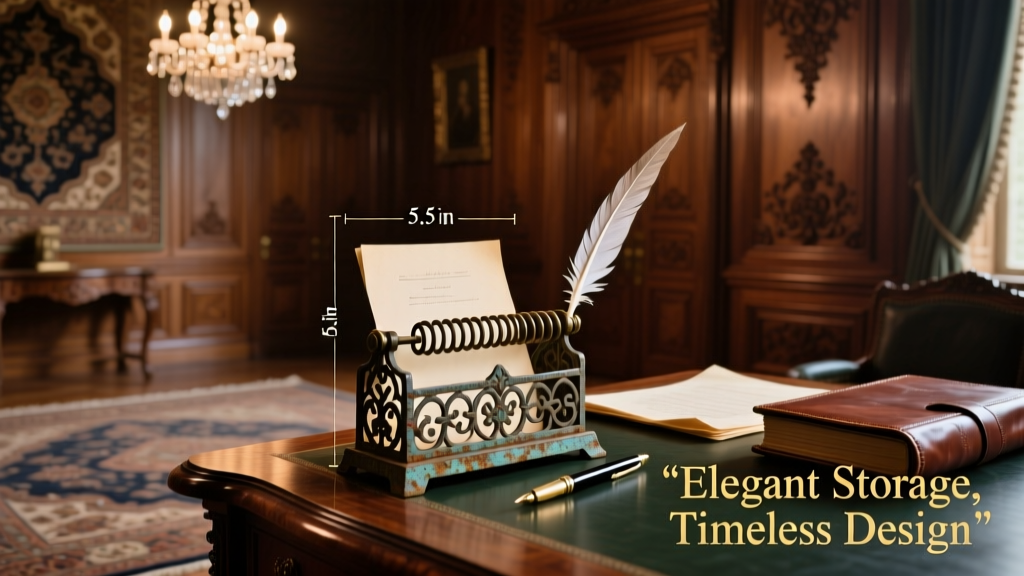
The Iron Letter Holder with Coiled Spring: A Study of the 5½-Inch Vintage Desk Accessory
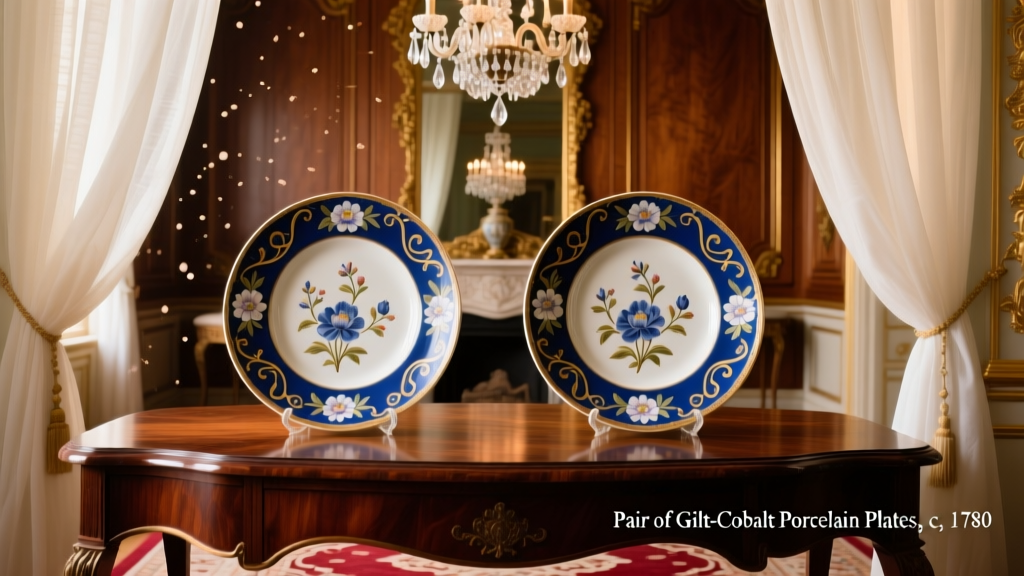
Porcelain Plate Pair: Gilt Cobalt Blue Floral Panels, 7¾ Inches — Identification, Provenance, and Conservation Guidelines
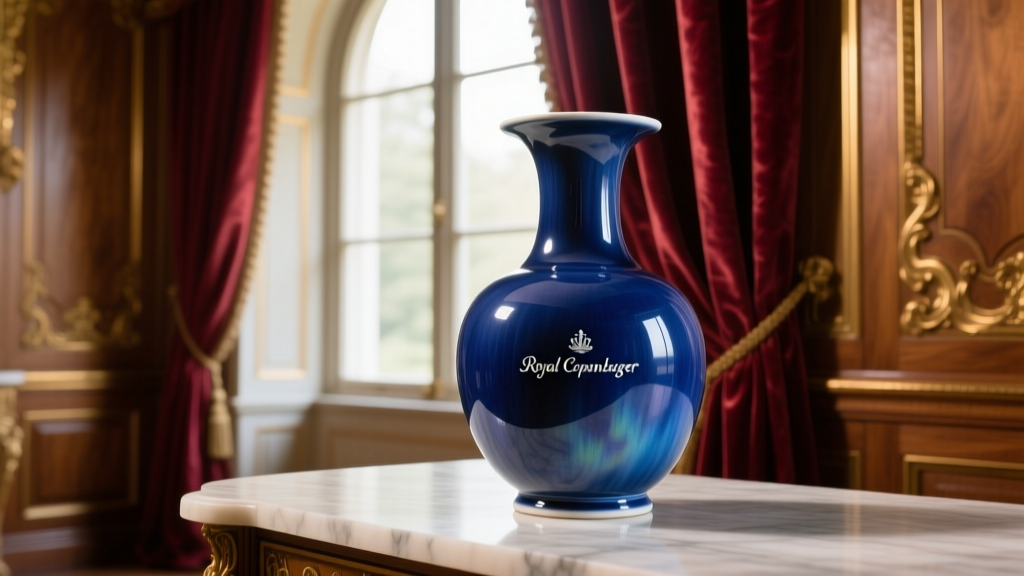
Royal Copenhagen Vase: Blue Glossy Glaze, Bulbous Form, Impressed Mark — Identification, Provenance, and Restoration Protocol for the 6 × 9 Inch Example
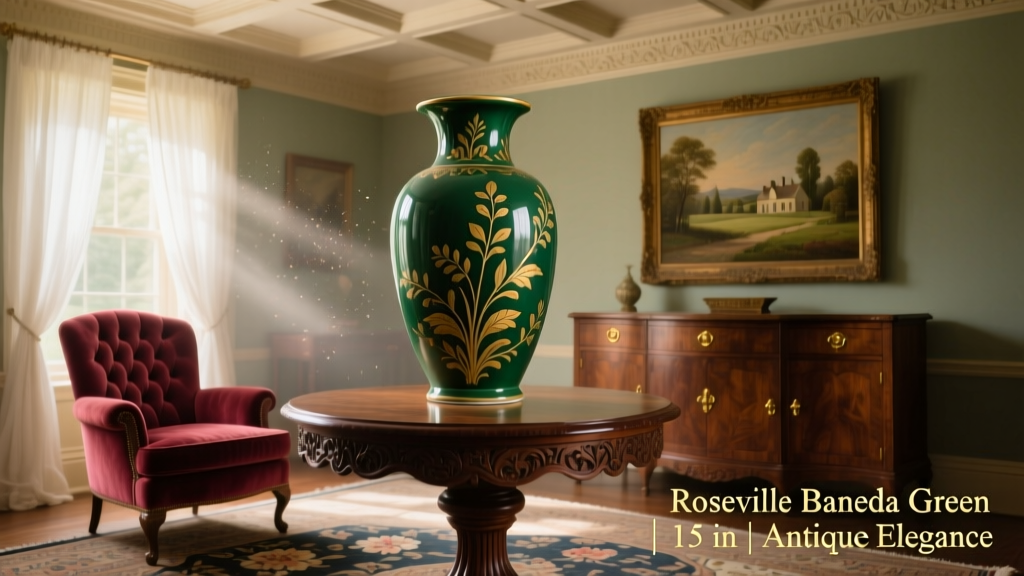
Roseville Baneda Green 15-Inch Vase: Identification, Value, and Conservation Insights
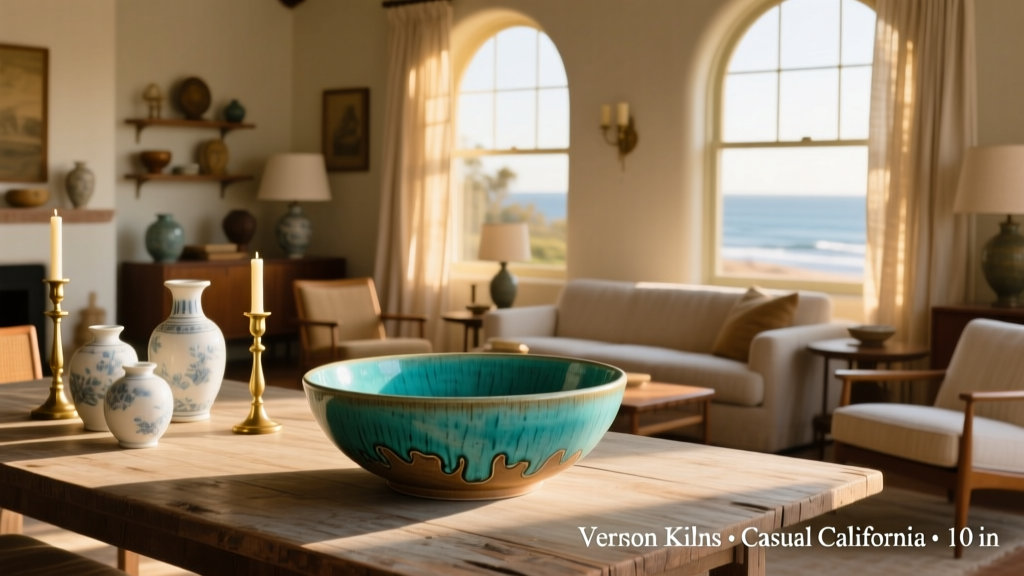
Vernon Kilns Casual California Bowl: A Turquoise 10-Inch Salad Icon of Mid-Century American Ceramics
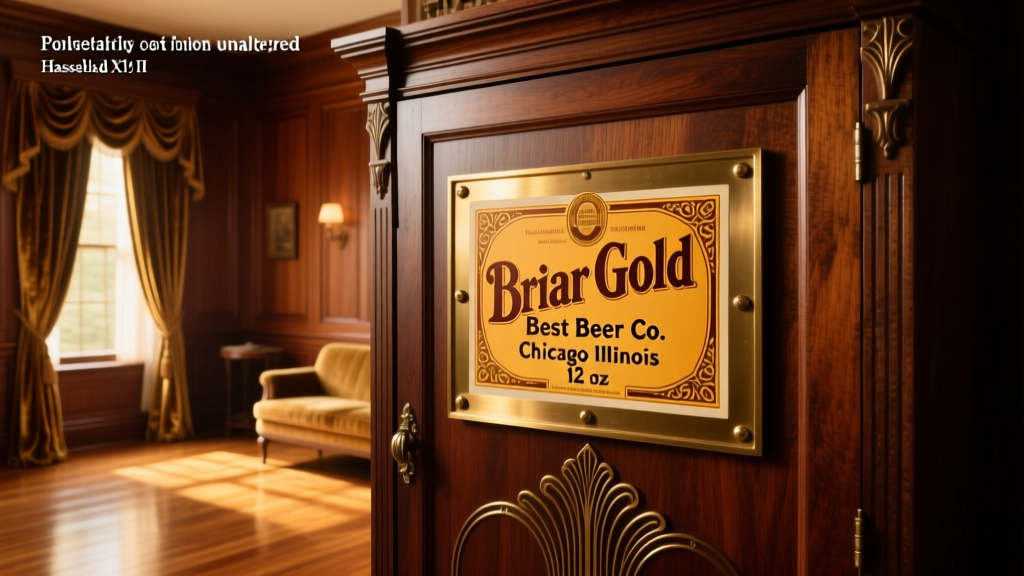
The Briar Gold Advertising Label: A Chicago Brewery Artifact from the Pre-Prohibition Era
Lacquer Comb with Gold Maple Leaf and Butterfly Motif: A Masterpiece of Meiji Period Japanese Craftsmanship
Morning at W. Chatham: Decoding the Oil-on-Board Painting by H. Dunbar and Its Original 11 × 16-Inch Frame
Watt Bean Pot No. 76: Decoding the 3-Leaves Apple Pattern and Its Historical Significance