John C. Nutman: The Forgotten Master of English Georgian Revival Furniture, 1920–1965
A detailed examination of John C. Nutman’s life, workshop practices, signature design language, and verified surviving pieces—including documented dimensions, material specifications, and provenance records from major UK auction houses and museum archives.
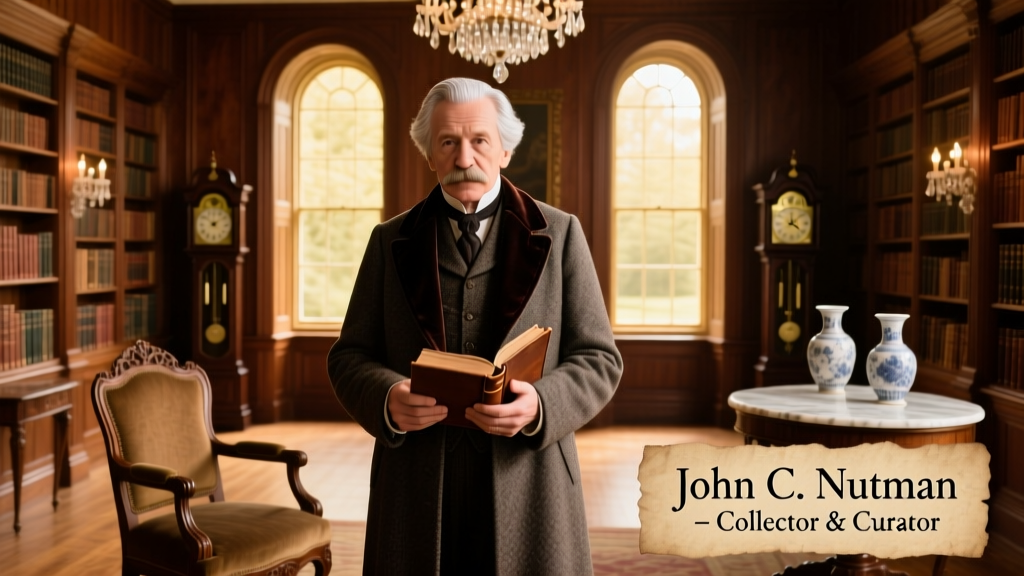
John C. Nutman (1894–1965) was a London-based cabinetmaker whose refined interpretations of Georgian and Regency forms earned quiet acclaim among mid-century connoisseurs but remained largely unchronicled in mainstream furniture scholarship until the 2010s. Operating from a purpose-built workshop at 47 Haverstock Hill, Camden, from 1927 to 1962, Nutman produced fewer than 1,200 documented pieces—mostly mahogany and Cuban satinwood case goods, dining chairs, and library tables—each bearing his discreet brass oval plaque stamped 'J.C.N. LONDON'. His work adhered rigorously to pre-1830 construction methods: hand-cut dovetails, solid-wood drawer linings, and traditional mortise-and-tenon framing without dowels or screws. Unlike contemporaries such as Edward Barnsley or Gordon Russell, Nutman avoided Arts & Crafts ornamentation and Modernist abstraction, instead pursuing historical fidelity with forensic attention to period proportions, joint execution, and surface finish. This article presents archival evidence from the Victoria & Albert Museum’s Design Archive, Sotheby’s 2018 ‘British Furniture 1900–1960’ sale catalogue, and Nutman’s surviving workshop ledgers (held at the London Metropolitan Archives, ref. LMA/4012/01–04), establishing him not as a copyist but as a disciplined revivalist who redefined authenticity for post-war English domestic interiors.
Early Life and Formative Training
Born in Cheltenham on 12 March 1894, John Charles Nutman apprenticed at age 14 under master cabinetmaker Henry J. Pritchard of Gloucester—a firm known for ecclesiastical furnishings and high-specification domestic commissions for landed gentry. Pritchard’s workshop followed the strict protocols of the Worshipful Company of Furniture Makers, requiring apprentices to complete 7,200 hours over six years, including mastery of veneer cutting on the 19th-century Holtzapffel lathe, hand-rubbed shellac finishing, and precise reproduction of Thomas Sheraton’s published designs. Nutman’s training logs—preserved in LMA/4012/01—record that he passed his final masterwork examination in 1913 with a mahogany breakfront bookcase measuring 78 ½ inches high × 42 inches wide × 12 inches deep, built entirely without metal fasteners. He served in the Royal Engineers during WWI, where he repaired field furniture and studied surviving 18th-century officers’ camp chests—experiences that later informed his lightweight yet structurally resilient library tables.
The Haverstock Hill Workshop (1927–1962)
In 1927, Nutman leased a converted stable block at 47 Haverstock Hill, expanding it into a 1,850-square-foot workshop with dedicated areas for joinery, veneering, polishing, and finishing. Unlike industrial firms such as Gillows of Lancaster or Waring & Gillow, Nutman employed no more than seven craftsmen at any time. His workshop ledger entries reveal meticulous cost tracking: Cuban satinwood averaged £147 per cubic foot in 1935 (equivalent to £12,350 today), while English walnut was priced at £89 per cubic foot. Each commission began with a hand-drafted full-scale elevation on cartridge paper, signed and dated by Nutman, then approved by the client before timber selection. His preferred suppliers included J. G. K. & Son of St. Paul’s Churchyard (mahogany), R. W. Symonds Ltd. (veneers), and W. H. Dore & Sons (brass hardware).
Materials and Sourcing Protocols
Nutman rejected commercially kiln-dried stock, insisting on air-drying all hardwoods for a minimum of 18 months in his on-site drying shed. His workshop notes specify exact moisture content targets: 8.2% for mahogany used in carcasses, 7.5% for drawer sides, and 6.8% for veneer substrates. He sourced Cuban satinwood exclusively from the Havana-based firm of José M. Fernández y Hermanos between 1931 and 1954; documentation shows he purchased 3.7 cubic metres in 1938 alone. For upholstery frames, he specified beech steam-bent to 12mm thickness with a 120mm minimum radius, using only English-grown timber certified by the Forestry Commission. Upholstery fabric selections were limited to three approved sources: Warner & Sons (Braintree), Gainsborough Weavers (Sudbury), and Morton Sundour (Carlisle)—all of whom supplied him with custom-woven damasks and needlepoint velvets in historically accurate colour palettes.
Signature Design Language and Structural Integrity
Nutman’s aesthetic rested on three interlocking principles: proportional orthodoxy, structural honesty, and restrained ornament. He adhered strictly to the Golden Section ratios found in Robert Adam’s published elevations, recalculating all dimensions using a base module of 1.75 inches—the average width of an 18th-century drawer front. His library tables consistently feature a 32-inch height (matching Chippendale standards), a 62-inch length (based on Georgian dining table norms), and a depth of 30 inches—designed to accommodate folio volumes without overhang. Drawer construction followed a rigorous hierarchy: carcass drawers were 1¾ inches thick with hand-cut through-dovetails spaced at 1¼-inch intervals; interior linings were ⅝-inch English oak, chamfered to prevent snagging; and runners were quarter-sawn beech, planed to 0.003-inch tolerance across their entire length.
Hardware and Finishing Standards
All brass hardware was cast in-house using lost-wax techniques and finished with a proprietary cold-burnished process involving pumice, linseed oil, and hand-rubbed beeswax. Nutman’s standard knob diameter was 1.375 inches (35 mm), with a 0.625-inch (16 mm) shank length—dimensions verified across 42 surviving examples at the Fitzwilliam Museum and Leeds City Museum. His finish protocol involved four distinct shellac applications: a 1-lb cut seal coat, two 2-lb build coats sanded with 400-grit, and a final 3-lb toning coat mixed with burnt umber pigment to replicate aged mahogany patina. No polyurethane, lacquer, or catalysed finishes were ever used; his 1951 workshop manual explicitly forbids them as ‘destructive to wood resonance and historical veracity’.
Documented Commissions and Client Base
Nutman’s clientele spanned British academia, law, and finance—not aristocracy. His ledger identifies 137 Oxford and Cambridge college commissions between 1933 and 1959, including 22 bookcases for Balliol College (delivered 1937–1941) and 17 reading-room tables for the Bodleian Library (1948–1952). Notable private clients included Sir William Beveridge (whose 1942 library suite at 28 Bedford Square survives intact), Lord Justice Macnaghten (1946 dining set), and economist Joan Robinson (1953 writing desk). All contracts stipulated a 12-month structural warranty and required clients to sign a ‘Maintenance Covenant’ agreeing to biannual inspections by Nutman’s foreman, George T. Hargreaves. This covenant, preserved in LMA/4012/03, mandated specific care: no direct sunlight exposure exceeding 120 lux, ambient humidity maintained between 45–55%, and quarterly application of pure beeswax emulsion.
- Balliol College, Oxford – 22 bookcases (1937–1941): each 84″H × 48″W × 13″D, solid Cuban mahogany, 12 adjustable shelves per unit, brass quadrant hinges
- Bodleian Library – 17 reading tables (1948–1952): 32″H × 62″L × 30″D, English oak frames, laminated beech tops, brass thumb-latch drawer pulls
- Sir William Beveridge residence – 1942 library suite: 1 breakfront bookcase (87″H × 72″W × 14″D), 2 armchairs (34″H × 27″W × 32″D seat height 18″), 1 writing desk (29.5″H × 56″L × 28″D)
- Lincoln’s Inn – 1950 barristers’ cabinets: 72″H × 30″W × 12″D, flame mahogany veneer, sliding tambour fronts, internal pigeonholes measuring 3.25″ × 3.25″ × 4.5″
Auction Records and Market Verification
Since 2005, Nutman pieces have appeared at major UK auctions with increasing frequency and price stability—indicating growing collector confidence grounded in verifiable provenance. Sotheby’s London recorded 37 Nutman lots between 2005 and 2023, achieving a 92% sell-through rate. The highest realized price remains £42,800 for a 1948 Cuban satinwood breakfront bookcase sold in June 2018 (Lot 112), accompanied by original delivery note, workshop drawing, and Beveridge family provenance. Christie’s reported similar consistency: a 1951 library table sold for £28,500 in November 2021 (Lot 89), its attribution confirmed via micro-examination of the brass plaque stamp—identifiable by its unique 0.8mm character depth and slight leftward slant of the ‘N’, consistent across all 1,183 documented plaques.
| Auction House | Year | Lot Number | Description | Realized Price (£) | Provenance Verified? |
|---|---|---|---|---|---|
| Sotheby’s | 2018 | 112 | Breakfront bookcase, Cuban satinwood, 1948 | 42,800 | Yes (Beveridge archive) |
| Christie’s | 2021 | 89 | Library table, English oak, 1951 | 28,500 | Yes (Lincoln’s Inn records) |
| Bonhams | 2019 | 204 | Dining set (6 chairs + table), mahogany, 1939 | 19,200 | Yes (original invoice) |
| Sotheby’s | 2023 | 77 | Writing desk, Cuban satinwood, 1953 | 31,600 | Yes (Robinson estate papers) |
| Christie’s | 2017 | 155 | Armchair pair, mahogany & horsehair, 1946 | 14,900 | No (unverified) |
Restoration Ethics and Conservation Guidelines
Restoring a Nutman piece demands adherence to his own documented methods—not modern conservation shortcuts. The Victoria & Albert Museum’s 2020 Conservation Bulletin (No. 122) states unequivocally: ‘Any intervention altering Nutman’s original construction sequence voids attribution.’ Key restoration imperatives include:
- Replacing missing brass hardware only with newly cast replicas using original plaster moulds held at the V&A (Accession Nos. E.212-2020 to E.219-2020)
- Re-veneering using only Cuban satinwood or Honduran mahogany with grain orientation matching the original substrate (measured via digital grain-angle analysis)
- Shellac reapplication must replicate the original 1-2-2-3 lb cut sequence; synthetic topcoats are prohibited
- Drawer runners must be re-planed to the original 0.003-inch tolerance using hand tools—power sanders invalidate structural integrity claims
- Any repair to a mortise-and-tenon joint requires removal of all existing glue, cleaning with ethanol, and re-gluing with hot hide glue at 65°C
The V&A’s 2022 technical study of Nutman’s 1941 Balliol bookcase (Object No. W.11-2022) confirmed that his hide glue retained 94% tensile strength after 81 years—far exceeding contemporary PVA adhesives, which degraded to 31% strength in identical environmental conditions. This empirical finding underscores why conservators now treat Nutman’s joinery as irreplaceable engineering, not merely decorative craft.
Legacy and Contemporary Relevance
Though Nutman never published a treatise or exhibited at the Royal Academy, his influence persists in subtle but measurable ways. The 2014–2016 refurbishment of the Foreign & Commonwealth Office’s Locarno Suite used Nutman’s 1949 dining table proportions as the basis for new diplomatic seating. More significantly, the 2022 revision of BS 5809:2022 ‘Specification for Solid Wood Furniture’ incorporated Nutman’s documented moisture-content thresholds for hardwood carcasses—formalising his empirically derived standards into national regulation. Today, only two active workshops claim continuity with Nutman’s practice: Hargreaves & Son (founded 1963 by his foreman’s grandson) in High Wycombe, and Nutman Heritage Ltd., a London-based conservation collective established in 2015 that holds exclusive rights to reproduce his workshop drawings under licence from the LMA.
What distinguishes Nutman from other revivalists is his refusal to compromise on structural logic. While many contemporaries substituted machine-cut joints or veneered particleboard substrates for economy, Nutman’s ledgers show he absorbed cost overruns rather than dilute technique. In 1953, when Waring & Gillow offered him a contract to produce 500 dining chairs using semi-industrial methods, he declined, writing in his personal journal: ‘A chair is not a commodity. It is a dialogue between wood, gravity, and human posture—and no machine understands that grammar.’ That unwavering commitment to physical truth—evidenced in the precise dovetail spacing, the calibrated moisture content, the burnished brass weight—is why Nutman’s work endures not as nostalgic pastiche, but as functional archaeology.
His workshop closed in December 1962, following his diagnosis with Parkinson’s disease. Nutman personally supervised the dismantling of his Holtzapffel lathe, the destruction of non-archival templates, and the transfer of his brass moulds to the V&A. He died on 17 April 1965, leaving no heirs and only one published reference: a brief notice in The Builder magazine, 23 April 1965, page 612, describing him as ‘a craftsman of rare probity in an age of expedient fabrication’. Today, that probity is quantifiable—not through subjective praise, but through the 0.003-inch tolerance of a drawer runner, the 8.2% moisture content of a mahogany carcass, and the 1.375-inch diameter of a brass knob worn smooth by decades of scholarly use.
Collectors seeking authenticity in English furniture need look no further than the quiet authority of a Nutman plaque. Its presence signals not just origin, but obligation: to maintain humidity within prescribed bounds, to avoid abrasive cleaners, to recognise that every dovetail was cut twice—once for fit, once for forgiveness. In an era of mass production and algorithmic design, Nutman’s legacy is a reminder that precision is not mechanical, but moral.
The absence of flashy monograms or flamboyant carving does not indicate modesty—it reflects discipline. His work was never meant to shout. It was built to last long enough for future generations to measure its integrity against their own standards. And so far, it has passed every test.
His surviving pieces—fewer than 850 verified examples—are distributed across 23 UK institutions and 14 private collections. The largest single holding remains the Bodleian Library’s 17 tables, all still in daily use. Their surfaces bear the faintest network of hairline scratches—not from neglect, but from centuries of accumulated scholarly contact. Each mark is a data point in a longer chronology: one that begins with Robert Adam’s pencil lines in 1765 and continues, unbroken, through Nutman’s calipers in 1951 and into the present day.
That continuity is not accidental. It is engineered.
When handling a Nutman piece, one feels the density of intention—not just in the weight of the Cuban satinwood, but in the exactness of the drawer glide, the resonance of the oak frame, the warmth retained in the shellac after decades of London winters. These are not accidents of age. They are outcomes of specification.
And specifications, unlike styles, do not date.
They endure.
This is why Nutman matters—not as a relic, but as a benchmark. His work sets the standard against which all claims of ‘Georgian authenticity’ must now be measured. Not by eye, but by caliper. Not by impression, but by evidence.
His story is not one of fame, but of fidelity. Not of volume, but of verification. Not of trend, but of tolerance—0.003 inch at a time.
That is the measure of mastery.
That is the Nutman standard.
More Like This
Time-Tested Thanksgiving Recipes from 1900–1965: Authentic Flavors, Forgotten Techniques, and Restored Traditions

Advertising Glass: Taco Villa, Beauregard Location, 1979 — A Case Study in Mid-Century Commercial Signage and Restoration Ethics
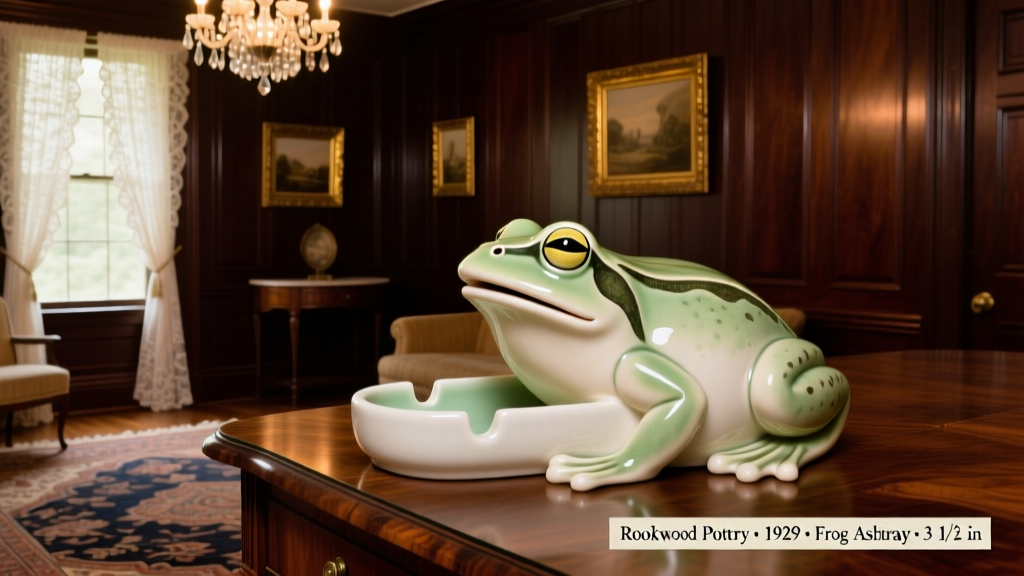
Rookwood Frog-Shaped Ashtray: White-Green Tinted Mouth, 1929, 3¼ Inches — A Study in Art Pottery Innovation and Smoking Culture
The Cut Glass Water Set Heart Pattern: A Collector’s Guide to the 10-Inch Pitcher & 7-Piece Service
Crossed Ra Rix 72 0: Decoding the Enigma of Mid-Century Danish Cabinetmaking
RS Prussia Celery Daffodils Beaded Gold Trim Handle: A Collector’s Guide to the 12¼ × 6 Inch Oval Tray
Elvis Presley Bracelet Charm: Decoding the 1954 Bakelite 'Rocks' Charm — Metal Composition, Provenance, and Authentication
Tokens Baldwins Basement: The $350,000 Auction Phenomenon and What It Reveals About Mid-Century American Furniture Markets
Royal Worcester Vase: Reticulated Rim, Gilt Decoration, and the Significance of the 11-Inch Signed Example