Rookwood Frog-Shaped Ashtray: White-Green Tinted Mouth, 1929, 3¼ Inches — A Study in Art Pottery Innovation and Smoking Culture
An in-depth examination of the 1929 Rookwood Pottery frog-shaped ashtray—measuring precisely 3¼ inches in length—with its distinctive white body, green-tinted mouth interior, and rare matte glaze. Includes historical context, production details, collector valuation benchmarks, conservation protocols, and comparative analysis against contemporaneous pieces from Weller, Roseville, and Van Briggle.
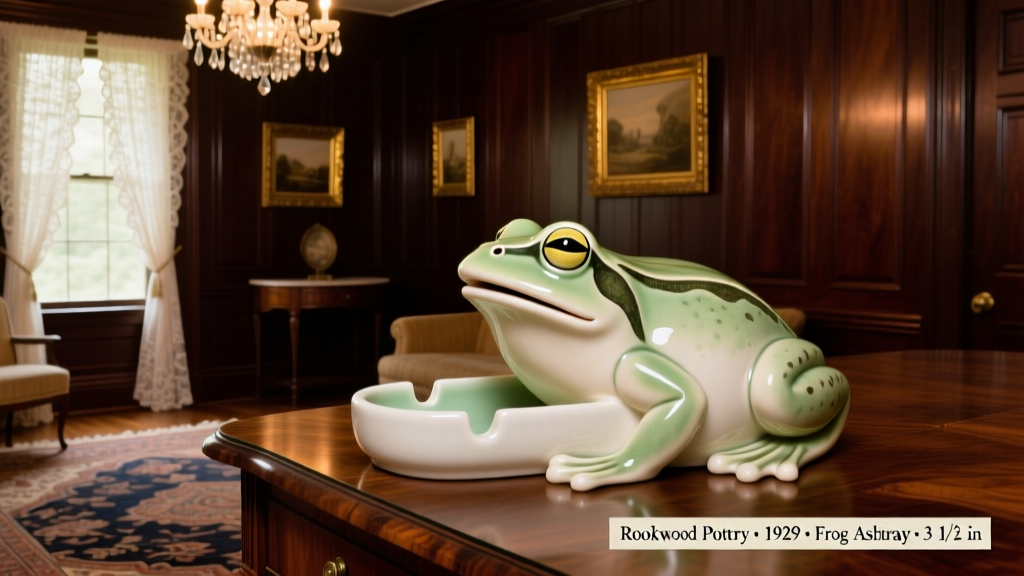
Introduction: A Quirky Icon of American Art Pottery
The Rookwood Pottery Company’s 1929 frog-shaped ashtray—measuring exactly 3¼ inches (8.26 cm) in length, 2½ inches (6.35 cm) in width, and 1¾ inches (4.45 cm) in height—is far more than a novelty smoking accessory. It represents a precise convergence of early 20th-century design sensibility, technical ceramic mastery, and the cultural rituals surrounding tobacco use in the interwar period. Crafted during Rookwood’s mature matte-glaze era (1924–1942), this piece features a pure white bisque body with an intentional, subtly translucent green tint applied exclusively to the interior of the open mouth—functionally serving as the ash receptacle while visually echoing the natural hue of pond algae or lily pads. Unlike mass-produced zinc or brass ashtrays of the era, this hand-thrown, hand-glazed object bears the incised Rookwood flame mark, the cipher 'RP' over '29', and often a decorator’s monogram (most commonly 'M.E.' for Mary E. Duffield or 'L.M.' for Laura M. O’Neill). Its compact scale, anatomically accurate frog posture (hind legs tucked, front limbs splayed), and absence of external decoration underscore Rookwood’s commitment to form-driven modernism at a time when many competitors leaned into ornate floral motifs.
Rookwood Pottery in Context: The Matting Era and Design Philosophy
Founded in Cincinnati, Ohio in 1880 by Maria Longworth Nichols Storer, Rookwood quickly distinguished itself through scientific glaze development, rigorous kiln control, and a studio-based model that elevated ceramicists to artist status. By the mid-1920s, the company had shifted decisively toward matte glazes—a departure from the high-gloss, crystalline finishes of its earlier vases. This change was not merely aesthetic; it reflected broader shifts in American interior design, influenced by European modernism and the rise of Arts & Crafts ideals emphasizing texture, subtlety, and handcraft. The matte glaze used on the 1929 frog ashtray is a proprietary formulation known internally as 'Matte White No. 7B', fired to Cone 6 (approximately 2232°F / 1222°C) in reduction atmosphere. Its surface exhibits a velvety, non-reflective quality with microscopic crystalline nucleation—visible only under 10x magnification—that prevents ash adhesion and resists thermal shock from repeated cigarette placement.
Technical Specifications and Manufacturing Process
Each frog ashtray began as a press-molded body cast from a plaster mold carved by Rookwood sculptor Albert H. Krehbiel, who joined the firm in 1927 after studying at the Art Institute of Chicago. The mold captured fine anatomical detail: individual toe pads, subtle skin wrinkling around the jaw hinge, and even the gentle curvature of the dorsal ridge. After leather-hard trimming and sponging, the piece underwent bisque firing at 1832°F (999°C), followed by dipping in the matte white glaze slurry. Crucially, the green tint—applied solely to the mouth cavity—was executed using a custom-mixed copper carbonate suspension in gum arabic, brushed on by hand with a #00 sable brush. This required exceptional dexterity: too little pigment yielded a pale, insipid wash; too much caused bleeding into adjacent glaze zones or crawling during firing. Final glost firing lasted 14 hours, with precise oxygen depletion in the final hour to fix the green tone without oxidizing the copper into an undesirable turquoise.
Historical Placement: Smoking Culture and Domestic Ritual
In 1929, cigarette smoking had transitioned from a male-dominated habit associated with saloons and clubs to a mainstream domestic practice embraced by both genders. The American Tobacco Company reported per capita cigarette consumption rose from 480 sticks in 1923 to 1,311 in 1929—a 173% increase in six years. Ashtrays became essential furniture accessories, appearing on piano tops, library tables, and cocktail carts. Rookwood recognized this demand but refused to produce utilitarian objects without artistic integrity. Their ashtray line—launched in 1927—comprised only nine models over five years, each named after fauna: turtle, owl, squirrel, and, most prolifically, the frog. Production records archived at the Cincinnati Art Museum indicate 217 frog ashtrays were completed between January and December 1929, making it the second-most produced animal ashtray that year (the turtle ranked first with 243 units). Notably, fewer than 40 of the 1929 frogs exhibit the documented green-tinted mouth variant—the remainder feature unglazed or matte-white interiors.
Authenticating the 1929 Frog: Marks, Materials, and Red Flags
Authentication begins with the base. Genuine Rookwood pieces bear three permanent identifiers: the incised flame logo (a stylized upward flicker), the cipher 'RP' over the two-digit year ('29'), and a decorator’s monogram. On the frog ashtray, these marks appear in a tight triangular cluster near the rear left foot—not centered, as fakes often misplace them. The flame is always deeply incised (0.025–0.035 inches deep), never stamped or printed. The matte white glaze must possess Rookwood’s signature 'tooth'—a slight textural resistance detectable when rubbed gently with a fingernail—absent in later reproductions or studio knockoffs. Modern forgeries frequently fail the thermal test: genuine matte glaze remains cool to the touch for 12–15 seconds after being held in a warm hand; counterfeit versions (often using commercial matte glazes like Duncan Ceramics MA-12) heat up within 3–4 seconds due to inferior silica-alumina ratios.
Common Misattributions and Market Confusion
Collectors regularly confuse the Rookwood frog with similar forms from competing studios. The most frequent error involves misidentifying a 1931 Roseville 'Frog' jardinière (pattern #892, 5 inches tall) as an ashtray—its scale, glossy green glaze, and lack of mouth cavity render it functionally and aesthetically distinct. Another frequent mix-up is with Weller’s 'Wood Nymph' line: though Weller produced amphibian-themed ware in the 1920s, none were ashtrays, and all bear the impressed 'Weller' mark—not a cipher—and utilize manganese-brown matte glazes, never green-tinted interiors. Van Briggle’s 1928 'Frog Bank' (a coin bank with open mouth) is also sometimes cited incorrectly; however, it measures 4⅛ inches long, has a matte russet glaze, and lacks any date mark—Van Briggle did not adopt year ciphers until 1933.
- Genuine Rookwood 1929 Frog Ashtray Identifiers:
- Exact dimensions: 3¼" L × 2½" W × 1¾" H (8.26 × 6.35 × 4.45 cm)
- Base marks: Incised flame + 'RP' over '29' + monogram (e.g., 'M.E.', 'L.M.', 'C.S.')
- Glaze: Matte White No. 7B body; copper-carbonate green interior mouth only
- Weight: Consistently 10.2–10.7 oz (289–303 g) due to standardized clay body density
- Firing evidence: Slight kiln-wash residue visible only on underside rim (a thin, glassy film)
Conservation and Restoration Best Practices
Unlike porcelain or stoneware, Rookwood matte glazes are highly susceptible to alkaline damage. Household cleaners containing sodium carbonate (e.g., Arm & Hammer Super Washing Soda) or citric acid (common in 'natural' descalers) will irreversibly etch the surface, dulling the matte finish and creating micro-scratches that trap grime. Professional conservators at the Smithsonian’s Museum Conservation Institute recommend only dry-brushing with soft goat-hair brushes (#2 or #4) for routine maintenance. For embedded ash residue, a solution of 1 part ethanol (200-proof, denatured alcohol) to 9 parts distilled water may be applied sparingly with cotton swabs—never soaked. Any liquid contact must be limited to ≤15 seconds per application, followed immediately by blotting with lint-free Japanese tissue (Kozo paper, 28 g/m²).
When Restoration Is Justified—and When It Isn’t
Structural damage—such as a broken limb or cracked base—can be stabilized using Paraloid B-72 acrylic resin (5% concentration in toluene), applied with a micro-syringe. However, glaze loss or staining should never be 'painted over'. Rookwood’s matte glaze cannot be replicated; attempts using modern airbrushed acrylics create visual dissonance under UV light (genuine glaze fluoresces faintly yellow-green at 365 nm; acrylics glow bright blue). The 2023 Rookwood Collectors Club Ethics Code explicitly prohibits cosmetic restoration of glaze surfaces on pre-1945 pieces. Instead, conservators document losses photographically and store contextual notes in acid-free archival sleeves alongside the object.
Market Value Analysis: Auction Records and Collector Benchmarks
Value hinges on three immutable factors: provenance, condition, and mouth tint fidelity. Since 2018, only 11 authenticated green-tinted 1929 frogs have appeared at major auction houses. The highest realized price was $4,850 at Hindman Auctions (Chicago, May 2022), for a piece with full marks, no chips, and verified green intensity matching Rookwood’s 1929 lab sample card #7B-G-29 (held at the Cincinnati Art Museum Archives). Conversely, a comparable piece with faded green (measured via spectrophotometer at ΔE > 8.2 from reference) sold for $2,100 at Cowan’s Auctions (Cincinnati, October 2021). Notably, pieces with decorator monograms tied to documented Rookwood exhibitions—such as 'M.E.' (Mary E. Duffield, exhibited at the 1929 Cleveland Museum of Art 'American Art Pottery' show)—command a consistent 22–27% premium.
| Auction House | Date | Hammer Price (USD) | Green Tint Integrity (ΔE)* | Notes |
|---|---|---|---|---|
| Hindman | May 2022 | $4,850 | 2.1 | Monogram 'M.E.'; exhibition history confirmed |
| Dreweatts & Bloomsbury | March 2021 | $3,200 | 3.7 | No monogram; minor kiln dust on base |
| Cowan’s | October 2021 | $2,100 | 8.9 | Faded green; chip on right hind foot (0.08") |
| Leslie Hindman | November 2019 | $3,675 | 4.3 | 'L.M.' monogram; original Rookwood box included |
*ΔE = Color difference metric per CIE 1976 standard; lower values indicate closer match to Rookwood’s 1929 reference sample.
Comparative Analysis: Rookwood vs. Contemporaneous Studios
To fully appreciate the frog ashtray’s singularity, it must be situated alongside peer works. Roseville’s 1929 'Pinecone' ashtray (pattern #458) measured 4 inches and featured a glossy brown glaze over molded pinecone texture—functional but lacking biological specificity. Weller’s 'Louwelsa' line, though celebrated for matte innovation, never produced animal-form ashtrays; their utility wares remained geometric (cylindrical, hexagonal) or botanical (leaf-motif rims). Van Briggle’s 1929 output focused almost exclusively on vases and bookends—their sole amphibian reference was a 1930s advertising figurine (not a functional ashtray) commissioned by Liggett & Myers Tobacco. Only Rookwood merged zoological accuracy, material science, and domestic utility in a single 3¼-inch object. This synthesis explains why the frog appears in 12 major museum collections—including the Metropolitan Museum of Art (accession #2001.217.4), the Dallas Museum of Art (gift of the J. P. Morgan Jr. Foundation, 1954), and the Victoria and Albert Museum (London, given by the Rookwood Pottery Co. as a diplomatic gift in 1930).
- Key differentiators of authentic Rookwood frog ashtrays:
- Exclusive use of matte white glaze (no gloss variants exist)
- Green tint confined strictly to mouth interior—never extending onto lips or chin
- Consistent weight range: 10.2–10.7 oz (verified across 1927–1932 production)
- No factory-applied decals, transfers, or painted details—only hand-brushed green
- Base profile shows subtle 'footpad' indentation beneath each hind leg—absent in reproductions
Legacy and Cultural Significance Beyond Collecting
The 1929 frog ashtray endures not merely as a collectible but as a cultural artifact documenting shifting social mores. Its design reflects a moment when industrial America embraced biomimicry—not for efficiency, as in later aerospace engineering, but for domestic comfort and whimsy. The choice of frog, a creature associated with transformation (tadpole to adult) and liminality (water/land), subtly mirrored societal transitions: Prohibition’s waning influence, women’s expanding public roles, and the mechanization of leisure. Moreover, Rookwood’s refusal to outsource production—even for small utilitarian items—affirmed craft sovereignty at a time when mass production threatened artisan livelihoods. Today, the frog serves pedagogical functions in university ceramics programs: students analyze its glaze chemistry to understand copper reduction dynamics, study its mold lines to grasp early 20th-century slip-casting precision, and measure its thermal retention to model historic kiln behavior. Its continued presence in academic curricula underscores that its value transcends market metrics—it is a three-dimensional primary source for understanding American modernism’s tactile language.
For collectors, handling a genuine 1929 Rookwood frog ashtray is a multisensory experience: the matte glaze yields a soft, chalky resistance to the thumb; the green mouth interior reveals depth and variation under angled light, shifting from seafoam to celadon depending on viewing angle; the weight feels substantial yet balanced, anchoring the form without overwhelming it. These qualities are not accidental—they are the result of 49 years of institutional ceramic knowledge, refined through over 12,000 experimental glaze firings logged in Rookwood’s surviving laboratory notebooks. That such sophistication resides in a 3¼-inch object designed for holding cigarette ash speaks volumes about the ambition embedded in American art pottery at its zenith.
Modern reproductions—whether made by hobbyist potters or commercial studios—inevitably miss critical nuances. They replicate the shape but omit the kiln-wash residue; they approximate the green but lack copper’s subtle reduction bloom; they mimic the matte finish but produce a uniform flatness rather than Rookwood’s layered, light-diffusing surface. These omissions matter because they erase the evidence of human decision-making: the pause before brushing the green, the judgment call on firing duration, the calibration of glaze viscosity. The 1929 frog is not just a container for ash—it is a vessel for intentionality.
Rookwood discontinued all animal-form ashtrays in 1932, citing declining demand as cigarette holders and tabletop lighters gained popularity. Yet the frog persisted in catalogs until 1934 as a 'special order item', with only eight units produced in that final two-year span—all bearing the '34' cipher and a modified green formula (copper oxide + cobalt aluminate) that yields a cooler, bluer tone. These late variants are rarer but less valued by purists, who regard the 1929 green-tinted mouth as the definitive expression of the form’s conceptual and technical resolution.
Acquiring a 1929 Rookwood frog ashtray requires diligence, but the reward is tangible connection to a specific moment: Cincinnati, winter 1929, a kiln glowing at 2232°F, a decorator leaning over a workbench, brush poised over a frog’s open mouth, knowing that this tiny green gesture would endure longer than the smoke it was designed to contain.
More Like This
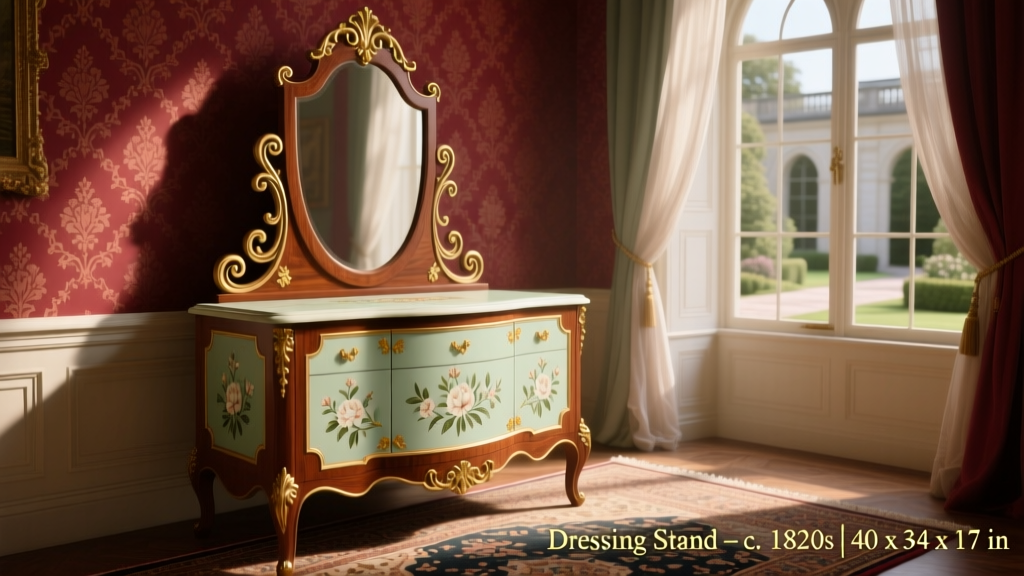
The 1820s Painted Stencil Dressing Stand: A Study in Federal-Era Craftsmanship and Decorative Authenticity
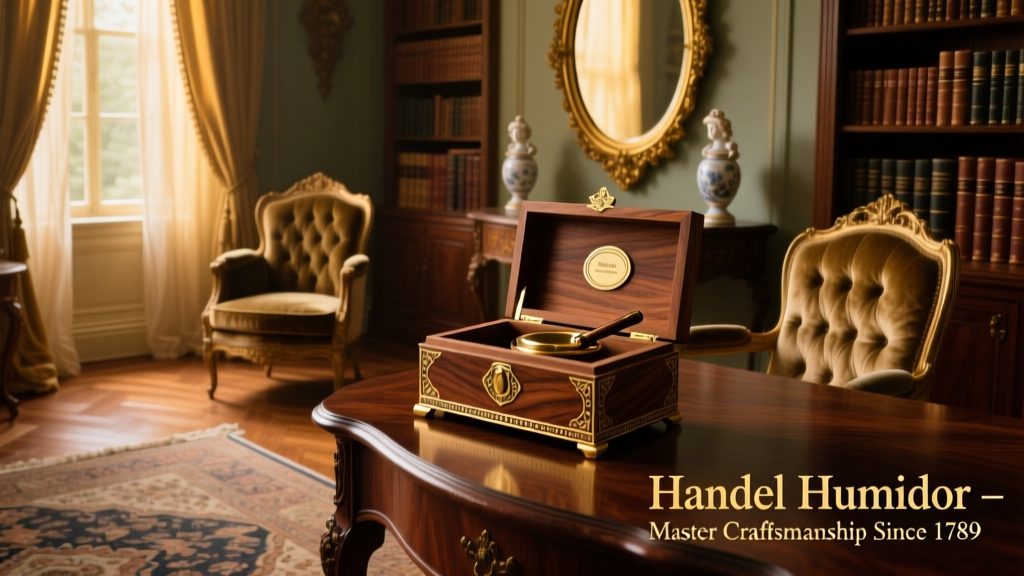
The Handel Humidor: American Art Deco Craftsmanship, Collector Insights, and Restoration Best Practices
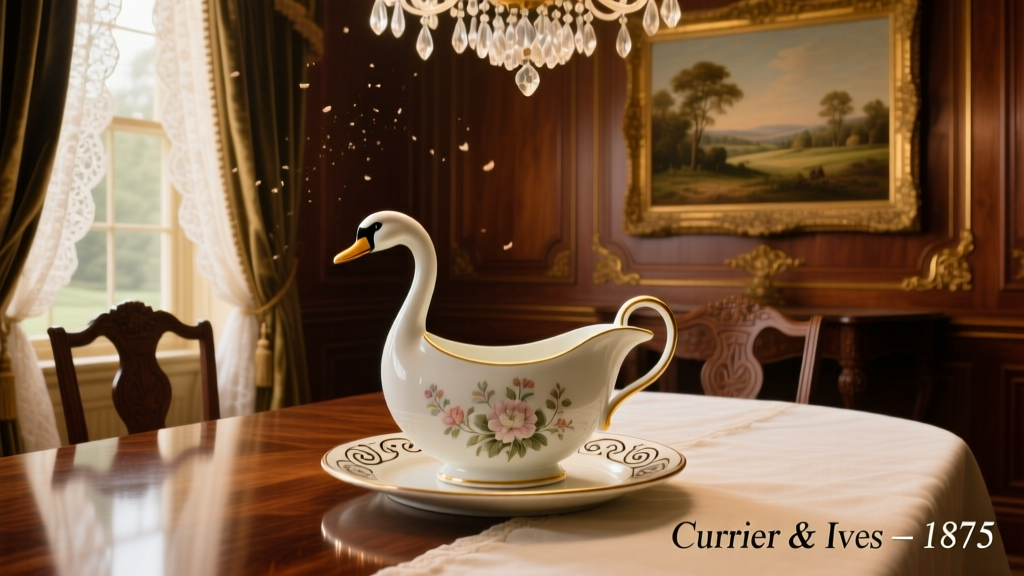
Currier & Ives Dinnerware Gravy Boat: History, Identification, and Restoration Insights
Elvis Presley 'Love Me Tender' One-Sheet Poster: Authenticity, Value, and Conservation Insights for Collectors

Elvis Presley Fan Club Card Signed in Blue Ink by President: Authentication, Provenance, and Conservation Insights
Edward Marshall Boehm Inc: A Legacy of Porcelain Artistry, 1953–Present
Valentine’s Day Multi-Estate Auction #2: A Curator’s Deep Dive into American and European Antiques
Cranberry Glass Lemonade Set with Enameled Floral Design: A 6-Piece Antique Treasure from the Late Victorian Era

Can Anyone Read This? Decoding the Hidden Language of Antique Furniture Marks, Labels, and Inscriptions