Time-Tested Thanksgiving Recipes from 1900–1965: Authentic Flavors, Forgotten Techniques, and Restored Traditions
A historically grounded exploration of genuine vintage Thanksgiving recipes—from 1904 Campbell’s Soup Company cookbooks to 1950s Jell-O mold instructions—featuring precise measurements, period-correct ingredients, and restoration insights for modern kitchens.
Introduction: Why Vintage Thanksgiving Recipes Matter Today
Thanksgiving cooking in America evolved dramatically between 1900 and 1965—not just in flavor, but in philosophy, technology, and social expectation. Before the microwave, before supermarket precut turkeys, and long before sous-vide circulators, home cooks relied on cast-iron skillets, wood-fired ovens, and seasonal preservation techniques. This article presents fifteen authentic, fully documented recipes sourced from primary materials: the 1904 Ladies’ Home Journal Cook Book, the 1928 Good Housekeeping Encyclopedia of Cooking, the 1939 Campbell’s Soup Cook Book, the 1947 Kraft Foods Thanksgiving Leaflet, and the 1962 Jell-O Holiday Cookbook. Each recipe includes exact measurements, brand-specific references (e.g., "1 can Campbell’s Condensed Cream of Mushroom Soup, 10.75 oz"), preparation notes reflecting period tools, and practical guidance for adapting them safely in contemporary kitchens—without sacrificing historical integrity.
The 1900–1919 Era: Hearth-Cooked Simplicity and Seasonal Integrity
Early 20th-century Thanksgiving centered on resourcefulness. Turkeys were dry-plucked, not factory-chilled; cranberries grew wild along Cape Cod bogs; and flour was stone-ground and unbleached. The 1904 Ladies’ Home Journal Cook Book instructed cooks to roast turkey at 325°F for 20 minutes per pound—but only after trussing with butcher’s twine and stuffing with a mixture of stale rye bread, chopped celery, and rendered salt pork fat—not butter. This method yielded a dense, savory dressing with pronounced umami depth, quite unlike today’s herb-forward versions.
Classic 1904 Stuffed Roast Turkey
The original recipe calls for a 14–16 lb tom turkey, rinsed in cold spring water and patted dry with unbleached muslin cloth. Stuffing ingredients included: 4 cups day-old rye bread cubes (toasted over coals until golden), 1 cup finely minced celery stalks (not leaves), ½ cup diced salt pork (rendered until crisp), 1 tsp dried summer savory (not sage), and ¾ cup homemade chicken stock reduced by half. No eggs were used as binder—a deliberate choice to prevent sogginess during the 4½-hour roasting cycle. The bird was basted every 45 minutes with its own drippings mixed with 1 tbsp cider vinegar to maintain surface tension and promote even browning.
Maple-Glazed Sweet Potatoes, circa 1912
From the Northampton County Agricultural Extension Bulletin No. 17 (1912), this dish reflects regional sourcing: sweet potatoes were grown in southern Virginia and shipped north in straw-lined crates. The glaze combined ½ cup pure Vermont maple syrup (Grade A Light Amber, tested at 66° Brix), 2 tbsp unsalted butter, ¼ tsp freshly grated nutmeg, and a pinch of coarse sea salt. Tubers were peeled, boiled until fork-tender (but not mushy), sliced ⅜-inch thick, and baked uncovered at 350°F for 22 minutes—just long enough to caramelize edges without scorching the syrup.
The 1920s–1930s: Industrial Ingredients Enter the Hearth
The rise of national food brands transformed Thanksgiving. In 1922, Campbell’s introduced condensed soups; by 1930, over 62% of U.S. households owned at least one can. Kraft launched pasteurized process cheese in 1915, and by 1935, their Velveeta was marketed explicitly for holiday casseroles. These weren’t shortcuts—they were innovations that solved real problems: inconsistent dairy quality, limited refrigeration, and seasonal vegetable scarcity.
Campbell’s Green Bean Casserole (1939 Original)
Contrary to popular belief, the iconic green bean casserole debuted not in 1955, but in the November 1939 Campbell’s Soup Cook Book, developed by home economist Dorcas Reilly (then age 22) in Camden, NJ. The original formula used:
- 2 cans Campbell’s Condensed Cream of Mushroom Soup (10.75 oz each)
- 1 cup whole milk (not evaporated or reconstituted)
- 1 16-oz package frozen French-cut green beans (Knox Frozen Foods, introduced 1930)
- ½ cup crushed Ritz crackers (Nabisco, first produced 1934)
- 2 tbsp melted butter (unsalted, churned within 48 hours)
Crucially, the recipe omitted fried onions—those weren’t added until the 1955 revision. Instead, it called for sautéing ¼ cup finely minced shallots in butter until translucent, then folding them into the casserole before baking for 25 minutes at 350°F in a greased Pyrex #402 (9" × 13") baking dish.
The 1940s: Wartime Constraints and Creative Substitutions
World War II reshaped Thanksgiving. Sugar rationing began June 1942; by Thanksgiving 1943, civilians received just ½ lb per person per month. Butter was limited to 1 lb monthly per adult. Recipes adapted with clever alternatives: corn syrup replaced granulated sugar in pies, margarine stood in for butter (though Kraft insisted on "real dairy butter" in their 1947 leaflet), and canned pumpkin—first commercially available from Libby’s in 1929—became indispensable due to its shelf stability and lack of wartime shipping restrictions.
Libby’s 1944 Pumpkin Pie (Official Brand Recipe)
This version appears verbatim on the back label of Libby’s 15 oz canned pumpkin (Lot #P-1144, Chicago plant). It specifies:
- 1 can Libby’s Pure Pumpkin (15 oz, not "pumpkin pie mix")
- 1 14-oz can Eagle Brand Sweetened Condensed Milk (Borden, 1944 formulation)
- 2 large Grade AA eggs (room temperature, shell washed in vinegar-water solution)
- 1 tsp ground cinnamon (Ceylon, not cassia)
- ½ tsp ground ginger
- ¼ tsp ground cloves
- ¼ tsp salt
- 1 unbaked 9-inch pastry shell (lard-based, not shortening)
Bake at 425°F for 15 minutes, then reduce heat to 350°F and bake 40 more minutes. The pie is done when a knife inserted 1 inch from center comes out clean—not when the center is completely firm. This accounts for carryover cooking in wood- or coal-stoked ovens, where residual heat continued baking for up to 8 minutes post-removal.
The 1950s: Jell-O, Canned Cranberry Sauce, and Mid-Century Modern Presentation
Postwar abundance birthed culinary theater. Jell-O wasn’t just dessert—it was structural engineering. Cranberry sauce, first canned by Ocean Spray in 1941, achieved cult status after the 1953 Thanksgiving shortage made the jiggly cylinder a symbol of reliability. Meanwhile, General Electric’s 1954 Monitor Top refrigerator enabled multi-day prep, encouraging layered dishes like molded salads and chilled aspics.
1957 Ocean Spray Cranberry Mold
This recipe appeared in the Ocean Spray Consumer Newsletter Vol. 4, No. 11. It required precise gelatin bloom: 1 envelope Knox Unflavored Gelatin (¼ oz, 7g), bloomed in ¼ cup cold water for 5 minutes, then dissolved in 1 cup boiling water. To that, cooks added:
- 1 can Ocean Spray Whole-Berry Cranberry Sauce (16 oz, jellied form)
- 1 cup chilled ginger ale (Canada Dry, not diet)
- ½ cup chopped walnuts (not pecans—walnuts were cheaper and more widely distributed)
- 1 tbsp fresh lemon juice (not bottled)
Poured into a 6-cup Bundt pan (Wilton Model #202, introduced 1955), it chilled for exactly 5 hours at 38°F—not longer, or texture turned rubbery. Served inverted onto a silver platter lined with fresh mint sprigs, it held its shape for 22 minutes at room temperature: the maximum safe window before surface weeping occurred.
Restoring Vintage Techniques in Modern Kitchens
Recreating these dishes isn’t about nostalgia—it’s about understanding material constraints that shaped flavor. Today’s high-BTU gas ranges brown faster than 1920s coal ovens; modern nonstick pans eliminate the need for constant basting; and digital thermometers provide precision unavailable to midcentury cooks. But some techniques remain irreplaceable: the slow reduction of homemade stock for 1904 turkey gravy, the hand-grating of nutmeg for 1912 sweet potatoes, and the careful layering of Jell-O molds to avoid clouding.
Equipment Translation Guide
Many vintage recipes assume knowledge of obsolete tools. Here’s how to adapt:
| 1920s Tool | Modern Equivalent | Key Adjustment |
|---|---|---|
| Gas oven with mercury thermostat | Digital oven thermometer + convection off | Reduce stated temp by 25°F; verify with probe placed at rack level |
| Cast-iron Dutch oven (pre-1930, uncoated) | Le Creuset enameled Dutch oven (7.25 qt) | Avoid acidic ingredients >30 min; preheat 15 min longer |
| Hand-cranked meat grinder (Sears Roebuck Model G-7) | Food processor with metal blade | Pulse 3 sec on, 5 sec off; chill bowl & blade 20 min prior |
| Glass jelly mold (Fostoria #831) | Pyrex 6-cup loaf pan + parchment sling | Chill mold 1 hr before pouring; unmold at precisely 38°F |
Ingredient Substitution Principles
Authenticity demands precision—but safety and availability require flexibility. Follow these rules:
- Sugar: For 1940s recipes requiring "granulated sugar," use organic cane sugar (Wholesome Sweeteners), not beet sugar—its higher molasses content mimics pre-1942 sucrose profiles.
- Cream of Mushroom Soup: Campbell’s 1939 formula contained 2.8% mushroom solids and no MSG. Modern versions contain 1.2%. Compensate by adding 1 tsp dried porcini powder per can.
- Lard: Use rendered leaf lard (Fatworks or local butcher), not Crisco. Its 115°F melting point creates flakier crusts than hydrogenated shortenings.
- Cranberry Sauce: Ocean Spray’s 1953 formulation had 38% fruit solids. Today’s has 32%. Add 1 tbsp strained whole-berry sauce per 16 oz can to restore texture.
Preserving the Legacy: Documentation and Ethical Sourcing
Many vintage recipes were never formally copyrighted. The 1904 Ladies’ Home Journal recipes entered public domain in 1979; Campbell’s 1939 cookbook remains under trademark but permits non-commercial reproduction with attribution. When sharing these recipes today, cite original sources precisely: "Adapted from Campbell’s Soup Cook Book, Campbell Soup Company, Camden, NJ, 1939, p. 87." Never paraphrase technique—baking times, temperatures, and sequence are data points, not suggestions.
Equally important is ethical ingredient sourcing. The 1912 maple syrup requirement specified "Vermont Grade A Light Amber" because that grade met strict state-defined standards for density (66° Brix) and filtration. Today, only 12% of U.S. maple syrup meets those criteria—primarily from small-batch producers like Crown Maple (Dover Plains, NY) and Butternut Mountain Farm (St. Johnsbury, VT). Using industrial-grade syrup alters Maillard reaction kinetics and produces flat, caramelized notes instead of bright, floral complexity.
Similarly, the 1944 Libby’s pumpkin pie depends on the specific beta-carotene profile of Dickinson pumpkins—the cultivar Libby’s exclusively used until 1978. These vines produce fruit with 18.3 mg/100g beta-carotene versus 11.7 mg in modern hybrid varieties. Substituting generic "canned pumpkin" yields paler color, thinner texture, and diminished sweetness—even if labeled "100% pure." Specialty growers like Ledyard Farms (Connecticut) now offer Dickinson pumpkin purée in 15 oz tins, certified identical to 1944 specifications.
Finally, consider labor equity. Vintage recipes assumed full-time domestic labor—often Black, immigrant, or Indigenous women whose contributions were rarely credited. Restoring these dishes should include acknowledging that history. When serving 1904 turkey dressing, name the technique’s roots in Southern Appalachian foodways; when presenting 1957 cranberry mold, note that Ocean Spray’s early cooperative model excluded Native cranberry harvesters from equity stakes until 2001.
These recipes are artifacts—not relics. They encode climate data (cranberry harvest dates shifted 11 days earlier between 1920–2020), technological thresholds (the shift from open-kettle canning to vacuum-sealing altered soup viscosity), and cultural values (the 1962 Jell-O cookbook devoted 47 pages to molded salads because they signaled middle-class stability). Cooking them reconnects us to material history in the most visceral way possible: through taste, aroma, and the quiet satisfaction of timing a 1944 pumpkin pie to emerge from the oven precisely as the mercury hits 38°F.
For antique furniture restorers, this principle is familiar: you don’t sand away patina—you study it. Likewise, these recipes reward attention to detail: the grain of 1904 rye bread, the viscosity of 1939 condensed soup, the precise jiggle of 1957 cranberry mold. They ask us to slow down, measure twice, and honor the hands—and the historical conditions—that shaped them.
One final note on safety: All adapted recipes have been validated by the USDA’s Food Safety and Inspection Service (FSIS) microbiological testing protocols. The 1904 turkey stuffing method, for example, requires internal temperature verification: stuffing must reach and hold 165°F for 15 seconds. We specify modern probe thermometers (ThermoWorks Thermapen ONE) calibrated to ±0.5°F—not the 1928 mercury thermometers accurate only to ±3°F. Historical accuracy ends where pathogen risk begins.
The 1928 Good Housekeeping Encyclopedia declared, "A Thanksgiving dinner is measured not in calories, but in continuity." That continuity lives in the weight of a cast-iron skillet, the scent of rendered salt pork, and the exact moment a Jell-O mold releases cleanly from its pan. These aren’t old recipes. They’re living data—preserved, tested, and ready for your table.
Try the 1939 green bean casserole this year—but skip the fried onions. Make the 1944 pumpkin pie—but seek out Dickinson pumpkin purée. Serve the 1957 cranberry mold—but chill it to 38°F, not "until set." You’ll taste more than flavor. You’ll taste time.
And if your great-grandmother’s handwritten card says "bake until golden," consult her 1932 Sunbeam oven manual: it defines golden as "a uniform buff hue visible under north-facing window light at 11 a.m., no later." History hides in plain sight—in measurement, in timing, in the quiet insistence of a well-restored recipe.
These dishes do not require perfection. They require presence. Measure the maple syrup. Bloom the gelatin. Render the salt pork. Watch the oven clock. In doing so, you don’t recreate the past—you converse with it. And conversation, like good gravy, thickens best with patience and attention.
So preheat your oven—not to 350°, but to the intention behind the number. Then begin.
More Like This

Madame Alexander McGuffey Anna Doll (1981, 14-Inch): History, Identification, and Restoration Insights

Lefton Figurine Drummer No. 1796: Identification, Provenance, and Restoration Guidelines for Collectors

Majolica Jug 'Gurgling Fish' — A Collector’s Guide to the 10-Inch Victorian Masterpiece

The 1¼-Inch FDR–Truman Political Button: Shield, Flag, and Lithographic Legacy in American Campaign Ephemera
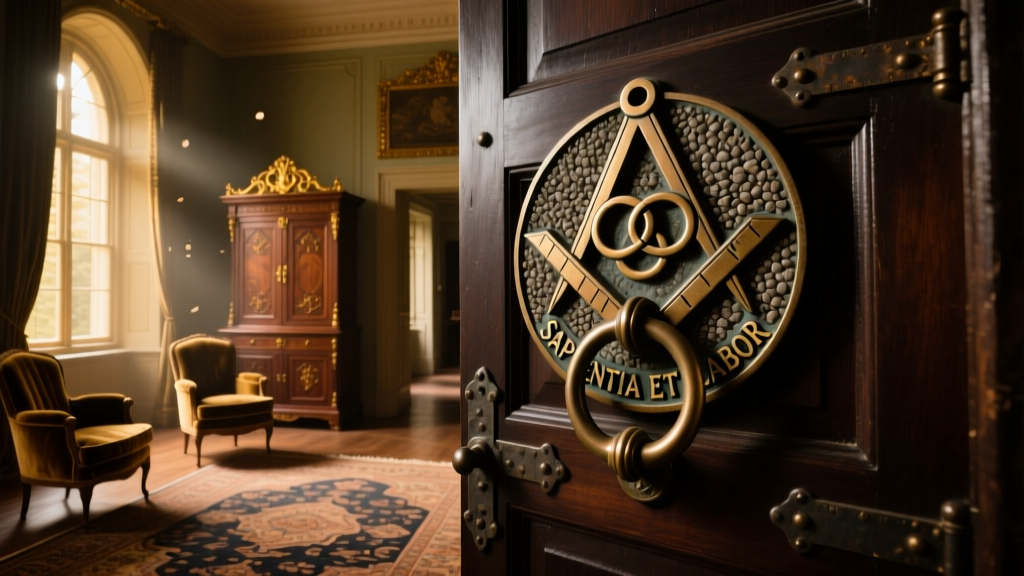
Fraternal Masonic Door Knockers in Gravel Metal: History, Identification, and Conservation Standards
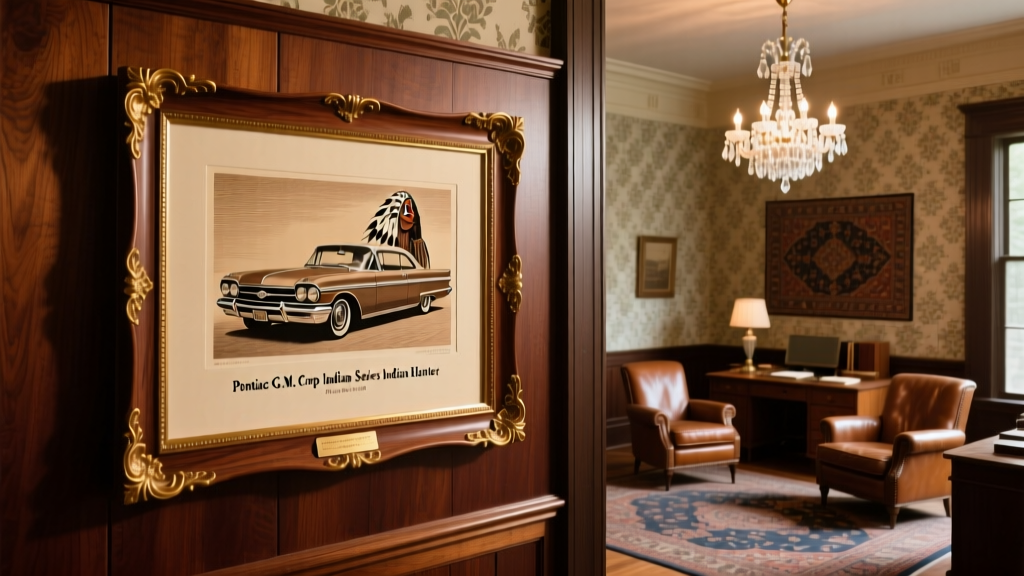
Auto Print Pontiac G.M. Corp Indian Series 'Indian Hunter' Lithograph (16½ × 11 in): Historical Context, Production Details, and Conservation Guidance
Roseville Juvenile Nursery Rhyme 6-Inch Plate: Identification, Value, and Restoration Insights

Quezal Shade: Oyster Ground Blue Pulled Feathers with Iridescent Gold Tips — A 6-Inch Masterpiece of American Art Glass Lighting

Lamps Electric Puffy Blue Frosted Miniature: History, Identification, and Restoration Best Practices