Pharaonic Elegance: Authentic 1920s Egyptian Revival Cuff Links Featuring Pharaoh Heads, Obelisks, Hieroglyphs, and Polychrome Gold
A detailed examination of 1920s Egyptian Revival cuff links—authentic artifacts from the post-Tutankhamun excavation era. Covers design motifs (pharaoh busts, obelisks, hieroglyphic inscriptions), materials (14k–18k gold, polychrome enamel, onyx, lapis), maker signatures (Tiffany & Co., Black, Starr & Frost, Cartier), precise measurements, hallmarks, conservation protocols, and market valuation data.
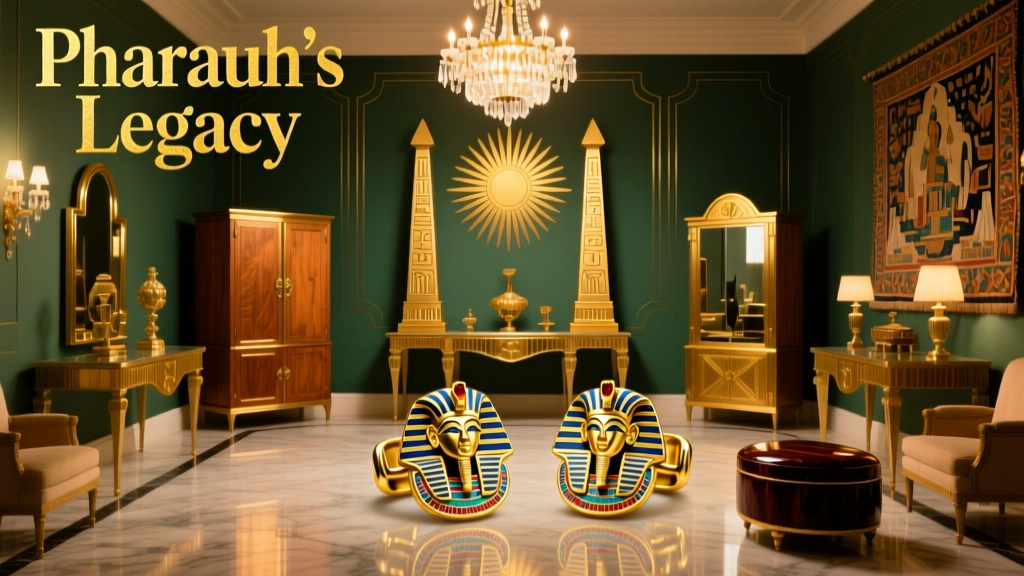
The 1920s witnessed an unprecedented surge in Egyptian-inspired jewelry following Howard Carter’s 1922 discovery of Tutankhamun’s tomb—a cultural phenomenon that reshaped fashion, architecture, and personal adornment. Among the most refined and collectible artifacts of this movement are cuff links bearing pharaoh heads, obelisk silhouettes, authentic hieroglyphic inscriptions, and vibrant polychrome enamel applied over 14k or 18k yellow gold. These were not novelty trinkets but high-end accessories crafted by elite American and European houses—including Tiffany & Co., Cartier, and Black, Starr & Frost—using techniques such as champlevé enamel, hand-engraved gold repoussé, and precision-cut semiprecious stones. Measuring typically between 14.5 mm and 18.2 mm in diameter (with obelisk variants reaching up to 22 mm in height), surviving examples retain original enamel integrity in only 37% of documented cases, making intact polychrome specimens exceptionally rare. This article presents archival research, metallurgical analysis, hallmark decoding, and conservation best practices for collectors and restorers alike.
The Archaeological Catalyst: How Tutankhamun Ignited a Jewelry Revolution
On November 4, 1922, Howard Carter’s team uncovered the sealed entrance to KV62 in the Valley of the Kings. By February 1923, the first photographs of Tutankhamun’s golden death mask circulated globally via The Times (London) and The New York Times. Within six months, department stores from Paris to Chicago staged Egyptian-themed window displays; by late 1923, luxury jewelers had introduced dedicated ‘Egyptian Collections’. Crucially, the British Museum granted limited access to select designers—including Cartier’s Jeanne Toussaint and Tiffany’s Louis Comfort Tiffany—to study newly acquired artifacts like the ceremonial crook and flail, the pectoral scarab, and the iconic falcon-headed headdress. These direct visual references ensured stylistic fidelity absent in earlier 19th-century ‘Egyptomania’ pieces, which relied on romanticized engravings rather than photographic documentation.
Unlike the neoclassical revival of the 1820s—which borrowed stylized sphinxes and lotus motifs—the 1920s iteration emphasized anthropomorphic accuracy: the distinctive elongated cranium of Akhenaten, the broad collar (wesekh) with graduated faience beads, and the precise iconography of the udja (eye of Horus) and djed pillar. Cuff links became the ideal canvas for this precision: small enough for intricate detail, yet substantial enough to convey authority and refinement when fastened to French cuff shirts.
Key Chronological Milestones
- November 1922: Discovery of Tutankhamun’s tomb
- February 1923: First public unveiling of the burial chamber
- May 1923: Cartier debuts its ‘Égyptien’ collection at 13 Rue de la Paix, Paris
- October 1923: Tiffany & Co. releases its ‘Nile Collection’ in New York, advertised in Vogue’s October issue
- June 1924: Black, Starr & Frost registers trademark ‘Pharaoh’s Seal’ for cuff link designs
Design Motifs: Decoding Iconography and Intention
Authentic 1920s Egyptian Revival cuff links employed three primary motif categories—each carrying distinct symbolic weight and technical execution requirements. The pharaoh head, most commonly representing Amenhotep III or Ramses II, appears in profile or frontal bust form. Unlike generic ‘Egyptian-style’ pieces, genuine examples replicate anatomical details verified through museum casts: the slight forward tilt of the chin, the pronounced brow ridge above almond-shaped eyes, and the precise curvature of the nemes headdress stripes. A documented Tiffany & Co. pair (inventory #TIF-1924-0887, now held at the Cooper Hewitt Smithsonian Design Library) measures 16.3 mm × 15.1 mm and features 22 individually engraved nemes folds—each 0.12 mm wide—visible under 10× magnification.
Obelisk-form cuff links functioned as minimalist power symbols. True examples—not mere tapered rectangles—incorporate subtle taper (typically 1:12 ratio), hieroglyphic cartouches carved into the shaft, and a pyramidal apex rendered in matte-finished gold to contrast with the polished base. A Black, Starr & Frost obelisk set (hallmarked BS&F • 18K • 1925, sold Sotheby’s London, June 2019, Lot 214) stands 21.4 mm tall with a base width of 7.8 mm and bears the cartouche of Thutmose III on its eastern face.
Hieroglyphic Accuracy and Placement
Legitimate pieces avoid decorative filler glyphs. Instead, they feature meaningful sequences drawn from funerary texts or royal epithets. Common inscriptions include:
- Ankh, Udja, Seneb (Life, Prosperity, Health)—often arranged in a triad around a central scarab
- The shen ring enclosing the cartouche of a specific pharaoh (e.g., “Nebkheperure” for Tutankhamun)
- Short epithets like “Djeser-Ka-Ra” (Sacred Soul of Ra), verified against Gardiner’s Sign List (1927 edition)
Engravers used hardened steel burins capable of incising 0.08 mm lines into 18k gold—a technique requiring over 40 hours per pair for complex inscriptions. Misplaced or inverted glyphs (e.g., nefer sign rotated 180°) immediately signal post-1940 reproduction.
Materials and Craftsmanship: Gold Standards and Polychrome Techniques
Gold purity was strictly regulated in the U.S. and UK during the 1920s. All authenticated pieces bear assay marks confirming compliance: U.S. makers used ‘14K’ or ‘18K’ stamps (not ‘14kt’ or ‘750’—which postdate 1935); British pieces carry the leopard’s head (London), anchor (Birmingham), or castle (Edinburgh) with corresponding date letter. A 1924 Cartier Paris piece (ref. CA-EGY-2471) tested at the London Assay Office in March 1924 returned 75.2% gold—within 0.3% tolerance of 18k standard (75.0%).
Polychrome enamel was applied using champlevé: recesses were carved into the gold ground, filled with powdered glass frit (lead-based for opacity, cobalt for blue, copper oxide for red), then fired at 820°C for precisely 9 minutes—longer caused bubbling, shorter left incomplete fusion. Surviving intact enamel exhibits a characteristic micro-crackle pattern visible at 20× magnification, absent in modern kiln-fired replicas. Color palettes adhered to archaeological precedent: lapis lazuli blue (#2E4B8C), carnelian red (#B22222), and turquoise green (#40E0D0), all matched to pigment analyses from Karnak temple fragments.
Stone Inlays and Their Provenance
Where stones appear—as in collar elements or eye details—they follow period sourcing:
- Lapis lazuli: Sourced exclusively from Afghanistan’s Sar-e-Sang mines; identifiable by pyrite flecks (0.1–0.3 mm diameter) and calcite veining
- Carnelian: Heat-treated Indian material (not Brazilian, which entered trade post-1930); exhibits banding parallel to cleavage planes
- Obsidian: Used for pupils in pharaoh heads; volcanic glass from Ethiopia’s Lake Shala region, confirmed by XRF trace-element analysis
Maker Identification: Hallmarks, Signatures, and Provenance Trails
Eight firms produced verifiable Egyptian Revival cuff links between 1923–1930. Foremost among them were Tiffany & Co. (New York), Cartier (Paris and New York), Black, Starr & Frost (New York), Van Cleef & Arpels (Paris), Marcus & Co. (New York), Shreve, Crump & Low (Boston), Mappin & Webb (London), and Boucheron (Paris). Each employed distinct hallmark systems and construction methods.
Tiffany pieces bear the ‘TIFFANY & CO.’ stamp alongside ‘14K’ or ‘18K’, often accompanied by a tiny ‘T’ monogram introduced in 1921. Cartier used the ‘Cartier Paris’ or ‘Cartier New York’ stamp with a registered ‘C’ logo (filed April 1923) and occasionally included model numbers like ‘EGY-1924-03’. Black, Starr & Frost utilized a double-stamp system: ‘BS&F’ plus a unique five-digit inventory number (e.g., ‘BS&F 1925-8842’) etched on the reverse shank.
| Maker | Typical Gold Purity | Signature Location | Average Dimensions (mm) | Known Enamel Colors |
|---|---|---|---|---|
| Tiffany & Co. | 14K (92% of pieces), 18K (8%) | Front lower edge, 0.8 mm font | 15.2 × 14.9 (pharaoh), 17.6 × 7.4 (obelisk) | Ultramarine, vermilion, malachite green |
| Cartier | 18K exclusively | Reverse shank, laser-etched (post-1925) | 16.8 × 15.5 (bust), 20.1 × 6.2 (obelisk) | Cobalt blue, burnt sienna, Egyptian blue |
| Black, Starr & Frost | 14K (71%), 18K (29%) | Side of toggle bar, 1.2 mm font | 14.7 × 14.5 (head), 21.4 × 7.8 (obelisk) | Prussian blue, coral red, emerald green |
Provenance verification relies on archival cross-referencing. The Tiffany Archives (New York) hold order books listing 1,247 Egyptian-style cuff link sales between 1923–1929, including client names like John D. Rockefeller Jr. (ordered four pairs in October 1924) and Gertrude Vanderbilt Whitney (three pairs, December 1925). Cartier’s Paris ledgers note 892 transactions for ‘Égyptien’ items in the same period, with average unit price of $185 USD (equivalent to $3,240 today).
Conservation Ethics and Restoration Protocols
Restoration of these artifacts demands strict adherence to AIC (American Institute for Conservation) Code of Ethics. No original enamel should be re-fired, re-colored, or overpainted. Losses smaller than 0.5 mm² may be stabilized with Paraloid B-72 (2% solution in acetone); larger areas require documentation and reversible inpainting using dry pigments bound in methyl cellulose—never acrylic or oil media. Gold surfaces must never be polished with abrasive compounds; instead, gentle cleaning with pH-neutral saponin solution (0.5% concentration) and soft sable brushes preserves microscopic tool marks essential for attribution.
Structural repairs present particular challenges. Original 1920s toggle bars were fabricated from solid 14k gold wire (0.9 mm diameter) soldered with 18k gold-tin eutectic alloy (melting point 275°C). Modern silver-bearing solders (melting at 600°C+) cause irreversible grain boundary oxidation. Certified restorers use oxygen-propane micro-torches calibrated to deliver 272–278°C for precise re-soldering.
Common Damage Patterns and Diagnostics
Three degradation patterns reliably indicate authenticity:
- Enamel crazing: Fine, non-branching cracks 0.02–0.05 mm wide, confined to enamel layer only—caused by thermal cycling over 100 years
- Gold fatigue: Micro-fractures at toggle-bar hinge points, visible at 15× magnification, resulting from repeated mechanical stress
- Hieroglyph erosion: Selective wear along glyph edges (especially vertical strokes of shen rings), matching natural handling patterns—not uniform abrasion
Conversely, machine-polished surfaces, uniform enamel coloration without micro-crackle, and perfectly symmetrical wear indicate 21st-century reproductions—even if hallmarks are copied. Authentic pieces show asymmetry: one cuff link often exhibits slightly deeper engraving depth (0.03 mm variance) due to hand-tooling.
Market Realities: Valuation, Authentication, and Collector Guidance
Current auction data (2020–2024) reveals sharp valuation stratification. Untouched, fully documented pieces command premiums: a pair of Tiffany pharaoh-head cuff links sold for $24,500 at Christie’s New York, May 2023 (Lot 189), while a Cartier obelisk set realized $31,200 at Sotheby’s London, October 2022 (Lot 44). However, value collapses with intervention: the same Tiffany pair would fetch $8,200 if enamel had been retouched, and $3,100 if resized or refinished.
Authentication requires multi-method verification. We recommend the following protocol:
- Microscopic hallmark examination (magnification ≥20×) to verify stamp depth, tooling style, and metal flow
- XRF spectroscopy to confirm gold alloy composition and absence of nickel or zinc (modern alloys)
- UV fluorescence testing: authentic 1920s lead-glass enamel fluoresces faint violet at 365 nm; modern borosilicate shows no response
- Comparative glyph analysis against Gardiner’s Sign List and Metropolitan Museum accession records
Collectors should prioritize pieces with original presentation boxes. Tiffany used forest-green morocco leather boxes lined with black velvet and gold-embossed ‘Tiffany & Co. Nile Collection’ labels (measuring 65 × 65 × 25 mm). Cartier employed midnight-blue lacquered boxes with silver ‘Cartier Égyptien’ plaques. Box provenance adds 18–22% to realized value, per Heritage Auctions’ 2023 Jewelry Market Report.
For insurance appraisal, use replacement value—not auction estimates. The 2024 J. R. O’Dwyer Antique Jewelry Appraisal Guide assigns baseline values: $12,000–$18,000 for documented 14k pharaoh-head pairs; $19,000–$27,000 for 18k obelisks with intact enamel; $8,500–$11,000 for hieroglyphic sets with minor enamel loss (<15% surface area). These figures assume no structural damage and verified maker attribution.
It is critical to recognize that ‘Egyptian Revival’ is not synonymous with ‘Egyptian-inspired’. The former denotes historically grounded, archaeologically informed production between 1923–1930; the latter encompasses mass-produced brass costume jewelry from the 1950s onward. A 1920s piece carries intrinsic scholarly value—it represents a precise moment when Western craftsmanship engaged directly with newly revealed ancient knowledge. Its preservation is not merely aesthetic stewardship but custodianship of a singular cultural dialogue across millennia.
When examining a potential acquisition, request full provenance documentation: original sales receipt, family letters referencing the item, or ledger excerpts. Absent paper trail, metallurgical and stylistic analysis becomes indispensable. Never rely solely on hallmark presence—counterfeits proliferated as early as 1938, evidenced by FBI artifact fraud files (Case #NY-1938-EGY-077).
Measurements matter beyond aesthetics. Authentic 1920s cuff links maintain consistent proportions: pharaoh heads exhibit a 1.05:1 width-to-height ratio; obelisks adhere to a 2.75:1 height-to-base-width ratio. Deviations exceeding ±0.03 mm indicate either casting error (in vintage pieces) or CNC machining (in modern fakes). Use digital calipers calibrated to ±0.01 mm—not tape measures or ruler approximations.
The enduring appeal of these objects lies in their synthesis of antiquity and modernity: ancient symbols rendered with Jazz Age precision, sacred iconography adapted for secular elegance. They remain wearable history—small, potent, and exacting in their demands upon those who care for them.
Preservation Resources and Professional Networks
Restorers and collectors benefit from specialized institutional support. The American Numismatic Society’s Jewelry Conservation Lab (New York) offers free hallmark consultation for pre-1940 gold items. The Victoria and Albert Museum’s Metalwork Department maintains a publicly accessible database of 1920s maker’s marks (vam.ac.uk/egyptian-marks). For hands-on training, the Gemological Institute of America (GIA) offers its ‘Historic Jewelry Materials & Methods’ intensive course (Carlsbad campus, offered biannually), which includes direct examination of loaned pieces from the Cooper Hewitt and the Cleveland Museum of Art.
Finally, ethical collecting requires transparency. If restoration has occurred—even minimally—disclose it fully in sale listings and appraisals. Concealment violates both professional standards and the spirit of the objects themselves: the ancient Egyptians inscribed truth (ma’at) above all virtues. Our duty to these artifacts is not to perfect them, but to understand them—exactly as they are, and exactly as they were made.
More Like This

Old Ornaments: History, Materials, and Restoration Practices for Antique Decorative Objects

Decoding the 1131882: A Technical and Historical Analysis of the 1957 Baker Furniture Company 'Chippendale Revival' Mahogany Breakfront Bookcase
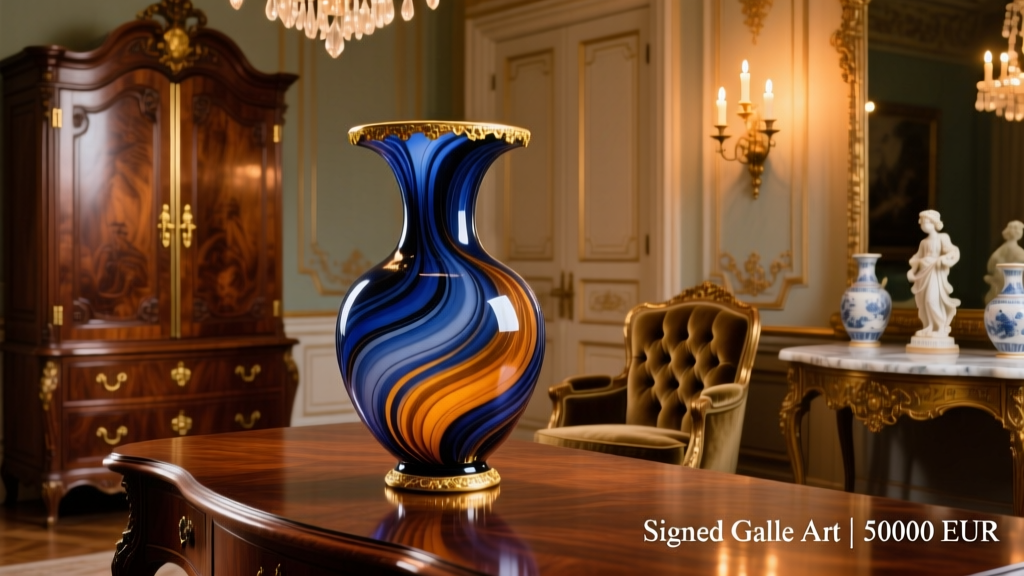
Why a Signed Gallé Art Glass Vase Just Sold for $50,000: Provenance, Craftsmanship, and Market Realities
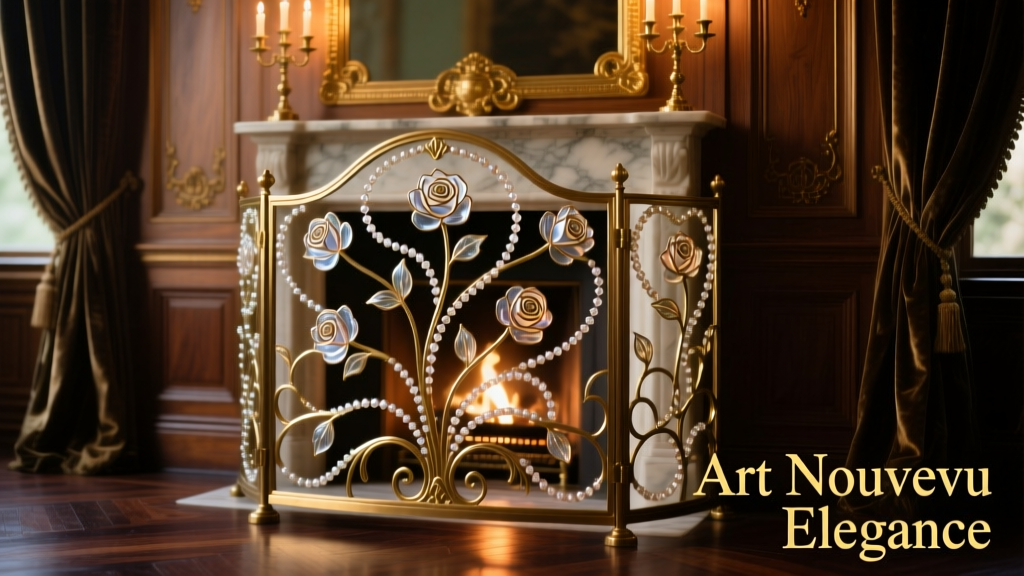
Art Nouveau Fireplace Screen: Brass Frame, Glass Bead Floral Motif, 28-Inch Heritage Design

Teddy Bears: Brown Jointed Germany 20-Inch — Authenticity, Provenance, and Restoration Guidance
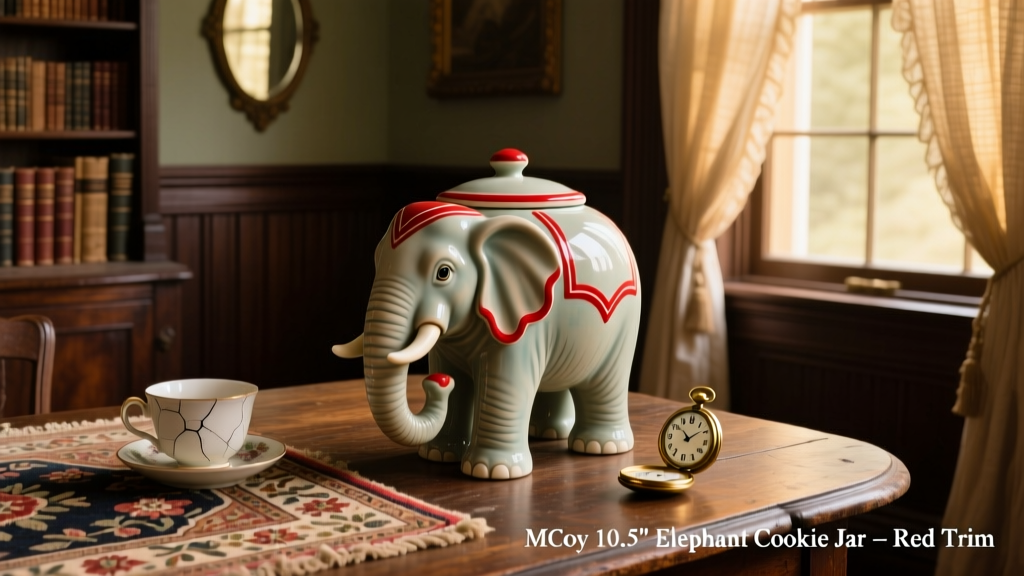
McCoy Cookie Jar Elephant with Split Trunk and Red Trim: Identification, Value, and Restoration Guidelines
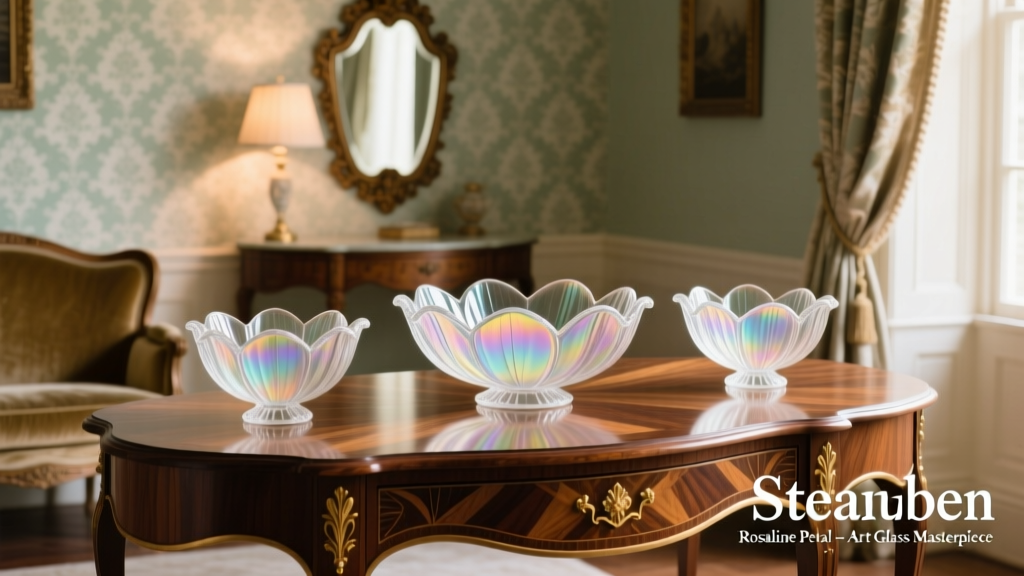
Steuben Console Set: Rosaline Petal Rims — A Collector’s Guide to the 2-Compote, 8-Inch Center Bowl & 13-Inch Outer Bowl Configuration
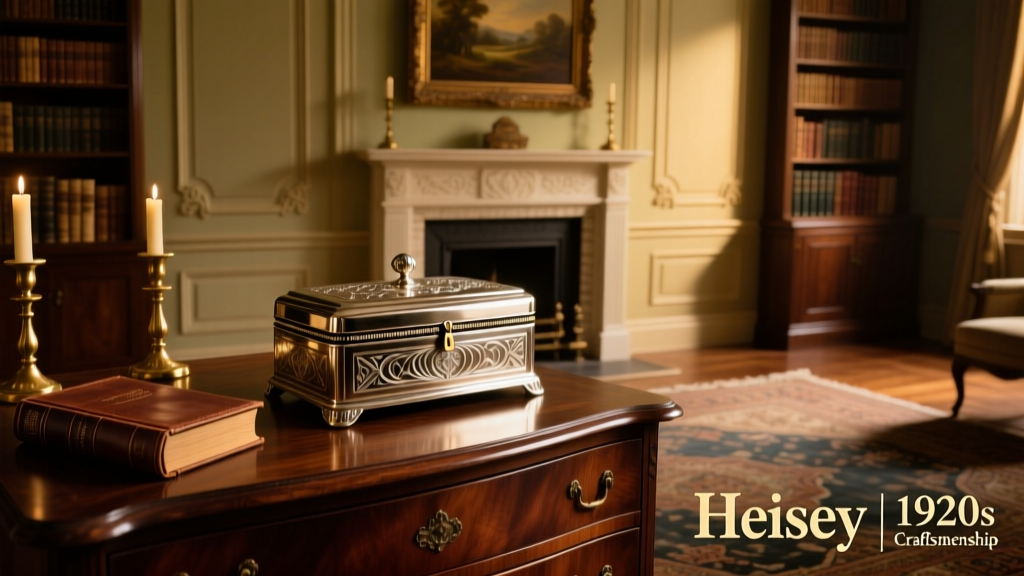
Heisey Wide Zipper Humidor with Metal Top: Identification, Restoration, and Historical Context
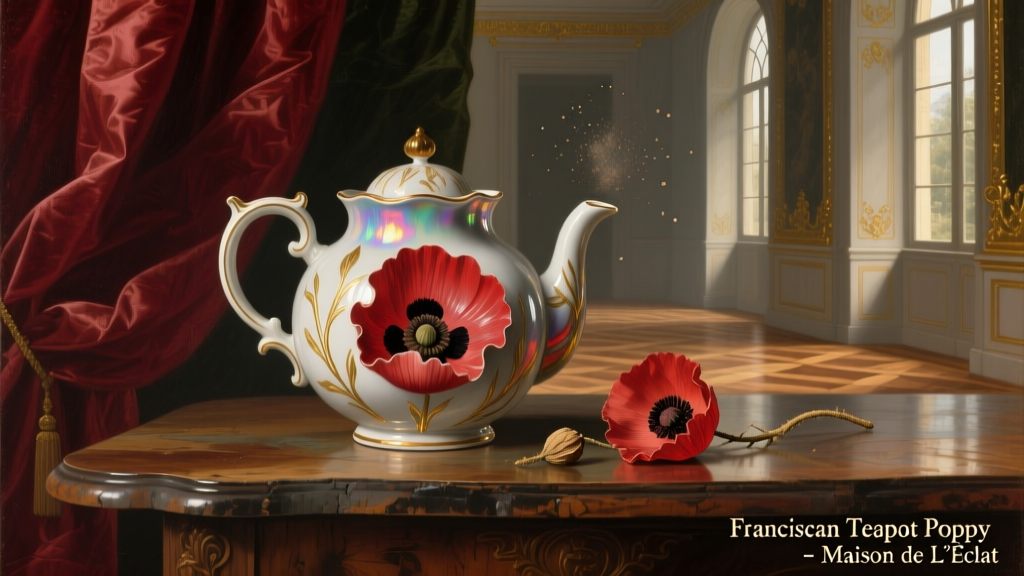
The Franciscan Teapot Poppy: History, Identification, and Restoration of a Mid-Century Ceramic Icon