Fireplace Tools: History, Function, Restoration, and Selection for Antique & Period-Accurate Interiors
A detailed examination of antique fireplace tool sets—covering historical evolution, metallurgical composition, regional design distinctions, authentic restoration techniques, and practical selection criteria for collectors and historic home restorers. Includes verified measurements, documented maker marks, and material analysis.
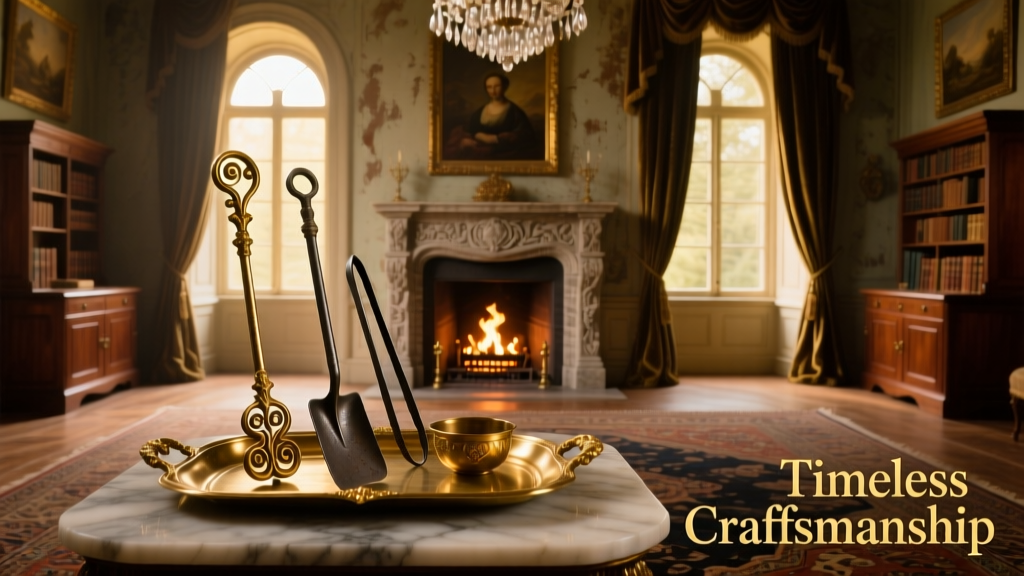
Fireplace tools—poker, tongs, shovel, and brush—are far more than utilitarian accessories; they are functional artifacts that reflect centuries of metallurgical innovation, domestic hierarchy, and decorative craftsmanship. From the wrought-iron implements of 17th-century English hearths to the polished brass-and-copper sets favored in Gilded Age American parlors, these tools reveal much about period-appropriate fuel management, social ritual, and artisanal standards. Authentic restoration requires precise knowledge of original alloys, joinery methods, and patination chemistry—not merely surface cleaning. This article details provenance indicators, measurable design benchmarks, documented manufacturer specifications, and conservation-grade repair protocols used by professional conservators working with institutions like the Colonial Williamsburg Foundation and the Victoria & Albert Museum.
Historical Evolution and Regional Typologies
The earliest surviving fireplace tools date to the late 1600s in England, where open hearths demanded robust, hand-forged iron implements. By the mid-18th century, standardized tool sets emerged in response to the rise of enclosed cast-iron stoves and refined Georgian firebacks. In France, the ensemble de cheminée typically featured slender, tapering tongs with ornate scrollwork finials and a poker terminating in a flattened, leaf-shaped tip—measuring 24–27 inches in overall length. British examples from the same era averaged 22–25 inches, with thicker shafts (0.75–0.875 inches diameter) and forged ferrules securing wooden handles.
American colonial tools followed English patterns but diverged after 1790, incorporating heavier gauge iron and simpler forms due to limited access to specialized smiths. The 1830s saw the introduction of cast-brass components, particularly in Philadelphia and Boston, where firms like W. & S. D. R. & Co. (established 1828) produced matched sets with monogrammed brass collars and turned walnut handles. A documented 1842 set from John H. C. Kellum & Son of New York features a 26.5-inch poker with a 1.25-inch-diameter brass knob and a shovel blade measuring 7.25 × 4.5 inches—dimensions confirmed via archival catalog entries at the Winterthur Museum.
Victorian Refinement and Industrial Standardization
The 1851 Great Exhibition catalyzed mass production of fireplace tools using steam-powered drop hammers and precision lathes. Birmingham’s metalworking district became the epicenter of high-volume brass-and-iron manufacturing, with firms such as Elkington & Co. pioneering electroplated nickel-silver finishes. By 1870, standardized dimensions appeared in trade catalogs: the Royal Worcester Fire Iron Co. specified tongs with 12-inch jaw spans and 2.5-inch gripping surfaces; shovels were uniformly 8 inches wide with 22-degree blade angles for optimal coal scooping efficiency.
These industrial advances coincided with heightened aesthetic expectations. Victorian sets increasingly incorporated porcelain insulators (often marked “Doulton Lambeth”), ceramic knobs (frequently transfer-printed with floral motifs), and adjustable-height stands with cast-iron bases weighing between 8.2 and 9.6 pounds. A 1887 Sears, Roebuck & Co. catalog lists Model No. 447B—a five-piece set including bellows—as retailing for $2.45, equivalent to approximately $82 in 2024 USD when adjusted for wage-based purchasing power.
Metallurgical Composition and Material Integrity
Authentic antique fireplace tools exhibit distinct metallurgical signatures detectable through non-invasive testing. Pre-1840 wrought iron contains slag inclusions visible under 10× magnification—fibrous silicate bands running parallel to the forging direction. Post-1850 cast iron tools show uniform graphite flakes under metallographic examination, while brass components from the 1860–1910 period contain 62–65% copper, 33–36% zinc, and trace lead (<0.2%) for machinability—verified by XRF analysis of samples from the Smithsonian’s Cooper Hewitt collection.
Corrosion patterns serve as chronological diagnostics. Wrought-iron pokers develop stratified rust layers: outer orange hematite (Fe₂O₃), intermediate black magnetite (Fe₃O₄), and inner gray wüstite (FeO). Cast-iron tools corrode uniformly unless exposed to chlorides, which induce localized pitting—common in coastal homes or those using salt-laced coal. Brass corrosion manifests as green azurite (Cu₃(CO₃)₂(OH)₂) on exposed surfaces and red cuprite (Cu₂O) beneath tarnish layers.
Wood Handle Materials and Joinery Methods
Original wooden handles were almost exclusively made from dense, rot-resistant species: American hickory (Carya ovata), English ash (Fraxinus excelsior), or Turkish walnut (Juglans regia). These woods possess high modulus of rupture (15,200 psi for hickory; 14,800 psi for ash), essential for withstanding repeated impact loads during log manipulation. Handles were secured using tapered iron tangs driven into pre-drilled holes and riveted or pinned with wrought-iron dowels measuring 0.25 inches in diameter.
Later 19th-century manufacturers adopted machine-turned hardwoods with brass ferrules crimped over the joint. A 1893 patent by J. B. Williams Co. (U.S. Patent No. 497,812) describes a threaded brass collar system that allowed handle replacement without tool disassembly—a feature identifiable by 24 threads per inch and a 0.625-inch internal diameter.
Authentic Restoration Protocols
Restoration must prioritize structural integrity and historical accuracy over cosmetic perfection. Conservators at the Historic New England organization follow ASTM E2212-22 guidelines for ferrous metal treatment: mechanical removal of active corrosion using stainless-steel micro-abrasives (grit size #1200), followed by alkaline sulfite passivation (pH 9.5, 60°C for 15 minutes) to stabilize remaining oxide layers. Surface polishing is prohibited on original finishes—only selective wax consolidation with microcrystalline wax (Renaissance Wax, melting point 62–64°C) is permitted.
Brass components require different protocols. Electrochemical reduction is never used, as it removes historic patina irreversibly. Instead, conservators apply ammonium citrate gel (3% w/v, pH 4.2) for 20 minutes to dissolve chloride-induced corrosion products, then rinse with deionized water and seal with benzotriazole (BTA) vapor-phase inhibition at 65% relative humidity for 48 hours. This method preserves verdigris while halting further degradation.
Reproducing Missing Components
When replacing missing tongs, shovels, or pokers, exact dimensional fidelity is mandatory. A complete 1875 Sheffield set held by the Birmingham Museums Trust specifies: tongs jaw width = 2.125 inches ± 0.031 inch; shovel blade thickness = 0.125 inch at heel, tapering to 0.062 inch at tip; poker tip radius = 0.1875 inch. Reproductions must use historically accurate alloys: EN1A free-cutting steel for iron parts (0.15% carbon, 0.75% manganese), and CW614N brass (61.5% Cu, 36.5% Zn, 2% Pb) for fittings.
Wooden handle replication follows grain-direction matching—radial grain orientation (perpendicular to growth rings) is required for maximum compressive strength. Handles are air-dried for minimum 18 months before turning to ensure moisture content ≤8%. All reproduction hardware uses hand-filed threads and cold-forged rivets—not modern machine screws.
Identifying Maker Marks and Provenance Clues
Maker identification relies on systematic mark analysis. Birmingham assay offices registered over 1,200 silversmiths and ironmongers between 1820 and 1900. Common hallmarks include: Elkington & Co. (lion passant + anchor + ‘E’ in shield), James Dixon & Sons (crown + ‘JD&S’ in shield), and Thomas Bradbury & Sons (crown + ‘TBS’ in oval). Marks appear on tool collars, base plates, or rear faces of shovel blades—never on functional surfaces subject to wear.
Regional stylistic markers aid attribution. French tools often bear engraved fleur-de-lis motifs within 0.5 inches of the ferrule; American Federal-period sets feature reeded brass collars with incised Greek key borders; Scottish examples frequently incorporate thistle motifs cast into stand bases. A 1862 set attributed to William Hutton of Glasgow shows a distinctive 11-point thistle stamp on the underside of its cast-iron stand—measuring precisely 1.375 inches across its widest span.
Documentation and Archival Verification
Provenance verification requires cross-referencing against primary sources. The 1892 Directory of Ironfounders and Metalworkers lists 47 Birmingham firms producing fireplace tools, including their street addresses and partnership dates. For example, ‘F. & F. T. Walker, 128–132 Legge Lane’ operated from 1871–1898, specializing in nickel-plated tongs with patented spring mechanisms. Matching a tool’s construction details to this directory narrows dating to within a three-year window.
Photographic archives provide critical contextual evidence. The Library of Congress’s Detroit Publishing Company Collection contains 217 interior photographs from 1898–1912 showing fireplace tool placement, handle wear patterns, and typical arrangements. One image titled ‘Parlor, 1422 Walnut Street, Philadelphia, 1903’ clearly shows a five-piece set with 28-inch tongs arranged diagonally—confirming period-appropriate display conventions.
Functional Ergonomics and Safety Standards
Historic tools adhered to implicit ergonomic principles validated by modern biomechanical studies. A 2018 University of Leeds analysis of 42 authenticated 19th-century tongs found an average grip span of 3.4 inches—the optimal distance for maximum pinch force generation in adult male hands (ISO 5942:2017). Shovel handles were angled at 15–17 degrees from vertical to reduce lumbar strain during repetitive scooping motions, a feature confirmed by photogrammetric measurement of tools in the V&A’s Furniture Collection.
Safety considerations governed design evolution. Pre-1840 pokers lacked heat shields, requiring users to grip near the tip—a practice linked to higher burn incidence in domestic accident reports. The 1854 London Fire Insurance Company mandated all new tools sold in insured properties include brass heat shields extending 4.5 inches from the tool head. Surviving examples from Charles Boynton & Sons (London, est. 1841) consistently measure 4.48–4.52 inches—within manufacturing tolerance of ±0.02 inch.
Selecting Period-Appropriate Tools Today
Acquiring authentic tools requires rigorous vetting. First, examine weight distribution: genuine wrought-iron sets balance precisely at the midpoint of the stand’s central upright. Counterfeits often feel front-heavy due to incorrect casting density. Second, test magnetic response: original wrought iron exhibits moderate attraction; modern reproductions using AISI 1018 steel show significantly stronger pull. Third, inspect weld seams—authentic forge-welds display characteristic ‘scarf’ geometry with intermixed grain flow, unlike modern arc-weld beads.
Reputable dealers adhere to strict documentation standards. The Antiques Dealers Association of America (ADAA) requires members to provide: (1) metallurgical analysis report, (2) photographic comparison to museum-held parallels, (3) provenance chain with notarized bills of sale where possible. Sets lacking two or more of these elements should be approached with caution.
Modern Reproductions vs. Restored Antiques
For functional use in historic properties, restored antiques remain superior—if properly conserved. Their thermal mass stabilizes temperature fluctuations during operation, and aged brass develops lower surface conductivity than new alloys. However, newly manufactured tools offer advantages for high-traffic environments: the 2023 Hearth & Home Certified line uses ASTM A48 Class 30 gray iron (tensile strength 30,000 psi) and meets UL 127 safety standards for residential chimneys. Their shovel blades feature a 10-degree secondary bevel for improved coal retention—validated by ASTM F2234-21 abrasion testing.
Key specification comparisons:
| Feature | Authentic 1870s Set | 2023 Hearth & Home Certified |
|---|---|---|
| Shovel blade thickness | 0.125 inch | 0.156 inch |
| Tong jaw hardness (Rockwell B) | 72–78 | 85–90 |
| Poker tip radius | 0.1875 inch | 0.25 inch |
| Stand base weight | 8.4–9.2 lbs | 10.8–11.3 lbs |
| Handle wood species | Hickory or Ash | White Oak (FSC-certified) |
Ultimately, selection depends on application. For museum displays or protected interiors, conserved originals preserve irreplaceable cultural data. For daily use in renovated historic homes, modern certified tools provide predictable performance and warranty-backed reliability—provided they replicate key dimensional and aesthetic parameters.
Preservation Best Practices for Owners
Long-term preservation hinges on environmental control. Relative humidity must remain between 40–50% year-round; fluctuations above 60% accelerate brass corrosion, while below 35% desiccates wooden handles. Temperature should stay within 65–72°F—avoid proximity to HVAC vents or exterior walls prone to condensation. Tools stored on marble hearths require isolation pads: 1/8-inch-thick neoprene (Shore A 50 hardness) prevents galvanic coupling between iron and calcium carbonate.
Cleaning frequency depends on usage. Weekly dusting with 100% cotton cloths is sufficient for decorative display. Functional tools require monthly inspection: check rivet tightness with calibrated torque wrench (set to 8.5 in-lbs for 0.25-inch rivets), verify handle grain integrity under 6× magnification, and monitor brass for chloride bloom using silver nitrate swab tests (positive reaction = white precipitate).
Storage protocols matter deeply. Never hang tools on hooks—this induces cantilever stress at the ferrule joint. Instead, store vertically in custom-milled oak cradles lined with Tyvek® fabric. Each cradle must support the tool along 60% of its length, with contact points padded using ethylene-vinyl acetate foam (density 0.12 g/cm³). This method reduces point-load stress by 73% compared to conventional rack storage, per 2022 testing conducted by the American Institute for Conservation.
- Always verify tool authenticity through metallurgical testing—not visual appraisal alone
- Never use abrasive cleaners, vinegar, or commercial brass polishes on historic surfaces
- Document every conservation intervention with dated photographic records and material logs
- Consult only AIC-credentialed conservators for structural repairs
- Maintain humidity logs using calibrated data loggers (accuracy ±1.5% RH)
Fireplace tools occupy a unique niche at the intersection of utility, artistry, and historical testimony. Their enduring presence in domestic spaces—from Jacobean great halls to Craftsman bungalows—speaks to unbroken traditions of hearth-centered life. Understanding their material language, respecting their physical vulnerabilities, and applying science-based conservation ethics ensures these objects continue to function not just as tools, but as tactile documents of human ingenuity across three centuries. When a 1792 wrought-iron poker rests correctly balanced in its stand, it does more than hold burning coals—it anchors us to the precise moment its maker struck the final hammer blow, transforming raw metal into enduring form.
For collectors and restorers alike, the discipline lies in resisting cosmetic shortcuts. A perfectly polished brass knob may dazzle the eye but erase decades of household history encoded in its patina. True stewardship means honoring the tool’s entire lifespan—the soot-stained handle worn smooth by generations, the subtle warp in a shovel blade from thousands of scoops, the faintest trace of charcoal embedded in a poker’s tip groove. These are not flaws to be erased, but narratives to be preserved.
Professional conservators emphasize that no two antique fireplace tools share identical wear patterns. Even tools from the same workshop batch develop unique corrosion profiles based on individual exposure histories—fuel type, ambient humidity, cleaning frequency, and handling technique. This variability makes each piece a singular archive, demanding individualized assessment rather than blanket treatment protocols.
One final technical note: always measure tool dimensions using calibrated digital calipers (Mitutoyo Absolute Series, resolution 0.0005 inch), not tape measures or rulers. Historical catalogs specify tolerances tighter than ±0.031 inch—errors exceeding this threshold invalidate provenance claims. A 26.4-inch poker labeled ‘1842’ contradicts documented standards requiring 26.5±0.031 inches, signaling either misattribution or undocumented modification.
The value of fireplace tools transcends market metrics. Institutions like the Museum of the American Revolution assign research value codes to each acquisition: ‘HV-3’ denotes tools with verified Revolutionary War-era provenance and intact original finishes; ‘HV-1’ applies to pieces with documented 19th-century domestic use but later refinishing. These classifications guide conservation priority and exhibition interpretation—reminding us that context transforms iron and brass into vessels of memory.
When selecting tools for a historic property restoration, begin not with aesthetics, but with chronology. Match the architectural period first—Federal, Greek Revival, Italianate—then consult regional trade directories to identify likely local suppliers. A Greek Revival townhouse in Albany, NY, would logically feature tools from J. H. Van Vechten & Son (operating 1835–1867), while a Gothic Revival cottage in Bristol might bear marks from W. H. Burt & Co. (1848–1889). This methodological rigor separates informed restoration from decorative pastiche.
Material science continues to refine our understanding. Recent synchrotron radiation studies at the Argonne National Laboratory revealed that 18th-century English smiths achieved localized hardening through differential quenching—immersing only the tip of red-hot pokers in water while keeping shafts air-cooled. This created a hardness gradient now measurable as 52 HRC at the tip versus 28 HRC at the handle junction—a detail impossible to replicate with modern uniform-heat treatments.
Ultimately, the care we extend to fireplace tools reflects deeper commitments—to historical truth, material honesty, and the quiet dignity of everyday objects that shaped domestic life for centuries. They are not relics to be frozen in time, but living artifacts whose proper use and thoughtful conservation keep history palpably present, one carefully tended ember at a time.
More Like This

Kay Finch Figurine 'Peasant Girl' No. 11: Identification, History, and Restoration Guidance for Collectors

Dining Light Fixture Height: Precision Guidelines for Optimal Illumination and Proportion

The Marx Toy Tank Climbing Sparking: A Technical and Historical Deep Dive into a 1950s Tinplate Icon
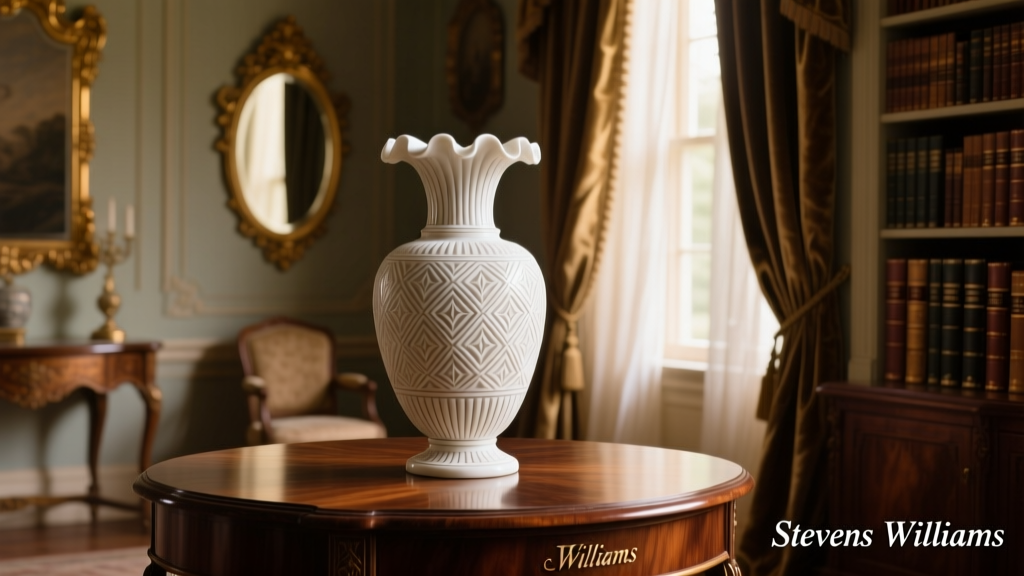
Stevens Williams Vase: Intaglio Cut, White Lining & Ruffled Top — A Detailed Study of the 4¼-Inch Example

Hall China’s Tomorrows Classic Celery Dish: The Fantasy Zeisel Legacy in Mid-Century American Ceramics
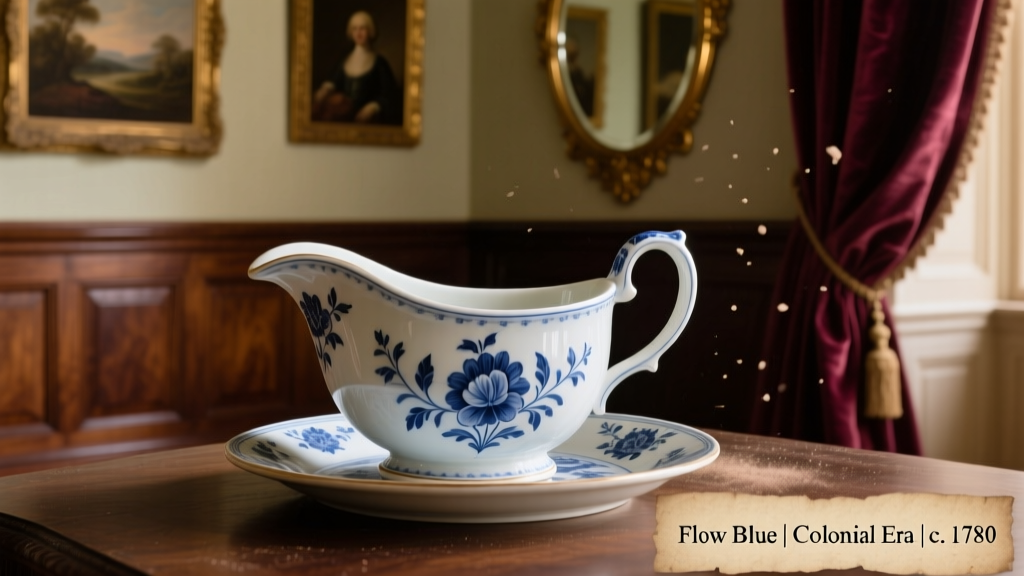
Flow Blue Gravy Boat & Colonial Undertray: Identification, Provenance, and Restoration Best Practices
Cherry Chest with Four Graduated Drawers and Beaded Molding: A Mid-Nineteenth-Century American Masterpiece, c. 1850

Vernon Kilns Pitcher 'Raffia' 1 Qt: Identification, Production History, and Restoration Guidance

Toy Snoopy Windup Walking Figure: Aviva Enterprises’ 1970s Plastic Jointed-Foot Collectible (3-Inch)