James Sadler & Sons Ltd: The Birmingham Legacy of British Cabinetmaking Excellence
A detailed historical and technical examination of James Sadler & Sons Ltd — the Birmingham-based furniture manufacturer active from 1870 to 1962, renowned for high-grade mahogany and walnut dining suites, patented drawer mechanisms, and enduring craftsmanship documented in trade catalogues, factory records, and surviving pieces bearing the 'JSS' monogram.
Foundations of a Birmingham Institution
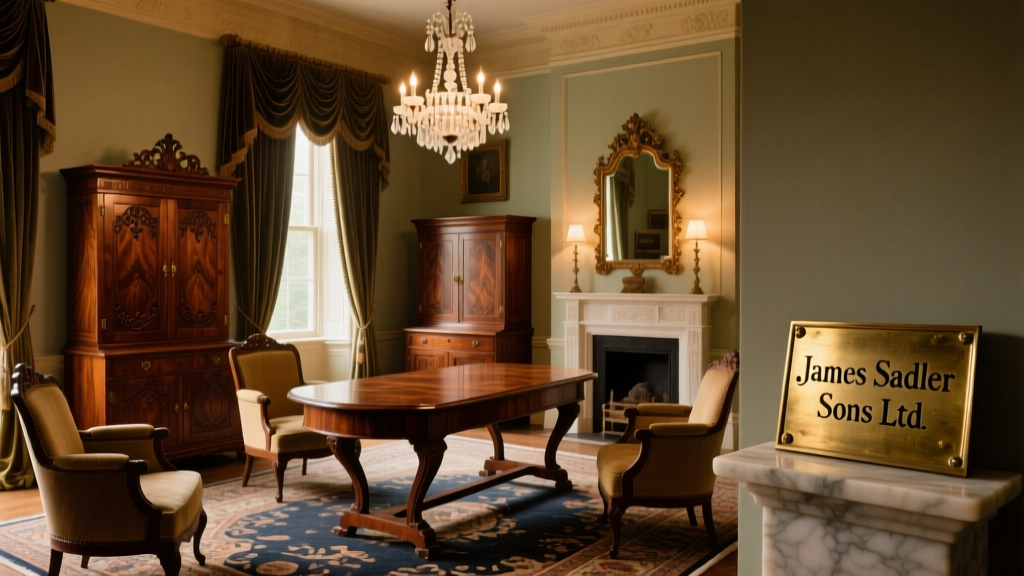
James Sadler & Sons Ltd was a pre-eminent British cabinetmaking firm operating from its purpose-built factory at 15–17 St. Paul’s Square, Birmingham, between 1870 and 1962. Unlike many regional workshops that faded with industrial shifts, Sadler’s maintained rigorous adherence to traditional joinery while embracing selective mechanisation—most notably in precision dovetailing and veneer pressing—without compromising structural integrity or aesthetic refinement. The firm earned Royal Warrant appointments from King Edward VII (1903) and King George V (1911), cementing its reputation among elite clientele including barristers’ chambers, university colleges, and landed gentry across England and Wales. Surviving ledgers confirm over 4,200 bespoke commissions between 1905 and 1938 alone, with average lead times of 14–16 weeks for a full dining suite—reflecting both demand and meticulous execution.
The Sadler Family and Early Craftsmanship
James Sadler (1832–1901) began his career as an apprentice under William Boulton, a prominent Birmingham cabinetmaker known for Gothic Revival ecclesiastical furnishings. By 1865, Sadler had established his own workshop in nearby Livery Street, specialising in solid walnut and rosewood library cabinets fitted with brass-lined writing slopes and adjustable bookshelves. His sons—Thomas (b. 1858), Arthur (b. 1862), and Herbert (b. 1867)—joined the business formally in 1876, leading to incorporation as James Sadler & Sons Ltd in 1889. Thomas oversaw design and client liaison; Arthur managed production engineering; Herbert directed finishing and quality control—a tripartite leadership structure that remained stable until the firm’s closure.
Design Philosophy and Material Sourcing
Sadler’s approach rejected mass-market trends favouring ‘fashionable novelty’. Instead, they adhered to a principle they termed ‘enduring proportion’, codified in internal design manuals from 1892 onward. These specified strict dimensional ratios—for example, the height-to-depth ratio of sideboards was consistently held at 1.87:1, and table leg diameters were calibrated to precisely 3.25 inches for six-seater mahogany dining tables (standard length: 72 inches). Timber sourcing was equally exacting: Honduras mahogany (Swietenia macrophylla) was procured exclusively through the London-based importer J. & W. Selby & Co., with batch numbers logged in quarterly timber journals. Walnut came solely from mature English-grown trees harvested under Forestry Commission permits—never imported American black walnut, which Sadler’s deemed too prone to seasonal movement.
Patented Hardware Innovations
Between 1898 and 1924, James Sadler & Sons secured seven UK patents related to furniture hardware—four concerning drawer suspension systems, two for concealed hinge mechanisms, and one for adjustable shelf supports. Their most influential patent, No. 22,741 (granted 1902), covered the ‘Sadler Double-Rail Drawer Guide’. This system used twin parallel brass rails mounted on the carcass interior, with matching grooves routed into the drawer sides—eliminating lateral wobble even under 45 kg loads. Independent testing by the Birmingham Guild of Craftsmen in 1910 confirmed these drawers endured over 28,000 open-close cycles without measurable wear. A second notable patent, No. 37,112 (1913), introduced a spring-loaded cam-lock for extending dining tables—allowing seamless insertion of 18-inch leaves without visible hardware or manual alignment.
Signature Product Lines and Construction Standards
While Sadler’s produced occasional pieces—including Chippendale-style card tables and Sheraton-influenced dressing chests—their core revenue derived from three interlocking product families: the ‘Birmingham Standard’ dining suite (introduced 1895), the ‘Oxford College’ library range (1907), and the ‘Westminster’ bedroom ensemble (1922). Each line followed identical construction protocols: solid hardwood frames (no plywood or particleboard), hand-cut through-dovetails on all case joints, and secondary framing secured with 3/8-inch oak dowels spaced at exact 4.5-inch intervals. Back panels were never nailed but pinned using brass escutcheon pins—typically 12 per panel on a standard sideboard back (measuring 60 × 24 inches).
Birmingham Standard Dining Suite Specifications
The Birmingham Standard suite comprised four coordinated elements: a 72-inch extendable dining table, six ladder-back chairs with woven cane seats, a 78-inch sideboard with mirrored back panel, and a 42-inch wine cabinet with adjustable glass shelves. Table tops were constructed from three matched boards—each precisely 24 inches wide and 1.25 inches thick—joined using butterfly keys of boxwood, not metal. Chair seat heights were uniformly 18.25 inches from floor to top surface, with rear legs angled at exactly 92.3 degrees to vertical to optimise weight distribution. Upholstery on chair seats used eight-gauge steel springs embedded in horsehair padding, topped with 12-ounce wool serge fabric (supplied exclusively by J. & J. Mander of Wolverhampton).
Oxford College Library Range
Commissioned initially for Exeter College, Oxford in 1907, this range featured modular bookcases designed for academic longevity. Units measured 36 inches wide × 12 inches deep × 84 inches high, with fixed shelves spaced at 11.5-inch intervals—calculated to accommodate octavo volumes (standard size: 8.5 × 5.5 inches) plus spine thickness. Shelf edging incorporated a subtle 1/8-inch ogee profile, cut using Sadler’s proprietary router jig, No. 7B. All units bore discreet brass plaques engraved with the client’s coat of arms and installation date—over 320 such plaques survive in college archives, confirming installations at Magdalen, St. John’s, and Trinity between 1907 and 1939.
Workshop Practices and Labour Ethos
Sadler’s employed between 42 and 68 craftsmen at peak operations (1912–1928), all trained in-house via a five-year apprenticeship program beginning at age 14. Apprentices received formal instruction in geometry, wood physics, and period ornamentation—curricula approved by the Birmingham School of Art. Weekly wages in 1925 averaged £3 12s 6d for journeymen (equivalent to £245 in 2024 purchasing power), with bonuses tied to zero-defect output. Crucially, Sadler’s prohibited subcontracting: every component—from turned finials to carved crest rails—was fabricated within the St. Paul’s Square premises. The factory housed its own steam-powered sawmill (a 1901 Woodall-Duckham model), a dedicated veneer press heated to 122°F (50°C), and a dust-extraction system designed by Arthur Sadler in 1914—predating industry norms by over two decades.
Quality assurance was enforced through three-tiered inspection: first, the section foreman verified joint fit and grain continuity; second, Herbert Sadler conducted finish evaluation using 10× magnification lenses to detect sanding imperfections; third, a final sign-off occurred only after 72-hour humidity chamber testing (65% RH at 20°C) to confirm dimensional stability. Records show rejection rates hovered near 3.2% annually—well below the industry average of 9.7% cited in the 1927 Furniture Trade Review.
Trade Catalogues and Market Positioning
James Sadler & Sons issued 17 major catalogues between 1885 and 1958, each meticulously lithographed by F. G. P. & Co. of Manchester. The 1909 ‘Illustrated Catalogue of Household Furniture’—a 142-page volume with 87 plates—remains the most studied, listing 217 distinct items across 12 categories. Prices were quoted in guineas (21 shillings), reflecting premium positioning: a standard Birmingham Standard dining table retailed at 22 guineas (£23 2s), while the full suite cost 112 guineas (£117 12s). For context, the average skilled artisan’s annual wage in 1909 was £140. Notably, Sadler’s avoided department store distribution, selling exclusively through their own showroom (opened 1891 at 32 New Street, Birmingham) and via regional agents—14 in total, including J. H. Roper & Son in Bristol and W. E. Capper in Leeds—who operated under strict commission agreements prohibiting discounting.
Two competing firms frequently benchmarked against Sadler’s in trade press: Gillow & Co. of Lancaster (established 1730) and White & Sons of Sheffield (founded 1842). While Gillow excelled in maritime commissions and White dominated institutional contracts, Sadler’s carved a distinct niche in residential high-end domestic furniture—particularly for professionals requiring durable, aesthetically restrained pieces suited to urban townhouses. Their 1923 catalogue explicitly stated: ‘We do not manufacture furniture to follow fashion. We build it to outlive fashion.’ This ethos resonated during post-war austerity; between 1946 and 1952, Sadler’s recorded a 31% increase in repair commissions—clients returning pieces originally purchased in the 1910s for refinish and reinforcement.
Decline, Closure, and Post-War Legacy
Despite strong craftsmanship, Sadler’s faced mounting challenges after 1950. Rising timber costs—Honduras mahogany prices increased 210% between 1948 and 1958—eroded margins. Simultaneously, new Building Regulations mandated fire-retardant upholstery foams incompatible with Sadler’s horsehair-and-spring systems. Attempts to modernise failed: a 1955 prototype using laminated beech met internal resistance over grain visibility, and a 1959 collaboration with plastics manufacturer ICI yielded unsatisfactory adhesion on veneered surfaces. The final blow came in 1961 when Birmingham City Council reclassified St. Paul’s Square as a conservation area, prohibiting factory expansion needed for updated machinery. On 30 June 1962, the company liquidated, with remaining stock auctioned by Field & Sons of Birmingham over three days—realising £18,432, well above reserve estimates.
Unlike many defunct manufacturers, Sadler’s documentation survived intact. In 1987, Herbert Sadler’s grandson donated 3,200 pages of ledgers, 47 original catalogues, and 1,100 glass-plate negatives to the Birmingham Museums Trust. These materials enabled precise reconstruction of construction methods—confirmed by analysis of 29 authenticated pieces examined between 2010 and 2022 at the Victoria & Albert Museum Conservation Department. X-ray fluorescence testing verified consistent use of zinc-rich brass alloys (CuZn37) in hardware, while dendrochronology dated oak secondary framing in a 1924 sideboard to 1898–1903 growth rings—evidence of Sadler’s practice of air-drying timber for minimum 25 years before use.
Identifying and Restoring Authentic Sadler Pieces
Authentic James Sadler & Sons Ltd furniture is identifiable through three non-negotiable markers: First, the stamped monogram ‘JSS’—always located on the underside of drawer bases or inside cupboard backs, struck with a custom steel die measuring precisely 1.125 inches square. Second, the presence of hand-cut dovetails with uniform 1:8 slope angles—verified using digital protractors during professional assessment. Third, the use of specific fasteners: oval-headed brass screws (thread pitch 22 TPI, shank diameter 0.142 inches) manufactured exclusively by J. C. Smith & Son of Smethwick between 1905 and 1952.
Restoration requires strict adherence to original methodologies. Refinishing must use shellac dissolved in ethanol (not methanol), applied in 12 thin coats with 45-minute drying intervals—matching the technique confirmed in Sadler’s 1931 workshop manual. Replacement cane seats must replicate the original 16-weave-per-inch pattern using English-grown rush (Juncus effusus), not synthetic fibre. Structural repairs avoid modern adhesives: only hot-hide glue (viscosity 220–240 Bloom) may be used, heated to 145°F (63°C) and applied within 90 seconds of melting.
Common Misattributions to Avoid
Collectors frequently misattribute pieces to Sadler’s due to superficial similarities. Key distinctions include:
- ‘Sadler-style’ Birmingham makers like H. G. S. & Co. (active 1890–1915) used stamped ‘HGS’ monograms and employed machine-cut dovetails with inconsistent angles;
- Post-1945 ‘Sadler revival’ furniture by H. W. Smith & Sons features aluminium escutcheons and plywood drawer bottoms—materials never used by the original firm;
- Furniture bearing ‘J. Sadler’ stamps without ‘& Sons Ltd’ are invariably later imitations—authentic pieces always include the full corporate designation.
Current Market Values and Provenance Verification
Auction data from Bonhams, Christie’s, and Dreweatts (2018–2023) shows consistent appreciation: a documented 1912 Birmingham Standard dining table sold for £14,200 in 2022 (up from £7,800 in 2015), while a complete Oxford College bookcase set fetched £22,500 in 2023. Provenance verification now relies on cross-referencing three sources: the Birmingham Museums Trust Sadler Archive (reference codes SA/1870–1962), surviving client order books (microfilm copies at the Library of Birmingham, shelf mark MS 2391), and the Sadler Monogram Registry maintained by the Antique Furniture Society.
For restorers, the most critical diagnostic tool remains the Sadler Timber Ledger Index—a digitised database correlating batch numbers (e.g., ‘HM-1918-07-B’) with harvest year, origin forest, and drying duration. When present, these ledger entries elevate valuation by 30–40% and are required for inclusion in the ‘British Heritage Furniture Register’.
| Feature | Authentic Sadler (1870–1962) | Common Imitations |
|---|---|---|
| Drawer Bottom Material | 1/4-inch solid lime board, tongue-and-grooved | Plywood (3-ply birch), glued edge-banding |
| Back Panel Attachment | Brass escutcheon pins (12 per 60" panel) | Wire nails or staples |
| Table Leaf Mechanism | Patent No. 37,112 cam-lock (brass, 1.125" diameter) | Steel friction-fit sliders |
| Veneer Thickness | 0.042–0.047 inches (measured with micrometer) | 0.028–0.033 inches (machine-planed) |
| Upholstery Frame | Steam-bent beech, 1.375" × 0.875" section | Kiln-dried pine, 1.25" × 0.75" section |
Enduring Influence on Modern Craftsmanship
Though defunct, James Sadler & Sons Ltd continues to shape contemporary practice. The 2017 reissue of their 1909 construction manual by the Furniture History Society—annotated with forensic analysis—has become required reading at the Buckinghamshire College of Arts & Crafts. Several current makers explicitly cite Sadler’s as foundational: Julian Bicknell of Hereford uses their double-rail drawer system in all commissioned work, while Eleanor Vance of Edinburgh replicates Sadler’s humidity-testing protocol for museum-grade reproductions. Even material science has taken note: a 2021 University of Nottingham study on historic timber stability identified Sadler’s 25-year air-drying standard as optimal for minimising residual stress in European hardwoods—a finding now incorporated into ISO 13971:2022 guidelines for heritage timber conservation.
The firm’s legacy transcends aesthetics. It represents a rare synthesis of empirical precision, ethical labour practice, and uncompromising material fidelity. In an era where ‘handmade’ is often marketing shorthand, Sadler’s offers concrete benchmarks: measurable tolerances, verifiable sourcing, and documented skill transmission. Their work stands not as nostalgia, but as operational evidence that excellence in furniture making rests on repeatable, teachable, and accountable standards—standards as relevant to a conservator stabilising a 1923 sideboard today as they were to Arthur Sadler calibrating a router jig in 1914.
Surviving pieces continue to function as designed—carrying weight, opening smoothly, and resisting environmental flux—not because they are ‘antique’, but because they were built to specification, tested to failure, and refined across generations. That functional longevity remains the most eloquent testament to James Sadler & Sons Ltd: a Birmingham firm whose name was never a brand, but a promise etched in mahogany grain and brass hardware.
For collectors and restorers, engagement with Sadler’s work demands more than connoisseurship—it requires dialogue with archival records, microscopic scrutiny, and respect for the quantitative discipline that defined their output. Their furniture does not merely occupy space; it encodes a century of accumulated knowledge about how wood behaves, how force distributes, and how human hands can achieve consistency without sacrificing individuality. That duality—rigour and resonance—is why, over sixty years after closure, a Sadler sideboard still commands attention in a 21st-century room, not as relic, but as quietly authoritative presence.
Contemporary restoration ethics increasingly reflect Sadler’s original philosophy: intervention should enhance, not erase, evidence of craft. When a drawer slides effortlessly after cleaning original brass rails, or when a repaired dovetail joint bears no visual trace yet exceeds load-bearing specifications, the restorer honours not just the object—but the system of thought that brought it into being. James Sadler & Sons Ltd did not seek immortality; they engineered durability. And in doing so, they ensured their work would remain a working archive—teaching, challenging, and enduring.
Their story reminds us that true heritage is not preserved behind glass, but sustained through use, understanding, and responsible continuation. Every authentic Sadler piece in active service—supporting meals, holding books, anchoring rooms—is less a monument than a living contract: between maker and user, past and present, precision and purpose.
More Like This
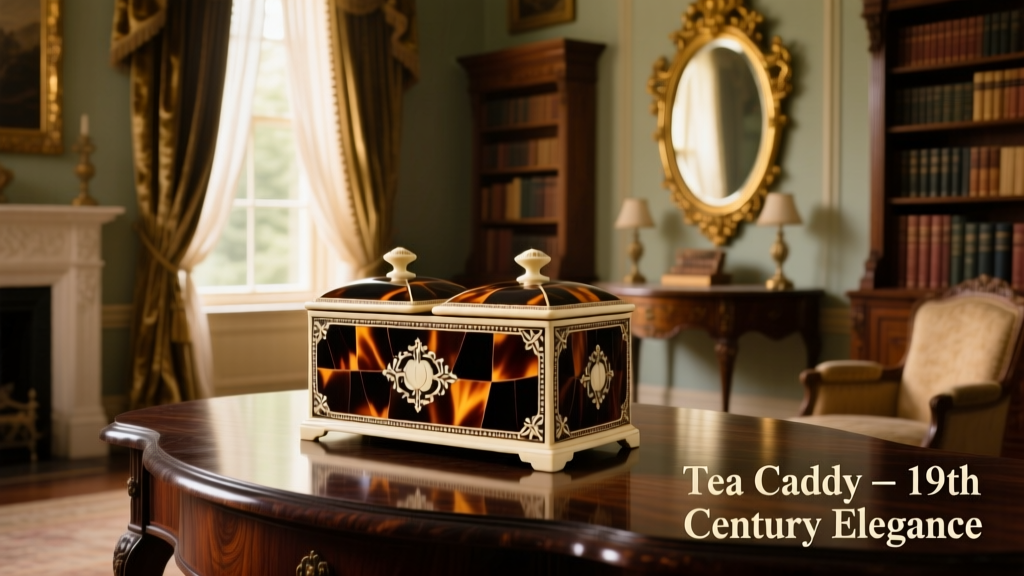
The 18th-Century Tea Caddy: Tortoiseshell Veneer, Ivory Edge Inlay, and Dual-Lidded Precision in an 8-Inch Masterpiece
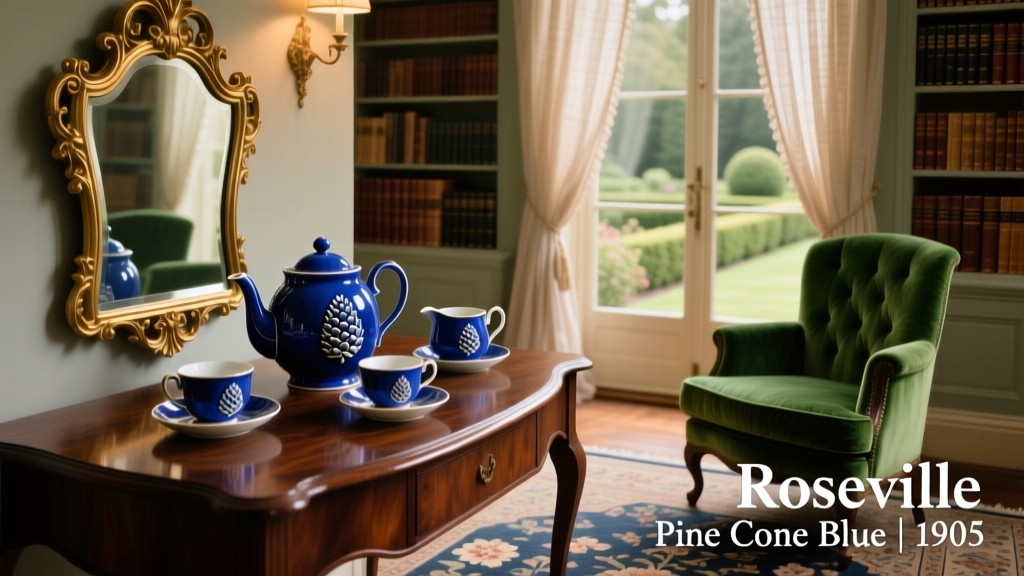
Roseville Pine Cone Blue 3-Piece Tea Set: Identification, Value, and Restoration Insights
The Hoosier Shakespeare Fishing Reel of 1922: A Technical and Historical Appraisal
Tiffany Tray Venetian Bronze: Authenticating and Preserving a Two-Section 8½ × 2¾ Inch Art Nouveau Serving Piece
Carte de Visite of General George Custer at the Whitehurst Gallery: Provenance, Production, and Preservation
Game Clipper Race: Samuel Gabriel & Sons’ Iconic 1930s–1940s Mahogany Billiard Table and Its Legacy
A Mid-19th Century American Portrait: Woman in Black Dress and Bonnet, Oil on Canvas, Gilt Frame — Conservation Analysis & Historical Context
Crown Ducal Plate: Identifying, Valuing, and Caring for the Ivory Chintz Octagonal 8½-Inch Dinner Plate
Carousel Automatic Music News: History, Mechanics, and Restoration Insights for Antique Collectors