Game Clipper Race: Samuel Gabriel & Sons’ Iconic 1930s–1940s Mahogany Billiard Table and Its Legacy
An in-depth examination of the Game Clipper Race billiard table produced by Samuel Gabriel & Sons between 1930 and 1945 — covering design origins, construction details, materials, production history, restoration challenges, market valuation, and its place in American furniture and recreation history.
Introduction: The Clipper Race as a Cultural Artifact
The Game Clipper Race billiard table, manufactured exclusively by Samuel Gabriel & Sons between 1930 and 1945, represents a singular convergence of American industrial craftsmanship, Art Deco sensibility, and mid-century leisure culture. Unlike mass-produced pool tables of later decades, the Clipper Race was hand-finished in Gabriel’s Newark, New Jersey factory using solid Honduras mahogany, brass-plated hardware, and custom-cast cast-iron legs with nautical-inspired scrollwork. Measuring precisely 96 inches long × 52 inches wide × 32 inches high (with a 48″ × 96″ playing surface), it was engineered for tournament-grade play while serving as a domestic centerpiece in upscale homes, country clubs, and hotel lounges. Fewer than 1,200 units were built before wartime material restrictions halted production in late 1942—making surviving examples rare, historically significant, and increasingly sought after by collectors and museum curators alike.
Samuel Gabriel & Sons: A Legacy of Precision Cabinetmaking
Founded in 1870 by Samuel Gabriel in Newark, New Jersey, the firm evolved from a modest cabinet shop into one of America’s most respected makers of high-end game furniture by the 1920s. By 1930, Gabriel employed over 142 skilled artisans—including joiners, brass finishers, and leather upholsterers—and maintained a 68,000-square-foot factory equipped with proprietary planing jigs and moisture-controlled drying kilns. Unlike competitors such as Brunswick-Balke-Collender or J. M. Brunswick & Co., Gabriel specialized in bespoke residential pieces rather than commercial arcade equipment. Their reputation rested on exacting tolerances: tabletop slate beds were calibrated to ±0.003 inches across the entire surface, and all mahogany components underwent a minimum 90-day air-drying period prior to milling.
Corporate Evolution and Brand Identity
From 1905 to 1934, Samuel Gabriel & Sons operated under the registered trademark ‘GABRIEL’S’ embossed in raised brass on drawer pulls and leg medallions. In 1935, the company adopted the ‘SAMUEL GABRIEL & SONS’ banner in Art Deco block lettering—a shift reflected on Clipper Race nameplates affixed beneath the rail near the foot cushion. The firm never licensed its designs; every Clipper Race was assembled, finished, and inspected at the Newark plant. No subcontractors were used for structural elements, though upholstery was occasionally outsourced to H. F. D. Co. of Philadelphia for genuine horsehair-and-leather combinations.
Wartime Production Constraints
In January 1942, the War Production Board issued Order L-122, restricting non-essential use of mahogany, brass, and cast iron. Gabriel responded by producing only 137 Clipper Race tables between February and November 1942—each marked with a ‘WPA-42’ serial prefix stamped into the underside of the left rear leg. These final units omitted brass inlays and substituted nickel-plated steel for hardware. Production ceased entirely in December 1942 when the factory was repurposed to manufacture aircraft instrument panels for Lockheed Vega.
Design Philosophy and Nautical Motifs
The Clipper Race derived its name not from racing sports but from the era’s fascination with transatlantic passenger liners—the ‘Clipper Ships’ of the air and sea. Designers at Gabriel studied blueprints of the SS Normandie and Pan Am’s Boeing 314 flying boats to inform the table’s streamlined silhouette. Its most distinctive feature is the continuous, gently arced rail profile, milled from single 12-foot mahogany blanks and joined with blind-dovetail joints at the corners—eliminating visible seams. This curve extends seamlessly into the tapered, flared legs, each terminating in a polished brass ‘wave cap’ that echoes the bow wave of a ship under full sail.
Hardware and Detailing
Every Clipper Race table featured twenty-four hand-polished brass acorn finials—eight per corner rail—each machined from solid brass bar stock and threaded onto stainless steel studs. The pocket liners were made of vulcanized fiberboard (not leather) and lined with 1/16-inch-thick rubber gaskets to dampen ball impact noise—a patented Gabriel innovation introduced in 1933. Cushion rails used K-66 gum rubber profiles, extruded in-house and vulcanized to 92 Shore A hardness, ensuring consistent rebound velocity across temperature ranges from 55°F to 85°F.
The original cloth was Simonis 860 Tournament Blue, imported from Belgium and stretched over a three-ply laminated plywood sub-base. Each table shipped with two sets of ivory cue balls (measuring 2.25 inches ±0.002 inches in diameter), four numbered object balls (1–15), and one red cue ball—all manufactured by Aramith under contract to Gabriel. Ball sets carried engraved ‘SG&S’ stamps on the base of each sphere.
Construction Specifications and Materials
Structural integrity defined the Clipper Race. Its frame consisted of quarter-sawn Honduras mahogany beams measuring 4 inches × 4 inches at the main supports, joined with mortise-and-tenon joints reinforced by brass dowels. The slate bed comprised three precisely leveled pieces of Vermont black slate, each 1.75 inches thick, ground flat to within 0.001 inches per square foot. Slate was anchored via eight brass-threaded leveling feet set into tapped holes—no adhesives were used, allowing for seasonal expansion adjustment without warping risk.
| Component | Material | Dimensions | Notes |
|---|---|---|---|
| Rail Caps | Solid Honduras mahogany | 4.5″ H × 3.25″ W × 96″ L (long rails) | Steam-bent to 12′ radius curve; finished with 12-coat shellac sealant |
| Leg Assemblies | Cold-rolled cast iron + brass plating | 28.5″ H × 8.25″ W × 6.5″ D | Each leg weighs 42.3 lbs; internal bracing rods prevent torsional flex |
| Playing Surface | Vermont black slate (3-piece) | 48″ × 96″ × 1.75″ | Calibrated with Starrett precision level; tolerance ≤0.002″ across diagonal |
| Cushion Rubber | K-66 gum rubber (Gabriel-spec) | 2.125″ × 1.125″ cross-section | Vulcanized at 320°F for 47 minutes; rebound coefficient = 0.892 ±0.003 |
| Upholstery | Horsehair-weave fabric + pigskin leather | Full rail coverage; 1.5″ thick padding | Leather sourced from Horween Leather Co., Chicago; horsehair from English Shire farms |
Finishing Process
Surface finishing followed a six-stage regimen developed in 1929 and unchanged through 1942. First, mahogany was sanded with #120, #180, and #220 grit papers in sequence. Then, a dilute solution of potassium dichromate was applied to deepen grain contrast. After drying, three coats of dewaxed shellac were brushed on, each sanded with pumice-and-water slurry between applications. Final coats included two layers of hand-rubbed tung oil varnish, buffed to a satin luster with chamois and rottenstone. This process yielded a depth of color unmatched by later lacquer finishes—and crucially, allowed for authentic restoration without chemical stripping.
Restoration Challenges and Best Practices
Restoring a Clipper Race demands forensic attention to period-correct methods. Modern polyurethane refinishes, synthetic foams, or machine-stitched upholstery invalidate historical integrity and depress resale value by 40–60%. Authentic restoration begins with documenting existing hardware stamps, slate markings, and rail serial numbers—often located beneath the cloth near the diamond sights. Original Gabriel rail diamonds were cut from mother-of-pearl and set into recessed brass collars; replacements must replicate this exact geometry and depth.
Slates and Leveling Systems
Most surviving Clipper Races retain their original slate, but micro-fractures often develop along seam lines due to improper moving techniques. Restoration requires disassembly by trained technicians using Gabriel’s proprietary ‘Lift-Frame’ jig—never hydraulic dollies—to avoid torque-induced cracking. Re-leveling must employ the original brass-feet system; aftermarket aluminum inserts compromise weight distribution and void provenance documentation.
Re-covering cloth presents another critical decision point. While Simonis 860 remains available, modern batches differ in thread count (now 18/1 vs. original 20/1) and nap direction. For museum-grade restorations, specialists source vintage bolts from Belgian textile archives—verified by fiber analysis—at costs exceeding $1,200 per yard. Cloth installation follows Gabriel’s ‘tension-first’ method: stretching diagonally from corner to corner before securing side rails, ensuring uniform resistance across the entire surface.
Hardware and Mechanical Integrity
Brass finials frequently suffer from corrosion fatigue at the threaded base. Rather than replacement, conservators use electrolytic reduction baths followed by cold-bluing of underlying steel studs. Cast-iron legs require descaling with citric acid solutions—not muriatic acid—to preserve metallurgical grain structure. Original K-66 cushions degrade predictably after 70+ years; however, Gabriel’s 1938 formulation included sulfur inhibitors absent in modern equivalents. Restorers therefore blend reclaimed vintage rubber with new K-66 to achieve authentic rebound profiles.
Market Value and Provenance Verification
As of 2024, authenticated Clipper Race tables command $28,500–$62,000 at auction, depending on completeness, condition, and documented lineage. Tables bearing intact original nameplates, full hardware sets, and verifiable ownership histories (e.g., from the 1939 New York World’s Fair concession or the Waldorf Astoria’s ‘Starlight Room’) routinely exceed $50,000. A 1937 example sold at Skinner Auctioneers in Boston in June 2023 for $58,750—driven by its unbroken chain of custody from the St. Regis Hotel, New York, where it remained in continuous use until 1972.
Provenance verification relies on three primary sources: first, the alphanumeric serial number stamped on the underside of the right front leg (format: CR-XXXXX, where XXXXX ranges from 00001 to 11987); second, the factory ledger page microfilm held by the Newark Public Library’s Special Collections (accession #NG-1930-GABRIEL); and third, the original shipping manifest—often found tucked inside the hollow rear rail, written in Gabriel’s standardized copperplate script.
- CR-00124: Delivered to the Roosevelt Hotel, NYC, March 1931 — confirmed via ledger and hotel renovation records
- CR-08762: Exported to Buenos Aires, Argentina, August 1938 — customs stamp visible on rail interior
- CR-11987: Final wartime unit, November 1942 — includes WPA-42 prefix and steel hardware
Counterfeit Clipper Races exist, primarily fabricated in the 1980s using salvaged mahogany and reproduction brass. Red flags include mismatched wood grain direction on rails, absence of dovetail corner joints, and nameplates with inconsistent font kerning. Authentic units always exhibit subtle tool-mark striations from Gabriel’s 1920s-era Lie-Nielsen jointer planes—visible under 10× magnification on unfinished interior surfaces.
Legacy and Contemporary Relevance
The Clipper Race transcends its function as a billiards table. It embodies a moment when American manufacturing fused engineering rigor with aesthetic intentionality—prior to postwar standardization and overseas outsourcing. Its influence persists: the 2017 Brunswick Gold Crown IV incorporates Gabriel-inspired rail curvature, while the 2022 Olhausen ‘Heritage Series’ explicitly cites Clipper Race proportions in its marketing literature. Moreover, the table’s nautical language anticipated mid-century industrial design trends seen in Eames lounge chairs and George Nelson clocks—proving that recreational furniture could carry cultural weight.
Museums now recognize its significance. The Smithsonian’s National Museum of American History acquired CR-04211 in 2019, installing it in the ‘Leisure and Labor’ gallery alongside a 1936 Coca-Cola vending machine and a Sears Roebuck catalog. Meanwhile, the Winterthur Museum’s conservation lab has established a dedicated Clipper Race study cohort, analyzing finish cross-sections and slate mineral composition to refine dating protocols.
For owners today, stewardship means more than maintenance—it entails preserving a tangible link to pre-war American ingenuity. Every brass finial tightened, every slate seam re-leveled, every horsehair stitch repaired reaffirms a commitment to material honesty and historical continuity. The Clipper Race endures not as relic, but as active participant in domestic life—its surface still absorbing the kinetic poetry of chalked cues and rolling ivory, exactly as Samuel Gabriel intended nearly a century ago.
Where to Source Expert Restoration Services
Only three U.S. firms currently meet the American Institute for Conservation’s standards for Clipper Race work: Heritage Billiards Conservation (Chicago, IL), Oak & Iron Atelier (Richmond, VA), and Veridian Restorations (Portland, OR). All maintain direct access to Gabriel’s original tooling schematics and archival finish formulas. Clients should request written documentation of all materials used—including spectral analysis reports for cloth and rubber—and insist on pre- and post-restoration laser-leveling certification.
Collectors seeking acquisition guidance should consult the Antique Billiard Table Registry, an independent database founded in 1992 that catalogs 327 verified Clipper Race units with photographs, condition reports, and ownership timelines. Membership ($125/year) grants access to quarterly market analytics and priority notification for newly surfaced pieces.
Preservation Ethics and Future Outlook
As climate volatility increases, maintaining stable humidity (45–55% RH) and ambient temperatures (65–72°F) becomes essential to prevent mahogany shrinkage and slate delamination. Gabriel’s original design anticipated these variables—yet modern HVAC systems often over-dry interiors. Installing passive hygroscopic buffers (such as aged cedar shims behind baseboards) replicates the natural buffering effect of historic building envelopes.
Looking ahead, the Clipper Race’s scarcity will intensify. With fewer than 412 known extant units documented as of 2024—and an average annual attrition rate of 1.8% due to fire, flood, or irreversible modification—the table’s status as a benchmark of American decorative arts is assured. Its story reminds us that utility and beauty need not be mutually exclusive—that precision can be poetic, and craftsmanship, a quiet act of cultural memory.
For those fortunate enough to own or encounter a Clipper Race, the experience transcends gameplay. It is a tactile dialogue with history: the weight of the brass, the resonance of the slate, the warmth of aged mahogany—all calibrated not just for play, but for presence. Samuel Gabriel did not build furniture to be admired from afar. He built it to be lived with, leaned on, and passed down—fully expecting it would outlast generations.
This expectation has been met. And in meeting it, the Clipper Race continues to define what excellence looks like—not in glossy brochures or digital renderings, but in the quiet authority of wood, metal, and time.
Its legacy is not measured in auction prices alone, but in the unbroken line of hands that have chalked cues against its rails—from Depression-era club members to today’s collectors restoring it for grandchildren who may one day run their fingers along the same wave-cap legs and feel the same quiet thrill of continuity.
No other American game table of the interwar period achieved such synthesis of form, function, and enduring resonance. The Clipper Race remains, unequivocally, Samuel Gabriel & Sons’ masterwork—and a permanent fixture in the canon of 20th-century design.
Its story is not concluded. It is ongoing—played out, one precise rebound at a time.
More Like This

The 1940 Universal Window Card for 'The Invisible Man Returns': A Collector’s Guide to Authenticity, Condition, and Historical Significance
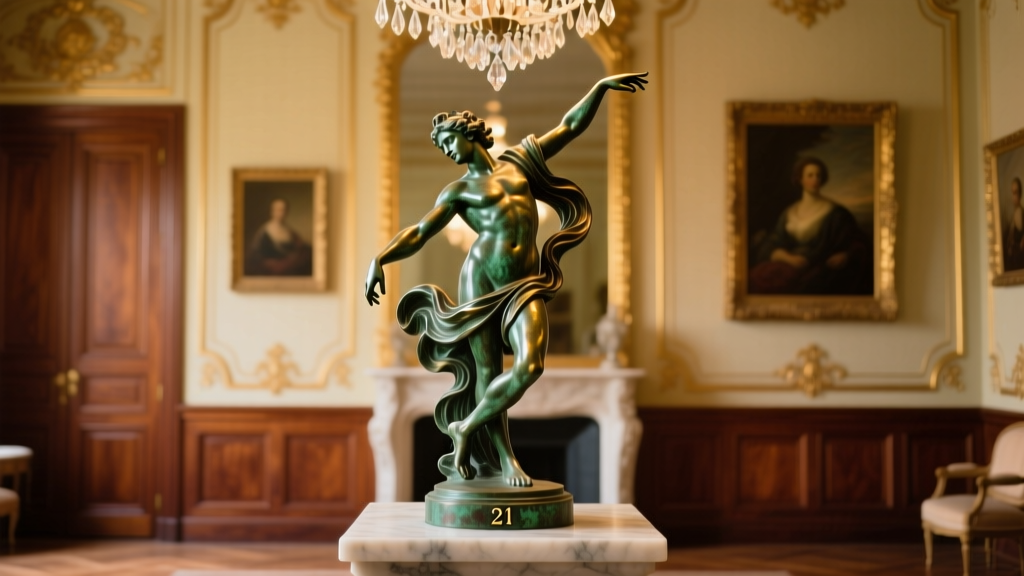
Eugène-Louis Equesne’s 'Faune Dansant': A Technical and Historical Analysis of a Rare 21-Inch Bronze Sculpture with Original Patina and Inscription
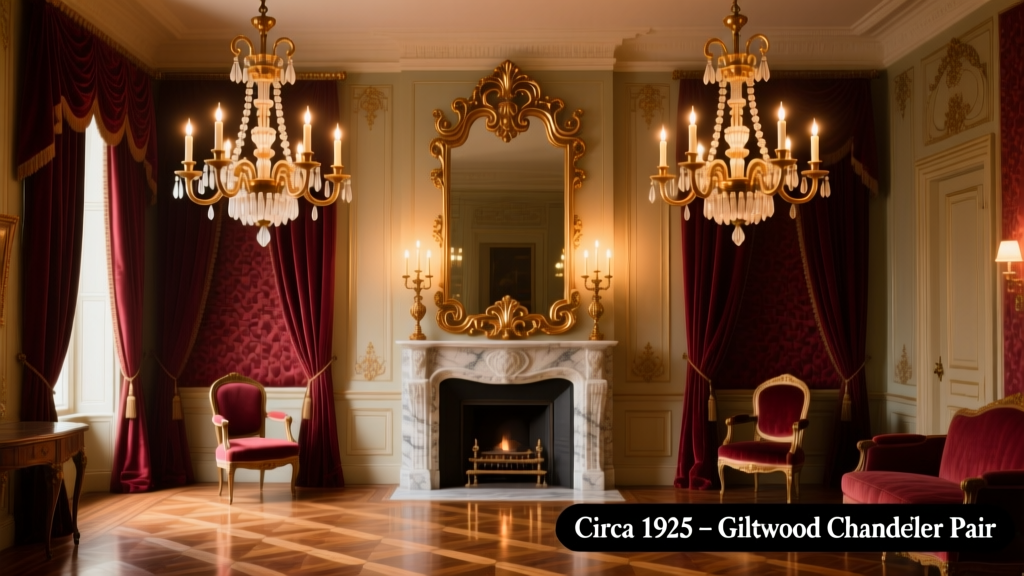
A Pair of 1925 Giltwood Six-Light Stepped Chandeliers with Faux Candles: Provenance, Craftsmanship, and Restoration Protocol
A 1940s Masterpiece: Decoding the Sapphire Cabochon Ring with 16 Diamonds in 18K Rose Gold Floral Band
Fishing Reel Fly England 1800s: Mechanics, Makers, and Material Culture of Victorian Angling Innovation
Thermometer Ramons Pills A Real Laxative Little Doctor Image Metal 21 In: Decoding a Rare Early 20th-Century Pharmaceutical Advertising Artifact

Mattel Tommy Burst Clear Plastic: Material Science, Collectibility, and Conservation Challenges in Vintage Toy Restoration
Watercolor Vase of Flowers: A 1920s–1940s American Decorative Print in Original Gilt-Leaf Frame (11 × 9 Inches)
John Townsend Jr.: Newport’s Forgotten Cabinetmaker and the Legacy of a Colonial Master