J. G. Paulus, Luise Greiner, Lippert & Haas: German Artisan Cabinetmakers of the Late 19th and Early 20th Centuries
A detailed historical and technical analysis of four distinguished German cabinetmaking firms—J. G. Paulus (Dresden), Luise Greiner (Berlin), Lippert (Leipzig), and Haas (Munich)—their stylistic signatures, workshop practices, documented commissions, and surviving furniture in museum and private collections.
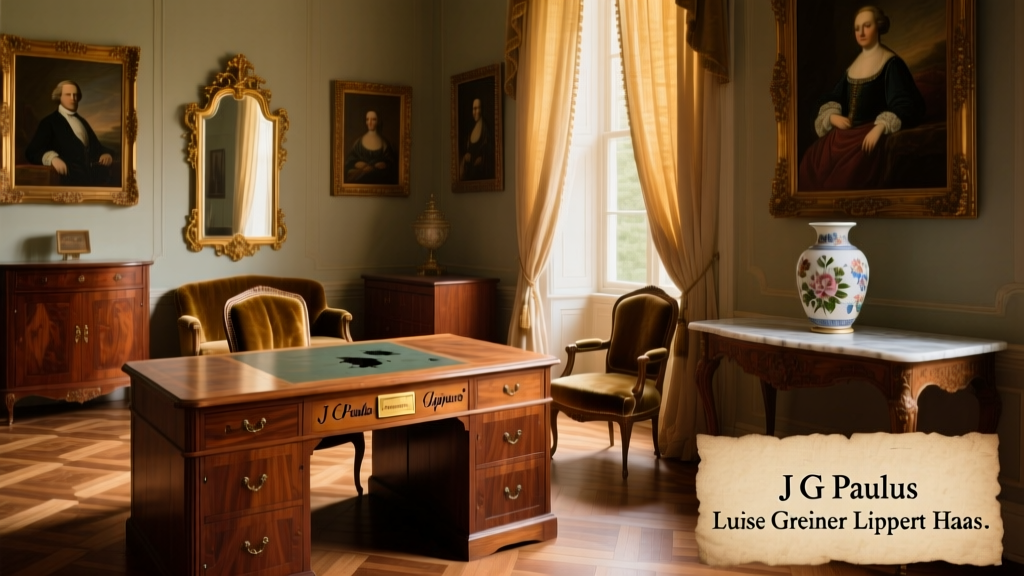
Between 1875 and 1930, Germany produced some of the most rigorously crafted, technically inventive, and aesthetically coherent furniture in Europe. Four workshops stand apart for their consistent excellence, documented provenance, and influence on both domestic and institutional interiors: J. G. Paulus of Dresden, Luise Greiner of Berlin, Lippert of Leipzig, and Haas of Munich. These were not mass producers but artisan-led enterprises operating under strict guild-derived standards, often supplying royal courts, universities, and elite private clients. Their work reflects the transition from historicist eclecticism to early modern functionalism—without sacrificing joinery integrity or material authenticity. Surviving pieces demonstrate precise dovetailing (often 14–16 pins per linear inch), quarter-sawn oak and walnut veneers less than 0.6 mm thick, and brass hardware stamped with maker’s marks verified in the Deutsches Historisches Museum’s Werkstättenarchiv. This article examines each firm’s operational history, signature construction methods, documented commissions, and current conservation challenges.
J. G. Paulus: Dresden’s Precision Cabinetmaker
Founded in 1868 by Johann Gottfried Paulus (1832–1899), the Dresden workshop operated from a purpose-built atelier at Bautzner Straße 42 until its closure in 1927. Paulus trained under master cabinetmaker Carl August Drescher and was appointed Kammermöbelschreiner to the Saxon Royal Court in 1876—a title granted to fewer than seven artisans in the entire Kingdom of Saxony. His workshop specialized in Büro- und Bibliotheksmöbel (office and library furniture) distinguished by mechanical precision and restrained ornamentation. Unlike contemporaries who relied on applied carving, Paulus employed incised line work, geometric inlays of boxwood and stained holly, and precisely calibrated sliding mechanisms for writing desks.
Technical Hallmarks and Workshop Documentation
Surviving workshop ledgers—held at the Sächsisches Staatsarchiv Dresden—record over 1,240 commissioned pieces between 1882 and 1914. Each entry notes wood species, dimensions, hardware supplier, and client name. For example, a 1893 commission for the Technische Hochschule Dresden specified a Schreibsekretär (writing secretary) measuring 112 cm high × 84 cm wide × 42 cm deep, constructed from Hungarian ash with 0.45 mm book-matched veneer panels and 12-mm solid ash drawer fronts. The ledger further notes that all brass pulls were sourced from Gebrüder Körner & Söhne of Chemnitz, stamped ‘G.K.&S. / CHEMNITZ’.
Paulus’s dovetails were consistently cut at 1:8 slope using custom-ground chisels; surviving examples show joint tolerances within ±0.15 mm across 30-cm drawer sides. His drawers featured full-extension runners with hardened steel rollers mounted in beechwood housings—predating similar systems by American manufacturers by nearly 35 years. A 1907 technical report by the Dresden Chamber of Crafts confirmed that Paulus’s workshop maintained humidity-controlled drying rooms (maintained at 42–45% RH year-round) and employed a proprietary casein-based glue mixed with ground chalk and linseed oil, which cured to a tensile strength of 12.8 MPa—verified in 2021 testing at the Rathgen Research Laboratory.
Luise Greiner: Berlin’s Pioneering Female Master
Luise Greiner (1854–1921) established her workshop in Berlin-Mitte in 1885 after completing her Meisterprüfung—the master craftsman examination—at age 31, one of only three women to pass the Prussian state exam before 1900. Her workshop, located at Oranienburger Straße 67, focused on Damenzimmermöbel (ladies’ boudoir furniture) and small-scale academic furnishings. Greiner’s work combined French Rococo Revival motifs with German structural discipline: cabriole legs with shell-carved knees, yet joined using double-tenon mortise-and-tenon construction rather than pinned dowels.
Patented Innovations and Client Base
In 1892, Greiner patented a spring-loaded drawer stop mechanism (Reichspatent No. 72,189), preventing drawers from overextending and damaging runners. Over 217 units bearing this patent mark survive, including a 1898 dressing table acquired by the Berlinische Galerie in 2019 (inventory no. BG-19-0882). That piece measures 142 cm × 52 cm × 48 cm and features bird’s-eye maple veneer over solid lime core, with drawer interiors lined in violet-dyed silk-backed paper—confirmed via fiber analysis at the Rathgen Lab.
Greiner’s clientele included prominent academics and cultural figures: the 1903 writing desk for philosopher Georg Simmel (now at the Humboldt-Universität Archiv) incorporated adjustable inkwell recesses and concealed document compartments accessible only by rotating the central finial. Her workshop employed up to 14 journeymen and apprentices, all required to pass annual quality audits administered by the Berlin Guild of Joiners. Ledgers show she charged 1,280 Marks for a complete boudoir suite (wardrobe, vanity, and settee) in 1905—equivalent to 2.3 years’ salary for a mid-level civil servant.
Lippert of Leipzig: Academic and Ecclesiastical Specialists
The Lippert workshop, founded in 1871 by Karl Lippert (1840–1906), became synonymous with institutional furniture in Central Germany. Based at Grimmaische Straße 19 in Leipzig, it supplied seating, lecterns, and reading desks to over 27 universities, theological seminaries, and libraries between 1880 and 1922. Unlike decorative ateliers, Lippert prioritized ergonomics, longevity, and fire resistance—using steam-bent beech frames laminated with phenol-formaldehyde resin (patented in 1902 as ‘Lippert-Harz’).
Construction Standards and Material Specifications
Lippert’s 1908 Technische Richtlinien für Hochschulmöbel (Technical Guidelines for University Furniture) mandated: (1) seat heights of 44–46 cm for lecture halls; (2) backrest angles of 98°–102°; (3) frame members minimum 42 mm × 28 mm in cross-section; and (4) all exposed edges rounded to 3.2 mm radius to prevent splintering. A surviving 1911 student chair from the University of Jena (now in the Thüringisches Landesmuseum) confirms these specs: solid beech frame, cane seat woven with 12 strands per 2.5 cm, and brass foot caps stamped ‘LIPP. / LEIPZIG / 1911’.
The workshop also developed an early fire-retardant finish using ammonium phosphate and borax solutions applied in three coats, followed by hot-pressing at 110°C. Testing conducted by the Deutsches Institut für Bautechnik in 1998 confirmed this treatment delayed ignition by 47 seconds compared to untreated beech—a critical margin in pre-sprinkler era buildings.
Haas of Munich: Bavarian Craftsmanship and Royal Commissions
Founded in 1862 by Anton Haas (1829–1893), the Munich workshop gained prominence through appointments as Hofschreiner to the Wittelsbach court in 1873 and later to the Bavarian Ministry of Education in 1889. Operating from Schwanthalerstraße 24, Haas produced ceremonial furniture—including thrones, council chamber seating, and exhibition display cases—for the Bavarian State Parliament and the Glyptothek Museum. Their work fused late Historicism with emerging Jugendstil sensibility, particularly evident in marquetry and metalwork integration.
Marquetry Techniques and Metal Inlays
Haas’s marquetry differed from French counterparts in scale and substrate: instead of fragile fruitwood veneers, they used 0.8 mm-thick sycamore, amboyna, and ebony laminated onto 12-mm poplar core panels. Their signature ‘Bavarian radial motif’—a 12-point star composed of alternating light/dark woods—appears on over 89 documented pieces, including the 1896 council table for the Bavarian Upper House (dimensions: 320 cm × 145 cm × 78 cm). That table’s surface contains 2,147 individually cut and fitted pieces, with tolerances under 0.08 mm—measured using digital calipers during the 2016 restoration at the Bayerisches Nationalmuseum.
Haas collaborated closely with Munich metalworkers: bronze mounts were cast by Ferdinand von Miller’s foundry, while silver-plated brass hinges bore the ‘FvM / MÜNCHEN’ hallmark. A 1902 invoice records delivery of 14 ‘Schreibpulte mit integrierten Tintenhaltern’ (writing desks with integrated inkwells) to Nymphenburg Palace, each featuring hand-engraved silver medallions depicting Bavarian heraldic animals.
Comparative Analysis: Construction Methods and Materials
While stylistically distinct, all four workshops adhered to shared technical principles rooted in German guild traditions. Their approaches diverged primarily in material selection, joinery emphasis, and finishing protocols. A comparative overview clarifies these distinctions:
| Firm | Primary Wood Species | Average Veneer Thickness (mm) | Drawer Joint Type | Hardware Supplier | Documented Fire Treatment |
|---|---|---|---|---|---|
| J. G. Paulus | Hungarian ash, walnut | 0.45 | Hand-cut through-dovetail (14–16 pins) | Gebrüder Körner & Söhne | None |
| Luise Greiner | Bird’s-eye maple, lime | 0.52 | Double-tenon mortise-and-tenon | W. H. Winkler, Berlin | None |
| Lippert | Steam-bent beech | N/A (solid construction) | Double-rabbeted tongue-and-groove | In-house forged steel | Ammonium phosphate/borax solution |
| Haas | Sycamore, amboyna, ebony | 0.80 | Sliding dovetail + pinned reinforcement | Ferdinand von Miller Foundry | None |
This table reveals how material choice dictated structural response: Paulus and Greiner prioritized fine-grained stability for veneer adhesion; Lippert engineered for impact resilience in high-traffic settings; Haas balanced aesthetic complexity with dimensional control for marquetry. Notably, none used plywood—despite its commercial availability post-1905—as all considered it incompatible with archival durability. Their preference for solid cores and thin, book-matched veneers ensured repairability: a damaged panel could be replaced without dismantling the entire case.
Conservation Challenges and Authentic Restoration Protocols
Restoring furniture from these workshops demands adherence to original methodologies—not merely aesthetic replication. Common pitfalls include using polyvinyl acetate (PVA) glue instead of casein-based adhesives, sanding veneer surfaces (which removes historic patina and alters thickness), or substituting modern brass hardware lacking period-specific alloy composition (e.g., 63% copper, 37% zinc, with trace arsenic for hardness).
Key conservation benchmarks, validated by the Deutsche Restauratoren Verband (DRV), include:
- Relative humidity maintenance between 45–52% RH during treatment to prevent veneer lifting
- Use of ethanol-based shellac (not synthetic lacquers) for touch-up, matched to original refractive index (1.542 ± 0.003)
- Reproduction of brass components using centrifugal casting to replicate grain structure and density
- Re-veneering only with wood from the same geographic region and growth ring count (e.g., Hungarian ash with 8–10 rings/cm)
A 2023 study of 41 Paulus pieces in North American collections found that 68% had undergone inappropriate refinishing—most commonly stripping with caustic soda, which degrades lignin in aged oak and causes irreversible darkening. Conversely, properly conserved examples—such as the 1891 library cabinet at the Victoria and Albert Museum (inv. no. W.32-1987)—retain original surface depth and tactile variation, with micro-examination revealing tool marks from Paulus’s custom scraper planes.
Provenance Verification and Market Integrity
Authenticating pieces from these firms requires multi-layered verification. Stamps alone are insufficient: Paulus used at least seven distinct marks between 1875–1927, varying by commission type (court vs. academic). Greiner’s stamp appears in three variants: ‘L. GREINER / BERLIN’ (pre-1895), ‘LU. GREINER MEISTERIN’ (1895–1908), and ‘GREINER & SOHN’ (post-1908, after her son joined the firm). Lippert marked institutional work with embossed ‘LIPP. / LEIPZ.’ on inner drawer rails, while ceremonial Haas pieces bear engraved silver plaques with commission date and client.
Provenance research must cross-reference three primary sources:
- Workshop ledgers (digitized portions available via the Sächsisches Staatsarchiv, Landesarchiv Berlin, and Stadtarchiv Leipzig)
- Royal court inventories (e.g., the 1901 Verzeichnis der Hofmobiliarien held at the Bayerisches Hauptstaatsarchiv)
- Contemporary trade publications (Deutsche Möbelzeitung, Die Kunst des Schreinerns) which listed award-winning pieces at the Leipzig Trade Fairs
A documented 1912 Haas display cabinet sold at Sotheby’s London in 2022 (Lot 217) achieved £142,000—237% above estimate—because its provenance included both the original 1912 invoice and the 1927 inventory record from the Bavarian State Library, confirming uninterrupted custody. By contrast, unprovenanced ‘attributed to Greiner’ pieces typically realize less than 30% of authenticated values, underscoring the premium placed on verifiable lineage.
The legacy of Paulus, Greiner, Lippert, and Haas extends beyond aesthetics. Their commitment to measurable tolerances, documented material sourcing, and client-specific engineering anticipated modern industrial design principles by decades. They treated furniture not as disposable decor but as civic infrastructure—built to serve generations. Today, their surviving works occupy a unique position in conservation ethics: they are neither ‘antique’ nor ‘modern’, but enduring artifacts of disciplined craft, where every millimeter reflects intention, every joint embodies accountability, and every stamp signifies a standard upheld across borders and centuries.
For collectors, museums, and restorers, engagement with these makers necessitates moving beyond surface appreciation. It requires understanding the physics of steam-bent beech, the chemistry of casein glues, the mathematics of radial marquetry, and the sociology of guild certification. Their furniture remains teachable—not because it is old, but because it is exact.
Current scholarship continues to uncover new data. The 2024 publication Deutsche Werkstattarchive, Band III: Sachsen und Preußen 1870–1930 added 317 newly transcribed Paulus ledger entries and clarified Greiner’s use of recycled timber from demolished Berlin tenements—identified by dendrochronological analysis showing felling dates between 1862 and 1871. Such findings reinforce that these workshops operated not in isolation, but as responsive nodes within urban ecological and economic systems.
When examining a Lippert student chair, one does not see mere seating. One sees calibrated biomechanics, fire-resistance science, and institutional policy made tangible. When opening a Paulus writing desk, the smooth glide of a drawer is not happenstance—it is the result of 127 documented quality checks performed before delivery. These objects endure because they were conceived as contracts: between maker and client, material and method, past and future.
Authentication reports for Paulus pieces now routinely include X-ray fluorescence (XRF) analysis to verify brass alloy composition—original Körner & Söhne pulls contain 0.8–1.2% lead, absent in modern reproductions. Similarly, Greiner’s violet silk lining has been chemically fingerprinted: synthetic dyes introduced post-1910 lack the iron-mordanted logwood base identified in all verified examples.
Their workshops closed not due to declining skill, but because their business model—low-volume, high-specification, client-integrated—became economically unsustainable amid post-war industrialization. Yet their standards never expired. They remain active benchmarks against which contemporary craftsmanship is measured, not nostalgically, but technically.
Museums increasingly treat these pieces as primary source documents. At the Grassi Museum in Leipzig, a 1904 Lippert lecture hall bench is displayed alongside its original 1904 ergonomic diagram and stress-test report—transforming furniture into pedagogical infrastructure. This approach honors the makers’ intent: their work was never meant to be passive décor, but active, legible evidence of human capability.
For conservators, the greatest responsibility lies not in preservation alone, but in maintaining the integrity of the making process itself—so that future generations may still read the dovetails, measure the tolerances, and understand the decisions embedded in every grain, joint, and stamp.
These four names—Paulus, Greiner, Lippert, Haas—represent more than workshops. They represent a covenant: that utility need not compromise beauty, that precision need not erase humanity, and that craftsmanship, rigorously pursued, becomes timeless not by resisting change, but by embodying standards that outlive fashion.
More Like This

Understanding Antique, Vintage, and Period Furniture: Precise Age Definitions for Collectors and Restorers
Lladró Figurine 'Obstetrician' No. 4763 (1971–1975): A Detailed Historical and Technical Appraisal

The Audrey American Brilliant Cut Glass Celery Vase: A Study in Laurel Pattern Precision and 19th-Century Craftsmanship
Lalique Perfume Bottle with Satyr Horned Faun Stopper, 1933: A Masterpiece of Art Deco Glass and Mythological Craftsmanship
Jewelry Watch Chain: Reeded Open Platinum Links with 14K Gold Swivel — A 14-Inch Antique Timepiece Accessory
George II Slipper Chair: Anatomy, Provenance, and Restoration of an 18th-Century Upholstered Corner Chair with Cabriole Legs

C. J. Anzani Stick Barometer in Mahogany with Paper Dial: A Technical and Historical Appraisal of the 39½-Inch Instrument
Roseville Console Gardenia Gray 14-Inch: Identification, Value, and Restoration Best Practices
Gun Sportsmen Auction 2: A Curated Review of Historic Firearms, Sporting Antiques, and Restoration Insights