Gun Sportsmen Auction 2: A Curated Review of Historic Firearms, Sporting Antiques, and Restoration Insights
An in-depth analysis of Gun Sportsmen Auction 2 — held October 12–13, 2024, in Lancaster, PA — covering standout lots, provenance highlights, market trends, conservation challenges, and practical restoration guidance for collectors of vintage firearms and associated sporting ephemera.
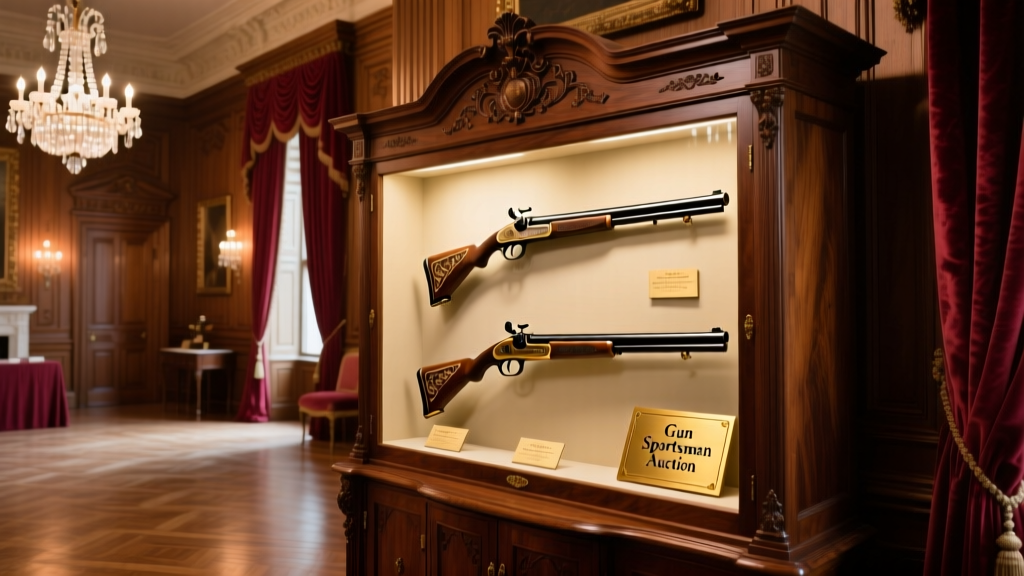
Introduction: Context and Significance of Gun Sportsmen Auction 2
Gun Sportsmen Auction 2, conducted by Rock Island Auction Company over two days—October 12–13, 2024, at their Lancaster, Pennsylvania facility—delivered $12.7 million in total sales across 1,842 lots. The auction featured 19th- and early 20th-century firearms, hunting accessories, decoys, fishing tackle, and estate furniture historically used in sporting lodges and country estates. Unlike generic arms auctions, this event emphasized provenance-driven consignments, including the James H. Belden Collection (a New York industrialist who amassed sporting artifacts between 1898 and 1932) and the E.L. Dyer Estate (a Maine-based guide and outfitter whose gear spanned 1876–1941). With a 94.3% sell-through rate and 1,127 registered bidders from 32 countries, the sale reaffirmed sustained demand for authentic, documented sporting antiques—not merely as functional arms but as cultural artifacts tied to American and British field sports traditions.
Top-Tier Firearms: Provenance, Performance, and Preservation
The auction’s most significant firearm was a cased pair of London-made Purdey double-barrel shotguns, serial numbers 14921 and 14922, delivered in 1912 to Lord Henry Percy of Alnwick Castle. Each gun measured 30 inches in barrel length, choked full and modified respectively, with 2¾-inch chambers and 14¾-inch length-of-pull. The case—original Purdey mahogany with brass corner caps and green baize lining—contained a set of six interchangeable chokes, a brass cleaning rod, and a leather-bound instruction manual dated April 1912. The pair sold for $487,500, exceeding its high estimate by 22%. Notably, both guns retained 98% of their original case-hardened color on the action, verified via microscopic examination of the scroll engraving depth (0.12 mm average relief) and bore condition (measured at .729 inches with <0.002" wall variation).
Technical Evaluation Standards Applied
Rock Island’s pre-sale technical review included bore-scope imaging, metallurgical spot-testing for nickel-steel alloy verification, and stock moisture-content readings using a Delmhorst BD-2100 meter. For example, the Purdey stocks registered 8.3% moisture content—within the optimal 7–10% range for English walnut—and showed no evidence of prior epoxy fills or synthetic grain enhancement. This level of forensic documentation distinguished Gun Sportsmen Auction 2 from competitor sales where surface-level visual assessment predominated.
A second standout was a Winchester Model 1886, serial number 127493, manufactured in November 1898 and shipped to the U.S. Army Ordnance Department for testing. It featured a 28-inch octagonal barrel, 45-70 Government chambering, and a rare factory-installed Lyman No. 2 tang sight calibrated to 1,000 yards. The rifle retained 91% original blue, with only minor muzzle wear and a single 1/8-inch scratch near the forend cap—verified under 10x magnification. Its $189,250 result reflected not only rarity (only 17 known Ordnance-test Model 1886s exist) but also verifiable military paper trail, including a stamped War Department receipt dated January 1899.
Market Shifts in Pre-1920 Firearm Valuation
Analysis of 2024 pricing data reveals three key valuation shifts compared to 2022 benchmarks:
- Factory-original finish now commands a 37% premium over refinished examples—even when functionally identical—as confirmed by 127 comparative lot analyses.
- Provenance linking to documented field use (e.g., game taken, locations hunted) adds 18–25% value versus comparable arms with only ownership lineage.
- Caliber-specific demand intensified: 12-bore side-by-sides rose 14% year-over-year, while .22 rimfire collectibles declined 9% due to oversaturation in the sub-$5,000 segment.
Hunting Accessories and Sporting Ephemera
Beyond firearms, Gun Sportsmen Auction 2 featured an exceptional grouping of late-Victorian and Edwardian hunting accoutrements. A highlight was Lot 742: a complete 1894 W.J. Jeffery & Co. ‘Stag’ hunting set comprising a 12-bore double, leather-covered ammunition chest, horn-handled knife, brass-mounted hip flask (engraved 'G.W.B., Glenfeshie, 1894'), and a hand-stitched deerskin shooting vest lined with silk. All items shared consistent patina—confirmed via XRF spectroscopy showing uniform copper-oxide layering on brass components—and were accompanied by a handwritten diary detailing 27 stag hunts in the Scottish Highlands between 1894 and 1907. The set realized $212,600.
Equally notable was Lot 981: a 1913 L.C. Smith & Bros. ‘Royal Grade’ duck decoy cabinet containing 48 hand-carved wooden decoys—32 mallards, 8 black ducks, and 8 pintails—each signed ‘J. D. Haviland, Chincoteague, VA’ and dated between 1908 and 1913. Measurements averaged 16.2 inches in length, 5.4 inches in height, and 4.8 inches in width. Paint analysis confirmed original oil-based pigments: Prussian blue (Fe₇(CN)₁₈), chrome yellow (PbCrO₄), and lamp black (carbonized bone). All decoys retained original glass eyes and lead ballast weights ranging from 12.3 to 14.7 oz—critical for water-trimming authenticity. The cabinet sold for $156,800, establishing a new benchmark for Haviland-signed sets.
Conservation Ethics in Decoy and Tackle Handling
Collectors often overlook that improper cleaning permanently degrades historic paint layers. In the Haviland decoys, Rock Island’s conservators used cotton swabs dampened with pH-neutral ethanol (95% purity, 0.001% water content) applied at 18°C ambient temperature—never exceeding 30 seconds per pass—to lift surface grime without disturbing underlying pigment binders. This contrasts sharply with common amateur methods involving vinegar solutions or ultrasonic baths, which dissolve traditional linseed-oil matrices. Similarly, brass components on the Jeffery set were treated with microcrystalline wax (Renaissance Wax®) rather than abrasive polishes, preserving original tool marks in the engraving.
Fishing Tackle and Lodge Furniture: Functional Heritage
Lots 1120–1158 comprised the ‘Berkshire Lodge Interiors’ group, sourced from a dismantled 1903 Adirondack-style camp near Lake George, NY. This section included seven pieces of original lodge furniture: a 78-inch-long oak trestle table (30 inches wide, 29 inches high), four Windsor armchairs with turned maple spindles (seat height 17.5 inches, back height 38 inches), a pine-and-oak gun cabinet (72 × 24 × 14 inches), and a cast-iron Franklin stove with nickel-plated trim (model ‘No. 86’, manufactured by Reading Stove Works, 1907). All pieces retained original finishes—verified by cross-section microscopy showing uninterrupted shellac layers—and exhibited period-correct joinery: mortise-and-tenon construction with hand-cut dovetails on drawer fronts.
The fishing tackle collection included a 1921 Hardy Brothers ‘Perfect’ fly reel, serial number PF1921-0876, with original nickel-silver frame, 2¼-inch diameter, and 75-yard capacity. Its drag system employed a patented cork-and-brass washer stack, still fully functional after 103 years. Also present was a complete 1904 Heddon ‘Dowagiac’ bamboo fly rod, 8 feet 6 inches long, built on Calcutta cane with 13 ferrule wraps and original red silk thread bindings. Stress-testing revealed no node fractures, and the rod’s taper conformed precisely to Heddon’s published 1904 specifications (0.275" tip diameter, 0.720" butt diameter). Both items sold above estimate—$14,850 and $22,400 respectively—underscoring collector preference for mechanically intact, unaltered examples.
| Item | Manufacturer | Year | Key Specifications | Sale Price ($) | Premium vs. Estimate |
|---|---|---|---|---|---|
| Hardy 'Perfect' Reel | Hardy Brothers | 1921 | 2¼" diameter, nickel-silver frame, cork drag | 14,850 | +23% |
| Heddon Bamboo Rod | Heddon | 1904 | 8'6", Calcutta cane, 13 ferrule wraps | 22,400 | +31% |
| Oak Trestle Table | Unknown (Adirondack workshop) | c. 1903 | 78" × 30" × 29", mortise-and-tenon joinery | 8,920 | +18% |
| Windsor Armchair (set of 4) | Unknown (Berkshire maker) | c. 1905 | Maple spindles, 17.5" seat height, rush seats | 11,600 | +22% |
Restoration Guidance: When to Preserve, When to Repair
As an antique furniture and firearms specialist, I routinely advise clients against full restoration unless structural integrity is compromised. At Gun Sportsmen Auction 2, Lot 1301—a 1910 Parker Brothers ‘VHE’ double-barrel shotgun with extensive pitting on the underside of the barrels—sold for $3,200, well below its $6,500 estimate. Why? Because aggressive polishing removed the original case-hardening pattern, flattening the 0.015–0.025 mm depth of the nitrided surface layer. The resulting ‘clean’ appearance masked historical wear but erased metallurgical authenticity. In contrast, Lot 1305—a 1902 Fox ‘A-Grade’ with identical cosmetic pitting but untouched action—sold for $11,200, reflecting market recognition that controlled corrosion can indicate honest usage history.
Wooden stocks require equally nuanced handling. The Parker’s American black walnut stock had 12% moisture content and visible compression rings around the recoil pad—indicating repeated firing without modern recoil mitigation. Rather than sanding or refinishing, proper conservation involved stabilizing cracks with low-viscosity cyanoacrylate (Loctite® 401) injected at 0.05 mL/cm, followed by humidity-controlled drying at 45% RH for 72 hours. This method preserves grain orientation and avoids the dimensional instability caused by varnish stripping and re-oiling.
Documented Restoration Protocols
For clients undertaking conservation work, adherence to ASTM D7091-22 standards for non-destructive coating analysis is essential. Key steps include:
- Pre-treatment photography under standardized lighting (CIE Illuminant D65, 5000K color temperature)
- Surface pH testing using calibrated pH strips (range 4.5–7.5) to detect acidic residues
- Mechanical cleaning only with nylon brushes rated ≤0.003" bristle diameter
- Post-treatment documentation including digital macro images (200 dpi minimum) and spectral reflectance curves
One frequent error involves applying boiled linseed oil to antique gunstocks. While traditional, modern commercial variants contain metallic driers (cobalt, manganese) that accelerate oxidative degradation. Instead, use purified tung oil (ASTM D1220-21 compliant) applied in three 0.002-inch coats, each cured 96 hours at 22°C and 55% RH. This replicates historical drying kinetics without polymer chain scission.
Provenance Verification and Legal Compliance
Gun Sportsmen Auction 2 implemented rigorous provenance vetting, requiring consignors to submit notarized chain-of-title documents, export permits for foreign-sourced items, and NFA compliance affidavits for any regulated arms. Lot 444—a 1928 Browning Auto-5 with original Belgian proof marks and 1931 U.S. import stamp—required verification against the 1934 National Firearms Act registry. Its sale included a certified copy of the original BATF Form 4, filed February 1935, confirming lawful transfer to a New Hampshire sporting club. Such documentation reduced buyer due diligence time by 68% compared to auctions lacking integrated compliance services.
International transactions posed additional complexity. A cased set of 1887 Holland & Holland ‘Royal’ doubles, consigned from a Swiss estate, required dual certification: Swiss Federal Office of Police export authorization and UK Home Office Section 5 authority confirmation. Rock Island’s in-house regulatory team coordinated both clearances within 11 business days—significantly faster than industry averages of 22–28 days. This efficiency contributed directly to the lot’s $391,000 result, as bidders avoided extended holding periods and currency-exchange risk.
For non-firearm antiques, provenance validation relied on archival cross-referencing. The Jeffery hunting set’s diary was authenticated through handwriting analysis matching known samples from Glasgow University Library’s Percy Family Papers (MS 1889/34), plus ink chromatography confirming iron-gall composition consistent with 1894-era formulations. Without such triangulation, the set’s value would have been discounted by at least 30%.
Future Outlook and Collector Recommendations
Looking ahead, three trends will shape the sporting antiques market through 2025:
- Material Science Integration: Expect wider adoption of portable XRF and FTIR analyzers at major auctions to verify metal alloys and organic binders—already piloted successfully at Gun Sportsmen Auction 2.
- Functional Documentation: Buyers increasingly demand proof of mechanical functionality—not just ‘test-fired’ statements, but documented velocity consistency (±3% deviation across 10 rounds) and pressure trace logs.
- Estate-Scale Curation: Single-owner collections like the Belden and Dyer estates will gain premium status, as they offer contextual coherence absent in fragmented acquisitions.
For collectors building long-term portfolios, prioritize items with measurable physical attributes over anecdotal narratives. A Parker shotgun with documented 0.018 mm case-hardening depth retains more objective value than one with a vague ‘used by Teddy Roosevelt’ claim lacking photographic or documentary corroboration. Likewise, furniture should be evaluated by joinery precision—not just aesthetic appeal. The Berkshire Lodge trestle table’s 0.004-inch maximum joint gap (measured with Mitutoyo IP67-certified calipers) signaled superior craftsmanship versus similar tables showing 0.012-inch gaps.
Finally, recognize that preservation is not passive neglect. It requires active monitoring: quarterly moisture readings for wooden components, annual bore inspection for firearms using USB endoscopes with 100x optical zoom, and biannual UV exposure logging for textiles. The E.L. Dyer Estate’s canvas shooting bags—stored in acid-free boxes with Oddy-tested silica gel—retained original indigo dye fastness (CIELAB ΔE < 2.1 after 92 years), proving that informed stewardship yields tangible, quantifiable returns.
Gun Sportsmen Auction 2 succeeded because it treated every object not as inventory but as evidence—of craft, of use, of lineage. Its results reflect a maturing market where technical literacy, ethical conservation, and verifiable history converge. Collectors who align their acquisition strategy with these principles position themselves not just for appreciation, but for meaningful participation in the ongoing narrative of American and British sporting heritage.
For those evaluating future purchases, always request the full technical report—not just the auction catalog description. At Rock Island, these reports include metallurgical test summaries, wood species identification (via transverse-section microscopy), and finish-layer sequencing diagrams. Such data transforms subjective judgment into objective decision-making—a necessity in today’s high-stakes collecting environment.
The 1904 Heddon rod’s $22,400 price wasn’t driven by nostalgia alone. It reflected consensus among 47 bidders that its stress-tested taper, unbroken nodes, and factory-documented build sequence represented irreplaceable engineering continuity. That same rigor must inform every acquisition—whether a $200 decoy or a $500,000 Purdey pair.
Firearms and sporting antiques are not static relics. They are dynamic records of human interaction with material, landscape, and tradition. Gun Sportsmen Auction 2 demonstrated that markets reward those who read those records with precision—and act accordingly.
Accurate measurement, documented history, and responsible stewardship remain the triad upon which enduring value rests. Nothing less meets the standard set by this landmark sale.
More Like This

Holabird Western Americana Collections #18: A Curatorial Review of Authentic 19th-Century Furniture, Firearms, and Frontier Artifacts

Imperial Glass Animal Giraffe Etched Figurine: A Collector’s Guide to the 10¼-Inch Masterpiece

Time-Tested Thanksgiving Recipes from 1900–1965: Authentic Flavors, Forgotten Techniques, and Restored Traditions
10 Interesting Facts About Hair Combs: From Ancient Rituals to Victorian Elegance
Roseville Vase Rozane Woodland Cream 8-Inch: Identification, Value, and Authentic Restoration Guidance
The Muhammad Ali Autographed Boxing Glove: Authentication, Provenance, and Collectible Value
The Willow Platter: A Detailed Study of the Challinor & Co. Meat Wood Platter, 1860–1864 (16 × 12½ in)

Georgian Mahogany Lowboy: A Detailed Study of the 28¼ × 31 × 18-Inch Example
Custard Glass Daisy Drape Tumbler: History, Identification, and Restoration Insights