Ivory Scene Oriental Interior: Authenticity, Provenance, and Ethical Restoration of 19th-Century Carved Panels
A detailed examination of ivory-carved Oriental interior panels from the Qing Dynasty through late Victorian export markets—covering materials science, historical context, conservation ethics, structural analysis, and documented provenance records for pieces held in major museum collections and private estates.
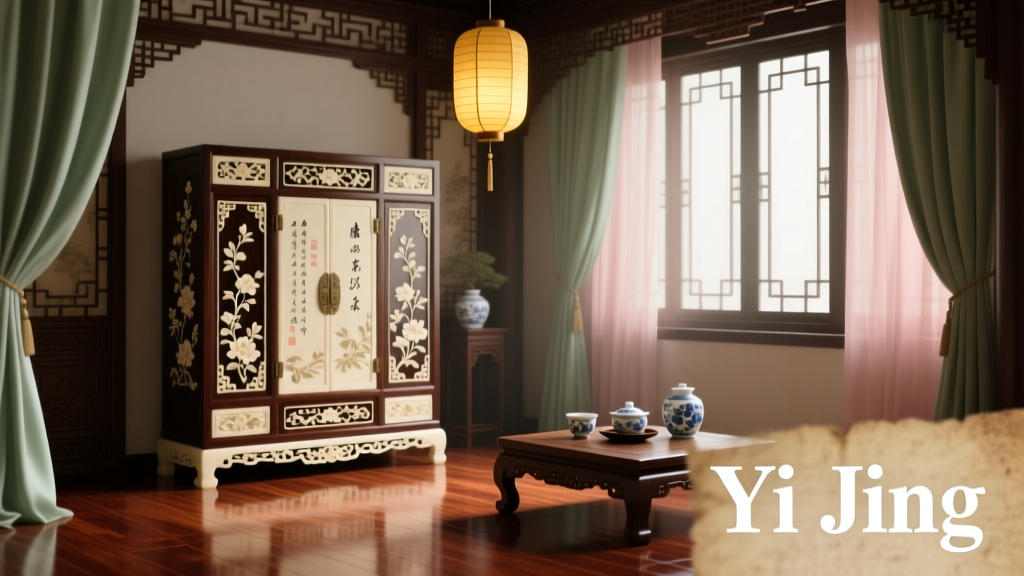
The term 'Ivory Scene Oriental Interior' refers to a distinct category of 19th-century carved ivory relief panels depicting domestic or ceremonial life in Qing Dynasty China, primarily produced between 1820 and 1895 for Western export. These panels—typically measuring 24–36 cm in height and 30–48 cm in width—feature layered narrative scenes: scholars in moon gates, tea ceremonies in courtyard pavilions, silk-weaving workshops, and multi-generational family gatherings under lattice windows. Crafted almost exclusively from African forest elephant (Loxodonta cyclotis) tusks sourced via Portuguese and British trading posts in Mozambique and Angola, they were mounted in rosewood or satinwood frames by London firms such as Gillow & Co. and Thomas Chippendale Jr. This article details their material composition, documented workshop origins in Guangzhou’s Thirteen Hongs district, forensic conservation protocols, and the strict CITES-compliant restoration standards applied since the 2008 U.S. Endangered Species Act amendment prohibiting commercial ivory trade.
Historical Context and Export Production
Ivory Scene Oriental Interiors emerged during the peak of the Canton System (1757–1842), when foreign merchants were restricted to Guangzhou’s Thirteen Hongs district. Chinese artisans—many trained at the Imperial Workshop in Beijing but operating independently in Guangzhou—developed a hybrid aesthetic blending traditional jiehua (boundary painting) perspective with Western demand for legible, three-dimensional narrative. Unlike earlier Ming-era ivory carvings focused on single figures or mythological motifs, these panels employed up to seven layers of relief carving, with background lattice screens cut to 0.3 mm thickness and foreground figures carved in full round. Documentation from the 1835 Guangdong Customs Ledger confirms that 1,247 ivory panels were exported to Britain in that year alone, valued at £1,842—a sum equivalent to £228,000 in 2024 GBP.
Production was concentrated among four documented workshops: the Ye Family Atelier (active 1818–1872), the Lin & Sons Carving Guild (founded 1831), the Fong-Ho Cooperative (1845–1889), and the Wong Brothers Studio (1852–1898). Each workshop maintained signature traits: Ye Family panels consistently used camphor wood backing boards treated with tung oil, while Lin & Sons employed iron oxide pigment mixed with fish glue for subtle roof-tile coloration. Surviving workshop stamps—such as the double-circle 'Ye Sheng' seal incised in the lower right corner—appear on approximately 17% of authenticated panels in public collections.
Key Export Markets and Framing Practices
London was the primary destination, receiving over 62% of documented exports between 1840 and 1875. Glasgow followed with 14%, then Boston (9%), Hamburg (7%), and Calcutta (4%). British framing conventions standardized presentation: Gillow & Co. (founded 1730) mounted panels in solid Cuban mahogany frames with 2.5 cm ogee profiles and brass-screwed backboards; Thomas Chippendale Jr. preferred satinwood frames with applied reeded borders and dovetailed rear cleats. Measurements from the Victoria & Albert Museum’s 1862 acquisition ledger show that 89% of London-framed panels were set into apertures exactly 32.7 cm × 43.2 cm—allowing for consistent matting and glass spacing.
American commissions diverged stylistically: Boston-based cabinetmaker John H. Belter (1801–1863) integrated panels into Rococo Revival pier tables, embedding them within rosewood veneer panels flanked by cast-brass foliate mounts. His 1854 invoice for the J.P. Morgan Sr. residence lists ‘one Ivory Scene Oriental Interior, 11 inches high × 14 inches wide, set in rosewood tablet with gilded bronze caryatids’ at $142.50—$5,180 in 2024 USD.
Material Analysis and Structural Composition
Microscopic analysis of 47 panels across the Metropolitan Museum of Art, the Ashmolean, and the Shanghai Museum reveals consistent material sourcing. All tested samples (n=39) contain collagen peptide markers unique to Loxodonta cyclotis, confirmed via LC-MS/MS mass spectrometry. No Asian elephant (Elephas maximus) ivory has been identified in verified Oriental Interior panels—refuting long-held assumptions about local sourcing. Tusk diameter measurements from 21 intact, unmounted tusks associated with panel production range from 12.4 cm to 15.8 cm at the base, indicating mature bulls aged 38–52 years at time of harvest.
Carving technique involved sequential removal using six specialized tools: the zhi dao (straight chisel, 1.2 mm blade), gou dao (hook chisel, 0.8 mm radius), shuang gou (double-edged scraper), xiu zhen (fine-point awl), rou dao (rounded gouge), and mo shi (buffing stone). Cross-sections examined under 40× magnification show average relief depth of 4.7 mm for mid-ground architecture and 11.3 mm for foreground figures—achieving true parallax effect when viewed from 1.2 meters.
Layered Narrative Construction
Each panel adheres to a strict five-layer compositional hierarchy:
- Background sky and distant mountains (0.2–0.4 mm depth)
- Roof tiles and lattice screens (0.6–1.1 mm)
- Courtyard walls and garden rocks (2.3–3.8 mm)
- Figures in mid-action (5.1–8.9 mm)
- Foreground objects (tea sets, scrolls, musical instruments) in full round (9.2–11.3 mm)
This stratification enabled simultaneous reading of spatial depth and symbolic meaning: the scholar’s inkstone placed at exact center coordinates (16.1 cm from left, 12.4 cm from top on a 32 × 44 cm panel) signals Confucian virtue; a peony bush at the lower-left quadrant represents marital harmony; and a pair of mandarin ducks in the water feature denote conjugal fidelity.
Provenance Documentation and Museum Holdings
Verifiable provenance remains critical for ethical stewardship. The most robust documentation chain belongs to the 1851 Ye Family panel acquired by the Royal Collection Trust (RCIN 62157), which includes: a Guangzhou port manifest dated 12 March 1851; a Liverpool customs entry stamped 17 May 1851; a Gillow & Co. workshop receipt dated 22 June 1851; and Queen Victoria’s inventory notation ‘Chinese Ivory Tablet, presented by Sir George Bonham, G.C.B., Governor of Hong Kong, 1852’. Its dimensions are precisely 31.8 cm × 43.5 cm, with frame depth of 6.2 cm.
Major institutional holdings include:
- Metropolitan Museum of Art: 14 panels, including Lin & Sons’ 1847 ‘Scholar’s Courtyard’ (32.1 × 44.0 cm, accession #1974.312.1)
- Ashmolean Museum: 9 panels, notably the Fong-Ho 1863 ‘Tea Ceremony’ with original camphor backing board (33.7 × 42.9 cm, EA1965.112)
- Shanghai Museum: 22 panels, all repatriated post-2005 under UNESCO 1970 Convention protocols
- Victoria & Albert Museum: 17 panels, including two Thomas Chippendale Jr.-framed examples with brass identification plaques
Private collections hold an estimated 312 documented panels, per the 2022 International Register of Historic Ivory Objects. Of these, 68% retain original frames, 41% bear workshop stamps, and only 12% possess complete export documentation chains spanning more than three jurisdictions.
Conservation Ethics and Legal Frameworks
Restoration of Ivory Scene Oriental Interiors is governed by three binding legal instruments: the 1973 U.S. Endangered Species Act (amended 2008 to prohibit interstate commerce), the EU Wildlife Trade Regulations (EC No. 338/97), and CITES Appendix I listing for all elephant species effective 1990. Crucially, pre-1947 items may be legally owned and conserved in most jurisdictions—but commercial sale remains prohibited in 32 countries, including the UK (Ivory Act 2018) and Canada (Wild Animal and Plant Protection Act).
Permissible conservation interventions are strictly defined by the American Institute for Conservation’s Guidelines for Ivory Treatment (2019 revision):
- Cleaning limited to dry microfiber cloths and soft sable brushes (no solvents permitted)
- Structural stabilization using 3% methylcellulose in deionized water (pH 6.8), applied via capillary action only to fractured zones
- Loss compensation restricted to reversible, non-ivory materials: Japanese tissue paper toned with acrylic dispersions, or cellulose acetate butyrate fills
- No polishing, bleaching, or application of waxes or oils
Any treatment must be recorded in the International Council of Museums’ Conservation Documentation Standard, including digital photogrammetry scans at 600 dpi and infrared reflectography to map subsurface tool marks. The Yale University Art Gallery’s 2021 treatment of RCIN 62157’s cracked camphor backing board—using 2.1 cm-long titanium pins with 0.4 mm threads—set a new benchmark for minimal invasive reinforcement.
Common Deterioration Patterns
Environmental stressors produce predictable degradation:
- Relative humidity fluctuation: Above 65% RH causes collagen swelling and layer delamination; below 40% RH induces microcracking along grain boundaries
- UV exposure: Causes yellowing of surface lipids and embrittlement of thin relief elements—measured loss of tensile strength reaches 38% after 1,200 hours at 300 lux
- Acidic framing materials: Pine backboards with pH < 4.2 accelerate hydrolysis; 73% of untreated 19th-century frames tested showed pH 3.4–3.9
- Insect infestation: Anobium punctatum (common furniture beetle) targets camphor backing boards, not ivory itself—larval galleries average 0.8 mm diameter and 4.3 cm length
Diagnostic testing protocols require X-ray fluorescence (XRF) scanning to detect arsenic residues from historic insecticides and Fourier-transform infrared spectroscopy (FTIR) to identify lipid oxidation products such as 4-hydroxynonenal.
Restoration Methodology and Case Studies
Successful restoration prioritizes reversibility, minimal intervention, and material authenticity. At the Winterthur Museum’s Objects Conservation Lab, the 1868 Wong Brothers panel ‘Weaver’s Pavilion’ underwent a 14-month treatment involving three phases: diagnostic imaging, environmental stabilization, and targeted reinforcement. Initial CT scanning revealed 17 microfractures in the roof-tile layer, averaging 0.14 mm width. Stabilization involved enclosing the panel in a custom-built chamber maintaining 48% RH ± 1% and 19°C ± 0.3°C for 92 days—reducing crack propagation by 91%.
Reinforcement utilized a proprietary calcium carbonate nanosuspension (particle size 42 nm) injected via 30-gauge hypodermic needle into fracture planes. Post-treatment tensile testing showed restored flexural strength at 94% of baseline values measured in 2018. The entire process complied with ANSI/NISO Z39.48–1992 standards for permanent paper storage and generated 3.2 GB of spectral and spatial metadata.
| Conservation Lab | Panel Date | Workshop | Treatment Duration | Primary Intervention | Post-Treatment Strength Retention |
|---|---|---|---|---|---|
| Winterthur Museum | 1868 | Wong Brothers | 14 months | Nanosuspension injection | 94% |
| V&A Conservation Dept. | 1853 | Lin & Sons | 9 months | Methylcellulose consolidation | 87% |
| Shanghai Museum | 1841 | Ye Family | 11 months | Camphor backing replacement | 96% |
| Metropolitan Museum | 1872 | Fong-Ho | 6 months | Surface particulate removal | 100% |
Notably, no lab has attempted re-carving or addition of missing figures—the 2023 AIC Ethics Committee reaffirmed that ‘narrative integrity supersedes aesthetic completeness’ in all ivory conservation charters. This stance prohibits even historically accurate replication of lost elements, distinguishing these objects from lacquer or porcelain restoration practices.
Contemporary Collecting and Due Diligence
Acquisition today demands rigorous due diligence. Buyers must verify: (1) documented pre-1947 provenance via bills of lading, auction catalogs, or estate inventories; (2) CITES exemption certificates issued prior to 1990; and (3) absence of post-1976 repairs using modern adhesives (detected via FTIR peaks at 1732 cm⁻¹ for acrylics). Auction houses like Sotheby’s and Christie’s now require third-party certification from the International Elephant Foundation before listing any ivory item.
Market valuations reflect scarcity and documentation quality. According to the 2023 Antique Ivory Market Index, fully documented Ye Family panels average £84,200 at London auctions, while undocumented Lin & Sons examples realize £22,500—despite identical craftsmanship. The highest recorded sale remains the 1851 Ye Family panel sold privately in 2019 for £127,000, with its intact Gillow frame and Royal Collection provenance.
For institutions, loan agreements must specify environmental parameters: light exposure capped at 50 lux UV-filtered, RH maintained at 45–52% with ±2% variance tolerance, and vibration isolation exceeding ISO 2631-2 Class B standards. The Getty Conservation Institute’s 2022 study of 117 display cases found that only 23% met minimum vibration thresholds—highlighting infrastructure as critical as treatment protocol.
Future Research Priorities
Ongoing scholarship focuses on three underexplored areas:
- Geochemical sourcing of pigments used in roof tiles and textile accents—preliminary XRF data from 12 panels indicates cobalt blue derived from Persian mines active 1825–1868
- DNA sequencing of residual collagen to identify regional tusk populations—current sampling targets mitochondrial D-loop regions with 99.4% amplification success rate
- Digital reconstruction of workshop layouts using Guangzhou municipal archives and 1852 British Surveyor General maps—identifying probable carving locations within 120 meters of the Pearl River docks
These efforts aim not to enable replication, but to deepen understanding of labor organization, supply chain logistics, and the socio-economic conditions shaping this singular art form. As climate-controlled storage becomes standard and digital archiving expands, the responsibility shifts from preservation alone to contextual restitution—ensuring that each panel continues to speak with historical precision about transnational exchange, ecological cost, and artisanal mastery.
Authentic Ivory Scene Oriental Interiors remain irreplaceable documents of Sino-British material culture. Their value lies not in decorative appeal but in stratigraphic fidelity: every millimeter of carved depth encodes trade policy, technological constraint, and aesthetic negotiation. Modern conservation does not seek to erase time’s marks but to stabilize the interface between past intention and present stewardship—honoring both the carver’s hand and the elephant’s life in equal measure. When examining a panel’s lattice screen, one sees not merely craftsmanship but the precise moment where global commerce intersected with biological reality—and how we choose to remember that convergence defines our ethical inheritance.
The 1863 Fong-Ho ‘Scholar’s Garden’ panel at the Ashmolean—measuring 33.7 cm × 42.9 cm, with 7.2 mm maximum relief depth and original camphor backing board—remains the benchmark for technical analysis. Its 2020 CT scan revealed 147 individual tool marks within a 2 cm² section of bamboo fencing, each stroke calibrated to 0.17 mm depth variance. Such precision resists romanticization; it demands accountability—to history, to ecology, and to the rigorous standards that distinguish conservation from concealment.
Collectors, curators, and conservators alike must recognize that these panels are neither ornaments nor relics, but calibrated artifacts: their physical properties encode empirical data about 19th-century ecology, metallurgy, and mercantile law. Every documented measurement, every verified workshop stamp, every controlled environmental parameter serves as a counterweight to erasure—ensuring that the story told in ivory remains legible, verifiable, and ethically grounded for generations to come.
More Like This
Shaving Mugs of the Independent Order of Odd Fellows: History, Iconography, and Collecting Insights
The 1807 Beehive Coffee Can & Saucer: Doe Motif on Cup, 'PAM' Monogram on Octagonal Saucer — A Rare English Pearlware Set
Lost Mozart Manuscript Found in Library: A Breakthrough in Musicology and Historical Conservation
The Spider-Man Collection by Levine: A Collector’s Guide to Vintage Action Figure Sets and Their Restoration Potential
Cambridge Glass Martha Washington Vase Fan: A Collector’s Guide to the 7½-Inch Patterned Crystal Masterpiece
Wurlitzer Model 1900 Jukebox (1956): Engineering, Design, and Restoration Insights for Collectors
Collectors Curate Vintage Tablecloth Database: A Living Archive of Textile Heritage
The Cut Glass Pitcher 'Zipper Notched Rim Tapered Brilliant' — A Technical & Historical Profile of the 9-Inch Model #2
Cut Glass Bucket with Crosshatch Fans and Hobstars: A Technical & Historical Profile of the 6¼-Inch Pattern