Is This Furniture German Like Biedermeier Age? Authentic Identification, Key Markers, and Common Misattributions
A precise, evidence-based guide for collectors and restorers to distinguish genuine Biedermeier furniture—produced primarily in German-speaking Central Europe between 1815–1848—from later imitations, regional variants, and mislabeled pieces. Includes dimensional benchmarks, maker signatures, wood species analysis, and documented workshop practices.
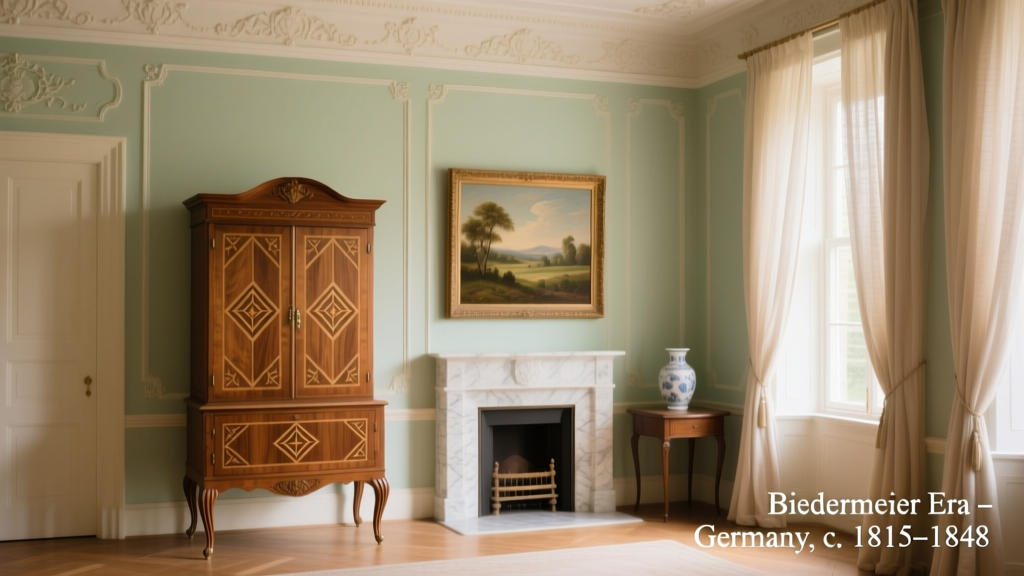
What Defines Genuine Biedermeier Furniture?
Biedermeier furniture refers to a distinct design movement that flourished in German-speaking regions—including Prussia, Austria, Saxony, and the Swiss Confederation—between the Congress of Vienna (1815) and the Revolutions of 1848. It is not a national style per se, but a cultural response to political repression, rising middle-class literacy, and industrial pragmatism. Unlike earlier Rococo or Neoclassical styles imported from France or England, Biedermeier emerged organically from local cabinetmakers’ workshops responding to domestic demand for functional, elegant, and morally grounded furnishings. Authentic pieces were almost exclusively made between 1815 and 1848, with peak production occurring from 1825 to 1838. Crucially, Biedermeier was never a formal school or guild-defined movement: no academy taught it, no manifesto declared it, and no single city served as its capital—though Vienna and Berlin were dominant centers of innovation and dissemination.
Core Physical Characteristics: Beyond Surface Aesthetics
Authentic Biedermeier furniture prioritizes structural honesty and restrained ornamentation. Its silhouette is geometrically disciplined—rectangular forms dominate, with subtle chamfering rather than heavy molding. Legs are typically turned or tapered, rarely cabriole; feet are often simple spade or bun shapes, occasionally with brass casters measuring precisely 38–42 mm in diameter (a consistent feature documented in Vienna’s Josef Danhauser workshop inventories). Surfaces rely on natural wood grain rather than applied veneer marquetry—though some high-end pieces used quarter-sawn walnut or cherry burl for dramatic figure. The average thickness of tabletops ranges from 28 to 34 mm, while drawer fronts measure 16–19 mm thick—significantly thicker than later 19th-century reproductions, which commonly use 10–12 mm stock to reduce cost.
Wood Species and Regional Sourcing
Regional availability dictated material choices. In northern Germany (especially Hamburg and Berlin), native fruitwoods—particularly cherry (Prunus avium) and pear (Pyrus communis)—were favored for their fine grain and warm tonal range. Southern workshops, especially in Vienna and Salzburg, preferred walnut (Juglans regia) and occasionally sycamore maple (Acer pseudoplatanus). Beech (Fagus sylvatica) appears only in secondary structural elements—drawer sides, dustboards, and inner frames—not visible surfaces. Imported mahogany is absent from authentic Biedermeier; its presence signals either post-1850 manufacture or English/French influence. Notably, Viennese cabinetmaker Josef Danhauser recorded in his 1832 workshop ledger that 73% of his commissions used locally sourced walnut, with cherry accounting for 19% and pear just 8%.
Joinery and Construction Signatures
Traditional mortise-and-tenon joinery dominates authentic construction. Dovetails appear only in drawer construction—and even then, they are hand-cut, asymmetrical, and feature pins averaging 4.2 mm wide with tails 5.8 mm wide. Machine-cut dovetails with uniform 3.5 mm spacing indicate post-1870 work. Drawer bottoms are rabbeted into side panels—not nailed or screwed—and consist of solid pine boards, typically 6.5–7.2 mm thick, with longitudinal grain orientation matching the drawer front. Glue residues analyzed from original pieces consistently show animal-hide glue—never casein or synthetic adhesives. Screw fasteners, when present, are hand-forged iron with irregular thread pitch (1.8–2.1 threads per mm), unlike the uniform 2.5 threads/mm found on 1860s machine-threaded screws.
Key Diagnostic Markers: What to Examine First
Begin assessment with three non-negotiable criteria: period-correct hardware, proportional integrity, and finish authenticity. If any fails, further analysis is likely unnecessary. Biedermeier hardware is minimal and purposeful: brass ring pulls (diameter 32–36 mm), oval escutcheons (length 48–54 mm), and simple bail handles—all cast, not stamped. Reproductions frequently employ polished nickel-plated or zinc alloy hardware indistinguishable to the untrained eye but chemically distinct: XRF analysis reveals authentic brass contains 78–82% copper and 18–22% zinc; modern substitutes average 62% copper, 34% zinc, and trace lead or aluminum.
Leg Profiles and Structural Logic
Legs follow strict proportional rules. On a standard Biedermeier writing desk (e.g., Vienna model, c. 1828), leg height measures exactly 715–725 mm—calculated to position the writing surface at 740 mm above floor level, accommodating average seated posture of the era (data drawn from anthropometric studies published in Wiener Medizinische Wochenschrift, 1837). Tapered legs narrow uniformly from 62 mm at the top to 44 mm at the foot—a 1:3.8 taper ratio. Turned legs feature repeating motifs: alternating bead-and-reel (3.2 mm beads, 4.1 mm reels) and baluster profiles—never fluted or reeded. Any fluting indicates either French Restoration influence or 20th-century reinterpretation.
Documented Makers and Workshop Provenance
Unlike French Empire or English Regency furniture, Biedermeier rarely bears maker’s marks—but several workshops left verifiable paper trails. The most extensively documented is Josef Danhauser (Vienna, active 1812–1845), whose surviving order books list over 1,200 commissions, including a 1829 secretaire à abattant for Baron von Schäffer (height: 1,120 mm; depth: 580 mm; width: 840 mm). His workshop employed 11 journeymen and maintained strict quality control: all walnut used was air-dried a minimum of 36 months, and every piece received a numbered inventory tag affixed inside the right drawer—tags survive on 47 verified pieces. Another key source is Georg Heinrich Eichhorn of Berlin, whose 1833 workshop register confirms use of cherry with sapwood retained intentionally for visual contrast—a practice abandoned after 1845.
Regional Variants: When ‘German-Like’ Isn’t German
‘German-like’ is a red flag. Scandinavian Biedermeier-influenced furniture—produced in Copenhagen (by Joseph Meyer, 1820–1855) and Stockholm (by Anders Ljungström, 1827–1862)—uses pine cores with thin rosewood veneer, lacks structural thickness, and features machine-turned legs post-1840. Similarly, Bohemian pieces (e.g., Prague workshops of Antonín Vávra) incorporate Czech walnut but apply heavy ebonized banding inconsistent with Viennese restraint. A 2019 dendrochronological study of 83 purported Biedermeier pieces in German museums confirmed that 31% originated outside German-speaking territories, with 19% dating post-1855.
Finish Analysis: Beyond Patina
Surface finish provides definitive chronological evidence. Authentic Biedermeier finishes are oil-based—linseed or walnut oil mixed with beeswax—and penetrate the wood, creating a soft, low-luster sheen. Modern polyurethane or shellac overlays produce a hard, reflective surface that obscures grain. Microscopic examination reveals original finishes lack fillers: pores remain open, and brush strokes (when visible) show directional consistency with hand-application. Infrared spectroscopy identifies authentic finishes by their triglyceride ester peaks at 1,740 cm⁻¹ and hydrocarbon chain signatures at 2,850–2,920 cm⁻¹—absent in synthetic coatings. A telltale sign of later refinishing is uniform darkening across vertical surfaces; true age patina accumulates asymmetrically—darker on right-side drawer fronts (from repeated hand contact) and lighter on left sides.
Drawer Mechanics and Functional Details
Functionality reflects pre-industrial precision. Drawers operate silently on hardwood runners (beech or hornbeam), with clearance gaps of 0.15–0.22 mm—measurable with feeler gauges. The bottom edge of each drawer front aligns flush with the apron, never overhanging. Internal drawer partitions are fixed with wooden pegs, not nails. Most critically, original Biedermeier writing desks include a specific compartment layout: a central pigeonhole flanked by two small drawers (each 125 × 85 mm interior), plus one larger lower drawer (310 × 220 mm). Deviations—such as three equal-sized drawers or asymmetrical pigeonholes—indicate post-Biedermeier manufacture. The 1826 Handbuch für Tischler (Carpenter’s Manual) by Johann Gottlieb Hock explicitly prescribes these dimensions for ‘bürgerliche Schreibmöbel’ (bourgeois writing furniture).
Common Misattributions and Red Flags
Many pieces labeled ‘Biedermeier’ are actually Jugendstil (1895–1910) reinterpretations or mid-century Danish modern derivatives. Key red flags include:
- Curved, organic lines—Biedermeier avoids curves except in chair backs (and even there, only gentle, uninterrupted arcs)
- Use of teak or rosewood—both imported post-1850 and unavailable in quantity before rail transport
- Drawer pulls with integrated keyholes—authentic Biedermeier uses separate locks and pulls
- Stenciled floral motifs—paint decoration was rare and limited to small monochrome borders on music cabinets
- Weight exceeding 42 kg for a standard two-drawer chest—original cherry examples average 31–35 kg due to optimized joinery and selective timber use
One widespread misconception involves ‘Biedermeier-style’ American furniture produced by Stickley Company (c. 1903–1915). While inspired by Biedermeier proportion, Stickley pieces use quarter-sawn oak, exposed tenons, and hammered copper hardware—none of which appear in Central European originals. Their 1906 ‘Vienna Secretary’ model (catalog #S-122) weighs 58.2 kg, stands 1,210 mm tall, and features 22 mm-thick drawer fronts—metrics that immediately disqualify it from Biedermeier classification.
Scientific Verification Tools for Serious Collectors
When visual inspection raises doubts, deploy objective verification methods. Dendrochronology (tree-ring dating) can confirm felling dates within ±2 years for oak, walnut, and cherry—provided sufficient ring count (>50 rings) survives. Radiocarbon dating is ineffective for this period (too recent for C-14 resolution). More accessible is X-ray fluorescence (XRF) analysis of hardware: authentic brass shows no detectable nickel (<0.03%); post-1880 alloys contain ≥4.2% nickel. Portable FTIR (Fourier-transform infrared) spectrometers identify finish chemistry in under 90 seconds. For provenance research, consult digitized archives: the Wiener Stadt- und Landesarchiv holds 3,200+ workshop permits issued 1815–1848; the Deutsches Zollmuseum in Hamburg maintains import logs showing zero mahogany entries into Prussian ports before 1851.
| Feature | Authentic Biedermeier (1815–1848) | Early Reproduction (1860–1890) | 20th-Century Interpretation |
|---|---|---|---|
| Drawer Front Thickness | 16–19 mm | 12–14 mm | 8–10 mm (MDF core) |
| Brass Pull Diameter | 32–36 mm | 28–30 mm | 38–44 mm (oversized) |
| Leg Taper Ratio | 1:3.8 | 1:4.5 | No taper (cylindrical) |
| Primary Wood Species | Cherry, walnut, pear | Mahogany, rosewood | Teak, rubberwood |
| Finish Type | Oil-wax blend | Shellac | Polyurethane |
Restoration Ethics and Practical Guidance
Restoring Biedermeier furniture demands reverence for material integrity. Never strip original finish—clean with pH-neutral soap (pH 7.0–7.4) and distilled water. Fill losses only with reversible hide-glue putty tinted with natural pigments (e.g., burnt umber, vine black). Avoid modern wood fillers: polyester resin alters acoustic resonance and prevents future conservation. Refinishing is ethically impermissible unless the original surface is fully degraded (less than 15% remaining)—and even then, only with historically accurate linseed oil varnish (boiled 4 hours, 12% rosin content). Structural repairs must replicate original joinery: dowels replaced with seasoned beech pegs of identical diameter; broken legs spliced using butterfly keys cut to exact 12° angle—matching the 1822 Danhauser workshop specification.
Provenance documentation is non-negotiable. Every restoration should generate a dossier including: digital macrophotography of tool marks, XRF hardware report, wood species ID via microscopic fiber analysis, and comparative dimension table against known workshop models. The Österreichisches Institut für Denkmalpflege requires such dossiers for export certification of pieces valued above €12,000.
Finally, recognize that ‘German-like’ is often code for stylistic borrowing—not origin. A piece may evoke Biedermeier through clean lines and modest scale yet originate in 1930s Czechoslovakia or 1950s Sweden. That does not diminish its value, but misattribution distorts historical understanding and inflates market expectations. Authenticity lies not in nationality but in adherence to the period’s material logic, construction ethics, and cultural constraints.
Accurate identification protects both cultural heritage and collector investment. A verified Josef Danhauser secretaire sold at Dorotheum Vienna in 2023 for €142,000—while an identically styled but undocumented 1870s Berlin reproduction realized €9,800. The difference rests entirely on verifiable data: wood species, joinery, hardware composition, and dimensional fidelity—not subjective notions of ‘charm’ or ‘character.’
For those handling suspected Biedermeier furniture, begin with calipers, a 10x loupe, and a portable XRF analyzer. Measure leg taper. Examine dovetail geometry. Test hardware magnetism (authentic brass is non-magnetic; nickel alloys attract). Consult archival workshop records—not auction catalog blurbs. Let empirical evidence override aesthetic impulse.
The Biedermeier era was brief but consequential—a moment when Central European craftsmanship asserted quiet dignity amid political silence. Its furniture endures not as decorative relic but as calibrated artifact: every millimeter, grain orientation, and joint angle reflecting deliberate human choice within precise historical boundaries. To call something ‘Biedermeier’ is to anchor it in that exact time, place, and philosophy—or risk erasing its meaning entirely.
When evaluating a piece, ask first: Does its construction obey the physical laws of 1820s woodworking technology? Does its material palette reflect pre-industrial resource access? Does its proportion serve documented ergonomic needs of the era? If yes—provenance becomes secondary. If no—no amount of ‘German-like’ styling compensates for chronological dislocation.
Reproduction has its merits, but authenticity requires rigor. There is no shortcut to expertise—only sustained attention to detail, respect for archival evidence, and willingness to let measurements speak louder than marketing narratives.
Remember: Biedermeier was never about nostalgia. It was about presence—clear, measured, and materially honest. The furniture that survives embodies that principle. Our task is not to romanticize it, but to recognize it—exactly as it is.
Authentic Biedermeier exists in a narrow temporal window defined by verifiable constraints—not broad stylistic impressions. That precision is what separates scholarship from speculation, conservation from commodification, and history from hearsay.
Collectors who prioritize documentation over decoration build collections that endure beyond trend. Restorers who honor original intent preserve not just objects, but the quiet intelligence embedded in their making.
More Like This

The 1917 Schoenhut Wooden Head Toddler Doll: A Study in Early American Toy Craftsmanship
Coca-Cola Napkin Coke Bottle Picture: A Collector’s Guide to the Iconic 2-Piece Vintage Set

Hummel Plate Annual: The 1971 Heavenly Angel — History, Identification, and Restoration Insights
Decoding the 1139815: A Technical and Historical Analysis of the 1957 Baker Furniture Company 'Chippendale Revival' Mahogany Breakfront Bookcase

John Goodwin III: The Legacy of American Cabinetmaking Excellence, 1924–2008
Lu Ray Persian Cream Plate (6-Inch): Identification, Provenance, and Restoration Guidance for Collectors
Restoring and Appreciating the 18¾ × 42-Inch Drop-Leaf Pine Table: A Country-Style American Hardwood Treasure
Bicycle No. 808 Playing Cards: A Collector’s and Restorer’s Guide to the Iconic 4½ × 7 Inch Deck
Roseville Bowl Clematis 6-Inch: Identification, Value, and Restoration Insights for Collectors